
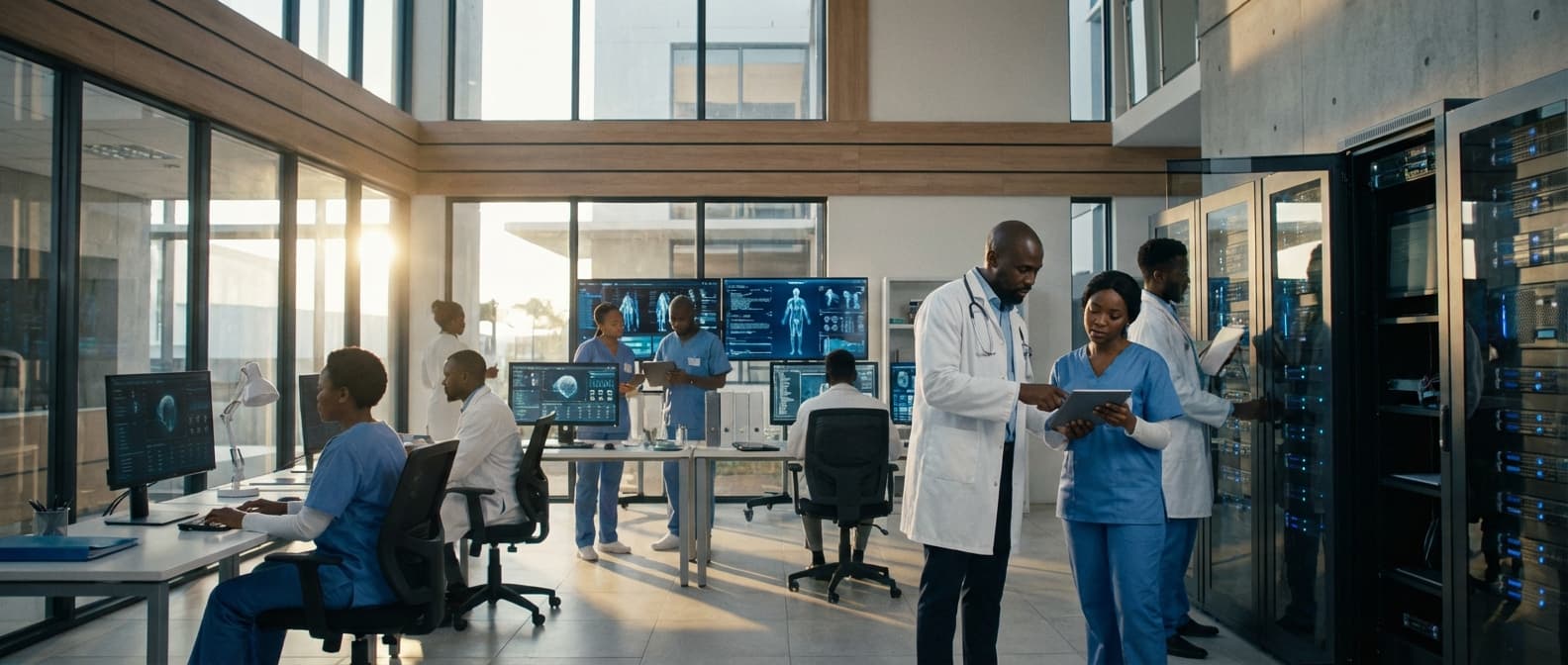
Tele-Radiology in Nigeria
Engineering Excellence & Technical Support
24/7 access to certified radiologists providing rapid, accurate remote interpretation of diagnostic imaging studies. High-standard technical execution following OEM protocols and local regulatory frameworks.
Bridging Geographic Gaps in Radiology Access
Tele-radiology platforms enable remote interpretation of medical images (X-rays, CT scans, MRIs) by qualified radiologists, regardless of their physical location. This is critical for Nigeria's vast geography, ensuring that patients in underserved rural areas or regions with a shortage of on-site radiologists receive timely and accurate diagnostic interpretations, leading to faster treatment initiation and improved patient outcomes.
Enhanced Subspecialty Expertise Availability
Nigeria faces a significant deficit in subspecialized radiologists (e.g., neuroradiologists, pediatric radiologists, interventional radiologists). Tele-radiology allows local healthcare facilities to tap into a global or national pool of subspecialists, providing expert consultations and interpretations for complex cases. This elevates the standard of care, reduces the need for costly patient transfers, and fosters knowledge transfer to local medical professionals.
Streamlined Workflow and Reduced Turnaround Times
Implementing tele-radiology solutions automates image transmission, reporting, and archiving processes. This drastically reduces the turnaround time for diagnostic reports, allowing clinicians to make quicker treatment decisions. For time-sensitive conditions like stroke or trauma, this efficiency can be life-saving and significantly contributes to better resource utilization within the Nigerian healthcare system.
What Is Tele-radiology In Nigeria?
Tele-radiology in Nigeria refers to the practice of transmitting radiological images (such as X-rays, CT scans, MRIs, and ultrasounds) from one location to another for the purpose of diagnostic interpretation and consultation. This is primarily achieved through the use of telecommunications technology, encompassing secure networks and digital image archiving and communication systems (PACS). The service aims to bridge the geographical and infrastructural gaps in radiology services within Nigeria, ensuring that patients in underserved or remote areas can access expert diagnostic interpretations without the need for physical transfer of images or patients.
| Who Needs Tele-Radiology in Nigeria? | Typical Use Cases in Nigeria | |||||
|---|---|---|---|---|---|---|
| Rural and remote healthcare facilities lacking on-site radiologists. | Emergency department interpretations (e.g., trauma imaging, stroke assessment) in facilities without 24/7 radiology coverage. | Hospitals with limited subspecialty radiology expertise (e.g., neuroradiology, pediatric radiology, interventional radiology). | Small clinics or private practices that cannot afford to employ full-time radiologists. | Disaster response and outbreak scenarios requiring rapid diagnostic support. | Tertiary healthcare institutions seeking to augment their existing radiology capacity or provide subspecialty consults. | Facilities undergoing maintenance or upgrades to their on-site PACS or radiology equipment. |
| 24/7 availability of radiological interpretations, especially for critical cases. | Access to specialized interpretations in areas with a shortage of subspecialist radiologists. | Improved turnaround times for diagnostic reports, leading to quicker treatment decisions. | Enhanced diagnostic accuracy through the review of images by experienced remote specialists. | Cost-effectiveness for smaller facilities compared to hiring full-time radiologists. | Quality assurance and peer review of radiological interpretations. | Training and educational opportunities for local medical professionals through case reviews and consultations. |
Key Components and Processes of Tele-Radiology in Nigeria:
- Image Acquisition: Radiological examinations are performed at local healthcare facilities (hospitals, clinics).
- Digitalization and Transmission: Acquired images are digitized and securely transmitted over a network (internet, dedicated lines) to a remote radiologist or radiology group.
- Teleradiology Hub/Reading Center: A central facility or a group of remote radiologists receive and process these images.
- Interpretation and Reporting: Qualified radiologists remotely interpret the images and generate a diagnostic report.
- Report Delivery: The finalized report is transmitted back to the originating healthcare facility, often electronically.
- Consultation: Facilitation of remote consultations between referring physicians and interpreting radiologists.
Who Needs Tele-radiology In Nigeria?
Tele-radiology offers a transformative solution for improving diagnostic imaging access and quality across Nigeria. The demand stems from a critical shortage of radiologists, particularly in remote and underserved areas, leading to delayed diagnoses and poorer patient outcomes. By leveraging tele-radiology, healthcare providers can gain access to expert interpretation of medical images, irrespective of geographical location. This is crucial for timely and accurate disease detection, treatment planning, and overall healthcare system efficiency.
| Customer Segment | Key Departments Benefiting | Primary Needs Addressed |
|---|---|---|
| Rural/Remote Hospitals & Clinics | Radiology, Emergency, Surgery, Internal Medicine | Access to radiologist expertise, reduced turnaround time for reports, improved diagnostic accuracy. |
| Tertiary/Federal Medical Centers | Radiology (all sub-specialties), Neurology, Cardiology, Oncology, Pediatrics | Sub-specialty consultation, workload balancing, coverage during leave/shortages, access to niche expertise. |
| Private Diagnostic Centers | Radiology, General Imaging | Expansion of service offerings, enhanced report quality, increased patient volume. |
| NGOs & Mission Hospitals | Radiology, General Medicine, Pediatrics, Obstetrics & Gynecology | Cost-effective access to expert interpretation, improved patient care in underserved areas. |
| Government Health Initiatives | Public Health, Screening Programs, Emergency Response | Scalable diagnostic support, rapid reporting for public health emergencies. |
| Medical Schools | Radiology, Medical Education | Training resource, exposure to diverse cases, enhancement of academic programs. |
| Emergency Medical Services (EMS) | Emergency Medicine, Trauma, Neurology | Rapid interpretation of critical scans (e.g., CT head for stroke/trauma), faster clinical decision-making. |
Target Customers and Departments for Tele-Radiology in Nigeria
- Hospitals and Clinics in Rural and Remote Areas: These facilities often lack in-house radiology departments or qualified radiologists, making them primary beneficiaries.
- Tertiary and Federal Medical Centers: While having existing radiology departments, these larger institutions can benefit from specialized sub-specialty interpretations and overflow case management, especially during periods of staff shortages.
- Private Diagnostic Centers: These centers can expand their service offerings and reach by outsourcing complex or specialized imaging interpretations.
- Non-Governmental Organizations (NGOs) and Mission Hospitals: Often operating in resource-limited settings, tele-radiology can significantly enhance their diagnostic capabilities.
- Government Health Initiatives and Public Health Programs: For screening programs or mass casualty incidents, tele-radiology can provide rapid and widespread diagnostic support.
- Medical Schools and Teaching Hospitals: Can utilize tele-radiology for training purposes and to expose trainees to a wider range of complex cases.
- Emergency Medical Services (EMS): For rapid interpretation of critical imaging like CT scans in stroke or trauma cases, enabling faster treatment decisions.
Tele-radiology Process In Nigeria
Tele-radiology, the practice of interpreting radiological images remotely, is a growing field in Nigeria, aiming to bridge the gap in expert radiologist availability, particularly in underserved areas. The process typically involves a seamless workflow from the initial inquiry by a referring clinician to the final delivery of the radiological report.
| Stage | Description | Key Participants | Technology/Tools Involved |
|---|---|---|---|
| Inquiry & Data Collection | Identifying the need for imaging and gathering patient details. | Referring Clinician, Nurse, Medical Assistant | EMR/EHR, Patient Charts, Specimen Collection Kits |
| Image Acquisition | Performing the radiological examination. | Radiographer, Radiologic Technologist | X-ray Machine, CT Scanner, MRI Scanner, Ultrasound Machine, PACS (local) |
| Image Transfer | Securely sending images and data to the teleradiology provider. | IT Support, Radiographer, Teleradiology Platform Administrator | Secure Network, VPN, Cloud Storage, DICOM Transfer Software, Encryption |
| Teleradiology Platform Access & Assignment | Receiving images, managing worklists, and assigning cases to radiologists. | Teleradiology Platform Administrator, Radiologist | Teleradiology Platform (Web-based or Desktop Application), Worklist Management System |
| Image Interpretation & Reporting | Analyzing images and creating diagnostic reports. | Radiologist (Remote) | High-resolution Medical Displays, Dictation Software, Reporting Software, PACS Viewer |
| Report Review & Dispatch | Quality check and secure transmission of the final report. | Radiologist (Remote), Teleradiology Platform Administrator | Teleradiology Platform, Secure Email, Encrypted Messaging |
| Integration & Follow-up | Incorporating the report into patient records and initiating patient management. | Referring Clinician, Specialist | EMR/EHR, Patient Charts |
Tele-Radiology Workflow in Nigeria: From Inquiry to Execution
- Inquiry & Patient Data Collection: A referring clinician in a hospital or clinic identifies the need for a radiological examination (X-ray, CT, MRI, etc.). They collect essential patient information, including demographics, clinical history, symptoms, and the specific examination requested.
- Image Acquisition: The radiological examination is performed at the referring facility using standard imaging equipment.
- Image Transfer: Acquired digital images (DICOM format) are securely transferred from the referring facility's PACS (Picture Archiving and Communication System) or imaging modality to the tele-radiology service provider. This can be done via dedicated secure networks, cloud-based platforms, or encrypted file transfer protocols.
- Teleradiology Platform Access: The tele-radiology service provider receives the images and associated clinical data on their specialized platform. This platform often includes functionalities for worklist management, image viewing, reporting tools, and secure communication.
- Radiologist Assignment & Review: A qualified and licensed radiologist within the tele-radiology network is assigned the case based on their subspecialty and availability. They access the images and clinical information on their workstation.
- Image Interpretation: The radiologist meticulously analyzes the radiological images, correlating them with the clinical history to identify any abnormalities or provide a diagnostic opinion.
- Report Generation: The radiologist dictates or types a comprehensive report, detailing their findings, conclusions, and recommendations. This report is usually structured and adheres to established medical reporting standards.
- Report Review & Quality Assurance (Optional but Recommended): In some advanced models, a senior radiologist or a peer review process may be implemented to ensure the accuracy and quality of the report before finalization.
- Report Dispatch: The finalized report is securely transmitted back to the referring clinician via the tele-radiology platform or a secure communication channel.
- Integration into Patient Records: The referring clinician integrates the tele-radiology report into the patient's electronic medical record (EMR) or physical chart for continuity of care and future reference.
- Billing & Administration: The tele-radiology service provider handles billing for their services, which may be direct to the referring facility or through insurance/government schemes where applicable.
Tele-radiology Cost In Nigeria
Tele-radiology, the practice of interpreting medical images remotely, is gaining traction in Nigeria as a solution to the shortage of qualified radiologists, particularly in underserved areas. The cost of tele-radiology services in Nigeria is influenced by a complex interplay of factors, leading to a significant range in pricing. These factors generally revolve around the complexity of the imaging study, the turnaround time required, the expertise of the remote radiologist, and the operational costs of the tele-radiology provider. Understanding these components is crucial for healthcare providers and institutions seeking to implement or procure these essential diagnostic services.
| Imaging Modality | Estimated Price Range (NGN) | Notes |
|---|---|---|
| X-ray (Single View) | 8,000 - 15,000 | Standard interpretation, basic findings. |
| X-ray (Multiple Views/Complex) | 15,000 - 30,000 | e.g., Chest X-ray with comparative analysis, skeletal survey. |
| Ultrasound (Abdomen/Pelvis) | 20,000 - 40,000 | Requires skilled sonographer and radiologist interpretation. |
| CT Scan (Brain/Abdomen/Pelvis) | 40,000 - 80,000 | Standard contrast or non-contrast studies. |
| CT Scan (Complex/Angiography) | 70,000 - 150,000+ | Requires specialized protocols and interpretation, e.g., CT Pulmonary Angiography (CTPA). |
| MRI Scan (Brain/Spine) | 70,000 - 150,000 | Standard sequences, depending on the area and contrast use. |
| MRI Scan (Joints/Abdomen) | 90,000 - 200,000+ | More complex sequences and dedicated protocols. |
| STAT/Emergency Reporting (per study) |
| For urgent cases requiring rapid turnaround. |
Key Pricing Factors for Tele-radiology in Nigeria:
- Type and Complexity of Imaging Modality: Different imaging techniques carry varying costs due to image acquisition time, processing requirements, and the level of specialization needed for interpretation. For example, a simple X-ray is generally less expensive to interpret than a complex MRI or CT scan requiring advanced multi-planar reconstruction and detailed analysis.
- Sub-specialty and Radiologist Expertise: The demand for sub-specialists (e.g., neuroradiologists, pediatric radiologists, interventional radiologists) often translates to higher service fees due to their specialized training and limited availability. Experienced and highly sought-after radiologists will command higher rates.
- Turnaround Time (TAT): The urgency of the report significantly impacts cost. Routine reporting (e.g., 24-48 hours) is typically priced lower than STAT or emergency reporting (e.g., within 1-4 hours), which requires immediate attention and prioritization.
- Volume of Studies: For healthcare facilities with a consistent and high volume of imaging studies, providers may offer volume-based discounts, reducing the per-study cost.
- Technology and Platform Costs: The tele-radiology provider's investment in secure IT infrastructure, Picture Archiving and Communication Systems (PACS), and reporting software can be factored into their pricing. This includes the cost of data transmission, storage, and maintenance.
- Provider's Overhead and Operational Expenses: This includes salaries for administrative staff, technical support, licensing, insurance, and marketing efforts, all of which contribute to the overall pricing structure.
- Geographic Location of the Provider: While the radiologist is remote, the administrative and operational base of the tele-radiology company can influence costs. Companies based in major commercial hubs might have higher overheads.
- Contractual Agreements and Service Level Agreements (SLAs): Long-term contracts with clearly defined SLAs often come with more predictable and potentially discounted pricing compared to ad-hoc or pay-as-you-go arrangements.
- Ancillary Services: Some tele-radiology providers may offer additional services like quality assurance, peer review, or training, which can add to the overall cost but enhance the value proposition.
Affordable Tele-radiology Options
Tele-radiology offers a cost-effective solution for medical imaging interpretation. By leveraging remote radiologists, healthcare providers can access expert opinions without the overhead of in-house specialists. Several strategies and models exist to make tele-radiology even more affordable. Value bundles, where a package of services is offered at a reduced combined price, and strategic partnerships are key to unlocking significant cost savings. Understanding these options can empower healthcare organizations to optimize their diagnostic imaging workflows while controlling expenses.
| Strategy/Option | Description | Cost-Saving Potential | Ideal For |
|---|---|---|---|
| Volume-Based Pricing | Discounted rates offered for higher volumes of interpreted studies. | High | Hospitals and imaging centers with consistent high patient throughput. |
| Fixed Fee per Study | A predictable cost for each imaging study interpreted, regardless of complexity (within defined parameters). | Medium | Facilities with stable, predictable imaging volumes across different modalities. |
| Subscription/Retainer Models | A monthly or annual fee for a set amount of tele-radiology services or guaranteed availability. | Medium to High | Clinics and practices that require consistent, but potentially variable, access to interpretation services. |
| Subspecialty-Specific Bundles | Packages focused on the interpretation of specific types of scans (e.g., MRI brain, CT chest). | Medium | Facilities that frequently order specific subspecialty interpretations. |
| Tiered Reporting Services | Offering basic reads, preliminary reads, and comprehensive final reports at different price points. | Medium | Organizations looking to manage costs by selecting the level of detail required for each case. |
| AI-Assisted Interpretation Discounts | Leveraging AI tools for initial flagging or preliminary analysis, potentially reducing radiologist time and cost. | Medium to High | Facilities adopting AI technologies to enhance efficiency and accuracy. |
Key Affordable Tele-Radiology Strategies
- Value Bundles: Negotiating comprehensive packages for common imaging modalities or for a set volume of studies.
- Tiered Service Models: Different levels of service (e.g., preliminary reads vs. final reports) with corresponding pricing.
- On-Demand vs. Dedicated Radiologist Services: Utilizing on-demand services for lower volumes and dedicated radiologists for higher, predictable needs.
- Strategic Partnerships: Collaborating with multiple facilities to achieve economies of scale and better negotiation power.
- Technology Integration: Leveraging cloud-based PACS and AI tools to streamline workflow and reduce manual effort.
- Flexible Contract Terms: Seeking contracts that allow for adjustments based on fluctuating patient volumes.
- Subspecialty Expertise Access: Gaining access to subspecialists without the cost of hiring them full-time.
Verified Providers In Nigeria
In Nigeria's burgeoning healthcare sector, distinguishing between reliable and less-than-reputable service providers is paramount for patient well-being. 'Verified Providers' signifies a commitment to quality, adherence to regulatory standards, and a patient-centric approach. Franance Health stands out as a beacon in this landscape, embodying the principles that define the best choices for healthcare services in Nigeria.
| Feature | Franance Health's Verification Standard | Benefit to Patients |
|---|---|---|
| Provider Credentials | Rigorous background checks, verification of licenses and accreditations. | Ensures you receive care from qualified and legitimate medical professionals. |
| Facility Standards | Assessment of infrastructure, equipment, hygiene, and safety protocols. | Guarantees a safe, clean, and well-equipped environment for treatment and recovery. |
| Clinical Practices | Review of treatment protocols, patient management systems, and adherence to medical ethics. | Ensures evidence-based and ethical medical care, promoting positive health outcomes. |
| Patient Feedback and Reviews | Active monitoring of patient satisfaction and regular collection of feedback. | Provides insight into provider performance and patient experience, empowering informed decisions. |
| Continuous Improvement | Encourages ongoing training and development for healthcare professionals within the network. | Ensures access to up-to-date medical knowledge and techniques for optimal patient care. |
Why Franance Health Represents the Best Choice for Verified Healthcare Providers in Nigeria:
- Unwavering Commitment to Quality Assurance: Franance Health meticulously vets all its partner providers, ensuring they meet stringent quality benchmarks in infrastructure, equipment, and clinical practices.
- Adherence to Regulatory Standards: We prioritize working with facilities and professionals who are fully compliant with Nigerian health regulations and licensing requirements, guaranteeing safety and ethical practice.
- Patient-Centric Approach: Our network is built on providers who place patient needs and satisfaction at the forefront, offering compassionate care and clear communication.
- Access to Specialized Expertise: Franance Health connects you with a diverse range of specialists, ensuring you receive the most appropriate care for your specific health concerns.
- Technological Integration for Enhanced Care: We partner with providers who embrace modern medical technologies and best practices, leading to more accurate diagnoses and effective treatments.
- Transparency and Trust: Our verification process fosters transparency, building trust between patients and healthcare providers through clear information and reliable service delivery.
- Affordability and Accessibility: While prioritizing quality, Franance Health also strives to make healthcare services more accessible and affordable through its curated network.
Scope Of Work For Tele-radiology
This document outlines the Scope of Work (SOW) for providing tele-radiology services, detailing the technical deliverables and standard specifications required. It aims to establish a clear framework for service providers to ensure consistent quality, efficiency, and compliance in remote diagnostic imaging interpretation.
| Deliverable Category | Specific Deliverable | Standard Specification | Format/Protocol |
|---|---|---|---|
| Image Transmission | Secure Image Upload | DICOM standard for image data, AES-256 encryption for data in transit | DICOM, HL7 |
| Reporting | Radiology Report | Structured reporting format, adherence to ACR guidelines, inclusion of findings, impressions, and recommendations | HL7 (for integration), PDF (for viewing/printing) |
| Platform | Tele-radiology Platform | HIPAA/GDPR compliant, secure user authentication, audit trails, real-time communication features, image viewer with essential measurement tools | Web-based, secure API for integration |
| Integration | PACS Integration | Seamless integration with client's PACS for image retrieval and sending reports back, supporting DICOM query/retrieve and send | DICOM (AE Title, Port, IP Address) |
| Integration | EHR Integration | Ability to push reports to EHR systems, patient demographics synchronization | HL7 v2.x or FHIR API |
| Quality Assurance | Report Review & Auditing | Minimum 10% of reports subject to peer review, documentation of QA process and outcomes | Internal reporting and dashboard |
| Technical Support | Helpdesk Availability | 24/7 availability for critical issues, 8 business hours for non-critical issues, response time within 1 hour for critical issues | Email, Phone, Ticketing System |
| Security | Data Security & Privacy | Compliance with HIPAA, GDPR, and other relevant data protection regulations. Regular security audits, vulnerability assessments, and penetration testing. | Encryption (at rest and in transit), Access Controls, Audit Logs |
| Personnel | Radiologist Qualifications | Board-certified radiologists with relevant subspecialty expertise, licensed in applicable jurisdictions | MD/DO, Board Certification (e.g., ABIM/AOBIM, FRCR), State Licenses |
Key Service Components
- Remote interpretation of medical images (X-ray, CT, MRI, Ultrasound, etc.)
- Preliminary and final diagnostic reports generated by qualified radiologists
- 24/7 availability for urgent and routine interpretations
- Secure transmission of images and reports via a HIPAA-compliant platform
- Integration with existing Picture Archiving and Communication Systems (PACS) and Electronic Health Records (EHR)
- Quality assurance and peer review processes
- Technical support and system maintenance
Service Level Agreement For Tele-radiology
This Service Level Agreement (SLA) outlines the guaranteed response times and uptime for tele-radiology services provided by [Your Company Name] (hereinafter referred to as 'Provider') to [Client Name] (hereinafter referred to as 'Client'). This SLA is an appendix to the Master Services Agreement (MSA) between the parties.
| Service Component | Service Level Objective (SLO) | Measurement | Downtime |
|---|---|---|---|
| Interpretation Request Reception | 99.9% of incoming requests acknowledged within 5 minutes. | Time from transmission to Provider's system to successful receipt confirmation. | Service is considered down if more than 0.1% of requests are not acknowledged within the SLO. |
| Preliminary Report Generation (Stat/Urgent Cases) | Preliminary reports for STAT/Urgent cases delivered within 30 minutes of image acquisition completion. | Time from confirmed image acquisition completion to preliminary report availability. | Service is considered down if more than 1% of STAT/Urgent cases exceed the SLO. |
| Final Report Generation (Routine Cases) | Final reports for Routine cases delivered within 24 hours of image acquisition completion. | Time from confirmed image acquisition completion to final report availability. | Service is considered down if more than 2% of Routine cases exceed the SLO. |
| System Uptime | 99.9% guaranteed uptime for core tele-radiology platform (excluding scheduled maintenance). | Percentage of time the core tele-radiology platform is accessible and functional. | Monthly uptime less than 99.9% (excluding scheduled maintenance). |
Key Service Components
- Interpretation Request Reception
- Preliminary Report Generation (Stat/Urgent Cases)
- Final Report Generation (Routine Cases)
- System Uptime
Frequently Asked Questions

Ready when you are
Let's scope your Tele-Radiology in Nigeria project in Nigeria.

Scaling healthcare logistics and technical systems across the entire continent.