
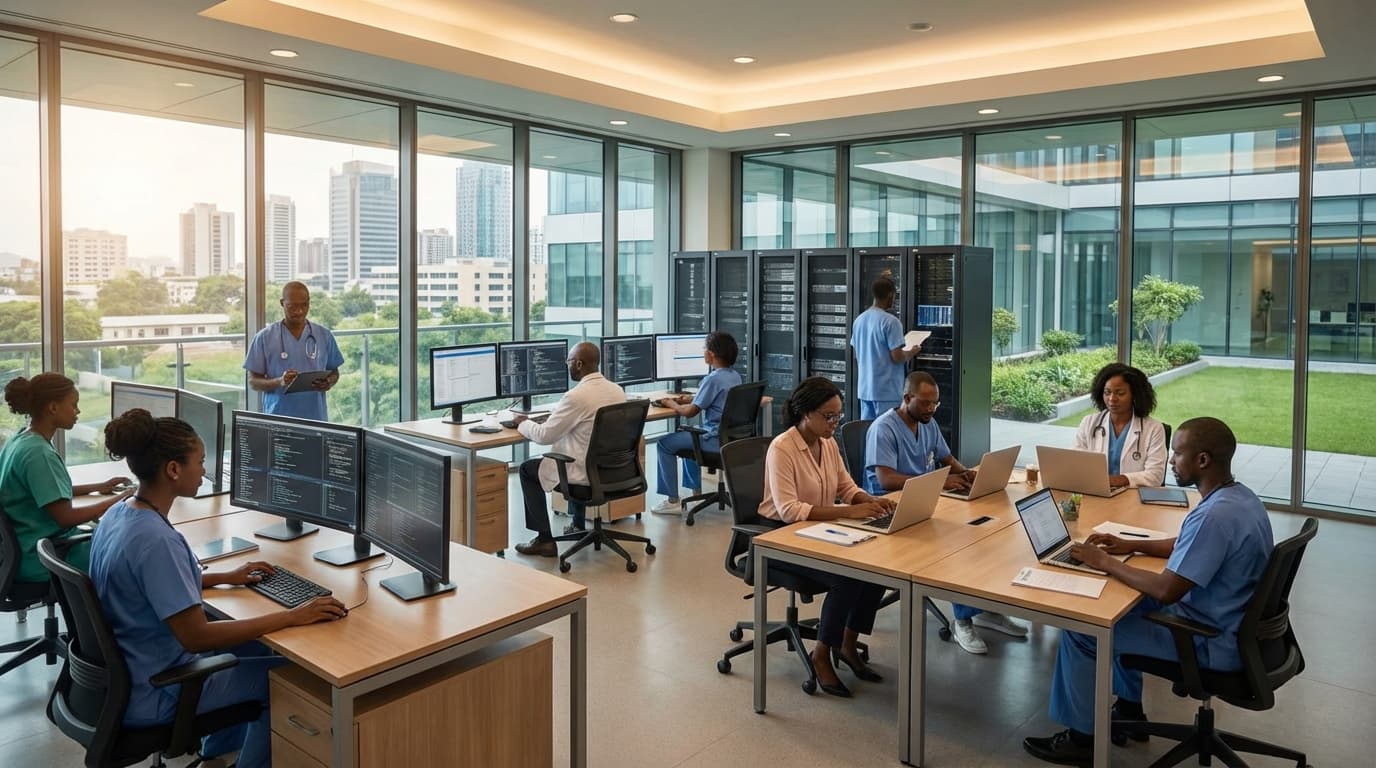
Radiology Reader & Reporting Support in Nigeria
Engineering Excellence & Technical Support
Remote radiology reading and reporting services High-standard technical execution following OEM protocols and local regulatory frameworks.
AI-Powered Diagnostic Assistance
Leveraging cutting-edge Artificial Intelligence algorithms to flag potential abnormalities in X-rays, CT scans, and MRIs, significantly improving detection rates and reducing turnaround times for radiologists across Nigeria. Our system assists in prioritizing critical cases and identifying subtle findings that might otherwise be missed.
Tele-Radiology Collaboration Platform
A secure and robust platform enabling seamless remote access to imaging studies and real-time consultation between radiologists. This empowers healthcare facilities in underserved areas of Nigeria with expert diagnostic capabilities, bridging geographical barriers and enhancing patient care accessibility.
Cloud-Based PACS & DICOM Management
Providing a scalable and cost-effective cloud infrastructure for Picture Archiving and Communication Systems (PACS). This ensures secure storage, retrieval, and sharing of DICOM images, facilitating efficient workflow management and data analytics for radiology departments throughout Nigeria, while reducing reliance on expensive on-premise hardware.
What Is Radiology Reader & Reporting Support In Nigeria?
Radiology Reader & Reporting Support in Nigeria refers to a specialized service that augments the capabilities of healthcare providers in the interpretation of medical imaging studies and the generation of comprehensive diagnostic reports. This service leverages advanced medical imaging software, artificial intelligence (AI) algorithms, and potentially remote expert radiologists to assist in the analysis of X-rays, CT scans, MRIs, ultrasounds, and other radiological modalities. The primary objective is to enhance diagnostic accuracy, reduce turnaround times for reports, and improve patient care outcomes within the Nigerian healthcare ecosystem.
| Use Case | Description | Benefits |
|---|---|---|
| Teleradiology Workflow Enhancement | Remote interpretation of imaging studies by radiologists and AI algorithms, with reports transmitted back to the originating facility. | Reduced reporting delays, improved access to specialized expertise, and increased throughput for imaging departments. |
| AI-Assisted Image Analysis | Employment of AI algorithms for initial screening, abnormality detection, lesion segmentation, and quantitative measurements on medical images. | Improved sensitivity and specificity for certain findings, reduced inter-observer variability, and faster preliminary assessments. |
| Second Opinion and Quality Assurance | Independent review of radiology reports by subspecialist radiologists to ensure accuracy and adherence to best practices. | Mitigation of diagnostic errors, enhanced confidence in diagnoses, and standardized reporting quality. |
| Subspecialty Consultation | Access to expert radiologists with specialized knowledge in areas such as neuroradiology, musculoskeletal radiology, or interventional radiology for complex case review. | Facilitation of diagnosis and management of rare or challenging conditions, leading to more targeted patient care. |
| Rural and Underserved Area Support | Providing essential radiology interpretation services to healthcare facilities where qualified radiologists are scarce. | Equitable access to diagnostic imaging for populations in remote regions, addressing healthcare disparities. |
Who Needs Radiology Reader & Reporting Support?
- Hospitals and Diagnostic Centers: Institutions lacking sufficient in-house radiologist staffing, particularly in underserved or remote areas, can benefit from external support for image interpretation and reporting.
- Radiologists: Individual radiologists may utilize the service to manage high caseloads, obtain second opinions, or access specialized expertise for complex cases.
- General Practitioners and Specialists: Clinicians who order imaging studies can benefit from faster, more detailed, and accurate reports, leading to more informed clinical decision-making and timely treatment initiation.
- Public Health Initiatives: Government-led health programs and screening initiatives can leverage this service to manage large volumes of imaging data and ensure consistent quality of reporting across various facilities.
- Medical Training Institutions: These institutions can use the service for educational purposes, allowing trainees to review cases with expert annotations and interpretations.
Who Needs Radiology Reader & Reporting Support In Nigeria?
Radiology reader and reporting support services are crucial for enhancing diagnostic accuracy, improving workflow efficiency, and ensuring timely patient care across various healthcare settings in Nigeria. These services leverage advanced technology and skilled professionals to assist overburdened radiologists and clinicians, particularly in areas facing shortages of specialized expertise.
| Target Customer Type | Specific Departments/Needs | Key Benefits |
|---|---|---|
| Tertiary Hospitals | Radiology Department (CT, MRI, X-ray, Ultrasound, Mammography); Oncology; Cardiology; Neurology; Neurosurgery; Orthopedics; Emergency Department | Reduced radiologist workload, faster turnaround times, improved diagnostic accuracy for complex cases, access to subspecialty expertise, support for after-hours and emergency reads. |
| Secondary/General Hospitals | Radiology Department (primarily X-ray, Ultrasound, CT if available); General Surgery; Internal Medicine; Pediatrics | Bridging expertise gaps, ensuring consistent reporting quality, managing seasonal peaks in demand, providing support for basic imaging modalities. |
| Private Diagnostic Centers | Radiology Department (all modalities); Referral services for smaller clinics | Scalability of services, enhanced reputation for quality and speed, ability to offer specialized interpretations, efficient utilization of equipment. |
| Specialty Clinics (e.g., Cancer Centers, Heart Institutes) | Radiology Interpretation (PET-CT, advanced MRI sequences, interventional radiology reports); Multidisciplinary Team Meetings | Accurate staging and treatment monitoring, subspecialty reporting crucial for patient management, integration with treatment planning. |
| Occupational Health | Workplace screening reports (e.g., chest X-rays for industrial workers, musculoskeletal assessments) | Efficient processing of high-volume screening exams, standardized reporting for industrial health compliance. |
| Telemedicine Providers | Remote interpretation of diagnostic images for underserved areas | Expanding reach of radiology services, enabling remote consultations, ensuring access to specialized readings regardless of geographic location. |
| Research Institutions | Image analysis for clinical trials, specialized radiological assessments | Support for research protocols requiring rigorous image interpretation, data collection for epidemiological studies. |
| Government Health Agencies | Public health imaging initiatives, disaster response imaging support | Ensuring consistent quality in public health programs, providing rapid diagnostic support during health crises. |
Target Customers & Departments in Nigeria for Radiology Reader & Reporting Support:
- {"title":"Hospitals (Public & Private)","description":"Hospitals are the primary beneficiaries, requiring support for their radiology departments to manage high patient volumes and complex cases. This includes both large tertiary referral centers and smaller community hospitals."}
- {"title":"Diagnostic Imaging Centers","description":"Dedicated imaging centers, often with multiple branches, can significantly benefit from external reading and reporting to ensure consistent quality and expand their service offerings without requiring an immediate increase in in-house radiologist staff."}
- Specialty Clinics (e.g., Cardiology, Oncology, Neurology)
- Occupational Health Centers
- Telemedicine Providers
- Medical Research Institutions
- Government Health Agencies & Ministries of Health
Radiology Reader & Reporting Support Process In Nigeria
This document outlines the typical workflow for radiology reading and reporting support services in Nigeria, from initial inquiry to the final delivery of reports. This process aims to ensure efficient, accurate, and timely interpretation of radiological images and generation of comprehensive reports, often supporting hospitals, clinics, and diagnostic centers that may have limited in-house radiology expertise or capacity.
| Stage | Description | Key Activities | Responsible Parties | Key Outputs/Deliverables | Considerations/Notes |
|---|---|---|---|---|---|
| Inquiry and Scoping | Initial contact from a client seeking radiology reading and reporting services. | Client contacts the support provider (e.g., via phone, email, online portal). Discussion of services required (e.g., specific modalities, volume of cases, turnaround time expectations). Provider assesses feasibility and provides a quote/proposal. | Client (Hospital/Clinic), Radiology Support Provider | Service proposal, pricing, Service Level Agreement (SLA) terms | Clear definition of scope, pricing structure, and communication protocols are crucial. |
| Case Submission and Data Transfer | Client submits patient imaging data and relevant clinical information for interpretation. | Client prepares patient history, clinical notes, and previous relevant imaging. Images are securely transferred via a Picture Archiving and Communication System (PACS), secure cloud platform, or encrypted drives. | Client (Referring Physician/Technologist), Radiology Support Provider | Digital imaging files (DICOM format), clinical information | Ensuring data privacy (HIPAA/local equivalents) and secure transfer methods is paramount. Standardized data submission formats improve efficiency. |
| Image Review and Interpretation | Radiologist(s) from the support provider review the submitted images and clinical data. | Radiologist accesses images on a high-resolution workstation. Reviews images, correlates with clinical history and prior studies. Identifies findings, diagnoses, and makes recommendations. | Radiologist (Support Provider) | Diagnostic findings, preliminary conclusions | Timeliness is critical. Radiologists must have access to appropriate viewing software and robust network connectivity. Quality assurance checks are often integrated. |
| Report Generation | A comprehensive, structured report is drafted based on the radiologist's findings. | Radiologist dictates or types the report, adhering to established reporting templates and standards. Includes patient demographics, clinical indication, technique, findings, impression/diagnosis, and recommendations. May involve a second reader or supervisor review. | Radiologist, Report Scribe (optional), Quality Assurance Radiologist (optional) | Draft report | Clarity, conciseness, and accuracy are essential. Adherence to international reporting standards (e.g., ACR guidelines) is often expected. |
| Report Delivery and Archival | The finalized report is securely transmitted to the client, and records are maintained. | Finalized report is signed off by the radiologist. Report is delivered to the client via secure portal, encrypted email, or integrated with client's Electronic Medical Record (EMR) system. Reports and images are archived by the provider for a defined period. | Radiology Support Provider, Client | Finalized radiology report, archived images and reports | Secure and auditable delivery mechanisms are vital. Clear retention policies for both reports and images should be established. |
| Billing and Payment | Invoicing for services rendered and payment processing. | Provider generates an invoice based on the agreed-upon pricing (per study, per subscription, etc.). Client reviews invoice and processes payment according to the agreed terms. | Radiology Support Provider, Client | Invoice, Payment confirmation | Transparent billing and timely payment processes are important for maintaining the provider-client relationship. |
Key Stages in the Radiology Reader & Reporting Support Process
- Inquiry and Scoping
- Case Submission and Data Transfer
- Image Review and Interpretation
- Report Generation
- Report Delivery and Archival
- Billing and Payment
Radiology Reader & Reporting Support Cost In Nigeria
The cost of radiology reader and reporting support in Nigeria can vary significantly due to several factors. These services are crucial for accurate diagnosis and treatment planning, and their pricing is influenced by the complexity of the imaging modality, the specialization of the radiologist, the urgency of the report, and the provider's location and overhead. Technology adoption, such as the use of AI-powered preliminary readings or advanced PACS (Picture Archiving and Communication System) and RIS (Radiology Information System) integration, can also impact costs. Furthermore, the volume of studies requested by a healthcare facility and the contractual agreements in place play a substantial role in determining the final price.
| Service Type / Modality | Estimated Price Range (NGN) | Notes |
|---|---|---|
| Basic X-ray Reading | 1,000 - 3,000 | Standard diagnostic X-rays (e.g., chest, limb) |
| Ultrasound Reading | 1,500 - 4,000 | Abdomen, pelvis, obstetrics, small parts |
| CT Scan Reading | 3,000 - 8,000 | Standard head, chest, abdomen, pelvis CTs |
| MRI Scan Reading | 5,000 - 15,000 | Standard brain, spine, joint, abdominal MRIs |
| Specialized/Complex Scan Reading (e.g., Angiography, Advanced MRI sequences) | 7,000 - 20,000+ | Requires sub-specialist expertise and advanced analysis |
| STAT/Rush Reporting Surcharge | 1,000 - 3,000+ | Added to the base cost for urgent reports |
| Tele-radiology Service (per study, bulk contract) | Varies (Negotiated) | Often depends on volume and contract duration. Can be more cost-effective for larger institutions. |
| AI Preliminary Read Integration | Adds a small percentage/fee | Can streamline initial review, cost varies by provider |
Key Pricing Factors for Radiology Reader & Reporting Support in Nigeria
- Complexity of Imaging Modality: X-rays, ultrasounds, CT scans, MRIs, and advanced interventional procedures have different reporting complexities and thus varying costs.
- Radiologist Specialization: Sub-specialists (e.g., neuroradiology, musculoskeletal, pediatric radiology) often command higher fees due to their niche expertise.
- Urgency of Report: Rush or STAT (as soon as possible) reports typically incur a premium.
- Provider Location and Overhead: Major urban centers may have higher operational costs, reflected in pricing, compared to rural areas.
- Technology Integration: Use of AI, advanced PACS/RIS, and tele-radiology platforms can influence cost structures.
- Volume and Contractual Agreements: High-volume providers or those with long-term contracts may negotiate lower per-report rates.
- Reporting Turnaround Time (TAT): Guaranteed shorter TATs can come with an additional charge.
- Type of Service: Standalone reporting, second opinions, or full-service tele-radiology solutions will have different pricing models.
Affordable Radiology Reader & Reporting Support Options
Healthcare providers are continuously seeking ways to optimize costs without compromising the quality of patient care. Radiology services, in particular, represent a significant operational expense. This document outlines affordable radiology reader and reporting support options, focusing on the value delivered through well-designed bundles and effective cost-saving strategies. By understanding these approaches, institutions can make informed decisions to enhance efficiency and financial sustainability.
| Cost-Saving Strategy | Description | Impact on Radiology Support |
|---|---|---|
| Volume-Based Pricing | Negotiating lower per-study rates as the volume of interpretations increases. | Reduces per-case costs for teleradiology services and can incentivize providers to offer tiered pricing. |
| Dedicated vs. Shared Resources | Determining whether to contract for dedicated remote radiologists or leverage shared pools of readers based on fluctuating demand. | Shared pools can offer cost efficiencies for lower-volume or unpredictable needs, while dedicated resources ensure consistent availability and familiarity with institutional protocols. |
| Standardized Reporting Templates | Utilizing pre-defined templates for common study types to streamline report generation. | Reduces radiologist time spent on formatting, allowing for quicker reporting and improved consistency. Can be integrated with AI tools for further automation. |
| Optimized Workflow Design | Analyzing and streamlining the entire radiology workflow from image acquisition to final report delivery. | Minimizes delays and bottlenecks, reducing the need for emergency or overtime reads, and improving overall efficiency of both in-house and outsourced services. |
| Strategic Outsourcing | Identifying specific types of reads or times of day that are most cost-effectively outsourced. | Allows in-house radiologists to focus on complex cases and subspecialty interpretations, while leveraging teleradiology for routine or after-hours reads. |
| Leveraging AI for Efficiency | Implementing AI tools for preliminary analysis, flagging abnormalities, or automating measurements. | Increases radiologist throughput by reducing the time spent on initial screening, allowing them to focus on higher-value interpretive tasks. |
| Flexible Staffing Models | Employing a mix of full-time, part-time, and on-demand radiologists, including locum tenens or teleradiology. | Matches staffing levels to patient volume fluctuations, avoiding overstaffing during slow periods and ensuring adequate coverage during peak times. |
Key Value Bundles for Radiology Reader & Reporting Support
- {"title":"Teleradiology Subspecialty Reads","description":"Access to a network of remote radiologists specializing in specific modalities (e.g., neuroradiology, musculoskeletal, cardiac). Bundles can be structured by volume, turnaround time tiers, or a combination of both, offering expertise precisely when needed."}
- {"title":"Overnight & Preliminary Reads","description":"Ensures rapid turnaround for critical findings outside of standard business hours. Bundles often include a dedicated team or a pool of readers available 24/7, providing preliminary interpretations that can guide immediate patient management."}
- {"title":"Quality Assurance & Peer Review Services","description":"Integrating quality checks into the reporting workflow. Bundles can encompass regular peer review sessions, discrepancy analysis, and performance metrics for in-house or teleradiology reads, fostering continuous improvement."}
- {"title":"AI-Assisted Workflow Integration","description":"Combining human expertise with artificial intelligence tools. Value bundles can include AI-powered detection of specific findings, automated measurements, or preliminary report drafting, freeing up radiologists for complex interpretation and consultation."}
- {"title":"Turnaround Time (TAT) Guarantees","description":"Service level agreements (SLAs) that guarantee specific reporting times for different study types. Bundles with strong TAT commitments provide predictability and improve patient flow, often priced based on urgency levels."}
Verified Providers In Nigeria
In Nigeria's rapidly evolving healthcare landscape, distinguishing between genuine and fraudulent service providers is paramount. Verified providers ensure quality, safety, and ethical practices, offering peace of mind to patients and stakeholders alike. Franance Health stands out as a beacon of trust, meticulously vetting its network of healthcare professionals and facilities. Their stringent credentialing process and unwavering commitment to excellence make them the undisputed best choice for accessing reliable healthcare in Nigeria.
| Credential Type | Franance Health Verification Standard | Benefit to Patients |
|---|---|---|
| Medical Licenses | Mandatory verification with relevant professional bodies (e.g., MDCN) | Ensures providers are legally qualified to practice. |
| Specialist Certifications | Confirmation of advanced training and board certifications | Guarantees expertise in specific medical fields. |
| Professional History Check | Background checks for malpractice claims or disciplinary actions | Mitigates risk of engaging with unqualified or problematic practitioners. |
| Facility Accreditation | Verification of operational licenses and compliance with health regulations | Confirms that healthcare facilities meet safety and quality standards. |
| Insurance & Malpractice Coverage | Confirmation of adequate professional liability insurance | Provides financial protection for patients in case of adverse events. |
Why Franance Health is the Premier Choice for Verified Providers in Nigeria:
- Rigorous Vetting Process: Franance Health employs a multi-faceted approach to verify the credentials, licenses, and professional history of every healthcare provider on their platform.
- Commitment to Quality and Safety: Beyond basic verification, they assess providers based on their adherence to international best practices, patient safety protocols, and ethical standards.
- Comprehensive Network: Franance Health offers access to a diverse range of specialists, general practitioners, and healthcare facilities, ensuring that all medical needs can be met.
- Patient-Centric Approach: Their focus is on empowering patients with transparent information and reliable access to care, building trust and fostering positive health outcomes.
- Continuous Monitoring and Feedback: Franance Health maintains an ongoing evaluation system, incorporating patient feedback to ensure consistent quality and address any emerging concerns.
Scope Of Work For Radiology Reader & Reporting Support
This Scope of Work (SOW) outlines the requirements for a Radiology Reader & Reporting Support service. This service will provide qualified radiologists to review medical images and generate comprehensive, accurate reports, thereby supporting the client's radiology department in managing workload, improving turnaround times, and ensuring high-quality diagnostic interpretations. The service will adhere to established medical standards and client-specific protocols.
| Technical Deliverable | Standard Specifications | Quality Metrics |
|---|---|---|
| Radiology Reports | Standardized report format (e.g., ACR DI-RADS, BI-RADS, LI-RADS where applicable). Inclusion of findings, impression, and relevant clinical history. Use of clear, unambiguous language. | Report accuracy (measured via peer review), completeness, adherence to template (100%). |
| Image Access & Review | Access to client's PACS/RIS via secure VPN or cloud-based solution. Support for common DICOM standards. Real-time or near real-time image access. | System uptime (99.5%), successful login rate (99.9%), successful image loading (99.9%). |
| Communication of Critical Findings | Defined protocol for identifying and communicating critical findings (e.g., life-threatening conditions, emergent findings). Communication method to be agreed upon (e.g., secure email, phone call, integrated messaging). | Notification TAT for critical findings (e.g., within 15 minutes of identification). Confirmation of receipt of critical findings. |
| Reporting Turnaround Time (TAT) | Agreed-upon TAT for routine, urgent, and STAT studies. For example:
| Percentage of reports delivered within TAT (e.g., >95% for routine, 100% for STAT/Urgent). |
| Data Security & Compliance | Adherence to HIPAA/GDPR and client-specific data handling policies. Secure data transmission and storage protocols. Regular security audits and compliance checks. | Zero data breaches or privacy violations. Successful completion of security audits. |
| Reporting Software & Tools | Use of client-approved dictation/transcription software, voice recognition software, or direct typing into RIS/reporting platform. Compatibility with standard operating systems. | Successful integration with client's reporting platform. User proficiency in provided tools. |
Key Responsibilities and Technical Deliverables
- Image Interpretation: Review of various radiological modalities including X-ray, CT, MRI, Ultrasound, Mammography, Nuclear Medicine, and interventional radiology procedures.
- Report Generation: Creation of clear, concise, and accurate radiology reports in accordance with established medical reporting standards and client's specific templates and guidelines.
- Turnaround Time (TAT) Adherence: Meeting agreed-upon TAT for routine, urgent, and STAT interpretations.
- Quality Assurance: Participation in internal and external quality assurance programs, including peer review and case discussion.
- Communication: Timely communication of critical findings to referring physicians or designated personnel.
- PACS/RIS Integration: Seamless integration with the client's Picture Archiving and Communication System (PACS) and Radiology Information System (RIS) for image access and report submission.
- Data Security & Privacy: Strict adherence to all relevant data security regulations (e.g., HIPAA, GDPR) and client-specific data handling policies.
- Continuous Improvement: Proactive identification of areas for improvement in workflow, reporting, and communication.
Service Level Agreement For Radiology Reader & Reporting Support
This Service Level Agreement (SLA) outlines the terms and conditions for the Radiology Reader & Reporting Support service provided by [Your Company Name] to [Client Company Name]. It defines the expected response times for support requests and the guaranteed uptime for the reporting platform.
| Issue Severity | Description | Response Time Guarantee | Resolution Time Target | Uptime Guarantee (Reporting Platform) |
|---|---|---|---|---|
| Critical (P1) | System outage impacting all users or core functionality; patient care directly at risk. | 15 minutes (acknowledgement) | 4 hours (resolution) | 99.9% |
| High (P2) | Significant functionality impairment affecting a majority of users or a critical workflow. | 30 minutes (acknowledgement) | 8 business hours (resolution) | 99.9% |
| Medium (P3) | Minor functionality impairment affecting a subset of users or non-critical workflows. | 2 business hours (acknowledgement) | 2 business days (resolution) | 99.5% |
| Low (P4) | General inquiries, feature requests, or minor non-critical issues. | 8 business hours (acknowledgement) | 5 business days (resolution) | N/A (Best Effort) |
Key Service Metrics
- This SLA applies to all services related to the provision of radiology reader and reporting support, including but not limited to, ticket resolution for technical issues, software updates, and system availability.
- The reporting platform refers to the specific software and infrastructure used for dictation, image annotation, and report generation.
- Support requests are categorized based on severity to ensure appropriate prioritization.
- Uptime guarantees are measured monthly and exclude scheduled maintenance windows.
- Service credits will be applied in accordance with the compensation outlined in this agreement for failure to meet the defined metrics.
Frequently Asked Questions

Ready when you are
Let's scope your Radiology Reader & Reporting Support in Nigeria project in Nigeria.

Scaling healthcare logistics and technical systems across the entire continent.