
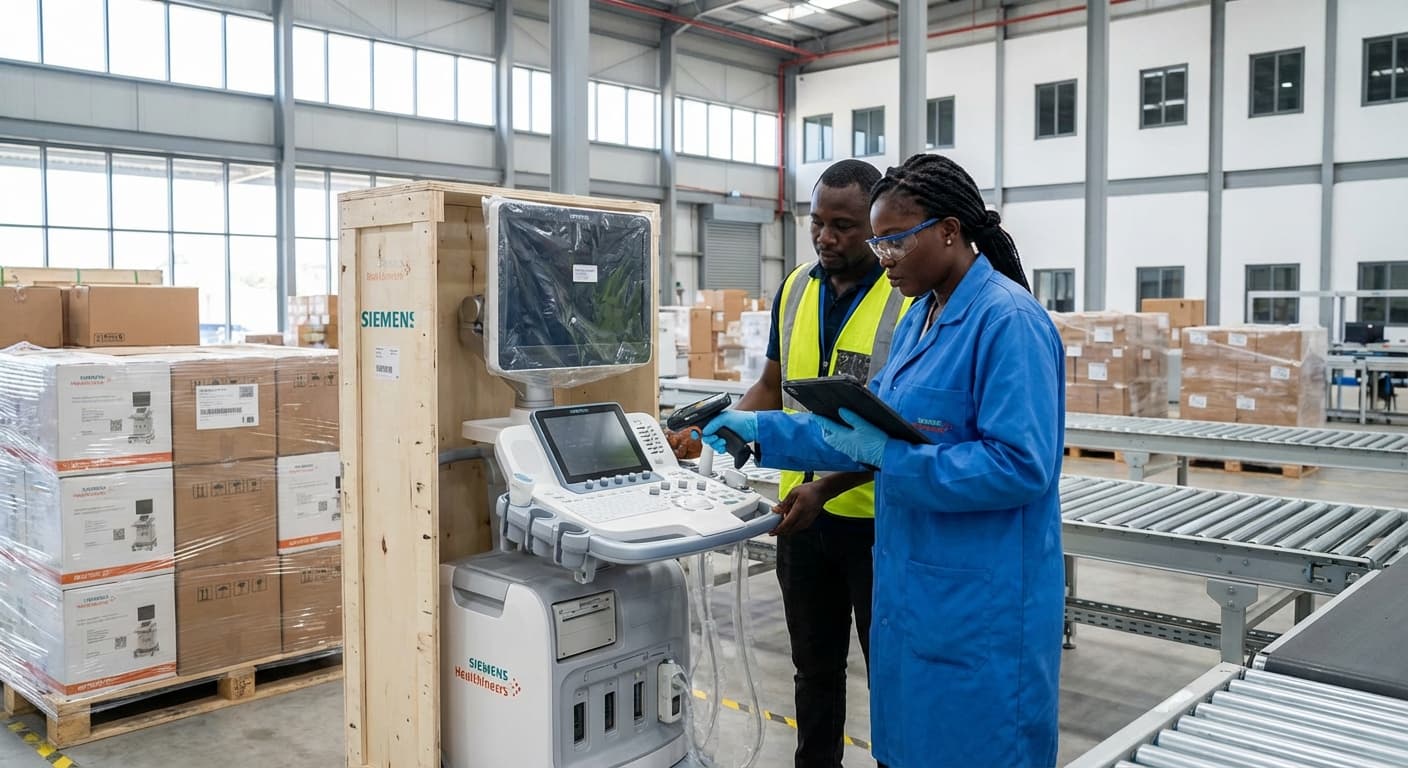
Warehouse Receiving Inspection Service (Medical Equipment) in Nigeria
Engineering Excellence & Technical Support
Warehouse Receiving Inspection Service (Medical Equipment) High-standard technical execution following OEM protocols and local regulatory frameworks.
End-to-End Supply Chain Visibility
Leveraging blockchain and IoT sensors, we provide real-time, tamper-proof tracking of medical equipment from manufacturer to your warehouse in Nigeria. This ensures chain of custody and immediate identification of any deviations or compromises.
AI-Powered Anomaly Detection
Our advanced AI algorithms analyze inspection data, including visual and functional checks, to detect subtle anomalies and potential defects that may be missed by human inspectors, ensuring only compliant medical equipment enters your inventory.
ISO 13485 Compliant Inspection Protocols
Our rigorous inspection procedures are designed to meet and exceed ISO 13485 standards, guaranteeing the quality, safety, and efficacy of all incoming medical equipment in accordance with international best practices and Nigerian regulatory requirements.
What Is Warehouse Receiving Inspection Service (Medical Equipment) In Nigeria?
Warehouse Receiving Inspection Service (Medical Equipment) in Nigeria is a critical quality assurance process undertaken upon the arrival of medical equipment into a designated warehouse facility. Its primary objective is to verify that the received medical equipment conforms to specified standards, regulatory requirements, contractual agreements, and the original purchase order, prior to its integration into the inventory or subsequent distribution. This service mitigates risks associated with receiving non-compliant, damaged, or incorrect medical equipment, thereby safeguarding patient safety, ensuring operational efficiency, and maintaining regulatory adherence within the Nigerian healthcare ecosystem.
| Stakeholder Category | Requirement | Rationale |
|---|---|---|
| Hospitals and Clinics | Ensuring the procurement of safe, effective, and compliant medical equipment for patient care. | Prevents the use of substandard, damaged, or incorrect equipment that could lead to adverse patient outcomes, clinical errors, and regulatory penalties. |
| Medical Equipment Distributors and Suppliers | Verifying the quality and accuracy of equipment before it is delivered to end-users. | Mitigates the risk of receiving and distributing faulty or non-compliant products, thereby protecting their reputation and avoiding costly returns and liabilities. |
| Procurement Agencies (Government and Private) | Ensuring that public funds are utilized for the acquisition of quality-assured medical devices. | Upholds accountability and transparency in the procurement process, ensuring value for money and compliance with tender specifications. |
| Third-Party Logistics (3PL) Providers and Warehouse Operators | Confirming the integrity and correctness of goods received into their facilities. | Facilitates accurate inventory management, reduces disputes with suppliers, and ensures that stored goods meet required standards for downstream operations. |
| Regulatory Bodies (e.g., NAFDAC) | Indirectly supported by ensuring that only compliant medical equipment enters the market. | Facilitates the enforcement of medical device regulations and standards by providing an upstream quality gate. |
Key Activities and Components:
- Documentation Verification: Cross-referencing incoming shipments against purchase orders, invoices, bills of lading, certificates of origin, and other relevant shipping and commercial documents.
- Physical Inspection: Conducting a thorough visual and tactile examination of the equipment for any signs of physical damage (e.g., dents, scratches, broken components, compromised packaging), contamination, or tampering.
- Quantity Verification: Confirming the exact number of units received against the documented quantities.
- Specification Compliance Check: Ensuring that the received equipment precisely matches the ordered specifications, including model numbers, serial numbers, configurations, technical parameters, and accessories.
- Regulatory Compliance Assessment: Verifying that the equipment meets relevant Nigerian regulatory standards and certifications mandated by bodies such as NAFDAC (National Agency for Food and Drug Administration and Control) and relevant medical device regulations.
- Functional Testing (where applicable): Performing initial basic operational checks to ascertain if the equipment powers on and exhibits fundamental functionalities, without compromising the integrity of sealed packaging for sensitive items.
- Packaging Integrity Assessment: Evaluating the condition of the packaging to ensure it is suitable for storage and transportation, and that it has not been compromised during transit.
- Labeling and Identification Verification: Checking that all labels, including serial numbers, model numbers, safety warnings, and manufacturer information, are present, legible, and accurate.
- Discrepancy Reporting: Documenting and reporting any deviations, damages, or non-conformities identified during the inspection process to the relevant stakeholders (e.g., supplier, logistics provider, procurement department).
- Acceptance or Rejection Recommendation: Providing a formal recommendation for acceptance or rejection of the shipment based on the inspection findings.
Who Needs Warehouse Receiving Inspection Service (Medical Equipment) In Nigeria?
In Nigeria's burgeoning healthcare sector, ensuring the integrity and safety of medical equipment upon arrival is paramount. Warehouse Receiving Inspection Service for medical equipment offers a critical layer of quality assurance, preventing faulty or non-compliant devices from entering the supply chain and reaching patients. This service is indispensable for a wide range of organizations and departments that handle, procure, or utilize medical equipment, acting as a gatekeeper against potential health risks and financial losses.
| Target Customer Type | Key Departments/Functions Involved | Why Inspection is Crucial |
|---|---|---|
| Government Health Sector | Ministry of Health, National Agency for Food and Drug Administration and Control (NAFDAC) - relevant divisions, Public Health Facilities | Ensuring public safety, preventing corruption in procurement, adherence to national standards, safeguarding taxpayer funds. |
| Private Healthcare Providers | Procurement Department, Biomedical Engineering Department, Quality Assurance Department, Clinical Departments (e.g., Surgery, Diagnostics) | Maintaining patient safety and trust, minimizing equipment downtime, reducing costly repairs, compliance with regulatory requirements. |
| International Organizations/NGOs | Procurement & Logistics, Program Management, Medical Affairs | Ensuring effectiveness of aid, accountability for donor funds, reaching beneficiaries with safe and functional equipment. |
| Manufacturers & Distributors | Quality Control, Supply Chain Management, Sales & Marketing | Protecting brand reputation, ensuring product compliance with import regulations, minimizing post-sale issues, facilitating smooth market entry. |
| Research & Academic Institutions | Procurement, Research Laboratories, Biomedical Engineering, Department Heads | Guaranteeing accuracy and reliability of research data, preventing damage to sensitive experiments, ensuring safety of personnel. |
| Logistics & Warehousing Providers | Warehouse Management, Quality Control, Operations | Fulfilling contractual obligations for clients, preventing loss or damage to high-value goods, maintaining a reputation for reliable service. |
Who Needs Warehouse Receiving Inspection Service (Medical Equipment) in Nigeria? Target Customers & Departments
- Government Ministries and Agencies: Responsible for national health initiatives, public hospitals, and procurement of essential medical supplies.
- Private Hospital Chains & Independent Hospitals: Rely on a consistent supply of reliable medical equipment for patient care and diagnosis.
- International Aid Organizations & NGOs: Procure and distribute medical equipment for healthcare programs and emergency relief efforts.
- Medical Equipment Manufacturers & Distributors (Local & International): Need to ensure their products meet quality standards and are handled correctly upon arrival in Nigeria before reaching end-users.
- Tertiary Healthcare Institutions (University Teaching Hospitals): Often at the forefront of advanced medical procedures, requiring highly specialized and meticulously inspected equipment.
- Diagnostic Laboratories & Imaging Centers: Depend on accurate and functional equipment for precise results.
- Pharmacies (with dispensing equipment): While primarily dealing with pharmaceuticals, some larger pharmacies may also handle specialized medical devices that require inspection.
- Research Institutions: Require calibrated and functioning equipment for scientific endeavors.
- Logistics & Warehousing Companies (specializing in healthcare): Offer storage and distribution services for medical equipment and must ensure the quality of goods they handle.
- Healthcare Procurement Departments: The central point for acquiring medical equipment across various organizations.
Warehouse Receiving Inspection Service (Medical Equipment) Process In Nigeria
This document outlines the standard workflow for a Warehouse Receiving Inspection Service for Medical Equipment in Nigeria, from the initial inquiry by a client to the final execution and reporting of the inspection.
Key Objectives: To ensure that received medical equipment meets specified quality standards, adheres to regulatory requirements, and is free from damage or defects before being accepted into the warehouse. This process is crucial for maintaining the integrity of medical supplies, preventing financial losses, and ensuring patient safety.
| Stage | Description | Key Activities | Responsible Parties | Documentation/Output |
|---|---|---|---|---|
| Inquiry and Initial Consultation | The client (e.g., hospital, medical distributor, government agency) expresses interest in the inspection service and provides initial details about their needs. | Client contacts inspection service provider. Initial discussion of scope, equipment types, volume, and location. Clarification of client's specific requirements and regulatory context (NAFDAC, etc.). | Client, Inspection Service Provider | Initial email/phone communication records, meeting minutes (if applicable). |
| Proposal and Quotation | The inspection service provider develops a tailored proposal and quotation based on the client's requirements. | Assessment of scope of work, required resources (inspectors, equipment, time). Development of a detailed proposal outlining services, methodology, timeline, and deliverables. Preparation of a formal quotation with pricing. | Inspection Service Provider | Formal Proposal Document, Quotation/Price List. |
| Agreement and Contract | Both parties agree on the terms and conditions, and a formal contract is established. | Review and negotiation of proposal/quotation. Signing of a Service Level Agreement (SLA) or contract. Clarification of payment terms, confidentiality, and liability. | Client, Inspection Service Provider | Signed Contract/SLA, Purchase Order (PO). |
| Pre-Inspection Planning | Preparation for the on-site inspection, ensuring all necessary information and resources are in place. | Confirmation of inspection date(s) and time(s). Gathering of relevant documentation (e.g., packing lists, invoices, quality certificates, manufacturer specifications). Briefing of inspection team on equipment types, potential risks, and client expectations. Preparation of inspection checklists and forms. | Inspection Service Provider, Client (for information provision) | Inspection Plan, Pre-inspection Checklist, Communication logs. |
| On-Site Inspection Execution | The physical inspection of the medical equipment upon arrival at the warehouse. | Verification of shipment against documentation (packing list, invoice). Visual inspection for damage (packaging and product). Verification of product identity, model, serial numbers. Sampling and testing (if applicable, based on scope). Checking for compliance with relevant Nigerian standards and regulations (e.g., NAFDAC registration, expiry dates). Documentation of findings (photos, notes). | Inspection Team (from Service Provider) | Inspection Checklists, Field Notes, Photographs, Equipment Logs. |
| Reporting and Documentation | Compilation of all findings into a comprehensive inspection report. | Analysis of inspection data and findings. Preparation of a detailed inspection report including observations, non-conformities, and recommendations. Submission of the report to the client. | Inspection Service Provider | Formal Inspection Report, Certificate of Inspection (if applicable), Photographic evidence. |
| Follow-up and Resolution | Addressing any issues or non-conformities identified during the inspection. | Client reviews the report and provides feedback. Discussion of any non-conformities. Facilitation of corrective actions if required (e.g., replacement, repair, return of goods). Final closure of the service engagement. | Client, Inspection Service Provider | Correspondence regarding findings, Corrective Action Reports (CARs), Payment confirmation, Final invoice. |
Workflow Stages for Warehouse Receiving Inspection Service (Medical Equipment) in Nigeria
- Inquiry and Initial Consultation
- Proposal and Quotation
- Agreement and Contract
- Pre-Inspection Planning
- On-Site Inspection Execution
- Reporting and Documentation
- Follow-up and Resolution
Warehouse Receiving Inspection Service (Medical Equipment) Cost In Nigeria
The cost of warehouse receiving inspection services for medical equipment in Nigeria can vary significantly depending on several factors. These services are crucial to ensure the integrity, functionality, and compliance of incoming medical devices before they are stored or distributed. The pricing is typically influenced by the complexity of the equipment, the volume of goods, the geographical location of the warehouse, the thoroughness of the inspection, and the expertise of the inspection firm.
| Service Type/Equipment Complexity | Estimated Cost Range (NGN) | Notes |
|---|---|---|
| Basic Visual Inspection (Low complexity items - e.g., consumables, basic instruments) | ₦15,000 - ₦50,000 per shipment/batch | Focuses on packaging integrity, labeling, and general condition. May be volume-dependent. |
| Standard Inspection (Medium complexity items - e.g., diagnostic tools, monitors) | ₦50,000 - ₦150,000 per shipment/batch | Includes visual checks, basic functional tests, and verification of accessories. |
| Comprehensive Inspection (High complexity/sensitive equipment - e.g., imaging machines, critical care devices) | ₦150,000 - ₦500,000+ per item/shipment | Involves detailed functional testing, calibration checks, regulatory compliance verification, and specialized diagnostics. Often quoted per item. |
| Per Hour/Daily Rate (for specialized consultations or ad-hoc inspections) | ₦25,000 - ₦75,000 per hour/day per inspector | Depends on the technician's expertise and the required equipment. |
| Volume Discounts | Negotiable | Typically offered for large, recurring shipments. |
| Travel & Accommodation (if applicable) | Actual costs + markup | Added for inspections outside the primary service area. |
Key Pricing Factors for Medical Equipment Warehouse Receiving Inspection in Nigeria:
- {"title":"Type and Complexity of Medical Equipment","description":"High-tech, sensitive, or complex medical devices (e.g., MRI machines, ventilators, surgical robots) require more specialized knowledge, diagnostic tools, and time for inspection compared to simpler items like stethoscopes or bandages. This directly impacts labor costs and the need for specific expertise."}
- {"title":"Volume of Equipment Being Inspected","description":"Inspection firms often offer tiered pricing based on the number of items or the total value of the shipment. Larger volumes may lead to a lower per-unit cost due to economies of scale, but the overall project cost will be higher."}
- {"title":"Scope and Depth of Inspection","description":"Basic visual inspections are less expensive than comprehensive functional testing, calibration checks, sterility verification, or regulatory compliance assessments. The client's specific requirements will dictate the level of detail and therefore the cost."}
- {"title":"Geographical Location","description":"The cost of operations, including transportation and labor rates, can differ between major economic hubs (like Lagos, Abuja) and more remote areas. Travel and accommodation expenses for inspectors in remote locations will add to the overall cost."}
- {"title":"Turnaround Time (Urgency)","description":"Expedited inspection services, often required for time-sensitive shipments, will typically command a premium price."}
- {"title":"Reporting Requirements","description":"Detailed reports with photographic evidence, specific test results, and recommendations will be more costly than a simple sign-off sheet."}
- {"title":"Credentials and Experience of Inspection Firm","description":"Reputable inspection agencies with certified technicians, specialized equipment, and a strong track record in medical equipment inspection will generally charge higher fees than less experienced or smaller operations."}
- {"title":"Additional Services","description":"Services beyond basic receiving inspection, such as sampling, testing, re-packaging, or storage, will incur additional charges."}
Affordable Warehouse Receiving Inspection Service (Medical Equipment) Options
Finding an affordable warehouse receiving inspection service for medical equipment is crucial for ensuring product integrity, regulatory compliance, and preventing costly errors. This service focuses on verifying the condition, accuracy, and documentation of incoming medical devices before they enter storage or are distributed. Several strategies and service models can help manage costs effectively.
| Value Bundle Option | Description | Cost-Saving Strategies |
|---|---|---|
| Basic Inspection Package | Covers essential checks like document verification, visual damage assessment, and serial number/lot number confirmation. Ideal for routine, lower-risk equipment. | Leverages standardized checklists, batch processing of inspections, and basic digital reporting. Can be more cost-effective for high-volume, low-complexity items. |
| Compliance-Focused Bundle | Includes all basic checks plus in-depth documentation review (regulatory compliance certificates, sterilization records), environmental monitoring, and adherence to specific SOPs. Essential for high-risk or highly regulated equipment. | Streamlined digital workflows for documentation upload and verification, automated alerts for critical parameters, and dedicated compliance specialists. Reduced risk of fines and recalls offers significant long-term savings. |
| Customizable Service Tiers | Offers a modular approach allowing clients to select specific inspection points and services based on their equipment type, risk profile, and regulatory requirements. Flexibility to scale services up or down. | Pay-per-service model prevents overspending on unnecessary checks. Clients can combine basic and advanced services as needed. Negotiated rates for long-term contracts or high-volume commitments. |
| On-Demand or Spot Inspection Service | Designed for businesses with fluctuating receiving volumes or occasional needs for specialized inspections. Provides flexibility without long-term commitments. | Eliminates fixed overhead costs associated with in-house inspection teams. Pay only for services rendered, ideal for businesses with unpredictable supply chains. |
| Integrated Technology Solutions | Bundles inspection services with advanced technology like barcode scanning, RFID tracking, and cloud-based reporting platforms. Enhances accuracy and efficiency. | Automates data entry, reduces manual errors, and provides real-time visibility, leading to faster issue resolution and reduced rework. Long-term efficiency gains translate to cost savings. |
Key Components of Warehouse Receiving Inspection (Medical Equipment)
- Verification of shipping documentation against actual received items.
- Visual inspection for physical damage (packaging and product).
- Confirmation of product specifications, serial numbers, and lot numbers.
- Temperature and humidity monitoring for sensitive equipment.
- Review of accompanying documentation (certificates of analysis, sterile packaging integrity, etc.).
- Adherence to Good Manufacturing Practices (GMP) and Good Distribution Practices (GDP).
- Identification and segregation of non-conforming products.
- Digital recording and reporting of inspection findings.
Verified Providers In Nigeria
Navigating the healthcare landscape in Nigeria can be challenging, with a paramount concern being access to reliable and trustworthy medical services. This is where 'Verified Providers' emerge as a critical solution, offering a benchmark for quality, ethical practice, and patient-centered care. Among these, Franance Health stands out not just as a provider, but as a beacon of excellence, demonstrating a profound commitment to upholding the highest standards in healthcare delivery. Their credentials are not mere certifications; they are testaments to a dedication to patient well-being, operational integrity, and continuous improvement, making them the discerning choice for individuals seeking superior medical attention in Nigeria.
| Credential Type | Issuing Body | Verification Aspect | Franance Health's Commitment |
|---|---|---|---|
| Medical Practice License | Medical and Dental Council of Nigeria (MDCN) | Legal authorization to practice medicine, ensuring practitioners meet educational and ethical requirements. | All medical doctors and dentists at Franance Health hold current, unblemished MDCN licenses, regularly verified. |
| Facility Accreditation | Federal Ministry of Health / State Ministries of Health | Ensures healthcare facilities meet standards for safety, hygiene, equipment, and operational management. | Franance Health facilities undergo regular inspections and hold necessary accreditations, demonstrating compliance with national health regulations. |
| Specialty Board Certification | Recognized Medical Specialty Boards (e.g., West African College of Physicians/Surgeons) | Confirms advanced knowledge and expertise in a specific medical discipline. | Specialist physicians at Franance Health are board-certified, signifying a high level of specialized competence. |
| Pharmaceutical License | Pharmaceutical Council of Nigeria (PCN) | Governs the safe and ethical distribution and dispensing of medications. | Pharmacies within Franance Health operate under strict PCN regulations, ensuring medication safety and quality. |
| Nursing Practice License | Nursing and Midwifery Council of Nigeria | Ensures nurses and midwives meet educational and professional standards for patient care. | All nursing staff at Franance Health are licensed and actively participate in ongoing professional development. |
Why Franance Health is the Best Choice for Verified Healthcare in Nigeria
- Rigorous Accreditation and Compliance: Franance Health undergoes stringent vetting processes by recognized healthcare bodies, ensuring adherence to national and international standards. This includes compliance with regulations set by the Medical and Dental Council of Nigeria (MDCN), Pharmaceutical Council of Nigeria (PCN), and other relevant authorities. Their facilities are regularly inspected and audited to maintain these high benchmarks.
- Experienced and Certified Medical Professionals: The cornerstone of Franance Health's excellence lies in its team. All practitioners, from doctors and nurses to specialists and allied health professionals, are fully licensed, board-certified, and possess extensive experience in their respective fields. Continuous professional development is a mandatory aspect of their employment, keeping them abreast of the latest medical advancements and best practices.
- Patient-Centric Care Philosophy: Franance Health prioritizes patient comfort, dignity, and active participation in their healthcare journey. This is reflected in their transparent communication, personalized treatment plans, and the availability of comprehensive patient support services. Their commitment to patient satisfaction is often highlighted in independent reviews and patient testimonials.
- State-of-the-Art Facilities and Technology: Investment in modern medical equipment and diagnostic tools is a key differentiator. Franance Health's facilities are designed to provide a safe, clean, and efficient environment for diagnosis and treatment, ensuring accurate results and effective interventions. This technological edge contributes significantly to better patient outcomes.
- Ethical Practice and Data Privacy: Upholding the highest ethical standards is non-negotiable for verified providers. Franance Health demonstrates unwavering commitment to patient confidentiality, informed consent, and ethical medical decision-making. Robust data security measures are in place to protect sensitive patient information, fostering trust and security.
- Accessibility and Affordability: While maintaining premium quality, Franance Health strives to make its services accessible to a broader population. They often explore partnerships with insurance providers and offer various payment options, demonstrating a commitment to inclusive healthcare.
Scope Of Work For Warehouse Receiving Inspection Service (Medical Equipment)
This Scope of Work (SOW) outlines the services required for comprehensive receiving inspection of medical equipment. The objective is to ensure that all incoming medical equipment meets the specified quality, safety, and functional standards before being accepted into inventory. This SOW details the technical deliverables, standard specifications, and general procedures for conducting these inspections.
| Inspection Area | Standard Specifications | Inspection Methodologies | Acceptance Criteria |
|---|---|---|---|
| Visual Inspection | No visible damage (dents, scratches, cracks, corrosion), proper labeling (serial numbers, model numbers, safety certifications), correct configuration as per Purchase Order (PO), intact packaging. | Manual inspection, close-up examination, comparison with PO and manufacturer documentation, verification of labels and markings. | Equipment and packaging must be free from cosmetic and structural damage. All identifying labels and markings must be present, legible, and accurate. Configuration must match PO. |
| Documentation Review | Completeness and accuracy of user manuals, service manuals, warranty information, certificates of calibration/test, and any required regulatory compliance documents (e.g., FDA clearance, CE marking). | Manual review of all provided documents against a checklist derived from PO requirements and regulatory standards. | All required documentation must be present, accurate, and up-to-date. Regulatory compliance documentation must be valid and applicable. |
| Functional Testing (Basic) | Verification of basic operational functions as per manufacturer's specifications and intended use. This may include power-on, basic menu navigation, core feature activation (e.g., light activation for a surgical lamp, pressure display for a pump). | Controlled activation of key features following manufacturer's guidelines or pre-defined test protocols. Use of calibrated test equipment where applicable for basic parameter verification. | All tested basic functions must operate as intended without errors or anomalies. Performance parameters, if measured, must fall within manufacturer's specified tolerances. |
| Dimensional & Mechanical Checks | Verification of key dimensions, component fit, and mechanical integrity. Includes checking for loose parts, proper assembly, and smooth operation of moving parts. | Use of calibrated measuring tools (calipers, rulers, micrometers) for critical dimensions. Manual manipulation of movable components. | Critical dimensions must be within +/- specified tolerances. All components must be securely assembled, and moving parts should operate smoothly and without excessive play or binding. |
| Electrical Safety (Basic) | Verification of grounding continuity, insulation resistance (if specified), and visual inspection of power cords and connectors for damage. | Use of calibrated electrical safety testers (e.g., for ground bond and insulation resistance). Visual inspection of electrical components. | Grounding continuity and insulation resistance must meet established safety standards (e.g., IEC 60601 series). Power cords and connectors must be undamaged and properly seated. |
| Accessory Verification | Confirmation of all included accessories, attachments, and consumables as specified in the PO and manufacturer's list. | Visual inspection and counting of all delivered accessories against the PO and packing list. | All specified accessories must be present, in good condition, and compatible with the main equipment. |
Technical Deliverables
- Receiving Inspection Reports (RIR): Detailed reports for each inspection, documenting findings, measurements, test results, and any deviations from specifications. These reports will include photographic evidence where applicable.
- Non-Conformance Reports (NCR): Formal documentation for any equipment failing to meet specified requirements, including detailed descriptions of the non-conformance, proposed corrective actions, and recommendations for disposition.
- Certificate of Conformance (CoC): Issued for equipment that successfully passes all inspection criteria, confirming adherence to specified standards.
- Summary Inspection Metrics: Regular reports (e.g., weekly, monthly) summarizing key inspection metrics such as pass/fail rates, common non-conformances, and supplier performance.
- Digital Inspection Records: All inspection data, reports, and supporting documentation will be maintained in a secure digital format, accessible via a designated platform.
Service Level Agreement For Warehouse Receiving Inspection Service (Medical Equipment)
This Service Level Agreement (SLA) outlines the guaranteed response times and uptime for the Warehouse Receiving Inspection Service provided for medical equipment. This SLA aims to ensure timely and accurate inspection of incoming medical equipment to maintain quality control and compliance within the supply chain.
| Service Metric | Guaranteed Response Time / Uptime | Definition | Notes |
|---|---|---|---|
| Initial Inspection Request Acknowledgment | 2 Business Hours | Time from request submission to Service Provider acknowledgment and initiation of inspection. | Business Hours are defined as Monday to Friday, 8:00 AM to 5:00 PM Local Time, excluding public holidays. |
| Standard Inspection Completion | 24 Business Hours (for standard inspection scope) | Time from inspection commencement to delivery of the final inspection report. | This applies to routine inspections. Complex or multi-stage inspections may have separate, agreed-upon timelines. |
| Critical Issue Notification | 1 Business Hour (from identification) | Time from identification of a critical issue to Service Provider initiating communication with the Client. | Critical issues include but are not limited to: damaged goods, incorrect quantity, non-conforming product, or safety concerns. |
| Inspection System Uptime | 99.5% | Percentage of time the inspection management system and primary communication channels are available. | Downtime excludes scheduled maintenance with prior notification, and force majeure events. |
| Report Delivery Availability | 24/7 | The inspection management system will be available for report submission and retrieval at all times. | Except during scheduled maintenance. |
Key Service Metrics and Guarantees
- Response Time for Initial Inspection Request: The time from when a receiving inspection request is submitted to the Service Provider until the Service Provider acknowledges receipt and initiates the inspection process.
- Inspection Completion Time: The time from the commencement of the inspection until the final inspection report is delivered to the Client.
- Critical Issue Response Time: The time from when a critical issue is identified during inspection until the Service Provider initiates communication with the Client to discuss the issue and propose corrective actions.
- System Uptime Guarantee: The percentage of time the Service Provider's inspection management system and communication channels are available and operational for request submission and report delivery.
Frequently Asked Questions

Ready when you are
Let's scope your Warehouse Receiving Inspection Service (Medical Equipment) in Nigeria project in Nigeria.

Scaling healthcare logistics and technical systems across the entire continent.