
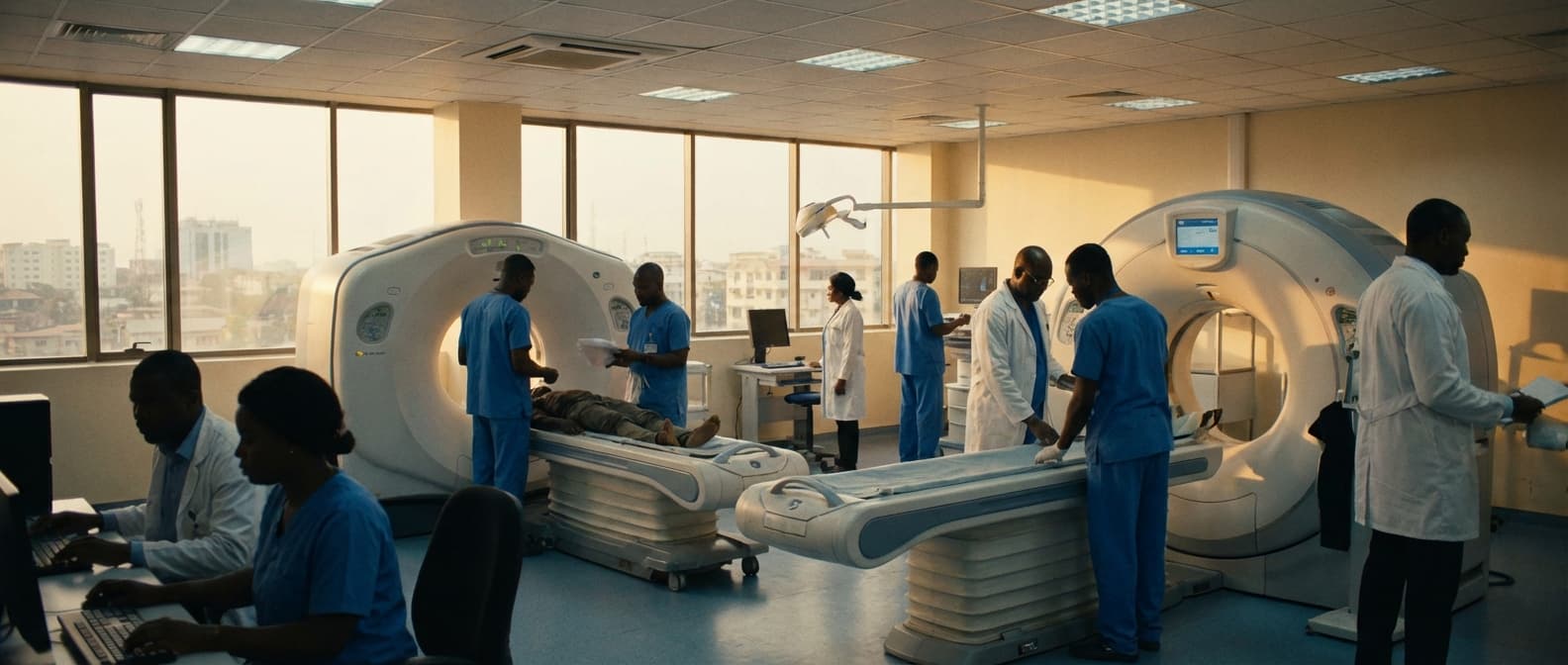
Radiology Room Design & Shielding Calculation in Nigeria
Engineering Excellence & Technical Support
Turnkey room planning, shielding drawings and approvals for imaging suites. High-standard technical execution following OEM protocols and local regulatory frameworks.
Optimized Radiology Workflow Design
Leveraging advanced CAD software, we meticulously design radiology rooms in Nigeria, ensuring optimal patient flow, staff ergonomics, and equipment placement. Our designs prioritize radiation safety protocols and efficient operational layouts, contributing to faster diagnoses and enhanced patient care within the Nigerian healthcare landscape.
Precise Radiation Shielding Calculations (Nigerian Standards)
We conduct rigorous, site-specific radiation shielding calculations for X-ray, CT, and MRI rooms, adhering to relevant international standards and considering local building materials and occupancy factors prevalent in Nigeria. Our expertise guarantees compliance and ensures the safety of both patients and medical personnel from unnecessary radiation exposure.
Comprehensive Shielding Material Consultation & Verification
Beyond calculations, we provide expert consultation on appropriate shielding materials (lead, concrete, etc.) suited for the Nigerian climate and construction practices. Our team verifies the effectiveness of installed shielding through on-site measurements, ensuring the highest level of radiation protection in newly established or upgraded radiology facilities across Nigeria.
What Is Radiology Room Design & Shielding Calculation In Nigeria?
Radiology room design and shielding calculation in Nigeria is a specialized engineering and architectural service focused on the safe and effective installation of diagnostic imaging equipment, primarily X-ray, CT, and fluoroscopy systems. This involves the meticulous planning of the physical space, including layout, ventilation, and access, coupled with precise calculations to determine the necessary radiation shielding for walls, doors, windows, and other structural elements. The primary objective is to protect patients, staff, and the general public from unnecessary ionizing radiation exposure, ensuring compliance with national and international radiation safety standards, such as those set by the Nigerian Nuclear Regulatory Authority (NNRA).
| Who Needs This Service? | Typical Use Cases |
|---|---|
| Hospitals (public and private) | New construction or renovation of diagnostic imaging suites (X-ray rooms, CT suites, fluoroscopy rooms, mammography suites, interventional radiology suites). |
| Diagnostic Imaging Centers | Installation of new imaging equipment requiring dedicated shielded rooms. |
| Specialized Clinics (e.g., Orthopedic, Cardiology, Oncology) | Establishing in-house diagnostic imaging capabilities. |
| Veterinary Clinics (offering advanced imaging) | Equipping veterinary facilities with X-ray or CT scanners. |
| Research Institutions | Setting up research facilities involving ionizing radiation sources for imaging studies. |
| Equipment Manufacturers and Suppliers | Ensuring their installed equipment meets regulatory safety requirements in Nigeria. |
| Construction Companies and Architects | Integrating specialized radiology room requirements into building designs. |
Key Components of Radiology Room Design & Shielding Calculation
- Room Layout and Ergonomics: Optimizing workflow, patient comfort, and staff efficiency. This includes considerations for equipment placement, control areas, viewing stations, and patient access.
- Radiation Shielding Calculations: Determining the required thickness and type of shielding materials (e.g., lead, concrete, baryte plaster) based on factors like radiation energy, beam orientation, workload (equipment utilization), occupancy factors of adjacent areas, and distance from the radiation source.
- Structural Integrity and Integration: Ensuring the room's structure can support the weight of shielding materials and equipment, and integrating necessary utilities (electrical, HVAC, plumbing).
- Ventilation and Environmental Control: Providing adequate air exchange to maintain a comfortable and safe environment, especially considering heat generated by imaging equipment.
- Lighting and Acoustics: Designing appropriate lighting levels for procedures and general use, and managing acoustic reverberation for clear communication.
- Compliance with Regulations: Adhering to the safety standards and guidelines stipulated by the Nigerian Nuclear Regulatory Authority (NNRA) and other relevant bodies.
- Documentation and Reporting: Providing detailed reports including design drawings, shielding calculations, material specifications, and construction guidelines.
Who Needs Radiology Room Design & Shielding Calculation In Nigeria?
In Nigeria, the demand for specialized radiology room design and shielding calculation is crucial for a growing number of healthcare facilities aiming to provide safe and high-quality diagnostic imaging services. This expertise ensures compliance with radiation safety regulations, protects both patients and staff from unnecessary radiation exposure, and optimizes the functionality and efficiency of radiology departments. The need spans various healthcare settings, from public hospitals to private clinics and research institutions.
| Target Customer/Department | Specific Needs & Justification for Design & Shielding | Examples of Modalities Implemented |
|---|---|---|
| Hospitals (Public and Private) | Establishment or upgrade of new radiology suites to accommodate increased patient load and diverse imaging needs. Ensuring compliance with national radiation safety standards. Optimizing workflow and patient comfort. Minimizing radiation dose to staff during procedures. | X-ray (General Radiography, Fluoroscopy), CT Scans, MRI, Mammography, Ultrasound, Interventional Radiology |
| Diagnostic Imaging Centers | Expansion of services or building new facilities to serve a wider patient population. Creating specialized rooms for high-volume modalities. Enhancing diagnostic accuracy through optimal equipment placement and environmental control. Meeting regulatory requirements for licensing and operation. | CT Scans, MRI, Digital X-ray, Mammography, Bone Densitometry (DXA), Interventional Radiology |
| Specialty Clinics (e.g., Cardiology, Neurology, Orthopedics) | Integration of advanced imaging capabilities to support specialized diagnoses and treatments. Designing dedicated rooms for specific procedures that involve radiation, such as cardiac catheterization labs with integrated fluoroscopy. | Fluoroscopy (for interventional procedures), CT (for neurological or orthopedic assessment), MRI (for detailed anatomical imaging) |
| Research Institutions and Universities | Setting up or modernizing research laboratories that utilize medical imaging equipment for scientific studies. Ensuring radiation safety for researchers and study participants. Designing flexible spaces that can accommodate evolving research protocols and equipment. | Advanced CT scanners for research, MRI scanners for preclinical studies, specialized X-ray systems for material science or biological imaging |
| Government Health Agencies & Regulatory Bodies | Developing and enforcing radiation safety guidelines and standards for healthcare facilities. Conducting inspections and audits to ensure compliance. Providing technical expertise and training to healthcare providers on radiation protection. | Not directly implementing modalities, but responsible for setting standards and approving designs for all the above. |
| Radiology Departments (within larger institutions) | Reconfiguration of existing spaces to improve efficiency, accommodate new equipment, or enhance patient privacy and safety. Specific focus on shielding calculations for areas adjacent to imaging rooms to protect other departments and corridors. | All modalities listed above, with a focus on optimization of the department's layout and workflow. |
Target Customers and Departments in Nigeria Requiring Radiology Room Design & Shielding Calculation
- Hospitals (Public and Private)
- Diagnostic Imaging Centers
- Specialty Clinics
- Research Institutions and Universities
- Government Health Agencies
Radiology Room Design & Shielding Calculation Process In Nigeria
Designing and calculating radiation shielding for radiology rooms in Nigeria involves a systematic workflow, commencing from the initial client inquiry and culminating in the successful execution of the shielding measures. This process is crucial for ensuring the safety of patients, staff, and the general public from ionizing radiation. The workflow typically involves regulatory compliance, architectural integration, material selection, and precise calculation to meet national and international standards. Key stakeholders include radiologists, medical physicists, architects, contractors, and regulatory bodies like the Radiation Protection Service (RPS) of Nigeria.
| Stage | Key Activities | Responsible Parties | Deliverables | Nigerian Context Considerations |
|---|---|---|---|---|
| Receive client request for new radiology room or upgrade. Understand room type (X-ray, CT, Fluoroscopy, etc.), equipment specifications, patient volume, and workflow. Site visit if applicable. | Client (Hospital/Clinic Management), Radiologist, Project Manager | Project scope definition, preliminary equipment list, site assessment report. | Understanding local healthcare infrastructure, budget constraints, and availability of specific imaging modalities. |
| Identify relevant Nigerian regulations (e.g., from the Radiation Protection Service - RPS). Consult with RPS for initial guidance and permit requirements. Understand dose limits for staff and public. | Project Manager, Medical Physicist, Radiation Safety Officer (RSO), RPS Officials | Understanding of regulatory requirements, preliminary permit application (if required). | Adherence to RPS guidelines is paramount. Understanding the typical approval timelines for permits and licenses. |
| Collaborate with architects to incorporate shielding requirements into the room layout. Define wall thicknesses, door types, window specifications (e.g., lead-lined glass), and ventilation. | Architect, Radiologist, Medical Physicist, Project Manager | Radiology room layout drawings with proposed shielding, preliminary material list. | Considering space constraints within existing hospital structures, local building codes, and aesthetic requirements. |
| Perform detailed radiation survey (if existing facility) or calculate required shielding based on equipment output, workload, occupancy factors, and distance. Use established shielding calculation methods (e.g., NCRP, ICRP). | Medical Physicist, Radiation Protection Specialist | Detailed shielding calculation report, specific material requirements (e.g., lead thickness, concrete density/thickness). | Accurate workload estimation is critical, reflecting typical usage patterns in Nigerian healthcare settings. Availability of specialized shielding materials may influence design choices. |
| Specify exact materials (lead sheets, concrete mix, lead-lined drywall, leaded glass) and their dimensions. Source materials from reputable suppliers, ensuring quality and compliance with standards. | Project Manager, Procurement Department, Contractor, Medical Physicist (for verification) | Bill of Quantities (BOQ) for shielding materials, approved supplier list. | Ensuring the quality and authenticity of shielding materials. Exploring local sourcing options where feasible to reduce costs and lead times. |
| Install shielding materials according to the design specifications. Ensure seamless integration and absence of radiation leakage pathways. Conduct pre-operational checks and basic measurements. | Contractor, Site Supervisor, Medical Physicist, Radiation Protection Specialist | Installed shielding, preliminary verification reports. | Ensuring quality workmanship and adherence to specifications by local contractors. Training local labor on specific installation techniques for shielding materials. |
| Conduct comprehensive radiation protection surveys and measurements to verify shielding effectiveness. Obtain final approval from the RPS. Commission the radiology room for operational use. | RPS Officials, Medical Physicist, Radiation Protection Specialist, Radiologist, Project Manager | Final Radiation Protection Certificate, Commissioning Report, Operational License. | Thorough inspection by RPS is mandatory for licensing. Ensuring all documentation is in order for the RPS approval process. |
| Implement regular quality assurance (QA) checks, including shielding integrity. Maintain records of all radiation protection surveys, equipment maintenance, and staff training. | Radiation Safety Officer (RSO), Medical Physicist, Facility Management | QA reports, maintenance logs, training records, updated radiation safety manual. | Establishing a robust QA program and ensuring continuous training of staff on radiation safety protocols are vital for long-term safety. |
Radiology Room Design & Shielding Calculation Process Workflow in Nigeria
- Initial Client Inquiry & Needs Assessment
- Regulatory Compliance & Preliminary Consultation
- Architectural Design Integration
- Radiation Protection Survey & Shielding Calculation
- Material Specification & Procurement
- Shielding Installation & Verification
- Final Inspection & Commissioning
- Ongoing Monitoring & Record Keeping
Radiology Room Design & Shielding Calculation Cost In Nigeria
Designing a radiology room in Nigeria involves several critical considerations, with shielding calculation being a major component that directly impacts cost. The complexity of the room, the type of imaging equipment, and the desired level of radiation protection are primary drivers of expenses. These factors influence the amount and type of shielding materials required, the expertise needed for calculations and installation, and the overall project timeline. Local currency pricing is subject to market fluctuations, availability of specialized materials, and the contractor's pricing structure. Understanding these elements is crucial for accurate budgeting and project planning.
| Service Component | Estimated Price Range (NGN) | Notes |
|---|---|---|
| Radiation Shielding Calculation & Design (Consultancy Fee) | 500,000 - 3,000,000+ | Varies based on the complexity of the project, type of equipment, and the reputation/experience of the medical physicist. Includes initial calculations, design recommendations, and potentially site visits. |
| Lead Sheeting (per square meter, typically 1-3mm thickness) | 75,000 - 250,000+ | Price depends heavily on lead thickness, quality, and the current market price of lead. Importation costs can significantly impact this. |
| Reinforced Concrete (per cubic meter, high density for shielding) | 30,000 - 80,000+ | Includes materials (cement, aggregate, rebar) and labor for construction. Density and thickness are key for effectiveness. |
| Leaded Glass (per square meter) | 150,000 - 500,000+ | Cost varies with lead equivalency, thickness, and dimensions of the window. Specialized product, often imported. |
| Lead-Lined Doors (per door) | 400,000 - 1,500,000+ | Includes the door itself, the lead lining, and installation hardware. Custom sizes and specifications increase cost. |
| Installation Labor (per day/project) | 20,000 - 100,000+ | Skilled labor for installing lead, concrete work, and fitting specialized components. Project-based quotes are common. |
| Radiation Survey & Verification (Post-Installation) | 300,000 - 1,000,000+ | Essential for ensuring compliance. Performed by a qualified medical physicist using specialized equipment. |
| Total Estimated Cost for Shielding & Design (excluding room construction, equipment) | 2,000,000 - 10,000,000+ | This is a broad range. A simple diagnostic X-ray room might be at the lower end, while a CT or interventional suite would be significantly higher. Excludes the imaging equipment itself. |
Key Pricing Factors for Radiology Room Design & Shielding Calculation in Nigeria
- Type and Energy of X-ray/Gamma Ray Equipment: Higher energy equipment (e.g., CT scanners, linear accelerators) requires more extensive and robust shielding than lower energy diagnostic X-ray units.
- Room Dimensions and Layout: Larger rooms necessitate more shielding material, and complex layouts with multiple entrances or windows can increase installation complexity and cost.
- Occupancy Factor: The intended use of adjacent areas (e.g., occupied offices vs. storage rooms) dictates the required shielding levels according to international and local radiation safety standards.
- Workload (mA-min/week): The expected usage of the equipment influences the cumulative radiation dose and thus the shielding requirements.
- Distance from Source to Receptor: The distance between the radiation source and any occupied area or public space is a fundamental factor in shielding calculations. Greater distances allow for less shielding.
- Type of Shielding Material: Common materials include lead (Pb) sheeting, concrete, and sometimes specialized baryte concrete. The cost and availability of these materials in Nigeria are significant.
- Complexity of Shielding Design: Multi-layered shielding or incorporating specialized features (e.g., interlocking lead-lined doors, leaded glass windows) adds to the cost.
- Professional Expertise: Engaging qualified medical physicists and radiation protection consultants for accurate calculations, design, and verification is essential and constitutes a professional fee.
- Installation Labor Costs: The cost of skilled labor to install shielding materials can vary based on location and contractor.
- Regulatory Compliance and Inspections: Costs associated with meeting local health and safety regulations and undergoing mandatory inspections.
- Material Sourcing and Logistics: The cost of transporting specialized shielding materials to the project site, especially if sourced from outside Nigeria, can be substantial.
- Contingency: It's prudent to include a contingency for unforeseen issues or design adjustments.
Affordable Radiology Room Design & Shielding Calculation Options
Designing and outfitting a radiology room involves significant investment, particularly concerning radiation shielding. This guide explores affordable design options and provides a framework for calculating shielding needs, emphasizing value bundles and cost-saving strategies. Understanding the interplay between room layout, equipment, and shielding requirements is crucial for budget-conscious healthcare facilities.
| Value Bundle Concept | Cost-Saving Strategies | Associated Benefits |
|---|---|---|
| Integrated Design Packages: A bundle might include architectural design, shielding calculations, and basic equipment layout consultation from a single provider. | Leveraging a single point of contact streamlines communication and can offer package discounts. Avoids multiple consultant fees. | Faster design process, reduced coordination efforts, potential for bundled pricing discounts. |
| Shielding Material Packages: Negotiating bulk pricing with suppliers for optimized shielding materials (e.g., lead-lined drywall, concrete mixes). | Bulk purchasing power reduces material costs. Working with suppliers who offer integrated installation services. | Lower material acquisition costs, potentially simplified installation, ensured material compatibility. |
| Equipment & Shielding Synergy: Bundling the purchase of imaging equipment with the design and installation of its required shielding, often through equipment manufacturers or their partners. | Manufacturers may offer integrated solutions at a competitive price. Ensures shielding is precisely tailored to equipment specifications. | Optimized fit between equipment and shielding, potentially better warranty on integrated solutions, streamlined procurement. |
| Modular Room Kits: Pre-designed and pre-fabricated radiology room modules that include basic structural elements, wall framing, and integrated shielding components. | Reduces on-site labor and construction time. Factory prefabrication can lead to higher quality control. | Faster project completion, reduced on-site disruption, potentially lower labor costs. |
Key Considerations for Affordable Radiology Room Design & Shielding
- Standardization: Utilizing standardized room layouts and equipment specifications can lead to bulk purchasing discounts and streamlined installation processes.
- Modular Construction: Exploring modular or prefabricated elements for walls and shielding can offer faster construction times and potentially lower labor costs compared to traditional on-site building.
- Material Optimization: Carefully selecting shielding materials based on required attenuation levels, considering alternatives to lead where appropriate (e.g., concrete, specialized drywall), can significantly impact cost.
- Equipment Placement: Strategic placement of X-ray tubes and detectors can minimize the amount of shielding required by directing the primary beam away from occupied areas.
- Phased Implementation: For new facilities or expansions, consider a phased approach to equipment acquisition and room build-out, allowing for budget allocation over time.
- Consultant Collaboration: Engaging with experienced radiology designers and shielding consultants early in the process can prevent costly redesigns and ensure compliance with safety regulations.
- Rental/Leasing Options: For specialized equipment or temporary needs, exploring rental or leasing agreements can defer large capital expenditures.
Verified Providers In Nigeria
In Nigeria's rapidly evolving healthcare landscape, identifying and trusting reliable healthcare providers is paramount. Verified providers offer a crucial layer of assurance, ensuring that patients receive quality care from qualified professionals. Franance Health stands out as a leading platform dedicated to connecting Nigerians with such verified healthcare professionals. This document outlines Franance Health's stringent credentialing process and explains why choosing their network represents the most dependable option for your health needs.
| Benefit | Why Franance Health Excels | Impact on Patient Experience |
|---|---|---|
| Trust and Reliability | Franance Health's multi-layered verification process eliminates guesswork. We rigorously vet every provider, ensuring they meet the highest standards of professionalism and competence. | Patients can be confident they are engaging with legitimate and qualified healthcare professionals, reducing anxiety and promoting a sense of security. |
| Quality of Care Assurance | Our commitment to verifying credentials means that Franance Health providers are not only licensed but also possess the necessary skills and knowledge for effective treatment and diagnosis. | Leads to better health outcomes, accurate diagnoses, and effective treatment plans, minimizing the risk of misdiagnosis or substandard care. |
| Access to Specialized Expertise | Through our detailed verification, Franance Health accurately categorizes providers by their specialties. This allows for precise matching of patient needs with the right experts. | Ensures patients are connected with specialists who have the precise experience for their specific medical conditions, leading to more targeted and effective care. |
| Enhanced Patient Safety | Our background checks and continuous monitoring contribute significantly to a safer healthcare environment. We prioritize patient well-being above all else. | Minimizes the risk of encountering unqualified or fraudulent practitioners, thus safeguarding patients from potential harm or exploitation. |
| Informed Decision-Making | By providing transparent access to verified credentials and patient feedback, Franance Health empowers patients to make informed decisions about their healthcare providers. | Patients can confidently select a provider that best suits their needs and preferences, fostering a stronger patient-provider relationship. |
Franance Health's Verification Process: Ensuring Excellence
- Comprehensive Professional Licensing Checks: Franance Health meticulously verifies that all healthcare professionals on their platform hold valid and current licenses from the relevant regulatory bodies in Nigeria (e.g., Medical and Dental Council of Nigeria, Nursing and Midwifery Council of Nigeria).
- Academic and Professional Qualification Verification: We confirm the authenticity of educational degrees, certifications, and specialized training obtained by our providers from recognized institutions.
- Background Checks: To ensure patient safety and trust, Franance Health conducts thorough background checks on all affiliated professionals.
- Peer Reviews and Testimonials: We actively gather and display feedback from other healthcare professionals and patients, providing real-world insights into the quality of care offered.
- Continuous Professional Development Monitoring: Franance Health encourages and, where applicable, monitors the ongoing education and development of its providers, ensuring they remain up-to-date with the latest medical advancements and best practices.
- Specialty and Area of Practice Confirmation: We precisely define and verify the specific areas of expertise and specialties of each healthcare provider to match patients with the most appropriate care.
Scope Of Work For Radiology Room Design & Shielding Calculation
This Scope of Work (SOW) outlines the requirements for the design and shielding calculations of a radiology room. The objective is to ensure a safe and compliant environment for patients and staff, adhering to all relevant regulatory standards and best practices for radiation protection.
| Deliverable | Description | Standard Specification/Reference |
|---|---|---|
| Radiology Room Layout Drawings | Architectural drawings showing room configuration, equipment placement, control booth, etc. | Architectural drawing standards (e.g., AIA, RIBA), local building codes, departmental imaging modality requirements. |
| Shielding Calculation Report | Detailed analysis of radiation attenuation requirements and proposed shielding thicknesses. | NCRP Report No. 147, ICRP Publication 102, local radiation safety regulations, ANSI standards. |
| Shielding Material Specifications | Detailed material properties and quality control for shielding components. | ASTM standards for lead and concrete, manufacturer specifications, material certifications. |
| Door and Window Specifications | Requirements for radiation-shielded doors and viewing windows. | Lead equivalency ratings as per NCRP/ICRP, ANSI standards for doors and windows, manufacturer technical data. |
| Electrical and Mechanical Considerations | Outline of supporting systems essential for radiation safety and room functionality. | Local electrical and mechanical codes, ASHRAE standards (for ventilation), imaging equipment manufacturer recommendations. |
| Commissioning and Testing Plan | Methodology for verifying shielding effectiveness after installation. | NCRP Report No. 151, local radiation control agency requirements, standard testing procedures. |
| Compliance Documentation | Summary demonstrating adherence to all applicable regulations. | National Council on Radiation Protection and Measurements (NCRP) guidelines, International Commission on Radiological Protection (ICRP) recommendations, local/national radiation safety acts and regulations. |
Technical Deliverables
- Radiology Room Layout Drawings: Detailed architectural drawings indicating the room dimensions, equipment placement, door swing, control booth location, and general layout.
- Shielding Calculation Report: Comprehensive report detailing the methodology, input parameters (e.g., workload, use factor, occupancy factor, kVp, mA, beam angle), shielding materials, thicknesses, and attenuation calculations for all shielding elements (walls, ceiling, floor, door, viewing window).
- Shielding Material Specifications: Detailed specifications for all required shielding materials, including lead, concrete, baryte plaster, etc., ensuring compliance with industry standards.
- Door and Window Specifications: Detailed specifications for radiation-shielded doors and viewing windows, including lead equivalency, frame construction, and hardware.
- Electrical and Mechanical Considerations: Outline of necessary electrical and mechanical requirements for the radiology room, including ventilation, lighting, and power distribution relevant to radiation safety.
- Commissioning and Testing Plan: A plan for post-installation testing and commissioning to verify shielding effectiveness and adherence to design specifications.
- Compliance Documentation: Summary of how the design and calculations meet relevant national and international radiation safety standards and guidelines.
Service Level Agreement For Radiology Room Design & Shielding Calculation
This Service Level Agreement (SLA) outlines the performance standards for Radiology Room Design and Shielding Calculation services. It defines response times for inquiries and critical issues, as well as uptime guarantees for any associated digital platforms or consultation tools.
| Service Component | Response Time (Business Hours) | Resolution Target (Business Hours) | Uptime Guarantee (Digital Platforms/Tools) |
|---|---|---|---|
| Initial Inquiry/Information Request | 4 Business Hours | N/A (Information provided) | 99.5% |
| Request for Proposal (RFP) / Scope Clarification | 8 Business Hours | N/A (Information provided) | 99.5% |
| Critical Design/Shielding Issue (e.g., immediate safety concern, regulatory deadline imminent) | 2 Business Hours | 4 Business Hours | 99.9% |
| Non-Critical Design/Shielding Issue (e.g., minor modification, clarification of existing report) | 8 Business Hours | 24 Business Hours | 99.9% |
| Delivery of Design Deliverables (e.g., preliminary drawings, initial shielding report) | As per agreed project timeline | N/A (Delivery is a milestone) | 99.5% |
| Delivery of Final Design & Shielding Documentation | As per agreed project timeline | N/A (Delivery is a milestone) | 99.5% |
| Support for Digital Platforms/Tools (if applicable) | 4 Business Hours | 8 Business Hours | 99.9% |
Scope of Service
- Radiology Room Design: Conceptualization, layout planning, and workflow optimization for various radiology modalities (X-ray, CT, MRI, Mammography, Fluoroscopy, etc.).
- Shielding Calculation: Determination of required protective shielding (lead, concrete, etc.) for walls, doors, windows, and other structural elements to ensure radiation safety compliance with regulatory standards.
- Consultation: Expert advice on best practices, regulatory requirements, and emerging technologies in radiology room design and radiation safety.
- Documentation: Provision of design drawings, shielding reports, and compliance documentation.
- Platform Access: Access to any online tools, portals, or software used for design visualization, collaboration, or calculation review (if applicable).
Frequently Asked Questions

Ready when you are
Let's scope your Radiology Room Design & Shielding Calculation in Nigeria project in Nigeria.

Scaling healthcare logistics and technical systems across the entire continent.