
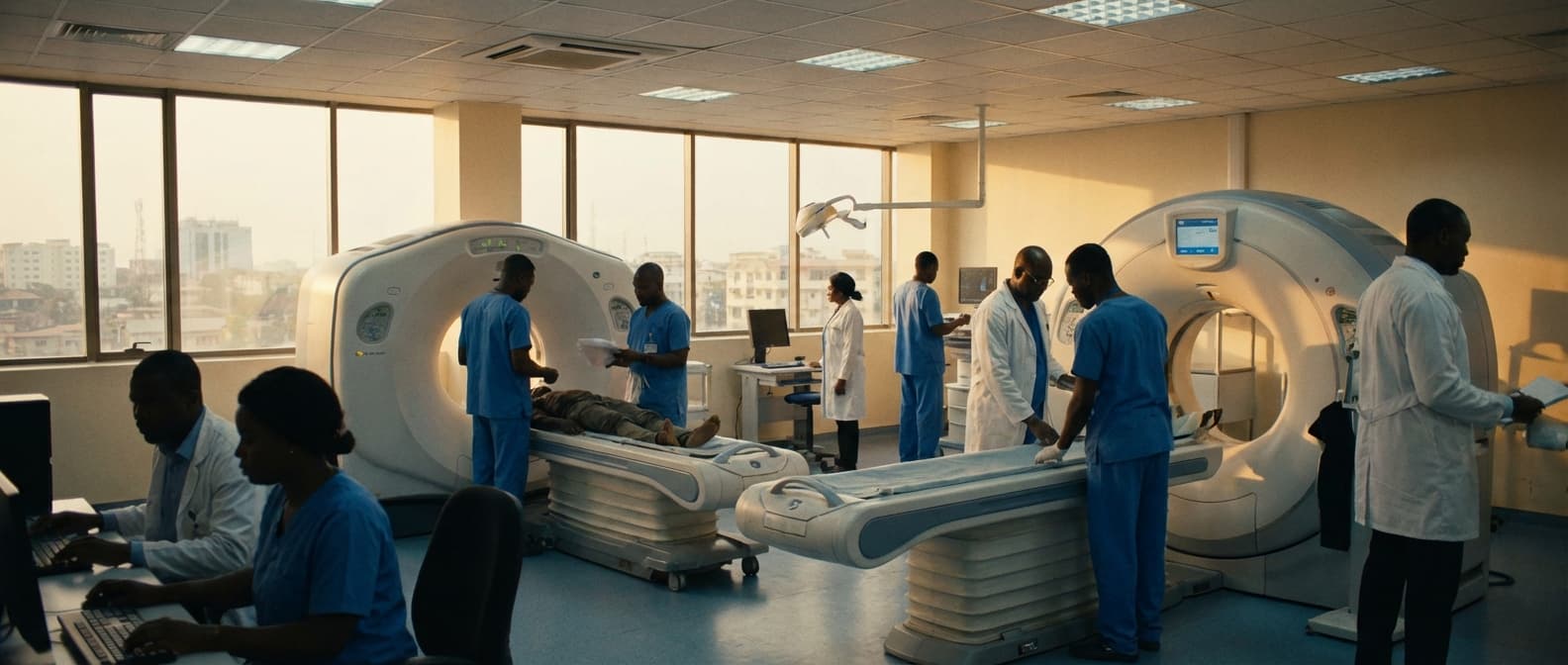
Imaging Acceptance Testing & QA in Nigeria
Engineering Excellence & Technical Support
Commissioning and periodic QA for CT/MRI/X‑ray/US/Mammo. High-standard technical execution following OEM protocols and local regulatory frameworks.
Ensuring Diagnostic Image Integrity
Implementing rigorous Imaging Acceptance Testing (IAT) protocols across diverse Nigerian healthcare facilities, including public hospitals and private clinics, to verify the consistent acquisition, display, and archival of high-quality diagnostic images (e.g., X-ray, CT, MRI). This includes validation of image resolution, contrast, signal-to-noise ratio, and artifact reduction, crucial for accurate diagnosis and patient care in resource-constrained environments.
Validating PACS & DICOM Compliance
Conducting comprehensive Quality Assurance (QA) testing on Picture Archiving and Communication Systems (PACS) and their adherence to DICOM standards within Nigerian healthcare IT infrastructure. This focuses on seamless image transfer, retrieval, and storage, ensuring interoperability between various imaging modalities and PACS vendors, thereby optimizing workflow efficiency and data accessibility for radiologists and clinicians across the country.
Mitigating Equipment & Network Vulnerabilities
Performing technical acceptance testing on new imaging equipment and network configurations to identify and mitigate potential vulnerabilities in Nigerian healthcare settings. This includes verifying equipment calibration, performance under varying environmental conditions (e.g., power fluctuations), and network bandwidth adequate for timely image distribution, ultimately safeguarding against data loss and ensuring reliable access to critical diagnostic information.
What Is Imaging Acceptance Testing & Qa In Nigeria?
Imaging Acceptance Testing & Quality Assurance (QA) in Nigeria refers to a systematic process of verifying and validating that imaging systems (such as medical imaging devices, printing equipment, or digital imaging hardware/software) meet predefined technical specifications, functional requirements, and user expectations before deployment or integration into operational workflows within the Nigerian context. This service ensures that the imaging solution performs reliably, accurately, and consistently according to industry standards and client needs. It encompasses a range of activities designed to identify and rectify defects or deviations from desired performance characteristics.
| Who Needs Imaging Acceptance Testing & QA in Nigeria? | Typical Use Cases | ||||||
|---|---|---|---|---|---|---|---|
| Healthcare Institutions: Hospitals, clinics, diagnostic centers, and radiology departments requiring reliable and accurate medical imaging equipment (e.g., MRI, CT scanners, X-ray machines, ultrasound devices) and associated software for patient diagnosis and care. | Government Agencies: Ministries of health, defense, and law enforcement requiring imaging solutions for public health initiatives, forensic analysis, security surveillance, and documentation. | Educational Institutions: Universities and training colleges utilizing imaging equipment for research, teaching, and specialized programs. | Commercial Printing and Graphics Companies: Businesses involved in high-volume or specialized printing requiring consistent color accuracy, resolution, and output quality. | Manufacturing and Industrial Sectors: Companies employing imaging for quality control, inspection, non-destructive testing, and product verification. | Telecommunications and IT Providers: Organizations implementing imaging-based infrastructure or services that require robust and dependable performance. | Importers and Distributors of Imaging Equipment: Entities seeking to ensure the quality and compliance of imported imaging hardware and software before market release. | Software Developers of Imaging Solutions: Companies creating or customizing imaging software, requiring validation of functionality and performance. |
| Deployment of new medical imaging equipment: Ensuring new diagnostic machines function optimally and integrate with existing hospital IT infrastructure. | Upgrades to existing imaging software: Validating that new versions of PACS, RIS, or image processing software are stable, secure, and maintain data integrity. | Implementation of digital radiography or fluoroscopy systems: Verifying image quality, workflow efficiency, and compliance with radiation safety standards. | Adoption of new printing technologies: Testing for color gamut, resolution, and substrate compatibility in commercial printing environments. | Integration of image-based security systems: Assessing the performance and reliability of surveillance cameras, facial recognition, or object detection software. | Validation of image analysis algorithms: Ensuring the accuracy and precision of automated image interpretation for industrial inspection or medical diagnostics. | Procurement of large-scale imaging infrastructure: Verifying that procured systems meet tender specifications and deliver expected performance levels. | Establishment of digital archiving systems for visual assets: Testing the integrity, accessibility, and long-term preservation of stored images. |
Key Components of Imaging Acceptance Testing & QA in Nigeria
- Requirements Validation: Verifying that the imaging system's documented specifications align with actual user needs and regulatory compliance (e.g., NAFDAC, SON guidelines where applicable).
- Functional Testing: Executing tests to confirm that all intended functionalities of the imaging system operate as expected, including image acquisition, processing, storage, retrieval, and display.
- Performance Testing: Evaluating the speed, throughput, and resource utilization of the imaging system under various load conditions to ensure it meets performance benchmarks.
- Accuracy and Fidelity Testing: Assessing the precision and faithfulness of image capture, reproduction, and display, particularly critical for diagnostic imaging where subtle details are paramount.
- Interoperability Testing: Confirming seamless integration and data exchange with other systems (e.g., Picture Archiving and Communication Systems (PACS), Electronic Health Records (EHR), or other workflow management systems).
- Usability Testing: Evaluating the ease of use, intuitiveness, and user-friendliness of the imaging system's interface and operational procedures for Nigerian end-users.
- Security Testing: Assessing the system's vulnerability to unauthorized access, data breaches, and ensuring compliance with data privacy regulations.
- Reliability and Stability Testing: Ensuring the system operates without failure over extended periods and under continuous use.
- Documentation Review: Validating the accuracy, completeness, and clarity of user manuals, technical documentation, and training materials.
- Compliance Verification: Ensuring adherence to relevant national and international standards, guidelines, and certifications.
Who Needs Imaging Acceptance Testing & Qa In Nigeria?
Imaging Acceptance Testing & Quality Assurance (QA) are crucial for ensuring that medical imaging systems in Nigeria are performing optimally, delivering accurate diagnostic information, and meeting regulatory standards. This process is vital for patient safety, effective treatment planning, and efficient healthcare delivery. While the benefits are universally recognized in healthcare, specific target customers and departments in Nigeria can be identified based on their reliance on imaging technologies.
| Department | Specific Needs & Benefits of Imaging Acceptance Testing & QA |
|---|---|
| Radiology Department | Ensures image quality for accurate diagnosis, reduces repeat scans, optimizes workflow, verifies equipment performance against manufacturer specifications. |
| Medical Physics Department (if present) | Verifies radiation dose accuracy, image quality parameters, and overall safety compliance. Essential for radiation protection and diagnostic efficacy. |
| IT/PACS Administration | Confirms seamless integration of imaging equipment with Picture Archiving and Communication Systems (PACS), data integrity, and network performance for image transfer and storage. |
| Clinical Departments (e.g., Cardiology, Neurology, Oncology) | Relies on accurate and timely imaging for diagnosis, treatment planning, and monitoring patient progress. Poor imaging leads to misdiagnosis and suboptimal care. |
| Procurement/Biomedical Engineering | Ensures that newly acquired equipment meets contractual specifications and operational requirements before full integration into clinical practice. Prevents costly equipment failures and returns. |
| Quality Management/Patient Safety | Crucial for maintaining high standards of patient care, minimizing diagnostic errors, and complying with national and international healthcare quality benchmarks. |
Target Customers & Departments in Nigeria for Imaging Acceptance Testing & QA:
- {"title":"Hospitals (Public & Private)","description":"These are the primary institutions where imaging services are delivered. Both large tertiary hospitals and smaller private clinics will benefit from rigorous testing."}
- {"title":"Diagnostic Imaging Centers","description":"Dedicated centers that offer a range of imaging modalities to multiple healthcare providers. Their reputation and accuracy are directly tied to the quality of their equipment and interpretations."}
- {"title":"Government Health Agencies & Ministries","description":"Responsible for setting standards, regulating healthcare facilities, and ensuring the quality of medical equipment across the nation. They may mandate or facilitate such testing."}
- {"title":"Research Institutions & Universities","description":"Conducting medical research often relies on high-quality imaging data for accurate results and publications."}
- {"title":"Medical Equipment Vendors & Distributors","description":"Those who sell, install, and service imaging equipment have a vested interest in ensuring their products function correctly and meet client expectations. Offering acceptance testing as part of their service is a value-add."}
- {"title":"Healthcare Insurance Providers","description":"While not directly performing the testing, insurance companies benefit from accurate diagnoses resulting from reliable imaging, potentially reducing unnecessary procedures and claims."}
Imaging Acceptance Testing & Qa Process In Nigeria
This document outlines the typical Imaging Acceptance Testing and Quality Assurance (QA) process in Nigeria, detailing the workflow from initial inquiry to the final execution and sign-off.
| Phase | Key Activities | Responsible Parties | Deliverables/Outcome |
|---|---|---|---|
| Inquiry & Requirement Gathering | Needs assessment, site survey, specification definition. | Client, Potential Vendors, Consultants | Detailed Requirements Document, Site Assessment Report |
| Vendor Selection & Proposal | Vendor evaluation, proposal review, contract negotiation. | Client, Vendors | Selected Vendor Contract |
| Procurement & Pre-Installation | Equipment manufacturing/order, site preparation, shipping. | Vendor, Client | Prepared Installation Site, Shipped Equipment |
| Equipment Delivery & Installation | Customs clearance, logistics, physical installation, initial power-up. | Vendor, Logistics Partners | Installed Imaging Equipment |
| Vendor Commissioning & Preliminary Testing | Calibration, configuration, basic functional checks. | Vendor Engineers | Operational System, Preliminary Test Report |
| Acceptance Testing (AT) & QA | Test protocol execution, image quality assessment, performance verification, defect identification. | Client QA Team, Vendor Engineers, Consultants | AT Report, Documented Test Results, Punch List |
| Defect Reporting & Rectification | Issue documentation, vendor fixes, re-testing. | Vendor, Client QA Team | Rectified Defects, Updated Punch List |
| Final Acceptance & Sign-off | Formal acceptance of equipment based on AT results. | Client Management, Vendor Management | Signed Acceptance Certificate |
| Handover & Go-Live | Training, integration into clinical workflow. | Client Operational Team, Vendor Trainers | Trained Staff, Operational Equipment |
| Post-Acceptance Monitoring | Routine use, warranty support, preventive maintenance. | Client Clinical Team, Vendor Support | Continued Service, Maintenance Records |
Key Stages in the Imaging Acceptance Testing & QA Process
- 1. Inquiry & Requirement Gathering:
- The client (e.g., a hospital, diagnostic center) expresses interest or initiates a request for new imaging equipment (MRI, CT scanner, X-ray, Ultrasound, etc.).
- A detailed discussion takes place to understand the client's specific needs, budget, intended use, required specifications, and any existing infrastructure limitations.
- Site assessment may be conducted to evaluate the installation environment (space, power, cooling, radiation shielding, network connectivity).
- Technical specifications and potential vendor solutions are discussed and documented.
- 2. Vendor Selection & Proposal:
- Based on the gathered requirements, potential vendors are identified and shortlisted.
- Vendors submit detailed proposals outlining the equipment, installation plan, training, warranty, and after-sales support.
- Proposals are reviewed by the client's technical team and/or a consultant for compliance with requirements and cost-effectiveness.
- 3. Procurement & Pre-Installation:
- The client selects a vendor and enters into a contract.
- The vendor initiates the manufacturing/procurement process for the equipment.
- Pre-installation activities commence, including site preparation (civil works, electrical upgrades, HVAC, etc.) as per vendor specifications.
- Equipment is shipped to Nigeria.
- 4. Equipment Delivery & Installation:
- Upon arrival, customs clearance and logistics for delivery to the site are managed.
- The vendor's certified engineers perform the physical installation of the imaging equipment.
- This includes unpacking, assembly, connection to power, network, and ancillary systems.
- Initial power-on and system checks are performed by the vendor.
- 5. Vendor Commissioning & Preliminary Testing:
- The vendor's engineers conduct initial system calibration, software configuration, and basic functional tests to ensure the equipment is operational.
- Preliminary performance checks against manufacturer specifications are carried out.
- The vendor provides basic operator training to the client's staff.
- 6. Acceptance Testing (AT) & Quality Assurance (QA):
- This is the critical phase where the client (often with a QA team or consultant) verifies the equipment's performance and quality.
- Pre-AT Meeting: A formal meeting is held to discuss the AT plan, protocols, test cases, expected results, and the roles of all parties involved.
- Test Scenario Development: Specific test protocols and phantom studies are designed to evaluate image quality, accuracy, dose (if applicable), workflow efficiency, and compliance with regulatory standards.
- Execution of Tests:
- **Image Quality Assessment:** Using phantoms and representative patient scans, image resolution, contrast, noise, artifact levels, and geometric accuracy are evaluated.- **Performance Verification:** Scan times, patient throughput, system stability, and response times are measured.- **Dose Measurement (for X-ray, CT, etc.):** Radiation doses are measured to ensure they are within acceptable limits and ALARA principles are met.- **Workflow Integration:** The equipment's integration with Picture Archiving and Communication Systems (PACS), Electronic Health Records (EHR), and other hospital IT systems is tested.- **Safety Checks:** Emergency stop functions, interlocks, and other safety features are verified.- **User Interface & Ergonomics:** Ease of use, clarity of controls, and operator comfort are assessed.- **Ancillary Equipment Testing:** Testing of any associated equipment (e.g., contrast injectors, workstations).- Data Recording & Documentation: All test results, observations, and any deviations are meticulously documented with date, time, personnel involved, and supporting evidence (images, reports).
- 7. Defect Reporting & Rectification:
- Any identified issues, discrepancies, or failures to meet specifications are formally documented in a 'punch list' or 'defect report'.
- The vendor is notified of these issues and is responsible for investigating and rectifying them.
- Re-testing is performed for each rectified defect to confirm resolution.
- 8. Final Acceptance & Sign-off:
- Once all defects are rectified to the client's satisfaction and all acceptance criteria are met, the client formally accepts the equipment.
- An Acceptance Certificate is signed by both the client and the vendor, marking the successful completion of the acceptance testing phase.
- 9. Handover & Go-Live:
- The equipment is officially handed over to the client's operational team.
- Comprehensive training for all relevant personnel (radiographers, technicians, radiologists, IT staff) is completed.
- The equipment is integrated into the daily clinical workflow and begins patient scanning.
- 10. Post-Acceptance Monitoring & Warranty Support:
- Ongoing monitoring of the equipment's performance and image quality in routine clinical use.- The warranty period commences, during which the vendor provides support for any unforeseen issues or malfunctions.- Scheduled preventive maintenance as per the service contract.- Potential for periodic QA checks by independent bodies or the client's internal QA department.
Imaging Acceptance Testing & Qa Cost In Nigeria
Imaging Acceptance Testing & QA in Nigeria involves rigorous checks to ensure imaging equipment (like X-ray machines, CT scanners, MRI machines, ultrasound devices, etc.) meets specified performance standards, safety regulations, and operational requirements before being deployed or after maintenance. The cost of these services is influenced by several factors, leading to a range of pricing in Nigerian Naira (NGN). Key considerations include the complexity and type of imaging modality, the vendor providing the service, the scope of testing required, the location within Nigeria, and the urgency of the testing.
| Service/Modality | Estimated Price Range (NGN) | Notes |
|---|---|---|
| Basic Ultrasound Machine (Acceptance Testing) | ₦100,000 - ₦350,000 | Covers basic functionality, image quality checks, and safety. |
| Digital X-ray Machine (Acceptance Testing) | ₦250,000 - ₦700,000 | Includes radiation safety, image quality, detector performance, and system integration. |
| CT Scanner (Acceptance Testing) | ₦700,000 - ₦2,500,000+ | Extensive testing of gantry, detectors, image reconstruction, radiation dose, and performance parameters. |
| MRI Scanner (Acceptance Testing) | ₦1,000,000 - ₦3,500,000+ | Focuses on magnet performance, gradient coils, RF system, image quality, and safety (e.g., cryogen levels). |
| Mammography Unit (Acceptance Testing) | ₦300,000 - ₦900,000 | Specific tests for image quality, dose, and system calibration for breast imaging. |
| Routine QA (Per Session/Device Type) | ₦50,000 - ₦250,000 | Ongoing quality assurance checks, less comprehensive than initial acceptance testing. |
| On-Site Service Call/Troubleshooting | ₦75,000 - ₦300,000+ | Excludes parts; primarily for diagnosis and initial fixes. |
Key Pricing Factors for Imaging Acceptance Testing & QA in Nigeria
- Type and Complexity of Imaging Modality: More advanced and complex equipment (e.g., MRI, CT scanners) requires specialized knowledge, calibrated phantom materials, and more time for testing compared to simpler devices like basic ultrasound machines.
- Scope of Testing: This includes basic functional tests, comprehensive performance evaluations, safety compliance checks (e.g., radiation safety for X-ray and CT), image quality assessments, and integration testing with Picture Archiving and Communication Systems (PACS). A broader scope naturally increases costs.
- Vendor Expertise and Reputation: Established companies with a proven track record and highly qualified technicians often command higher prices due to their reliability and quality of service.
- Equipment Age and Condition: Older or potentially problematic equipment might require more diagnostic time and troubleshooting, potentially increasing the service cost.
- Location within Nigeria: Travel and logistics costs for technicians can vary significantly depending on the city or region within Nigeria where the testing is to be performed. Major cities like Lagos and Abuja might have different pricing structures compared to more remote areas.
- Urgency of Testing: Expedited testing or on-demand services often come with a premium charge.
- Need for Specialized Equipment/Phantoms: Some tests require specific, calibrated phantom materials or specialized measurement tools, which adds to the cost of the service.
- Certification and Documentation: The level of detailed reporting and certification required by regulatory bodies or the client can influence the pricing.
Affordable Imaging Acceptance Testing & Qa Options
Navigating imaging acceptance testing and quality assurance (QA) can present significant cost challenges for healthcare facilities. However, strategic planning and exploring available value bundles can lead to substantial savings without compromising on essential compliance and performance standards. This guide outlines effective cost-saving strategies and explains the benefits of value-based bundled services for imaging acceptance testing and QA.
| Value Bundle Type | Description | Potential Cost Savings | Ideal For |
|---|---|---|---|
| Comprehensive Modality Package | Includes acceptance testing, routine QA, and potentially preventative maintenance for a specific imaging modality (e.g., MRI, CT, X-ray). | 20-30% reduction compared to individual service costs; streamlined scheduling. | Facilities with multiple units of the same modality or those undergoing significant equipment upgrades. |
| Site-Wide QA Program | Offers a holistic QA service covering all imaging modalities across the entire facility, often with tiered service levels. | 15-25% savings on overall QA budget; simplified vendor management. | Larger hospitals and imaging centers seeking standardized QA across all departments. |
| Acceptance Testing & Initial Calibration | Focuses solely on the initial setup, testing, and calibration of new imaging equipment upon installation. | Can be more cost-effective than ad-hoc testing; ensures optimal performance from day one, preventing future issues. | Facilities acquiring new imaging equipment or expanding their imaging capabilities. |
| Remote Monitoring & Testing Solutions | Utilizes software and remote access to perform certain QA checks and identify potential issues before they require on-site visits. | Reduced travel costs for technicians; faster identification of problems. | Organizations with geographically dispersed facilities or those looking to optimize resource allocation. |
| Integrated Service Agreements | Combines acceptance testing, QA, and sometimes service/maintenance into a single, multi-year contract with an equipment manufacturer or third-party provider. | Significant discounts (30%+) due to bundled services; predictable budgeting. | Facilities seeking a single point of contact for all imaging equipment needs and long-term operational efficiency. |
Key Considerations for Affordable Imaging Acceptance Testing & QA
- Understanding the Scope: Clearly define the specific imaging modalities, features, and performance metrics that require testing and validation.
- Regulatory Compliance: Ensure all testing meets relevant regulatory bodies (e.g., FDA, ACR) requirements to avoid costly re-testing or fines.
- Vendor Partnerships: Leverage existing relationships with imaging equipment vendors for bundled services or potential discounts.
- Internal vs. External Resources: Evaluate the cost-effectiveness of performing certain tests in-house versus outsourcing to specialized QA providers.
- Technology Adoption: Investigate the use of automated testing tools or software to improve efficiency and reduce manual labor costs.
- Long-Term Contracts: Consider longer-term contracts for QA services, which often come with reduced per-unit pricing.
- Training and Skill Development: Invest in training internal staff for specific QA tasks to reduce reliance on external experts for routine checks.
Verified Providers In Nigeria
Navigating the healthcare landscape in Nigeria can be challenging. Identifying reliable and competent healthcare providers is crucial for individuals seeking quality medical services. Franance Health has emerged as a leading force, distinguished by its rigorous credentialing process and unwavering commitment to excellence. This document outlines why Franance Health's verified providers represent the best choice for your healthcare needs in Nigeria.
| Credentialing Area | Franance Health Verification Process | Benefit to Patients |
|---|---|---|
| Medical Licensing & Registration | Verification with relevant medical councils and regulatory bodies to ensure current and valid licenses. | Confirms that providers meet the minimum legal and professional requirements to practice. |
| Clinical Expertise & Specialization | Review of educational qualifications, certifications, and documented experience in specific medical fields. | Ensures providers possess the necessary skills and knowledge for your specific health concerns. |
| Professional Conduct & Ethics | Background checks for disciplinary actions, malpractice claims, and adherence to ethical guidelines. | Guarantees that providers operate with integrity and prioritize patient well-being. |
| Patient Feedback & Outcomes | Collection and analysis of patient testimonials, satisfaction surveys, and, where applicable, aggregated outcome data. | Provides insights into provider's bedside manner and effectiveness in delivering care. |
| Continuous Professional Development | Assessment of ongoing training, participation in medical conferences, and commitment to staying abreast of medical advancements. | Ensures providers are up-to-date with the latest medical knowledge and treatments. |
Why Choose Franance Health Verified Providers?
- Uncompromising Quality Standards: Franance Health implements a multi-layered verification process that goes beyond basic licensing. We assess clinical expertise, ethical conduct, and patient satisfaction records.
- Trust and Reliability: Our verified providers are recognized for their professionalism and dedication to delivering patient-centered care, fostering trust and peace of mind.
- Access to Top Talent: We curate a network of leading medical professionals across various specialties, ensuring you have access to the best available expertise.
- Enhanced Patient Safety: Rigorous background checks and continuous performance monitoring contribute to a safer healthcare experience for all patients.
- Streamlined Healthcare Navigation: Franance Health simplifies the process of finding qualified healthcare professionals, saving you time and reducing stress.
Scope Of Work For Imaging Acceptance Testing & Qa
This document outlines the Scope of Work (SoW) for Imaging Acceptance Testing and Quality Assurance (QA). It details the objectives, responsibilities, methodology, and deliverables required to ensure that imaging systems and solutions meet specified technical and functional requirements. This includes defining standard specifications against which the imaging performance and quality will be evaluated.
| Phase | Activities | Technical Deliverables | Standard Specifications (Examples) |
|---|---|---|---|
| Planning & Setup | Define test strategy and plan. Develop test cases and scripts. Prepare test environment and data. Procure/configure test equipment. | Imaging Test Plan. Test Cases Document. Test Data Sets. Test Environment Configuration Report. | ISO 19018 (Medical imaging quality control). DICOM Part 14 (Grayscale Standard Display Function). Project-specific performance metrics (e.g., resolution, contrast ratio, signal-to-noise ratio). |
| Functional Testing | Verify image acquisition parameters (resolution, exposure, focus). Test image capture, processing, and storage functionalities. Validate metadata and header information (DICOM tags). Test user interface and control functions. | Functional Test Report. Defect Log. Image Samples (with metadata). Test Script Execution Results. | DICOM Conformance Statements. Application-specific functional requirements. Data integrity checks. |
| Performance Testing | Evaluate image quality metrics. Measure acquisition speed and throughput. Assess system stability and resource utilization. | Image Quality Assessment Report. Performance Benchmark Report. System Stability Report. | Signal-to-Noise Ratio (SNR) > X. Modulation Transfer Function (MTF) > Y at Z spatial frequency. Acquisition time per image < T seconds. |
| Usability & Workflow Testing | Assess ease of use for operators. Simulate real-world clinical/operational workflows. Gather feedback from end-users. | Usability Feedback Report. Workflow Simulation Report. End-User Satisfaction Survey Results. | Task completion time within defined limits. Error rate below a threshold. User feedback on intuitive design. |
| Reporting & Closure | Document all test results and identified defects. Provide a final QA report with recommendations. Obtain formal acceptance from stakeholders. | Final Imaging QA Report. Defect Resolution Status. Acceptance Sign-off Document. | Adherence to defined pass/fail criteria for all test cases. Comprehensive documentation of all findings. |
Key Objectives
- To verify that the imaging system meets all functional and performance requirements as defined in the project specifications.
- To ensure the generated images are of acceptable quality for their intended purpose (e.g., diagnostic, archival, analysis).
- To identify and document any defects, deviations, or areas for improvement in the imaging system.
- To confirm the reliability and consistency of the imaging process.
- To provide assurance to stakeholders that the imaging solution is fit for purpose.
Service Level Agreement For Imaging Acceptance Testing & Qa
This Service Level Agreement (SLA) outlines the guaranteed response times and uptime for Imaging Acceptance Testing (IAT) and Quality Assurance (QA) services. It defines the expectations for service availability, performance, and issue resolution to ensure efficient and reliable imaging workflows.
| Service Component | Uptime Guarantee | Response Time (Severity 1 - Critical Issues) | Response Time (Severity 2 - High Issues) | Response Time (Severity 3 - Medium Issues) | Response Time (Severity 4 - Low Issues) |
|---|---|---|---|---|---|
| Imaging System Availability (Production) | 99.9% | 15 minutes (Acknowledgement) | 1 hour (Acknowledgement) | 4 business hours (Acknowledgement) | 8 business hours (Acknowledgement) |
| IAT/QA Service Portal Access | 99.5% | 10 minutes (Acknowledgement) | 30 minutes (Acknowledgement) | 2 business hours (Acknowledgement) | 4 business hours (Acknowledgement) |
| Data Transfer/Processing Performance (for QA checks) | N/A (performance-based, see notes) | 4 business hours (Diagnosis & Action Plan) | 8 business hours (Diagnosis & Action Plan) | 2 business days (Diagnosis & Action Plan) | 5 business days (Diagnosis & Action Plan) |
Scope of Services
- Imaging Acceptance Testing (IAT): Includes the validation and verification of newly implemented or significantly modified imaging systems, equipment, and software to ensure they meet predefined functional and performance requirements before they are deployed into production.
- Quality Assurance (QA) for Imaging: Encompasses ongoing monitoring, testing, and validation of existing imaging systems, processes, and data to identify and rectify issues, maintain optimal performance, and ensure compliance with established standards and regulations.
Frequently Asked Questions

Ready when you are
Let's scope your Imaging Acceptance Testing & QA in Nigeria project in Nigeria.

Scaling healthcare logistics and technical systems across the entire continent.