
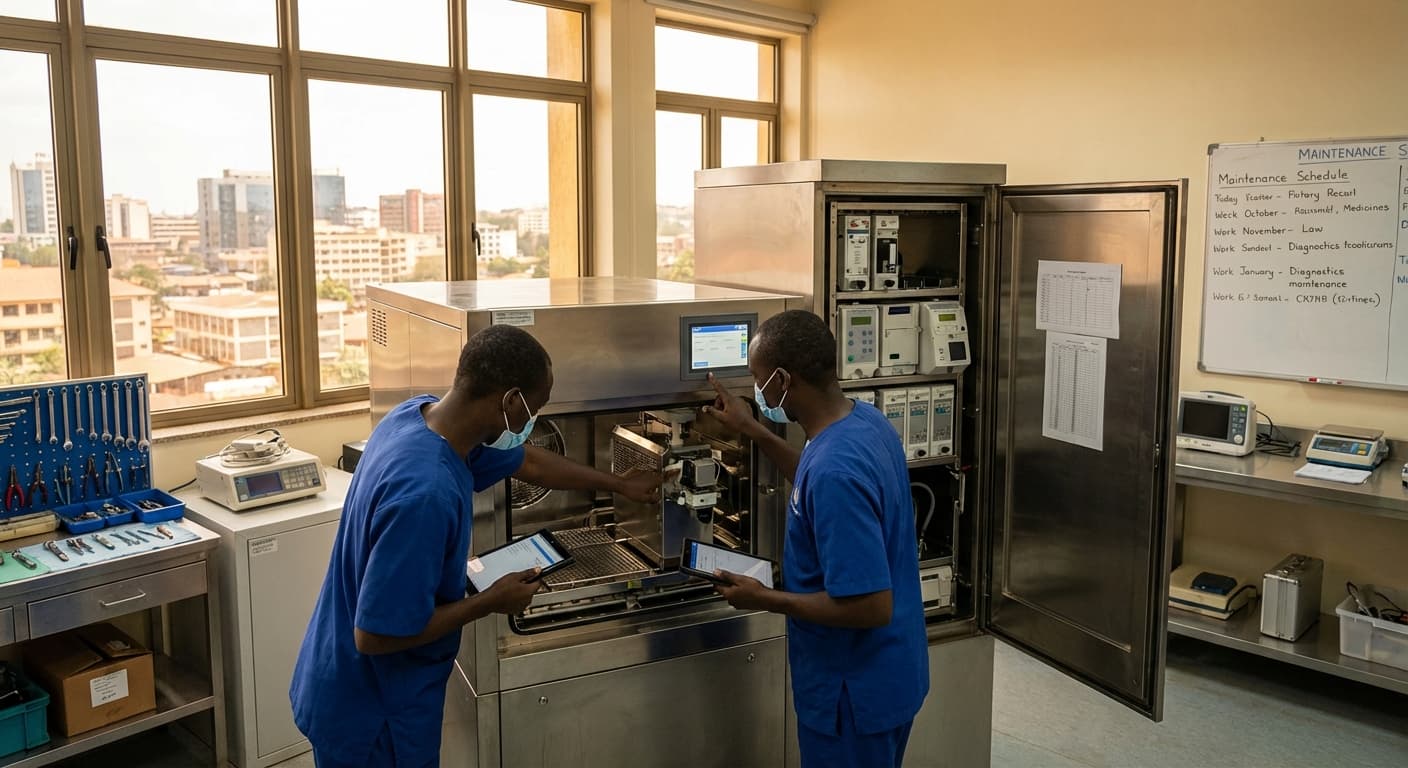
Total Cost of Ownership (TCO) & Lifecycle Budgeting Service in Nigeria
Engineering Excellence & Technical Support
Total Cost of Ownership (TCO) & Lifecycle Budgeting Service High-standard technical execution following OEM protocols and local regulatory frameworks.
Predictive Cost Modeling
Leverage advanced algorithms and historical data to forecast total cost of ownership for infrastructure, technology, and operational assets across Nigeria. Our predictive models identify potential cost overruns and recommend proactive mitigation strategies, ensuring predictable budgeting and maximizing ROI.
Lifecycle Value Optimization
Go beyond initial purchase price. We conduct comprehensive lifecycle assessments to uncover hidden costs and opportunities for value enhancement. From acquisition and operation to maintenance and disposal, our service optimizes every stage of an asset's life to deliver sustained economic benefits and strategic advantage in the Nigerian market.
Strategic Financial Forecasting & Risk Mitigation
Navigate the complexities of Nigeria's economic landscape with robust financial forecasting. We integrate currency fluctuations, inflation rates, and local regulatory impacts into our TCO analyses. Our proactive risk mitigation strategies safeguard your budget, ensuring financial resilience and informed decision-making for long-term project success.
What Is Total Cost Of Ownership (Tco) & Lifecycle Budgeting Service In Nigeria?
Total Cost of Ownership (TCO) and Lifecycle Budgeting services in Nigeria represent a strategic financial management approach designed to quantify and manage all direct and indirect costs associated with an asset, system, or project throughout its entire operational lifespan. This encompasses not only the initial acquisition costs but also ongoing operational expenses, maintenance, upgrades, decommissioning, and disposal. TCO analysis provides a comprehensive financial perspective, moving beyond simple purchase price to inform more robust investment decisions, optimize resource allocation, and mitigate long-term financial risks. Lifecycle Budgeting, intrinsically linked to TCO, involves the systematic planning, forecasting, and allocation of financial resources required for all phases of an asset's existence, from inception to retirement.
| Who Needs TCO & Lifecycle Budgeting Services? | Typical Use Cases in Nigeria | |||||||||||
|---|---|---|---|---|---|---|---|---|---|---|---|---|
| Businesses and Corporations: Across all sectors (e.g., Oil & Gas, Manufacturing, Telecommunications, Financial Services, Healthcare, Retail) requiring long-term asset management and strategic investment planning. | Infrastructure Development Projects: Government agencies and private developers managing large-scale projects (e.g., roads, bridges, power plants, water treatment facilities) with extended lifespans and significant capital outlay. | IT Departments and Technology Managers: Evaluating hardware, software, and cloud solutions, assessing migration strategies, and optimizing IT infrastructure investments. | Facility Management Teams: Managing buildings, equipment, and utilities to control operational expenditures and plan for capital replacements. | Fleet Managers: Optimizing vehicle acquisition, operational efficiency, maintenance schedules, and eventual disposal for commercial fleets. | Procurement and Supply Chain Professionals: Making informed sourcing decisions for long-term supply agreements and capital equipment purchases. | Investment and Financial Analysts: Assessing the true financial viability and return on investment for capital-intensive projects and asset acquisitions. | Real Estate Developers and Investors: Evaluating the long-term profitability and operational costs of commercial and residential properties. | Government and Public Sector Organizations: Managing public assets, capital budgeting for public services, and optimizing public expenditure. | Energy Sector Companies: Analyzing the lifecycle costs of power generation assets, transmission infrastructure, and renewable energy installations. | Telecommunications Providers: Planning and budgeting for network infrastructure, equipment upgrades, and service deployment. | Manufacturing Firms: Evaluating production machinery, process improvements, and automation investments to control operational costs and maximize output. | Aviation and Maritime Industries: Managing the lifecycle costs of aircraft, vessels, and associated operational infrastructure. |
Key Components of TCO & Lifecycle Budgeting Services in Nigeria
- Initial Acquisition Costs: Procurement price, taxes, duties, shipping, installation, and initial setup.
- Operational Costs: Energy consumption, consumables, labor (direct and indirect), software licenses, and general overhead.
- Maintenance and Support Costs: Preventive maintenance, corrective repairs, spare parts, service contracts, and technical support.
- Upgrade and Enhancement Costs: Modifications, hardware/software upgrades, and expansions to meet evolving requirements.
- Downtime and Opportunity Costs: Lost productivity and revenue due to unexpected failures or planned maintenance.
- Decommissioning and Disposal Costs: Dismantling, removal, environmental remediation, and disposal or recycling fees.
- Financing and Interest Costs: Costs associated with debt financing or the opportunity cost of capital.
- Risk Assessment and Contingency Planning: Identification and quantification of potential cost overruns and the allocation of contingency budgets.
Who Needs Total Cost Of Ownership (Tco) & Lifecycle Budgeting Service In Nigeria?
In Nigeria's dynamic business landscape, understanding the true cost of owning and operating assets is paramount for sustained profitability and strategic decision-making. Total Cost of Ownership (TCO) and Lifecycle Budgeting services offer a comprehensive financial framework that goes beyond initial purchase price, encompassing all direct and indirect expenses associated with an asset throughout its entire lifespan. This includes acquisition, operation, maintenance, repair, upgrades, and eventual disposal. For businesses in Nigeria, embracing TCO and Lifecycle Budgeting is not just good practice; it's a necessity for informed investment, risk mitigation, and competitive advantage.
| Target Customers/Organizations | Key Departments Benefiting |
|---|---|
| Large Corporations (Manufacturing, Oil & Gas, Telecommunications, Power, Aviation) | Procurement, Finance, Operations, Engineering, Asset Management, Maintenance, Facilities Management |
| Government Agencies & Parastatals (Infrastructure, Transportation, Utilities) | Finance, Planning & Budgeting, Procurement, Engineering, Public Works, Maintenance |
| Infrastructure Development Companies (Real Estate, Construction) | Project Management, Finance, Procurement, Operations, Facilities Management |
| Financial Institutions (Banks, Insurance Companies) | IT Department (for technology assets), Facilities Management, Operations |
| Logistics & Transportation Companies | Fleet Management, Procurement, Finance, Operations, Maintenance |
| Healthcare Providers (Hospitals, Clinics) | Procurement (for medical equipment), Facilities Management, Finance, Biomedical Engineering |
| Educational Institutions (Universities, Colleges) | Procurement (for IT, lab equipment, facilities), Facilities Management, Finance |
| Agricultural & Agribusiness Companies | Farm Management, Procurement (for machinery), Operations, Maintenance |
Who Needs Total Cost of Ownership (TCO) & Lifecycle Budgeting Service in Nigeria?
- Organizations seeking to optimize capital expenditure and operational expenditure.
- Businesses aiming to improve asset reliability and reduce downtime.
- Companies focused on making data-driven procurement and replacement decisions.
- Entities looking to minimize financial risks associated with asset ownership.
- Sectors heavily reliant on capital-intensive assets and infrastructure.
- Businesses committed to sustainable and responsible asset management.
Total Cost Of Ownership (Tco) & Lifecycle Budgeting Service Process In Nigeria
This document outlines the typical workflow for engaging a Total Cost of Ownership (TCO) & Lifecycle Budgeting service in Nigeria, from the initial client inquiry through the final execution and reporting.
| Stage | Description | Key Activities | Deliverables/Outcomes | Nigerian Context Considerations |
|---|---|---|---|---|
| Inquiry & Initial Consultation | The client expresses interest in TCO and lifecycle budgeting services. | Understanding client's objectives, scope, current challenges, and existing data. Initial assessment of needs and potential service fit. | Clear understanding of client requirements. Initial assessment of project feasibility and complexity. | Building rapport and trust. Understanding the specific industry and regulatory landscape in Nigeria. Cultural nuances in business communication. |
| Proposal Development & Negotiation | Based on the initial consultation, a tailored service proposal is created. | Defining project scope, methodology, timelines, team roles, pricing, and terms. Presenting the proposal to the client for review and discussion. | Formal proposal document. Negotiated scope, timeline, and pricing. | Ensuring proposal addresses specific Nigerian economic factors (e.g., inflation rates, currency fluctuations, import duties, local content policies). Transparency in pricing and payment terms. |
| Contracting & Project Initiation | Formal agreement is reached and the project officially commences. | Signing of the service agreement. Assembling the project team. Establishing communication protocols and kick-off meetings. | Signed contract. Project plan. Dedicated project team. | Ensuring contract adheres to Nigerian legal frameworks. Clearly defining roles and responsibilities to avoid misinterpretations. |
| Data Collection & Analysis | Gathering all relevant data for TCO and lifecycle budgeting. | Collecting historical costs, operational data, maintenance records, procurement information, depreciation schedules, expected lifespan of assets, and any relevant market data. | Comprehensive dataset. Initial data quality assessment. | Accessing and validating data from diverse Nigerian entities (government, private sector, SMEs). Dealing with potential data gaps or inconsistencies. Understanding local accounting standards. |
| TCO Model Development | Building a robust model to calculate the total cost of ownership. | Defining cost categories (acquisition, operation, maintenance, disposal). Applying appropriate depreciation methods. Incorporating direct and indirect costs. | Developed TCO model. Initial TCO calculations. | Factoring in Nigerian specific taxes, tariffs, and levies. Accounting for local labor costs and training requirements. |
| Lifecycle Budgeting & Forecasting | Projecting costs over the entire lifespan of the asset or project. | Forecasting future operational, maintenance, and eventual disposal costs. Incorporating inflation, interest rates, and potential price changes. | Lifecycle cost projections. Budgetary forecasts. | Using realistic inflation and currency exchange rate forecasts specific to Nigeria. Considering the impact of government infrastructure projects and policy changes. |
| Scenario Planning & Risk Assessment | Exploring potential future scenarios and their financial implications. | Identifying key risks (economic, political, technological, operational). Developing alternative scenarios (e.g., best case, worst case, most likely). Quantifying the financial impact of identified risks. | Risk register. Scenario analysis reports. | Assessing risks unique to the Nigerian operating environment (e.g., security concerns, power supply reliability, regulatory shifts, political instability). |
| Reporting & Presentation | Communicating the findings and recommendations to the client. | Preparing detailed reports and executive summaries. Presenting findings, TCO figures, lifecycle budgets, and risk assessments. Providing actionable recommendations. | Comprehensive TCO & Lifecycle Budgeting report. Presentation slides. | Tailoring reports to the client's understanding and decision-making process. Ensuring clarity and conciseness. Addressing potential questions from local stakeholders. |
| Implementation Support & Review | Assisting the client in applying the TCO and lifecycle budgeting insights. | Providing guidance on asset selection, procurement strategies, maintenance planning, and budget allocation. Conducting periodic reviews to track performance against projections. | Advisory support. Performance tracking mechanisms. | Supporting clients in making informed procurement decisions within the Nigerian market. Advising on optimizing operational costs in a local context. |
| Project Closure & Knowledge Transfer | Formally concluding the project and ensuring the client can continue the practice. | Finalizing all project deliverables. Conducting a post-project review. Providing documentation and training to client personnel for future TCO and lifecycle budgeting efforts. | Project closure report. Training materials. Client team empowerment. | Ensuring the client has the capacity to sustain TCO and lifecycle budgeting practices independently within their Nigerian operations. |
Workflow Stages
- Inquiry & Initial Consultation
- Proposal Development & Negotiation
- Contracting & Project Initiation
- Data Collection & Analysis
- TCO Model Development
- Lifecycle Budgeting & Forecasting
- Scenario Planning & Risk Assessment
- Reporting & Presentation
- Implementation Support & Review
- Project Closure & Knowledge Transfer
Total Cost Of Ownership (Tco) & Lifecycle Budgeting Service Cost In Nigeria
The Total Cost of Ownership (TCO) and Lifecycle Budgeting services are crucial for organizations in Nigeria to understand the true financial implications of acquiring, operating, and disposing of assets. These services go beyond the initial purchase price, encompassing all direct and indirect costs incurred over an asset's entire lifespan. In Nigeria, the pricing of these services is influenced by a variety of factors, leading to a wide range of costs expressed in Nigerian Naira (NGN). Effectively budgeting for the entire lifecycle helps businesses make informed procurement decisions, optimize operational expenditures, and avoid unforeseen financial burdens.
| Service Scope / Complexity | Estimated Price Range (NGN) | Typical Inclusion |
|---|---|---|
| Basic TCO Analysis (e.g., a few key IT assets, limited operational costs) | 500,000 - 1,500,000 | Initial purchase cost, key operational expenses (energy, maintenance), basic disposal estimates. |
| Standard TCO & Lifecycle Budgeting (e.g., a fleet of vehicles, moderate operational detail) | 1,500,000 - 4,000,000 | Comprehensive acquisition costs, detailed operational expenses (fuel, repairs, insurance), planned maintenance schedules, salvage value estimation. |
| Advanced TCO & Comprehensive Lifecycle Budgeting (e.g., multiple asset classes, complex industrial equipment, full lifecycle) | 4,000,000 - 10,000,000+ | Includes all of the above, plus indirect costs (training, support, downtime), financing costs, regulatory compliance, risk assessment, strategic recommendations, and detailed disposal/decommissioning plans. |
| Retainer/Advisory Services (Ongoing TCO monitoring and strategic guidance) | Customizable (e.g., monthly/quarterly fees) | Regular updates, trend analysis, proactive cost optimization, expert advice on asset management decisions. |
Key Pricing Factors for TCO & Lifecycle Budgeting Services in Nigeria:
- Scope and Complexity of the Project: The number of assets to be analyzed, the variety of asset types (e.g., IT hardware, vehicles, industrial machinery, buildings), and the depth of the analysis (e.g., only operational costs vs. including decommissioning and disposal) significantly impact the cost. Larger and more complex projects require more man-hours and specialized expertise.
- Consultant's Experience and Reputation: Established consulting firms with a proven track record and highly experienced professionals often command higher fees. Their expertise ensures accuracy, in-depth analysis, and strategic recommendations.
- Data Availability and Quality: The ease with which relevant cost data can be accessed and its reliability directly affects the time and effort required for the analysis. If data is fragmented, incomplete, or requires significant validation, the cost will increase.
- Customization and Reporting Requirements: The level of customization in the TCO model and the format/detail of the final report can influence pricing. Bespoke dashboards, in-depth case studies, and detailed risk assessments will be more expensive than standard reports.
- Geographic Location within Nigeria: While not always a primary driver for remote consultations, on-site assessments or workshops in specific regions might incur additional travel and accommodation expenses, impacting the overall cost.
- Industry Specificity: Certain industries have unique cost drivers and regulatory considerations (e.g., oil & gas, manufacturing, telecommunications). Consultants with specialized industry knowledge may charge a premium.
- Duration of the Engagement: Whether the service is a one-off project, a recurring annual assessment, or a longer-term advisory role will affect the total cost.
- Technology and Tools Used: Some consultants may leverage advanced TCO software or analytics platforms, which can add to the service cost but also improve efficiency and accuracy.
Affordable Total Cost Of Ownership (Tco) & Lifecycle Budgeting Service Options
Our Affordable Total Cost of Ownership (TCO) & Lifecycle Budgeting services are designed to provide businesses with a comprehensive understanding of all costs associated with an asset or project from acquisition through disposal. We offer flexible value bundles and proven cost-saving strategies to optimize your investments and ensure long-term financial efficiency. By meticulously analyzing every stage of an asset's life, from initial purchase and implementation to maintenance, operation, upgrades, and eventual decommissioning, we empower you to make informed decisions, reduce unexpected expenses, and maximize return on investment.
| Cost-Saving Strategy | Description | Impact on TCO |
|---|---|---|
| Preventative Maintenance Programs | Implementing scheduled maintenance to avoid costly breakdowns and extend asset lifespan. | Reduces unexpected repair costs, minimizes downtime, and prolongs useful life, lowering the overall operational and replacement costs. |
| Energy Efficiency Upgrades | Investing in energy-efficient equipment and technologies to reduce utility consumption. | Significantly lowers operational expenses (electricity, gas, water) over the asset's lifecycle. |
| Bulk Purchasing & Long-Term Contracts | Negotiating discounts for larger quantities or securing favorable terms for long-term service agreements. | Reduces initial acquisition costs and can lock in lower operational and maintenance costs over extended periods. |
| Standardization of Assets & Components | Using common equipment models and interchangeable parts across different systems. | Simplifies maintenance, reduces spare parts inventory, lowers training costs, and facilitates easier upgrades or replacements. |
| Lean Operations & Process Improvement | Streamlining workflows to minimize waste, optimize resource utilization, and reduce manual effort. | Lowers operational overhead, improves efficiency, and can reduce the need for additional staffing or equipment. |
| Vendor Negotiation & Management | Actively negotiating terms with suppliers and service providers, and building strong vendor relationships for better service and pricing. | Secures competitive pricing for purchases and services, and can lead to better support and warranty terms. |
| Lifecycle Assessment for Procurement | Incorporating TCO considerations directly into the procurement process, prioritizing long-term value over initial price. | Ensures that the lowest initial price doesn't lead to higher long-term costs by selecting assets with better operational efficiency and durability. |
| Right-Sizing Assets | Ensuring that acquired assets are appropriately sized for the intended purpose, avoiding over-capacity. | Minimizes initial investment and reduces ongoing operational costs associated with underutilized resources. |
| End-of-Life Planning & Responsible Disposal | Developing strategies for asset retirement, including refurbishment, resale, or environmentally sound disposal. | Minimizes disposal fees, potentially generates revenue from resale, and avoids environmental penalties. |
Key Value Bundles for TCO & Lifecycle Budgeting:
- Essential TCO Assessment: Basic analysis of direct acquisition costs, operational expenses, and immediate maintenance needs. Ideal for evaluating smaller-scale projects or single assets.
- Comprehensive Lifecycle Budgeting: Includes all aspects of the Essential TCO Assessment plus detailed projections for ongoing maintenance, repairs, planned upgrades, training, and end-of-life disposal costs.
- Strategic TCO Optimization: Builds upon Comprehensive Lifecycle Budgeting by integrating proactive cost-saving strategies, risk mitigation, and scenario planning to identify opportunities for significant long-term savings.
- Customized Solutions: Tailored bundles designed to address specific industry needs, complex projects, or unique organizational challenges. We work with you to define the scope and deliverables.
- Managed TCO & Budgeting: Ongoing service where we continuously monitor and manage your TCO and lifecycle budgets, providing regular reports and recommendations for continuous improvement.
Verified Providers In Nigeria
In Nigeria's dynamic healthcare landscape, identifying trustworthy and competent medical practitioners is paramount. "Verified Providers" signifies a commitment to excellence, rigorous vetting, and patient-centric care. Franance Health stands out as a beacon of this commitment, offering a network of healthcare professionals who not only meet but exceed industry standards. Their meticulous credentialing process ensures that every provider on their platform possesses the necessary qualifications, experience, and ethical standing. This dedication to verification provides patients with peace of mind, knowing they are receiving care from the best the Nigerian healthcare sector has to offer.
| Verification Component | Franance Health's Approach | Benefit to Patients |
|---|---|---|
| Academic & Professional Qualifications | Verification of degrees, licenses, and certifications from accredited institutions and regulatory bodies. | Ensures providers have foundational knowledge and legal authorization to practice. |
| Clinical Experience | Scrutiny of work history, including years of practice and specific areas of expertise. | Guarantees practical application of knowledge and hands-on skill development. |
| Professional References & Background Checks | Contacting previous employers and conducting background checks for any disciplinary actions or concerns. | Confirms professional conduct and ethical standing. |
| Specialty Certifications | Validation of advanced training and certifications in specific medical fields. | Ensures specialized knowledge and competence for complex medical needs. |
| Continuing Medical Education (CME) | Checking for up-to-date participation in ongoing training and development programs. | Confirms providers are current with the latest medical advancements and practices. |
Why Franance Health Verified Providers are the Best Choice:
- Uncompromising Quality: Franance Health's rigorous credentialing process filters out subpar providers, ensuring access to highly skilled and experienced medical professionals.
- Patient Safety First: Verification guarantees that providers adhere to the highest safety protocols and ethical standards, prioritizing your well-being.
- Expertise Across Specialties: Access a diverse network of specialists, from general practitioners to surgeons and diagnosticians, all thoroughly vetted.
- Transparency and Trust: Franance Health provides clear information about provider qualifications, fostering trust and enabling informed decision-making.
- Convenient Access to Excellence: Easily find and connect with top-tier healthcare providers through Franance Health's user-friendly platform.
- Continuously Monitored Performance: Beyond initial verification, Franance Health may engage in ongoing monitoring to maintain the high standards of its network.
Scope Of Work For Total Cost Of Ownership (Tco) & Lifecycle Budgeting Service
This document outlines the Scope of Work (SOW) for providing a Total Cost of Ownership (TCO) and Lifecycle Budgeting (LCB) service. The objective is to equip the client with a comprehensive understanding of the financial implications of an asset, system, or project over its entire lifespan, enabling informed decision-making, optimized resource allocation, and proactive financial planning. The service will include detailed analysis, reporting, and recommendations for managing costs effectively throughout the lifecycle.
| Deliverable | Description | Standard Specification/Format | Key Metrics/Outputs |
|---|---|---|---|
| TCO & LCB Methodology Report | Detailed documentation of the adopted TCO and LCB methodology, including definitions, assumptions, and calculation methods. | PDF Document, outlining the framework, data requirements, and analytical approach. | Clearly defined cost categories, lifecycle phases, and discount rates. |
| Data Collection Plan | A structured plan for gathering all relevant cost data across the lifecycle, specifying sources, methods, and responsible parties. | Excel Spreadsheet or Document, detailing data points, sources, and collection timelines. | Data completeness and accuracy metrics. |
| Cost Breakdown Report (by Phase and Category) | Detailed breakdown of all identified costs, categorized by lifecycle phase (e.g., acquisition, operation, maintenance, disposal) and cost type (e.g., capital, operational, personnel). | Excel Spreadsheet or Dashboard, with drill-down capabilities. | Total cost per phase, cost per category, unit costs (if applicable). |
| Lifecycle Budget Forecast | Projected costs over the asset's entire lifecycle, presented with clear assumptions and contingency. | Multi-year Financial Model (Excel/Specialized Software), graphical representations of cost trends. | Net Present Value (NPV), Internal Rate of Return (IRR), Annualized Cost of Ownership. |
| Risk Register and Mitigation Plan | Identification of potential cost-impacting risks and proposed strategies to mitigate them. | Excel Spreadsheet or Dedicated Risk Management Tool, outlining risk likelihood, impact, and mitigation actions. | Quantified potential cost impact of identified risks. |
| Sensitivity Analysis Report | Analysis of how changes in key variables (e.g., inflation, usage, maintenance costs) affect the overall TCO and LCB. | PDF Document, with charts and tables illustrating the impact of variable changes. | Break-even points, tornado charts. |
| Benchmarking Report | Comparison of the client's TCO/LCB with industry best practices and similar assets/systems. | PDF Document, highlighting areas of high/low performance and potential for improvement. | Percentage deviation from benchmarks, identification of best-in-class examples. |
| Executive Summary and Recommendations Report | A concise overview of the TCO and LCB findings, including actionable recommendations for cost optimization and financial management. | PDF Presentation or Document, tailored for executive review. | Key financial insights, prioritized recommendations, ROI of proposed actions. |
| Training Materials and Session | Documentation and a facilitated session to enable the client's team to understand and utilize the TCO/LCB framework moving forward. | User Manuals, Presentation Slides, Interactive Workshop. | Client team's comprehension of the methodology and ability to update/maintain the TCO/LCB model. |
Key Service Components
- TCO & LCB Framework Development and Customization
- Data Collection and Validation
- Cost Identification and Categorization
- Lifecycle Phase Analysis
- Risk Assessment and Contingency Planning
- Scenario Modeling and Sensitivity Analysis
- Benchmarking and Best Practice Identification
- Reporting and Presentation
- Training and Knowledge Transfer
Service Level Agreement For Total Cost Of Ownership (Tco) & Lifecycle Budgeting Service
This Service Level Agreement (SLA) outlines the response times and uptime guarantees for the Total Cost of Ownership (TCO) & Lifecycle Budgeting Service provided by [Your Company Name] to [Client Name]. This SLA is an appendix to the Master Services Agreement (MSA) dated [MSA Date].
| Severity Level | Description | Response Time | Target Resolution Time | Uptime Guarantee |
|---|---|---|---|---|
| Severity 1 (Critical) | Complete outage of the TCO & Lifecycle Budgeting Service, or a critical feature preventing all users from performing core functions. No workaround available. | 1 Hour | 4 Business Hours | 99.9% Monthly |
| Severity 2 (High) | Significant degradation of the TCO & Lifecycle Budgeting Service, impacting a large number of users or a core functionality. A difficult or time-consuming workaround may exist. | 2 Business Hours | 8 Business Hours | 99.9% Monthly |
| Severity 3 (Medium) | Minor degradation of the TCO & Lifecycle Budgeting Service or a non-critical feature is affected. A workaround is available and is reasonably easy to implement. | 4 Business Hours | 24 Business Hours | 99.9% Monthly |
| Severity 4 (Low) | Inquiries regarding functionality, requests for enhancement, or minor issues that do not impact service availability or core functionality. | 8 Business Hours | N/A (handled during standard support cycles) | 99.9% Monthly |
Definitions
- Affected Service: The TCO & Lifecycle Budgeting Service, or a component thereof, that is experiencing an Incident.
- Downtime: The period during which the Affected Service is unavailable to the Client, excluding Scheduled Maintenance.
- Incident: An event that causes, or is suspected of causing, a significant degradation of the Affected Service's performance or availability.
- Maintenance Window: Pre-scheduled periods during which maintenance may be performed on the Affected Service. Notice will be provided at least [e.g., 48 hours] in advance for Scheduled Maintenance exceeding [e.g., 2 hours].
- Response Time: The maximum time within which [Your Company Name] will acknowledge an Incident and begin investigation.
- Resolution Time: The maximum time within which [Your Company Name] will resolve an Incident to restore the Affected Service to normal operation.
- Scheduled Maintenance: Planned maintenance activities that may temporarily impact the availability of the Affected Service.
- Service Hours: [e.g., 24 hours per day, 7 days per week, 365 days per year], excluding Scheduled Maintenance.
- Uptime: The percentage of Service Hours during which the Affected Service is available and operational.
- Workaround: A temporary solution that mitigates the impact of an Incident, allowing the Affected Service to function, albeit with reduced capabilities.
Frequently Asked Questions

Ready when you are
Let's scope your Total Cost of Ownership (TCO) & Lifecycle Budgeting Service in Nigeria project in Nigeria.

Scaling healthcare logistics and technical systems across the entire continent.