
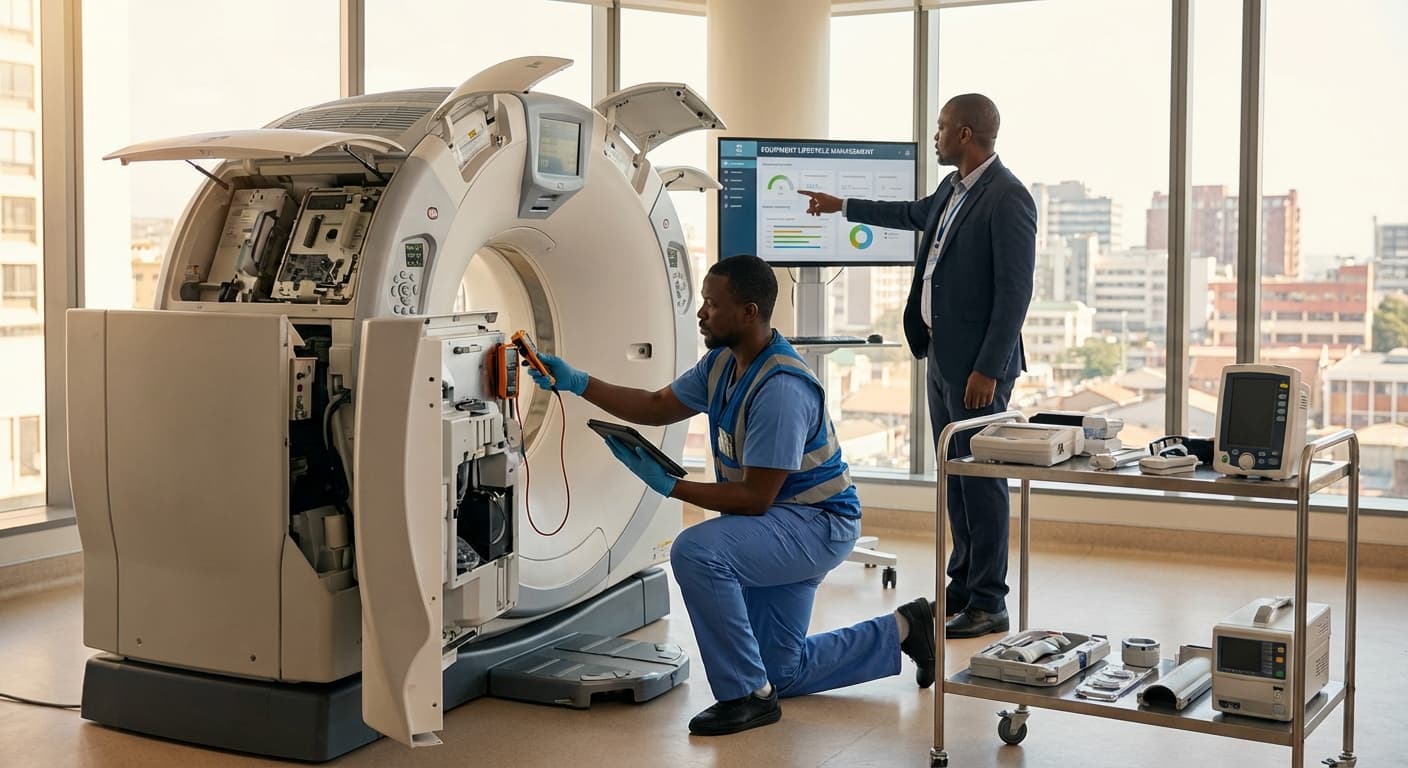
Equipment Replacement Planning & Obsolescence Strategy Service in Nigeria
Engineering Excellence & Technical Support
Equipment Replacement Planning & Obsolescence Strategy Service High-standard technical execution following OEM protocols and local regulatory frameworks.
Proactive Obsolescence Mitigation
Leveraging advanced lifecycle data and predictive analytics to identify and address potential equipment obsolescence risks before they impact operational continuity, minimizing downtime and costly emergency replacements. Our service in Nigeria ensures your assets remain relevant and supported.
Strategic Sourcing & Vendor Management
Optimizing the procurement process for replacement equipment through robust vendor qualification, negotiation, and lifecycle support agreements. We facilitate strategic partnerships in Nigeria to secure best-in-class solutions and favorable terms, ensuring long-term value.
Integrated Asset Lifecycle Management
Developing comprehensive replacement plans that align with your operational, financial, and technological objectives. Our service provides a holistic approach to asset management in Nigeria, from initial acquisition through to end-of-life disposition, ensuring optimal performance and cost-efficiency.
What Is Equipment Replacement Planning & Obsolescence Strategy Service In Nigeria?
Equipment Replacement Planning and Obsolescence Strategy Service in Nigeria is a specialized offering designed to assist organizations in proactively managing the lifecycle of their critical physical assets. This service encompasses a systematic approach to evaluating the current state, operational efficiency, and future viability of equipment, with a strong emphasis on identifying and mitigating the risks associated with technological obsolescence, performance degradation, and increasing maintenance costs. The core objective is to ensure that asset replacement decisions are data-driven, cost-effective, and strategically aligned with business objectives, thereby minimizing operational disruptions, optimizing capital expenditure, and maintaining competitive advantage within the Nigerian economic landscape.
| Who Needs This Service? | Typical Use Cases | ||||||
|---|---|---|---|---|---|---|---|
| Manufacturing and Industrial Companies: Industries with a high reliance on machinery, production lines, and process control systems. | Oil and Gas Sector: Critical infrastructure, exploration, and production equipment subject to harsh environments and stringent safety regulations. | Power Generation and Utilities: Aging power plants, distribution networks, and control systems requiring strategic upgrades to ensure reliability and efficiency. | Telecommunications Providers: Network infrastructure, switching equipment, and transmission systems facing rapid technological evolution and capacity demands. | Transportation and Logistics: Fleet management, warehousing automation, and infrastructure requiring regular modernization for operational efficiency. | Healthcare Institutions: Medical equipment, diagnostic imaging systems, and laboratory instruments with significant maintenance costs and regulatory compliance needs. | Government Agencies and Public Infrastructure: Management of aging public works, transportation networks, and defense systems. | Large-Scale Mining Operations: Heavy machinery, processing plants, and support equipment operating in demanding conditions. |
| Predictive Maintenance & Reliability Improvement: Transitioning from reactive to proactive maintenance by identifying and replacing components nearing failure or becoming obsolete. | Capital Expenditure (CAPEX) Optimization: Developing long-term capital budgets that align equipment replacement with strategic business growth and financial planning. | Mitigation of Operational Downtime: Preventing costly production halts or service interruptions due to equipment failure or obsolescence. | Enhancement of Safety and Environmental Compliance: Ensuring that equipment meets current safety standards and environmental regulations, particularly relevant in the Nigerian context. | Adaptation to Technological Advancements: Leveraging newer technologies to improve efficiency, reduce operating costs, and gain a competitive edge. | Supply Chain Resilience: Ensuring the availability of critical spares and support for essential operational equipment. | Digital Transformation Initiatives: Integrating new digital technologies and automation into existing operational frameworks. | Mergers and Acquisitions (M&A): Assessing the state of existing assets within acquired companies to identify integration challenges and investment needs. |
Key Components of the Service:
- Asset Inventory and Condition Assessment: Comprehensive cataloging of existing equipment, including specifications, acquisition dates, maintenance history, and current operational status. This phase often involves physical inspections and diagnostic testing.
- Performance Benchmarking and Gap Analysis: Evaluating equipment performance against industry standards, regulatory requirements, and evolving technological capabilities. Identifying performance deficiencies and potential obsolescence.
- Risk Assessment and Prioritization: Analyzing the probability and impact of equipment failure, performance degradation, and obsolescence. Prioritizing assets for replacement based on criticality, risk exposure, and return on investment (ROI).
- Technology Forecasting and Trend Analysis: Monitoring emerging technologies, industry best practices, and supplier roadmaps to predict future equipment capabilities and identify impending obsolescence.
- Total Cost of Ownership (TCO) Analysis: Calculating the full cost associated with owning and operating equipment over its lifecycle, including acquisition, installation, operation, maintenance, and disposal. This is crucial for informed replacement decisions.
- Obsolescence Management: Developing strategies to address components, software, or entire systems that are no longer supported by the manufacturer or are superseded by newer, more efficient technologies. This can involve extended maintenance contracts, alternative sourcing, or proactive upgrades.
- Replacement Strategy Development: Formulating a phased plan for equipment replacement, including financial modeling, procurement strategies, vendor selection criteria, and implementation timelines.
- End-of-Life (EOL) Management: Planning for the safe and compliant decommissioning, disposal, or recycling of obsolete equipment.
- Integration with Enterprise Asset Management (EAM) Systems: Ensuring that the outputs of the planning process are integrated into existing EAM frameworks for continuous monitoring and management.
Who Needs Equipment Replacement Planning & Obsolescence Strategy Service In Nigeria?
In Nigeria's dynamic industrial landscape, proactive equipment replacement planning and a robust obsolescence strategy are no longer optional luxuries but critical necessities for sustainable growth and competitive advantage. Organizations that fail to anticipate and manage the lifecycle of their assets risk significant operational disruptions, escalating maintenance costs, and falling behind technologically. This service is vital for any Nigerian business that relies on physical assets to generate revenue, maintain operations, or deliver services.
| Department | Responsibilities & Needs | Why Equipment Replacement Planning & Obsolescence Strategy is Crucial |
|---|---|---|
| Operations/Production | Ensuring seamless and efficient production processes; minimizing downtime; meeting output targets. | Avoids production stoppages due to equipment failure or obsolescence. Guarantees access to critical spare parts and updated technology for optimal efficiency. |
| Maintenance & Engineering | Managing asset upkeep; troubleshooting breakdowns; ensuring equipment reliability and safety. | Facilitates proactive maintenance scheduling based on expected lifespan. Reduces reactive maintenance costs and risks associated with outdated, hard-to-repair equipment. |
| Finance & Procurement | Budgeting for capital expenditures; managing asset acquisition and disposal; optimizing return on investment. | Allows for accurate financial forecasting of replacement costs. Identifies opportunities to leverage new technologies for cost savings and improved performance. Minimizes the risk of costly emergency purchases. |
| IT/Technology | Managing IT infrastructure, software, and communication systems that may be integrated with physical equipment. | Ensures that integrated systems remain compatible and supported. Prevents obsolescence-driven disruptions to digital operations and data management. |
| Risk Management & Compliance | Ensuring adherence to safety regulations; mitigating operational and financial risks; maintaining business continuity. | Reduces risks associated with aging, unsafe equipment. Ensures compliance with evolving industry standards and environmental regulations related to equipment disposal and new technology adoption. |
| Strategic Planning/Executive Management | Setting long-term business goals; driving innovation; maintaining competitive advantage; ensuring profitability. | Supports strategic investment decisions. Positions the company to embrace new technologies and market opportunities, preventing it from being outmaneuvered by competitors with more modern assets. |
Target Customers in Nigeria
- Manufacturing Companies
- Oil and Gas Exploration & Production Companies
- Power Generation and Distribution Utilities
- Telecommunications Providers
- Mining Operations
- Transportation and Logistics Companies
- Healthcare Institutions (hospitals with advanced medical equipment)
- Food and Beverage Processing Plants
- Construction Firms
- Large-scale Agricultural Enterprises
Equipment Replacement Planning & Obsolescence Strategy Service Process In Nigeria
This document outlines the service process for Equipment Replacement Planning & Obsolescence Strategy in Nigeria, detailing the workflow from initial client inquiry to the final execution and delivery of the strategic plan. The service aims to help organizations in Nigeria proactively manage their equipment lifecycle, mitigate risks associated with aging assets, and optimize capital expenditure for replacements.
| Stage | Description | Key Activities | Deliverables | Timeline (Indicative) |
|---|---|---|---|---|
| The client expresses interest in the service, and an initial meeting is held to understand their general needs and the scope of potential engagement. | Initial contact, discovery call, preliminary needs discussion, proposal outline. | Service proposal, preliminary understanding of client objectives. | 1-3 days |
| A detailed understanding of the client's current equipment, operational challenges, and strategic goals is established. The scope of the service is formally defined. | In-depth interviews with stakeholders, site visits (if necessary), review of existing documentation, formal scope of work (SOW) agreement. | Detailed Statement of Work (SOW), agreed-upon project objectives and KPIs. | 1-2 weeks |
| Gathering comprehensive data on existing equipment, including purchase history, maintenance records, performance data, operational costs, and manufacturer support status. | Inventory compilation, data extraction from client systems, interviews with technical and operational staff, data validation and cleansing. | Comprehensive equipment inventory database, operational data summaries. | 2-4 weeks |
| Evaluating the current and future obsolescence risk of each piece of equipment based on factors like age, availability of spare parts, manufacturer support, and technological advancements. | Application of obsolescence models, risk matrix development, identification of critical assets at risk. | Obsolescence risk report, identification of high-risk equipment categories. | 2-3 weeks |
| Formulating a multi-year strategy for equipment replacement, considering various options like like-for-like replacement, upgrade, or technology refresh, aligned with business objectives. | Scenario planning, evaluation of replacement options, development of phased replacement timelines, consideration of vendor landscape in Nigeria. | Draft Equipment Replacement Strategy Document, recommended replacement scenarios. | 3-5 weeks |
| Developing detailed cost projections for the proposed replacement strategy, including capital expenditure, installation, training, and potential ROI calculations. | Cost estimation, financial modeling (e.g., NPV, payback period), budget allocation recommendations, identification of funding sources. | Detailed replacement budget, financial justification for proposed investments. | 2-3 weeks |
| Outlining the practical steps required to execute the replacement strategy, including procurement processes, vendor selection, project management frameworks, and change management. | Development of procurement plans, vendor evaluation criteria, project management roadmap, training plans. | Implementation roadmap, procurement strategy guidelines, initial project plan. | 1-2 weeks |
| Assisting the client in the execution of the replacement plan, including procurement, installation, and commissioning of new equipment. This stage can be a joint effort or managed by the client. | Procurement support, vendor management, project oversight, risk mitigation during implementation. | Successful procurement and installation of new equipment (if managed by service provider). | Variable (depends on scope) |
| Establishing mechanisms for ongoing monitoring of equipment performance, operational costs, and the effectiveness of the replacement strategy. | Setting up performance dashboards, periodic review meetings, post-implementation review. | Performance reports, recommendations for strategy adjustments. | Ongoing (post-execution) |
| Ensuring the client has the internal capabilities to manage their equipment lifecycle and obsolescence strategy going forward, and providing a comprehensive final report. | Training client staff, handover of tools and methodologies, delivery of final strategy report and presentation. | Final Equipment Replacement & Obsolescence Strategy Report, trained client personnel, documented processes. | 1-2 weeks |
Key Stages of the Equipment Replacement Planning & Obsolescence Strategy Service Process:
- Inquiry & Initial Consultation
- Needs Assessment & Scope Definition
- Data Collection & Analysis
- Obsolescence Assessment & Risk Profiling
- Replacement Strategy Development
- Budgeting & Financial Modeling
- Implementation Planning
- Execution & Project Management
- Monitoring & Review
- Knowledge Transfer & Final Reporting
Equipment Replacement Planning & Obsolescence Strategy Service Cost In Nigeria
Planning for equipment replacement and developing effective obsolescence strategies are crucial for businesses in Nigeria to maintain operational efficiency, avoid costly downtime, and optimize capital expenditure. The cost of such services in Nigeria can vary significantly depending on several factors. These services typically involve assessing current equipment lifecycles, predicting future technological advancements, identifying risks associated with outdated equipment, and recommending strategic replacement schedules. Factors influencing pricing include the complexity of the organization's asset base, the scope of the assessment, the level of detail required in the strategy, and the experience and reputation of the consulting firm or individual providing the service. For small to medium-sized enterprises (SMEs) with a simpler asset portfolio, costs might be lower, while large corporations with extensive and diverse equipment holdings will generally face higher service fees. The duration of the engagement and the specific deliverables (e.g., a high-level report versus a comprehensive, multi-year phased implementation plan) also play a significant role in the overall cost.
| Service Scope/Complexity | Estimated Price Range (NGN) |
|---|---|
| Basic Equipment Inventory & Lifecycle Assessment (SMEs) | ₦300,000 - ₦750,000 |
| Comprehensive Obsolescence Risk Assessment & High-Level Strategy (SMEs/Mid-Size) | ₦700,000 - ₦1,500,000 |
| Detailed Equipment Replacement Planning & Financial Modeling (Mid-Size/Large Enterprises) | ₦1,200,000 - ₦3,000,000 |
| Full Obsolescence Strategy Development with Phased Implementation Roadmap (Large Enterprises/Complex Operations) | ₦2,500,000 - ₦7,000,000+ |
| Ongoing Advisory & Periodic Reviews | Negotiable (retainer-based, typically 15-25% of initial project cost annually) |
Key Pricing Factors for Equipment Replacement Planning & Obsolescence Strategy Services in Nigeria:
- Scope of Assessment: The number and types of equipment to be assessed, as well as the depth of analysis (e.g., technical condition, performance, market availability of replacements).
- Complexity of Asset Base: Organizations with diverse and numerous assets across multiple locations will naturally incur higher costs.
- Level of Strategy Detail: The requirement for detailed financial modeling, risk assessments, and phased implementation plans will increase service fees.
- Consultant's Experience and Reputation: Established firms with proven track records and specialized expertise often command higher rates.
- Data Availability and Quality: The ease with which the consultant can access accurate and complete data on existing equipment will impact efficiency and cost.
- Project Duration and Timeline: Longer engagements and accelerated timelines can influence pricing.
- Deliverables Required: The format and comprehensiveness of the final report, presentations, and strategic documents.
- Industry-Specific Requirements: Certain industries might have unique regulatory or operational considerations that add complexity.
- Geographical Reach: If the assessment covers multiple sites across Nigeria, travel and logistical costs may be factored in.
Affordable Equipment Replacement Planning & Obsolescence Strategy Service Options
Our Affordable Equipment Replacement Planning & Obsolescence Strategy Service is designed to provide businesses with a proactive, cost-effective approach to managing their critical assets. We understand that unexpected equipment failures and the constant cycle of technological advancement can strain budgets and disrupt operations. Our service offers flexible value bundles and strategic cost-saving methodologies to ensure your organization maintains optimal performance without overspending.
| Value Bundle Name | Included Services | Target Business Size | Estimated Cost Savings Potential | Key Benefit |
|---|---|---|---|---|
| Essential Planning Bundle | Basic Obsolescence Report, TCO Snapshot, Initial Replacement Prioritization | Small to Medium Businesses (SMBs) | 10-15% | Foundational understanding of asset health and immediate risks. |
| Strategic Growth Bundle | Comprehensive Obsolescence Strategy, Phased Replacement Roadmap (3-5 years), Predictive Maintenance Consultation, Vendor Negotiation Guidance | Medium to Large Enterprises | 15-25% | Integrated approach to long-term asset management and cost optimization. |
| Advanced Optimization Bundle | All services from Strategic Growth Bundle, plus Custom Data Analytics Integration, Alternative Solution Assessment (e.g., leasing, refurbished), Risk Mitigation Planning | Large Enterprises & Mission-Critical Operations | 20-30%+ | Holistic, data-driven strategy for maximum ROI and operational resilience. |
| Ad-Hoc Consultation | Targeted advice on specific equipment needs, vendor evaluation, or obsolescence concerns | All Business Sizes | Variable (project-dependent) | Flexible support for immediate, specific challenges. |
Key Service Features & Benefits
- Predictive Maintenance Integration: Leverage data analytics to forecast potential failures, enabling planned replacements and minimizing costly emergency repairs.
- Obsolescence Forecasting: Stay ahead of technology curves with our analysis of equipment lifecycles and market trends, advising on timely upgrades to avoid performance bottlenecks and security risks.
- TCO (Total Cost of Ownership) Analysis: Comprehensive evaluation of equipment costs over its entire lifespan, including acquisition, operation, maintenance, and disposal, to inform strategic investment decisions.
- Vendor Negotiation Support: Empowered with market insights and data-driven justifications to negotiate better pricing and terms with equipment suppliers.
- Phased Replacement Roadmaps: Develop multi-year plans for equipment renewal, spreading capital expenditures and optimizing cash flow.
- Alternative Solution Assessment: Explore cost-effective alternatives, including refurbished equipment, leasing options, and cloud-based solutions where appropriate.
Verified Providers In Nigeria
In Nigeria's dynamic healthcare landscape, identifying reliable and qualified healthcare providers is paramount for ensuring quality patient care. "Verified Providers" represent a crucial standard, indicating that these entities have undergone rigorous credentialing processes, adhering to industry best practices and regulatory requirements. Franance Health stands out as a premier example of such a commitment. Their dedication to meticulous credentialing, continuous quality improvement, and patient-centered care positions them as a leading choice for individuals and organizations seeking trustworthy healthcare solutions in Nigeria. By prioritizing transparency, upholding ethical standards, and investing in ongoing professional development for their network, Verified Providers like Franance Health offer peace of mind and assurance of superior medical services.
| Credentialing Aspect | Franance Health's Standard | Benefit to Patients |
|---|---|---|
| Professional Licenses & Certifications | Verified current and valid professional licenses for all medical practitioners. | Ensures practitioners are legally qualified and authorized to practice. |
| Clinical Competence & Experience | Assessment of qualifications, training, and track record in relevant medical fields. | Guarantees access to skilled and experienced healthcare professionals. |
| Ethical Conduct & Professionalism | Background checks and adherence to a strict code of conduct. | Protects patients from malpractice and unprofessional behavior. |
| Infrastructure & Equipment | Evaluation of facilities to ensure they meet safety and operational standards. | Provides a safe and well-equipped environment for treatment. |
| Patient Feedback & Satisfaction | Regular collection and analysis of patient feedback to drive service improvements. | Ensures a responsive and continuously improving patient experience. |
| Data Security & Privacy | Compliance with data protection regulations for patient information. | Safeguards sensitive personal and medical data. |
Key Differentiators of Franance Health as Verified Providers
- Rigorous Verification Process: Franance Health employs an exhaustive vetting system for all its partner providers, ensuring they meet stringent clinical, operational, and ethical standards.
- Commitment to Quality Assurance: Continuous monitoring and evaluation mechanisms are in place to maintain the highest levels of service delivery and patient outcomes.
- Patient-Centric Approach: Focus on patient satisfaction, accessibility, and personalized care plans is a cornerstone of their verification criteria.
- Adherence to Regulatory Compliance: All verified providers are mandated to comply with Nigerian healthcare regulations and licensing requirements.
- Network of Specialized Expertise: Franance Health curates a network of providers with diverse specializations, offering comprehensive healthcare solutions.
- Transparency and Accountability: Clear communication channels and robust feedback mechanisms ensure accountability and build trust with patients.
Scope Of Work For Equipment Replacement Planning & Obsolescence Strategy Service
This Scope of Work (SOW) outlines the services for Equipment Replacement Planning and Obsolescence Strategy. The objective is to develop a comprehensive framework that guides the organization in proactively managing its equipment lifecycle, minimizing operational disruptions due to obsolescence, and optimizing capital expenditure for replacements. The service will encompass assessment of the current equipment inventory, identification of critical assets, analysis of obsolescence risks, development of a strategic replacement roadmap, and the establishment of ongoing monitoring and management processes. Technical deliverables will include detailed reports, models, and recommendations, adhering to industry best practices and standard specifications where applicable.
| Deliverable | Description | Format | Standard Specifications / Key Elements |
|---|---|---|---|
| Equipment Inventory & Condition Report | Detailed catalog of existing equipment, including manufacturer, model, serial number, installation date, condition, maintenance history, and criticality. | Digital Report (PDF, Excel) | Asset Tagging System Alignment, ISO 55000 principles, Manufacturer Data Sheets, Maintenance Logs |
| Obsolescence Risk Assessment Matrix | Quantified assessment of obsolescence risks for each critical asset, considering vendor support, availability of spares, technology advancements, and regulatory compliance. | Digital Report (PDF, Excel) | Risk Scoring Methodology, Vendor End-of-Life (EOL) Notices, Technology Trend Analysis, Regulatory Compliance Checklists |
| Strategic Equipment Replacement Roadmap | Prioritized plan for equipment replacement over a defined period (e.g., 3-5 years), outlining recommended replacement timelines, estimated costs, and business impact. | Digital Report (PDF, PowerPoint) | Capital Expenditure (CAPEX) Budget Alignment, Business Case Justification, Project Management Framework Integration, Lifecycle Costing |
| Total Cost of Ownership (TCO) Models | Detailed financial models comparing the TCO of maintaining existing equipment versus replacing it with new alternatives, considering acquisition, installation, operation, maintenance, and disposal costs. | Spreadsheet Models (Excel) | Industry Standard TCO Calculation Frameworks, Discounted Cash Flow (DCF) Analysis, Payback Period Calculation, Return on Investment (ROI) Metrics |
| Obsolescence Monitoring & Management Framework Document | Document outlining the processes, responsibilities, and tools for ongoing monitoring of equipment obsolescence, including proactive identification of emerging risks and triggers for action. | Digital Document (Word, PDF) | Defined Key Performance Indicators (KPIs), Workflow Diagrams, Change Management Procedures, System Integration Requirements |
| Spare Parts Strategy Recommendations | Guidelines for optimizing spare parts inventory levels, sourcing strategies for obsolete or hard-to-find parts, and strategies for managing critical spares. | Digital Report (PDF) | Inventory Optimization Techniques (e.g., ABC analysis), Vendor Relationship Management best practices, Just-In-Time (JIT) principles where applicable |
| End-of-Life (EOL) Management Plan Guidelines | Recommendations for the safe, compliant, and environmentally responsible disposal or decommissioning of obsolete equipment. | Digital Report (PDF) | Environmental Regulations Compliance, Data Security Protocols, Asset Remarketing Opportunities |
Key Service Components
- Current State Assessment of Equipment Inventory
- Obsolescence Risk Identification and Prioritization
- Development of Equipment Replacement Strategy & Roadmap
- Total Cost of Ownership (TCO) Analysis for Replacement Options
- Establishment of Obsolescence Monitoring & Management Framework
- Recommendations for Spare Parts Management & End-of-Life (EOL) Planning
- Training and Knowledge Transfer to Internal Teams
Service Level Agreement For Equipment Replacement Planning & Obsolescence Strategy Service
This Service Level Agreement (SLA) defines the response times and uptime guarantees for the Equipment Replacement Planning & Obsolescence Strategy Service (the 'Service'). This SLA applies to all customers who have subscribed to the Service.
| Service Component | Response Time Target | Uptime Guarantee | Notes |
|---|---|---|---|
| Initial Consultation & Assessment | 2 business days | N/A | For new service engagements and initial reviews. |
| Obsolescence Identification & Reporting | 5 business days from data submission | N/A | Assumes timely provision of required equipment data by the customer. |
| Strategic Replacement Plan Development | 10 business days from approved assessment | N/A | Timeframe may vary based on complexity and scope of the customer's equipment inventory. |
| Urgent Query/Advisory Support | 4 business hours | N/A | For critical decisions or immediate concerns regarding obsolescence. |
| Service Platform Availability (for customer access to reports/tools) | 99.5% monthly uptime | 99.5% | Excludes scheduled maintenance windows. Scheduled maintenance will be communicated at least 48 hours in advance. |
Scope of Service
- Proactive identification of potential equipment obsolescence.
- Development of strategic replacement plans based on lifecycle, performance, and cost.
- Risk assessment and mitigation strategies for end-of-life equipment.
- Recommendations for alternative solutions and upgrade paths.
- Regular reporting and consultation on the obsolescence strategy.
Frequently Asked Questions

Ready when you are
Let's scope your Equipment Replacement Planning & Obsolescence Strategy Service in Nigeria project in Nigeria.

Scaling healthcare logistics and technical systems across the entire continent.