
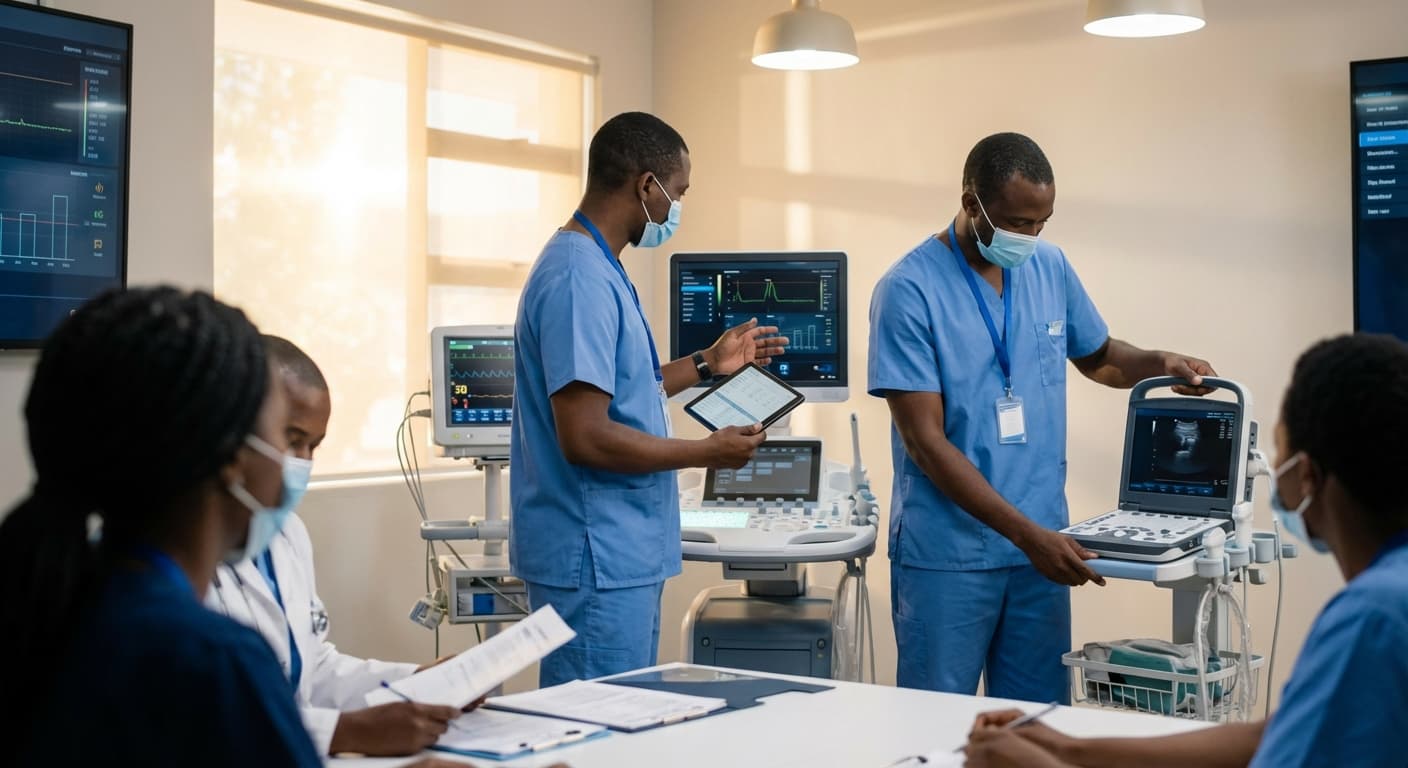
Clinical Needs Assessment for Medical Equipment in Nigeria
Engineering Excellence & Technical Support
Clinical Needs Assessment for Medical Equipment High-standard technical execution following OEM protocols and local regulatory frameworks.
Comprehensive Needs Assessment Framework
Developed and implemented a robust framework for clinical needs assessment that integrates patient demographics, disease prevalence data, and existing healthcare infrastructure to accurately forecast medical equipment requirements across diverse Nigerian healthcare facilities.
Technology Suitability & Integration Analysis
Conducted in-depth analysis of the suitability of advanced medical equipment for the Nigerian context, considering factors like power stability, maintenance capacity, user training needs, and interoperability with existing systems to ensure sustainable adoption and utilization.
Cost-Effectiveness & Resource Optimization
Executed rigorous cost-benefit analyses to prioritize medical equipment procurement based on clinical impact, operational efficiency, and total cost of ownership, ensuring optimal allocation of limited healthcare resources for maximum patient benefit in Nigeria.
What Is Clinical Needs Assessment For Medical Equipment In Nigeria?
A Clinical Needs Assessment for Medical Equipment in Nigeria is a systematic process designed to identify, evaluate, and prioritize the medical equipment requirements of healthcare facilities. This service is critical for ensuring that healthcare providers have access to appropriate, functional, and sufficient medical devices to deliver effective patient care, optimize resource allocation, and comply with regulatory standards. It involves a comprehensive review of clinical workflows, patient demographics, disease prevalence, existing equipment inventory, maintenance capabilities, and budgetary constraints. The assessment informs strategic procurement, technology adoption, and infrastructure development plans, aiming to bridge the gap between current capabilities and desired clinical outcomes.
| Who Needs It? | Typical Use Cases | ||||||||||||
|---|---|---|---|---|---|---|---|---|---|---|---|---|---|
| Public Healthcare Facilities: Ministry of Health (Federal and State), Teaching Hospitals, Federal Medical Centers, General Hospitals, Primary Health Centers. | Private Healthcare Providers: Hospitals, Clinics, Diagnostic Centers, Specialized Medical Centers. | Non-Governmental Organizations (NGOs) and International Aid Organizations: Involved in healthcare delivery and capacity building initiatives. | Medical Equipment Manufacturers and Distributors: To understand market needs and tailor product offerings. | Financial Institutions and Investors: For due diligence and risk assessment related to healthcare infrastructure investments. | Healthcare Policy Makers and Planners: To inform national health strategies and resource allocation. | Biomedical Engineering Departments and Maintenance Units: To optimize service delivery and resource management. | New Hospital or Clinic Development Projects: To establish a baseline equipment requirement from inception. | Existing Facilities Undergoing Expansion or Renovation: To identify new equipment needs or upgrade requirements. | Facilities Facing Challenges with Equipment Downtime or Inadequacy: To address persistent operational issues. | Hospitals Introducing New Clinical Services or Specialties: To equip the new departments appropriately. | Healthcare Institutions Receiving Donor Funding for Equipment: To ensure strategic and effective utilization of funds. | Facilities Adopting New Technologies or Treatment Modalities: To identify complementary equipment needs. | Tertiary and Specialized Healthcare Centers: Requiring advanced and specific diagnostic and therapeutic equipment. |
Key Components of a Clinical Needs Assessment for Medical Equipment
- Facility Profiling: Characterization of the healthcare facility (e.g., type, size, specialization, geographical location).
- Clinical Service Evaluation: Analysis of the medical services offered, including specialties, patient volume, and typical patient pathways.
- Epidemiological Data Review: Examination of local disease prevalence, incidence rates, and common health challenges requiring specific diagnostic or therapeutic interventions.
- Existing Equipment Inventory and Condition Assessment: Cataloging current medical equipment, assessing its functionality, age, maintenance history, and suitability for current clinical needs.
- Gap Analysis: Identification of discrepancies between existing equipment and the documented clinical requirements, considering both quantitative and qualitative deficiencies.
- Technological Trends and Innovations: Research into relevant advancements in medical technology and their potential applicability and benefit within the Nigerian context.
- Infrastructure and Support System Evaluation: Assessment of the facility's power supply reliability, IT infrastructure, space availability, and availability of skilled personnel for operation and maintenance.
- User Needs and Stakeholder Consultation: Engagement with clinicians, biomedical engineers, administrators, and other end-users to gather input on operational requirements and preferences.
- Budgetary and Resource Allocation Review: Consideration of financial constraints, funding sources, and the economic feasibility of proposed equipment acquisition and maintenance.
- Regulatory Compliance and Standards Alignment: Ensuring proposed equipment meets national (e.g., NAFDAC) and international standards for safety, efficacy, and quality.
- Training and Capacity Building Assessment: Identifying the need for training healthcare professionals on the operation, maintenance, and troubleshooting of new or existing equipment.
- Sustainability and Lifecycle Planning: Evaluating the long-term costs associated with equipment acquisition, including consumables, maintenance, spare parts, and eventual replacement.
Who Needs Clinical Needs Assessment For Medical Equipment In Nigeria?
Clinical needs assessment (CNA) for medical equipment in Nigeria is a critical process that ensures healthcare facilities acquire the right tools to effectively diagnose, treat, and manage patient conditions. This assessment goes beyond simply listing desired equipment; it involves a thorough evaluation of current and future healthcare demands, existing infrastructure, user capabilities, and budget constraints. It is essential for optimizing resource allocation, improving patient outcomes, and enhancing the overall efficiency of the healthcare system. Without a proper CNA, Nigeria risks investing in obsolete, inappropriate, or underutilized medical technology, leading to wasted resources and compromised patient care. This process is vital for all entities involved in providing or funding healthcare services, from individual clinics to national health programs.
| Target Customer Group | Key Departments Involved | Primary Rationale for CNA |
|---|---|---|
| Public Hospitals | Clinical Departments (e.g., Medicine, Surgery, Pediatrics, Obstetrics & Gynecology, Radiology, Pathology), Biomedical Engineering, Procurement, Administration | Addressing high patient loads, diverse disease profiles, limited budgets, and ensuring equitable access to care. |
| Private Hospitals & Clinics | Clinical Departments, Hospital Management, Finance, Procurement | Maintaining competitiveness, offering specialized services, improving patient satisfaction, and maximizing return on investment. |
| Tertiary Health Institutions | All Clinical Specialties, Research and Development, Education Units, Biomedical Engineering, Hospital Administration | Supporting advanced diagnostics and treatments, facilitating medical education and training, driving research, and adopting cutting-edge technologies. |
| NGOs & Faith-Based Organizations | Clinical Staff, Program Managers, Project Coordinators, Operations | Meeting specific health program objectives, serving underserved populations, and ensuring efficient use of donor funds. |
| Government Health Ministries/Agencies | Planning and Statistics, Procurement, Health Services, Policy Development | National health system strengthening, strategic planning for equipment procurement, disease control programs, and equitable distribution of resources. |
| Medical Equipment Suppliers | Sales & Marketing, Product Development, Technical Support | Understanding market demands, tailoring product offerings, identifying gaps, and providing relevant solutions to healthcare providers. |
| International Development Partners | Program Officers, Technical Specialists, Procurement Officers, Monitoring & Evaluation | Ensuring project effectiveness, aligning investments with national health priorities, and promoting sustainable healthcare infrastructure. |
Who Needs Clinical Needs Assessment for Medical Equipment in Nigeria?
- Public Hospitals (Federal, State, and Local Government-owned)
- Private Hospitals and Clinics
- Non-Governmental Organizations (NGOs) providing healthcare services
- Tertiary Health Institutions (Teaching Hospitals and University Medical Centers)
- Specialty Clinics and Diagnostic Centers
- Medical Equipment Suppliers and Distributors (for informing their product offerings and sales strategies)
- Government Health Ministries and Agencies (for national health planning and resource allocation)
- International Development Partners and Funding Agencies (for project planning and investment decisions)
Clinical Needs Assessment For Medical Equipment Process In Nigeria
This document outlines the standard workflow for a Clinical Needs Assessment (CNA) for medical equipment in Nigeria, detailing the process from initial inquiry to final execution. The CNA is a critical step in ensuring that healthcare facilities acquire appropriate, functional, and sustainable medical equipment that directly addresses patient care needs and aligns with national health priorities. The process is designed to be systematic, transparent, and collaborative, involving multiple stakeholders from the requesting facility, the procuring entity, and potentially technical experts.
| Phase | Stage | Key Activities | Responsible Parties | Key Deliverables | Typical Timeline |
|---|---|---|---|---|---|
| 1 | Inquiry and Initial Scoping | 1.1 Inquiry Submission: Healthcare facility identifies a need for new or replacement medical equipment and submits a formal inquiry to the relevant procuring authority (e.g., Ministry of Health, hospital management). | Healthcare Facility, Procuring Authority | Formal Inquiry Letter/Request | 1-2 Weeks |
| 1.2 Initial Review: Procuring authority reviews the inquiry for clarity, completeness, and alignment with strategic objectives. | Procuring Authority | Acknowledged Inquiry, Initial Feedback | 1 Week | ||
| 1.3 Formation of CNA Team: A multidisciplinary team is assembled, including clinical staff, biomedical engineers, procurement officers, and administrators. | Procuring Authority, Healthcare Facility Leadership | CNA Team Composition | 1 Week | ||
| 2 | Needs Identification and Prioritization | 2.1 Clinical Needs Assessment Visit: CNA team visits the facility to observe current practices, patient demographics, existing equipment inventory, and infrastructure limitations. | CNA Team, Healthcare Facility Staff | Assessment Report (Initial Findings) | 1-2 Weeks |
| 2.2 Data Collection and Analysis: Gathering data on patient load, disease prevalence, current treatment protocols, and service gaps. | CNA Team, Healthcare Facility Staff | Needs Analysis Data | 2-3 Weeks | ||
| 2.3 Prioritization of Equipment Needs: Ranking identified equipment needs based on clinical impact, urgency, cost-effectiveness, and alignment with national health goals. | CNA Team, Healthcare Facility Leadership, Ministry of Health (if applicable) | Prioritized Equipment List | 1 Week | ||
| 3 | Technical Specification Development | 3.1 Defining Technical Requirements: Detailed technical specifications for each prioritized equipment are developed, considering performance standards, safety features, compatibility, and ease of maintenance. | CNA Team (Clinical Specialists, Biomedical Engineers) | Technical Specifications Document | 2-4 Weeks |
| 3.2 Market Research and Benchmarking: Identifying available technologies, potential suppliers, and comparing features and costs of similar equipment. | CNA Team (Procurement Officers, Biomedical Engineers) | Market Research Report | 1-2 Weeks | ||
| 3.3 Finalization of Equipment Specifications: Refining specifications based on market research and expert consultation. | CNA Team | Finalized Technical Specifications | 1 Week | ||
| 4 | Budgeting and Funding Approval | 4.1 Cost Estimation: Estimating the total cost of equipment, including purchase, installation, training, consumables, and ongoing maintenance. | CNA Team (Procurement Officers, Finance Officers) | Cost Estimate Report | 1-2 Weeks |
| 4.2 Budget Proposal Submission: Submitting a budget proposal for the acquisition of the prioritized equipment to the relevant funding authority. | Procuring Authority, Healthcare Facility Leadership | Budget Proposal | 1 Week | ||
| 4.3 Funding Approval: Securing approval for the allocated budget. | Funding Authority | Approved Budget | 2-8 Weeks (variable) | ||
| 5 | Procurement and Acquisition | 5.1 Tender Process: Developing tender documents, advertising the tender, and evaluating bids from potential suppliers. | Procuring Authority (Procurement Unit) | Tender Documents, Bid Evaluation Report | 4-8 Weeks |
| 5.2 Contract Award: Awarding the contract to the successful bidder based on technical and financial evaluation. | Procuring Authority | Signed Contract | 1-2 Weeks | ||
| 5.3 Equipment Manufacturing/Delivery: Overseeing the manufacturing and delivery of the equipment to the healthcare facility. | Supplier, Procuring Authority, Healthcare Facility | Delivery Confirmation | Variable (depending on equipment) | ||
| 6 | Installation and Commissioning | 6.1 Site Preparation: Ensuring that the facility infrastructure (power, space, ventilation) is adequate for the new equipment. | Healthcare Facility (Works Department), Biomedical Engineers | Site Readiness Report | 1-2 Weeks |
| 6.2 Equipment Installation: Professional installation of the equipment by certified technicians. | Supplier Technicians, Biomedical Engineers | Installation Report | 1-5 Days per equipment | ||
| 6.3 Commissioning and Testing: Verifying that the equipment functions according to the technical specifications and is safe for clinical use. | Biomedical Engineers, Clinical Staff | Commissioning Report, Test Results | 1-3 Days per equipment | ||
| 7 | Training and Capacity Building | 7.1 User Training: Comprehensive training for clinical staff on the operation, basic maintenance, and troubleshooting of the new equipment. | Supplier Trainers, Biomedical Engineers | Training Materials, Attendance Records, Competency Assessments | 1-3 Days per equipment/user group |
| 7.2 Maintenance Training: Training for biomedical engineers and technicians on preventive and corrective maintenance. | Supplier Trainers, Biomedical Engineers | Maintenance Training Manuals, Certified Technicians | 2-5 Days | ||
| 8 | Monitoring, Evaluation, and Support | 8.1 Post-Installation Verification: Follow-up assessment to ensure the equipment is being used effectively and is performing optimally. | CNA Team, Healthcare Facility Management | Post-Installation Report | 2-4 Weeks after installation |
| 8.2 Performance Monitoring: Establishing systems for ongoing monitoring of equipment performance and utilization. | Healthcare Facility Management, Biomedical Engineers | Performance Data | Ongoing | ||
| 8.3 Warranty and Service Support: Ensuring the availability of after-sales service and spare parts as per the contract. | Supplier, Procuring Authority, Healthcare Facility | Service Records, Maintenance Logs | Ongoing | ||
| 8.4 Evaluation and Feedback: Periodic evaluation of the impact of the new equipment on patient care and facility operations, providing feedback for future assessments. | CNA Team, Healthcare Facility Staff | Evaluation Reports | Quarterly/Annually |
Clinical Needs Assessment Workflow for Medical Equipment in Nigeria
- Phase 1: Inquiry and Initial Scoping
- Phase 2: Needs Identification and Prioritization
- Phase 3: Technical Specification Development
- Phase 4: Budgeting and Funding Approval
- Phase 5: Procurement and Acquisition
- Phase 6: Installation and Commissioning
- Phase 7: Training and Capacity Building
- Phase 8: Monitoring, Evaluation, and Support
Clinical Needs Assessment For Medical Equipment Cost In Nigeria
A comprehensive clinical needs assessment for medical equipment in Nigeria is crucial to understand the specific requirements of healthcare facilities across diverse settings. This involves identifying essential equipment, considering their functionality, capacity, and suitability for the local context, including existing infrastructure, technical expertise for maintenance, and patient demographics. A significant challenge in this assessment is the pricing of medical equipment. Prices are heavily influenced by a multitude of factors, leading to wide and often unpredictable ranges in local currency (Nigerian Naira - NGN).
| Equipment Category | Estimated Price Range (NGN) | Notes |
|---|---|---|
| Basic Diagnostic Equipment (e.g., Stethoscope, Blood Pressure Monitor, Thermometer) | 5,000 - 50,000 | Highly dependent on brand (e.g., Riester, Omron, Welch Allyn). |
| Basic Laboratory Equipment (e.g., Microscope, Centrifuge, Hematology Analyzer - semi-auto) | 500,000 - 5,000,000 | Ranges from manual to semi-automated systems. Full-auto analyzers can be significantly higher. |
| Imaging Equipment (e.g., Portable Ultrasound, X-ray Machine - basic) | 3,000,000 - 20,000,000 | New vs. refurbished, brand (e.g., Mindray, Samsung Medison, GE), and imaging resolution are key drivers. |
| Surgical Instruments (e.g., General Surgery Set) | 200,000 - 1,500,000 | Depends on the number and type of instruments, material quality (e.g., stainless steel). |
| Patient Monitoring Systems (e.g., Vital Signs Monitor) | 300,000 - 2,000,000 | Features like ECG, SpO2, NIBP integration and screen size affect price. |
| Anesthesia Machines (Basic) | 5,000,000 - 30,000,000 | New vs. refurbished, integration with ventilators, and vaporizers. |
| Hospital Beds (Manual/Semi-Electric) | 150,000 - 800,000 | Adjustable features, material, and brand. |
| Defibrillators (AEDs) | 800,000 - 3,000,000 | Automated External Defibrillators are generally more affordable than manual ones. |
| Ventilators (Basic ICU) | 7,000,000 - 50,000,000+ | Sophisticated modes, patient populations (adult/pediatric), and brand are major factors. |
| Specialized Equipment (e.g., MRI, CT Scanner - entry-level) | 50,000,000 - 500,000,000+ | Requires significant infrastructure, installation, and maintenance. Prices are highly variable. |
Key Pricing Factors for Medical Equipment in Nigeria
- Importation Costs: A substantial portion of medical equipment is imported. This includes duties, tariffs, shipping, insurance, and customs clearance fees, all of which are subject to currency fluctuations and government policies.
- Currency Exchange Rate Fluctuations: The Nigerian Naira's volatility against major international currencies (USD, EUR, GBP) directly impacts the landed cost of imported equipment. A weaker Naira significantly increases prices.
- Supplier Markups and Distribution Channels: Different suppliers and distributors have varying markup structures. Local authorized distributors often command higher prices than direct importers or parallel market sources, but may offer better warranty and support.
- Brand and Manufacturer: Reputable international brands generally come with a premium price tag due to perceived quality, reliability, and advanced features compared to generic or less-known manufacturers.
- Technology and Features: Advanced features, newer models, and sophisticated diagnostic capabilities (e.g., AI integration, high-resolution imaging) naturally increase the cost.
- Volume and Bulk Purchasing: While bulk purchases might offer discounts, the initial outlay for larger quantities can still be substantial. For individual facilities, smaller orders are generally more expensive per unit.
- After-Sales Service and Warranty: Equipment that comes with comprehensive warranty, readily available spare parts, and reliable technical support is typically priced higher.
- Local Availability and Supply Chain: Equipment that is readily available in the Nigerian market and has a well-established supply chain will generally have more stable pricing than those that are scarce or difficult to source.
- Regulatory Compliance and Certifications: Equipment meeting specific international (e.g., CE, FDA) and potentially local (e.g., NAFDAC for consumables) regulatory standards can influence cost.
- Installation and Training: The cost of expert installation and user training, especially for complex equipment, is often factored into the overall price.
Affordable Clinical Needs Assessment For Medical Equipment Options
Securing appropriate medical equipment is crucial for providing quality patient care, but budget constraints can pose a significant challenge for healthcare providers. This guide outlines an affordable approach to conducting a clinical needs assessment for medical equipment, emphasizing the strategic use of "value bundles" and implementing effective cost-saving strategies. A thorough needs assessment identifies essential equipment based on clinical workflows, patient demographics, and existing infrastructure, ensuring investments are targeted and impactful.
| Value Bundle Concept | Description | Cost-Saving Strategy | Example |
|---|---|---|---|
| Integrated System Bundles | Purchasing multiple pieces of equipment that are designed to work together seamlessly, often from a single manufacturer. | Negotiating bulk discounts, reduced integration costs, simplified training, and unified maintenance contracts. | A hospital acquiring a new patient monitoring system that includes vital signs monitors, central station software, and bedside units from one vendor. |
| Service and Maintenance Packages | Bundling the purchase of equipment with extended warranty, preventative maintenance, and on-site support services. | Predictable maintenance costs, reduced downtime, extended equipment lifespan, and avoiding unexpected repair expenses. | A clinic purchasing an MRI machine that comes with a 5-year comprehensive service agreement. |
| Training and Implementation Support | Including comprehensive training for clinical staff and technical support during the initial setup and integration phase as part of the equipment package. | Faster staff adoption, reduced errors, improved equipment utilization, and minimized disruption to clinical operations. | A hospital purchasing new diagnostic imaging software that includes on-site training for radiologists and technologists. |
| Refurbished and Certified Equipment Programs | Opting for high-quality, certified refurbished medical equipment that has been tested and restored to full working order by the manufacturer or a trusted third party. | Significant upfront cost savings compared to new equipment, often with warranties similar to new units. | Purchasing a refurbished ultrasound machine for a satellite clinic with a limited budget. |
| Leasing and Usage-Based Models | Instead of outright purchase, considering leasing options or equipment that offers pay-per-use models. | Lower initial capital outlay, flexibility to upgrade or downgrade as needs change, and avoids costs associated with ownership (depreciation, disposal). | A small practice leasing a specialized surgical laser instead of buying it outright. |
Key Components of an Affordable Clinical Needs Assessment
- Define Scope and Objectives: Clearly articulate what the needs assessment aims to achieve. Focus on specific departments or clinical areas experiencing the most pressing equipment gaps.
- Engage Stakeholders: Involve clinicians (doctors, nurses, technicians), administrators, and IT personnel. Their input is vital for understanding true clinical needs and operational requirements.
- Analyze Existing Equipment Inventory: Document current equipment, its age, condition, maintenance history, and utilization rates. Identify redundant, outdated, or underutilized assets.
- Map Clinical Workflows: Understand the patient journey and the equipment required at each stage. This helps prioritize needs and identify opportunities for integrated solutions.
- Research Available Technologies: Explore the market for equipment that meets identified needs, focusing on reliability, usability, and long-term support.
- Quantify Needs and Budget Allocation: Based on the assessment, create a prioritized list of required equipment with estimated costs. Work within realistic budget parameters.
- Develop a Phased Implementation Plan: If comprehensive upgrades are not immediately feasible, plan for gradual acquisition and implementation of equipment over time.
Verified Providers In Nigeria
Navigating the Nigerian healthcare landscape can be challenging. Identifying trustworthy and competent medical practitioners is paramount for ensuring quality care and peace of mind. This is where verified providers, particularly those credentialed by Franance Health, stand out. Franance Health's rigorous verification process ensures that their network comprises highly qualified and ethical healthcare professionals. Their commitment to excellence means that when you choose a Franance Health-verified provider, you are opting for a higher standard of medical expertise, patient care, and adherence to ethical practices. This verification process is not merely a formality; it's a guarantee of competence and reliability, making them the best choice for your healthcare needs in Nigeria.
| Provider Type | Franance Health Verification Benefit | Why it Matters for Patients |
|---|---|---|
| General Practitioners | Certified for broad medical knowledge and patient management. | Ensures accurate initial diagnosis and effective treatment plans for common ailments. |
| Specialists (e.g., Cardiologists, Neurologists, Gynecologists) | Verified for specialized expertise and advanced training. | Guarantees access to highly skilled professionals for complex medical conditions requiring specific knowledge. |
| Surgeons | Confirmed surgical competency, safety records, and adherence to best practices. | Provides assurance of safe and effective surgical procedures by qualified and experienced surgeons. |
| Diagnostic Centers | Validated for accuracy of tests, quality of equipment, and professional interpretation. | Ensures reliable and precise diagnostic results crucial for accurate treatment. |
| Hospitals and Clinics | Assessed for infrastructure, quality of care, patient safety protocols, and medical team qualifications. | Offers a holistic assurance of a high standard of care within a well-equipped and safe medical facility. |
Why Franance Health Verified Providers are the Best Choice:
- Rigorous Credentialing: Franance Health employs a comprehensive vetting process, examining medical licenses, educational qualifications, professional experience, and ethical conduct.
- Commitment to Quality Care: Verified providers are dedicated to delivering evidence-based medicine and prioritizing patient well-being and satisfaction.
- Enhanced Patient Safety: The verification process includes checks for malpractice history and regulatory compliance, ensuring a safer healthcare experience.
- Access to Expertise: Franance Health's network encompasses a wide range of specialists, offering access to top-tier medical professionals across various disciplines.
- Trust and Transparency: The verification mark provides patients with confidence and transparency, reducing the anxiety of seeking medical care.
- Continuous Professional Development: Many Franance Health-verified providers engage in ongoing training and education to stay abreast of the latest medical advancements.
Scope Of Work For Clinical Needs Assessment For Medical Equipment
This Scope of Work (SOW) outlines the activities, deliverables, and standard specifications required for conducting a comprehensive clinical needs assessment for medical equipment. The primary objective is to identify, evaluate, and prioritize medical equipment requirements aligned with the current and future clinical service needs of [Hospital/Clinic Name]. This assessment will inform procurement decisions, ensure optimal utilization of resources, and enhance patient care quality.
| Phase | Key Activities | Technical Deliverables | Standard Specifications/Requirements |
|---|---|---|---|
| Phase 1: Project Initiation and Planning | Define project scope, objectives, and success criteria. Establish a project team and stakeholder roles. Develop a detailed project plan, including timeline and resource allocation. Identify key clinical departments and service lines to be assessed. Conduct initial stakeholder consultations to understand existing challenges and priorities. | Project Charter Stakeholder Register Detailed Project Plan (Gantt Chart) Communication Plan | Project charter approved by senior management. Project team members with defined roles and responsibilities. Clear understanding of project scope and expected outcomes. Identification of all relevant departments and service lines. Established communication channels with all stakeholders. |
| Phase 2: Data Collection and Analysis | Conduct detailed reviews of existing medical equipment inventories and utilization data. Interview clinical staff (physicians, nurses, technicians) to gather input on current equipment performance, limitations, and unmet needs. Observe clinical workflows and patient pathways to identify areas for improvement. Analyze patient demographic data, projected service volume, and disease prevalence. Research emerging medical technologies and best practices relevant to the assessed service lines. Review relevant clinical guidelines and regulatory requirements. | Existing Equipment Inventory and Utilization Report Clinical Staff Feedback Summary Workflow Analysis Report Patient Demographics and Service Volume Projections Technology Landscape Review Relevant Clinical Guidelines and Regulatory Compliance Checklist | Comprehensive audit of all existing medical equipment. Systematic collection and analysis of qualitative and quantitative data. Identification of critical equipment gaps and redundancies. Data accuracy and completeness validated by department heads. Alignment with national and international clinical standards. |
| Phase 3: Equipment Prioritization and Recommendation | Evaluate identified equipment needs based on clinical impact, patient safety, cost-effectiveness, technological advancement, and strategic alignment. Develop a framework for prioritizing equipment needs. Formulate recommendations for new equipment acquisition, upgrades, or replacements. Identify potential training requirements for new equipment. Assess potential impact on existing infrastructure and IT systems. | Equipment Needs Prioritization Matrix Recommended Equipment List (with justification) Estimated Cost-Benefit Analysis for Key Equipment Training Needs Assessment Summary Infrastructure and IT Impact Assessment | Prioritization criteria clearly defined and agreed upon by stakeholders. Recommendations supported by evidence-based rationale. Cost-benefit analysis includes both capital and operational costs. Realistic estimation of training needs and resources. Consideration of interoperability and data security for new equipment. |
| Phase 4: Documentation and Reporting | Compile all findings, analyses, and recommendations into a comprehensive report. Present the findings and recommendations to key stakeholders for review and approval. Develop a final action plan for implementing recommendations. Archive all project documentation. | Comprehensive Clinical Needs Assessment Report Executive Summary Presentation Slides Implementation Action Plan Final Project Documentation Archive | Report is clear, concise, and actionable. Executive summary effectively communicates key findings and recommendations. Presentation is tailored to the audience. Action plan includes specific steps, responsibilities, timelines, and success metrics. All project artifacts are organized and stored securely. |
Key Phases of the Clinical Needs Assessment
- Phase 1: Project Initiation and Planning
- Phase 2: Data Collection and Analysis
- Phase 3: Equipment Prioritization and Recommendation
- Phase 4: Documentation and Reporting
Service Level Agreement For Clinical Needs Assessment For Medical Equipment
This Service Level Agreement (SLA) outlines the response times and uptime guarantees for the Clinical Needs Assessment service for Medical Equipment provided by [Your Company Name]. This agreement is designed to ensure that our clients receive timely and reliable support for their medical equipment needs.
| Service Component | Description | Service Level Target | Measurement Metric |
|---|---|---|---|
| Initial Contact & Acknowledgement (Standard Inquiry) | Acknowledgement of a standard clinical needs assessment inquiry. | 2 Business Hours | Time from submission of inquiry to acknowledgement by [Your Company Name]. |
| Initial Contact & Acknowledgement (Urgent Request) | Acknowledgement of an urgent clinical needs assessment request (e.g., critical equipment failure impacting patient care). | 1 Business Hour | Time from submission of urgent request to acknowledgement by [Your Company Name]. |
| Progress Update (Scheduled) | Regular updates on the progress of an ongoing clinical needs assessment project. | Bi-Weekly (or as agreed) | Frequency of provided progress reports. |
| Report Delivery | Delivery of the final clinical needs assessment report after the completion of the evaluation and analysis. | Within 10 Business Days of site visit completion | Time from site visit completion to delivery of the final report. |
| Uptime Guarantee (Assessment Platform) | Availability of the online platform used for data collection and analysis for the clinical needs assessment. | 99.5% | Percentage of time the platform is accessible and functional during standard business hours (9 AM - 5 PM Local Time). |
| Uptime Guarantee (Consultant Availability) | Availability of dedicated clinical assessment consultants for scheduled meetings and consultations. | 98.0% | Percentage of scheduled meeting and consultation times that the consultant is available. |
Key Service Components
- Clinical Needs Assessment: This service involves a comprehensive evaluation of your current medical equipment, identification of gaps, and recommendations for new or upgraded equipment based on clinical requirements, patient demographics, and budget constraints.
- Response Times: Specifies the maximum allowed time for [Your Company Name] to acknowledge and begin addressing a reported issue or request.
- Uptime Guarantees: Defines the minimum percentage of time that critical systems or services related to the clinical needs assessment process will be available and functional.
Frequently Asked Questions

Ready when you are
Let's scope your Clinical Needs Assessment for Medical Equipment in Nigeria project in Nigeria.

Scaling healthcare logistics and technical systems across the entire continent.