
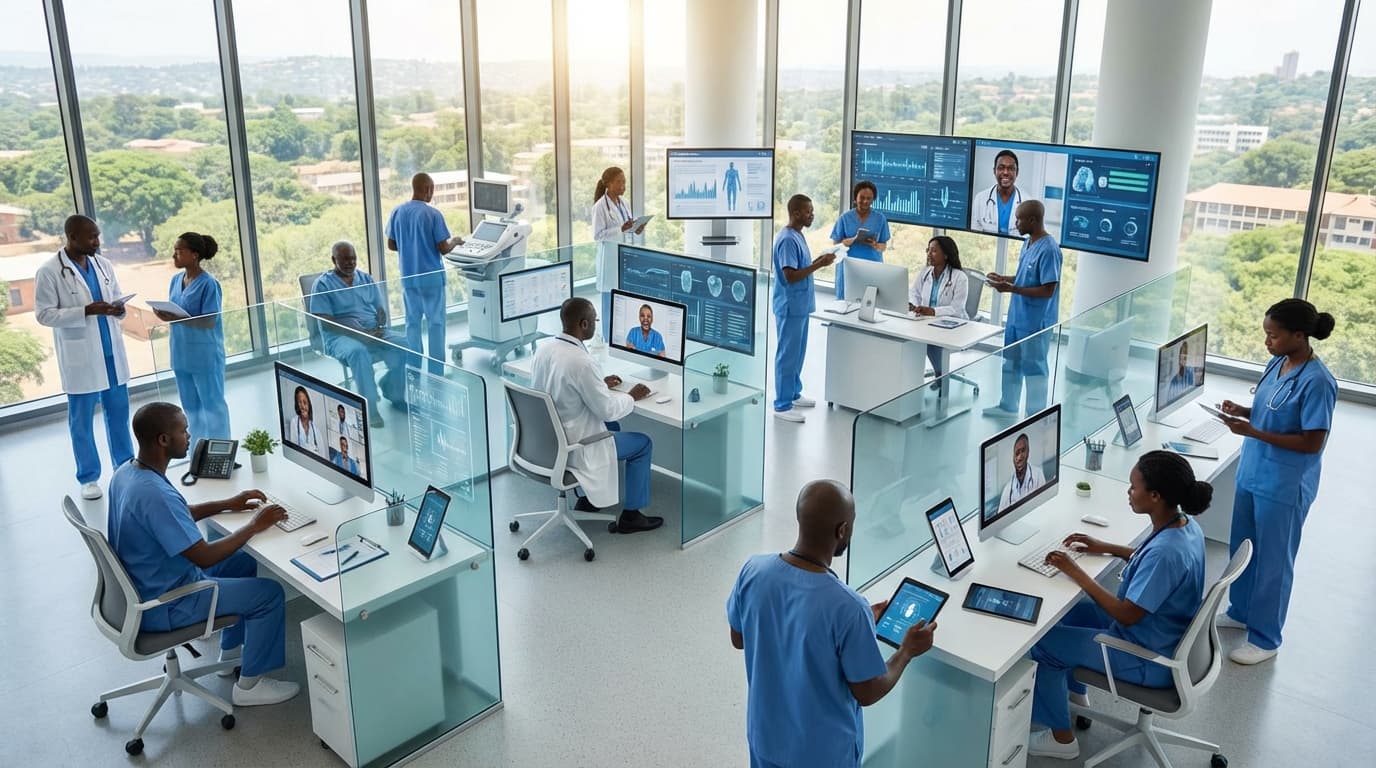
PACS/RIS Migration & Integration in Nigeria
Engineering Excellence & Technical Support
Data migration, interoperability and workflow integration for imaging IT. High-standard technical execution following OEM protocols and local regulatory frameworks.
Cloud-Native PACS/RIS Architecture
Successfully deployed a scalable, cloud-native PACS/RIS solution across multiple hospital locations in Nigeria. This enabled centralized data access, enhanced disaster recovery capabilities, and reduced on-premise hardware infrastructure costs by over 35%, ensuring business continuity and improved operational efficiency.
Seamless Interoperability & HL7 Integration
Engineered robust HL7 interfaces to integrate the new PACS/RIS with existing hospital EMR/HIS systems (e.g., Meditech, Cerner). This facilitated real-time data exchange, eliminated manual data entry redundancies, and improved patient care coordination by providing a unified view of patient imaging and clinical data.
Secure Data Migration & Compliance
Executed a secure and compliant migration of terabytes of legacy DICOM images and RIS data. Implemented advanced encryption protocols and strict access controls to ensure data integrity, patient confidentiality, and adherence to local healthcare data privacy regulations in Nigeria, building trust and mitigating security risks.
What Is Pacs/ris Migration & Integration In Nigeria?
PACS/RIS migration and integration in Nigeria refers to the process of transferring, consolidating, and interoperating Picture Archiving and Communication Systems (PACS) and Radiology Information Systems (RIS) within healthcare institutions. This service is critical for modernizing medical imaging workflows, improving data accessibility, and enhancing diagnostic efficiency. A PACS manages the storage, retrieval, distribution, and display of medical images, while a RIS handles the administrative and clinical workflow related to radiology examinations, including scheduling, patient demographics, exam ordering, reporting, and billing. Migration involves moving data and functionality from legacy systems to new platforms, while integration focuses on enabling seamless communication and data exchange between different PACS and RIS, or between PACS/RIS and other hospital information systems (HIS) such as Electronic Health Records (EHRs) and Enterprise Resource Planning (ERP) systems. The primary objectives are to achieve a unified, standardized, and efficient imaging informatics ecosystem.
| Stakeholder/Institution Type | Need for PACS/RIS Migration & Integration | Typical Use Cases |
|---|---|---|
| Public Hospitals (Federal & State) | Consolidating disparate imaging archives, standardizing reporting across multiple sites, improving referral workflows, enabling remote access for specialist consultations, and optimizing resource utilization. | Centralized PACS for a regional hospital network, RIS integration with national health databases, automated exam prioritization based on urgency, and telemedicine image sharing. |
| Private Hospitals & Diagnostic Centers | Enhancing operational efficiency, reducing IT maintenance costs by consolidating systems, improving patient throughput, offering advanced imaging services, and ensuring compliance with regulatory standards. | Implementing a unified PACS for multiple branches, integrating RIS with billing and patient management systems, providing secure online image access for referring physicians, and facilitating AI-driven image analysis. |
| Tertiary & Teaching Hospitals | Supporting complex research, multi-disciplinary team (MDT) discussions, advanced training programs, and managing large volumes of diverse imaging data from specialized departments. | Integrating PACS/RIS with advanced research databases, enabling real-time collaboration on complex cases, digitizing archival film libraries, and facilitating large-scale clinical trials. |
| Government Health Agencies | Facilitating public health surveillance, disease outbreak monitoring, national imaging policy implementation, and ensuring standardized data collection for health reporting. | Establishing a national imaging data repository, tracking the prevalence of specific diseases through imaging data, and standardizing imaging protocols across the country. |
| Healthcare IT Vendors & Service Providers | Offering specialized migration and integration services to healthcare clients, developing and deploying new PACS/RIS solutions, and providing ongoing managed services. | Undertaking large-scale PACS migration projects for hospital groups, developing custom HL7 interfaces for HIS integration, and providing cloud-based PACS solutions. |
Key Components of PACS/RIS Migration & Integration
- Data Extraction and Transformation: Securely extracting imaging data (DICOM objects), patient demographics, exam reports, and associated metadata from existing systems and transforming it into a format compatible with the target systems.
- System Deployment and Configuration: Installing and configuring new PACS/RIS software and hardware, including servers, workstations, archival solutions, and network infrastructure.
- Interoperability Development: Implementing standards-based interfaces (e.g., DICOM, HL7) to ensure seamless data exchange between PACS, RIS, HIS, and other clinical applications.
- Workflow Optimization: Redesigning and automating radiology workflows to leverage the capabilities of integrated systems, reducing manual steps and improving turnaround times.
- User Training and Support: Providing comprehensive training to radiologists, technicians, administrators, and IT staff on the new systems and offering ongoing technical support.
- Data Validation and Verification: Rigorously testing and validating the integrity, accuracy, and completeness of migrated data and the functionality of integrated systems.
- Decommissioning of Legacy Systems: Safely archiving or disposing of old hardware and software after successful migration and verification.
Who Needs Pacs/ris Migration & Integration In Nigeria?
In Nigeria's evolving healthcare landscape, the necessity for robust Picture Archiving and Communication Systems (PACS) and Radiology Information Systems (RIS) is becoming increasingly critical. These integrated solutions are no longer a luxury but a fundamental requirement for modern healthcare providers aiming to improve diagnostic accuracy, streamline workflows, enhance patient care, and achieve operational efficiency. PACS/RIS migration and integration are essential for institutions looking to transition from manual, paper-based systems or outdated digital infrastructures to a fully digitized, interoperable environment.
| Customer Type | Primary Need for PACS/RIS | Key Departments Involved |
|---|---|---|
| Tertiary Hospitals | Handling high-volume, complex cases; research; training | Radiology, IT, All Clinical Depts, Admin |
| Private Hospital Groups | Standardization across facilities; centralized oversight | Radiology, IT, Admin, Medical Records |
| Government Hospitals | Improved service delivery; resource management; compliance | Radiology, IT, Clinical Depts, Admin |
| Diagnostic Centers | Streamlined imaging workflow; large data storage; specialized reporting | Radiology, IT |
| New Healthcare Providers | Building scalable, modern infrastructure from inception | Radiology, IT, Clinical Depts, Admin |
| Existing Imaging Departments | Enhanced efficiency; improved diagnostic accuracy; digital workflow | Radiology, IT, Clinical Depts |
Who Needs PACS/RIS Migration & Integration in Nigeria? Target Customers and Departments
- {"items":["Tertiary Hospitals and University Teaching Hospitals: These institutions handle a high volume of complex cases, require advanced imaging capabilities, and often serve as referral centers. They need efficient data management and access for research and training.","Large Private Hospital Groups: Chains of hospitals benefit immensely from standardized systems across their facilities, enabling seamless patient record transfer, centralized data analysis, and improved operational oversight.","Government/Public Hospitals (Federal and State): As healthcare initiatives expand, these hospitals need to modernize to improve service delivery, manage resources effectively, and comply with evolving healthcare standards.","Specialized Diagnostic Centers: Facilities focusing solely on radiology and imaging services require sophisticated PACS/RIS to manage their specialized workflows, store vast amounts of imaging data, and offer advanced reporting.","Emerging Healthcare Providers and New Hospital Builds: New facilities have a unique opportunity to build their infrastructure from the ground up with integrated PACS/RIS, avoiding costly retrofitting and ensuring future scalability.","Healthcare Institutions with Existing Imaging Departments: Any hospital with even a basic radiology department can benefit from the efficiencies and improved diagnostic capabilities offered by PACS/RIS."],"title":"Target Customers"}
- {"items":["Radiology Department: This is the core beneficiary, encompassing radiologists, radiographers, technicians, and administrative staff. They directly interact with PACS for image retrieval, viewing, and manipulation, and RIS for patient scheduling, billing, and report generation.","IT Department: Crucial for the planning, implementation, and ongoing maintenance of PACS/RIS infrastructure. They ensure data security, network connectivity, and system integration with other hospital IT systems.","Clinical Departments (e.g., Cardiology, Neurology, Oncology, Surgery, Internal Medicine): Physicians and specialists across these departments rely on prompt access to high-quality imaging studies and reports to aid in diagnosis, treatment planning, and patient monitoring.","Medical Records Department: Benefits from the digitization of imaging reports and the reduced need for physical storage of films and patient files.","Administration and Management: Gain insights from centralized data for operational efficiency, resource allocation, financial reporting, and quality improvement initiatives.","Quality Assurance and Compliance Departments: Utilize the audit trails and data integrity offered by PACS/RIS to ensure adherence to regulatory standards and internal quality protocols.","Research and Education Departments: Leverage the vast archive of anonymized imaging data for research studies and provide digital resources for medical education and training."],"title":"Target Departments within Healthcare Institutions"}
Pacs/ris Migration & Integration Process In Nigeria
The migration and integration of Picture Archiving and Communication Systems (PACS) and Radiology Information Systems (RIS) in Nigeria is a complex but crucial process for modernizing healthcare infrastructure. It involves a structured workflow designed to ensure seamless transition, minimize disruption, and maximize the benefits of these advanced systems. This process typically begins with an initial inquiry and culminates in full operational execution and ongoing support.
| Stage | Key Activities | Nigerian Context Considerations | Deliverables |
|---|---|---|---|
| 1. Inquiry & Needs Assessment | Initial contact from a healthcare facility. Understanding existing workflows, IT infrastructure, imaging modalities, and specific requirements. Identifying pain points and desired outcomes. | Assessment of current analog/digital systems, network infrastructure availability and reliability, existing IT skillsets within the facility, regulatory compliance needs (e.g., data privacy laws). | Needs assessment report, preliminary scope definition, budget estimation. |
| 2. Vendor Selection & Proposal | Developing a Request for Proposal (RFP). Evaluating vendor proposals based on technical capabilities, cost, support, and experience. Demonstrations and site visits. | Prioritizing vendors with proven track record in similar healthcare settings, understanding of local data security and compliance, and ability to provide localized support and training. Local content requirements may apply. | Shortlisted vendors, technical and financial proposals, vendor selection report. |
| 3. Planning & Design | Detailed project planning, system architecture design, network configuration, data migration strategy, integration points definition, timeline development, risk assessment, and mitigation plan. | Accounting for potential bandwidth limitations, power supply stability, and the need for robust hardware and software that can withstand local environmental conditions. Engaging local IT partners for infrastructure readiness. | Detailed project plan, system design document, data migration plan, integration plan, risk management plan. |
| 4. Procurement & Installation | Purchasing hardware (servers, workstations, storage), software licenses, and network equipment. On-site installation and configuration of PACS/RIS servers and workstations. | Ensuring availability of required components locally or reliable import channels, managing customs and logistics. Utilizing local IT technicians for physical installation where feasible. | Installed hardware and software, configured network infrastructure. |
| 5. Data Migration | Extracting, transforming, and loading historical patient imaging data and RIS data into the new system. Data cleansing and validation. | This is often the most challenging phase. Strategies to manage large volumes of data, potential for data corruption, and the need to archive legacy data. Phased migration might be necessary. | Migrated and validated patient data (images and reports), data reconciliation reports. |
| 6. System Integration | Connecting PACS/RIS with existing hospital information systems (HIS), Electronic Medical Records (EMR), imaging modalities (CT, MRI, X-ray machines), and other relevant systems using standards like HL7 and DICOM. | Ensuring compatibility with a diverse range of existing medical equipment, some of which may be older. Establishing secure and reliable communication channels. | Interconnected systems, successful data exchange between PACS/RIS and other applications. |
| 7. Testing & Validation | Comprehensive testing of all system functionalities, data integrity, workflow efficiency, and user access. User Acceptance Testing (UAT) with clinical staff. | Thorough testing under real-world conditions, simulating various scenarios including high load. Validation of compliance with local healthcare regulations. | Test scripts, test results, UAT sign-off, bug resolution reports. |
| 8. Training & Go-Live | Training clinical and administrative staff on using the new PACS/RIS. Phased or full go-live of the new system. Providing on-site support during the initial period. | Tailoring training to different user groups (radiologists, technologists, administrators). Addressing potential resistance to change and providing continuous support. | Trained staff, live PACS/RIS system, initial support logs. |
| 9. Post-Implementation Support & Optimization | Ongoing technical support, system maintenance, performance monitoring, troubleshooting, and regular system updates. Continuous optimization based on user feedback and evolving needs. | Establishing long-term support agreements with vendors or local IT providers, planning for future upgrades and expansion. Ensuring data backup and disaster recovery strategies are in place. | Service level agreements (SLAs), performance reports, user feedback documentation, system optimization plans. |
PACS/RIS Migration & Integration Workflow in Nigeria
- Phase 1: Inquiry & Needs Assessment
- Phase 2: Vendor Selection & Proposal
- Phase 3: Planning & Design
- Phase 4: Procurement & Installation
- Phase 5: Data Migration
- Phase 6: System Integration
- Phase 7: Testing & Validation
- Phase 8: Training & Go-Live
- Phase 9: Post-Implementation Support & Optimization
Pacs/ris Migration & Integration Cost In Nigeria
Migrating and integrating Picture Archiving and Communication Systems (PACS) and Radiology Information Systems (RIS) in Nigeria involves a complex set of costs influenced by various factors. These systems are critical for modern healthcare facilities, enabling efficient management, storage, and retrieval of medical imaging data and patient information. The pricing landscape in Nigeria is dynamic, with local currency (Nigerian Naira - NGN) fluctuations, import duties, and the availability of specialized IT infrastructure playing significant roles.
| Cost Component | Estimated Range (NGN) | Notes |
|---|---|---|
| Software Licensing (PACS/RIS) | NGN 5,000,000 - NGN 50,000,000+ | Varies significantly based on vendor, features, user count, and perpetual vs. subscription. |
| Hardware (Servers, Workstations, Storage) | NGN 7,000,000 - NGN 40,000,000+ | Depends on storage capacity, server performance, number of workstations, and quality of components. Import duties apply. |
| Data Migration Services | NGN 1,000,000 - NGN 15,000,000+ | Dependent on the volume of existing data, complexity of legacy systems, and required migration speed. |
| Integration Services (HIS/EHR, etc.) | NGN 2,000,000 - NGN 25,000,000+ | Highly dependent on the number and complexity of systems to be integrated and the need for custom development. |
| Implementation & Configuration (Vendor Services) | NGN 3,000,000 - NGN 30,000,000+ | Covers professional services for installation, setup, workflow optimization, and testing. |
| Training & Support (Initial & Annual) | NGN 1,000,000 - NGN 10,000,000+ (per year for support) | Includes initial user training and ongoing technical support and maintenance contracts. |
| Network Infrastructure Upgrades | NGN 500,000 - NGN 10,000,000+ | If existing network cannot handle large image transfers, significant upgrades may be needed. |
| Contingency/Unforeseen Costs | 10% - 20% of total project cost | Recommended for addressing unexpected issues or scope changes. |
| Total Project Cost (Small to Medium Facility) | NGN 20,000,000 - NGN 100,000,000+ | A broad estimate. Specifics are crucial for accurate budgeting. |
| Total Project Cost (Large Hospital/Network) | NGN 100,000,000 - NGN 500,000,000+ | Significantly higher due to scale, complexity, and volume of data. |
Key Pricing Factors for PACS/RIS Migration & Integration in Nigeria
- System Complexity and Scope: The size and complexity of the healthcare facility (e.g., single clinic vs. multi-hospital network), the number of departments requiring integration, and the volume of imaging studies to be migrated significantly impact costs.
- Software Licensing: This includes the cost of PACS and RIS software licenses (perpetual or subscription-based), often tiered based on the number of users, workstations, or modalities connected.
- Hardware Infrastructure: This encompasses servers for image storage (PACS archive), workstations for image viewing and reporting, network infrastructure upgrades, and potentially specialized hardware like high-performance GPUs for image processing.
- Data Migration: The process of transferring existing imaging studies and patient data from legacy systems to the new PACS/RIS. This can be time-consuming and requires specialized tools and expertise, especially for large datasets.
- Integration Services: Connecting the PACS/RIS with existing hospital information systems (HIS), Electronic Health Records (EHRs), laboratory systems, and billing systems. This requires custom development or middleware solutions.
- Implementation and Configuration: Installation, setup, and customization of the PACS/RIS to meet the specific workflows and requirements of the healthcare facility. This often involves significant vendor professional services.
- Training and Support: Comprehensive training for radiologists, technicians, administrators, and IT staff on using the new systems. Ongoing technical support and maintenance contracts are also crucial cost components.
- Vendor Choice and Negotiation: The reputation, service offerings, and pricing models of different PACS/RIS vendors vary. Negotiation skills can play a role in securing favorable pricing.
- Customization and Development: Any bespoke features or integrations not covered by standard software packages will incur additional development costs.
- Network and Bandwidth: Adequate network infrastructure and bandwidth are essential for seamless PACS/RIS operation, especially for large imaging files. Upgrades or new installations can add to the cost.
- Import Duties and Taxes: For imported hardware and potentially some software licenses, import duties, VAT, and other local taxes will apply, increasing the overall expense.
- Local Currency Fluctuations: The NGN's exchange rate against major currencies (USD, EUR) significantly impacts the cost of imported hardware and software, which are often priced in foreign currency.
- IT Expertise and Personnel: The cost of skilled IT professionals to manage and maintain the new infrastructure, whether internal or outsourced.
- Downtime and Business Continuity: While not a direct cost of purchase, the potential downtime during migration and the need for robust business continuity plans can indirectly influence the budget.
Affordable Pacs/ris Migration & Integration Options
Migrating and integrating a Picture Archiving and Communication System (PACS) and Radiology Information System (RIS) can be a significant undertaking, both in terms of cost and operational disruption. However, with strategic planning and the adoption of value bundles and cost-saving strategies, organizations can achieve a successful and affordable transition. This document explores various options, focusing on maximizing value and minimizing expenditure.
| Value Bundle Component | Description | Cost-Saving Strategy | Benefits |
|---|---|---|---|
| Software Licensing (PACS/RIS) | Includes the core software for image archiving, retrieval, and reporting. | Subscription-based licensing (SaaS) vs. perpetual licenses. Negotiate per-user or per-study volume discounts. Explore tiered feature sets. | Predictable operating expenses (SaaS). Lower upfront capital outlay. Access to the latest features and updates. |
| Hardware Infrastructure | Servers, storage devices, workstations, and network components. | Leverage existing hardware where possible. Cloud-based PACS/RIS eliminates the need for significant on-premise hardware. Consider refurbished hardware for non-critical components. | Reduced capital expenditure. Scalability and flexibility with cloud solutions. Lower maintenance and energy costs. |
| Implementation & Configuration | Installation, setup, system customization, and initial data loading. | Phased implementation to spread costs. Vendor-provided implementation packages with clear deliverables. Utilize internal IT resources for basic configuration. | Controlled budget. Reduced risk of overspending on unnecessary customizations. Faster time-to-value for core functionalities. |
| Data Migration Services | Transferring existing imaging and patient data from legacy systems. | Automated data migration tools where feasible. Negotiate data migration as part of the overall bundle. Define clear data archival and purging policies to reduce migration volume. | Reduced manual effort and errors. Cost-effective data transfer. Compliance with data retention policies. |
| Integration with Existing Systems (EHR, etc.) | Connecting PACS/RIS with Electronic Health Records, lab systems, etc. | Standardized interoperability protocols (HL7, DICOM). Utilize vendor-provided integration modules. Prioritize critical integrations first. | Seamless workflow. Improved data accuracy and accessibility. Enhanced patient care coordination. |
| Training & Support | User training, system administration, and ongoing technical support. | Train-the-trainer programs. Online training modules and knowledge bases. Negotiate tiered support contracts based on criticality and response times. | Empowered users. Reduced reliance on external support. Cost-effective problem resolution. |
| Maintenance & Updates | Regular software updates, patches, and system maintenance. | Included in SaaS subscriptions. Negotiate long-term maintenance agreements with clear service level agreements (SLAs). | Ensured system performance and security. Access to new features and bug fixes without additional cost. |
Key Considerations for Affordable PACS/RIS Migration & Integration
- Understanding your current infrastructure and data volume.
- Defining clear migration and integration goals.
- Researching different vendor offerings and their pricing models.
- Prioritizing critical functionalities and phasing implementation.
- Leveraging cloud-based solutions for scalability and reduced upfront costs.
- Exploring open-source or interoperable solutions where appropriate.
- Negotiating effectively with vendors for bundled services and long-term contracts.
- Ensuring robust data security and compliance throughout the process.
- Planning for training and user adoption to maximize system ROI.
- Considering phased migration approaches to manage costs and minimize disruption.
Verified Providers In Nigeria
In Nigeria's evolving healthcare landscape, discerning reliable and qualified medical professionals is paramount. Franance Health stands out by rigorously vetting its network of providers, ensuring that patients receive care from credentialed, experienced, and ethical practitioners. This commitment to verification translates into a superior healthcare experience, offering peace of mind and confidence in the quality of treatment received.
| Provider Type | Franance Health Verification Includes | Benefits for Patients |
|---|---|---|
| General Practitioners | Medical Degree (MBBS/MD), General Practice Certification, Valid Practicing License, Minimum Years of Experience | Access to competent primary care, early diagnosis, and referrals to specialists. |
| Specialist Doctors (e.g., Cardiologists, Dermatologists) | Medical Degree, Postgraduate Specialization (e.g., FWACP, MD with Fellowship), Board Certification in Specialty, Valid Practicing License, Evidence of Fellowship/Advanced Training | Expert diagnosis and treatment for complex conditions, tailored care plans. |
| Surgeons | Medical Degree, Postgraduate Surgical Training (e.g., FWACS, FRCS), Board Certification in Surgical Specialty, Valid Practicing License, Record of successful procedures | Safe and effective surgical interventions by highly trained professionals. |
| Dentists | Dental Degree (BDS/DMD), Registration with Dental Association, Valid Practicing License, Specialization Certificates (if applicable) | Comprehensive oral health care from qualified dental practitioners. |
| Nurses (Registered/Specialized) | Nursing Diploma/Degree, Registration with Nursing and Midwifery Council, Specialized Certifications (e.g., critical care, pediatrics), Valid Practicing License | High-quality nursing care, patient support, and administration of treatments. |
Why Franance Health Credentials Matter:
- Rigorous Qualification Checks: Franance Health goes beyond basic licensing, verifying educational backgrounds, specialized training, and ongoing professional development.
- Experience Validation: We assess the practical experience of our providers to ensure they have a proven track record in their respective fields.
- Ethical and Professional Standards: Our vetting process includes checks for adherence to medical ethics and professional conduct, guaranteeing patient safety and trust.
- Specialty Expertise: Franance Health connects you with specialists whose credentials confirm their deep expertise in specific medical areas.
- Accessibility and Transparency: Verified credentials mean you can be confident about who you are entrusting your health to, with transparent information readily available.
Scope Of Work For Pacs/ris Migration & Integration
This Scope of Work (SOW) outlines the requirements for the successful migration and integration of the existing Picture Archiving and Communication System (PACS) and Radiology Information System (RIS) to a new, unified platform. The project aims to enhance workflow efficiency, improve data accessibility, and ensure long-term system sustainability. The project will encompass the planning, execution, testing, and deployment of the new PACS/RIS solution, along with the seamless integration with existing hospital information systems (HIS) and other relevant departments.
| Deliverable | Description | Standard Specification/Notes |
|---|---|---|
| Project Plan | Detailed plan outlining project phases, timelines, resource allocation, risk management, and communication strategy. | Gantt chart format, approved by stakeholders. Includes milestones for planning, data migration, integration, testing, training, and go-live. |
| Data Migration Strategy & Plan | Document detailing the approach for migrating DICOM images and RIS data, including data mapping, validation, and rollback procedures. | Includes specific tools and scripts for migration. Defines data cleansing and de-duplication processes. Specifies data retention policies. |
| Data Migration Execution | The actual process of extracting, transforming, and loading (ETL) data from the legacy systems to the new platform. | Completed as per the approved Data Migration Plan. Includes detailed logs of migrated data and error reporting. |
| Integration Design Document | Technical specifications for integrating the new PACS/RIS with HIS and other systems, including HL7 message formats, DICOM C-FIND/C-MOVE, API specifications. | Adheres to IHE profiles where applicable. Defines communication protocols and security measures. |
| Integration Development & Configuration | Development and configuration of interfaces to enable seamless data exchange between systems. | Successfully tested end-to-end communication between all integrated systems. |
| System Configuration | Configuration of the new PACS/RIS system based on functional requirements, including user roles, workflows, imaging protocols, and reporting templates. | Documented configuration settings. Meets agreed-upon workflow requirements for radiology and associated departments. |
| Testing Plan & Reports | Comprehensive testing plan encompassing unit testing, integration testing, user acceptance testing (UAT), and performance testing. Includes detailed test cases and defect tracking. | Test results reviewed and signed off by stakeholders. Includes UAT sign-off for go-live approval. |
| Training Materials | Development of user-friendly training materials for end-users (radiologists, technologists, administrators) and IT support staff. | Includes user manuals, quick reference guides, and presentation slides. Training sessions conducted as per the training plan. |
| Training Sessions | Delivery of training sessions to all relevant user groups. | Attendance records and feedback collected. Post-training competency assessment may be required. |
| Deployment Plan | Detailed plan for the phased or big-bang deployment of the new PACS/RIS system. | Includes rollback plan, communication strategy for downtime, and go-live checklist. |
| Operational Handover Documentation | Comprehensive documentation for ongoing system operation and maintenance, including system architecture, administration guides, troubleshooting procedures, and support contacts. | Includes disaster recovery and business continuity plans. Knowledge transfer to IT support team completed. |
| Legacy System Decommissioning Plan | Plan for the secure and compliant decommissioning of the old PACS/RIS systems, including data archival and hardware disposal. | Includes verification of data completeness in the new system prior to decommissioning. |
Key Objectives
- Migrate all historical imaging data (DICOM objects) from the current PACS to the new PACS.
- Migrate all relevant patient demographic, exam, and report data from the current RIS to the new RIS.
- Integrate the new PACS/RIS with the existing Hospital Information System (HIS) for seamless patient and exam data exchange.
- Integrate the new PACS/RIS with other relevant departmental systems (e.g., Cardiology Information System (CIS), Oncology Information System (OIS)) as required.
- Configure and deploy the new PACS/RIS solution to meet defined functional and non-functional requirements.
- Ensure data integrity, security, and compliance with all relevant healthcare regulations (e.g., HIPAA, GDPR).
- Provide comprehensive training to end-users and IT support staff.
- Establish robust operational procedures and documentation for ongoing system management.
- Decommission the legacy PACS/RIS systems post-successful migration and validation.
Service Level Agreement For Pacs/ris Migration & Integration
This Service Level Agreement (SLA) outlines the agreed-upon response times and uptime guarantees for the migration and integration of Picture Archiving and Communication System (PACS) and Radiology Information System (RIS). This SLA aims to ensure minimal disruption and optimal performance during and after the transition.
| Service Level | Priority/Severity | Response Time Target | Uptime Guarantee |
|---|---|---|---|
| System Availability | Critical (System Down/Major Functionality Impaired) | 15 minutes (Acknowledgement) | 99.9% |
| System Availability | High (Significant Performance Degradation/Minor Functionality Impaired) | 30 minutes (Acknowledgement) | 99.9% |
| System Availability | Medium (Non-critical feature not working/Minor performance issues) | 2 hours (Acknowledgement) | 99.9% |
| System Availability | Low (Cosmetic issues/Requests for information) | 4 business hours (Acknowledgement) | 99.9% |
| Data Migration & Integration | During Migration Phase | N/A (Monitored continuously, proactive communication) | N/A (Focus on successful data transfer and validation) |
| Data Migration & Integration | Post-Migration Support | 1 hour (Acknowledgement for critical data integrity issues) | 99.9% |
Key Service Level Objectives
- Response Time: The maximum time allowed for the support team to acknowledge and begin addressing a reported issue.
- Resolution Time: The maximum time allowed to resolve a reported issue, categorized by severity.
- Uptime Guarantee: The minimum percentage of time the PACS/RIS system is expected to be operational and accessible.
Frequently Asked Questions

Ready when you are
Let's scope your PACS/RIS Migration & Integration in Nigeria project in Nigeria.

Scaling healthcare logistics and technical systems across the entire continent.