
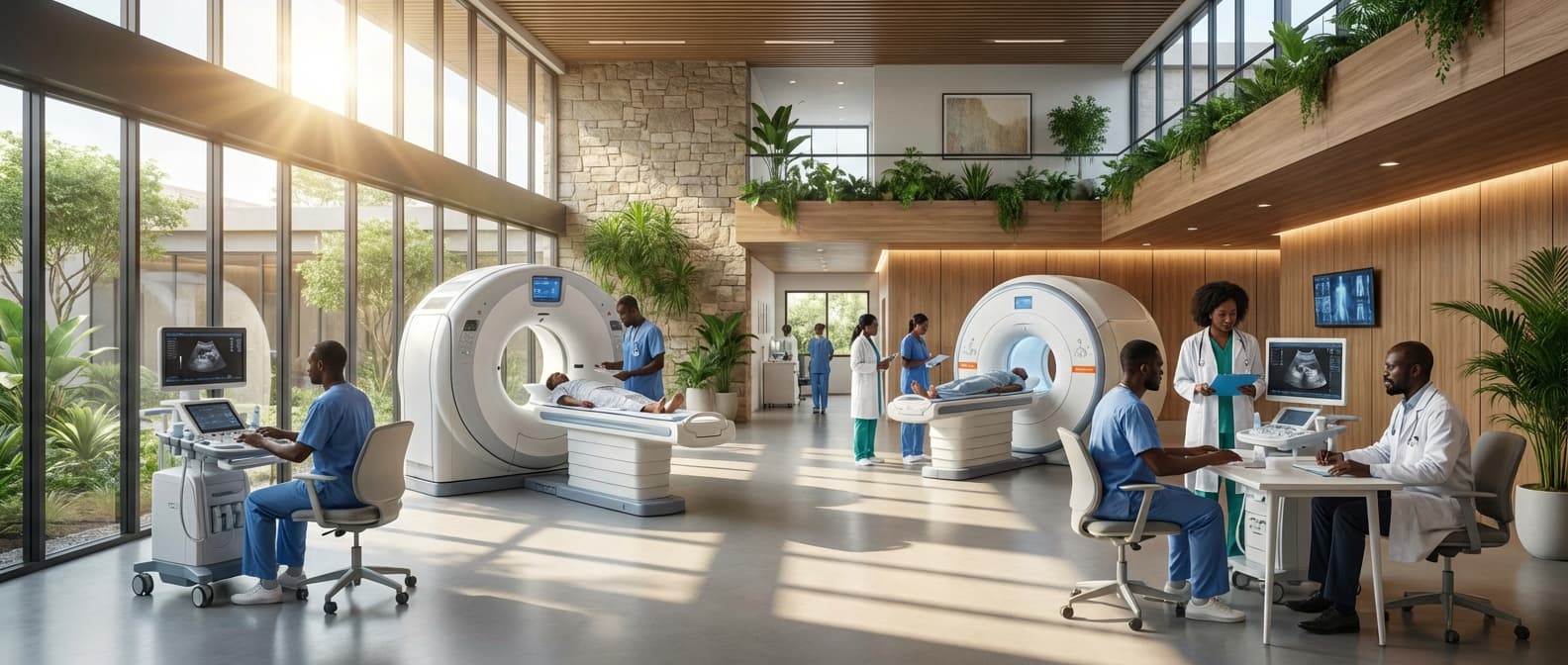
Endoscopy Solutions in Nigeria
Engineering Excellence & Technical Support
Advanced endoscopic equipment delivering superior visualization and diagnostic precision for minimally invasive procedures. High-standard technical execution following OEM protocols and local regulatory frameworks.
Advanced Imaging & Visualization
Leveraging state-of-the-art endoscopy systems featuring high-definition optics, narrow-band imaging (NBI), and advanced magnification for unparalleled visualization of mucosal details, aiding early detection of pre-cancerous lesions and precise polyp characterization in Nigerian healthcare facilities.
Minimally Invasive Intervention Capabilities
Providing sophisticated endoscopic tools and accessories for a wide range of therapeutic interventions, including complex polyp removal (EMR/ESD), stricture dilation, foreign body retrieval, and stent placement, thereby reducing patient trauma and accelerating recovery times across Nigeria.
Digital Workflow & Connectivity Solutions
Implementing integrated digital platforms for seamless image and video capture, secure data storage, remote expert consultation, and telemedicine capabilities, enhancing diagnostic accuracy, facilitating remote training, and improving patient management pathways for endoscopic procedures in Nigeria.
What Is Endoscopy Solutions In Nigeria?
Endoscopy Solutions in Nigeria refers to the provision of diagnostic and therapeutic medical services utilizing endoscopes. An endoscope is a long, flexible tube with a light and camera attached to its tip, allowing medical professionals to visualize the internal structures of the body with minimal invasiveness. These solutions are crucial for the accurate diagnosis and management of a wide range of gastrointestinal, respiratory, and other internal organ conditions.
| Who Needs Endoscopy Solutions? | Typical Use Cases |
|---|---|
| Individuals experiencing persistent gastrointestinal symptoms such as chronic abdominal pain, nausea, vomiting, difficulty swallowing, unexplained weight loss, or changes in bowel habits (diarrhea or constipation). | Screening for colorectal cancer in asymptomatic individuals above a certain age (e.g., 45-50 years) or those with a family history of colorectal cancer or polyps. Investigating suspected gastrointestinal bleeding, evidenced by blood in stool or vomit. Diagnosing and monitoring inflammatory bowel diseases (IBD) like Crohn's disease and ulcerative colitis. Evaluating upper gastrointestinal tract abnormalities such as peptic ulcers, gastritis, esophagitis, and Barrett's esophagus. Assessing and managing conditions of the biliary and pancreatic ducts, such as gallstones or strictures (via ERCP). Diagnosing lung diseases like chronic cough, hemoptysis, or suspected lung masses (via bronchoscopy). Investigating unexplained anemia, which can sometimes be linked to gastrointestinal bleeding. |
| Patients with a history of polyps or gastrointestinal cancers who require surveillance or follow-up procedures. | Patients with suspected or confirmed liver disease requiring evaluation of the biliary system. Diagnosing and treating upper airway conditions or abnormalities. Examining the small intestine for conditions not visible via gastroscopy or colonoscopy (via capsule endoscopy). Providing therapeutic interventions for bleeding ulcers, removed polyps, or dilated strictures. |
| Individuals with suspected foreign body ingestion. | Patients undergoing treatment for conditions requiring precise internal imaging and intervention. |
Key Components of Endoscopy Solutions in Nigeria
- Diagnostic Endoscopies: Procedures like gastroscopy (esophagus, stomach, duodenum), colonoscopy (large intestine), sigmoidoscopy (lower large intestine), and bronchoscopy (airways) to visualize abnormalities such as inflammation, ulcers, polyps, tumors, and bleeding sources.
- Therapeutic Endoscopies: Interventions performed during endoscopic procedures, including polyp removal (polypectomy), bleeding control (hemorrhage control via cautery, clipping, or injection), stricture dilation, foreign body retrieval, stenting, and tumor ablation.
- Endoscopic Biopsy: Collection of tissue samples from suspicious lesions for histopathological examination to confirm diagnoses, including malignancy.
- Sedation and Anesthesia Services: Administration of conscious sedation or general anesthesia to ensure patient comfort and safety during procedures.
- Specialized Endoscopic Techniques: Advanced procedures such as endoscopic retrograde cholangiopancreatography (ERCP) for the biliary and pancreatic systems, endoscopic ultrasound (EUS) for detailed imaging and fine-needle aspiration, and capsule endoscopy for small bowel examination.
- Equipment and Consumables: Procurement, maintenance, and sterilization of high-definition endoscopes, video processors, light sources, insufflators, suction pumps, and specialized endoscopic accessories.
- Training and Education: Continuous professional development for gastroenterologists, pulmonologists, surgeons, nurses, and technicians in the latest endoscopic techniques and technologies.
Who Needs Endoscopy Solutions In Nigeria?
Endoscopy solutions are vital in Nigeria for accurate diagnosis, effective treatment, and improved patient outcomes across a range of medical conditions. The demand stems from the need for less invasive procedures, early disease detection, and advanced therapeutic interventions.
| Department | Key Endoscopic Procedures | Why Endoscopy Solutions are Needed |
|---|---|---|
| Gastroenterology | Esophagogastroduodenoscopy (EGD), Colonoscopy, Sigmoidoscopy, Endoscopic Retrograde Cholangiopancreatography (ERCP) | Diagnosis and treatment of ulcers, gastritis, GERD, inflammatory bowel disease (IBD), polyps, gallstones, pancreatitis, and upper/lower GI cancers. |
| Pulmonology | Bronchoscopy | Diagnosis of lung infections, tumors, hemoptysis, and management of airway obstructions. Biopsies for lung cancer diagnosis. |
| Urology | Cystoscopy, Ureteroscopy | Diagnosis and treatment of bladder tumors, kidney stones, urinary tract infections (UTIs), and prostate issues. Biopsies and removal of stones/tumors. |
| Ear, Nose, and Throat (ENT) | Laryngoscopy, Nasopharyngoscopy, Otoscopy (advanced) | Diagnosis of throat cancers, sinus problems, vocal cord issues, and ear pathologies. Removal of foreign bodies. |
| Gynecology | Hysteroscopy | Diagnosis and treatment of uterine abnormalities, fibroids, polyps, and abnormal uterine bleeding. |
| General Surgery | Laparoscopy (though often considered minimally invasive surgery, the camera technology is related) | Used for diagnostic purposes and minimally invasive surgical procedures, reducing recovery time. |
| Emergency Medicine | Gastroscopy (for foreign body ingestion or bleeding) | Rapid assessment and intervention in critical situations involving the upper digestive tract. |
Target Customers and Departments for Endoscopy Solutions in Nigeria
- {"title":"Hospitals (Public and Private)","description":"The primary consumers of endoscopy solutions. These institutions require equipment for both diagnostic and therapeutic procedures across various specialties."}
- {"title":"Specialty Clinics","description":"Facilities focusing on specific areas like gastroenterology, pulmonology, or urology will have a dedicated need for advanced endoscopic equipment."}
- {"title":"Diagnostic Centers","description":"Independent or hospital-affiliated centers that offer specialized diagnostic services."}
- {"title":"Research Institutions and Universities","description":"For medical education, training, and research into gastrointestinal, pulmonary, and other related diseases."}
- {"title":"Government Health Programs","description":"Potential for large-scale procurement for public health initiatives, particularly for screening programs (e.g., for certain cancers)."}
Endoscopy Solutions Process In Nigeria
This document outlines the typical workflow for endoscopy solutions in Nigeria, from the initial inquiry by a client to the successful execution of the service. The process is designed to ensure efficient planning, resource allocation, and delivery of high-quality endoscopy services to various healthcare facilities.
| Stage | Key Activities | Responsible Parties | Deliverables/Outcomes | Typical Timeline |
|---|---|---|---|---|
| Client expresses interest in endoscopy solutions (equipment, consumables, training, maintenance). | Potential Client (Hospital/Clinic), Endoscopy Solutions Provider Sales Team | Understanding of client's needs, preliminary information sharing. | 1-3 Business Days |
| Detailed evaluation of the client's current infrastructure, existing equipment, specific service requirements, and any identified gaps. | Endoscopy Solutions Provider Technical Team/Consultant, Client's Medical Staff | Comprehensive needs assessment report, identification of required solutions. | 3-7 Business Days |
| Development of a tailored proposal outlining the recommended solutions, technical specifications, service plans, training programs, and a detailed cost breakdown. | Endoscopy Solutions Provider Technical & Sales Teams | Formal proposal document, detailed quotation. | 5-10 Business Days (after needs assessment) |
| Review and discussion of the proposal and quotation, negotiation of terms, and finalization of the service agreement. | Endoscopy Solutions Provider Management, Client's Procurement/Legal Department | Signed Service Level Agreement (SLA) or Contract. | 7-14 Business Days |
| Procurement, configuration, and testing of necessary endoscopy equipment and consumables. Scheduling of personnel and logistics for delivery and installation. | Endoscopy Solutions Provider Operations/Logistics Team, Technical Team | Ready-to-deploy equipment and consumables, confirmed personnel and transport arrangements. | 2-6 Weeks (depending on equipment lead time) |
| Delivery, installation, and commissioning of equipment. Training of client's medical staff. Commencement of planned endoscopy services or support. | Endoscopy Solutions Provider Technical Team, Trainers, Field Engineers, Client's Medical Staff | Fully operational endoscopy suite, trained staff, commencement of services. | Varies based on scope (days to weeks) |
| Ongoing technical support, maintenance, troubleshooting, and performance monitoring. Regular check-ins to ensure client satisfaction and address any emergent issues. | Endoscopy Solutions Provider Technical Support Team, Account Manager | Resolved issues, maintained equipment, high client satisfaction, ongoing service relationship. | Continuous |
| Issuance of invoices based on the agreed contract terms. Processing of payments from the client. | Endoscopy Solutions Provider Finance Department, Client's Finance Department | Accurate and timely invoicing, reconciled payments. | As per contract terms (e.g., monthly, per procedure) |
Endoscopy Solutions Process Workflow in Nigeria
- Inquiry & Initial Consultation
- Needs Assessment & Site Survey
- Proposal & Quotation Generation
- Contract Negotiation & Agreement
- Logistics & Equipment Preparation
- On-site Execution & Service Delivery
- Post-Service Follow-up & Support
- Billing & Payment
Endoscopy Solutions Cost In Nigeria
Endoscopy solutions in Nigeria encompass a range of procedures and services, with costs varying significantly based on several key factors. These include the type of endoscopy performed (e.g., gastroscopy, colonoscopy, bronchoscopy), the complexity of the procedure, the location and reputation of the healthcare facility, the doctor's experience and specialization, and whether it's a diagnostic or therapeutic intervention. The use of advanced equipment, consumables, anesthesia, and post-procedure care also contribute to the overall expense. While specific pricing is best obtained directly from medical providers, general price ranges can provide an estimation for individuals seeking these services in Nigeria.
| Endoscopy Type | Estimated Price Range (NGN) |
|---|---|
| Gastroscopy (Upper GI Endoscopy) | NGN 80,000 - NGN 250,000+ |
| Colonoscopy (Lower GI Endoscopy) | NGN 100,000 - NGN 300,000+ |
| Sigmoidoscopy | NGN 60,000 - NGN 180,000+ |
| Bronchoscopy | NGN 120,000 - NGN 350,000+ |
| Cystoscopy (for bladder) | NGN 70,000 - NGN 200,000+ |
| ERCP (Endoscopic Retrograde Cholangiopancreatography) | NGN 200,000 - NGN 500,000+ |
Key Factors Influencing Endoscopy Costs in Nigeria
- Type of Endoscopy: Different procedures target different organs and thus vary in complexity and equipment required.
- Facility Type: Private hospitals and specialized clinics generally charge more than public hospitals.
- Location: Major cities like Lagos and Abuja tend to have higher healthcare costs than smaller towns.
- Specialist Fees: Experienced and renowned gastroenterologists or surgeons command higher fees.
- Diagnostic vs. Therapeutic: Procedures aimed at diagnosis are typically less expensive than those involving treatment (e.g., polyp removal during colonoscopy).
- Anesthesia: The type and duration of anesthesia used will impact the cost.
- Consumables and Equipment: Disposable instruments and advanced technology contribute to the price.
- Pre and Post-Procedure Care: Consultation fees, diagnostic tests, and follow-up appointments add to the total cost.
Affordable Endoscopy Solutions Options
Affordable endoscopy solutions are crucial for healthcare providers aiming to deliver high-quality patient care without incurring excessive costs. This often involves exploring various options and implementing smart strategies to manage expenses. Value bundles and cost-saving strategies play a significant role in making these essential diagnostic and therapeutic procedures more accessible and economically viable.
| Strategy/Bundle | Description | Cost-Saving Benefit | Value Proposition |
|---|---|---|---|
| Value Bundles (Equipment + Consumables) | Packaging essential endoscopy equipment with a set of necessary disposable supplies at a bundled price. | Reduced overall purchase price for combined items, predictable budgeting. | Streamlined procurement, simplified inventory management, potential for volume discounts. |
| Value Bundles (Service + Training) | Offering service contracts that include regular maintenance, repairs, and dedicated training programs for endoscopy staff. | Lower long-term maintenance costs through preventative care, enhanced staff proficiency leading to fewer errors and faster procedures. | Extended equipment lifespan, improved patient safety, increased procedural throughput. |
| Cost-Saving Strategy: In-House Reprocessing Optimization | Implementing rigorous protocols and using efficient cleaning and disinfection agents to maximize the lifespan and reusability of endoscopes. | Reduced need for frequent replacement of expensive scopes, lower consumable costs for cleaning supplies. | Ensuring compliance with safety standards, maintaining operational readiness, contributing to overall cost control. |
| Cost-Saving Strategy: Predictive Maintenance Programs | Utilizing data analytics and regular inspections to anticipate and address potential equipment failures before they occur. | Minimizes unexpected downtime and costly emergency repairs, extends equipment lifespan. | Ensures consistent availability of endoscopy services, reduces disruption to patient care, and controls repair expenses. |
| Cost-Saving Strategy: Negotiated Contracts with Suppliers | Actively negotiating pricing and terms with multiple suppliers for both capital equipment and disposable items. | Secures more favorable pricing and payment terms, potentially leading to significant discounts. | Optimizes the cost of goods, allowing for reallocation of resources to other critical areas of patient care. |
Key Affordable Endoscopy Solutions Options
- Refurbished Endoscopes: Purchasing certified, pre-owned endoscopes can offer substantial savings compared to new equipment.
- Leasing Agreements: Flexible leasing options can reduce upfront capital investment and provide access to the latest technology.
- Outsourced Sterilization Services: Partnering with specialized third-party providers for endoscope reprocessing can be more cost-effective than in-house solutions.
- Consignment Inventory: Utilizing consignment models for disposable supplies can reduce storage costs and minimize waste.
- Group Purchasing Organizations (GPOs): Joining GPOs allows for aggregated purchasing power, leading to discounted prices on equipment and supplies.
- Technology Adoption Planning: Strategically planning the acquisition of new technologies, considering their long-term value and impact on procedure efficiency.
- Training and Skill Development: Investing in staff training to maximize the utilization of existing equipment and improve procedural efficiency.
Verified Providers In Nigeria
In Nigeria's rapidly evolving healthcare landscape, accessing trusted and qualified medical professionals is paramount. 'Verified Providers' signifies a commitment to quality, expertise, and patient safety. Franance Health stands at the forefront of this initiative, upholding rigorous credentialing processes that ensure their network of healthcare providers meets the highest standards. This dedication to verification offers patients peace of mind, knowing they are in capable hands. By choosing Franance Health, you're opting for a healthcare experience that prioritizes your well-being through a meticulously vetted selection of doctors, specialists, and healthcare facilities.
| Credential Aspect | Franance Health Verification Process | Benefit to Patients |
|---|---|---|
| Medical License | Primary source verification with the Medical and Dental Council of Nigeria (MDCN) and relevant professional bodies. | Confirms legal authorization to practice medicine in Nigeria, ensuring compliance with regulatory standards. |
| Educational Background | Verification of degrees, diplomas, and postgraduate qualifications from accredited institutions. | Ensures providers have received foundational and specialized training from reputable sources. |
| Professional Experience | In-depth review of work history, including certifications, and references from previous employers or colleagues. | Validates practical skills, experience level, and a track record of successful patient care. |
| Specialty Certifications | Confirmation of board certifications and fellowships in specific medical disciplines. | Guarantees that providers possess advanced knowledge and expertise in their chosen field. |
| Good Standing | Checks for any disciplinary actions or complaints lodged with professional regulatory bodies. | Protects patients by ensuring providers have a clean professional record and are ethical practitioners. |
Why Franance Health's Verified Providers are the Best Choice:
- Rigorous Credentialing: Franance Health employs a multi-faceted verification process that goes beyond basic licensing to include comprehensive background checks, peer reviews, and validation of specialized training and experience.
- Commitment to Quality Care: Verification ensures that providers adhere to established medical protocols, ethical standards, and best practices, leading to superior patient outcomes.
- Enhanced Patient Safety: By confirming qualifications and experience, Franance Health significantly reduces the risk of medical errors and ensures patients receive care from competent professionals.
- Access to Specialized Expertise: Their network includes a wide range of specialists, all thoroughly vetted, allowing patients to find the exact expertise they need for complex medical conditions.
- Trust and Transparency: Franance Health fosters trust through its transparent verification process, empowering patients to make informed decisions about their healthcare providers.
- Continuous Monitoring: Beyond initial verification, Franance Health often engages in ongoing monitoring to ensure providers maintain their high standards and stay current with medical advancements.
Scope Of Work For Endoscopy Solutions
This document outlines the Scope of Work (SOW) for the provision of Endoscopy Solutions. It details the technical deliverables and standard specifications required for the successful implementation and operation of these solutions. The objective is to ensure a high-quality, integrated, and reliable endoscopy system that meets the clinical and operational needs of the healthcare facility.
| Category | Specification/Requirement | Description | Compliance Standard/Notes |
|---|---|---|---|
| Imaging Resolution | Minimum 1920x1080 (Full HD) | Ensures clear and detailed visualization of anatomical structures. | DICOM compliant for image archiving and communication. |
| Connectivity | HDMI, DVI, SDI, USB 3.0, Network (Gigabit Ethernet) | Facilitates integration with displays, recording devices, and hospital IT infrastructure. | Compatibility with existing hospital network protocols. |
| Image Processing | Real-time image enhancement, noise reduction, white balance, zoom capabilities | Optimizes image quality for accurate diagnosis and procedure guidance. | Configurable by user. |
| Sterilization Compatibility | Autoclave, Ethylene Oxide (EtO), Low-Temperature Hydrogen Peroxide Plasma | Ensures effective and safe reprocessing of endoscopes and accessories. | Manufacturer's validated protocols must be provided. |
| Data Security | HIPAA/GDPR compliant, encrypted data transmission and storage | Protects patient privacy and sensitive medical information. | Access control and audit trails implemented. |
| Ergonomics and Usability | Intuitive user interface, lightweight and balanced design | Enhances user comfort and reduces procedural fatigue. | Feedback from clinical end-users to be incorporated. |
| System Integration | API/SDK for EMR/PACS integration, HL7 compliance | Enables seamless workflow by sharing patient data and procedure reports. | Successful integration testing with existing systems. |
| Power Requirements | Standard hospital power outlets (110-240V AC, 50/60 Hz) | Ensures compatibility with existing electrical infrastructure. | Power surge protection recommended. |
| Environmental Conditions | Operating temperature: 10-40°C, Humidity: 30-75% non-condensing | Specifies optimal operating environment for system longevity and performance. | As per manufacturer's recommendations. |
| Maintenance and Support | On-site technical support, remote diagnostics, preventative maintenance schedule | Minimizes downtime and ensures continuous operation of the endoscopy solutions. | Service Level Agreement (SLA) to be defined. |
Technical Deliverables
- Endoscopic Imaging Systems (e.g., HD/4K cameras, light sources, video processors)
- Endoscopes (e.g., flexible, rigid, specialized scopes for various procedures)
- Ancillary Equipment (e.g., insufflators, irrigation pumps, retrieval devices, imaging displays, recording and documentation systems)
- Integration Software (for Picture Archiving and Communication System - PACS, Electronic Medical Record - EMR, and other hospital information systems)
- Data Storage and Archiving Solutions
- Training Materials and Programs (for clinical staff and technical personnel)
- User Manuals and Technical Documentation
- Maintenance and Support Services Plan
- Installation and Commissioning Reports
- Validation and Verification Documentation
Service Level Agreement For Endoscopy Solutions
This Service Level Agreement (SLA) outlines the performance standards and guarantees for the Endoscopy Solutions provided by [Your Company Name] to [Client Name]. It defines the expected response times for technical support and the guaranteed uptime for the Endoscopy Solutions platform. This SLA aims to ensure the reliable and efficient operation of the Endoscopy Solutions, minimizing disruption to patient care and clinical workflows.
| Service Component | Uptime Guarantee | Response Time (Critical Incident) | Response Time (Non-Critical Incident) | Example Non-Critical Incident |
|---|---|---|---|---|
| Endoscopy Solutions Platform (Software & Servers) | 99.8% Uptime (excluding Scheduled Maintenance) | Within 1 Business Hour (during Business Hours) | Within 4 Business Hours (during Business Hours) | Minor software glitches, performance degradation not impacting core functionality |
| Endoscopic Imaging & Recording Functionality | 99.8% Uptime (excluding Scheduled Maintenance) | Within 1 Business Hour (during Business Hours) | Within 4 Business Hours (during Business Hours) | Intermittent image freezing, minor audio issues |
| Data Storage & Retrieval | 99.9% Uptime (excluding Scheduled Maintenance) | Within 2 Business Hours (during Business Hours) | Within 8 Business Hours (during Business Hours) | Slow data loading, temporary inability to access historical records |
Key Definitions
- Endoscopy Solutions: Refers to the complete suite of hardware, software, and associated services provided by [Your Company Name] for endoscopic procedures.
- Uptime: The percentage of time the Endoscopy Solutions are operational and accessible for use.
- Downtime: The percentage of time the Endoscopy Solutions are not operational or accessible.
- Scheduled Maintenance: Planned periods during which the Endoscopy Solutions may be unavailable for updates, upgrades, or system checks. These will be communicated in advance.
- Emergency Maintenance: Unscheduled downtime required to address critical system failures or security vulnerabilities. This will be communicated as soon as possible.
- Response Time: The maximum time within which [Your Company Name] will acknowledge and begin addressing a reported incident.
- Resolution Time: The target time within which an incident will be fully resolved. This is an aspirational target and may vary based on incident complexity.
- Business Hours: [Specify Business Hours, e.g., Monday to Friday, 9:00 AM to 5:00 PM, excluding public holidays in [Relevant Region]].
- Critical Incident: An incident that renders the Endoscopy Solutions completely inoperable, significantly impacting the ability to perform endoscopic procedures.
Frequently Asked Questions

Ready when you are
Let's scope your Endoscopy Solutions in Nigeria project in Nigeria.

Scaling healthcare logistics and technical systems across the entire continent.