
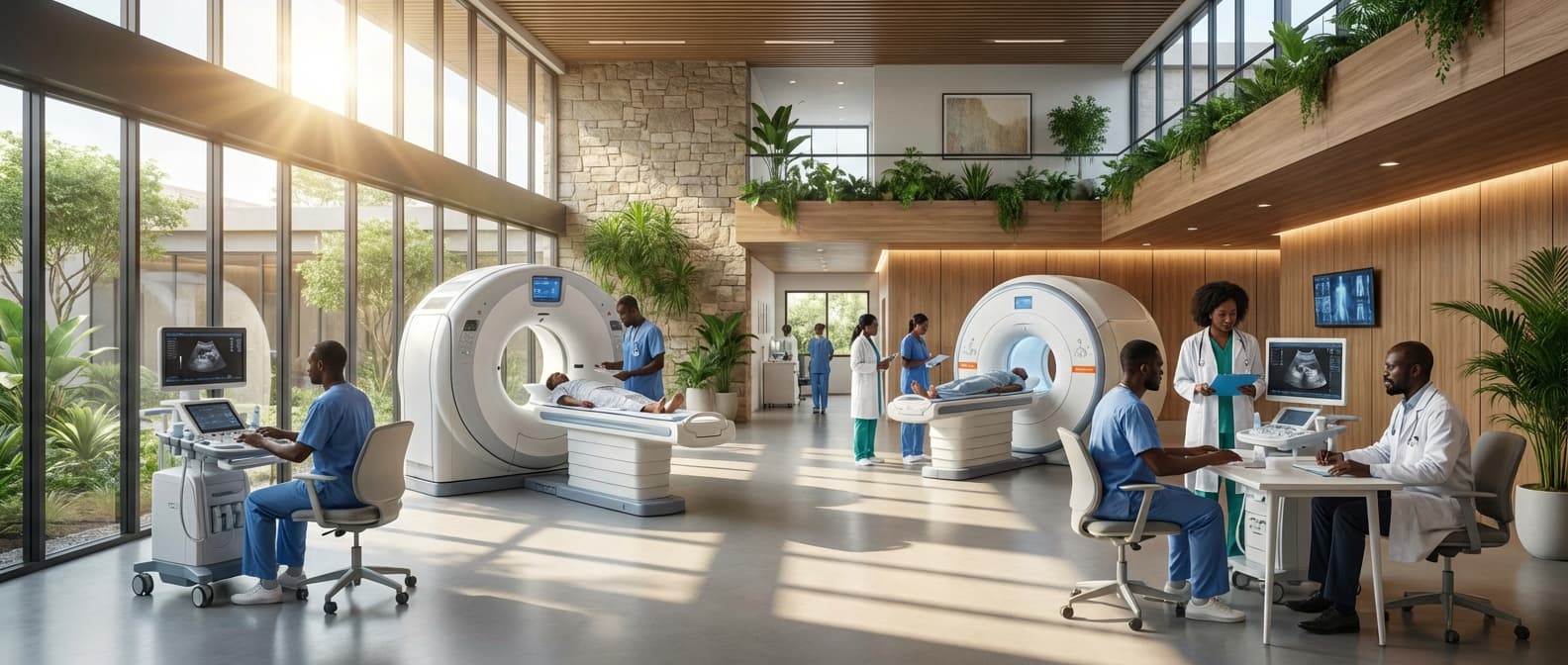
Diagnostic Imaging in Nigeria
Engineering Excellence & Technical Support
High-resolution imaging systems including CT scanners, MRI, X-ray, and ultrasound technology for accurate clinical diagnosis. High-standard technical execution following OEM protocols and local regulatory frameworks.
AI-Powered Stroke Detection
Deploying advanced AI algorithms to rapidly analyze CT scans and MRIs for early stroke detection, significantly reducing diagnosis time and improving patient outcomes in critical cases across Nigerian hospitals.
Mobile Ultrasound Units
Introducing portable, high-resolution ultrasound machines to reach underserved rural communities, providing essential diagnostic imaging services for prenatal care, abdominal issues, and musculoskeletal conditions where fixed facilities are scarce.
Cloud-Based PACS Implementation
Establishing secure, cloud-based Picture Archiving and Communication Systems (PACS) to enable seamless sharing of medical images between different healthcare providers nationwide, facilitating remote consultations and specialized diagnostics for complex cases.
What Is Diagnostic Imaging In Nigeria?
Diagnostic imaging in Nigeria refers to the use of various medical imaging modalities to visualize the internal structures of the human body for the purpose of diagnosis, disease monitoring, and therapeutic guidance. These non-invasive or minimally invasive techniques produce anatomical and physiological information, aiding clinicians in identifying abnormalities, staging diseases, and planning interventions. The service encompasses a range of technologies and their interpretation by qualified radiologists and radiographers.
| Imaging Modality | Description | Primary Applications |
|---|---|---|
| X-ray (Radiography) | Uses electromagnetic radiation to create images of internal structures. Highly effective for bone imaging and detection of certain lung pathologies. | Fracture detection, pneumonia, bowel obstruction, screening for tuberculosis. |
| Computed Tomography (CT) Scan | Combines multiple X-ray images taken from different angles to create cross-sectional views of the body. Provides detailed anatomical information. | Trauma assessment, stroke evaluation, cancer staging, detection of internal bleeding, detailed bone and soft tissue imaging. |
| Magnetic Resonance Imaging (MRI) | Utilizes strong magnetic fields and radio waves to generate detailed images of soft tissues, organs, and bones. Excellent for visualizing brain, spinal cord, joints, and muscles. | Neurological disorders (e.g., tumors, multiple sclerosis), musculoskeletal injuries, evaluation of abdominal and pelvic organs, cardiovascular imaging. |
| Ultrasound (Sonography) | Employs high-frequency sound waves to create real-time images of internal organs and blood flow. Safe, non-ionizing, and cost-effective. | Obstetrics and gynecology (fetal imaging, pelvic masses), abdominal imaging (liver, gallbladder, kidneys), vascular studies (Doppler), thyroid imaging. |
| Mammography | A specialized X-ray technique for imaging breast tissue, primarily used for breast cancer screening and diagnosis. | Breast cancer screening, diagnosis of palpable breast masses, evaluation of breast calcifications. |
Key Components of Diagnostic Imaging Services in Nigeria:
- Imaging Modalities: The core of diagnostic imaging involves a suite of technologies.
- Image Acquisition: The process of generating images using specialized equipment.
- Image Interpretation: The critical analysis of acquired images by trained medical professionals (radiologists and radiographers).
- Reporting: The documentation and communication of findings to the referring physician.
- Quality Assurance: Protocols to ensure the accuracy, reliability, and safety of imaging procedures.
Who Needs Diagnostic Imaging In Nigeria?
Diagnostic imaging plays a crucial role in modern healthcare by providing non-invasive visual insights into the human body, aiding in diagnosis, treatment planning, and monitoring of diseases. In Nigeria, the demand for these services is driven by a growing population, increasing prevalence of chronic diseases, and a developing healthcare infrastructure. Identifying who needs diagnostic imaging and where these services are most utilized is key to understanding its importance and ensuring its accessibility.
| Target Customer Group | Commonly Requested Imaging Modalities | Key Departments Utilizing Imaging |
|---|---|---|
| Individuals with Musculoskeletal Issues (e.g., pain, fractures, arthritis) | X-ray, MRI, Ultrasound | Orthopedics, Physiotherapy, General Practice |
| Individuals with Neurological Conditions (e.g., headaches, stroke, seizures) | CT Scan, MRI, X-ray (for skull fractures) | Neurology, Neurosurgery, Emergency Medicine |
| Individuals with Cardiovascular Diseases (e.g., chest pain, heart conditions) | Echocardiogram (Ultrasound), CT Angiography, X-ray (for chest) | Cardiology, Internal Medicine, Emergency Medicine |
| Individuals with Gastrointestinal and Genitourinary Issues (e.g., abdominal pain, kidney stones) | Ultrasound, CT Scan, X-ray (e.g., for bowel obstruction) | Gastroenterology, Urology, General Surgery, Internal Medicine |
| Women's Health (e.g., pregnancy monitoring, gynecological issues) | Ultrasound (Obstetric and Gynecological) | Obstetrics and Gynecology, Radiology |
| Pediatric Patients (children with various conditions) | X-ray, Ultrasound, CT Scan (with radiation dose considerations) | Pediatrics, General Practice, Emergency Medicine |
| Trauma and Emergency Patients (accidents, injuries) | X-ray, CT Scan, Ultrasound | Emergency Medicine, Trauma Surgery, Radiology |
| Oncology Patients (cancer diagnosis, staging, monitoring) | CT Scan, MRI, PET Scan (less common but growing) | Oncology, Radiology, Surgery, Internal Medicine |
| Patients requiring pre-operative assessment | X-ray, CT Scan, MRI, Ultrasound (depending on the surgical site) | All Surgical Specialties, Anesthesiology, Radiology |
| Patients requiring post-operative monitoring | X-ray, CT Scan, Ultrasound | All Surgical Specialties, Intensive Care Unit, Radiology |
Target Customers & Departments for Diagnostic Imaging in Nigeria
- Individuals experiencing symptoms that require internal visualization for diagnosis.
- Patients undergoing follow-up care for chronic conditions.
- Individuals referred by healthcare professionals for screening or diagnostic purposes.
- Patients involved in accidents or trauma requiring immediate assessment.
- Patients undergoing surgical procedures to assess anatomy and guide interventions.
Diagnostic Imaging Process In Nigeria
Diagnostic imaging plays a crucial role in modern healthcare, aiding in the diagnosis, staging, and management of a wide range of medical conditions. In Nigeria, the process typically follows a structured workflow, from the initial patient referral or inquiry to the final interpretation and reporting of the imaging results. This workflow ensures that patients receive appropriate imaging investigations in a timely and efficient manner.
| Step | Description | Key Personnel Involved | Common Technologies/Procedures |
|---|---|---|---|
| Patient Referral/Inquiry | A clinician (doctor, nurse practitioner, etc.) determines the need for a diagnostic imaging study based on the patient's signs, symptoms, or medical history. This can be initiated by a referring physician from a hospital or clinic, or sometimes by the patient themselves seeking a specific scan. | Referring Clinician, Patient | Clinical Examination, Patient History, Preliminary Investigations |
| Appointment Scheduling | Once referred, the patient or the referring clinic contacts the imaging center to schedule an appointment. This involves checking availability, determining the appropriate imaging modality, and providing pre-appointment instructions. | Receptionist/Administrator, Scheduling Officer, Patient | Phone Calls, Online Portals, Clinic Referrals |
| Patient Preparation | Depending on the specific imaging modality, patients may need to undergo preparation. This can include fasting, avoiding certain medications, drinking contrast agents, or changing into specialized gowns. Proper preparation is essential for optimal image quality. | Radiographer/Technologist, Nurse, Patient | Dietary Restrictions, Oral Contrast Agents, IV Contrast Agents (if applicable), Medical History Review |
| Image Acquisition (Execution) | The patient is positioned correctly by the radiographer/technologist, and the imaging scan is performed using the designated equipment. This is the core execution phase where the images are captured. | Radiographer/Technologist | X-ray, CT Scan, MRI, Ultrasound, Mammography, Fluoroscopy |
| Image Processing and Enhancement | The raw images acquired are processed and may undergo enhancement to improve clarity and visibility of anatomical structures or abnormalities. This is often done by the radiographer or a PACS administrator. | Radiographer/Technologist, PACS Administrator | Digital Image Processing Software, Contrast Enhancement Algorithms |
| Radiologist Interpretation | A qualified radiologist reviews the processed images, analyzes them for any findings, and compares them with the patient's clinical information. This is a critical diagnostic step. | Radiologist (Specialist Physician) | Radiological Knowledge, Anatomical Expertise, Pathology Recognition |
| Report Generation | The radiologist dictates or writes a detailed report summarizing their findings, conclusions, and recommendations. This report is then transcribed and finalized. | Radiologist, Medical Transcriptionist | Digital Dictation Systems, Medical Terminology, Reporting Templates |
| Report Delivery and Clinical Integration | The final report is delivered to the referring clinician, usually electronically via a Picture Archiving and Communication System (PACS) or physically. The clinician then integrates this information into the patient's overall medical management plan. | Referring Clinician, Radiologist, PACS Administrator | PACS, Electronic Health Records (EHR), Secure Communication Channels |
| Billing and Record Keeping | The imaging center handles the billing for the services rendered and maintains comprehensive patient records, including images and reports, for future reference and legal purposes. | Billing Department, Administrative Staff | Medical Billing Software, Archiving Systems |
Diagnostic Imaging Workflow in Nigeria
- Patient Referral/Inquiry
- Appointment Scheduling
- Patient Preparation
- Image Acquisition (Execution)
- Image Processing and Enhancement
- Radiologist Interpretation
- Report Generation
- Report Delivery and Clinical Integration
- Billing and Record Keeping
Diagnostic Imaging Cost In Nigeria
Diagnostic imaging plays a crucial role in modern healthcare, aiding in the diagnosis, staging, and monitoring of a wide array of medical conditions. In Nigeria, the cost of these services can vary significantly due to several factors, impacting accessibility for patients across different socioeconomic strata. Understanding these pricing determinants and the typical cost ranges in Nigerian Naira (NGN) is essential for both patients and healthcare providers. Several factors influence the price of diagnostic imaging procedures in Nigeria. These include the type of imaging modality used (e.g., X-ray, Ultrasound, CT scan, MRI), the complexity of the examination, the specific body part being imaged, and whether contrast agents are required. The location of the healthcare facility also plays a significant role; imaging services in private, well-equipped hospitals in major cities like Lagos or Abuja tend to be more expensive than those in public hospitals or smaller clinics in less developed regions. The expertise and reputation of the radiologist or technician performing the scan can also command a premium. Furthermore, the cost of maintaining advanced imaging equipment, including software updates, calibration, and specialized personnel, contributes to the overall pricing. Availability of these services can also be a factor; areas with fewer imaging centers may experience higher prices due to limited competition. Finally, government regulations and the presence of health insurance schemes (though not yet widespread for comprehensive diagnostic imaging coverage in Nigeria) can influence patient out-of-pocket expenses.
| Imaging Procedure | Estimated Cost Range (NGN) - Public/General Hospitals | Estimated Cost Range (NGN) - Private/Specialized Centers |
|---|---|---|
| X-ray (Single View) | 5,000 - 15,000 | 10,000 - 30,000 |
| X-ray (Multiple Views) | 10,000 - 25,000 | 20,000 - 50,000 |
| Ultrasound (Abdomen/Pelvis) | 15,000 - 40,000 | 30,000 - 80,000 |
| Ultrasound (Obstetric - Antenatal) | 20,000 - 45,000 | 40,000 - 90,000 |
| CT Scan (Head/Brain) | 50,000 - 120,000 | 100,000 - 250,000+ |
| CT Scan (Abdomen/Pelvis) | 70,000 - 150,000 | 150,000 - 350,000+ |
| CT Scan with Contrast | 80,000 - 200,000+ | 180,000 - 400,000+ |
| MRI (Brain) | 100,000 - 250,000 | 200,000 - 500,000+ |
| MRI (Spine) | 120,000 - 300,000 | 250,000 - 600,000+ |
| MRI with Contrast | 150,000 - 350,000+ | 300,000 - 700,000+ |
| Mammography (Single Breast) | 20,000 - 50,000 | 40,000 - 100,000 |
Key Pricing Factors for Diagnostic Imaging in Nigeria:
- Imaging Modality: X-ray, Ultrasound, CT Scan, MRI, Mammography, etc.
- Examination Complexity: Basic scan vs. specialized protocols.
- Body Part Imaged: Simple extremity vs. complex organ system.
- Use of Contrast Agents: Addition of intravenous or oral contrast.
- Facility Type: Public hospital, private clinic, specialized imaging center.
- Geographic Location: Major city vs. rural area.
- Radiologist/Technician Expertise: Experience and specialization.
- Equipment Maintenance & Technology: Cost of upkeep and advanced features.
- Availability & Competition: Number of imaging centers in an area.
- Insurance Coverage: Impact of available health plans (limited for imaging).
Affordable Diagnostic Imaging Options
Navigating the healthcare system can be challenging, especially when it comes to diagnostic imaging. The costs associated with X-rays, MRIs, CT scans, and ultrasounds can be significant. Fortunately, there are affordable diagnostic imaging options and strategies available to help patients manage these expenses. Understanding value bundles and implementing cost-saving techniques can make a considerable difference in your out-of-pocket costs.
| Cost-Saving Strategy | Description | Example |
|---|---|---|
| Shop Around/Compare Prices | Different imaging facilities have varying pricing structures. It's crucial to compare costs between providers in your area. | Comparing the price of an MRI of the knee at three different imaging centers and choosing the least expensive. |
| Utilize In-Network Providers | Using imaging centers and radiologists that are in your health insurance network will significantly reduce your out-of-pocket expenses due to pre-negotiated rates. | Choosing a radiology group contracted with your insurance plan for a CT scan. |
| Ask About Self-Pay Discounts | If you don't have insurance or are facing high deductibles, many imaging centers offer discounted cash prices for self-pay patients. | Inquiring about a cash discount for a diagnostic ultrasound if you don't plan to use your insurance. |
| Negotiate Pricing | While less common, in some cases, you may be able to negotiate the price, especially for cash-pay patients or if facing financial hardship. | Contacting a facility to discuss a lower price for an upcoming PET scan due to a high deductible. |
| Consider Freestanding Imaging Centers | Freestanding imaging centers are often more affordable than those affiliated with hospitals, as they typically have lower overhead costs. | Opting for an MRI at a dedicated imaging clinic instead of one within a hospital system. |
| Understand Your Insurance Benefits | Familiarize yourself with your insurance policy, including deductibles, copays, coinsurance, and out-of-pocket maximums, to anticipate costs. | Reviewing your Explanation of Benefits (EOB) to understand how much your insurance will cover for an upcoming X-ray. |
| Pre-Authorization | Ensure your insurance company pre-authorizes the imaging procedure to avoid surprise denials or unexpected charges. | Submitting a pre-authorization request to your insurance before scheduling a specialized MRI. |
| Payment Plans | If facing a large bill, ask the imaging center if they offer flexible payment plans to spread out the cost over time. | Arranging to pay for a series of ultrasounds in monthly installments. |
Understanding Value Bundles
- What are Value Bundles? Value bundles, also known as package pricing or bundled payments, are a healthcare pricing model where a single price is set for a group of related services that a patient receives. Instead of paying for each individual service separately, you pay one consolidated fee.
- Benefits of Value Bundles:
- Cost Predictability: Bundles offer a clearer understanding of the total cost upfront, reducing unexpected expenses.
- Potential Savings: Often, bundles are priced lower than the sum of individual services, creating a cost-saving opportunity.
- Coordinated Care: They can incentivize providers to coordinate care more effectively, as they have a vested interest in the overall outcome and efficiency.
- Reduced Administrative Burden: Simpler billing processes for both patients and providers.
- How to Find Value Bundles:
- Inquire with Imaging Centers: Directly ask imaging facilities if they offer bundled pricing for specific procedures or imaging packages.
- Check with Insurance Providers: Your health insurance may have preferred providers or specific bundled plans that offer discounts.
- Explore Online Healthcare Marketplaces: Some online platforms are emerging that offer transparent pricing and bundled options for diagnostic imaging.
Verified Providers In Nigeria
In Nigeria's evolving healthcare landscape, identifying trustworthy and competent medical professionals is paramount. "Verified Providers" signifies a commitment to quality, ethical practice, and patient well-being. Franance Health stands out in this regard, not only by adhering to rigorous verification standards but also by actively championing them. Their commitment extends beyond simple credentialing, focusing on continuous professional development, patient-centric care, and a deep understanding of the unique healthcare needs within Nigeria. Choosing a verified provider through Franance Health means opting for assurance, expertise, and a partner dedicated to your health journey.
| Credential Type | Franance Health Verification Process | What it means for Patients |
|---|---|---|
| Medical Licenses | Validation against official regulatory bodies (e.g., MDCN). | Ensures providers are legally qualified to practice medicine in Nigeria. |
| Specialist Certifications | Verification of board certifications and fellowships from recognized institutions. | Confirms specialized expertise in particular medical fields. |
| Educational Background | Confirmation of degrees and academic qualifications from accredited universities. | Guarantees a strong foundational understanding of medical science. |
| Professional Experience | Thorough review of work history and previous practice environments. | Assesses practical application of knowledge and clinical skills. |
| Continuing Medical Education (CME) | Tracking of participation in approved CME programs and workshops. | Indicates commitment to staying current with medical best practices. |
| Peer Reviews & Testimonials | Collection and assessment of feedback from colleagues and patients (where applicable). | Provides insights into a provider's reputation and patient satisfaction. |
Why Franance Health Credentials Matter
- Rigorous Verification Process: Franance Health employs a multi-faceted approach to verify the qualifications, licenses, and experience of all its affiliated healthcare professionals.
- Commitment to Ethical Practice: All verified providers adhere to a strict code of conduct, ensuring patient privacy, respect, and professional integrity.
- Focus on Continuous Professional Development: Franance Health encourages and supports ongoing training and education for its providers, keeping them abreast of the latest medical advancements.
- Patient-Centric Approach: Verified providers prioritize patient needs, fostering open communication and shared decision-making in healthcare.
- Understanding of Local Healthcare Needs: Franance Health's network is built with an awareness of Nigeria's specific health challenges and the best approaches to address them.
- Enhanced Trust and Reliability: The 'Verified Provider' badge offers peace of mind, assuring patients they are receiving care from qualified and reputable professionals.
Scope Of Work For Diagnostic Imaging
This Scope of Work (SOW) outlines the requirements for providing comprehensive diagnostic imaging services. It details the technical deliverables, standard specifications, and operational expectations for a vendor performing these services. The goal is to ensure high-quality, accurate, and timely diagnostic imaging to support patient care and clinical decision-making.
| Deliverable | Specification | Standard | Acceptance Criteria |
|---|---|---|---|
| Radiology Reports | Comprehensive, clear, and concise reports including findings, impressions, and recommendations. | ACR (American College of Radiology) guidelines, relevant professional society standards (e.g., RSNA). | Reports delivered within specified turnaround times (e.g., STAT < 1 hour, Routine < 24 hours). Reports must be accurate and clinically relevant upon review by referring physician. |
| Digital Images | High-resolution digital images in DICOM (Digital Imaging and Communications in Medicine) format. | DICOM 3.0 standard, with appropriate metadata. | Images are viewable, manipulable, and archivable on the client's PACS. No loss of image quality compared to original acquisition. |
| Image Quality | Images must be of diagnostic quality, free from artifacts that impede interpretation. | Internal quality control procedures, adherence to ALARA (As Low As Reasonably Achievable) principles for radiation dose. | Radiologist sign-off on image quality for a minimum of 98% of studies. |
| PACS Integration | Seamless integration with the client's existing PACS and EHR (Electronic Health Record) systems. | HL7 (Health Level Seven) compliance for data exchange. Secure and reliable data transfer protocols. | Successful transmission and display of images and reports within the client's systems without manual intervention for 99% of transmissions. |
| Equipment Maintenance & Calibration | Regular preventative maintenance, calibration, and performance testing of all imaging equipment. | Manufacturer's recommended schedules and specifications. Compliance with relevant regulatory standards (e.g., FDA, Joint Commission). | Documentation of all maintenance and calibration activities. Equipment uptime of >95% for critical imaging modalities. |
| Staffing & Qualifications | Qualified and credentialed technologists and radiologists. | ARRT (American Registry of Radiologic Technologists) certification for technologists. Board certification by the American Board of Radiology (or equivalent) for radiologists. | Verification of credentials for all personnel. No reportable adverse events directly attributable to staff qualifications. |
| Contrast Media | Appropriate administration of contrast media, including patient screening for allergies and contraindications. | ACR Manual on Contrast Media, institutional protocols. | Adherence to safety protocols. No adverse contrast reactions exceeding institutional thresholds. |
| Billing and Coding | Accurate and compliant billing and coding for all services rendered. | CPT (Current Procedural Terminology) codes, ICD-10 (International Classification of Diseases, 10th Revision) codes. Compliance with all federal and state billing regulations. | Billing errors not exceeding 1% of claims submitted. |
Key Imaging Modalities and Services Required
- Radiography (X-ray)
- Computed Tomography (CT)
- Magnetic Resonance Imaging (MRI)
- Ultrasound
- Mammography
- Fluoroscopy
- Nuclear Medicine (including PET/CT where applicable)
- Image Archiving and Communication System (PACS) integration
- Radiologist interpretation and reporting
- Contrast media administration
- Image retrieval and transfer
Service Level Agreement For Diagnostic Imaging
This Service Level Agreement (SLA) outlines the performance expectations and guarantees for diagnostic imaging services provided by [Provider Name] to [Client Name]. It defines key performance indicators (KPIs) related to response times for critical studies and overall system uptime.
| Metric | Definition | Target | Measurement Period | Remedy for Failure |
|---|---|---|---|---|
| Critical Study Read Time | Time from completion of imaging acquisition to radiologist report availability for emergent/critical cases. | 90% of critical studies reported within 2 hours. | Monthly | 10% discount on monthly service fees for each occurrence exceeding the target by 5% or more. |
| Urgent Study Read Time | Time from completion of imaging acquisition to radiologist report availability for urgent (non-emergent) cases. | 95% of urgent studies reported within 24 hours. | Monthly | 5% discount on monthly service fees for each occurrence exceeding the target by 5% or more. |
| Routine Study Read Time | Time from completion of imaging acquisition to radiologist report availability for routine cases. | 98% of routine studies reported within 72 hours. | Monthly | 3% discount on monthly service fees for each occurrence exceeding the target by 5% or more. |
| System Uptime | Percentage of time that all critical diagnostic imaging systems are operational and available for use during scheduled operating hours. | 99.5% | Monthly | For every 0.5% downtime below 99.5% in a given month, a credit of 5% of the monthly service fee will be applied. |
| Technical Support Response Time | Time from initial report of a technical issue to the initiation of troubleshooting by a qualified technician. | Within 1 hour for critical system failures. | As needed, reported monthly. | N/A (focus is on resolution, not just initial response) |
Scope of Services
- On-demand availability of diagnostic imaging equipment (e.g., MRI, CT, X-ray, Ultrasound).
- Timely interpretation and reporting of imaging studies by qualified radiologists.
- Secure storage and retrieval of all imaging studies and reports.
- Technical support for imaging equipment and associated software.
Frequently Asked Questions

Ready when you are
Let's scope your Diagnostic Imaging in Nigeria project in Nigeria.

Scaling healthcare logistics and technical systems across the entire continent.