
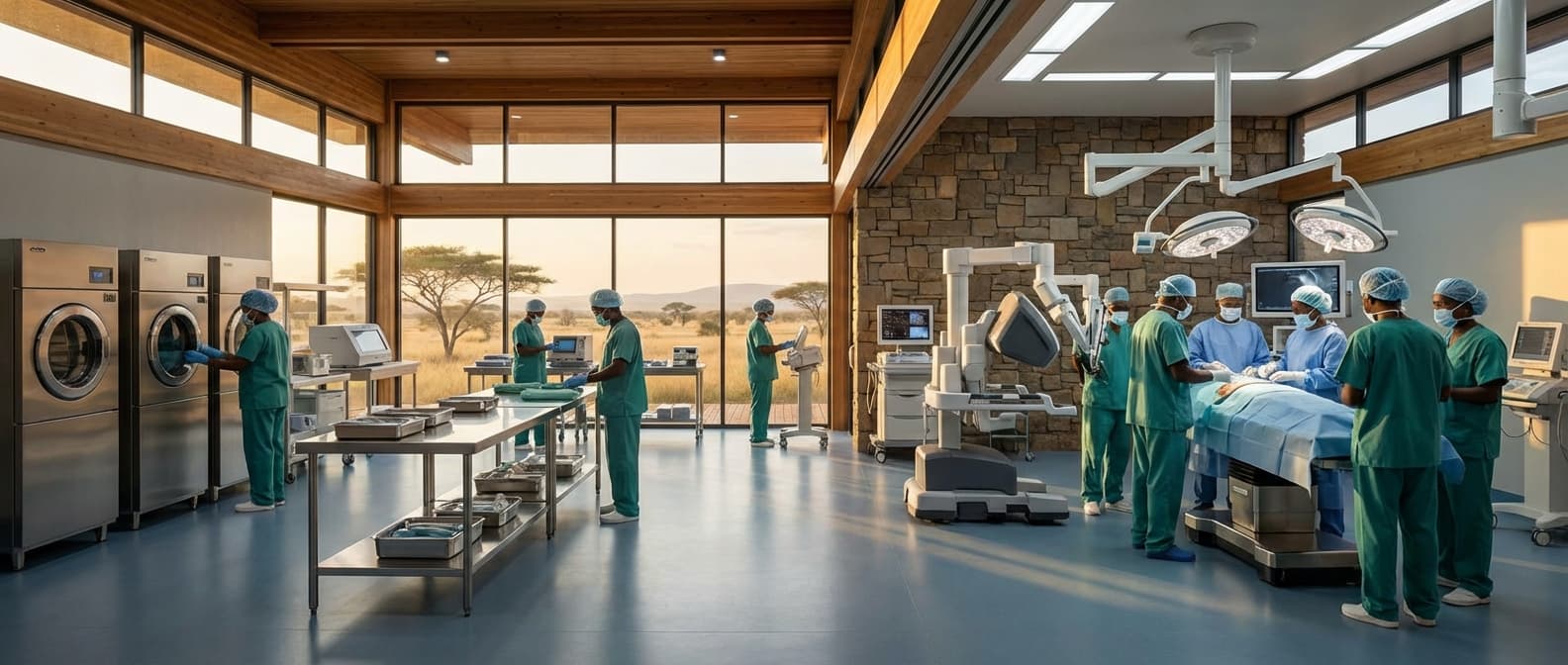
Operating Theatre Turnkey Build in Nigeria
Engineering Excellence & Technical Support
Complete OR design, equipment integration and commissioning High-standard technical execution following OEM protocols and local regulatory frameworks.
Optimized Workflow & Infection Control
Our turnkey operating theatre builds in Nigeria integrate advanced HVAC systems with HEPA filtration, positive pressure differentials, and seamless, anti-microbial surface finishes. This ensures a sterile environment, minimizing infection risks and maximizing surgical team efficiency, adhering to international standards.
Robust Power & Medical Gas Infrastructure
We provide reliable and redundant power solutions, including UPS and generator backups, crucial for uninterrupted surgery in the Nigerian context. Integrated medical gas pipelines (Oxygen, Medical Air, Vacuum) are designed for scalability and compliance, guaranteeing patient safety and operational continuity.
Future-Ready Surgical Technology Integration
Our turnkey solutions encompass the seamless integration of cutting-edge surgical equipment and technology. We design flexible layouts and robust IT infrastructure to accommodate advancements in minimally invasive surgery, robotics, and digital imaging, ensuring your Nigerian facility remains at the forefront of medical innovation.
What Is Operating Theatre Turnkey Build In Nigeria?
An Operating Theatre Turnkey Build in Nigeria refers to a comprehensive service that delivers a fully functional, state-of-the-art operating theatre ready for immediate use. This end-to-end solution encompasses the entire lifecycle of operating theatre construction and outfitting, from initial design and planning through to final commissioning and handover. The 'turnkey' aspect signifies that the client receives a complete, operational unit without the need for extensive involvement in the granular execution of each phase. This model is particularly relevant in developing healthcare markets like Nigeria, where access to specialized expertise and integrated project management can be limited. The service typically involves the integration of architectural, structural, mechanical, electrical, and plumbing (MEP) systems, along with specialized medical equipment and interior finishes, all designed to meet stringent healthcare standards and regulatory requirements for infection control, safety, and functionality.
| Who Needs an Operating Theatre Turnkey Build? | Typical Use Cases | ||||
|---|---|---|---|---|---|
| Hospitals (Public & Private): Seeking to upgrade existing facilities or establish new, modern operating theatres to improve surgical capacity and patient outcomes. | Specialty Clinics: Requiring dedicated, advanced surgical suites for specific disciplines (e.g., cardiology, orthopedics, ophthalmology). | Medical Research Institutions: Needing equipped surgical spaces for clinical trials and research activities. | Government Healthcare Initiatives: Implementing projects to expand and modernize public healthcare infrastructure. | International Aid Organizations: Funding the development of healthcare facilities in underserved regions. | New Healthcare Ventures: Establishing a comprehensive medical facility from the ground up. |
| Creation of New Operating Suites: Building entirely new surgical facilities within existing or new hospital structures. | Expansion of Surgical Capacity: Adding more operating rooms to meet increasing demand. | Modernization of Outdated Theatres: Replacing or renovating old, non-compliant surgical spaces with contemporary, functional units. | Establishment of Specialized Surgical Hubs: Creating dedicated centers for complex surgical procedures. | Emergency Preparedness Facilities: Building rapidly deployable or resilient surgical units. | Private Practice Expansion: Allowing individual practitioners or groups to offer advanced surgical services. |
Key Components of an Operating Theatre Turnkey Build:
- Architectural Design & Planning: Site assessment, conceptualization, detailed architectural drawings, space planning to optimize workflow and patient safety.
- Structural Construction: Building the physical shell of the operating theatre, including walls, floors, ceilings, and ensuring appropriate load-bearing capacities.
- MEP Systems Integration: Installation and integration of specialized HVAC (Heating, Ventilation, and Air Conditioning) systems with laminar airflow, medical gas pipelines (oxygen, vacuum, medical air), specialized electrical wiring (isolated power systems, emergency power), and plumbing for sterile and non-sterile water.
- Specialized Interior Finishes: Application of anti-microbial, seamless, and easily cleanable materials for walls, floors, and ceilings. This includes specialized paints, epoxy coatings, and anti-static flooring.
- Lighting Systems: Installation of surgical lighting (surgical lamps, LED systems) with features for illumination intensity, color rendering index (CRI), and shadow reduction, alongside ambient and task lighting.
- Medical Equipment Outfitting: Procurement, installation, and calibration of essential operating theatre equipment such as anesthesia machines, surgical tables, patient monitors, electro-surgical units, and imaging equipment integration points.
- Ancillary Room Fit-out: Construction and equipping of adjacent support rooms, including scrub sinks, sterilization areas, instrument preparation rooms, recovery bays, and changing rooms.
- Safety & Infection Control Measures: Implementation of advanced infection control protocols, including air filtration systems (HEPA filters), negative pressure rooms where applicable, and appropriate waste management systems.
- Commissioning & Validation: Thorough testing and validation of all installed systems and equipment to ensure compliance with performance specifications and regulatory standards.
- Training & Handover: Provision of training to clinical and technical staff on the operation and maintenance of the new facility and its equipment, followed by formal handover.
Who Needs Operating Theatre Turnkey Build In Nigeria?
The demand for operating theatre turnkey builds in Nigeria is driven by the evolving healthcare landscape and the increasing need for modern, compliant, and efficient surgical facilities. These comprehensive solutions, which encompass design, construction, fit-out, and equipment installation, cater to a specific set of needs within the Nigerian healthcare sector. They offer a streamlined, project-managed approach, reducing complexity and ensuring a high standard of readiness for surgical procedures. This is particularly crucial for facilities aiming to offer specialized surgeries, adhere to international best practices, and enhance patient safety and outcomes.
| Customer Type | Primary Need for Turnkey Build | Relevant Departments |
|---|---|---|
| New Hospital Developments | Establishing a complete, modern surgical facility from the ground up. | All core and ancillary departments within the operating theatre complex. |
| Existing Hospitals (Upgrade/Expansion) | Replacing outdated facilities, increasing capacity, or specializing surgical services. | Specific operating theatres requiring modernization, CSSD, recovery areas. |
| Teaching Hospitals | Creating advanced, state-of-the-art facilities for training and research. | Advanced operating theatres, simulation labs, integrated imaging. |
| Specialty Hospitals | Building highly specialized surgical environments tailored to specific medical disciplines. | Dedicated specialized theatres, advanced equipment for niche procedures. |
| Government Health Ministries | Improving public healthcare infrastructure and access to surgical services. | Operating theatres in public hospitals across various specialties. |
| International Aid/NGOs | Establishing or enhancing surgical capabilities in underserved or crisis-affected regions. | Basic to advanced operating theatres, often with a focus on essential surgical needs. |
| Private Investors/Healthcare Groups | Creating profitable, high-quality healthcare businesses with cutting-edge surgical offerings. | Comprehensive operating theatre complexes designed for efficiency and patient satisfaction. |
Target Customers and Departments for Operating Theatre Turnkey Builds in Nigeria
- Target Customers:
- Hospitals (Public and Private):
- New Hospital Developments: Greenfield projects requiring complete surgical suites.
- Existing Hospitals: Seeking to upgrade or expand their surgical capacity, replace outdated facilities, or build new specialized operating theatres.
- Teaching Hospitals: Requiring advanced facilities for training medical professionals and conducting research.
- Specialty Hospitals: Focusing on specific areas like cardiology, orthopedics, neurosurgery, or oncology.
- Government Health Ministries/Agencies:
- Public Health Infrastructure Projects: Initiating or overseeing the construction/renovation of operating theatres in government-owned hospitals.
- National Health Programs: Implementing initiatives that require improved surgical access in various regions.
- International Aid Organizations & NGOs:
- Healthcare Development Projects: Funding or managing the establishment of surgical facilities in underserved areas or in response to specific health crises.
- Private Investors & Healthcare Groups:
- Establishing New Healthcare Ventures: Creating modern medical centers with state-of-the-art surgical capabilities.
- Acquiring and Renovating Existing Facilities: Bringing older hospitals up to current standards with advanced operating theatres.
- Corporate Healthcare Providers:
- Employee Health Services: Establishing or upgrading facilities to cater to the healthcare needs of their workforce.
- Target Departments (within the aforementioned customers):
- The Core Operating Theatre Suite:
- Main Operating Theatres (General Surgery): For a wide range of surgical procedures.
- Specialized Operating Theatres:
- **Orthopedic Theatres:** Equipped for bone and joint surgeries.- **Cardiothoracic Theatres:** For heart and lung surgeries.- **Neurosurgical Theatres:** For brain and spinal cord procedures.- **Urology Theatres:** For urinary tract and male reproductive system surgeries.- **Gynecological Theatres:** For female reproductive system surgeries.- **Ophthalmology Theatres:** For eye surgeries.- **ENT (Ear, Nose, and Throat) Theatres:** For procedures related to these areas.- **Plastic and Reconstructive Surgery Theatres:** For aesthetic and reconstructive procedures.- **Pediatric Theatres:** Designed for the specific needs of children.- Ancillary and Support Departments Crucial for Theatre Operations:
- Sterilization and Decontamination Units (CSSD - Central Sterile Supply Department): Essential for instrument processing and infection control.
- Pre-operative Holding Areas: For patient preparation before surgery.
- Post-Anesthesia Care Units (PACU) / Recovery Rooms: For patient monitoring immediately after surgery.
- Surgical Intensive Care Units (SICU) / High Dependency Units (HDU): For critically ill patients requiring specialized post-operative care.
- Diagnostic Imaging Rooms (e.g., X-ray, CT Scan, MRI): Often located near or integrated with the theatre complex for immediate diagnostic needs.
- Laboratories: For intra-operative testing and analysis.
- Pharmacy: For immediate dispensing of critical medications.
- Surgical Waiting Areas: For patients and their families.
Operating Theatre Turnkey Build Process In Nigeria
Establishing a state-of-the-art operating theatre in Nigeria involves a structured and comprehensive turnkey build process. This workflow guides clients from their initial interest to the fully operational facility, encompassing design, procurement, construction, installation, and commissioning. The goal of a turnkey project is to deliver a complete, ready-to-use operating theatre, minimizing client involvement in the day-to-day management of the various trades and specialists.
| Stage | Key Activities | Deliverables | Typical Duration (Weeks/Months) | Key Stakeholders Involved |
|---|---|---|---|---|
| Client expresses interest. Discusses project scope, budget, and preliminary requirements. Site visit may be conducted. | Initial project brief, understanding of client needs. | 1-2 Weeks | Client, Project Manager, Sales/Business Development Team |
| Detailed analysis of operational needs, equipment requirements, patient flow, and regulatory compliance. Assessment of site suitability and potential challenges. | Feasibility report, detailed functional brief, preliminary budget. | 2-4 Weeks | Client (Medical Staff), Project Manager, Healthcare Consultants, Architects |
| Development of preliminary layouts, floor plans, and 3D visualizations. Focus on optimizing space, workflow, and infection control principles. | Conceptual drawings, preliminary space plan, estimated cost breakdown. | 3-6 Weeks | Architects, Interior Designers, Project Manager, Client |
| Production of comprehensive architectural, structural, MEP, and specialized system designs. Includes detailed specifications for all materials and equipment. | Complete set of architectural and engineering drawings, detailed specifications, Bill of Quantities (BOQ). | 6-12 Weeks | Architects, Structural Engineers, MEP Engineers, Biomedical Engineers, Project Manager |
| Submission of design documents to relevant government agencies (e.g., Ministry of Health, building control authorities) for necessary approvals and permits. | Obtained building permits, environmental impact assessments (if required), and operational licenses. | 4-16 Weeks (highly variable) | Project Manager, Architects, Legal Counsel, Local Consultants |
| Sourcing and procurement of all construction materials, specialized medical equipment, and integrated systems. Vendor selection and contract negotiation. | Procured materials, ordered equipment, signed supplier contracts. | 8-20 Weeks (overlaps with construction) | Procurement Team, Project Manager, Suppliers, Manufacturers |
| Execution of all building construction activities, including foundation, structural work, walls, roofing, and external finishes. | Completed building shell, structural integrity. | 12-30 Weeks (depending on scale) | Construction Company, Site Engineers, Project Manager, Sub-contractors |
| Installation of ventilation, air conditioning (HVAC), electrical systems (including backup power), medical gas pipelines, water supply, and drainage. | Functional MEP systems, installed medical gas lines. | 10-25 Weeks (overlaps with construction and equipment install) | MEP Contractors, Specialized Technicians, Project Manager |
| Installation of surgical lights, operating tables, anesthesia machines, imaging equipment, sterilization units, and other specialized medical devices. | Installed and pre-tested medical equipment. | 6-12 Weeks (overlaps with MEP and finishing) | Medical Equipment Suppliers, Biomedical Engineers, Project Manager |
| Installation of wall finishes (e.g., anti-microbial coatings), flooring, ceiling, doors, cabinetry, and integration of IT infrastructure. | Completed interior, ready for equipment calibration and testing. | 8-15 Weeks | Interior Fit-out Contractors, Project Manager, Sub-contractors |
| Rigorous testing and commissioning of all systems (MEP, medical gases, equipment) to ensure they meet design specifications and regulatory standards. Functional validation by medical professionals. | Commissioning reports, validation certificates, snag list (with resolutions). | 4-8 Weeks | Biomedical Engineers, MEP Engineers, Medical Staff, Project Manager, Regulatory Bodies |
| Comprehensive training for hospital staff on the operation and maintenance of all installed equipment and systems. Formal handover of the facility. | Trained staff, operational manuals, warranties, final handover documentation. | 2-4 Weeks | Equipment Suppliers, Training Specialists, Hospital Staff, Project Manager |
| Ongoing support, warranty management, and scheduled maintenance services as per the contract. | Continued operational efficiency, problem resolution. | Ongoing | Project Manager, Maintenance Team, Service Providers |
Operating Theatre Turnkey Build Process in Nigeria: Workflow Breakdown
- Inquiry & Initial Consultation
- Needs Assessment & Feasibility Study
- Conceptual Design & Space Planning
- Detailed Design & Engineering
- Regulatory Approvals & Permits
- Procurement & Sourcing
- Construction & Civil Works
- MEP (Mechanical, Electrical, Plumbing) Installation
- Specialized Operating Theatre Equipment Installation
- Finishing & Interior Fit-out
- Testing, Commissioning & Validation
- Training & Handover
- Post-Completion Support & Maintenance
Operating Theatre Turnkey Build Cost In Nigeria
Establishing a modern operating theatre in Nigeria involves a significant investment, with costs fluctuating based on numerous factors. These factors can be broadly categorized into pre-construction, construction, and fit-out/equipment. The 'turnkey' nature of the project implies a comprehensive service, from design to full operational readiness, encompassing all necessary elements. Local currency, the Nigerian Naira (NGN), is the primary basis for all costings. Understanding the influencing variables is crucial for accurate budgeting and project planning.
| Category | Estimated Cost Range (NGN) | Notes |
|---|---|---|
| Basic Turnkey Build (Standard Operating Theatre) | 50,000,000 - 150,000,000 | Includes essential infrastructure, standard HVAC, basic medical gases, essential lighting, and entry-level medical equipment. |
| Mid-Range Turnkey Build (Advanced General/Specialized Theatre) | 150,000,000 - 400,000,000 | Features advanced HVAC, comprehensive medical gas systems, high-quality lighting, integrated imaging capabilities, and mid-tier specialized equipment. |
| High-End Turnkey Build (State-of-the-Art, Highly Specialized Theatre) | 400,000,000+ | Encompasses ultra-modern, sterile environments, advanced robotics, comprehensive digital integration, premium materials, and top-tier specialized medical equipment (e.g., for cardiac surgery, neurosurgery). |
| Medical Equipment (Standalone - Variable) | 30,000,000 - 250,000,000+ | This is highly dependent on the type and quantity of specialized equipment chosen. Can be a significant portion of the total project cost. |
| Design & Consultancy Fees | 5,000,000 - 20,000,000+ | Varies based on project complexity and the firm's reputation. |
Key Pricing Factors for Operating Theatre Turnkey Builds in Nigeria
- Project Scope and Size: The overall square footage of the operating theatre suite, including pre-op, recovery rooms, sterile corridors, and support spaces, directly impacts material and labor costs.
- Level of Specialization: Whether it's a general operating theatre or a highly specialized unit (e.g., neurosurgery, cardiac, orthopedic) dictates the complexity of infrastructure, specialized ventilation systems (HVAC), and advanced equipment required, leading to higher costs.
- Geographic Location: Construction and material costs can vary significantly between major urban centers like Lagos and Abuja versus smaller towns or more remote areas. Accessibility for logistics also plays a role.
- Quality of Materials and Finishes: The choice of flooring, wall finishes, ceiling materials, lighting, and cabinetry will impact the budget. High-grade, infection-resistant, and durable materials are essential for operating theatres.
- Infrastructure and Utilities: The availability and reliability of existing power, water, and waste management services at the site. If significant upgrades or new installations are needed, costs will escalate.
- Medical Gas Systems: The complexity and number of medical gas outlets (oxygen, medical air, vacuum, nitrous oxide) and the type of central supply system (cylinders, manifold, medical air compressors) are major cost drivers.
- HVAC and Air Filtration: Operating theatres require stringent air quality control. Specialized HVAC systems with HEPA filtration, positive pressure, and temperature/humidity control are expensive but critical.
- Lighting and Electrical Systems: Surgical lighting (e.g., LED surgical lights, ceiling-mounted systems), ambient lighting, emergency power backup (generators, UPS), and dedicated electrical circuits for sensitive equipment are essential and costly.
- Sterilization and Waste Management: Provision for autoclaves, instrument washers, and safe medical waste disposal systems (including incineration or specialized disposal contracts) adds to the overall cost.
- Architectural and Engineering Design Fees: Professional design services are mandatory and their fees depend on the complexity and reputation of the firm.
- Construction Labor Costs: Wages for skilled and unskilled labor, which can fluctuate based on demand and location.
- Medical Equipment Procurement: This is often one of the largest cost components. It includes surgical tables, anesthesia machines, patient monitors, electro-surgical units, endoscopes, imaging equipment, sterilization units, and various surgical instruments. The brand, technology, and features of the equipment are major determinants of cost.
- Integration and Commissioning: The cost of integrating all systems, testing, and commissioning the entire operating theatre to ensure it meets regulatory and operational standards.
- Regulatory Compliance and Approvals: Costs associated with obtaining necessary permits, licenses, and ensuring compliance with local health and safety regulations.
- Contingency: It's prudent to include a contingency fund (typically 10-20%) to account for unforeseen issues and price variations.
Affordable Operating Theatre Turnkey Build Options
Building or upgrading an operating theatre can be a significant undertaking, with costs often proving a barrier for many healthcare facilities. Fortunately, the market offers increasingly affordable operating theatre turnkey build options. These solutions aim to streamline the entire process, from design to construction and fit-out, delivering a fully functional theatre within budget. Value bundles are a key strategy employed by providers to offer comprehensive packages at a more predictable and often lower overall cost. This approach consolidates various services and components, leading to cost savings through economies of scale, simplified procurement, and reduced project management overhead. Understanding these value bundles and implementing smart cost-saving strategies is crucial for healthcare organizations seeking to optimize their investments.
| Cost-Saving Strategy | Explanation | Example Value Bundle Component |
|---|---|---|
| Standardized Design & Modular Construction | Utilizes pre-engineered designs and modular components to reduce customisation, engineering time, and on-site construction complexity. This also allows for faster assembly. | Pre-fabricated wall panels with integrated services |
| Bulk Procurement & Supplier Partnerships | Providers leverage their scale to negotiate better prices for materials, equipment, and specialized systems, passing on savings to the client. | Contracted rates for high-efficiency HEPA filters |
| Phased Implementation | Breaking down the project into manageable phases allows for staggered payments and potentially sourcing better deals as the project progresses or as new technologies become available. | Initial build of the core theatre space, with later upgrades to advanced imaging systems |
| Efficient Project Management | Minimizes delays, rework, and unforeseen expenses through streamlined planning, coordination, and execution. | Dedicated project manager overseeing all build aspects |
| Focus on Essential Features | Prioritizing core functionality and essential equipment, while offering optional upgrades for future expansion or specialized needs. | Standard LED surgical lighting instead of advanced robotic lighting systems initially |
| Integrated System Design | Designing all systems (HVAC, medical gases, lighting) to work harmoniously from the outset reduces installation conflicts and optimizes efficiency. | Pre-integrated ceiling service pendants with all necessary connections |
| Off-Site Fabrication | Many components can be manufactured in a controlled factory environment, improving quality, reducing waste, and speeding up on-site installation. | Pre-assembled HVAC units with integrated controls |
Key Components of Affordable Operating Theatre Turnkey Builds
- Modular or Prefabricated Theatre Modules
- Integrated HVAC and Air Filtration Systems
- Specialized Lighting and Imaging Integration
- Medical Gas Systems and Infrastructure
- Surgical Workflow-Optimized Layouts
- Wall and Floor Finishes (antimicrobial, seamless)
- Sterilization Equipment and Storage
- Basic Furniture and Fixtures
- Project Management and Installation Services
- Commissioning and Training
Verified Providers In Nigeria
Navigating the healthcare landscape in Nigeria can be challenging. Ensuring you're receiving care from reputable and qualified professionals is paramount. Franance Health has emerged as a trusted name, dedicated to connecting individuals with verified healthcare providers. This commitment to quality assurance sets them apart, offering a crucial layer of confidence in your medical journey. Franance Health meticulously vets its network of doctors, specialists, and other healthcare professionals, scrutinizing their credentials, licenses, and professional history. This rigorous process guarantees that every provider listed on their platform meets stringent standards for expertise, ethical practice, and patient care. Choosing Franance Health means opting for a healthcare experience that prioritizes your safety and well-being. Their verified providers represent the best choice due to their proven qualifications, commitment to excellence, and the peace of mind that comes with knowing you are in expert hands.
| Provider Type | Key Verification Points | Benefits of Choosing Franance Health |
|---|---|---|
| Doctors (General & Specialists) | Medical Council Registration (MDCN), Postgraduate Qualifications, Practice History | Accurate Diagnosis, Effective Treatment Plans, Access to Specialized Care |
| Nurses | Nursing Council Registration, Relevant Certifications, Experience | Compassionate Care, Skilled Assistance, Post-operative Support |
| Pharmacists | Pharmacists Council Registration, Retail/Hospital Practice License | Safe Medication Dispensing, Drug Interaction Advice, Health Counseling |
| Therapists (Physio, Occupational, etc.) | Relevant Professional Body Registration, Specialized Training, Clinical Experience | Rehabilitation, Improved Mobility, Pain Management |
| Diagnostic Centers | Accreditation, Equipment Calibration, Qualified Technicians | Accurate Test Results, Reliable Diagnostic Information, Timely Reporting |
Why Franance Health Verified Providers are the Best Choice:
- Rigorous Credential Verification: Each provider undergoes a thorough check of their qualifications, licenses, and professional background.
- Commitment to Quality Care: Franance Health ensures providers adhere to high standards of medical practice and patient ethics.
- Access to Expertise: Connect with a diverse network of specialists and general practitioners, all vetted for their proficiency.
- Enhanced Patient Safety: Minimize risks by choosing providers who have met Franance Health's stringent verification criteria.
- Peace of Mind: Receive healthcare with confidence, knowing you are in the hands of trusted and qualified professionals.
Scope Of Work For Operating Theatre Turnkey Build
This document outlines the Scope of Work (SOW) for the turnkey construction and commissioning of a state-of-the-art Operating Theatre (OT) suite. It details the technical deliverables and standard specifications required to ensure a fully functional, safe, and compliant OT environment. The project encompasses all phases from design and engineering to construction, installation of specialized equipment, testing, commissioning, and handover.
| Category | Technical Deliverables | Standard Specifications |
|---|---|---|
| Architectural Design | Detailed architectural drawings, including floor plans, elevations, sections, and 3D visualizations. Design for optimal workflow, infection control, and patient/staff safety. | Compliance with relevant building codes (e.g., local building regulations, healthcare facility standards like JCI, ISO 14644 for cleanrooms), ergonomic principles, and accessibility standards. |
| Structural Engineering | Structural design calculations, reinforcement drawings, and foundation plans to support all equipment and building loads. | Adherence to local seismic codes, load-bearing requirements for heavy medical equipment, and structural integrity for long-term use. |
| MEP Systems | Design and installation of HVAC (Heating, Ventilation, and Air Conditioning) systems with HEPA filtration, temperature and humidity control, positive pressure for OT. Electrical systems including medical-grade power, backup generators, UPS, emergency lighting. Plumbing systems for medical gases, sterile water, and drainage. | ISO 14644-1 Class 7 or better for OT air cleanliness, specific air changes per hour (ACH), precise temperature (20-24°C) and humidity (40-60%) control, medical gas pipeline systems (oxygen, medical air, vacuum, nitrous oxide) compliant with ISO 7396-1, medical electrical equipment safety standards (IEC 60601 series), fire safety regulations. |
| Medical Gas Systems | Installation of medical gas outlets, alarm systems, pressure regulators, and pipeline infrastructure. Capacity planning for all required gases. | Compliance with ISO 7396-1 for medical gas pipeline systems, color-coding according to international standards (e.g., ISO 32), fail-safe systems, and regular testing. |
| Lighting | Installation of surgical lighting systems (LED, examination lights), ambient lighting, and emergency lighting. Illumination levels as per surgical requirements. | Surgical lights with high color rendering index (CRI >90), adjustable intensity, shadow-free operation, and appropriate illuminance levels (e.g., 50,000-100,000 lux).. |
| Wall & Floor Finishes | Application of seamless, anti-microbial, non-porous, and easy-to-clean wall and floor finishes. Integration of lead shielding where required for X-ray procedures. | Vinyl, epoxy resin, or other approved seamless flooring. Anti-microbial wall coverings. Lead-lined drywall for radiation protection as per radiation safety standards. |
| Ceiling Systems | Installation of cleanroom-compliant ceiling panels with integrated services (lighting, ventilation diffusers). | Seamless, flush-mounted ceiling panels that meet HEPA filtration requirements and are easily cleanable. |
| Doors & Windows | Installation of hermetically sealed, automated or manual doors with safety features. X-ray proof windows where applicable. | Hermetic sealing to maintain air pressure, interlocks for airlock functionality, lead-lined glass for X-ray rooms. |
| Infection Control | Design and implementation of features that minimize the risk of healthcare-associated infections (HAIs), including airlocks, material selection, and workflow design. | Compliance with established infection control guidelines, use of non-porous and anti-microbial materials, segregated clean and dirty utility areas. |
| Audiovisual & Communication | Installation of integrated audiovisual systems for surgical observation, recording, and teleconferencing. Communication systems (intercoms, nurse call). | High-definition video, audio recording, real-time streaming capabilities, secure data transmission. |
| Safety & Security | Implementation of fire detection and suppression systems, emergency power, access control, and CCTV surveillance. | Compliance with local fire safety codes, automatic fire sprinkler systems, smoke detectors, emergency exits, access control for authorized personnel only. |
| Testing & Commissioning | Comprehensive testing of all systems and equipment to verify performance against design specifications. Validation of air quality, pressure differentials, power stability, medical gas purity, and functionality. | Witness testing by client representatives, certified third-party validation reports, pre-functional and functional performance testing protocols. |
| Documentation & Training | Provision of comprehensive as-built drawings, operation and maintenance manuals, and training for hospital staff on the operation and maintenance of all installed systems and equipment. | Complete set of O&M manuals in electronic and hard copy format, detailed training sessions for relevant personnel. |
Key Stages of Turnkey Operating Theatre Build
- Design & Engineering
- Site Preparation & Civil Works
- MEP (Mechanical, Electrical, Plumbing) Systems Installation
- Specialized OT Equipment Installation
- Finishing & Interior Works
- Testing & Commissioning
- Training & Handover
Service Level Agreement For Operating Theatre Turnkey Build
This Service Level Agreement (SLA) outlines the response times and uptime guarantees for the operating theatre turnkey build project. It defines the expected performance standards and the remedies for non-compliance.
| Service Level Metric | Target | Guarantee | Remedy for Non-Compliance |
|---|---|---|---|
| Overall Operating Theatre Uptime | 99.9% | Guaranteed | For every hour of downtime below 99.9% in a given month, a credit of 0.5% of the monthly service fee will be applied. For downtime below 99.5%, a credit of 1.0% of the monthly service fee will be applied, and a root cause analysis report will be provided within 48 hours. |
| Critical Issue Response Time | 1 Hour | Guaranteed | If response time for a Critical Issue exceeds 1 hour, a penalty of 10% of the monthly service fee will be applied for that incident, in addition to the uptime remedy. |
| Major Issue Response Time | 4 Business Hours | Guaranteed | If response time for a Major Issue exceeds 4 business hours, a penalty of 5% of the monthly service fee will be applied for that incident. |
| Minor Issue Response Time | 1 Business Day | Guaranteed | No direct penalty, but cumulative minor issues impacting service delivery may lead to a review of service performance and potential renegotiation of terms. |
| Scheduled Maintenance Notification | 7 Days Prior | Guaranteed | Failure to provide 7 days' notice for scheduled maintenance will result in the downtime associated with that maintenance not being counted towards the monthly uptime calculation (i.e., it will be treated as operational time for the purpose of the guarantee). |
Key Definitions
- Operating Theatre Turnkey Build: The complete design, construction, equipping, and commissioning of a fully functional operating theatre suite, delivered as a ready-to-use facility.
- Uptime: The percentage of time the operating theatre facility is fully operational and available for its intended use, excluding scheduled maintenance and agreed-upon downtime.
- Downtime: Any period during which the operating theatre facility is not fully operational or available for use, excluding scheduled maintenance and agreed-upon downtime.
- Response Time: The maximum time allowed from the reporting of an issue or request to the commencement of corrective action by the service provider.
- Critical Issue: A problem that renders the operating theatre completely unusable or poses an immediate risk to patient safety.
- Major Issue: A problem that significantly impairs the functionality of the operating theatre but does not render it completely unusable.
- Minor Issue: A problem that causes inconvenience or minor disruption but does not significantly impact the core functionality of the operating theatre.
Frequently Asked Questions

Ready when you are
Let's scope your Operating Theatre Turnkey Build in Nigeria project in Nigeria.

Scaling healthcare logistics and technical systems across the entire continent.