
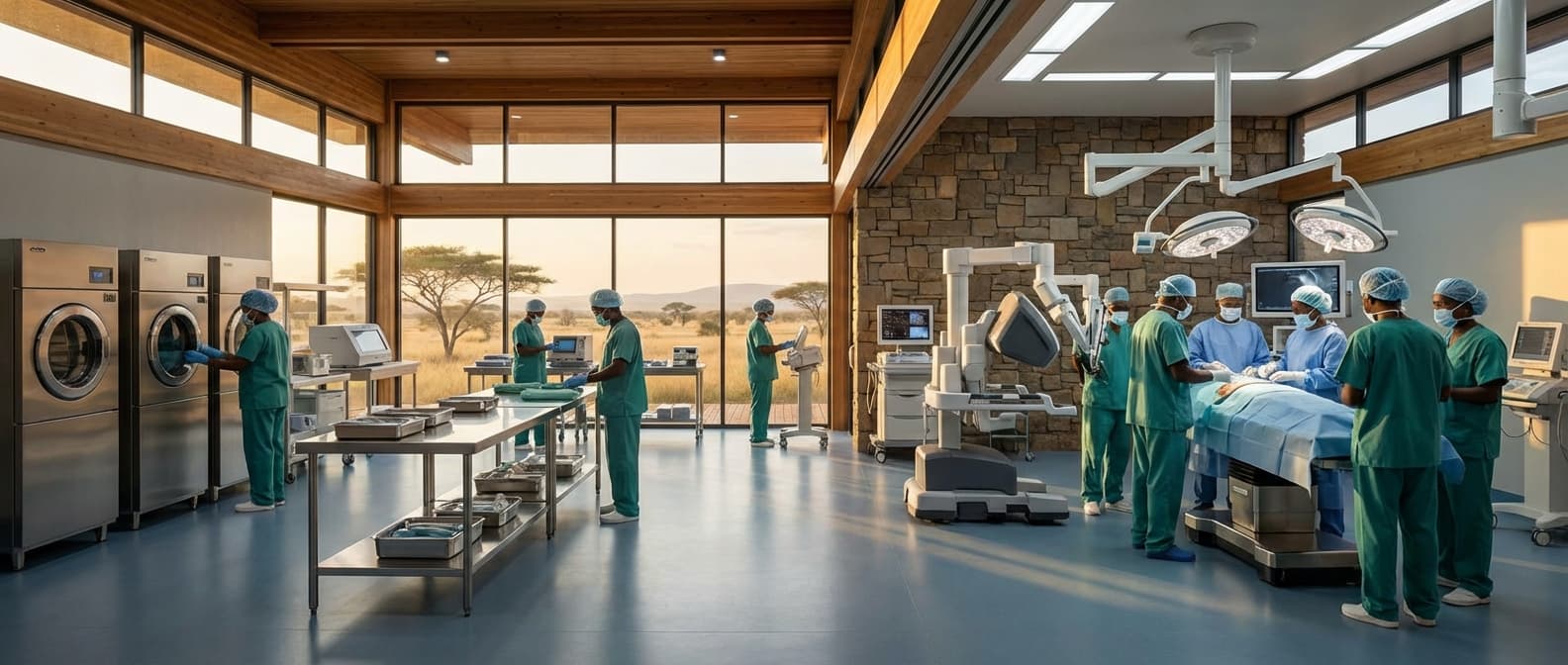
Medical Gas System Design & Installation in Nigeria
Engineering Excellence & Technical Support
Medical gas pipeline systems: O2, N2O, air, vacuum High-standard technical execution following OEM protocols and local regulatory frameworks.
Purity Assurance & Compliance
Ensuring medical gas purity meets international standards (e.g., ISO 7396-1, HTM 02-01) through meticulous material selection, welding techniques, and rigorous purging procedures. Our designs incorporate advanced filtration and monitoring systems to guarantee contaminant-free delivery to patient care areas, crucial for patient safety and treatment efficacy in Nigerian healthcare facilities.
Redundancy & Reliability Engineering
Designing robust medical gas systems with built-in redundancy for critical services like oxygen, medical air, and vacuum. This includes the integration of automatic changeover systems, secondary supply sources (e.g., manifold backup for bulk storage), and strategically placed isolation valves to guarantee uninterrupted supply during maintenance or emergencies, vital for the demanding healthcare environment in Nigeria.
Localized Design for Nigerian Context
Tailoring medical gas system designs to the specific environmental conditions, available resources, and regulatory framework in Nigeria. This involves considerations for tropical climate resilience, power stability, local material sourcing where feasible, and seamless integration with existing infrastructure to ensure cost-effectiveness, ease of maintenance, and long-term sustainability for Nigerian hospitals.
What Is Medical Gas System Design & Installation In Nigeria?
Medical gas system design and installation in Nigeria refers to the comprehensive process of planning, engineering, and physically implementing piped medical gas systems within healthcare facilities. These systems are critical for the safe and efficient delivery of medical gases such as oxygen (O2), medical air (MA), nitrous oxide (N2O), vacuum, and sometimes specialized gases like carbon dioxide (CO2) or nitrogen (N2). The design phase involves intricate calculations for pipe sizing, pressure regulation, flow rates, alarm systems, and material selection, adhering to national and international standards (e.g., ISO 7396 series, NFPA 99). Installation entails the precise routing of medical gas lines, brazing of copper tubing to stringent leak-proof standards, installation of terminal units (outlets), zone valve cabinets, central supply equipment (compressors, vacuum pumps, manifolds, regulators), and alarm panels. Commissioning and validation are integral, ensuring the system's integrity, purity of gases, and correct functionality under various operating conditions. This service is essential for maintaining patient safety, operational efficiency, and compliance with healthcare regulations.
| Who Needs Medical Gas System Design & Installation? | Typical Use Cases in Nigeria | ||||||||
|---|---|---|---|---|---|---|---|---|---|
| Hospitals (all sizes, from primary to tertiary care) | Operating theatres (anesthesia, ventilation, resuscitation) | Intensive Care Units (ICUs) / High Dependency Units (HDUs) | Emergency Departments / Accident & Emergency (A&E) units | Maternity wards and Neonatal Intensive Care Units (NICUs) | General wards and patient rooms (oxygen therapy) | Rehabilitation centres | Specialized clinics (e.g., dental, sleep labs) | Veterinary hospitals | Research laboratories requiring medical-grade gases |
| Medical Oxygen (O2) Supply: For respiratory support, hypoxemia treatment, and critical care ventilation. | Medical Air (MA) Supply: For pneumatic devices, mechanical ventilation (diluent gas), and nebulizer therapy. | Nitrous Oxide (N2O) Supply: Primarily for anesthesia and analgesia in surgical and dental procedures. | Medical Vacuum (VAC) Supply: For suction of bodily fluids, secretions, and surgical debris. | Carbon Dioxide (CO2) Supply: For insufflation in laparoscopic surgery and cryosurgery. | Nitrogen (N2) Supply: For powering surgical tools (e.g., pneumatic drills, saws) and cryotherapy. | Emergency Oxygen and Vacuum: Ensuring critical life support is available during power outages or equipment failures. | System Expansion and Upgrades: To accommodate increased patient capacity or new medical technologies. | Compliance with Health and Safety Regulations: Meeting national and international standards for medical gas delivery. |
Key Components of a Medical Gas System in Nigeria
- Source Equipment: Oxygen concentrators/generators, medical air compressors, vacuum pumps, bulk liquid oxygen storage, medical gas manifolds.
- Piping Network: Copper tubing (typically Type K or L) with specific wall thickness and purity, brazed joints.
- Pressure Regulators: To reduce and maintain gas pressure at desired levels.
- Alarm Systems: Audible and visual alarms for pressure deviations, loss of supply, and gas purity.
- Terminal Units (Outlets): Wall-mounted or ceiling-mounted connections for medical devices, color-coded and gas-specific.
- Zone Valve Cabinets: For isolating sections of the pipeline in emergencies or during maintenance.
- Central Control Panels: Displaying system status and alarms.
- Gas Monitoring and Analysis Equipment: For verifying gas purity.
- Emergency Shut-off Valves: Strategically placed for system control.
- Ventilation and Exhaust Systems (for specific gases like N2O).
Who Needs Medical Gas System Design & Installation In Nigeria?
Medical gas systems are the lifeblood of modern healthcare facilities, providing essential gases like oxygen, medical air, nitrous oxide, and vacuum for a wide range of critical patient care applications. In Nigeria, a growing and increasingly sophisticated healthcare sector necessitates the expertise of specialized design and installation professionals for these vital systems. This ensures patient safety, operational efficiency, and compliance with international standards.
| Customer Type | Typical Departments Requiring Medical Gas Systems |
|---|---|
| New Hospitals | Operating Rooms, Intensive Care Units (ICU), Neonatal Intensive Care Units (NICU), Emergency Department, Recovery Rooms, Patient Wards, Anaesthesia Departments, Respiratory Therapy Departments, Laboratories |
| Existing Hospitals (Expansion/Renovation) | Same as new hospitals, with a focus on upgrading or extending existing infrastructure. |
| Specialized Medical Facilities | Cardiac Catheterization Labs, Electrophysiology Labs, Sleep Labs, Bronchoscopy Suites, Endoscopy Units, Hyperbaric Chambers |
| Government-Owned Hospitals | All general hospital departments, with emphasis on primary and secondary care facilities requiring basic medical gas supply. |
| Private Healthcare Providers | Similar to government hospitals but often with a focus on specialized services and advanced patient care, requiring more comprehensive systems. |
| Teaching Hospitals | All clinical departments, plus specialized research laboratories and simulation centers. |
| Emergency and Trauma Centers | Emergency Department, Operating Rooms, ICU, Resuscitation Bays. |
| Diagnostic and Imaging Centers | Procedure rooms requiring sedation (e.g., for MRI or CT scans). |
| Veterinary Hospitals | Surgical suites, intensive care units for animals, and recovery areas. |
| Research Institutions | Laboratories requiring specific gas mixtures or controlled environments. |
Target Customers for Medical Gas System Design & Installation in Nigeria
- New Hospitals and Healthcare Centers
- Existing Hospitals Undergoing Expansion or Renovation
- Specialized Medical Facilities (e.g., Cardiac Centers, Intensive Care Units, Surgical Centers)
- Government-Owned Hospitals and Clinics
- Private Healthcare Providers and Chains
- Teaching Hospitals and Medical Schools
- Emergency and Trauma Centers
- Diagnostic and Imaging Centers with Sedation Capabilities
- Veterinary Hospitals (for advanced animal care)
- Research Institutions with Medical Gas Requirements
Medical Gas System Design & Installation Process In Nigeria
The design and installation of medical gas systems in Nigeria is a complex but crucial process, essential for modern healthcare facilities. It involves multiple stages, from initial client engagement to final system commissioning and handover. This workflow ensures that the installed system is safe, compliant with relevant standards, and meets the specific needs of the healthcare provider. The process is typically managed by specialized engineering firms and contractors with expertise in medical gas systems.
| Phase | Key Activities | Deliverables/Outcomes | Key Stakeholders |
|---|---|---|---|
| Phase 1: Inquiry & Initial Consultation | Client contacts specialized firm for medical gas system needs. Discussion of project scope, objectives, and preliminary budget. | Understanding of client's requirements, initial project brief. | Client (Hospital/Clinic Management), Design/Installation Firm |
| Phase 2: Site Assessment & Requirements Gathering | Detailed site survey to assess existing infrastructure, space availability, and specific medical gas needs (types of gases, flow rates, pressures). | Detailed site report, confirmed list of medical gases, required quantities, and technical specifications. | Design/Installation Firm, Client's Engineering/Facilities Team |
| Phase 3: Conceptual Design & Proposal Development | Development of preliminary system layout, basic schematics, and cost estimations. Presentation of conceptual design and detailed proposal to the client. | Conceptual design drawings, detailed project proposal including scope of work, timeline, and cost breakdown. | Design/Installation Firm, Client (Procurement & Technical Committees) |
| Phase 4: Detailed Design & Engineering | Creation of comprehensive engineering drawings (piping schematics, layout plans, equipment specifications) adhering to Nigerian and international standards (e.g., HTM, NFPA). | Complete engineering drawings, Bill of Quantities (BoQ), technical specifications for all components. | Design/Installation Firm (Engineers, Draftspersons), Client (for review and approval) |
| Phase 5: Regulatory Approvals & Permitting | Submission of design documents to relevant Nigerian authorities (e.g., Ministry of Health, Standards Organization of Nigeria - SON) for review and approval. Obtaining necessary permits for construction. | Approved design drawings, construction permits. | Design/Installation Firm, Client, Regulatory Bodies (SON, Ministry of Health, Local Government Agencies) |
| Phase 6: Procurement of Materials & Equipment | Sourcing and purchasing of all necessary medical gas equipment, piping, fittings, valves, alarms, and control systems from approved vendors. | All required materials and equipment on-site and ready for installation. | Design/Installation Firm (Procurement Department), Vendors, Client (for quality assurance) |
| Phase 7: System Installation | On-site installation of the medical gas pipeline system, including pipe welding, pressure testing of individual sections, and installation of terminal units and distribution panels. | Physically installed medical gas pipeline system, distribution networks, and associated components. | Installation Firm (Technicians, Welders, Supervisors), Design/Installation Firm (Project Manager), Client's Representative |
| Phase 8: Testing, Commissioning & Validation | Rigorous testing of the entire system for leaks, pressure stability, gas purity, and alarm functionality. Commissioning ensures all components operate as designed. Validation confirms the system meets clinical requirements. | Comprehensive test reports, commissioning certificates, validation reports confirming system compliance and performance. | Design/Installation Firm (Commissioning Engineers), Third-Party Validators, Client (Clinical Staff, Facilities Team) |
| Phase 9: Training & Handover | Training of hospital maintenance staff on system operation, routine checks, and basic troubleshooting. Formal handover of the system with all documentation. | Trained maintenance staff, complete system documentation (as-built drawings, manuals, test certificates). | Design/Installation Firm, Client (Maintenance & Clinical Staff) |
| Phase 10: Post-Installation Support & Maintenance | Provision of warranty support, scheduled maintenance services, and emergency repair services as per the contract agreement. | A fully functional and well-maintained medical gas system, ensuring patient safety and operational continuity. | Design/Installation Firm (Service Department), Client (Facilities Management) |
Medical Gas System Design & Installation Process in Nigeria: Workflow Breakdown
- Inquiry & Initial Consultation
- Site Assessment & Requirements Gathering
- Conceptual Design & Proposal Development
- Detailed Design & Engineering
- Regulatory Approvals & Permitting
- Procurement of Materials & Equipment
- System Installation
- Testing, Commissioning & Validation
- Training & Handover
- Post-Installation Support & Maintenance
Medical Gas System Design & Installation Cost In Nigeria
Designing and installing a medical gas system in Nigeria involves a complex interplay of factors that significantly influence the overall cost. These systems are critical for healthcare facilities, providing essential gases like oxygen, medical air, vacuum, and nitrous oxide. The pricing is not static and can fluctuate based on project scope, location, chosen materials, and the expertise of the installation team. Understanding these determinants is crucial for accurate budgeting and successful project execution.
Several key pricing factors dictate the final cost. The size and complexity of the healthcare facility are primary drivers. A small clinic will require a much simpler and less extensive system than a large multi-specialty hospital. The number of medical gas outlets needed in operating rooms, patient wards, ICUs, and recovery areas directly impacts the quantity of piping, outlets, and associated equipment. The type of medical gases required also plays a role, with some gases or specialized mixtures potentially incurring higher costs.
Material selection is another significant cost determinant. While copper piping is standard for medical gases due to its inertness and durability, the gauge and grade of copper can vary, affecting price. The quality and brand of medical gas equipment, including regulators, alarms, shut-off valves, and central supply units (e.g., oxygen concentrators, air compressors, vacuum pumps), are crucial. Higher-end, more reliable equipment often comes with a higher price tag but offers better long-term performance and safety.
The installation complexity and labor costs are heavily influenced by the building's existing infrastructure. Retrofitting a system into an older building can be more challenging and expensive than installing in a new construction. The expertise and reputation of the medical gas installation company are also critical. Certified and experienced technicians ensure compliance with safety standards and proper system functionality, which may translate to higher professional fees. Regulatory compliance and testing are non-negotiable and add to the overall expense. Thorough testing and certification by accredited bodies are required before a system can be commissioned.
Finally, location within Nigeria can impact pricing due to variations in logistics, material availability, and local labor rates. Major cities like Lagos and Abuja may have higher operational costs for installers compared to smaller towns. The currency exchange rate can also influence the cost of imported components and equipment.
| System Component/Service | Estimated Cost Range (NGN) | Notes |
|---|---|---|
| Medical Gas Piping (Copper) | 1,500,000 - 15,000,000+ | Varies significantly by length, diameter, and number of outlets. Includes fittings and brazing. |
| Medical Gas Outlets (per outlet) | 50,000 - 250,000+ | Includes the wall plate, valve, and connection. Price depends on type (O2, Air, Vac) and brand. |
| Central Medical Air Compressors | 3,000,000 - 20,000,000+ | For hospitals. Oil-free, medical-grade units. Capacity and redundancy are key factors. |
| Central Vacuum Pumps | 2,000,000 - 15,000,000+ | For hospitals. Duplex or triplex systems for reliability. Capacity is crucial. |
| Oxygen Concentrators / Cylinders / Bulk Supply | 1,000,000 - 30,000,000+ | Depends on the chosen primary oxygen source. Bulk liquid oxygen systems are the most expensive but cost-effective for large facilities. |
| Gas Manifolds and Regulators | 500,000 - 5,000,000+ | For managing cylinder banks and controlling pressure to the system. |
| Alarms and Monitoring Systems | 300,000 - 3,000,000+ | Essential for patient safety, monitoring gas pressure and levels. |
| Design and Engineering Fees | 500,000 - 5,000,000+ | Professional services for system layout, schematics, and specifications. |
| Installation Labor | 2,000,000 - 10,000,000+ | Skilled technicians, project management, and site work. Influenced by project complexity and duration. |
| Testing, Commissioning, and Certification | 500,000 - 3,000,000+ | Pressure testing, leak detection, gas purity analysis, and final certification by accredited bodies. |
| Project Management | 500,000 - 5,000,000+ | Overseeing the entire installation process from start to finish. |
| Contingency (10-15%) | Variable | Recommended to cover unforeseen issues or scope changes. |
| Total Estimated Cost (Small Clinic/Ward) | 5,000,000 - 25,000,000 | Basic system with limited outlets and essential gases. |
| Total Estimated Cost (Medium Hospital) | 25,000,000 - 100,000,000 | Comprehensive system with multiple departments and advanced features. |
| Total Estimated Cost (Large Multi-Specialty Hospital) | 100,000,000 - 500,000,000+ | Extensive system with high redundancy, multiple gas types, and sophisticated monitoring. |
Key Pricing Factors for Medical Gas System Design & Installation in Nigeria
- Facility Size and Complexity (Clinic vs. Hospital)
- Number of Medical Gas Outlets Required
- Types of Medical Gases (Oxygen, Medical Air, Vacuum, Nitrous Oxide, etc.)
- Material Quality (e.g., Copper Piping Grade)
- Brand and Quality of Medical Gas Equipment (Regulators, Alarms, Compressors, etc.)
- Installation Complexity (New Construction vs. Retrofit)
- Installer's Expertise, Certification, and Reputation
- Regulatory Compliance, Testing, and Certification Fees
- Geographic Location within Nigeria (Logistics, Local Labor Rates)
- Import Costs and Currency Exchange Rates (for imported components)
Affordable Medical Gas System Design & Installation Options
Designing and installing a medical gas system can be a significant investment for healthcare facilities. Fortunately, there are several affordable options and cost-saving strategies available. Understanding these options, including the benefits of value bundles and exploring different approaches to installation, can help facilities manage their budget effectively while ensuring the highest standards of patient care and safety.
| Value Bundle Component | Description | Cost-Saving Benefit |
|---|---|---|
| Integrated Design & Installation Services | A single vendor handles both the design of the medical gas system and its physical installation. This streamlines the process and minimizes coordination issues. | Reduces project management overhead, potential for design-build conflicts, and often leads to more efficient scheduling. May also offer bulk material discounts. |
| Pre-fabricated Medical Gas Outlets & Assemblies | Pre-assembled units that include the gas outlet, rough-in piping, and sometimes valve assemblies. These are manufactured off-site in a controlled environment. | Significantly reduces on-site labor time for installation, improves quality control, and minimizes waste. Can lead to faster project completion. |
| Equipment & Material Packages | Bundles that include the central supply equipment (compressors, vacuum pumps, manifolds), piping, alarms, and outlets as a complete package from one manufacturer or distributor. | Often comes with volume discounts, simplified procurement, and ensures compatibility between components. Can reduce shipping and handling costs. |
| Maintenance & Service Contracts | Long-term agreements for regular inspection, testing, and servicing of the medical gas system, often bundled with initial installation or equipment purchase. | Prevents costly emergency repairs, ensures system uptime, and can offer preferential rates for service calls. Proactive maintenance extends equipment lifespan. |
| Training & Certification Packages | Bundles that include training for facility staff on the operation and basic maintenance of the medical gas system, potentially with certification options. | Empowers in-house staff for minor tasks, reducing reliance on external technicians for routine checks. Improves safety awareness and system understanding. |
Key Considerations for Affordable Medical Gas System Design & Installation
- Needs Assessment: Accurately determining the required medical gases, their purity levels, flow rates, and outlet locations is crucial to avoid over-specification and unnecessary costs.
- Phased Installation: For new builds or expansions, consider a phased approach, installing essential systems first and adding others as the facility grows or budget allows.
- Equipment Sourcing: Explore options for both new and refurbished medical gas equipment. Reputable suppliers can offer certified refurbished equipment at a reduced cost.
- Material Selection: While durability and safety are paramount, evaluate the cost-effectiveness of different piping materials and connections. Consult with experts to ensure compliance with all regulations.
- Labor Costs: Carefully consider the labor involved. Local contractors might offer competitive pricing, but ensure they have specialized experience in medical gas systems. Project management plays a key role in controlling labor expenses.
- Maintenance Planning: Factor in the long-term costs of maintenance and servicing. A well-designed system with easily accessible components can reduce future maintenance expenses.
- Regulatory Compliance: Adhering to all relevant standards (e.g., NFPA 99, ISO 7396) from the outset prevents costly rework and ensures system longevity.
Verified Providers In Nigeria
In Nigeria's evolving healthcare landscape, identifying reliable and trustworthy healthcare providers is paramount. Franance Health stands out as a beacon of excellence, offering a curated network of verified healthcare professionals and institutions. This document outlines Franance Health's stringent credentialing process and highlights why their verified providers represent the best choice for your health and well-being.
| Why Choose Franance Health Verified Providers? | Benefits for Patients | Peace of Mind |
|---|---|---|
| Access to highly qualified and vetted medical professionals. | Reduced risk of encountering unqualified practitioners. | Confidence in the quality and safety of your medical care. |
| Specialized care tailored to your health concerns. | Efficient and accurate diagnosis and treatment plans. | Trustworthy partnerships for your long-term health management. |
| A network of reputable hospitals and clinics. | Streamlined access to necessary medical services. | Empowerment to make informed healthcare decisions. |
| Commitment to ethical practices and patient-centered care. | Improved patient satisfaction and outcomes. | A healthcare journey built on reliability and integrity. |
Franance Health's Credentialing Process: Ensuring Quality and Trust
- Rigorous Verification: Franance Health employs a multi-faceted verification process that goes beyond basic licensing. This includes checking for active professional licenses, board certifications, and relevant accreditations.
- Experience and Specialization: We assess the practical experience and areas of specialization of each provider to ensure they possess the necessary expertise for your specific medical needs.
- Reputation and Peer Review: Franance Health considers the professional reputation and, where applicable, peer review feedback to gauge the quality of care and patient outcomes.
- Compliance and Ethical Standards: All verified providers adhere to strict ethical guidelines and regulatory compliance within the Nigerian healthcare system.
- Ongoing Monitoring: Our commitment doesn't end with initial verification. Franance Health actively monitors its network to ensure continued adherence to our high standards.
Scope Of Work For Medical Gas System Design & Installation
This Scope of Work (SOW) outlines the requirements for the comprehensive design and installation of a medical gas system. It covers all stages from initial conceptualization and detailed engineering to final testing, commissioning, and handover. The objective is to ensure a safe, reliable, and compliant medical gas system that meets all relevant national and international standards and regulations.
| Category | Technical Deliverables | Standard Specifications / Applicable Codes |
|---|---|---|
| Design & Engineering | Conceptual Design Report | NFPA 99, ASSE Series Standards, Local Building Codes |
| Design & Engineering | Detailed Engineering Drawings (P&IDs, Layouts, Isometrics) | NFPA 99, ASSE Series Standards, ASHRAE Standards |
| Design & Engineering | Equipment Specifications and Data Sheets | Manufacturer Standards, ISO 7396 Series |
| Design & Engineering | Bill of Materials (BOM) | Project-specific requirements |
| Design & Engineering | Stress Analysis for Piping | ASME B31.3 (Process Piping) |
| Procurement | Certified Material Test Reports (MTRs) | ASTM Standards (e.g., ASTM B88 for copper tubing) |
| Procurement | Equipment Submittals (for review and approval) | Manufacturer Data Sheets, NFPA 99 |
| Installation | Welding Procedure Specifications (WPS) and Procedure Qualification Records (PQR) | ASME Section IX |
| Installation | Certified Welder Qualifications | ASME Section IX |
| Installation | Pipe Hanger and Support Design | Manufacturer recommendations, Project-specific loads |
| Testing | Pressure Testing Records | NFPA 99, ASME B31.3 |
| Testing | Brazing Procedure and Qualification Records | ASSE Series Standards |
| Testing | Leak Testing (Nitrogen Purge) | NFPA 99 |
| Testing | Piping System Cleaning and Flushing Records | NFPA 99 |
| Testing | Purity Testing of Gases | NFPA 99, USP (United States Pharmacopeia) |
| Testing | Alarm System Testing and Calibration | NFPA 99, ASSE 1023 |
| Testing | Flow and Pressure Verification | NFPA 99, ASSE Series Standards |
| Commissioning | System Performance Verification Report | NFPA 99, ASSE Series Standards |
| Commissioning | Training Manuals and Records | Project-specific requirements |
| Documentation | As-Built Drawings | NFPA 99, Project-specific requirements |
| Documentation | Operation and Maintenance Manuals | Manufacturer recommendations, Project-specific requirements |
| Documentation | Certificates of Compliance | NFPA 99, Relevant Authorities Having Jurisdiction (AHJ) |
Key Stages of the Project
- Project Initiation and Planning
- Detailed Design and Engineering
- Procurement of Equipment and Materials
- System Fabrication and Installation
- Testing, Inspection, and Commissioning
- Training and Handover
- Documentation and As-Built Drawings
Service Level Agreement For Medical Gas System Design & Installation
This Service Level Agreement (SLA) outlines the guaranteed response times and uptime for medical gas system design and installation services. It defines the expected performance standards for our services, ensuring timely and reliable support throughout the project lifecycle and for any subsequent maintenance or support required.
| Service Component | Description | Response Time Guarantee (Business Hours) | Uptime Guarantee (Post-Installation/Support) |
|---|---|---|---|
| Initial Design Consultation | First meeting to discuss project requirements, scope, and feasibility. | 2 business days | N/A |
| Design Submission & Review | Submission of preliminary and final design documents for client review. | 5 business days (for initial submission after consultation) | N/A |
| Installation Scheduling | Confirmation of installation dates and timelines. | 3 business days (after design approval) | N/A |
| Emergency System Malfunction (Post-Installation) | Critical failure requiring immediate attention to restore gas supply. | 2 business hours | 99.9% (Guaranteed uptime for operational medical gas systems) |
| Non-Emergency System Support (Post-Installation) | Routine maintenance, minor adjustments, or non-critical system issues. | 8 business hours | 99.5% (Guaranteed uptime for operational medical gas systems) |
| Routine Maintenance Visit Scheduling | Arranging pre-scheduled preventative maintenance. | 5 business days (advance notice required) | N/A |
| Design/Installation Documentation Request | Providing as-built drawings, O&M manuals, etc. | 3 business days | N/A |
Key Service Objectives
- To provide expert medical gas system design and installation services that meet all relevant regulatory standards and client specifications.
- To ensure prompt and effective response to all service requests.
- To guarantee high uptime for critical medical gas systems after installation, minimizing disruption to patient care.
- To maintain clear and consistent communication throughout the design and installation process.
Frequently Asked Questions

Ready when you are
Let's scope your Medical Gas System Design & Installation in Nigeria project in Nigeria.

Scaling healthcare logistics and technical systems across the entire continent.