
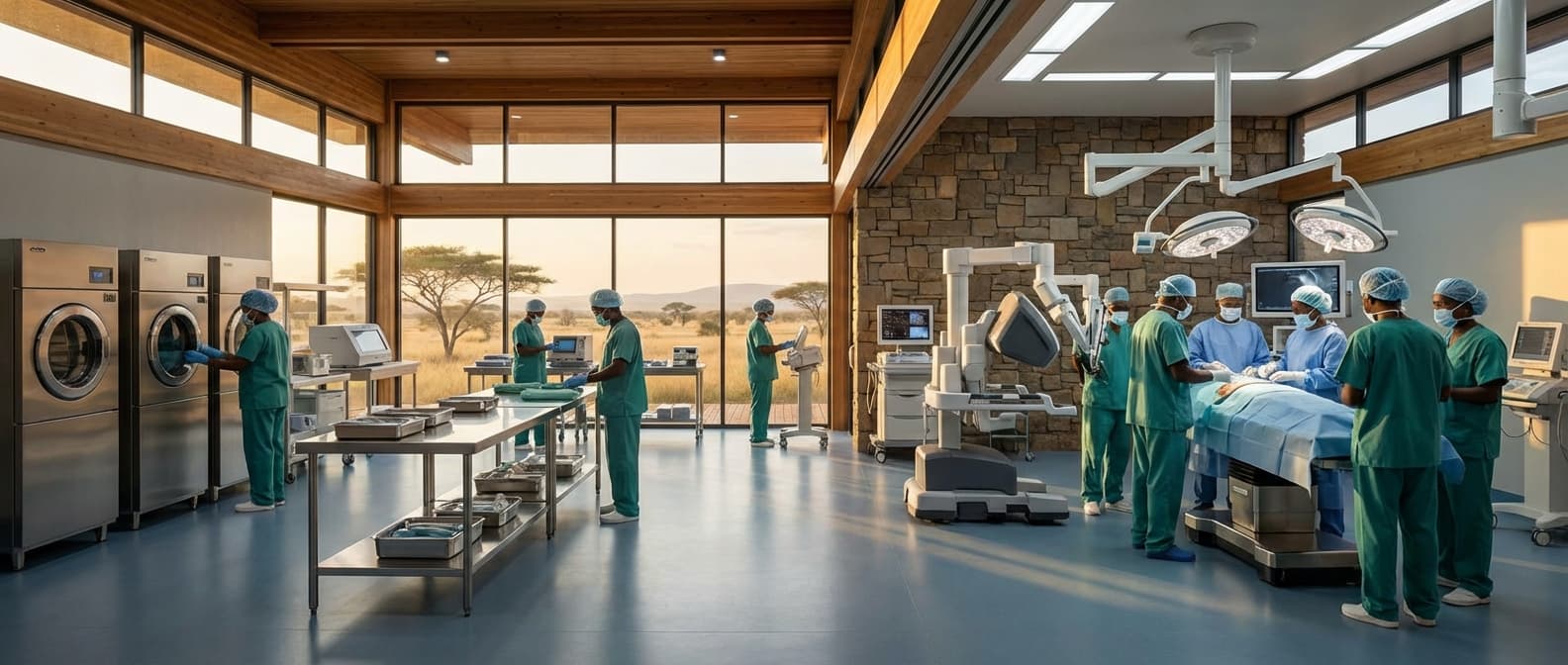
Endoscopy Reprocessing Validation in Nigeria
Engineering Excellence & Technical Support
AER validation, SOP development and compliance High-standard technical execution following OEM protocols and local regulatory frameworks.
Advanced Automated Cleaning Validation
Implementing automated cleaning validation protocols using high-precision equipment to ensure thorough removal of bioburden from endoscopes, exceeding national standards for patient safety in Nigerian healthcare facilities.
Comprehensive Disinfection Efficacy Testing
Conducting rigorous efficacy testing of disinfectants against a broad spectrum of clinically relevant microorganisms, validating reprocessing cycles against stringent international guidelines for the Nigerian context.
Traceability and Documentation Systems
Establishing robust traceability systems and digital documentation platforms for all reprocessing steps, ensuring compliance with regulatory requirements and providing auditable proof of validation for Nigerian endoscopy units.
What Is Endoscopy Reprocessing Validation In Nigeria?
Endoscopy reprocessing validation in Nigeria refers to the systematic, documented process of confirming that the cleaning and high-level disinfection (HLD) or sterilization procedures applied to reusable medical endoscopes meet established standards for patient safety and infection prevention. This validation ensures that these critical medical devices are rendered safe for subsequent patient use by effectively eliminating or inactivating microorganisms. The validation process typically involves a combination of qualitative and quantitative assessments to verify the efficacy of the reprocessing cycle.
| Who Needs It? | Typical Use Cases | |||||||
|---|---|---|---|---|---|---|---|---|
| Hospitals and Clinics (Public and Private) performing endoscopic procedures. | Initial validation of newly installed reprocessing equipment and workflows. | Routine validation as part of quality assurance programs. | Post-maintenance or repair of reprocessing equipment. | Introduction of new endoscopes or reprocessing chemicals/agents. | In response to regulatory requirements or accreditation surveys. | Following outbreaks or identified breaches in infection control related to endoscopes. | Healthcare facilities accredited by national or international bodies. | Facilities aiming to achieve or maintain international standards of patient care and infection prevention. |
Key Components of Endoscopy Reprocessing Validation:
- Validation Protocol Development: Establishing a detailed, documented plan outlining the specific validation activities, parameters, and acceptance criteria.
- Process Flow Mapping: Documenting the entire reprocessing workflow from initial rinse to storage, identifying critical control points.
- Equipment Verification: Ensuring that all reprocessing equipment (e.g., automated endoscope reprocessors, drying cabinets) is functioning within manufacturer specifications and is properly calibrated.
- Chemical Indicator Testing: Utilizing chemical indicators to confirm that critical parameters of the HLD or sterilization process (e.g., temperature, contact time, chemical concentration) have been met.
- Biological Indicator Testing: Employing biological indicators (e.g., spores of specific microorganisms) to demonstrate the microbicidal efficacy of the HLD or sterilization process.
- Microbiological Surface Sampling: Conducting qualitative or quantitative sampling of endoscope surfaces post-reprocessing to detect any residual microbial contamination.
- Water Quality Testing: Verifying that the water used for rinsing and in automated reprocessors meets specified microbial and chemical quality standards.
- Documentation and Record Keeping: Maintaining comprehensive records of all validation activities, results, and corrective actions taken.
Who Needs Endoscopy Reprocessing Validation In Nigeria?
Endoscopy reprocessing validation is a critical patient safety measure, ensuring that reusable endoscopic instruments are thoroughly cleaned and disinfected between patient uses. In Nigeria, where healthcare resources and infrastructure can vary, understanding who specifically requires and benefits from robust endoscopy reprocessing validation is essential for targeted intervention and resource allocation. This is not a niche service but a fundamental requirement for any healthcare facility performing endoscopic procedures.
| Target Customer/Department | Why Validation is Crucial | Specific Procedures Involved | Key Stakeholders for Validation |
|---|---|---|---|
| Gastroenterology Departments | High volume of endoscopies, direct patient contact, risk of cross-contamination leading to infections like Hepatitis and H. pylori. | Gastroscopy, Colonoscopy, Sigmoidoscopy, ERCP. | Gastroenterologists, Endoscopy Nurses, Infection Control Officers, Biomedical Engineers. |
| Pulmonology Departments | Bronchoscopy involves delicate airways, requiring sterile instruments to prevent pulmonary infections. | Bronchoscopy. | Pulmonologists, Respiratory Therapists, Endoscopy Nurses, Infection Control Officers. |
| Urology Departments | Procedures involving the urinary tract can introduce or spread infections if instruments are not properly reprocessed. | Cystoscopy, Ureteroscopy. | Urologists, Urology Nurses, Infection Control Officers, Biomedical Engineers. |
| Gynecology Departments | Hysteroscopy and other gynecological endoscopies require stringent reprocessing to prevent pelvic inflammatory disease and other infections. | Hysteroscopy. | Gynecologists, Gynecology Nurses, Infection Control Officers. |
| Surgical Departments (General, Laparoscopic) | While not strictly 'endoscopy' in the same sense as GI, many laparoscopic instruments are reusable and require similar high-level disinfection/sterilization, with validation being essential. | Laparoscopic Cholecystectomy, Appendectomy, Hernia Repair instruments. | Surgeons, Surgical Nurses, Sterile Processing Technicians, Infection Control Officers. |
| Infection Prevention and Control (IPC) Departments | Responsible for establishing and overseeing protocols to prevent healthcare-associated infections (HAIs). Validation is a core component of their mandate. | Development and auditing of reprocessing protocols, staff training, surveillance. | IPC Officers, Hospital Administrators, Department Heads. |
| Biomedical Engineering Departments | Involved in the maintenance, repair, and validation of reprocessing equipment (e.g., automated endoscope reprocessors - AERs). | Equipment calibration, performance verification, validation of AER cycles. | Biomedical Engineers, Service Technicians, IPC Officers. |
| Hospital Administration/Management | Ultimately responsible for patient safety, regulatory compliance, and efficient healthcare delivery. Funding and resource allocation for validation are key decisions. | Policy development, budget allocation, risk management, ensuring compliance with national guidelines. | Hospital CEOs, Medical Directors, Heads of Departments, IPC Committee. |
| Regulatory Bodies (e.g., Medical and Dental Council of Nigeria, NAFDAC where applicable) | Establish standards and guidelines for healthcare practice. While they may not directly perform validation, they set the framework for its necessity. | Developing and enforcing healthcare standards, accreditation processes. | Representatives from relevant ministries and professional bodies. |
Target Customers and Departments Requiring Endoscopy Reprocessing Validation in Nigeria
- Hospitals (Federal, State, and Private)
- Tertiary Hospitals and Teaching Hospitals
- Specialty Clinics (e.g., Gastroenterology, Pulmonology, Urology, Gynecology)
- Diagnostic Centers
- Government Health Agencies
- Non-Governmental Organizations (NGOs) involved in healthcare delivery
- Medical Equipment Suppliers and Service Providers
- Healthcare Training Institutions
Endoscopy Reprocessing Validation Process In Nigeria
The Endoscopy Reprocessing Validation Process in Nigeria is a crucial quality assurance measure ensuring that flexible endoscopes are reprocessed according to international standards and national guidelines to prevent healthcare-associated infections. This workflow outlines the steps involved from the initial inquiry to the final execution and reporting of the validation process.
| Stage | Description | Key Activities | Responsible Parties | Deliverables |
|---|---|---|---|---|
| The process is initiated when a healthcare facility (e.g., a hospital or clinic) or a regulatory body requests validation for their endoscopy reprocessing procedures. | Contacting the validation service provider, defining the scope of validation, scheduling the audit, and clarifying objectives and expectations. | Healthcare Facility Management, Endoscopy Unit Staff, Validation Service Provider (e.g., accredited laboratory, consultancy firm). | Signed agreement, confirmed schedule, defined validation scope. |
| An initial review of the facility's current reprocessing practices and infrastructure. | Review of existing Standard Operating Procedures (SOPs) for reprocessing, assessment of reprocessing equipment (washers, disinfectors), and evaluation of water supply and environmental conditions. | Validation Service Provider, Endoscopy Unit Staff. | Pre-validation report highlighting potential areas for improvement. |
| A detailed plan outlining the methodology, tests, and acceptance criteria for the validation. | Development of a written protocol that includes specific tests for cleaning efficacy, high-level disinfection efficacy, and equipment functionality. This protocol should align with relevant international standards (e.g., IFU from endoscope manufacturers, CDC guidelines) and any applicable Nigerian regulations. | Validation Service Provider, with input from the Healthcare Facility's Infection Prevention and Control (IPC) team. | Approved Validation Protocol document. |
| Execution of the validation protocol within the healthcare facility. | Observation of the entire reprocessing cycle, collection of process parameters (e.g., temperature, time, chemical concentrations), collection of simulated contaminated endoscopes or samples for testing, and verification of equipment calibration and maintenance records. | Validation Service Provider's technical team, Endoscopy Unit Staff (assisting and providing access). | Raw data logs, sample collection records, observational notes, photographs/videos (if applicable). |
| Laboratory testing of collected samples to assess the efficacy of the reprocessing steps. | Microbiological testing of rinse water and endoscope channels to detect residual organic matter and microbial contamination (e.g., ATP testing, bioburden counts, sterility testing if applicable). | Accredited Laboratory contracted by the Validation Service Provider. | Laboratory test results and certificates of analysis. |
| Compilation and interpretation of all collected data against the validation protocol's acceptance criteria. | Correlation of on-site observations with laboratory results, identification of any deviations from the protocol or acceptance criteria, and determination of the overall effectiveness of the reprocessing procedures. | Validation Service Provider's technical team and lead auditor. | Validated data set, preliminary findings. |
| Formal documentation of the validation process and its findings. | Preparation of a comprehensive validation report detailing the methodology, results, conclusions, and recommendations for improvement. This report is submitted to the healthcare facility's management and IPC committee. | Validation Service Provider. | Final Validation Report. |
| Implementation of recommended actions to address any identified deficiencies and verification of their effectiveness. | The healthcare facility implements corrective actions based on the report's recommendations. Depending on the severity of the issues, a targeted or full re-validation may be required to confirm that the improvements have resolved the problems. | Healthcare Facility Management and Endoscopy Unit Staff, with oversight from the Validation Service Provider for re-validation. | Records of corrective actions taken, updated SOPs, and (if applicable) a new Validation Report confirming successful reprocessing. |
Endoscopy Reprocessing Validation Workflow in Nigeria
- Inquiry and Planning
- Pre-Validation Assessment
- Validation Protocol Development
- On-site Data Collection and Testing
- Laboratory Analysis
- Data Review and Analysis
- Reporting and Recommendation
- Corrective Action and Re-validation
Endoscopy Reprocessing Validation Cost In Nigeria
Endoscopy reprocessing validation in Nigeria is a critical step to ensure patient safety and prevent the transmission of infections. This process involves validating the effectiveness of cleaning and disinfection protocols for endoscopic equipment. The cost associated with this validation can vary significantly due to several factors. These factors include the type and complexity of the endoscope, the specific validation methods employed, the laboratory or service provider chosen, and geographical location within Nigeria. While a definitive, universally set price is unavailable, understanding these influencing elements can help estimate potential expenditures.
| Validation Component | Estimated Range (NGN) |
|---|---|
| Basic Microbiological Swab Testing (per endoscope) | 15,000 - 40,000 |
| ATP Testing (per endoscope) | 10,000 - 30,000 |
| Process Challenge Device (PCD) Testing (per cycle/method) | 20,000 - 75,000 |
| Chemical Indicator Monitoring (per batch/cycle) | 5,000 - 15,000 |
| Comprehensive Validation Package (including documentation and reporting) | 75,000 - 250,000+ |
| Consultation and Protocol Development | 30,000 - 100,000 |
Key Pricing Factors for Endoscopy Reprocessing Validation in Nigeria
- Type of Endoscope: Flexible vs. Rigid scopes, and specific models (e.g., gastroscopes, colonoscopes, bronchoscopes) can influence validation complexity.
- Validation Methodology: Standardized microbiological testing, chemical indicator use, and process monitoring all contribute to the overall cost.
- Laboratory/Service Provider: Different facilities will have varying overheads, expertise, and pricing structures.
- Scope of Validation: Whether it's a routine validation, initial setup validation, or post-repair validation can affect the scope and cost.
- Number of Devices: Validation for a single endoscope might have a different per-unit cost compared to a batch of multiple devices.
- Geographical Location: Costs can differ between major urban centers (e.g., Lagos, Abuja) and other regions due to operational expenses.
- Turnaround Time: Urgent validation services may incur additional charges.
Affordable Endoscopy Reprocessing Validation Options
Validating the reprocessing of flexible endoscopes is a critical step in ensuring patient safety and preventing healthcare-associated infections. Traditionally, validation processes could be resource-intensive, leading to concerns about cost. However, several affordable options and cost-saving strategies are available. These include leveraging existing internal expertise, partnering with third-party reprocessing validation services, and implementing lean methodologies. Understanding 'value bundles' and strategic approaches to cost containment can significantly reduce the financial burden while maintaining rigorous validation standards.
| Strategy/Option | Description | Cost-Saving Mechanism | Value Proposition |
|---|---|---|---|
| Value Bundles (Third-Party) | Pre-defined packages of validation services, often including regular testing, documentation review, and potentially on-site audits, offered at a set price. | Economies of scale for the provider, predictable budgeting for the facility, reduced administrative overhead for internal management. | Guaranteed compliance, expert oversight, reduced risk of internal oversight errors, frees up internal resources. |
| Internal Validation Program Development | Establishing a structured internal program with trained personnel and documented procedures for performing routine validation tasks. | Eliminates external service fees, leverages existing staff and infrastructure, builds in-house expertise. | Greater control over validation schedule, tailored to specific needs, fosters staff ownership and continuous improvement. |
| Risk-Based Validation Approach | Prioritizing validation efforts based on the complexity of the endoscope, the procedure performed, and the patient population being served. | Reduces the frequency and scope of validation for lower-risk scenarios, focusing resources where they are most critical. | Optimized resource allocation, targeted risk mitigation, ensures rigorous validation for high-risk situations. |
| Lean Methodology Integration | Applying lean principles to identify and eliminate waste in the reprocessing workflow, including validation steps. | Streamlines processes, reduces redundant steps, minimizes errors, leading to less need for re-validation or troubleshooting. | Improved efficiency, reduced turnaround time for scopes, lower operational costs, enhanced throughput. |
| Technology-Assisted Validation | Implementing automated systems for leak detection, channel verification, and digital record-keeping of validation data. | Reduces manual effort and potential for human error, improves data accuracy and accessibility, can automate reporting. | Enhanced accuracy and reliability, real-time monitoring, improved compliance tracking, reduced manual labor costs. |
Affordable Endoscopy Reprocessing Validation Options & Cost-Saving Strategies
- Internal Validation Programs: Utilizing trained internal staff and existing equipment for routine validation checks (e.g., leak testing, channel flushing verification).
- Third-Party Validation Services: Engaging specialized companies that offer cost-effective validation packages on a per-scope or recurring basis.
- Risk-Based Validation: Focusing validation efforts on higher-risk procedures or scopes with a history of reprocessing challenges.
- Standardized Protocols: Implementing and consistently adhering to validated reprocessing protocols to minimize variability and the need for frequent revalidation.
- Technology Integration: Utilizing automated monitoring systems and data logging to streamline validation processes and provide immediate feedback.
- Staff Training & Competency: Investing in comprehensive staff training on proper reprocessing techniques and validation procedures to reduce errors.
- Consumable Optimization: Negotiating bulk purchasing of cleaning and disinfection supplies to reduce per-procedure costs.
- Environmental Monitoring: Integrating validation checks with routine environmental monitoring of reprocessing areas.
Verified Providers In Nigeria
In Nigeria's rapidly evolving healthcare landscape, distinguishing between genuine and questionable healthcare providers is paramount. Verified providers offer a level of assurance and trust that is crucial for patient well-being. This is where Franance Health distinguishes itself, not just as a provider, but as a benchmark for quality and reliability. Franance Health's rigorous credentialing process and unwavering commitment to patient care make them the premier choice for individuals seeking dependable and expert medical services in Nigeria.
| Credential Type | Franance Health Verification Process | Importance for Patients |
|---|---|---|
| Medical Licenses | Rigorous verification against official regulatory bodies (e.g., Medical and Dental Council of Nigeria). | Ensures practitioners are legally qualified and authorized to practice medicine. |
| Professional Qualifications | Scrutiny of degrees, diplomas, and specialist certifications from accredited institutions. | Guarantees that providers have received appropriate academic and specialist training. |
| Work Experience | Thorough background checks and verification of past employment and clinical experience. | Confirms practical application of knowledge and established expertise in their field. |
| Ethical Conduct and Reputation | Reference checks and assessment of past disciplinary actions or complaints. | Assures patients of trustworthy and morally sound healthcare professionals. |
| Specialty Board Certifications | Confirmation of successful completion of recognized board examinations in their specialization. | Indicates a high level of competence and specialized knowledge in a particular medical area. |
Why Franance Health Stands Out as a Verified Provider:
- Uncompromising Credentialing Standards: Franance Health meticulously vets all its healthcare professionals, ensuring they possess legitimate qualifications, licenses, and a proven track record of ethical practice.
- Patient-Centric Approach: Their focus extends beyond medical treatment to encompass the overall patient experience, prioritizing comfort, clear communication, and personalized care.
- Access to Specialized Expertise: Franance Health connects patients with a network of specialists across various medical disciplines, ensuring access to the right expertise for every health concern.
- Technological Integration: Leveraging modern healthcare technologies, they strive for efficient diagnostics, effective treatment delivery, and seamless patient management.
- Commitment to Continuous Improvement: Franance Health actively engages in ongoing training and development for its providers, staying abreast of the latest medical advancements and best practices.
Scope Of Work For Endoscopy Reprocessing Validation
This Scope of Work (SOW) outlines the requirements for validating the reprocessing procedures of flexible endoscopes within [Healthcare Facility Name]. The primary objective is to ensure that the established reprocessing protocols effectively reduce microbial contamination to acceptable levels, thereby minimizing the risk of patient-to-patient transmission of infection. This validation will involve a comprehensive assessment of the endoscope cleaning, high-level disinfection (HLD) or sterilization processes, and the associated documentation and training. The technical deliverables will focus on demonstrating the efficacy of the reprocessing cycle against relevant biological indicators and microbial surrogates, as well as verifying compliance with current regulatory standards and manufacturer's instructions for use (IFU).
| Deliverable | Description | Standard/Specification | Acceptance Criteria |
|---|---|---|---|
| Cleaning Efficacy Assessment | Assessment of cleaning effectiveness using protein and hemoglobin assays on representative endoscopes after manual cleaning and/or AER cycles. Visual inspection for residual debris. | Manufacturer's IFU for endoscope and cleaning agents; Industry best practices for protein/hemoglobin testing (e.g., < 200 µg protein/cm²). | Demonstrated absence of visible soil and reduction of protein/hemoglobin levels below specified thresholds for all tested endoscopes. |
| Microbiological Validation | Testing of endoscopes (internal lumens and external surfaces) for microbial recovery after HLD or sterilization using a combination of enumerated spore challenge (e.g., Geobacillus stearothermophilus) and/or surrogate organisms (e.g., Pseudomonas aeruginosa) if required by specific standards or IFU. | Applicable standards (e.g., AAMI TIR34 for water quality, relevant FDA guidance), CDC guidelines, and manufacturer's IFU for the HLD/sterilization agent and process. Target log reduction for HLD (e.g., log 6 reduction for critical microorganisms). | Demonstrated efficacy of the HLD/sterilization process in achieving the specified microbial reduction (e.g., ≥ log 6 kill for indicator organisms) for all tested endoscopes and lumens. Absence of viable challenge organisms detected in subsequent culturing. |
| Environmental Monitoring (if applicable) | Monitoring of water quality used in the reprocessing cycle for microbial contamination and endotoxin levels. Air quality monitoring in dedicated reprocessing areas. | AAMI TIR34 for water; ASHRAE standards for air quality; Manufacturer's IFU for water specifications. | Water quality within acceptable limits for microbial counts and endotoxins. Air quality within relevant specifications for clean environments. |
| Equipment Performance Verification | Functional testing and calibration records for AERs, washer-disinfectors, and other reprocessing equipment. | Manufacturer's specifications, maintenance logs, and calibration certificates. | All reprocessing equipment is operational, calibrated, and maintained according to manufacturer recommendations and regulatory requirements. |
| Staff Training and Competency Records | Review of training materials, competency assessments, and records for all personnel involved in endoscopy reprocessing. | Internal training policies and procedures, regulatory requirements for staff training. | Documented evidence of comprehensive training and successful competency assessment for all relevant staff. |
| Documentation and Traceability Audit | Review of reprocessing logs, patient-endoscope tracking systems, and quality control records to ensure completeness, accuracy, and traceability. | Internal SOPs, regulatory requirements for record-keeping. | Complete, accurate, and auditable records for all reprocessing cycles, demonstrating traceability from patient to reprocessed endoscope. |
| Validation Report | A comprehensive report summarizing the validation methodology, results, analysis, and conclusions. Includes recommendations for ongoing monitoring and improvement. | Industry best practices for validation reporting; Client-specific reporting requirements. | Report clearly documents the validation process, presents all data, and provides a definitive statement on the efficacy of the reprocessing procedures. |
Key Objectives of Endoscopy Reprocessing Validation
- Verify the effectiveness of the cleaning process in removing gross soil and organic debris from endoscope lumens and surfaces.
- Validate the efficacy of the selected HLD or sterilization process in achieving a validated reduction in microbial load (e.g., to log 6 reduction for high-level disinfection).
- Ensure compliance with relevant regulatory standards (e.g., FDA, AAMI, CDC, local health authorities) and professional guidelines (e.g., SGNA, APIC).
- Confirm the adequacy of staff training and competency in performing the reprocessing procedures.
- Assess the functionality and maintenance of reprocessing equipment (e.g., automated endoscope reprocessors (AERs), washer-disinfectors).
- Evaluate the integrity and traceability of documentation related to the reprocessing cycle.
Service Level Agreement For Endoscopy Reprocessing Validation
This Service Level Agreement (SLA) outlines the response times and uptime guarantees for the Endoscopy Reprocessing Validation service. This service ensures that the automated validation of reusable medical devices (endoscopes) meets regulatory requirements and maintains operational readiness. The goal is to minimize downtime and provide timely support to ensure patient safety and efficient workflow.
| Service Component | Service Level Target (SLT) | Measurement Method | Remedy for Failure |
|---|---|---|---|
| Critical Incident Response (e.g., System Failure impacting reprocessing validation) | Within 30 minutes of notification | Automated system alerts and manual reporting via dedicated support portal/phone | Service credit equivalent to 10% of monthly service fee per incident. Escalation to senior management. |
| Non-Critical Incident Response (e.g., Minor software glitches, performance degradation) | Within 4 business hours of notification | Dedicated support portal and email | Service credit equivalent to 5% of monthly service fee per incident. |
| System Uptime Guarantee | 99.8% availability per calendar month | System logs and monitoring tools | Service credit of 5% of monthly service fee for every 0.1% downtime below the target. Maximum credit of 20%. |
| Validation Success Rate | 99.9% of validated reprocesses meet documented standards | Audit logs, validation reports, and quality control data | Root cause analysis and corrective action plan implementation within 2 business days. Review of validation protocols. |
Key Performance Indicators (KPIs)
- Response Time for Critical Incidents
- Response Time for Non-Critical Incidents
- System Uptime Guarantee
- Validation Success Rate
Frequently Asked Questions

Ready when you are
Let's scope your Endoscopy Reprocessing Validation in Nigeria project in Nigeria.

Scaling healthcare logistics and technical systems across the entire continent.