
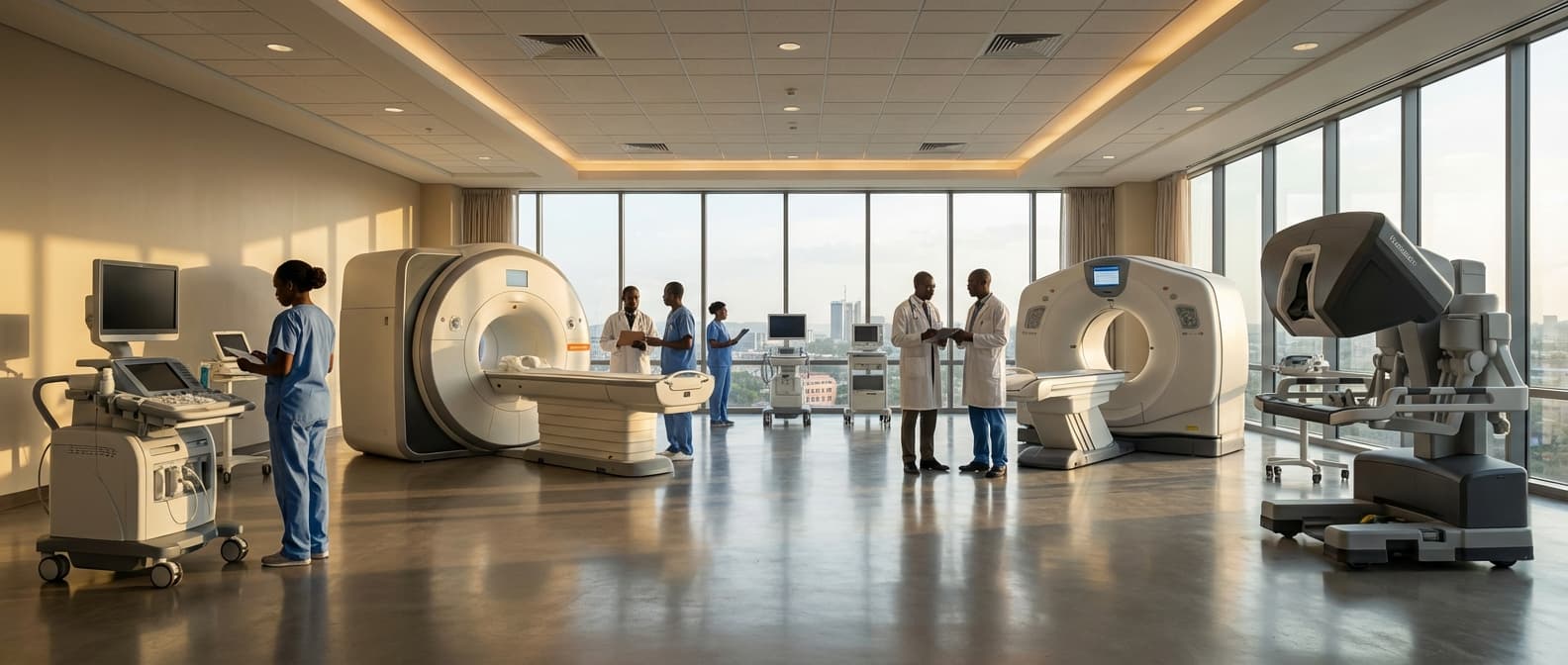
Renal Solutions in Nigeria
Engineering Excellence & Technical Support
Complete dialysis systems and renal care equipment designed to deliver safe, effective, and patient-centered kidney treatment. High-standard technical execution following OEM protocols and local regulatory frameworks.
Advanced Dialysis Technologies
Renal Solutions leverages state-of-the-art hemodialysis machines and advanced dialyzer technologies, ensuring optimal fluid and electrolyte balance, efficient waste removal, and enhanced patient comfort for superior renal care across Nigeria.
Comprehensive Diagnostic & Monitoring Suite
We offer a robust suite of diagnostic tools, including advanced laboratory analysis and real-time patient monitoring systems. This enables early detection of renal complications and personalized treatment adjustments, improving patient outcomes and reducing hospitalization rates.
Integrated Patient Support Programs
Beyond treatment, Renal Solutions provides comprehensive patient education, nutritional counseling, and psychological support programs. This holistic approach empowers patients and their families with the knowledge and resources to manage their condition effectively, fostering long-term well-being.
What Is Renal Solutions In Nigeria?
Renal Solutions in Nigeria refers to a spectrum of medical services and interventions aimed at the diagnosis, management, and treatment of kidney-related diseases (nephropathies). This encompasses the entire continuum of care for individuals experiencing acute or chronic kidney dysfunction, from early detection and prevention to advanced renal replacement therapies. The services are delivered by specialized nephrologists, urologists, and allied healthcare professionals utilizing advanced diagnostic modalities and therapeutic approaches. These solutions are crucial for mitigating the morbidity and mortality associated with renal failure, improving patient quality of life, and addressing the growing burden of kidney disease within the Nigerian populace.
| Who Needs Renal Solutions? | Typical Use Cases |
|---|---|
| Individuals with uncontrolled hypertension and/or diabetes mellitus. | Early detection and management of diabetic nephropathy and hypertensive nephrosclerosis. Initiation of antihypertensive and glycemic control medications. |
| Patients presenting with symptoms suggestive of acute kidney injury (e.g., oliguria, anuria, edema, altered mental status). | Diagnosis and management of acute tubular necrosis (ATN), glomerulonephritis, or obstructive uropathy. Consideration for temporary dialysis if indicated. |
| Individuals diagnosed with chronic kidney disease (CKD) of any stage, particularly those progressing towards ESRD. | Slowing the progression of CKD, managing complications like anemia and bone disease, and preparing for renal replacement therapy (dialysis or transplantation). |
| Patients with established ESRD who are candidates for renal replacement therapy. | Initiation and ongoing management of hemodialysis or peritoneal dialysis. Evaluation and preparation for kidney transplantation. |
| Patients with autoimmune diseases (e.g., Lupus Erythematosus, Vasculitis) that can affect kidney function. | Diagnosis and treatment of lupus nephritis or other autoimmune-related glomerulonephritis. Immunosuppressive therapy to preserve renal function. |
| Individuals with a family history of kidney disease or congenital renal abnormalities. | Genetic counseling and proactive monitoring for early signs of renal dysfunction. |
| Post-operative patients experiencing potential nephrotoxic insult (e.g., from contrast agents or certain medications). | Monitoring of renal function and management of potential acute kidney injury. |
Key Components of Renal Solutions in Nigeria:
- Diagnostic Services: Comprehensive laboratory testing (serum creatinine, blood urea nitrogen, urinalysis, eGFR calculation), renal imaging (ultrasound, CT scans, MRI), and kidney biopsy for definitive diagnosis of renal pathologies.
- Medical Management: Pharmacological interventions for hypertension, diabetes mellitus, autoimmune diseases, and other systemic conditions contributing to renal damage. Management of electrolyte imbalances, anemia of chronic kidney disease, and mineral and bone disorders.
- Dialysis Services: Hemodialysis (HD) and Peritoneal Dialysis (PD) as renal replacement therapies for patients with end-stage renal disease (ESRD). This includes chronic outpatient dialysis programs and acute intermittent dialysis for critical care settings.
- Kidney Transplantation: Surgical implantation of a donor kidney for eligible patients with irreversible renal failure. This involves pre-transplant evaluation, immunosuppressive therapy, and post-transplant follow-up care.
- Preventive Nephrology: Public health initiatives, patient education, and screening programs focused on identifying individuals at high risk for kidney disease and implementing strategies for early intervention and risk factor modification.
- Supportive Care: Nutritional counseling, psychosocial support, and rehabilitation services to enhance patient well-being and adherence to treatment regimens.
Who Needs Renal Solutions In Nigeria?
Renal solutions in Nigeria are vital for addressing the growing burden of kidney diseases. These solutions encompass a range of medical products, services, and technologies designed to diagnose, treat, and manage kidney-related ailments. The demand for such solutions is driven by factors like the rising prevalence of diabetes and hypertension, key contributors to chronic kidney disease (CKD), alongside an aging population and increasing awareness of kidney health. Nigeria, with its large and diverse population, presents a significant market for comprehensive renal care.
| Department/Institution | Specific Needs/Interests | Examples of Renal Solutions |
|---|---|---|
| Nephrology Departments (Hospitals) | Diagnostic equipment, dialysis machines, consumables, medications, treatment protocols, specialized staff training. | Dialysis machines, water treatment systems, dialyzers, dialysis chairs, immunosuppressants, antihypertensives, diagnostic kits (e.g., urine analysis, blood tests). |
| Urology Departments (Hospitals) | Diagnostic tools for urinary tract issues that can impact kidney function, surgical equipment for kidney-related procedures. | Ultrasound machines, CT scanners, surgical instruments for kidney biopsies or stone removal. |
| General Hospitals & Clinics | Basic screening tools, referral pathways for specialized care, management of common co-morbidities (diabetes, hypertension). | Blood pressure monitors, glucose meters, basic laboratory services, educational materials. |
| Dialysis Centers (Standalone) | High volume of dialysis machines, consumables, water purification systems, trained nursing staff. | Multiple dialysis machines, dialyzer stock, saline, sterile water, water treatment plants, trained dialysis nurses. |
| Transplant Centers/Units | Surgical equipment, immunosuppressive drugs, post-transplant monitoring tools, organ preservation solutions. | Operating room equipment, immunosuppressants, anti-rejection medications, laboratory monitoring services. |
| Public Health Agencies & Ministries of Health | Data collection and analysis, policy development, public awareness campaigns, procurement of essential supplies for public health facilities. | Epidemiological data platforms, educational campaign materials, bulk procurement of dialysis consumables for government hospitals. |
| Medical Research Institutions & Universities | Access to research equipment, diagnostic tools for studies, collaboration on new treatment modalities. | Advanced laboratory equipment, reagents, access to patient data for research, grants for kidney disease research. |
| Pharmaceutical Companies | Development and distribution of kidney-specific medications, clinical trial support. | Erythropoietin, phosphate binders, vitamin D analogs, drugs for managing complications of CKD. |
Target Customers for Renal Solutions in Nigeria:
- Patients with Chronic Kidney Disease (CKD) at various stages.
- Patients undergoing dialysis (hemodialysis and peritoneal dialysis).
- Patients who have received or are candidates for kidney transplants.
- Individuals at high risk of developing kidney disease (e.g., those with diabetes, hypertension, family history of kidney disease, or who have experienced acute kidney injury).
- Individuals seeking routine kidney health screenings and early diagnosis.
- Pediatric patients with congenital or acquired kidney conditions.
Renal Solutions Process In Nigeria
The "Renal Solutions Process in Nigeria" outlines the comprehensive journey a patient or referring entity undertakes to access and receive renal care services, from the initial point of contact to the successful completion of treatment. This workflow ensures a structured and efficient delivery of critical healthcare interventions.
| Stage | Description | Key Activities | Responsible Parties | Potential Challenges |
|---|---|---|---|---|
| The process begins when a patient, their family, or a referring healthcare provider reaches out for renal services. | Making contact (phone, email, walk-in), expressing need for renal care, requesting information about services and facilities. | Patient/Family, Referring Physician/Clinic, Renal Care Center Admissions/Inquiry Desk. | Lack of awareness about available services, communication barriers, initial logistical hurdles. |
| A thorough understanding of the patient's medical history and current condition is established. | Collecting patient medical history, reviewing existing medical records, conducting initial physical examination, preliminary diagnostic tests (blood tests, urine analysis, imaging). | Nephrologist, Physician Assistant, Nurses, Medical Records Department, Laboratory Technicians. | Incomplete medical history, limited access to previous records, cost of initial diagnostics. |
| Based on the assessment, a personalized treatment strategy is formulated. | Nephrologist consultation, diagnostic interpretation, discussion of treatment options (dialysis, transplant, conservative management), patient/family education and consent. | Nephrologist, Patient/Family, Transplant Coordinator (if applicable). | Complexity of patient's condition, patient's understanding and acceptance of the plan, availability of specialized resources (e.g., transplant program). |
| Ensuring the patient is medically and logistically ready for the chosen treatment. | Further specialized tests (e.g., dialysis access assessment, tissue typing for transplant), surgical procedures (e.g., fistula creation, catheter insertion), patient education on treatment protocols, scheduling appointments. | Surgeons, Nephrologist, Nurses, Anesthesiologists, Patient/Family. | Surgical complications, infection risk, delays in scheduling, patient compliance with pre-treatment instructions. |
| The core renal treatment is actively administered. | Initiation and ongoing management of dialysis (hemodialysis, peritoneal dialysis), post-operative care for transplant recipients, administration of medications, regular monitoring of vital signs and lab parameters. | Dialysis Nurses, Nephrologist, Transplant Team, Pharmacists, Dietitians. | Equipment malfunction, treatment-related complications (e.g., hypotension during dialysis), adherence to strict sterile techniques, managing electrolyte imbalances. |
| Continuous evaluation of the patient's progress and response to treatment. | Regular outpatient clinic visits, follow-up blood tests, assessment of treatment efficacy, management of side effects or complications, nutritional counseling. | Nephrologist, Nurses, Dietitians, Social Workers. | Patient non-attendance at appointments, managing chronic complications, psychosocial support needs, financial constraints impacting follow-up. |
| Transitioning the patient to a sustainable management plan, which may involve ongoing treatment or a return to a stable condition. | Developing a long-term care plan, educating patient/family on home management (if applicable), referral to support groups, coordination with primary care physicians, ongoing monitoring for relapse or progression. | Nephrologist, Primary Care Physician, Patient/Family, Community Health Workers. | Lack of adequate home support, discontinuity of care, socioeconomic factors affecting long-term adherence, need for continuous education and adaptation of care. |
Renal Solutions Process Workflow in Nigeria
- Inquiry and Initial Contact
- Information Gathering & Assessment
- Treatment Plan Development
- Pre-Treatment Preparations
- Treatment Execution
- Post-Treatment Monitoring & Follow-up
- Discharge & Long-Term Management
Renal Solutions Cost In Nigeria
The cost of renal solutions in Nigeria, encompassing dialysis fluids and related consumables, is a significant factor for patients and healthcare facilities. These costs are influenced by a variety of elements, from the type and brand of solution to import duties, logistical challenges, and the specific healthcare provider's pricing strategies. The local currency, the Nigerian Naira (NGN), is the primary medium of exchange, and its fluctuation against major international currencies can directly impact the landed cost of imported medical supplies.
| Renal Solution Type/Component | Estimated Price Range (NGN) | Notes |
|---|---|---|
| Standard Dialysis Concentrate (per liter, mixable) | 3,000 - 7,000 | This is the base concentrate that needs to be diluted. Price varies by brand and electrolyte composition. |
| Pre-mixed Dialysis Solution (per liter bag) | 5,000 - 12,000 | Ready-to-use solutions, often more convenient but pricier than concentrates. |
| Bags of Dialysate (e.g., 5-liter bag) | 15,000 - 40,000 | This is a common packaging size for pre-mixed solutions, particularly for hemodialysis. |
| Peritoneal Dialysis Solutions (per 2-liter exchange) | 8,000 - 25,000 | Price varies based on glucose concentration, osmolarity, and brand. Often purchased in multi-packs. |
| Dialysis Tubing and Connectors (per set) | 5,000 - 15,000 | These are essential consumables used with the solutions. |
| Filters/Sorbents (per unit) | 10,000 - 30,000 | While not a 'solution' itself, these are critical components in the dialysis process and influence overall cost. |
| Specialty Dialysis Solutions (e.g., for specific conditions) | 20,000 - 70,000+ | Significantly higher cost due to specialized formulations and lower production volumes. |
Key Pricing Factors for Renal Solutions in Nigeria
- Type of Solution: Different types of dialysis solutions (e.g., bicarbonate-based, lactate-based, high-flux, low-flux) have varying manufacturing costs and ingredient complexities, leading to price differences.
- Brand and Manufacturer: Reputable international brands often command higher prices due to perceived quality, research and development investment, and established distribution networks. Local or less established brands may offer more affordable alternatives.
- Concentration and Volume: The concentration of electrolytes and the volume of the solution (e.g., liters per bag) directly affect the per-unit cost.
- Import Duties and Taxes: As many advanced renal solutions are imported, import duties, tariffs, and Value Added Tax (VAT) significantly contribute to the final price in Nigeria.
- Logistics and Distribution: The cost of transportation, warehousing, and distribution across Nigeria's diverse and sometimes challenging infrastructure adds to the overall price. Cold chain requirements for some solutions further increase logistical expenses.
- Healthcare Provider Markup: Hospitals and dialysis centers will add their own markup to cover operational costs, staff salaries, facility maintenance, and profit margins.
- Availability and Demand: Scarcity of specific renal solutions due to supply chain disruptions or high demand can lead to price inflation.
- Currency Exchange Rates: Fluctuations in the Nigerian Naira (NGN) against major currencies like the US Dollar and Euro directly impact the cost of imported goods, including renal solutions.
- Quality and Sterility Standards: Solutions meeting stringent international quality and sterility standards (e.g., ISO, FDA approval) often come at a premium.
- Specialty Solutions: Specialized dialysis solutions tailored for specific patient conditions (e.g., for patients with liver issues or severe electrolyte imbalances) can be more expensive due to their specialized formulation.
Affordable Renal Solutions Options
Exploring "Affordable Renal Solutions Options" involves understanding how to manage the costs associated with kidney disease treatment and management. This includes a focus on value bundles, which are comprehensive packages of services designed to provide better care at a predictable cost, and various cost-saving strategies that patients and providers can implement. The goal is to ensure access to quality care while minimizing financial burden.
| Cost-Saving Strategy | Description | Potential Impact |
|---|---|---|
| Generic Medications | Using generic versions of prescribed drugs when available can significantly reduce medication expenses. | Lower prescription costs, improved patient adherence due to affordability. |
| Home Hemodialysis (HHD) | Performing dialysis at home, often with family assistance, can be more cost-effective than in-center treatments due to reduced overhead. | Lower treatment costs, increased patient autonomy, potential for fewer complications. |
| Peritoneal Dialysis (PD) | A form of dialysis performed using the lining of the abdomen, which can be done at home and often has lower equipment and facility costs compared to hemodialysis. | Potentially lower overall treatment costs, greater flexibility for patients. |
| Preventive Care & Early Detection | Managing underlying conditions like diabetes and hypertension, and regular screenings to detect kidney disease early, can prevent or delay the need for more expensive treatments. | Reduced progression of kidney disease, lower long-term treatment costs, improved quality of life. |
| Care Coordination Programs | Integrated care teams that coordinate all aspects of a patient's treatment can improve outcomes and reduce hospital readmissions, leading to cost savings. | Fewer hospitalizations and emergency room visits, better management of chronic conditions. |
| Negotiating Medical Bills | Actively discussing and negotiating medical bills with healthcare providers and facilities can lead to reductions. | Direct reduction in out-of-pocket expenses. |
| Utilizing Patient Assistance Programs | Many pharmaceutical companies and non-profit organizations offer financial assistance for medications and treatment. | Reduced medication and treatment costs for eligible patients. |
| Telehealth and Remote Monitoring | Using technology for remote consultations and monitoring can reduce the need for frequent in-person visits, saving time and travel costs. | Lower travel expenses, improved convenience, potentially fewer missed appointments. |
Key Components of Affordable Renal Solutions
- Understanding Value Bundles in Renal Care
- Identifying Cost-Saving Strategies for Patients and Providers
- Exploring Different Treatment Modalities and their Cost Implications
- Leveraging Insurance and Financial Assistance Programs
- The Role of Preventive Care in Reducing Long-Term Costs
Verified Providers In Nigeria
In the dynamic landscape of healthcare in Nigeria, discerning the best healthcare providers is paramount for ensuring quality care and patient well-being. Franance Health stands out as a beacon of excellence, distinguished by its rigorous credentialing process and unwavering commitment to patient-centered services. This document outlines Franance Health's credentials and explains why they represent the superior choice for healthcare needs in Nigeria.
| Credential Type | Franance Health Standard | Why it Matters for Patients |
|---|---|---|
| Medical Licenses & Certifications | Mandatory verification of current, valid licenses and board certifications from recognized authorities. | Ensures providers are legally qualified and possess the necessary expertise to practice. |
| Clinical Experience & Specialization | Thorough review of professional history, areas of specialization, and documented years of practice. | Guarantees patients are treated by specialists with relevant experience for their specific conditions. |
| Background & Disciplinary Checks | Comprehensive checks for any past disciplinary actions or malpractice claims. | Protects patients by ensuring providers have a clean professional record and ethical standing. |
| Patient Feedback & Testimonials | Active collection and analysis of patient satisfaction scores and qualitative feedback. | Provides transparent insights into provider communication, empathy, and overall patient experience. |
| Facility Accreditation & Equipment | Partnership with hospitals and clinics holding national or international accreditation and equipped with advanced medical technology. | Assures access to safe, sterile environments and the latest diagnostic and treatment tools. |
Franance Health's Commitment to Excellence:
- Rigorous Provider Vetting: Franance Health employs a multi-stage vetting process for all healthcare professionals and facilities. This includes comprehensive background checks, verification of licenses and certifications, and evaluation of clinical experience and patient feedback.
- Quality Assurance Framework: We operate under a robust quality assurance framework that continuously monitors service delivery, adherence to best practices, and patient outcomes. Regular audits and performance reviews ensure sustained high standards.
- Patient-Centric Approach: Our core philosophy is built around the patient. This translates to accessible care, clear communication, empathetic treatment, and a focus on addressing individual health needs with dignity and respect.
- Technological Integration: Franance Health embraces technology to enhance patient experience and care delivery. This includes user-friendly online booking systems, telemedicine options, and secure electronic health records.
- Network of Accredited Facilities: We partner exclusively with healthcare facilities that meet our stringent accreditation standards, ensuring access to state-of-the-art equipment, well-maintained environments, and highly qualified support staff.
- Continuous Professional Development: Franance Health encourages and supports ongoing training and professional development for all its affiliated healthcare providers, ensuring they remain at the forefront of medical advancements.
Scope Of Work For Renal Solutions
This Scope of Work (SOW) outlines the technical deliverables and standard specifications for the Renal Solutions project. The objective is to develop and implement a comprehensive software solution that will streamline the management of renal care services, from patient intake to treatment tracking and reporting. This SOW defines the expected outcomes, the technical components to be delivered, and the quality standards that will govern the project.
| Deliverable | Description | Standard Specifications / Technologies | Acceptance Criteria |
|---|---|---|---|
| Core Renal Management Module | Central hub for managing all renal-related operations, including patient registration, appointment management, and treatment plan creation. | Backend: Java/Spring Boot, Database: PostgreSQL, Architecture: Microservices | Successful registration of 100 test patients, creation of 50 unique treatment plans, and scheduling of 200 appointments. |
| Patient Information System (PIS) | Secure storage and retrieval of comprehensive patient data, including medical history, demographics, and contact information. | Frontend: React.js, UI Framework: Material-UI, Security: OAuth 2.0, Encryption: AES-256 | Ability to store and retrieve all specified patient data fields with 100% accuracy for 50 patients. |
| Treatment Scheduling and Management | Intuitive interface for scheduling dialysis sessions, doctor appointments, and other patient treatments, with automated reminders. | Real-time updates, calendar view integration (Google Calendar/Outlook), automated email/SMS notifications | Successful scheduling of 95% of patient appointments without conflicts. Reminders sent accurately for 100% of scheduled events. |
| Medication Management | Tracking of prescribed medications, dosages, and administration history, with alerts for refills and potential interactions. | Integration with drug databases (e.g., RxNorm), dosage calculation algorithms, allergy and interaction checking | Accurate tracking of medication for 50 patients, with 100% accuracy for dosage and administration history. No critical drug interaction alerts missed. |
| Lab and Diagnostic Integration | Ability to receive and integrate lab results and diagnostic reports from external systems. | HL7 v2.x/FHIR standards, secure API endpoints, data transformation capabilities | Successful integration and display of lab results for 25 simulated patient cases from an external system. |
| Reporting and Analytics Dashboard | Customizable dashboards and reports for key performance indicators (KPIs) related to patient outcomes, resource utilization, and operational efficiency. | BI Tools: Tableau/Power BI integration, SQL queries, data visualization libraries | Generation of 5 pre-defined reports with accurate data. Dashboard displays real-time metrics for 10 KPIs. |
| User Role and Access Control | Defines user roles and permissions to ensure data security and compliance with HIPAA regulations. | RBAC (Role-Based Access Control), granular permissions, audit trails | All users assigned to correct roles with restricted access to authorized data and functionalities as per defined roles. |
| API for Third-Party Integrations | RESTful APIs to allow seamless integration with other healthcare systems and third-party applications. | RESTful APIs, OpenAPI/Swagger documentation, JSON data format, authentication via API keys/OAuth | API documentation is complete and accurate. 3 sample integrations with dummy data are successful. |
| Data Migration Strategy and Execution | Plan and execution of migrating existing patient and operational data into the new system. | Data cleansing scripts, ETL tools, phased migration approach, validation checks | Successful migration of 99% of critical data from the legacy system with zero data loss or corruption. |
| User Training Materials and Sessions | Development of comprehensive training materials and delivery of training sessions to end-users. | User manuals, video tutorials, interactive training modules, train-the-trainer sessions | 90% of targeted users successfully complete training. Feedback surveys indicate high satisfaction with training materials. |
| System Documentation | Creation of detailed technical and user manuals for system maintenance, troubleshooting, and everyday use. | Technical architecture diagrams, API documentation, user guides, installation and configuration guides | All documentation is complete, accurate, and updated to reflect the final system build. Searchable and easily navigable. |
Technical Deliverables
- Core Renal Management Module
- Patient Information System (PIS)
- Treatment Scheduling and Management
- Medication Management
- Lab and Diagnostic Integration
- Reporting and Analytics Dashboard
- User Role and Access Control
- API for Third-Party Integrations
- Data Migration Strategy and Execution
- User Training Materials and Sessions
- System Documentation (Technical and User Manuals)
Service Level Agreement For Renal Solutions
This Service Level Agreement (SLA) outlines the performance commitments and responsibilities between Renal Solutions and its clients for the provision of our services. This SLA defines the expected response times for support requests and the uptime guarantees for our platform.
| Service Component | Uptime Guarantee (Monthly) | Response Time (Business Hours) | Response Time (Outside Business Hours) |
|---|---|---|---|
| Renal Solutions Platform (Core Services) | 99.9% | 4 Business Hours | 8 Business Hours (for Critical Incidents) |
| Reporting Module | 99.5% | 8 Business Hours | 24 Business Hours (for Non-Critical Issues) |
| Patient Portal | 99.8% | 6 Business Hours | 12 Business Hours (for Non-Critical Issues) |
Key Definitions
- Scheduled Maintenance: Pre-announced periods when system maintenance or upgrades are performed. During Scheduled Maintenance, the platform may be unavailable.
- Unscheduled Downtime: Any period of platform unavailability not classified as Scheduled Maintenance.
- Downtime: The cumulative period during a calendar month that the Renal Solutions platform is unavailable to the client.
- Response Time: The maximum time within which Renal Solutions will acknowledge a support request and begin working towards a resolution.
- Resolution Time: The maximum time within which Renal Solutions will resolve a support request. (Note: This SLA focuses on Response Time and Uptime Guarantee, Resolution Time may be detailed in a separate support policy).
- Business Hours: Monday to Friday, 9:00 AM to 5:00 PM (Client's local time zone), excluding public holidays.
Frequently Asked Questions

Ready when you are
Let's scope your Renal Solutions in Nigeria project in Nigeria.

Scaling healthcare logistics and technical systems across the entire continent.