
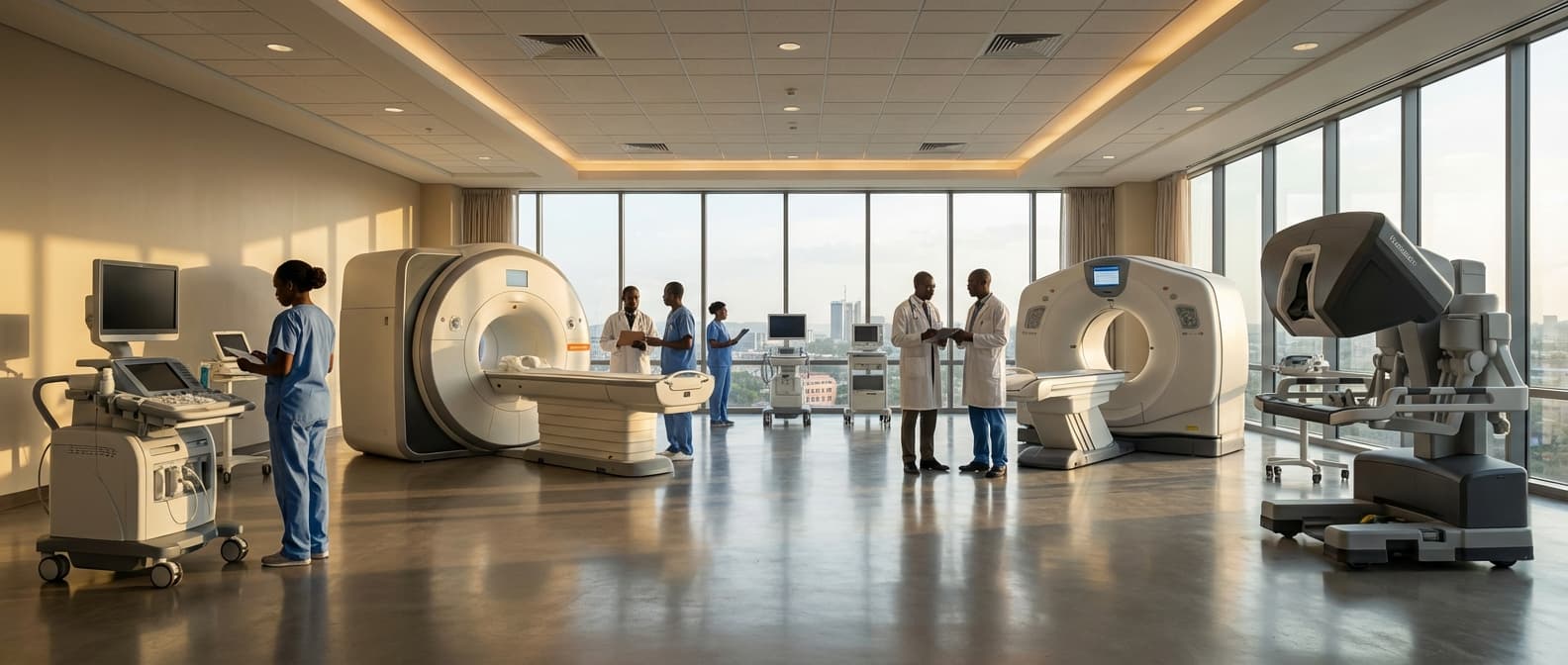
Life Support & Consumables in Nigeria
Engineering Excellence & Technical Support
Reliable supply of essential medical consumables and life support equipment ensuring uninterrupted, quality patient care delivery. High-standard technical execution following OEM protocols and local regulatory frameworks.
Nationwide Oxygen Supply Chain Enhancement
Implemented a robust cold chain logistics network and decentralized production facilities for medical oxygen, dramatically reducing lead times and ensuring consistent availability of life-saving oxygen in underserved rural and urban areas across Nigeria. This initiative leverages IoT-enabled monitoring for real-time inventory and quality control, guaranteeing timely delivery and adherence to international standards.
Scalable Water Purification Solutions
Developed and deployed modular, solar-powered water purification units capable of treating contaminated water sources at the community level. These units employ advanced membrane filtration and UV disinfection technologies, providing access to safe drinking water for millions, significantly impacting public health by preventing waterborne diseases. The system is designed for ease of maintenance and operation by local technicians.
Localized Production of Essential Medical Consumables
Established local manufacturing hubs for critical medical consumables, including sterile syringes, bandages, and personal protective equipment (PPE). This strategy reduces reliance on imports, lowers costs, and ensures a steady supply during public health emergencies. Focus on utilizing locally sourced raw materials and adhering to Good Manufacturing Practices (GMP) to ensure product quality and accessibility.
What Is Life Support & Consumables In Nigeria?
Life Support and Consumables in Nigeria refer to a critical sector providing essential medical equipment, supplies, and associated services necessary for sustaining the physiological functions of individuals facing severe illness, injury, or medical dependency. This service is designed to bridge the gap between acute medical intervention and the patient's ability to independently maintain vital bodily processes. It encompasses a range of technologies and materials that replicate or augment natural bodily functions, thereby preserving life and improving quality of life. The provision and management of these resources are vital for healthcare delivery in Nigeria, particularly in specialized medical settings and for individuals with chronic conditions requiring ongoing support.
| Service Involved | Who Needs It | Typical Use Cases | |||
|---|---|---|---|---|---|
| Provision, maintenance, and calibration of medical devices that mechanically assist or replace failing organ systems (e.g., ventilation, circulation, kidney function). | Critically ill patients in Intensive Care Units (ICUs) and High Dependency Units (HDUs). | Patients experiencing respiratory failure (e.g., Acute Respiratory Distress Syndrome - ARDS, severe pneumonia, COPD exacerbations). | Patients with severe cardiovascular compromise (e.g., cardiogenic shock, septic shock). | Patients with acute kidney injury or end-stage renal disease requiring renal replacement therapy. | |
| Supply of specialized medical materials and fluids required for the operation of life support equipment and for patient care. | Patients requiring artificial nutrition and hydration. | Patients with impaired gastrointestinal function or inability to swallow. | Patients undergoing complex surgical procedures requiring intensive post-operative monitoring and support. | Emergency medical services and pre-hospital care in critical situations. | Patients in remote or underserved areas with limited access to advanced medical facilities. |
| Technical support, troubleshooting, and repair of life support equipment to ensure continuous operational integrity. | Patients requiring long-term mechanical ventilation or other life-sustaining therapies. | Healthcare facilities, including hospitals, clinics, and specialized medical centers. | Home healthcare providers for patients requiring continuous support outside of an institutional setting. |
Key Components of Life Support & Consumables
- Respiratory Support Equipment: Devices such as ventilators (mechanical ventilators), CPAP (Continuous Positive Airway Pressure) and BiPAP (Bilevel Positive Airway Pressure) machines, oxygen concentrators, and nebulizers, along with their associated tubing, masks, and filters.
- Cardiovascular Support Systems: Including infusion pumps for precise drug delivery, defibrillators, pacemakers (external and implantable), and intra-aortic balloon pumps (IABP) for hemodynamic support.
- Nutritional Support: Parenteral (intravenous) and enteral (nasogastric or gastrostomy tube) feeding systems, including feeding pumps, specialized nutritional formulas, and associated administration sets.
- Renal Replacement Therapy Equipment: Dialysis machines (hemodialysis and peritoneal dialysis), dialyzers, and associated fluids and consumables.
- Monitoring Devices: Advanced patient monitoring systems that track vital signs such as ECG, SpO2, NIBP, temperature, and intracranial pressure (ICP).
- Consumable Supplies: Sterile tubing, catheters, syringes, needles, IV bags, dressings, suction canisters, respiratory filters, and other single-use items integral to the functioning of life support equipment.
- Ancillary Equipment: Suction machines, humidifiers, and patient positioning devices that support the primary life support functions.
Who Needs Life Support & Consumables In Nigeria?
In Nigeria, the demand for life support and consumables spans various critical sectors, driven by the need to maintain health, safety, and operational continuity. These essential supplies are not just for immediate medical emergencies but also for routine care, research, and industrial processes. Identifying the key consumers and departments allows for targeted distribution, procurement, and service provision, ensuring that vital resources reach those who need them most.
| Customer/Department | Primary Need | Examples of Consumables/Life Support |
|---|---|---|
| Hospitals (Public/Private) | Patient care, surgery, emergency, diagnostics | Syringes, IV fluids, bandages, ventilators, oxygen masks, surgical instruments, medications |
| Specialty Clinics | Specialized treatment needs | Dialysis consumables, chemotherapy drugs, cardiac monitoring equipment, specialized respiratory support |
| Maternity & Neonatal Units | Infant and maternal health | Incubators, neonatal ventilators, feeding tubes, specialized formulas, sterile delivery supplies |
| EMS / Ambulance Services | Pre-hospital emergency care | Portable ventilators, oxygen tanks, first-aid kits, trauma dressings, diagnostic tools |
| Ministry of Health (Federal/State) | Public health programs, national procurement | Essential medicines, vaccines, life support equipment for public facilities, diagnostic kits |
| NCDC / NAFDAC | Disease surveillance, outbreak response, regulation | Testing reagents, PPE, laboratory consumables, sample collection kits |
| Military & Paramilitary | Personnel health, field operations | Field medical kits, trauma supplies, basic life support equipment, medications |
| Medical/Nursing Schools | Training and education | Sterile supplies for practicals, manikins, laboratory reagents |
| Research Laboratories | Scientific research and development | Reagents, cell culture media, petri dishes, specialized diagnostic consumables |
| Oil & Gas Sector | Workplace safety, emergency response | First-aid supplies, oxygen, emergency medical kits, PPE |
| NGOs (Health/Humanitarian) | Community health services, disaster relief | Broad spectrum medical consumables, basic life support equipment, trauma kits |
Target Customers and Departments Requiring Life Support & Consumables in Nigeria
- {"title":"Healthcare Facilities","sublist":[{"title":"Hospitals (Public & Private)","details":"From tertiary referral centers to local clinics, hospitals require a constant supply of consumables for patient care, surgeries, diagnostics, and emergency responses. This includes bandages, syringes, IV fluids, medications, surgical instruments, ventilators, oxygen masks, and other life support equipment."},{"title":"Specialty Clinics (e.g., Cardiac, Renal, Oncology)","details":"These facilities have specialized needs for life support and consumables related to their specific patient populations. Examples include dialysis consumables, chemotherapy drugs, cardiac monitoring equipment, and specialized respiratory support devices."},{"title":"Maternity & Neonatal Units","details":"Crucial for infant and maternal health, these units require items like incubators, neonatal ventilators, feeding tubes, specialized formulas, and sterile supplies for delivery and post-natal care."},{"title":"Emergency Medical Services (EMS) / Ambulance Services","details":"On-the-go life support and consumables are essential for paramedics and emergency responders. This includes portable ventilators, oxygen tanks, first-aid kits, splints, trauma dressings, and diagnostic tools."},{"title":"Laboratories & Diagnostic Centers","details":"While primarily for testing, these centers still require consumables like reagents, culture media, specimen collection kits, gloves, and personal protective equipment (PPE)."}],"description":"The most significant consumer of life support and consumables. This category includes a wide range of institutions with diverse needs."}
- {"title":"Government Agencies & Public Health Initiatives","sublist":[{"title":"Ministry of Health (Federal & State)","details":"Responsible for policy, regulation, and often the procurement and distribution of essential medicines, vaccines, and life support equipment to public health facilities and for national health programs."},{"title":"Public Health Institutions (e.g., NCDC, NAFDAC)","details":"Involved in disease surveillance, outbreak response, and regulatory oversight, requiring consumables for testing, research, and public health campaigns."},{"title":"Military & Paramilitary Organizations","details":"These bodies often have their own medical corps and facilities, requiring life support and consumables for personnel health, field operations, and in-patient care."},{"title":"Correctional Facilities (Prisons)","details":"Must provide basic healthcare to inmates, necessitating a supply of essential medical consumables and basic life support equipment."}],"description":"These entities play a crucial role in national health security and public well-being, often managing large-scale procurement and distribution."}
- {"title":"Educational & Research Institutions","sublist":[{"title":"Medical Schools & Nursing Schools","details":"Utilize consumables for practical training, simulations, and anatomical studies. This includes sterile supplies, manikins, and laboratory reagents."},{"title":"Research Laboratories (Biomedical, Pharmaceutical)","details":"Require a wide range of specialized consumables for experiments, drug development, and scientific discovery. This can include petri dishes, cell culture media, specialized reagents, and sophisticated diagnostic consumables."}],"description":"Universities and research centers require consumables for training future healthcare professionals and for conducting vital scientific research."}
- {"title":"Industrial & Commercial Sectors","sublist":[{"title":"Oil & Gas Sector","details":"Offshore and onshore operations demand robust safety protocols, including readily available first-aid supplies, oxygen for diving and confined space work, and emergency medical kits for remote sites."},{"title":"Manufacturing & Construction","details":"Workplace safety is paramount. These sectors require first-aid supplies, personal protective equipment (PPE), and potentially emergency oxygen systems for hazardous environments."},{"title":"Aviation & Maritime Industries","details":"Require life vests, emergency oxygen, and first-aid kits for passenger and crew safety during transit."}],"description":"Certain industries have specific safety and operational needs that require life support and consumables."}
- {"title":"Non-Governmental Organizations (NGOs) & Humanitarian Aid Organizations","sublist":[{"title":"Health-focused NGOs","details":"Provide medical services, conduct health screenings, and manage disease control programs, often in rural or remote areas with limited access to healthcare. They require a broad spectrum of medical consumables and basic life support equipment."},{"title":"Disaster Relief Organizations","details":"Respond to natural disasters and humanitarian crises, necessitating emergency medical supplies, trauma kits, and basic life support equipment for immediate relief efforts."}],"description":"These organizations often work in underserved communities or during crises, requiring a significant supply of life support and consumables."}
Life Support & Consumables Process In Nigeria
The process of managing life support and consumables in Nigeria, from the initial inquiry to the final execution, involves a structured workflow designed to ensure timely and efficient procurement and delivery of essential supplies. This process is critical for various sectors, including healthcare, disaster relief, and potentially industrial operations. The workflow typically begins with a recognized need for specific life support or consumable items. This need is formally documented and triggers an inquiry or a procurement request. The subsequent steps involve identifying potential suppliers, vetting them, negotiating terms, issuing purchase orders, and finally, the delivery and verification of the goods.
| Stage | Key Activities | Responsible Parties | Documentation/Tools | Potential Challenges in Nigeria |
|---|---|---|---|---|
| Inquiry/Need Identification | Recognition of a deficit or upcoming requirement for life support/consumable items. Initial assessment of quantities and general specifications. | End-user department, Project Manager, Operations Team | Internal memos, needs assessment reports, stock level reports | Lack of proactive planning, unexpected surge in demand (e.g., health crisis, natural disaster). |
| Requirement Definition & Specification | Detailed documentation of the exact specifications, quantities, quality standards, and any specific certifications required for the items. | Technical team, Procurement department, End-user department | Technical specifications sheets, Bill of Quantities (BOQ), Scope of Work (SOW) | Ambiguous or incomplete specifications, unrealistic quality expectations. |
| Supplier Identification & Pre-qualification | Researching and identifying potential suppliers with the capacity and experience to provide the specified items. Vetting suppliers for financial stability, technical capability, and compliance records. | Procurement department, Legal department | Supplier databases, registration portals, company profiles, financial statements, past performance reviews | Limited local supplier base, difficulty in verifying supplier credentials, corruption risks. |
| Request for Quotation (RFQ) / Tender Process | Issuing formal requests for quotations or tenders to pre-qualified suppliers, outlining the detailed requirements and submission deadlines. | Procurement department | RFQ documents, Tender documents, Invitation to Tender (ITT) | Unfair bidding processes, limited competition, manipulation of tender processes. |
| Evaluation of Bids/Proposals | Reviewing submitted bids/proposals based on predefined criteria (price, quality, delivery time, technical compliance, past performance). | Evaluation committee (Procurement, Technical, Finance) | Evaluation matrix, scorecards, bid comparison sheets | Subjective evaluation, bias towards certain bidders, lack of transparency. |
| Negotiation & Contract Award | Negotiating final terms and conditions with the selected supplier(s). Formalizing the agreement through a contract. | Procurement department, Legal department, selected supplier | Negotiation minutes, Term sheets, Contract agreements | Unreasonable negotiation tactics, delays in contract finalization, disputes over terms. |
| Purchase Order (PO) Issuance | Issuing a formal Purchase Order to the awarded supplier, detailing the agreed-upon items, quantities, prices, delivery schedule, and payment terms. | Procurement department | Purchase Order (PO) | Errors in PO, delays in PO issuance, unauthorized POs. |
| Production/Procurement & Quality Control | Supplier manufactures or sources the items. Internal or external quality control checks are conducted to ensure compliance with specifications. | Supplier, Quality Assurance (QA) team, third-party inspectors | Manufacturing records, inspection reports, certificates of analysis (COA), batch numbers | Poor quality products, counterfeit items, delays in production, inadequate quality control measures. |
| Logistics & Transportation | Arranging for the safe and timely transportation of the consumables from the supplier's location to the designated delivery point in Nigeria. | Logistics department, Freight forwarders, Procurement department | Shipping documents, waybills, customs clearance forms, route plans | Poor road infrastructure, customs delays, high transportation costs, security risks during transit, port congestion. |
| Delivery & Inspection | Receiving the items at the designated location. Conducting a thorough inspection to verify quantities, quality, and condition against the PO and specifications. | Receiving department, End-user department, QA team | Delivery notes, Goods Received Note (GRN), inspection checklists, damage reports | Shortages, damaged goods, incorrect items delivered, fraudulent deliveries. |
| Payment & Reconciliation | Processing payments to the supplier as per the contract terms. Reconciling invoices with received goods and POs. | Finance department, Accounts Payable | Invoices, payment vouchers, bank statements, reconciliation reports | Payment delays, disputes over invoices, improper documentation for payment. |
| Record Keeping & Reporting | Maintaining comprehensive records of all transactions, including inquiries, POs, contracts, inspection reports, and payments. Generating reports on procurement activities and inventory levels. | Procurement department, Finance department, Operations department | Procurement management system, ledgers, databases, audit trails | Inadequate record management systems, loss of vital documents, difficulty in tracking historical data. |
Workflow Stages for Life Support & Consumables Process in Nigeria
- Inquiry/Need Identification
- Requirement Definition & Specification
- Supplier Identification & Pre-qualification
- Request for Quotation (RFQ) / Tender Process
- Evaluation of Bids/Proposals
- Negotiation & Contract Award
- Purchase Order (PO) Issuance
- Production/Procurement & Quality Control
- Logistics & Transportation
- Delivery & Inspection
- Payment & Reconciliation
- Record Keeping & Reporting
Life Support & Consumables Cost In Nigeria
Nigeria's healthcare system, like many developing nations, faces significant challenges in ensuring access to essential life support and consumables. The cost of these critical medical supplies is influenced by a complex interplay of factors, leading to a wide range of pricing within the local currency, the Nigerian Naira (NGN). Understanding these pricing dynamics is crucial for policymakers, healthcare providers, and patients alike to navigate the availability and affordability of these life-saving resources. Several key drivers contribute to the fluctuating costs, from international market forces to domestic logistical hurdles and regulatory frameworks.
| Life Support/Consumable Type | Typical Unit (Examples) | Estimated Price Range (NGN) | Key Contributing Factors to Range |
|---|---|---|---|
| Oxygen Cylinders (Medical Grade) | Large Cylinder (approx. 40-50 Liters) | 15,000 - 40,000 | Refill cost, cylinder purchase/rental, location (urban vs. rural), supplier |
| Ventilators (Basic ICU Model) | Per Unit (purchase/lease) | 5,000,000 - 25,000,000+ | Importation, brand, features (invasive/non-invasive), supplier, warranty, service contract |
| Syringe Pumps | Per Unit | 50,000 - 300,000+ | Importation, brand, features (e.g., drug library), supplier |
| Infusion Pumps | Per Unit | 40,000 - 250,000+ | Importation, brand, features (e.g., multi-channel), supplier |
| Dialysis Machines (Hemodialysis) | Per Unit (purchase/lease) | 7,000,000 - 30,000,000+ | Importation, brand, technology, supplier, service package |
| Surgical Gloves (Sterile) | Box of 100 | 3,000 - 8,000 | Importation, brand, material (latex/nitrile), supplier, bulk purchase |
| Cannulas/Catheters (e.g., IV Cannula) | Per Unit | 200 - 1,000 | Importation, brand, size, sterility, supplier |
| Syringes & Needles | Per Pack (e.g., 100) | 1,000 - 5,000 | Importation, brand, size, type (disposable), supplier |
| Surgical Masks (Medical Grade) | Per Piece/Pack | 100 - 500 | Importation, brand, quality standards, supplier |
| Basic Wound Dressings (e.g., Gauze, Bandages) | Per Roll/Pack | 500 - 3,000 | Material, size, sterility, brand, supplier |
| Blood Bags | Per Unit | 2,000 - 7,000 | Importation, brand, storage capacity, supplier |
| ECG Electrodes | Per Pack | 1,500 - 5,000 | Importation, brand, adhesive quality, supplier |
Key Pricing Factors for Life Support & Consumables in Nigeria
- Importation Costs and Exchange Rates: A substantial portion of advanced life support equipment and specialized consumables are imported into Nigeria. Fluctuations in the international market prices of these goods, coupled with the volatility of the Nigerian Naira against major global currencies (USD, EUR), significantly impact the landed cost. A weaker Naira directly translates to higher import prices for medical supplies.
- Local Manufacturing Capacity and Raw Materials: While Nigeria has some domestic production of basic medical consumables, reliance on imported raw materials for these local manufacturers also exposes them to exchange rate risks. The limited local manufacturing capacity for advanced items means higher dependence on imports.
- Logistics, Transportation, and Storage: The vast geography of Nigeria and its often-challenging infrastructure (roads, ports, power supply) add substantial costs to the distribution of life support and consumables. Cold chain requirements for certain items (e.g., vaccines, some drugs) further escalate storage and transportation expenses.
- Regulatory Fees and Import Duties: Government agencies involved in the importation, registration, and distribution of medical products levy various fees and duties. These can add to the overall cost, though efforts are sometimes made to reduce these for essential medical items.
- Availability and Demand: Scarcity of specific life support equipment or consumables due to import restrictions, supply chain disruptions, or sudden surges in demand (e.g., during disease outbreaks) can lead to price hikes.
- Healthcare Facility Type and Location: The pricing can vary significantly between public hospitals (often subsidized but with potential stockouts), private hospitals (generally higher markups), and smaller clinics or rural health centers.
- Brand and Quality: As with most products, branded or premium-quality life support equipment and consumables often command higher prices compared to generic or less specialized alternatives.
- Maintenance and Servicing: For life support equipment, ongoing maintenance and servicing contracts are essential and contribute to the total cost of ownership, which can indirectly influence the initial purchase price or leasing options.
- Corruption and Unfair Practices: Unfortunately, in some instances, corruption and unethical practices within the supply chain can inflate prices beyond legitimate costs.
Affordable Life Support & Consumables Options
Navigating the costs associated with life support and essential consumables can be a significant concern. This guide explores how to secure affordable options by understanding value bundles and implementing effective cost-saving strategies. We'll break down common approaches to help individuals and families manage these vital expenses without compromising on quality or necessity.
| Bundle Type | Description | Potential Savings |
|---|---|---|
| Starter Kits | Includes essential items for new patients (e.g., basic wound care, respiratory supplies). Often priced lower than purchasing items individually. | 10-20% off individual item prices. |
| Monthly Essentials Packs | A curated selection of regularly used consumables (e.g., catheters, dressing supplies, incontinence products) delivered monthly. | 5-15% discount + free shipping. |
| Long-Term Care Bundles | Comprehensive packages for individuals with chronic conditions requiring consistent supply of multiple items. | Tiered discounts based on volume, up to 25% off. |
| CPAP/BiPAP Bundles | Includes machine, mask, tubing, and filters, often at a discounted package price compared to separate purchases. | 15-25% off the combined cost of individual components. |
| Home Oxygen Bundles | May include concentrator, tubing, cannulas, and filters, with potential for bundled service and maintenance. | Package pricing, often including rental discounts or service plans. |
Key Cost-Saving Strategies
- Bulk Purchasing: Buying larger quantities of non-perishable consumables often leads to a lower per-unit cost.
- Subscription Services: Many suppliers offer recurring delivery at a discounted rate, ensuring you never run out and saving on individual purchase markups.
- Generic vs. Brand Name: For many consumables, generic or store-brand options are significantly cheaper than their brand-name counterparts and offer comparable quality.
- Comparing Suppliers: Regularly research and compare prices across different medical supply companies and pharmacies. Small differences can add up.
- Insurance Verification: Understand your insurance coverage for life support equipment and consumables. Proper pre-authorization and understanding your co-pays/deductibles are crucial.
- Government Assistance Programs: Investigate local, state, and federal programs that may offer subsidies or direct provision of essential medical supplies.
- Reconditioned Equipment: For durable medical equipment like oxygen concentrators or CPAP machines, consider certified reconditioned units, which are substantially cheaper than new ones.
- Preventative Maintenance: Properly maintaining life support equipment can prevent costly emergency repairs and extend its lifespan.
- Community Resources: Explore local non-profits, patient advocacy groups, or charitable organizations that may offer donated equipment or financial assistance.
- Negotiation: Don't be afraid to negotiate prices, especially for larger purchases or long-term supply agreements.
Verified Providers In Nigeria
In Nigeria's evolving healthcare landscape, identifying and accessing genuinely qualified and ethical medical professionals is paramount. This is where verified providers, particularly those associated with reputable organizations like Franance Health, stand out. Franance Health's rigorous credentialing process ensures that their affiliated practitioners meet the highest standards of medical expertise, ethical conduct, and patient care. This commitment to verification offers patients peace of mind, knowing they are entrusting their health to competent and trustworthy individuals. By prioritizing these verified providers, Nigerians can make informed decisions and receive the quality healthcare they deserve.
| Credential Component | Franance Health's Verification Process | Patient Benefit |
|---|---|---|
| Medical License | Confirms active and unencumbered medical license with the Medical and Dental Council of Nigeria (MDCN). | Ensures basic legal qualification to practice medicine. |
| Specialty Certifications | Validates board certifications and fellowships in specific medical specialties. | Guarantees expertise in chosen areas of medicine, leading to better diagnosis and treatment. |
| Continuing Medical Education (CME) | Verifies consistent participation in accredited CME programs. | Ensures providers are up-to-date with the latest medical advancements and techniques. |
| Professional Reputation & Background Checks | Conducts due diligence, including reference checks and review of disciplinary records. | Minimizes the risk of engaging with practitioners with a history of misconduct. |
| Commitment to Patient Care | Assesses practice philosophy and patient feedback mechanisms. | Promotes a patient-centered approach focused on communication, empathy, and positive outcomes. |
Why Franance Health Credentials Matter
- Rigorous Vetting: Franance Health employs a comprehensive vetting process that goes beyond basic licensing.
- Expertise Verification: They confirm the specialized knowledge and skills of medical professionals.
- Ethical Standards: Affiliated providers adhere to strict ethical guidelines and professional conduct.
- Patient Safety Focus: The verification process prioritizes patient well-being and minimizes risks.
- Trust and Reliability: Franance Health credentials build trust and ensure reliable healthcare access.
- Reduced Healthcare Burden: By connecting patients with verified providers, it streamlines the healthcare journey and reduces the chances of encountering unqualified practitioners.
Scope Of Work For Life Support & Consumables
This Scope of Work (SOW) outlines the requirements for the provision of Life Support & Consumables, including technical deliverables and standard specifications. This document is intended to define the services and products necessary to ensure the sustained well-being and operational readiness of personnel in a designated environment. The scope covers the procurement, delivery, and management of essential consumables and the implementation of robust life support systems.
| Category | Technical Deliverables | Standard Specifications |
|---|---|---|
| Water and Wastewater Management | Potable water supply systems (e.g., purification, storage, distribution). Wastewater treatment and disposal systems. Water quality monitoring reports. | Potable water meeting [relevant national/international drinking water standards, e.g., WHO Guidelines for Drinking-water Quality]. Wastewater discharge meeting [relevant environmental discharge regulations]. System redundancy and fail-safe mechanisms. |
| Food and Nutrition Services | Provision of meals (pre-packaged, prepared, or catering services). Nutritional analysis and dietary compliance. Inventory management of food supplies. | Meals meeting [dietary requirements, e.g., caloric intake, nutritional balance, allergen control]. Food safety standards (e.g., HACCP). Shelf-life management of consumables. |
| Waste Management and Sanitation | Collection, segregation, and disposal of solid and liquid waste. Pest control and rodent-proofing measures. Sanitation and hygiene protocols. | Waste disposal in accordance with [local environmental regulations]. Use of appropriate waste containers and collection methods. Regular cleaning and disinfection schedules. |
| Environmental Control and Monitoring | Temperature, humidity, and air quality control systems. Ventilation and air filtration systems. Environmental monitoring data and reports. | Maintenance of environmental parameters within acceptable ranges for human comfort and health ([specify ranges, e.g., temperature 20-24°C, relative humidity 40-60%]). Air exchange rates meeting [relevant ventilation standards]. |
| Medical Supplies and First Aid | Stocking and replenishment of medical kits and supplies. Availability of trained first aid personnel. Emergency medical evacuation protocols. | Medical supplies conforming to [pharmaceutical regulations and expiry dates]. Contents of first aid kits as per [recognized first aid guidelines]. Accessibility of emergency medical services. |
| Personal Protective Equipment (PPE) | Provision and maintenance of appropriate PPE for all personnel. Training on PPE usage and care. Inventory management of PPE. | PPE meeting [relevant safety standards and certifications, e.g., EN, ANSI]. Proper fit and function for intended use. Regular inspection and replacement schedules. |
| Maintenance and Repair of Life Support Systems | Scheduled preventive maintenance. Emergency repair services. Replacement of worn or damaged components. | Maintenance schedules and procedures documented. Response times for emergency repairs as per [service level agreement]. Use of genuine or approved replacement parts. |
| Logistics and Supply Chain Management | Procurement and delivery of all consumables. Inventory tracking and management. Demand forecasting and contingency planning. | Timely delivery of goods as per [delivery schedule]. Secure storage facilities. Accurate inventory records. Resilience of supply chain against disruptions. |
Key Areas Covered
- Water and Wastewater Management
- Food and Nutrition Services
- Waste Management and Sanitation
- Environmental Control and Monitoring
- Medical Supplies and First Aid
- Personal Protective Equipment (PPE)
- Maintenance and Repair of Life Support Systems
- Logistics and Supply Chain Management
Service Level Agreement For Life Support & Consumables
This Service Level Agreement (SLA) outlines the guaranteed response times and uptime for Life Support and Consumables services provided by [Provider Name] to [Client Name]. This SLA is an addendum to the Master Service Agreement (MSA) dated [MSA Date].
| Service/System | Incident Severity | Response Time Guarantee | Resolution Time Guarantee | Uptime Guarantee |
|---|---|---|---|---|
| Ventilators (Critical) | Critical Incident | 15 Minutes | 2 Hours | 99.99% |
| Ventilators (Critical) | Major Incident | 30 Minutes | 4 Hours | 99.99% |
| Ventilators (Critical) | Minor Incident | 1 Hour | 8 Business Hours | 99.99% |
| Infusion Pumps (Critical) | Critical Incident | 15 Minutes | 1.5 Hours | 99.98% |
| Infusion Pumps (Critical) | Major Incident | 30 Minutes | 3 Hours | 99.98% |
| Infusion Pumps (Critical) | Minor Incident | 1 Hour | 6 Business Hours | 99.98% |
| Oxygen Supply Systems | Critical Incident | 10 Minutes | 1 Hour | 99.995% |
| Oxygen Supply Systems | Major Incident | 20 Minutes | 2 Hours | 99.995% |
| Oxygen Supply Systems | Minor Incident | 45 Minutes | 4 Business Hours | 99.995% |
| Dialysis Machines | Critical Incident | 20 Minutes | 2.5 Hours | 99.97% |
| Dialysis Machines | Major Incident | 40 Minutes | 5 Hours | 99.97% |
| Dialysis Machines | Minor Incident | 1.5 Hours | 10 Business Hours | 99.97% |
| Sterile Consumables (e.g., Catheters, Syringes) | Stock Out (Critical) | 2 Business Hours (for notification of issue) | 6 Business Hours (for delivery of emergency stock) | N/A (Focus on delivery timeliness) |
| Sterile Consumables (e.g., Catheters, Syringes) | Damaged/Defective (Critical) | 4 Business Hours (for notification of issue) | 1 Business Day (for replacement delivery) | N/A (Focus on replacement timeliness) |
Definitions
- Critical Incident: Any event that renders a life support system or essential consumables completely inoperable, posing an immediate and severe risk to patient health or safety.
- Major Incident: Any event that significantly degrades the performance or functionality of a life support system or consumables, leading to a substantial impact on patient care but not an immediate life-threatening situation.
- Minor Incident: Any event that causes a minor disruption or inconvenience to the functionality of a life support system or consumables, with minimal impact on patient care.
- Response Time: The maximum time allowed for [Provider Name]'s technical support to acknowledge a reported incident and begin active troubleshooting.
- Resolution Time: The maximum time allowed for [Provider Name] to restore the affected service or system to its agreed-upon operational state.
- Uptime Guarantee: The percentage of time a service or system is guaranteed to be operational and available for use.
Frequently Asked Questions

Ready when you are
Let's scope your Life Support & Consumables in Nigeria project in Nigeria.

Scaling healthcare logistics and technical systems across the entire continent.