
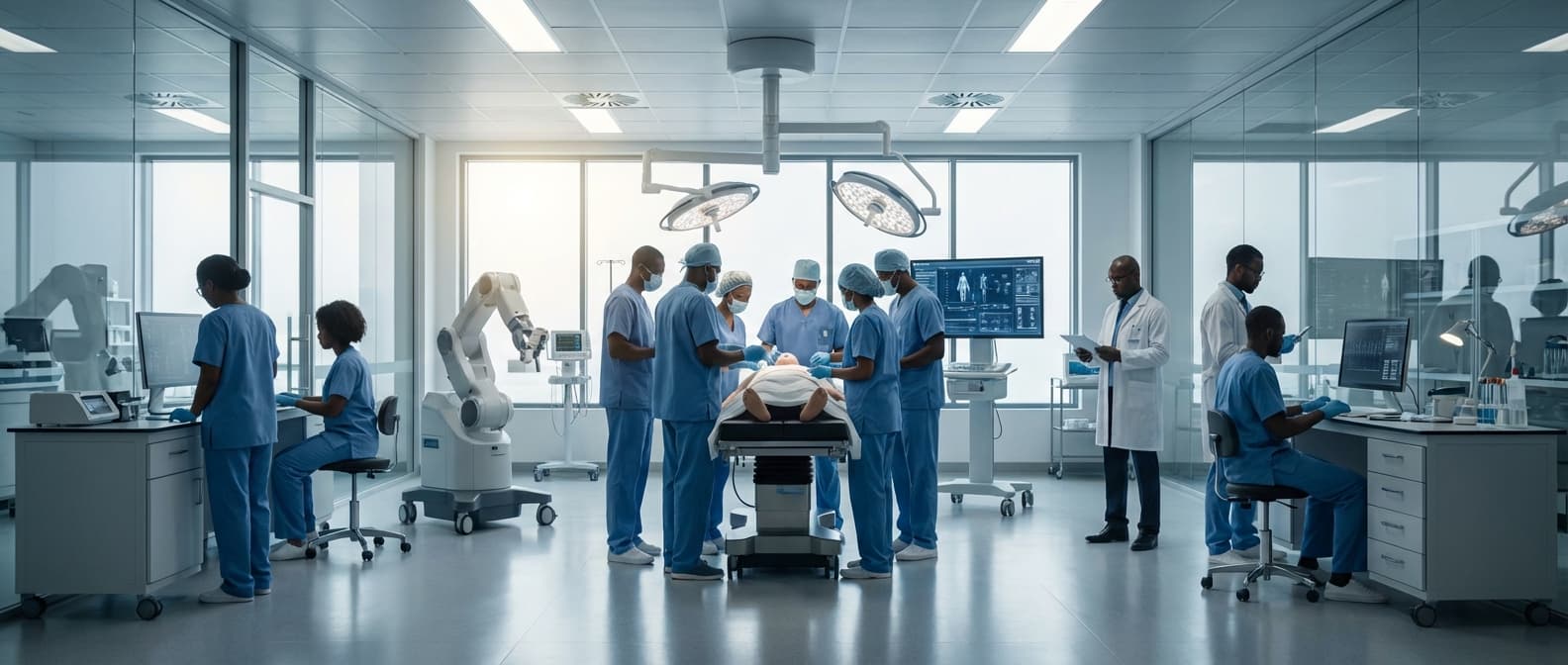
Managed Equipment Service (MES) in Nigeria
Engineering Excellence & Technical Support
Long‑term equipment provision with uptime SLAs and lifecycle management. High-standard technical execution following OEM protocols and local regulatory frameworks.
Predictive Maintenance for Critical Healthcare Equipment
Leveraging IoT sensors and AI analytics, our MES proactively monitors vital signs of medical devices like MRI scanners and ventilators. This minimizes unexpected downtime by identifying potential issues before they impact patient care, ensuring 24/7 operational readiness for Nigerian healthcare providers.
Localized Expertise & Rapid Response for Industrial Machinery
Our MES offers on-the-ground technical teams across key industrial hubs in Nigeria. With deep understanding of local operating conditions and readily available spare parts, we guarantee swift diagnosis and repair for manufacturing and oil & gas equipment, boosting productivity and reducing operational risks.
Remote Monitoring & Performance Optimization via Secure Cloud Platform
We provide a secure, cloud-based platform for real-time monitoring and performance data of your deployed equipment in Nigeria. This enables remote troubleshooting, energy efficiency analysis, and informed decision-making for optimal asset utilization, all accessible from anywhere.
What Is Managed Equipment Service (Mes) In Nigeria?
Managed Equipment Service (MES) in Nigeria refers to a comprehensive outsourcing model whereby a third-party provider assumes responsibility for the acquisition, deployment, maintenance, and management of critical medical equipment for healthcare facilities. This service contractually obligates the MES provider to ensure equipment availability, optimal performance, and adherence to regulatory standards, often for a fixed fee or per-use charge. MES aims to alleviate the financial and operational burdens associated with equipment lifecycle management for Nigerian healthcare institutions, enabling them to focus on patient care delivery. It encompasses a spectrum of services from initial procurement and installation to proactive maintenance, corrective repairs, consumables management, and eventual disposal or upgrade.
| Who Needs MES? | Typical Use Cases in Nigeria | |||||||
|---|---|---|---|---|---|---|---|---|
| Public Hospitals and Federal Medical Centers (FMCs): Often facing capital constraints and resource limitations, requiring reliable equipment operation without significant upfront investment. | Diagnostic imaging centers (e.g., MRI, CT scanners, X-ray machines): Critical for patient diagnosis, requiring high uptime and specialized maintenance expertise. | Tertiary Hospitals and University Teaching Hospitals: Requiring a diverse range of advanced medical equipment for specialized care and research, needing seamless operational continuity. | Private Hospitals and Clinics (especially those expanding or upgrading): Seeking to optimize operational efficiency, reduce capital expenditure on equipment, and leverage expert management. | Remote or underserved healthcare facilities: Benefiting from a complete equipment solution that includes maintenance and operational support, overcoming logistical challenges. | Laboratories (clinical and research): Requiring precision instruments that need regular calibration and maintenance to ensure accurate results. | Operating theaters and Intensive Care Units (ICUs): Demand for high-reliability equipment such as ventilators, anesthesia machines, and patient monitors, with zero tolerance for downtime. | Dialysis centers: Requiring consistent and reliable functionality of dialysis machines, often supported by dedicated service teams. | New healthcare facility developments: Offering a turnkey solution for equipping and managing medical technology infrastructure. |
Key Components of Managed Equipment Service (MES) in Nigeria:
- Equipment Procurement and Acquisition: Sourcing and financing of specified medical devices.
- Installation and Commissioning: Professional setup, calibration, and testing of equipment.
- Preventive Maintenance: Scheduled servicing to minimize downtime and extend equipment lifespan.
- Corrective Maintenance and Repair: Prompt response and resolution of equipment malfunctions.
- Consumables and Spares Management: Ensuring availability of necessary consumables and spare parts.
- Training and Skill Development: Providing training for facility staff on equipment operation and basic maintenance.
- Asset Tracking and Inventory Management: Maintaining a detailed record of all managed equipment.
- Performance Monitoring and Reporting: Tracking equipment utilization, uptime, and service metrics.
- Technology Upgrades and Obsolescence Management: Planning for and facilitating equipment upgrades.
- Decommissioning and Disposal: Safe and compliant removal of obsolete or end-of-life equipment.
Who Needs Managed Equipment Service (Mes) In Nigeria?
Managed Equipment Service (MES) offers a comprehensive solution for organizations to manage their critical medical equipment efficiently and cost-effectively. Instead of outright purchasing and maintaining expensive devices, clients enter into service agreements where MES providers assume responsibility for procurement, installation, maintenance, repair, upgrades, and even eventual disposal of equipment. This model frees up capital, ensures uptime, and allows healthcare facilities to focus on patient care rather than technical logistics. In Nigeria, where the healthcare sector faces unique challenges including infrastructure limitations, funding constraints, and a need for advanced medical technology, MES is becoming an increasingly valuable proposition.
| Target Customer Type | Typical Departments Benefiting |
|---|---|
| Tertiary Hospitals (Federal, State, and Private) | Radiology (X-ray, CT, MRI, Ultrasound), Cardiology (ECG, Echocardiography, Cath Lab), Oncology (Linear Accelerators, Brachytherapy), Surgery (Operating Theatres, Endoscopy), Intensive Care Units (ICUs), Emergency Departments, Nephrology (Dialysis Machines), Laboratorie (Hematology, Biochemistry, Microbiology), Central Sterile Supply Departments (CSSD) |
| Secondary Hospitals | Radiology, Surgery, Emergency Departments, General Wards, Laboratories, Obstetrics & Gynecology |
| Specialized Clinics (e.g., Cardiac, Cancer, Diagnostic Imaging) | The specific specialized departments relevant to their focus (e.g., Cardiology, Oncology, Radiology) |
| Teaching Hospitals & Research Institutions | All clinical departments as well as research laboratories requiring advanced diagnostic and experimental equipment. |
| Government Health Agencies & Ministries | For public health initiatives, remote health centers, and facilities looking to standardize and upgrade their equipment infrastructure. |
| Non-Governmental Organizations (NGOs) & International Aid Organizations | For healthcare projects in underserved areas, where sustainable and reliable equipment management is paramount. |
Who Needs Managed Equipment Service (MES) in Nigeria? Target Customers and Departments
- MES is crucial for any healthcare institution in Nigeria that relies heavily on medical equipment for diagnostic, therapeutic, and surgical purposes. This includes a wide spectrum of organizations, from large tertiary hospitals to specialized clinics and even research institutions.
- Key beneficiaries are those seeking to: improve equipment reliability and uptime, reduce operational costs associated with equipment ownership, access and utilize the latest medical technologies, and ensure compliance with safety and regulatory standards.
Managed Equipment Service (Mes) Process In Nigeria
The Managed Equipment Service (MES) process in Nigeria outlines a comprehensive workflow for procuring, installing, maintaining, and managing specialized medical equipment for healthcare facilities. This service ensures hospitals have access to state-of-the-art technology without the upfront capital investment and the burden of ongoing maintenance and operational complexities. The process is designed to be transparent, efficient, and mutually beneficial for both the service provider and the healthcare institution.
| Phase | Description | Key Activities | Stakeholders Involved |
|---|---|---|---|
| Inquiry and Initial Contact | The healthcare facility expresses interest in MES or a provider proactively reaches out. | Initial discussions, understanding basic needs, and introduction to MES concept. | Healthcare Facility Management, MES Provider Sales Team |
| Needs Assessment and Gap Analysis | Detailed evaluation of the facility's current equipment, service needs, and future requirements. | Site visits, equipment audits, interviews with clinical staff, identification of technology gaps. | Healthcare Facility Clinical & Technical Staff, MES Provider Technical & Business Development Teams |
| Proposal Development and Negotiation | The MES provider formulates a tailored solution based on the needs assessment. | Developing technical specifications, service level agreements (SLAs), financial models (e.g., per-use fees, fixed monthly payments), and negotiating terms. | MES Provider Technical & Commercial Teams, Healthcare Facility Finance & Procurement Departments |
| Contracting and Agreement | Formalization of the partnership and service commitment. | Drafting, reviewing, and signing the MES contract, including scope of services, payment terms, duration, and termination clauses. | MES Provider Legal & Commercial Teams, Healthcare Facility Legal & Management Teams |
| Procurement and Logistics | Sourcing and delivery of the agreed-upon equipment. | Ordering equipment from manufacturers, managing import duties and taxes, customs clearance, transportation to the facility. | MES Provider Procurement & Logistics Teams, Customs Authorities, Equipment Manufacturers |
| Installation and Commissioning | Setting up and verifying the functionality of the new equipment. | Physical installation, calibration, testing, and ensuring the equipment meets performance standards and regulatory requirements. | MES Provider Technical Installation Teams, Equipment Manufacturers' Technical Support, Healthcare Facility Biomedical Engineers |
| Training and Capacity Building | Equipping the facility's staff to effectively use and manage the new equipment. | Providing hands-on training for clinicians, technicians, and support staff on operation, basic troubleshooting, and safety protocols. | MES Provider Training Specialists, Healthcare Facility Clinical & Technical Staff |
| Operations and Maintenance | Ongoing management and upkeep of the equipment to ensure optimal performance. | Scheduled preventive maintenance, unscheduled repairs, supply of consumables and spare parts, 24/7 technical support. | MES Provider Technical Operations Teams, Healthcare Facility Biomedical Engineers (collaboration) |
| Performance Monitoring and Reporting | Tracking equipment usage, uptime, and service delivery against agreed SLAs. | Regular data collection, generating performance reports, holding review meetings to discuss key metrics and identify areas for improvement. | MES Provider Operations & Account Management Teams, Healthcare Facility Management |
| Equipment Upgrade/Replacement | Proactive or reactive measures to ensure the facility has access to current technology. | Planning for technology obsolescence, recommending upgrades or replacements based on evolving medical needs and technological advancements. | MES Provider Technical & Business Development Teams, Healthcare Facility Clinical & Management Teams |
| Contract Review and Renewal/Exit | Evaluating the MES partnership at the end of the contract term. | Reviewing overall performance, discussing renewal terms, negotiating new agreements, or managing a smooth transition if the contract is not renewed. | MES Provider Senior Management, Healthcare Facility Senior Management |
Managed Equipment Service (MES) Workflow in Nigeria
- Inquiry and Initial Contact
- Needs Assessment and Gap Analysis
- Proposal Development and Negotiation
- Contracting and Agreement
- Procurement and Logistics
- Installation and Commissioning
- Training and Capacity Building
- Operations and Maintenance
- Performance Monitoring and Reporting
- Equipment Upgrade/Replacement
- Contract Review and Renewal/Exit
Managed Equipment Service (Mes) Cost In Nigeria
Managed Equipment Service (MES) is a crucial model for healthcare providers in Nigeria looking to acquire and maintain sophisticated medical equipment without the burden of direct capital expenditure and operational management. This service involves a third-party provider taking responsibility for the acquisition, installation, maintenance, repair, and eventual replacement of medical equipment. The cost of MES in Nigeria is influenced by a variety of factors, leading to a wide range of pricing, typically quoted in Nigerian Naira (NGN). Understanding these factors is essential for hospitals and clinics to budget effectively and negotiate favorable terms.
| Equipment Category | Estimated Monthly MES Cost (NGN) | Notes |
|---|---|---|
| Basic Imaging (e.g., X-ray, Ultrasound) | 500,000 - 2,000,000 | Depends on model, volume, and SLA. May include basic consumables. |
| Advanced Imaging (e.g., CT, MRI) | 3,000,000 - 15,000,000+ | Highly dependent on scanner type, magnet strength, and comprehensive SLAs with high uptime guarantees. |
| Laboratory Equipment (e.g., Analyzers, Microscopes) | 200,000 - 1,500,000 | Ranges from simple analyzers to high-throughput automated systems. Cost of reagents and consumables can be bundled. |
| Surgical & Anesthesia Equipment (e.g., Ventilators, Anesthesia Machines, Basic Electrosurgical Units) | 400,000 - 2,500,000 | Includes maintenance and calibration. More advanced robotic systems would be significantly higher. |
| Critical Care & Patient Monitoring | 150,000 - 800,000 | Covers a range of monitors, infusion pumps, and other critical care devices. Volume dependent. |
| Sterilization Equipment (e.g., Autoclaves) | 300,000 - 1,200,000 | Includes regular maintenance and validation. Larger capacity units will be at the higher end. |
Key Pricing Factors for MES in Nigeria
- Type and Complexity of Equipment: High-value, specialized, and technologically advanced equipment (e.g., MRI scanners, CT scanners, advanced surgical robots) will naturally have higher MES costs than simpler or more common equipment (e.g., basic X-ray machines, patient monitors). The complexity of maintenance and the need for specialized technicians also play a significant role.
- Equipment Volume and Bundle: Hospitals often negotiate MES contracts for a bundle of equipment rather than individual items. The total volume and the diversity of equipment within a bundle can influence the overall cost. Economies of scale might lead to slightly lower per-unit costs for larger contracts.
- Service Level Agreement (SLA) Details: The agreed-upon SLA is a critical determinant of cost. This includes parameters like: * Response Times: Faster guaranteed response times for breakdowns, especially for critical equipment, will increase the cost. * Uptime Guarantees: Higher uptime guarantees (e.g., 98% or 99%) translate to more proactive maintenance and potentially the provision of loaner equipment, thus increasing the price. * Preventive Maintenance Schedule: The frequency and thoroughness of scheduled preventive maintenance directly impact the service provider's resources and therefore the cost.
- Manufacturer and Brand: The reputation, reliability, and cost of spare parts for different manufacturers and brands can affect MES pricing. Some premium brands might have higher associated maintenance costs.
- Provider's Expertise and Infrastructure: The MES provider's experience in the Nigerian market, their network of qualified technicians, the availability of spare parts locally, and their investment in diagnostic tools and training will influence their pricing. A provider with a robust infrastructure and proven track record might command higher fees.
- Contract Duration: Longer MES contract durations often come with more favorable pricing per unit or per month compared to shorter-term agreements, as it provides the provider with greater predictability and allows for amortization of initial investments.
- Geographic Location and Accessibility: For facilities located in remote or hard-to-reach areas, the added logistical costs (travel, accommodation for technicians) might be factored into the MES pricing.
- Ancillary Services: The MES contract might include additional services beyond basic maintenance, such as staff training on equipment operation, software updates, calibration services, and consumables management. The inclusion of these services will increase the overall cost.
- Inflation and Economic Conditions: Fluctuations in the Nigerian Naira exchange rate, inflation rates, and the general economic climate can influence the cost of imported spare parts and the overall operational expenses of the MES provider, leading to price adjustments.
Affordable Managed Equipment Service (Mes) Options
Finding affordable Managed Equipment Service (MES) is crucial for many organizations to maintain operational efficiency without breaking the bank. MES provides a comprehensive solution for managing and maintaining a fleet of equipment, often encompassing everything from procurement and installation to ongoing maintenance, repair, and eventual replacement. The key to affordability lies in understanding value bundles and implementing effective cost-saving strategies.
| Cost-Saving Strategy | Description | MES Application |
|---|---|---|
| Negotiate Service Level Agreements (SLAs) Carefully | Clearly define response times, repair turnaround times, and uptime guarantees to ensure you're getting the service you pay for. Avoid over-provisioning services you don't need. | MES contracts should have clearly defined SLAs tied to equipment availability and repair speed. Negotiating these upfront prevents unnecessary costs for underutilized services. |
| Leverage Predictive Maintenance | Utilizing data analytics to predict equipment failures before they occur allows for scheduled maintenance, reducing costly emergency repairs and minimizing downtime. | MES providers often incorporate predictive maintenance as part of their value bundles, using IoT sensors and data analysis to anticipate issues. |
| Optimize Equipment Utilization | Ensure equipment is being used efficiently and for its intended purpose. Underutilized or improperly used equipment leads to premature wear and tear. | MES platforms can provide utilization reports, highlighting underperforming assets and suggesting opportunities for consolidation or reallocation. |
| Consider Refurbished or Certified Pre-Owned Equipment | For non-critical or less demanding applications, opting for refurbished or certified pre-owned equipment can significantly reduce capital expenditure. | MES providers may offer refurbished equipment as part of their lifecycle management, providing a cost-effective alternative to new purchases. |
| Long-Term Contracts with Volume Discounts | Committing to longer-term MES contracts, especially when managing a larger fleet, can often unlock volume discounts and more favorable pricing. | Negotiate tiered pricing based on the total number of assets managed or the duration of the contract for potential savings. |
| Standardize Equipment Types | Where possible, standardizing on a limited range of equipment models simplifies maintenance, parts inventory, and technician training, leading to operational efficiencies. | MES providers can help in recommending standardized equipment solutions and managing the entire lifecycle of these standardized assets. |
| Regular Performance Reviews | Conduct periodic reviews of the MES performance against the agreed-upon SLAs and identify areas for improvement or cost optimization. | Use data from the MES platform to track key performance indicators (KPIs) and discuss potential cost-saving adjustments during review meetings. |
Understanding Value Bundles in MES
- {"title":"Comprehensive vs. Tiered Services","description":"Value bundles can range from all-inclusive packages covering every aspect of equipment management to tiered options that allow organizations to select specific services based on their needs and budget. Comprehensive bundles offer predictability and peace of mind, while tiered options provide flexibility and cost control."}
- {"title":"Bundled Software & Analytics","description":"Many MES providers include integrated software platforms for asset tracking, performance monitoring, and predictive maintenance. Bundling these tools often proves more cost-effective than purchasing them separately and integrates seamlessly with the service offerings."}
- {"title":"Training & Support Inclusion","description":"Effective equipment utilization and maintenance also depend on skilled personnel. Value bundles may include training for your staff on equipment operation, basic troubleshooting, and the MES platform itself, reducing the need for external training costs."}
- {"title":"Proactive Maintenance Programs","description":"Instead of reactive break-fix models, most value bundles emphasize proactive and predictive maintenance. This approach minimizes downtime, prevents costly emergency repairs, and extends the lifespan of your equipment, leading to significant long-term savings."}
- {"title":"Consolidated Vendor Management","description":"By opting for an MES bundle, you consolidate your equipment management into a single point of contact. This reduces the administrative overhead associated with managing multiple vendors for different equipment types and services."}
Verified Providers In Nigeria
Navigating the healthcare landscape in Nigeria can be challenging. Ensuring you receive quality care from trustworthy medical professionals is paramount. This is where verified providers, particularly those with Franance Health credentials, stand out. Franance Health is a reputable organization dedicated to upholding the highest standards in healthcare. Their rigorous credentialing process ensures that healthcare providers meet stringent requirements for education, training, experience, and ethical conduct. Choosing a Franance Health-credentialed provider means opting for a healthcare professional who has been thoroughly vetted and is committed to patient safety and optimal health outcomes. They represent the best choice due to their proven competence, adherence to best practices, and dedication to continuous professional development.
| Provider Type | Franance Health Credentialing Benefits | Why They Are the Best Choice |
|---|---|---|
| Doctors (Specialists & General Practitioners) | Verifies medical school completion, residency, board certifications, and ongoing practice evaluation. | Ensures access to highly skilled and knowledgeable physicians with up-to-date medical expertise. |
| Nurses (RNs, LPNs, etc.) | Confirms nursing education, licensure, and specialized training. | Guarantees compassionate and competent nursing care from qualified professionals. |
| Pharmacists | Authenticates pharmacy degrees, licensure, and knowledge of drug interactions and patient counseling. | Provides assurance of safe and accurate medication management and dispensing. |
| Therapists (Physical, Occupational, Mental Health) | Validates degrees, certifications, and clinical experience in their respective fields. | Offers access to evidence-based therapeutic interventions delivered by certified practitioners. |
| Medical Facilities (Clinics, Hospitals) | Assesses adherence to safety protocols, quality of equipment, and staff qualifications. | Ensures a safe, well-equipped, and professionally managed environment for medical services. |
Why Franance Health Credentials Matter
- Rigorous vetting process ensuring competence and ethical standards.
- Commitment to patient safety and high-quality care.
- Demonstrated adherence to best practices in medicine.
- Encouragement of continuous professional development and up-to-date knowledge.
- Building patient trust through transparent and verifiable qualifications.
Scope Of Work For Managed Equipment Service (Mes)
This Scope of Work (SOW) outlines the requirements for a Managed Equipment Service (MES) provider responsible for the comprehensive management and maintenance of specified medical equipment within [Healthcare Facility Name]. The MES provider will ensure the optimal performance, availability, and safety of the equipment through proactive maintenance, repair services, and asset lifecycle management. This document details the technical deliverables and standard specifications expected from the MES provider.
| Category | Technical Deliverable | Standard Specification / Requirement | Key Performance Indicators (KPIs) | ||
|---|---|---|---|---|---|
| Equipment Management & Maintenance | Preventive Maintenance (PM) | Scheduled PMs conducted according to manufacturer recommendations and internal risk assessments. Use of certified technicians and approved parts. Detailed PM reports including findings and actions taken. | PM completion rate (target: 98%) | Mean Time Between Failures (MTBF) for critical equipment (target: TBD based on equipment type) | |
| Equipment Management & Maintenance | Corrective Maintenance (CM) | 24/7 emergency repair service. Response times defined for different equipment criticality levels. On-site repair or replacement of faulty equipment. Use of genuine or equivalent parts. Detailed CM reports. | Average response time for critical equipment (target: < 4 hours) | Average repair time for critical equipment (target: < 24 hours) | Equipment availability rate (target: > 95%) |
| Equipment Management & Maintenance | Calibration and Performance Verification | Regular calibration and performance verification of all serviced equipment to meet manufacturer specifications and regulatory requirements. Use of NIST-traceable calibration standards. | Calibration compliance rate (target: 100%) | Accuracy of calibration records | |
| Asset Lifecycle Management | Equipment Auditing & Inventory | Comprehensive, up-to-date inventory of all managed equipment, including model, serial number, location, purchase date, warranty status, and maintenance history. Regular physical audits. | Inventory accuracy (target: 100%) | Audit frequency (e.g., annual) | |
| Asset Lifecycle Management | Technology Refresh Planning | Proactive identification of equipment nearing end-of-life or requiring upgrades. Recommendations for replacement or refurbishment based on technological advancements, performance, and cost-effectiveness. | Frequency of technology refresh recommendations (e.g., quarterly) | Cost savings identified through technology refresh planning | |
| Asset Lifecycle Management | Decommissioning and Disposal | Safe and compliant decommissioning of retired equipment, including data sanitization and environmentally responsible disposal. Provision of certificates of disposal. | Compliance with disposal regulations | Timeliness of decommissioning | |
| Risk Management & Compliance | Regulatory Compliance | Ensuring all managed equipment meets current local, national, and international regulatory standards (e.g., FDA, CE, ISO). Maintenance of all required documentation for audits. | Successful audit outcomes | Non-compliance incidents (target: 0) | |
| Risk Management & Compliance | Safety Inspections | Regular safety inspections of all equipment to identify and mitigate potential hazards. Adherence to electrical safety standards. | Number of safety incidents reported (target: 0) | Completion rate of safety recommendations | |
| Reporting & Communication | Performance Reporting | Monthly and quarterly reports detailing equipment performance, maintenance activities, repair history, asset status, compliance, and KPIs. Secure online portal for real-time access to data. | Timeliness of report delivery | Completeness and accuracy of reports | |
| Reporting & Communication | Service Level Agreements (SLAs) | Formal SLAs outlining response times, repair times, availability targets, and other service commitments. Review and update of SLAs annually or as needed. | Adherence to SLA targets | Number of SLA breaches | |
| Resource Management | Staffing & Training | Provision of adequately trained and certified technical staff. Ongoing training to keep pace with evolving medical technologies. Background checks and appropriate certifications for all personnel on-site. | Technician certification levels | Staff turnover rate | |
| Resource Management | Parts & Inventory Management | Efficient management of spare parts inventory to ensure availability of critical components. Use of genuine or approved parts from reputable suppliers. | Parts availability for critical components | Average inventory holding cost |
Key Objectives of Managed Equipment Service (MES)
- Maximize equipment uptime and operational readiness.
- Ensure patient safety through rigorous maintenance and calibration.
- Optimize equipment utilization and lifecycle management.
- Control and reduce total cost of ownership (TCO) for medical equipment.
- Provide access to advanced technology and expertise.
- Ensure compliance with regulatory standards and manufacturer guidelines.
- Streamline equipment management processes for the healthcare facility.
Service Level Agreement For Managed Equipment Service (Mes)
This Service Level Agreement (SLA) outlines the performance standards and guarantees for the Managed Equipment Service (MES) provided by [Provider Name] to [Client Name]. It covers critical aspects of service delivery, including response times to incidents and guaranteed uptime for the managed equipment.
| Service Component | Service Level Objective (SLO) | Measurement Metric | Remedy for Breach (Example) |
|---|---|---|---|
| Incident Response Time | Critical Incident: acknowledgement within 15 minutes; initial diagnosis/resolution plan within 60 minutes. | Time from ticket creation to acknowledgement/diagnosis. | Service credit of 5% of monthly MES fee for each Critical Incident exceeding the response time. |
| High Incident: acknowledgement within 30 minutes; initial diagnosis/resolution plan within 120 minutes. | Time from ticket creation to acknowledgement/diagnosis. | Service credit of 2.5% of monthly MES fee for each High Incident exceeding the response time. | |
| Medium Incident: acknowledgement within 2 business hours. | Time from ticket creation to acknowledgement. | Service credit of 1% of monthly MES fee for each Medium Incident exceeding the response time. | |
| Equipment Uptime Guarantee | Core Equipment: 99.9% uptime per calendar month. | Percentage of time equipment is operational and available for use. | For every 30 minutes of unplanned downtime below 99.9% uptime, a service credit of 1% of the monthly MES fee for the affected equipment. |
| Supporting Equipment: 99.5% uptime per calendar month. | Percentage of time equipment is operational and available for use. | For every hour of unplanned downtime below 99.5% uptime, a service credit of 0.5% of the monthly MES fee for the affected equipment. | |
| Preventative Maintenance Completion | 100% of scheduled preventative maintenance tasks completed on time. | Percentage of scheduled PM tasks completed within their designated timeframe. | None (focus on proactive completion). |
Key Components of the SLA
- Purpose: To define the expected service levels and remedies for non-compliance.
- Scope: Applicable to all equipment identified in the attached Equipment Schedule and managed under the MES agreement.
- Definitions: Clarifies terms used throughout the SLA.
- Service Levels: Details specific metrics for response times and uptime.
- Remedies: Outlines consequences and actions in case of SLA breaches.
- Reporting: Specifies how service performance will be reported.
- Review and Updates: Describes the process for reviewing and amending the SLA.
Frequently Asked Questions

Ready when you are
Let's scope your Managed Equipment Service (MES) in Nigeria project in Nigeria.

Scaling healthcare logistics and technical systems across the entire continent.