
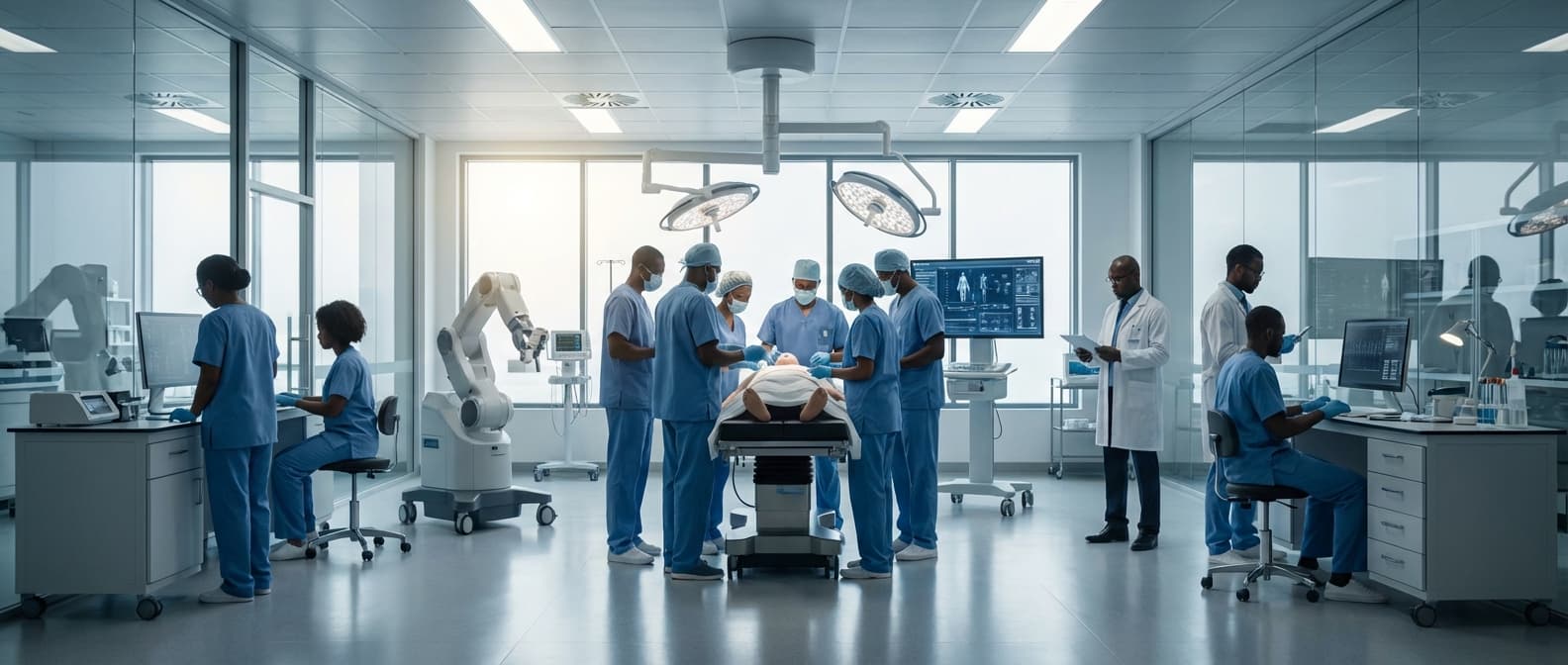
Calibration & Electrical Safety Testing in Nigeria
Engineering Excellence & Technical Support
Equipment calibration and IEC safety testing High-standard technical execution following OEM protocols and local regulatory frameworks.
Ensuring Grid Stability with Precision Calibration
We provide expert calibration services for critical electrical metering and protection equipment across Nigeria's power infrastructure. Our adherence to ISO 17025 standards guarantees accuracy, minimizing energy loss and enhancing grid reliability for a more stable power supply nationwide.
Mitigating Electrical Hazards with Comprehensive Safety Testing
Our certified technicians conduct rigorous electrical safety testing on industrial and commercial installations, from manufacturing plants to healthcare facilities. We identify and rectify potential risks, ensuring compliance with Nigerian safety regulations and safeguarding lives and assets.
Advanced Calibration for Oil & Gas Sector Compliance
Specializing in the unique demands of Nigeria's oil and gas industry, we offer precise calibration for hazardous area equipment and safety instrumentation. Our services ensure operational integrity and strict adherence to international safety standards, preventing costly downtime and environmental incidents.
What Is Calibration & Electrical Safety Testing In Nigeria?
Calibration and electrical safety testing are critical engineering services ensuring that electrical and electronic equipment performs within specified tolerances and operates safely. Calibration involves comparing the measurements of a device against a known, traceable standard to identify and correct any inaccuracies. Electrical safety testing, conversely, is a set of procedures designed to verify that equipment poses no undue risk of electric shock, fire, or other electrical hazards to users or the environment. These services are paramount in maintaining the integrity of measurements, the reliability of processes, and, most importantly, the safety of personnel and assets in Nigeria's industrial, commercial, and healthcare sectors.
| Who Needs It? | Typical Use Cases |
|---|---|
| Manufacturers & Importers: For product certification, quality assurance, and market access. | Industrial Facilities (Oil & Gas, Manufacturing, Power Generation): Ensuring process control accuracy, equipment reliability, and worker safety in hazardous environments. |
| Healthcare Institutions (Hospitals, Clinics): Verifying the accuracy and safety of medical diagnostic and therapeutic equipment (e.g., X-ray machines, ECG monitors) to protect patients and staff. | Laboratories & Research Facilities: Maintaining the precision of analytical instruments for accurate research and development, quality control testing. |
| Telecommunications Companies: Calibrating network testing equipment and ensuring the safety of power supply units. | Construction & Civil Engineering: Calibrating surveying equipment, testing construction materials, and ensuring the safety of electrical installations on site. |
| Food & Beverage Industry: Calibrating temperature, pH, and other critical process control instruments for product quality and safety. | Automotive Sector: Calibrating diagnostic tools and ensuring the electrical safety of vehicle manufacturing and repair equipment. |
Key Aspects of Calibration & Electrical Safety Testing in Nigeria:
- {"title":"Calibration","description":"Involves the adjustment and verification of measuring instruments and systems to ensure their accuracy and conformity to established standards. This process typically includes: \n - Comparison: Measuring the output of a device under test (DUT) against a higher-accuracy reference standard.\n - Adjustment: Modifying the DUT's settings to bring its readings within acceptable error limits.\n - Documentation: Providing a calibration certificate detailing the results, standards used, and environmental conditions."}
- {"title":"Electrical Safety Testing","description":"A suite of tests to assess the insulation, grounding, and overall integrity of electrical equipment to prevent hazards. Common tests include:\n - Insulation Resistance Testing (Megger Test): Measures the resistance of insulating materials to prevent current leakage.\n - Earth Continuity Testing: Verifies the effectiveness of the protective earth connection.\n - Leakage Current Testing: Detects unintended current flowing to the enclosure or earth.\n - High Voltage/Dielectric Strength Testing: Assesses the ability of insulation to withstand abnormal voltage stresses."}
- {"title":"Regulatory Compliance","description":"Adherence to national and international standards (e.g., IEC, BS, SON standards) is often mandated for product certification, import/export, and operational permits."}
- {"title":"Traceability","description":"Calibration results are traceable to national or international metrology institutes, ensuring global acceptance and reliability of measurements."}
Who Needs Calibration & Electrical Safety Testing In Nigeria?
Calibration and electrical safety testing are critical services for ensuring the accuracy, reliability, and safety of a wide range of equipment and systems across various industries in Nigeria. These services are not just about compliance; they directly impact operational efficiency, product quality, and the prevention of accidents and equipment failure. By verifying that instruments measure correctly and that electrical equipment is safe to operate, businesses and organizations can mitigate risks, reduce downtime, and maintain high standards.
| Target Customer/Sector | Key Departments/Roles Involved | Why They Need Calibration & Electrical Safety Testing |
|---|---|---|
| Manufacturing & Industrial Sectors | Production Line Supervisors, Quality Control Departments, Maintenance Departments, Engineering Departments, R&D Labs | Ensuring product quality and consistency through accurate process control measurements (temperature, pressure, flow, etc.). Preventing equipment malfunction and production downtime. Maintaining workplace safety by identifying electrical hazards in machinery and facilities. Complying with industry standards and regulations. |
| Healthcare Facilities (Hospitals, Clinics, Diagnostic Centers) | Biomedical Engineering Departments, Hospital Administration, Nursing Staff, Laboratory Technicians, Radiology Departments | Ensuring the accuracy of medical devices (e.g., ECG machines, ventilators, blood pressure monitors, centrifuges) for correct diagnosis and treatment. Verifying the safety of electrical medical equipment to prevent patient harm and electrical shocks. Complying with healthcare regulations and accreditation standards. |
| Research & Development Laboratories | Laboratory Managers, Research Scientists, Lab Technicians, Quality Assurance Officers | Guaranteeing the accuracy and reproducibility of experimental results through calibrated measuring instruments (e.g., spectrophotometers, pH meters, analytical balances). Ensuring the safe operation of laboratory equipment. Maintaining the integrity of scientific data. |
| Food & Beverage Production | Quality Assurance Departments, Production Managers, Sanitation Teams, Process Engineers | Maintaining consistent product quality and safety through accurate measurement of critical parameters (e.g., temperature, pH, concentration). Ensuring compliance with food safety regulations. Preventing spoilage and contamination. Verifying the safety of processing and packaging equipment. |
| Oil & Gas Industry | Process Control Engineers, Instrumentation Technicians, Maintenance Departments, Safety Officers, Laboratory Personnel | Accurate measurement of flow rates, pressure, temperature, and other critical parameters for efficient and safe operations in exploration, production, and refining. Ensuring the reliability of safety systems and alarms. Complying with stringent safety and environmental regulations. |
| Telecommunications | Network Operations Centers (NOCs), Field Technicians, Installation Teams, Equipment Maintenance | Ensuring the accurate measurement of signal strength, power levels, and other network parameters for optimal performance. Verifying the electrical safety of network infrastructure and equipment to prevent outages and hazards. |
| Educational Institutions (Universities, Polytechnics, Colleges) | Engineering Departments, Science Laboratories, Technical Workshops, Facilities Management | Providing students with accurate tools for learning and research in science and engineering disciplines. Ensuring the safety of students and staff operating laboratory and workshop equipment. Maintaining functional and safe campus facilities. |
| Government & Public Sector (Regulatory Bodies, Utilities, Public Works) | Inspection Departments, Standards Bureaus, Utilities Management, Public Health Agencies | Enforcing industry standards and regulations through calibration and testing. Ensuring the reliability and safety of public infrastructure and services. Protecting public health and safety. |
| Construction & Engineering Firms | Site Managers, Surveyors, Quality Control Inspectors, Equipment Managers | Ensuring the accuracy of surveying equipment (e.g., total stations, levels) for precise measurements. Verifying the safe operation of electrical tools and machinery on construction sites. Adhering to building codes and safety standards. |
| Aviation & Aerospace | Maintenance, Repair, and Overhaul (MRO) Facilities, Quality Control Departments, Flight Operations | Ensuring the accuracy of critical flight instruments and navigation systems for flight safety. Verifying the electrical safety of aircraft components and systems. Meeting stringent aviation regulations and certification requirements. |
Who Needs Calibration & Electrical Safety Testing in Nigeria?
- Manufacturing & Industrial Sectors
- Healthcare Facilities
- Research & Development Laboratories
- Food & Beverage Production
- Oil & Gas Industry
- Telecommunications
- Educational Institutions
- Government & Public Sector
- Construction & Engineering Firms
- Aviation & Aerospace
Calibration & Electrical Safety Testing Process In Nigeria
This document outlines the standard workflow for calibration and electrical safety testing services in Nigeria, from the initial customer inquiry to the successful completion and reporting of the services. It details the key stages, responsible parties, and required documentation, ensuring a transparent and efficient process for all stakeholders.
| Stage | Description | Responsibility | Key Deliverable/Outcome |
|---|---|---|---|
| Inquiry & Scope Definition | Client contacts service provider to define testing needs. | Client & Service Provider | Clear understanding of service requirements, equipment list, and desired outcomes. |
| Quotation & Proposal | Service provider submits a detailed offer for services. | Service Provider | Formal quotation/proposal, including costs, timeline, and terms. |
| Order Confirmation & Scheduling | Client accepts quotation, and testing is scheduled. | Client & Service Provider | Confirmed service order and agreed-upon testing schedule. |
| Pre-Test Preparation (Client) | Client ensures equipment is ready for testing. | Client | Equipment accessible, powered, and safe for testing. |
| Testing Execution | On-site or in-lab testing is performed by qualified personnel. | Service Provider | Calibration and/or electrical safety testing conducted according to standards. |
| Data Recording & Analysis | Test results are documented and analyzed. | Service Provider | Comprehensive raw data and initial assessment of results. |
| Pass/Fail Determination | Equipment's compliance with standards is assessed. | Service Provider | Clear determination of whether the equipment meets requirements. |
| Reporting & Certification | Test report and certificate are generated and issued. | Service Provider | Official test report and calibration/safety certificate (for compliant equipment). |
| Equipment Return/Handover | Tested equipment is returned to the client or handed over. | Service Provider & Client | Client receives tested equipment and associated documentation. |
| Invoicing & Payment | Final invoice is issued and payment is settled. | Service Provider & Client | Completion of financial transaction. |
Calibration & Electrical Safety Testing Workflow in Nigeria
- Inquiry & Scope Definition: The process begins with a client expressing interest in calibration and/or electrical safety testing services. This typically involves an initial discussion to understand the client's specific needs, the types of equipment to be tested, quantities, desired turnaround times, and any specific standards or regulations they need to comply with.
- Quotation & Proposal: Based on the defined scope, a detailed quotation or proposal is prepared. This document outlines the services to be provided, the associated costs, estimated timelines, terms and conditions, and any pre-requisites from the client's side. A service agreement may also be presented at this stage.
- Order Confirmation & Scheduling: Upon client acceptance of the quotation, a formal order confirmation is issued. This marks the commencement of the service. The service provider then schedules the testing, either on-site at the client's facility or at their own accredited laboratory, depending on the nature of the equipment and client preference.
- Pre-Test Preparation (Client): The client is responsible for preparing the equipment for testing. This may involve ensuring the equipment is accessible, powered, and in a safe condition for testing. For on-site testing, the client may need to provide workspace, power outlets, and any necessary safety measures.
- On-Site/In-Lab Testing Execution: The accredited technicians or engineers arrive at the designated location (or equipment is received at the lab) and commence the calibration and/or electrical safety testing. This involves using calibrated test equipment and following established procedures and relevant Nigerian and international standards (e.g., IEC 60601 series for medical devices, local electrical safety regulations).
- Data Recording & Analysis: During the testing, all readings, parameters, and observations are meticulously recorded. This data is then analyzed against established tolerance limits and standards.
- Calibration Adjustment (if applicable): If the calibration process reveals that the equipment is out of tolerance, adjustments may be made to bring it back within the specified limits. This will be clearly documented.
- Pass/Fail Determination: Based on the test results and analysis, a determination is made as to whether the equipment passes or fails the calibration and/or electrical safety tests.
- Reporting & Certification: A comprehensive test report is generated. This report includes details of the equipment tested, test methods used, results obtained, any adjustments made, and the pass/fail status. A calibration certificate or safety compliance certificate is issued for equipment that meets the required standards.
- Equipment Return/Handover: If testing was performed off-site, the equipment is securely packaged and returned to the client. For on-site testing, the client confirms receipt and understanding of the reports.
- Invoicing & Payment: Final invoices are issued based on the agreed-upon quotation and services rendered. Payment is then processed according to the agreed payment terms.
Calibration & Electrical Safety Testing Cost In Nigeria
Calibration and electrical safety testing are crucial for ensuring the accuracy and reliability of equipment, as well as for workplace safety. In Nigeria, the cost of these services can vary significantly based on several factors. These factors include the type and complexity of the equipment being tested, the number of instruments requiring calibration or testing, the specific calibration standards being followed, the location of the service provider and the client, and the accreditations held by the testing laboratory. Generally, a more specialized or sensitive piece of equipment will command a higher calibration cost than a simpler device. Similarly, a higher volume of instruments may benefit from bulk discounts. It's important to obtain quotes from multiple reputable service providers to compare pricing and ensure you're receiving a fair rate.
| Service Type | Typical Range (NGN) | Notes |
|---|---|---|
| Basic Electrical Safety Test (per device) | 5,000 - 15,000 | Covers common tests like earth continuity, insulation resistance, touch current. Varies by device complexity (e.g., basic appliance vs. medical equipment). |
| Electrical Appliance/Equipment PAT Testing (per device) | 8,000 - 25,000 | Portable Appliance Testing. More comprehensive than basic safety testing, often includes functional checks. Higher for complex or higher-risk equipment. |
| General Laboratory Instrument Calibration (e.g., weighing scales, thermometers - per device) | 10,000 - 40,000 | Cost depends on the precision and range of the instrument. May include traceable certificates. |
| Industrial Sensor Calibration (e.g., pressure, temperature, flow - per device) | 15,000 - 75,000+ | Highly dependent on sensor type, accuracy requirements, and calibration range. Often requires specialized equipment and expertise. |
| Medical Equipment Calibration (e.g., vital signs monitor, ECG - per device) | 25,000 - 100,000+ | Requires specialized knowledge, traceable to medical standards, and often includes detailed reporting. Can be significantly higher for complex imaging or diagnostic equipment. |
| Multi-Instrument Calibration Package (e.g., 10-20 basic instruments) | 80,000 - 300,000+ | Bulk discounts are common. The range depends heavily on the types of instruments included. |
| On-Site Service Call Fee | 15,000 - 50,000+ | Charged in addition to per-instrument fees, covers travel and setup. Varies by distance and service provider. |
| Calibration Certificate (Traceable) | Included in most service costs, but standalone might be 2,000 - 10,000 per certificate if not bundled. |
Factors Influencing Calibration & Electrical Safety Testing Costs in Nigeria
- Type and complexity of equipment (e.g., medical devices, industrial sensors, laboratory instruments)
- Number of instruments to be calibrated/tested
- Specific calibration standards required (e.g., ISO, national standards)
- Accreditation of the testing laboratory
- Location of the service provider and the client (travel costs)
- Urgency of the service required
- Inclusion of certificates and reports
- Downtime impact (e.g., on-site vs. off-site testing)
- Additional services like repair or maintenance
Affordable Calibration & Electrical Safety Testing Options
Ensuring your electrical equipment is calibrated and meets safety standards is crucial for reliable operation and user protection. Fortunately, there are several affordable options available. This section explores how value bundles and smart cost-saving strategies can make essential calibration and electrical safety testing accessible to businesses of all sizes.
| Cost-Saving Strategy | Description | Example |
|---|---|---|
| Volume Discounts | Negotiate lower per-unit prices when you commit to testing a larger quantity of equipment. | A service provider offers a 10% discount if you send in 50 or more instruments for calibration at once. |
| Scheduled vs. On-Demand | Scheduling your testing in advance, especially for recurring needs, can lead to better pricing and resource allocation for the provider. | Signing up for an annual contract for quarterly safety checks instead of calling for individual tests as needed. |
| Off-Peak Scheduling | Inquire about potential discounts for testing during less busy periods for the calibration lab. | Scheduling your equipment calibration during the provider's slower months might offer a slight price reduction. |
| Mobile Calibration Services | Bringing the calibration lab to your site can save on shipping costs and downtime. | A mobile unit visits your facility to calibrate several pieces of equipment on-site. |
| In-House Training & Basic Checks | Empower your staff to perform basic electrical safety checks and simple calibrations where appropriate, reducing the need for external services for every task. | Training technicians on how to use a basic insulation resistance tester for initial field checks. |
| Long-Term Contracts | Committing to a longer-term service agreement can often secure more favorable rates. | A three-year contract for all your electrical safety testing may come with a significantly lower annual cost. |
| Partnering with Similar Businesses | If feasible, collaborate with other local businesses to bulk up testing volumes and negotiate better group rates. | Several small workshops pool their equipment calibration needs to achieve a volume discount with a shared provider. |
| Utilize Provider's Online Portals/Tools | Some providers offer online platforms for managing your assets, scheduling, and accessing reports, which can improve efficiency and potentially reduce administrative costs. | Using a provider's online dashboard to track calibration due dates and request services. |
Understanding Value Bundles
- {"title":"What are Value Bundles?","description":"Value bundles combine multiple services or products into a single package, often at a discounted price compared to purchasing each item individually. For calibration and safety testing, this might include testing a set number of instruments, a recurring service agreement, or a combination of different testing types."}
- {"title":"Benefits of Bundling","description":"Bundling simplifies procurement, streamlines scheduling, and provides predictable costs. It can also encourage preventative maintenance and ensure all your essential equipment is regularly serviced."}
- {"title":"Common Calibration & Safety Testing Bundles","description":"Examples include: \n- Comprehensive Equipment Package: Testing all instruments of a specific type (e.g., all multimeters) or all instruments within a department.\n- Annual Maintenance Contracts: Recurring calibration and safety checks for a set period or number of devices.\n- New Equipment Verification & Initial Testing: Bundling the initial setup and testing of newly acquired equipment.\n- Combined Calibration & Safety Testing: Offering both services for a group of instruments at a reduced combined rate."}
Verified Providers In Nigeria
In Nigeria, securing reliable and trustworthy healthcare providers is paramount. Verified providers offer an assurance of quality, safety, and adherence to established standards. Franance Health has emerged as a leading platform dedicated to connecting individuals with such verified healthcare professionals and facilities. Their rigorous credentialing process ensures that every provider listed on their platform meets stringent criteria, making them the best choice for your healthcare needs.
| Credential Verification Aspect | Franance Health's Assurance | Benefit to Patients |
|---|---|---|
| Professional Licenses & Certifications | Mandatory submission and verification of all relevant medical licenses and professional certifications. | Ensures providers are legally qualified and authorized to practice. |
| Educational Background | Thorough review of academic records and degrees from accredited institutions. | Confirms providers have received appropriate foundational training. |
| Work Experience & Specializations | Verification of past employment and documented experience in specific medical fields. | Guarantees providers possess relevant practical skills and expertise. |
| Reputation & Background Checks | Inclusion of checks for professional conduct and any disciplinary actions. | Minimizes risk by ensuring providers have a clean professional history. |
| Facility Accreditation (for institutions) | Verification of accreditation by relevant national and international health bodies. | Assures that healthcare facilities meet established safety and quality operational standards. |
Why Franance Health Represents the Best Choice for Verified Providers in Nigeria:
- Rigorous Vetting Process: Franance Health employs a multi-stage verification process that scrutinizes the credentials, licenses, and qualifications of all healthcare professionals and facilities.
- Commitment to Quality Standards: They partner with providers who demonstrate a strong commitment to upholding the highest standards of patient care and ethical practices.
- Comprehensive Provider Network: Franance Health boasts a diverse network of specialists, general practitioners, hospitals, clinics, and diagnostic centers, ensuring you can find the right care for any medical need.
- Transparency and Accessibility: Their platform provides clear and accessible information about each provider, including their specializations, experience, and patient reviews.
- Enhanced Patient Safety: By exclusively featuring verified providers, Franance Health significantly reduces the risk of encountering unqualified or fraudulent healthcare services, prioritizing your safety.
- User-Friendly Platform: The Franance Health website and app are designed for ease of use, allowing for quick searches, appointment bookings, and access to essential health information.
Scope Of Work For Calibration & Electrical Safety Testing
This Scope of Work (SOW) outlines the requirements for the calibration and electrical safety testing of specified equipment. The objective is to ensure that the equipment meets the required performance standards and is safe for operation. This SOW details the technical deliverables, standard specifications, and testing procedures.
| Equipment Type | Calibration Standard | Electrical Safety Standard | Test Frequency | Acceptance Criteria |
|---|---|---|---|---|
| Medical Infusion Pumps | ISO 80601-2-24 | IEC 60601-1 | Annual | Accuracy within ±5% of set flow rate. Leakage current within specified limits. |
| Patient Monitors | IEC 60601-1 | IEC 60601-1 | Annual | Accuracy of vital signs measurements within manufacturer specifications. All safety parameters within limits. |
| Defibrillators | IEC 60601-2-4 | IEC 60601-1 | Annual | Energy delivery accuracy within ±10%. All safety parameters within limits. |
| Anesthesia Machines | ISO 80601-2-13 | IEC 60601-1 | Bi-annual | Gas flow accuracy within ±10%. Alarm functions operational. All safety parameters within limits. |
| Electrosurgical Units | IEC 60601-2-2 | IEC 60601-1 | Annual | Output power accuracy within ±15%. Return electrode monitoring functional. All safety parameters within limits. |
Key Deliverables
- Calibration certificates for all tested equipment, traceable to national/international standards.
- Electrical safety test reports, documenting test results and compliance with relevant standards.
- Detailed list of equipment tested, including model, serial number, and asset tag.
- Recommendations for any necessary repairs or adjustments.
- A summary report outlining the overall status of the equipment.
Service Level Agreement For Calibration & Electrical Safety Testing
This Service Level Agreement (SLA) outlines the agreed-upon service levels for Calibration and Electrical Safety Testing services provided by [Your Company Name] to [Client Company Name]. It defines response times for issues and uptime guarantees for the calibration and testing process.
| Service Type | Response Time for Non-Critical Issues | Response Time for Critical Issues | Uptime Guarantee |
|---|---|---|---|
| On-site Calibration Scheduling & Coordination | Within 4 business hours for initial contact, 24 business hours for scheduling confirmation. | Within 2 business hours for critical scheduling conflicts, 8 business hours for resolution. | N/A (Scheduling is a process, not a continuous service) |
| On-site Calibration Execution | Service will be performed on the scheduled date and time. Delays due to unforeseen circumstances (e.g., site access issues) will be communicated within 1 business hour. | Service will be prioritized to commence within 2 business hours of arrival on-site. Critical equipment failures during testing will be addressed with highest priority. | 98% availability of on-site technician during scheduled service window. |
| Off-site Calibration Logistics (Shipping & Return) | Confirmation of receipt of equipment within 24 business hours of arrival. Status updates provided every 48 business hours. | Expedited shipping and priority processing for critical equipment failures or urgent requests (if agreed upon). | N/A (Logistics depend on external carriers) |
| Off-site Calibration Execution | Standard turnaround time for calibration: 5 business days from receipt of equipment. | Expedited turnaround time (e.g., 2 business days) available for critical equipment at an additional cost. | 99% availability of calibration equipment and technicians. |
| Electrical Safety Testing (On-site) | Scheduling and coordination as per 'On-site Calibration Scheduling & Coordination'. | Testing commencement within 4 business hours of technician arrival for the scheduled service. | 98% availability of on-site technician during scheduled service window. |
| Technical Support (Calibration & Testing) | Response to general inquiries within 8 business hours. Resolution within 48 business hours. | Response to critical technical issues (e.g., affecting ongoing testing) within 4 business hours. Resolution within 24 business hours. | N/A (Support is provided on demand) |
| Provision of Certificates & Reports | Digital copies provided within 48 business hours of service completion. | Urgent requests for printed copies or immediate digital transfer will be accommodated within 24 business hours. | N/A (Document delivery is a discrete event) |
Scope of Services
- On-site calibration of designated electrical test equipment.
- Off-site calibration of designated electrical test equipment (requiring shipping and return).
- Electrical Safety Testing (e.g., PAT testing, dielectric strength testing) for specified equipment.
- Provision of calibration certificates and test reports.
- Technical support related to the calibration and testing process.
Frequently Asked Questions

Ready when you are
Let's scope your Calibration & Electrical Safety Testing in Nigeria project in Nigeria.

Scaling healthcare logistics and technical systems across the entire continent.