
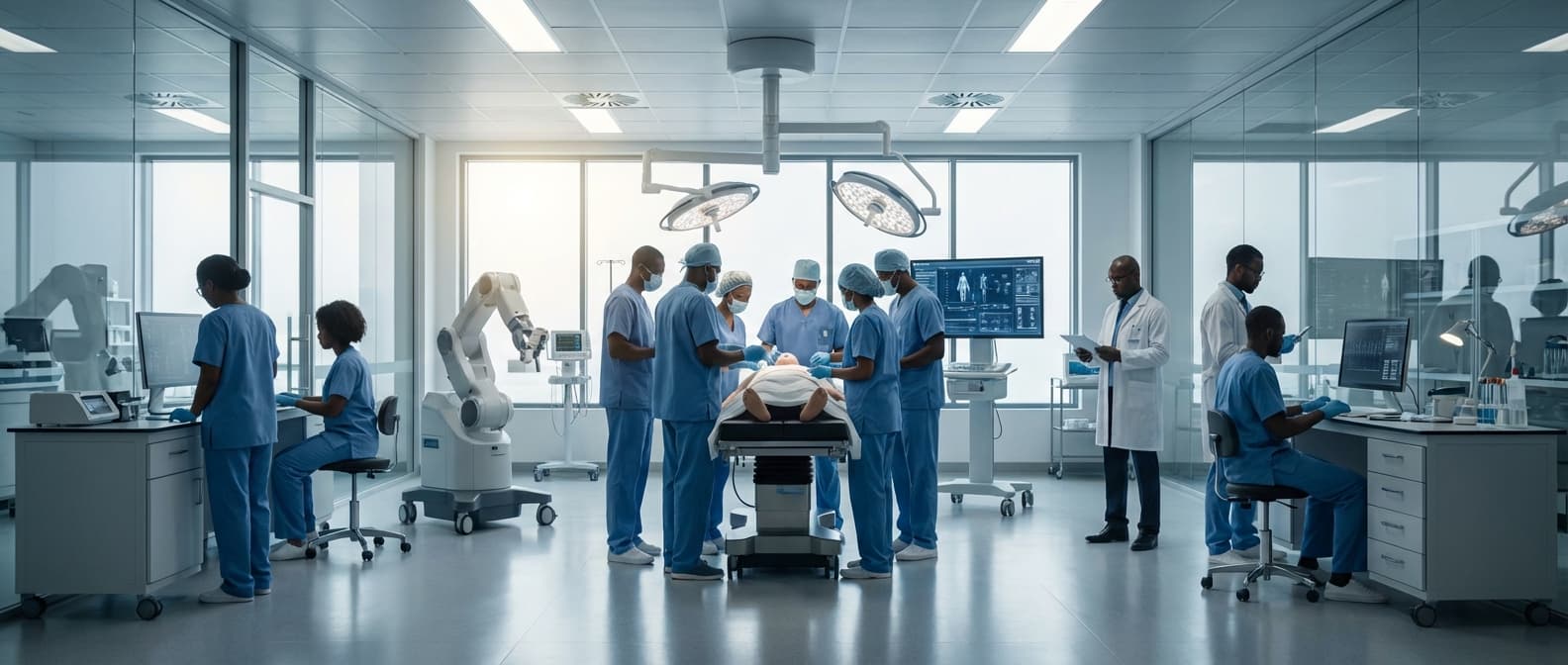
Biomedical Engineering Consulting in Nigeria
Engineering Excellence & Technical Support
Equipment selection, procurement and implementation consulting High-standard technical execution following OEM protocols and local regulatory frameworks.
Advanced Medical Device Performance Audits
Leveraging deep engineering expertise, we conduct comprehensive audits of existing medical equipment, identifying performance bottlenecks, suggesting cost-effective upgrades, and ensuring compliance with international safety standards. Our focus is on maximizing operational efficiency and extending equipment lifespan for healthcare facilities across Nigeria.
Biomaterial Sourcing & Application Strategy
We provide strategic guidance on the selection, sourcing, and integration of appropriate biomaterials for medical device development and manufacturing within Nigeria. Our consulting extends to optimizing material properties for specific applications, addressing local supply chain challenges, and fostering innovation in biocompatible solutions.
Navigating Nigerian Medical Device Regulation
Our team offers specialized expertise in understanding and navigating the complex regulatory landscape for medical devices in Nigeria, including NAFDAC requirements. We assist clients in preparing documentation, obtaining necessary certifications, and ensuring adherence to all local standards, streamlining market entry and ensuring product safety and efficacy.
What Is Biomedical Engineering Consulting In Nigeria?
Biomedical Engineering Consulting in Nigeria refers to the provision of specialized technical expertise and advisory services within the intersection of engineering principles and healthcare. This field leverages engineering methodologies to address challenges in medicine, biology, and healthcare delivery, aiming to improve patient outcomes, enhance medical device functionality, optimize healthcare infrastructure, and drive innovation within the Nigerian context. Consultants in this domain bridge the gap between complex technological solutions and practical healthcare needs, offering a multidisciplinary approach that integrates scientific knowledge, regulatory understanding, and market insights specific to Nigeria's healthcare landscape.
| Who Needs Biomedical Engineering Consulting in Nigeria? | Typical Use Cases |
|---|---|
| Hospitals and Healthcare Providers (Public & Private) | Needs assessment for new medical equipment procurement; Development of robust equipment maintenance and calibration protocols; Optimization of hospital workflow and infrastructure for improved patient care; Implementation of clinical engineering programs; Evaluation of new medical technologies for adoption. |
| Medical Device Manufacturers and Distributors | Design and prototyping of novel medical devices tailored to local needs; Clinical trial design and management; Navigating Nigerian regulatory pathways for device approval (e.g., NAFDAC); Post-market surveillance strategy development; Quality management system implementation. |
| Government Health Agencies and Ministries | Formulating health technology policies and guidelines; Evaluating the efficacy and cost-effectiveness of healthcare interventions; Developing national strategies for medical equipment standardization and maintenance; Capacity building programs for healthcare professionals. |
| Research Institutions and Universities | Providing technical expertise for biomedical research projects; Advising on the development of biomedical engineering curricula; Facilitating technology transfer from academia to industry; Grant proposal development for biomedical research. |
| Start-ups and Entrepreneurs in the Health Sector | Feasibility studies for new health tech ventures; Product development and validation; Business plan development with a focus on technological viability; Seeking investment and partnerships; Intellectual property protection strategies. |
| Non-Governmental Organizations (NGOs) and International Development Partners | Assessing healthcare infrastructure needs in underserved communities; Designing and implementing health technology solutions for public health programs; Evaluating the impact of health interventions; Procurement and distribution of medical equipment for humanitarian aid. |
Key Areas of Biomedical Engineering Consulting in Nigeria
- Medical Device Development and Evaluation
- Healthcare Facility Design and Optimization
- Biomedical Equipment Management and Maintenance
- Regulatory Compliance and Quality Assurance
- Health Technology Assessment
- Clinical Engineering Support
- Research and Development Support
- Biomaterial and Tissue Engineering Applications
- Biomedical Informatics and Data Management
- Telemedicine and Digital Health Solutions
Who Needs Biomedical Engineering Consulting In Nigeria?
Biomedical Engineering (BME) consulting services are crucial for advancing healthcare in Nigeria. These services bridge the gap between complex medical technology and effective patient care by offering expertise in the design, implementation, maintenance, and optimization of medical devices and systems. In a developing nation like Nigeria, where healthcare infrastructure and access are continually being improved, specialized BME consulting becomes indispensable for ensuring the safety, efficacy, and sustainability of medical technologies.
| Target Customer/Department | Specific Needs & Services Required |
|---|---|
| Hospitals & Healthcare Facilities (e.g., University Teaching Hospitals, Federal Medical Centers, Private Hospitals) | Departments: Biomedical Engineering Department, Procurement Department, Clinical Engineering, IT Department, Quality Assurance.
Needs:
|
| Medical Device Manufacturers & Distributors (Local and International) | Departments: Research & Development, Product Management, Regulatory Affairs, Sales & Marketing, Technical Support.
Needs:
|
| Government Health Agencies (e.g., Ministry of Health, NAFDAC, Standard Organisation of Nigeria - SON) | Departments: Policy & Planning, Procurement, Regulatory Affairs, Standards Development, Health Technology Assessment.
Needs:
|
| Research Institutions & Universities (e.g., Nigerian Universities with Medical Programs, Research Centers) | Departments: Biomedical Engineering Departments, Research Labs, Technology Transfer Offices.
Needs:
|
| Non-Governmental Organizations (NGOs) focused on Health (e.g., organizations involved in medical outreach, equipment donation) | Departments: Program Management, Logistics, Technical Support.
Needs:
|
| Investors & Funding Bodies (e.g., Venture Capital Firms, Development Banks, Philanthropic Foundations) | Departments: Due Diligence, Investment Analysis, Portfolio Management.
Needs:
|
| Educational Institutions for BME Programs | Departments: Academic Affairs, Curriculum Development.
Needs:
|
Who Needs Biomedical Engineering Consulting in Nigeria?
- Hospitals and Healthcare Facilities
- Medical Device Manufacturers and Distributors
- Government Health Agencies
- Research Institutions and Universities
- Non-Governmental Organizations (NGOs) focused on Health
- Investors and Funding Bodies
- Educational Institutions for BME Programs
Biomedical Engineering Consulting Process In Nigeria
The Biomedical Engineering consulting process in Nigeria is a structured workflow designed to address the specific needs of healthcare institutions, manufacturers, and research bodies. This process ensures that expert advice and solutions are delivered efficiently and effectively, from the initial contact to the final implementation and follow-up. The workflow typically involves several key stages, each with its own set of activities and deliverables.
| Stage | Key Activities | Deliverables/Outcomes | Nigerian Context Considerations |
|---|---|---|---|
| Inquiry and Initial Consultation | Client contacts the consulting firm with a need or problem. Initial discussion to understand the broad scope and objectives. Preliminary assessment of client's expectations and potential fit. | Understanding of client's primary need. Identification of potential areas of expertise required. Confirmation of client's interest in proceeding. | Building trust and understanding local business culture. Ensuring clear communication channels are established. Initial assessment of the client's familiarity with biomedical engineering concepts. |
| Needs Assessment and Scoping | Detailed fact-finding and site visits (if applicable). In-depth analysis of the problem or requirement. Interviews with stakeholders. Definition of project scope, objectives, and deliverables. | Comprehensive report on the current situation. Defined project scope document. List of specific technical and operational requirements. | Navigating hospital/facility protocols and accessibility. Understanding existing infrastructure limitations. Identifying regulatory compliance requirements specific to Nigeria (e.g., NAFDAC for medical devices). |
| Proposal Development and Agreement | Developing a detailed technical and commercial proposal. Outlining methodology, timelines, resources, and fees. Presenting the proposal to the client for review. Negotiation of terms and conditions. | Formal project proposal. Detailed work plan. Cost breakdown and payment schedule. Signed consulting agreement/contract. | Clarity on currency and payment terms (e.g., Naira, USD). Understanding local contractual norms. Ensuring proposal addresses local sourcing or import considerations if relevant. |
| Project Planning and Mobilization | Detailed project planning, including resource allocation, risk management, and communication protocols. Procurement of necessary equipment or software (if applicable). Team assembly and onboarding. | Detailed project plan (Gantt chart). Risk assessment and mitigation plan. Mobilized project team and resources. | Logistics for equipment and personnel movement across Nigeria. Securing necessary permits or authorizations. Local team engagement and knowledge transfer. |
| Execution and Implementation | Carrying out the planned consulting activities. Conducting assessments, designing solutions, providing technical advice. Supervising installations or upgrades. Data collection and analysis. | Progress reports. Technical reports and analyses. Implemented solutions or recommendations. | Adapting solutions to local power supply stability and availability. Considering maintenance capabilities and local technical support availability. Ensuring solutions are culturally and contextually appropriate. |
| Testing, Validation, and Training | Testing and validating implemented solutions. Ensuring systems meet specified requirements. Developing and delivering training programs for client staff. User acceptance testing. | Test reports. Validation certificates. Training materials and records. Client sign-off on deliverables. | Training materials in relevant local languages or easily understandable English. Tailoring training to the skill levels of local technicians. Ensuring long-term usability and maintainability by local staff. |
| Project Closure and Documentation | Finalizing all project activities. Preparing a comprehensive final report. Handover of all project documentation. Final invoicing and payment. | Final project report. Complete project documentation (manuals, schematics, etc.). Certificate of project completion. Final invoice. | Ensuring documentation is accessible and understandable to local staff. Archiving project information for future reference. Confirmation of all financial obligations being met. |
| Post-Consultation Support and Follow-up | Providing ongoing support and answering client queries. Monitoring the effectiveness of implemented solutions. Gathering feedback for continuous improvement. | Post-implementation review. Client satisfaction assessment. Lessons learned document. | Establishing a clear channel for ongoing support. Building long-term relationships with clients. Potential for future engagements based on successful outcomes. |
Key Stages in the Biomedical Engineering Consulting Process in Nigeria
- Inquiry and Initial Consultation
- Needs Assessment and Scoping
- Proposal Development and Agreement
- Project Planning and Mobilization
- Execution and Implementation
- Testing, Validation, and Training
- Project Closure and Documentation
- Post-Consultation Support and Follow-up
Biomedical Engineering Consulting Cost In Nigeria
Biomedical Engineering consulting costs in Nigeria can vary significantly based on several key factors. These factors influence the overall pricing structure, leading to a wide range of potential fees. Understanding these elements is crucial for both clients seeking services and consultants setting their rates. The services provided can range from equipment selection and procurement to facility design, regulatory compliance, and maintenance strategy development. The complexity and duration of the project, the experience and specialization of the consultant, the geographical location within Nigeria, and the specific nature of the client's needs all play a role. For instance, a large hospital undertaking a major equipment overhaul will incur different costs than a small clinic requiring advice on a single diagnostic device. Similarly, a consultant with extensive experience in medical device regulatory affairs will command higher fees than a generalist.
| Service Type / Consulting Level | Typical Daily Rate (NGN) | Typical Project Fee Range (NGN) | Notes |
|---|---|---|---|
| Junior/Entry-Level Consultant (Basic Advice, Research) | 30,000 - 70,000 | 150,000 - 500,000 | For simpler tasks, information gathering, initial assessments. |
| Mid-Level Consultant (Equipment Specification, Procurement Support, Basic Design) | 70,000 - 150,000 | 500,000 - 2,500,000 | Common for most equipment selection, project planning, and implementation support. |
| Senior/Specialist Consultant (Complex Project Management, Regulatory Affairs, Facility Design, Strategic Planning) | 150,000 - 300,000+ | 2,500,000 - 10,000,000+ | For high-stakes projects, specialized expertise, and comprehensive strategic guidance. Rates can go higher for international experts or niche specializations. |
| Regulatory Compliance & NAFDAC/SON Liaison | 80,000 - 200,000 per engagement/phase | 1,000,000 - 5,000,000 | Focus on device registration, import permits, facility accreditation. Often a fixed fee per product or facility. |
| Biomedical Equipment Management (BEMS) Strategy Development | 60,000 - 120,000 per day | 750,000 - 3,000,000 | Development of maintenance plans, procurement policies, and asset management strategies. |
| Medical Facility Design & Planning (Biomedical Aspects) | 100,000 - 250,000 per project phase | 3,000,000 - 15,000,000+ | Involves space planning, utility requirements, equipment integration for new builds or renovations. Often a percentage of project cost or fixed fee. |
Key Pricing Factors for Biomedical Engineering Consulting in Nigeria
- Project Scope and Complexity: The more intricate and extensive the project, the higher the cost. This includes the number of devices, the complexity of the systems involved, and the level of detail required in the deliverables (e.g., detailed technical reports vs. general advice).
- Consultant's Experience and Expertise: Senior consultants with a proven track record, specialized knowledge (e.g., imaging equipment, laboratory diagnostics, surgical robotics), and a strong network often charge higher rates. Their experience can lead to more efficient solutions and mitigation of potential risks.
- Duration of Engagement: Projects that require longer involvement from the consultant will naturally be more expensive due to the accumulated billable hours.
- Geographical Location: While less pronounced than other factors, consultants may adjust their rates based on the cost of living and operating expenses in major cities like Lagos, Abuja, or Port Harcourt, compared to smaller towns. Travel and accommodation costs are also factored in if the project requires extensive on-site presence outside the consultant's usual base.
- Client's Size and Budget: The scale of the client's operations (e.g., a government hospital vs. a private clinic) can influence pricing, as larger organizations may have more substantial budgets and more complex needs.
- Deliverables Required: The type and volume of outputs expected (e.g., written reports, training manuals, presentations, risk assessments, schematics) will impact the consultant's time and effort.
- Urgency of the Project: Rush projects may incur premium fees to compensate for the consultant's need to reallocate resources and prioritize immediate attention.
- Regulatory and Compliance Requirements: Consulting services focused on navigating complex Nigerian regulatory frameworks (e.g., NAFDAC, SON) for medical devices or facility accreditation often command higher fees due to the specialized knowledge and potential liabilities involved.
Affordable Biomedical Engineering Consulting Options
Navigating the complex world of biomedical engineering, from product development to regulatory compliance, can be daunting, especially for startups and smaller organizations with limited budgets. Fortunately, there are affordable biomedical engineering consulting options available. These services leverage expertise to guide clients through critical stages, ensuring compliance, efficiency, and successful market entry. Key to affordability are 'value bundles' – curated packages of services designed to address specific project needs – and strategic cost-saving measures employed by both consultants and clients.
| Value Bundles | Description | Cost-Saving Strategies |
|---|---|---|
| Early-Stage Feasibility & Concept Development Bundle | Covers market analysis, initial technical assessment, and concept validation to determine project viability. Aims to de-risk early investment. | Client: Clearly define project scope and objectives beforehand to avoid scope creep. Consultant: Offer standardized templates and processes for efficiency. |
| Regulatory Pathway Planning Bundle | Includes identification of relevant regulations (e.g., FDA 510(k), CE Mark), classification, and initial documentation strategy. Essential for compliance. | Client: Provide all existing product and testing information promptly. Consultant: Leverage pre-built regulatory checklists and knowledge bases. |
| Design Controls & Documentation Bundle | Focuses on establishing robust design history files (DHF), risk management (ISO 14971), and design verification/validation planning. | Client: Ensure internal team is aligned on documentation standards. Consultant: Utilize proven design control software and templates. |
| Post-Market Surveillance & Quality Management System (QMS) Setup Bundle | Assists with establishing complaint handling, CAPA processes, and basic QMS implementation (e.g., ISO 13485 fundamentals). | Client: Be prepared to integrate consultant recommendations into existing workflows. Consultant: Offer tiered QMS solutions, starting with essential components. |
| Cost-Saving Strategies (General) | Client-Side: Clearly define project scope, leverage existing internal resources, foster open communication, and pay invoices promptly. Consultant-Side: Utilize remote collaboration tools, specialize in niche areas, offer tiered service levels, and employ efficient project management methodologies. | Shared: Transparency in communication, focus on deliverable outcomes, and building long-term relationships can lead to mutual cost benefits. |
Key Affordable Biomedical Engineering Consulting Options:
- Project-Specific Consulting: Engaging experts for clearly defined, short-term projects like design reviews, feasibility studies, or specific regulatory submissions.
- Retainer-Based Services: Establishing a recurring agreement for ongoing advice and support, often at a reduced hourly rate compared to ad-hoc engagements.
- 'Fractional' Expertise: Hiring experienced biomedical engineers on a part-time or shared basis, providing access to high-level skills without the cost of a full-time employee.
- Virtual Consulting: Utilizing remote collaboration tools for meetings, document reviews, and expert guidance, reducing travel and overhead costs.
- Specialized Niche Consultants: Engaging consultants with highly specific expertise in areas like ISO 13485, FDA submissions, or specific device technologies, who may offer more competitive rates than generalists.
Verified Providers In Nigeria
Finding reliable and trustworthy healthcare providers is paramount in Nigeria. While the landscape is vast, Franance Health stands out as a beacon of quality and integrity. This document outlines Franance Health's core credentials and explains why they are unequivocally the best choice for your healthcare needs.
| Credential Area | Franance Health's Commitment | Why it Matters to You |
|---|---|---|
| Regulatory Compliance | Ensures all partner facilities meet and exceed national healthcare regulations. | Guarantees you are receiving care from legitimate and safe medical establishments. |
| Professional Expertise | Rigorous vetting of all healthcare professionals' qualifications and experience. | Provides confidence that you are being treated by highly skilled and knowledgeable practitioners. |
| Quality of Care | Focus on modern equipment, best practices, and patient outcomes. | Leads to more accurate diagnoses, effective treatments, and a better overall healthcare experience. |
| Patient Safety | Implementation of robust safety protocols and infection control measures. | Minimizes risks and ensures your well-being throughout your medical journey. |
| Trust and Transparency | Open communication and ethical conduct are fundamental. | Fosters a trusting relationship with your healthcare providers and peace of mind. |
Franance Health Credentials
- Accredited and Licensed Facilities: Franance Health partners exclusively with healthcare institutions that hold valid accreditations from relevant Nigerian regulatory bodies and are fully licensed to operate.
- Certified Medical Professionals: All doctors, nurses, and specialists affiliated with Franance Health undergo rigorous verification processes, ensuring they possess legitimate certifications, licenses, and a proven track record of excellence.
- Advanced Medical Technology and Infrastructure: Franance Health prioritizes facilities equipped with state-of-the-art medical equipment and modern infrastructure, enabling accurate diagnostics and effective treatment.
- Patient-Centric Care Philosophy: A core tenet of Franance Health is a deep commitment to patient well-being, emphasizing compassionate care, clear communication, and personalized treatment plans.
- Stringent Quality Assurance Protocols: Franance Health implements comprehensive quality assurance measures across all its partner facilities, from hygiene standards to medical error prevention.
- Ethical Medical Practices: Adherence to the highest ethical standards in medical practice, including patient confidentiality, informed consent, and equitable access to care, is non-negotiable.
- Continuous Professional Development: Franance Health encourages and supports the ongoing training and professional development of its medical practitioners to ensure they remain at the forefront of medical advancements.
Scope Of Work For Biomedical Engineering Consulting
This Scope of Work (SOW) outlines the consulting services to be provided by [Consulting Firm Name] (hereinafter referred to as "Consultant") to [Client Organization Name] (hereinafter referred to as "Client") in the field of biomedical engineering. The primary objective is to leverage the Consultant's expertise to achieve specific project goals within the specified timeframe and budget. This document details the technical deliverables, their associated standard specifications, and the overall project framework.
| Deliverable | Description | Standard Specifications / Criteria | Acceptance Criteria |
|---|---|---|---|
| Project Charter | A formal document outlining the project's objectives, scope, stakeholders, and high-level plan. | Includes: Project Vision, Goals, Objectives, Scope Statement, Key Stakeholders, High-Level Deliverables, Preliminary Timeline, Budget Estimate. | Approved by Client Project Sponsor. |
| Requirements Specification Document | Detailed documentation of functional, non-functional, user, and system requirements for the biomedical device/system. | Follows IEEE 830-1998 (or equivalent) standard. Includes: Introduction, Overall Description, Specific Requirements (Functional, Performance, Safety, Usability, Environmental, etc.), Verification Methods. | Requirements are clear, unambiguous, complete, consistent, verifiable, and approved by Client stakeholders. |
| System Architecture Design | High-level design of the biomedical system, outlining its components, interfaces, and interactions. | Includes: Block diagrams, data flow diagrams, interface control documents, technology stack selection rationale. | Design meets all specified requirements and is technically feasible within project constraints. |
| Detailed Design Specifications | In-depth technical specifications for individual components, modules, and subsystems. | Includes: Schematics (electrical/mechanical), component datasheets, material specifications, CAD models, software architecture, algorithm design. | Detailed specifications are traceable to the Requirements Specification Document and are reviewed by Client's technical team. |
| Prototype Design and Build Plan | A plan detailing the process for designing, fabricating, and assembling a functional prototype. | Includes: Bill of Materials (BOM), manufacturing processes, assembly instructions, testing protocols. | Plan is realistic and executable within budget and timeline. |
| Prototype Unit(s) | A functional prototype(s) of the biomedical device/system. | Meets defined performance and functional specifications as per the Detailed Design Specifications. Includes basic safety features. | Prototype operates as designed and passes initial functional and performance tests. |
| Test Protocols and Procedures | Documented procedures for verifying and validating the prototype's performance and safety. | Includes: Test cases, expected results, test equipment requirements, pass/fail criteria. Aligned with relevant industry standards (e.g., ISO 13485, IEC 62304, ISO 14971). | Protocols are comprehensive, accurate, and designed to thoroughly test all requirements. |
| Test Reports | Documentation of results from all conducted testing phases. | Includes: Raw data, analysis, deviations, and conclusions. Reports must clearly indicate whether tests passed or failed. | Reports accurately reflect test execution and results, and are formally reviewed and signed off by the Client. |
| Regulatory Strategy Document | A plan outlining the regulatory pathway for the biomedical device/system (e.g., FDA, CE Marking). | Includes: Target markets, classification, required submissions, potential challenges, timeline for regulatory approval. | Strategy is aligned with current regulations and client's business objectives, and approved by Client's regulatory affairs team. |
| Design History File (DHF) - Draft | A compilation of records that describe the design history of a finished medical device. | Includes: Design inputs, design outputs, design verification, design validation, design reviews, transfer to manufacturing. Conforms to 21 CFR Part 820.30. | DHF contains all essential records and is structured according to regulatory requirements. |
| Risk Management File (RMF) - Draft | Documentation of hazards, hazardous situations, and their associated risks for the device. | Follows ISO 14971:2019 standard. Includes: Risk analysis, risk evaluation, risk control, and assessment of residual risk. | RMF is comprehensive, systematically identifies and assesses risks, and proposes appropriate mitigation strategies. |
| Project Closure Report and Knowledge Transfer | Summary of project outcomes, lessons learned, and documentation for ongoing maintenance/development. | Includes: Final project report, recommendations for future development, training materials (if applicable), handover of all project documentation. | Report is comprehensive, and knowledge transfer is effectively executed to Client personnel. |
Project Phases and Activities
- Phase 1: Project Initiation and Planning
- Phase 2: Technical Design and Development
- Phase 3: Prototyping and Testing
- Phase 4: Regulatory Strategy and Documentation
- Phase 5: Project Closure and Knowledge Transfer
Service Level Agreement For Biomedical Engineering Consulting
This Service Level Agreement (SLA) outlines the commitment of [Consulting Firm Name] (the "Consultant") to its clients (the "Client") regarding the provision of biomedical engineering consulting services. This SLA focuses specifically on response times for support requests and uptime guarantees for any managed systems or platforms provided by the Consultant.
| Service Level | Description | Target/Guarantee | Measurement Method |
|---|---|---|---|
| Support Request Acknowledgement (Critical) | Acknowledgement of urgent support requests requiring immediate attention (e.g., critical system failure impacting patient care). | Within 30 minutes | Timestamp of ticket creation and acknowledgement confirmation. |
| Support Request Acknowledgement (High) | Acknowledgement of high-priority support requests (e.g., significant performance degradation). | Within 2 business hours | Timestamp of ticket creation and acknowledgement confirmation. |
| Support Request Acknowledgement (Medium) | Acknowledgement of medium-priority support requests (e.g., feature requests, minor issues). | Within 4 business hours | Timestamp of ticket creation and acknowledgement confirmation. |
| Support Request Acknowledgement (Low) | Acknowledgement of low-priority support requests (e.g., general inquiries, documentation requests). | Within 1 business day | Timestamp of ticket creation and acknowledgement confirmation. |
| Managed System/Platform Uptime | The percentage of time that any managed biomedical systems or platforms provided by the Consultant will be operational and accessible to the Client. | 99.5% uptime per calendar month | Monitored by [Monitoring Tool Name] using [Monitoring Method, e.g., synthetic transaction monitoring] from [Number] geographically diverse locations. |
Key Service Commitments
- Response Times: Defines the maximum acceptable time for the Consultant to acknowledge and begin addressing a client's support request.
- Uptime Guarantees: Specifies the percentage of time that any managed systems or platforms provided by the Consultant will be available and operational.
- Exclusions: Outlines circumstances under which response times and uptime guarantees may not apply.
- Remedies: Details the actions the Consultant will take in the event of failing to meet the agreed-upon service levels.
Frequently Asked Questions

Ready when you are
Let's scope your Biomedical Engineering Consulting in Nigeria project in Nigeria.

Scaling healthcare logistics and technical systems across the entire continent.