
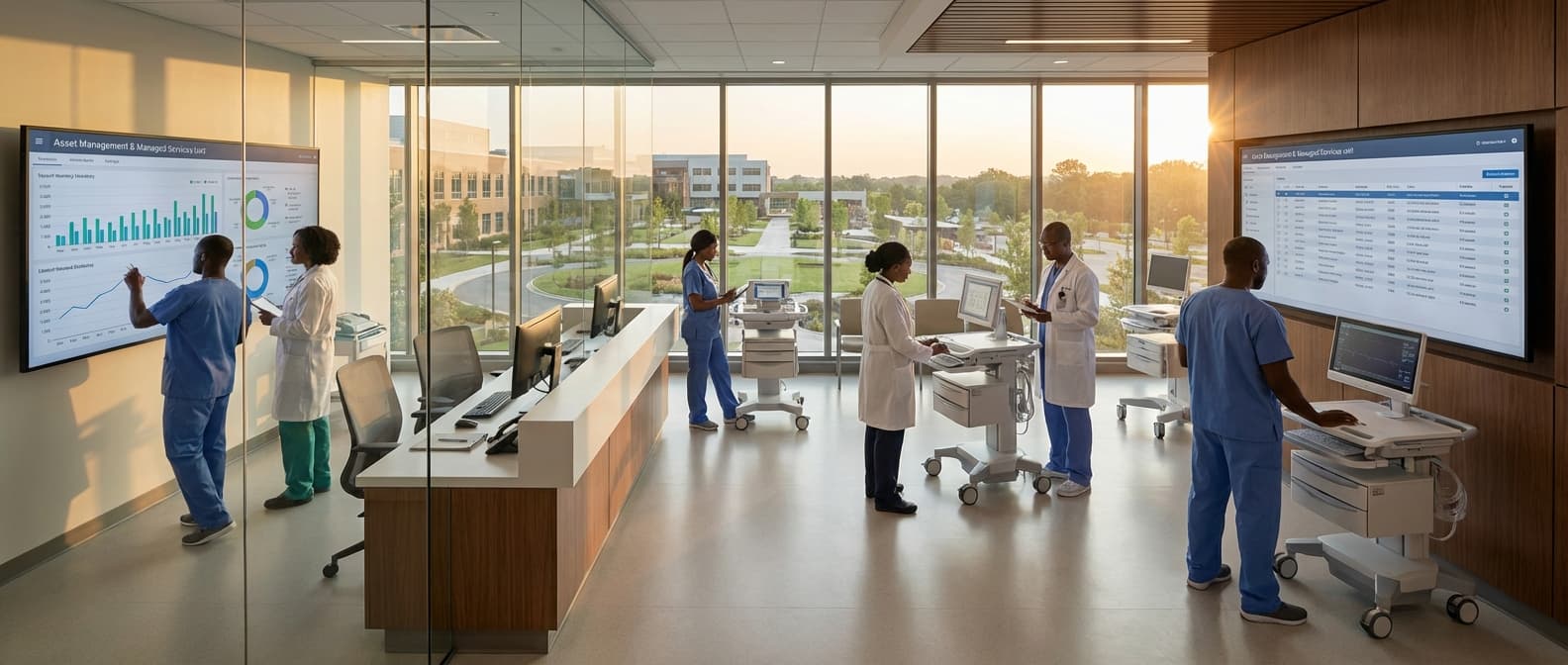
Maintenance KPI Reporting Service (Uptime/MTBF/MTTR) in Nigeria
Engineering Excellence & Technical Support
Maintenance KPI Reporting Service (Uptime/MTBF/MTTR) High-standard technical execution following OEM protocols and local regulatory frameworks.
Boost Operational Uptime
Our Maintenance KPI Reporting Service empowers Nigerian businesses to achieve peak operational uptime. By meticulously tracking and analyzing key metrics like Mean Time Between Failures (MTBF), we provide actionable insights to identify and resolve recurring issues, minimizing costly downtime and maximizing productivity.
Optimize Equipment Reliability
Enhance your asset performance with our specialized MTBF (Mean Time Between Failures) reporting for Nigerian industries. We deliver clear data-driven insights to pinpoint equipment vulnerabilities, enabling proactive maintenance strategies that significantly extend equipment lifespan and reduce unexpected breakdowns.
Accelerate Maintenance Response
Reduce costly repair times across Nigeria with our advanced MTTR (Mean Time To Repair) reporting. We provide the visibility needed to streamline your maintenance workflows, identify bottlenecks, and ensure your teams can respond and resolve equipment issues faster, driving greater operational efficiency.
What Is Maintenance Kpi Reporting Service (Uptime/mtbf/mttr) In Nigeria?
A Maintenance KPI Reporting Service (Uptime/MTBF/MTTR) in Nigeria is a specialized offering designed to systematically collect, analyze, and present Key Performance Indicators (KPIs) related to asset and equipment maintenance. These KPIs, specifically Uptime, Mean Time Between Failures (MTBF), and Mean Time To Repair (MTTR), are crucial metrics for evaluating the effectiveness, efficiency, and reliability of maintenance operations. The service involves the implementation of robust data acquisition methods, the application of statistical and analytical techniques, and the generation of actionable reports and dashboards. The primary objective is to provide stakeholders with quantifiable insights into equipment health, maintenance performance, and potential areas for improvement, thereby driving operational excellence and cost optimization within organizations operating in the Nigerian context.
| KPI | Definition | Significance in Nigeria | Typical Data Sources |
|---|---|---|---|
| Uptime | The percentage of time that an asset or system is operational and available for use. | Critical for minimizing production losses and ensuring service delivery, especially in sectors sensitive to operational continuity (e.g., oil & gas, telecommunications, manufacturing). Impacts revenue generation and customer satisfaction. | CMMS work order completion times, SCADA system logs, production line status indicators. |
| Mean Time Between Failures (MTBF) | The average time elapsed between one failure of a repairable system and the beginning of the next failure. | Indicates the reliability of equipment. High MTBF suggests robust machinery and effective preventive maintenance, crucial for operations where unexpected downtime is costly and can disrupt supply chains. | CMMS failure records, maintenance logs, historical repair data. |
| Mean Time To Repair (MTTR) | The average time it takes to repair a failed system or component and return it to operational status. | Reflects the efficiency of the maintenance team and the availability of spare parts and technical expertise. Lower MTTR minimizes downtime duration, directly impacting operational productivity and cost of repair. | CMMS repair completion times, technician fault reporting, parts requisition records. |
Key Components of a Maintenance KPI Reporting Service:
- Data Acquisition and Integration: Establishing mechanisms for collecting raw maintenance data from various sources, including Computerized Maintenance Management Systems (CMMS), Enterprise Resource Planning (ERP) systems, sensor data (IoT), manual logs, and technician reports. This often involves data cleansing and standardization.
- KPI Calculation and Analysis: Implementing algorithms to accurately calculate Uptime (percentage of operational time), MTBF (average time between equipment failures), and MTTR (average time taken to repair a failed equipment). This also includes trend analysis, anomaly detection, and root cause analysis of failures.
- Reporting and Visualization: Developing comprehensive reports and interactive dashboards that present the calculated KPIs in an easily understandable format. This can include historical trends, comparative analysis (e.g., against benchmarks), and predictive insights.
- Performance Benchmarking: Comparing calculated KPIs against industry standards, internal historical data, or similar assets to identify performance gaps and areas requiring attention.
- Actionable Recommendations: Translating data insights into concrete, actionable recommendations for maintenance strategy optimization, spare parts management, technician training, and predictive maintenance implementation.
- Platform/Software Provision: Often, the service is underpinned by a dedicated software platform or cloud-based solution for data management, analysis, and reporting.
Who Needs Maintenance Kpi Reporting Service (Uptime/mtbf/mttr) In Nigeria?
In Nigeria's dynamic industrial and service sectors, effective maintenance is no longer a passive cost center but a strategic imperative. Organizations that rely on the consistent performance of their physical assets, from manufacturing plants to critical infrastructure, are prime candidates for a Maintenance KPI Reporting Service focused on Uptime, Mean Time Between Failures (MTBF), and Mean Time To Repair (MTTR). This service provides crucial data-driven insights to optimize maintenance operations, minimize downtime, and maximize return on investment from assets. The target customers in Nigeria span a diverse range of industries, each facing unique challenges related to equipment reliability and operational efficiency. Understanding these specific needs allows for tailored reporting solutions that address their most pressing concerns.
| Target Customer Industry/Sector | Specific Business Challenges Requiring KPI Reporting | Key Departments Benefiting from Reporting |
|---|---|---|
| Manufacturing & Production | Unplanned machinery breakdowns leading to production line stoppages, loss of output, and missed delivery deadlines. | Production Management, Maintenance Department, Operations Management, Quality Control |
| Oil & Gas (Upstream, Midstream, Downstream) | High cost of downtime in exploration, extraction, refining, and distribution; safety risks associated with equipment failure; regulatory compliance demands. | Operations, Asset Integrity, Maintenance Engineering, Health, Safety & Environment (HSE) |
| Power Generation & Utilities | Ensuring uninterrupted electricity supply; managing aging infrastructure; optimizing fuel consumption; responding to grid demands. | Operations Control, Asset Management, Maintenance Planning, Grid Management |
| Telecommunications | Maintaining network availability and quality of service; minimizing customer churn due to service interruptions; managing vast and dispersed infrastructure. | Network Operations Center (NOC), Field Maintenance, Service Delivery, Customer Support |
| Logistics & Transportation | Fleet availability and operational efficiency; minimizing delays due to vehicle breakdowns; optimizing maintenance schedules for cost-effectiveness. | Fleet Management, Operations, Maintenance Workshops, Supply Chain Management |
| Mining & Quarrying | Equipment reliability in harsh environments; ensuring continuous extraction; minimizing costly downtime of heavy machinery. | Operations, Maintenance Department, Site Management, Safety Department |
| Healthcare | Ensuring critical medical equipment is always operational for patient care; compliance with medical device regulations. | Biomedical Engineering, Facilities Management, Clinical Operations |
| Food & Beverage Processing | Maintaining hygiene and safety standards; preventing spoilage due to equipment failure; ensuring consistent product quality. | Production Management, Maintenance Department, Quality Assurance, Operations |
Who Needs Maintenance KPI Reporting Service (Uptime/MTBF/MTTR) in Nigeria?
- Industries heavily reliant on continuous operation and facing significant financial penalties for downtime.
- Organizations seeking to improve the reliability and lifespan of their critical assets.
- Companies aiming to optimize maintenance budgets by focusing on preventative and predictive strategies.
- Businesses looking to enhance workforce productivity and efficiency within their maintenance departments.
- Entities undergoing digital transformation and seeking to integrate data-driven decision-making into their operational processes.
Maintenance Kpi Reporting Service (Uptime/mtbf/mttr) Process In Nigeria
This document outlines the workflow for the Maintenance KPI Reporting Service (Uptime/MTBF/MTTR) in Nigeria. This service aims to provide businesses with accurate and actionable insights into their asset maintenance performance, focusing on key metrics like Uptime, Mean Time Between Failures (MTBF), and Mean Time To Repair (MTTR). The process is designed to be transparent, efficient, and tailored to the specific needs of Nigerian industries.
| Stage | Description | Key Activities | Deliverables/Outcomes | Responsible Party | Timeline (Typical) |
|---|---|---|---|---|---|
| The client expresses interest in the Maintenance KPI Reporting Service. |
|
| Client & Service Provider | 1-3 Business Days |
| Detailed understanding of the client's specific assets, data availability, and reporting requirements. |
|
| Service Provider & Client | 3-7 Business Days |
| Formalization of the service offering based on the needs assessment. |
|
| Service Provider & Client | 3-5 Business Days |
| Gathering and organizing relevant maintenance data from the client's systems. |
|
| Service Provider & Client's IT/Maintenance Team | 5-15 Business Days (dependent on data complexity and availability) |
| Applying established methodologies to calculate Uptime, MTBF, and MTTR. |
|
| Service Provider | 5-10 Business Days |
| Creation of comprehensive and visually appealing reports. |
|
| Service Provider | 3-7 Business Days |
| Presenting the findings to the client and discussing the implications. |
|
| Service Provider & Client | 2-3 Business Days |
| Assisting the client in implementing recommendations and providing continuous reporting. |
|
| Service Provider & Client | Ongoing (as per SLA) |
Key Performance Indicators (KPIs) Covered
- Uptime: The percentage of time an asset is operational and available for use.
- Mean Time Between Failures (MTBF): The average time that an asset operates between breakdowns.
- Mean Time To Repair (MTTR): The average time it takes to repair a faulty asset and bring it back to operational status.
Maintenance Kpi Reporting Service (Uptime/mtbf/mttr) Cost In Nigeria
The cost of a Maintenance KPI Reporting Service focusing on Uptime, Mean Time Between Failures (MTBF), and Mean Time To Repair (MTTR) in Nigeria can vary significantly. These services are crucial for businesses to understand and improve their operational efficiency, reduce downtime, and optimize maintenance strategies. The pricing is influenced by several factors, making it challenging to provide a single definitive cost. However, we can outline the key determinants and offer estimated price ranges in Nigerian Naira (NGN).
| Service Tier/Feature Set | Estimated Monthly Cost (NGN) | Typical Inclusions |
|---|---|---|
| Basic Reporting (Standard Templates, Limited Assets/Users) | 50,000 - 150,000 | Pre-defined KPI dashboards (Uptime, basic MTBF/MTTR), standard report generation, limited data sources, web-based access. |
| Standard Reporting (Customizable Dashboards, Moderate Assets/Users) | 150,000 - 400,000 | Customizable KPI dashboards, advanced MTBF/MTTR analysis, integration with 1-2 data sources, regular report generation, basic email/phone support. |
| Advanced Reporting & Analytics (Full Customization, High Assets/Users, Basic Automation) | 400,000 - 1,000,000+ | Fully customizable reporting, predictive maintenance insights (leveraging MTBF trends), integration with multiple data sources, automated report delivery, API access, dedicated support. |
| Managed Services & Consulting (Bespoke Solutions, Expert Analysis) | 1,000,000+ (often project-based or retainer) | End-to-end KPI management, proactive maintenance recommendations, root cause analysis, custom report development, on-site support, strategic consulting on maintenance optimization. |
| Implementation & Setup Fees (One-time) | 100,000 - 1,500,000+ (depending on complexity) | System configuration, data integration, initial training, custom report design. |
Key Pricing Factors for Maintenance KPI Reporting Services in Nigeria
- {"title":"Scope and Complexity of Reporting","description":"The more intricate the reporting requirements, the higher the cost. This includes the number of assets being monitored, the depth of data analysis, and the customizability of reports. Basic, standardized reports will be less expensive than highly tailored, in-depth analyses."}
- {"title":"Data Acquisition and Integration Methods","description":"How data is collected (e.g., manual input, IoT sensors, SCADA systems) and integrated into the reporting platform significantly impacts cost. Implementing new sensor networks or integrating with complex existing systems will incur higher setup and ongoing fees."}
- {"title":"Software and Technology Platform","description":"The underlying software used for data collection, analysis, and reporting plays a role. Proprietary, advanced platforms with sophisticated analytics and visualization tools often come with higher subscription or licensing fees. Cloud-based solutions might have tiered pricing based on usage or features."}
- {"title":"Level of Service and Support","description":"The type of support offered is a major differentiator. This can range from basic software access to comprehensive managed services involving expert analysis, proactive recommendations, and dedicated account management. Higher levels of support command premium pricing."}
- {"title":"Number of Users and Assets","description":"Most services are priced based on the number of users who need access to the reports and the total number of assets being monitored. A larger number of users or assets generally translates to a higher cost."}
- {"title":"Frequency of Reporting and Updates","description":"The frequency with which reports are generated and updated (e.g., daily, weekly, monthly) can affect pricing. Real-time or near real-time reporting often incurs higher costs due to the continuous data processing required."}
- {"title":"Provider's Expertise and Reputation","description":"Established providers with a proven track record in maintenance analytics and a strong understanding of the Nigerian industrial landscape may charge more for their specialized knowledge and reliable service."}
- {"title":"Customization and Integration Needs","description":"If the service requires significant customization to fit unique business processes or integration with other enterprise systems (ERP, CMMS), this will add to the overall cost."}
- {"title":"Training and Onboarding","description":"Initial training for staff on how to use the reporting tools or interpret the data can be an additional cost, especially for more complex platforms."}
Affordable Maintenance Kpi Reporting Service (Uptime/mtbf/mttr) Options
Our Affordable Maintenance KPI Reporting Service provides essential uptime, Mean Time Between Failures (MTBF), and Mean Time To Repair (MTTR) insights to optimize your operational efficiency and minimize downtime. We understand that effective data analysis is crucial, but can be costly. This service is designed to deliver actionable intelligence without breaking the bank, empowering you to make informed decisions that lead to significant cost savings.
| Bundle Name | Key Features | Price Point (Indicative) | Ideal For |
|---|---|---|---|
| Basic Insights Bundle | Monthly Uptime, MTBF/MTTR, Basic Trends | Starting from $X/month | Small to Medium Businesses |
| Proactive Performance Bundle | Bi-weekly Reporting, Preliminary RCA, Alerts | Starting from $Y/month | Businesses aiming for proactive maintenance |
| Strategic Optimization Bundle | Weekly Reporting, Predictive Analytics, Benchmarking | Starting from $Z/month | Large Enterprises, ROI focused |
Value Bundles to Suit Your Needs
- {"title":"Basic Insights Bundle","features":["Monthly Uptime Reporting","Monthly MTBF & MTTR Calculations","Basic Trend Analysis (Year-over-Year, Quarter-over-Quarter)","Standardized Report Templates","Data Export Functionality (CSV)"],"description":"Ideal for small to medium-sized businesses or those just starting with KPI tracking. This bundle focuses on core reporting and trend identification.","target_audience":"Businesses needing fundamental uptime and repair time metrics."}
- {"title":"Proactive Performance Bundle","features":["All features from Basic Insights Bundle","Bi-weekly Uptime Monitoring & Reporting","Bi-weekly MTBF & MTTR Analysis","Root Cause Analysis Identification (preliminary)","Customizable Dashboard Views","Alerts for Critical Downtime Events"],"description":"For businesses looking for deeper analysis and more frequent insights to drive proactive maintenance strategies.","target_audience":"Businesses aiming for proactive maintenance and faster issue resolution."}
- {"title":"Strategic Optimization Bundle","features":["All features from Proactive Performance Bundle","Weekly comprehensive KPI Reporting","Advanced Predictive Analytics (forecasting potential failures)","Benchmarking against industry standards","Root Cause Analysis (detailed investigation)","Cost-Benefit Analysis of maintenance strategies","Dedicated Account Manager for strategic consultation"],"description":"Our most comprehensive offering, designed for organizations that require detailed predictive insights and a strategic approach to maintenance cost reduction.","target_audience":"Large enterprises and those focused on maximizing ROI through data-driven maintenance."}
Verified Providers In Nigeria
In Nigeria's evolving healthcare landscape, finding reliable and trustworthy medical service providers is paramount. 'Verified Providers' signifies a commitment to quality, ethical practice, and patient safety. Franance Health stands out as a beacon in this regard, diligently vetting its network of healthcare professionals and facilities. Their rigorous credentialing process ensures that every provider listed under their umbrella meets stringent standards, offering Nigerians peace of mind and access to superior medical care. This dedication to verification makes Franance Health a clear leader in connecting patients with the best possible healthcare outcomes.
| Credential Type | Franance Health Verification | Benefit to Patients |
|---|---|---|
| Medical Licenses & Certifications | Thoroughly checked against official registries and licensing bodies. | Ensures providers are legally qualified and possess the necessary expertise. |
| Professional Experience & Qualifications | Verified through peer review, academic records, and continuous professional development. | Guarantees access to experienced and skilled medical professionals. |
| Facility Accreditation & Standards | Facilities are assessed for compliance with national and international healthcare standards. | Ensures a safe, clean, and well-equipped environment for treatment. |
| Patient Feedback & Testimonials | A system for collecting and reviewing patient experiences to maintain high service levels. | Provides insights into provider quality and patient satisfaction. |
| Ethical Conduct & Compliance | Providers are screened for adherence to medical ethics and regulatory compliance. | Upholds patient rights and ensures trustworthy medical interactions. |
Why Franance Health Verified Providers are the Best Choice:
- Uncompromising Quality Standards: Rigorous vetting ensures adherence to the highest medical benchmarks.
- Patient Safety First: Protocols are in place to guarantee a safe and secure healthcare experience.
- Ethical Practices: Providers are committed to transparency and patient-centered care.
- Access to Expertise: Connect with highly qualified specialists across various medical disciplines.
- Convenient and Reliable Network: Easily find trusted healthcare solutions when you need them most.
Scope Of Work For Maintenance Kpi Reporting Service (Uptime/mtbf/mttr)
This Scope of Work (SOW) outlines the requirements for a Maintenance KPI Reporting Service focused on delivering insights into system Uptime, Mean Time Between Failures (MTBF), and Mean Time To Repair (MTTR). The service will involve the collection, analysis, and presentation of data to support proactive maintenance strategies and operational efficiency improvements. This document details the technical deliverables, standard specifications, and reporting frequencies expected from the service provider.
| Deliverable | Description | Format | Frequency | Standard Specifications |
|---|---|---|---|---|
| Raw Data Feed Integration | Secure and reliable integration with specified source systems (e.g., CMMS, SCADA, IoT platforms) for automated data ingestion. | API Endpoints (REST/SOAP), SFTP, or direct database connection. | Continuous/Daily | Data schema mapping agreement; data validation and error handling mechanisms; data encryption in transit. |
| Uptime Report | Detailed report on system availability, highlighting periods of downtime, their causes, and impact. | PDF, Excel, Interactive Dashboard | Weekly/Monthly | Includes total operational hours, total downtime hours, Uptime percentage (%), breakdown of downtime by system/component and cause code. |
| MTBF Report | Analysis of failure intervals to identify trends and predict potential future failures. | PDF, Excel, Interactive Dashboard | Monthly/Quarterly | Includes number of failures, total operational hours, calculated MTBF (hours), breakdown by system/component, identification of recurring failure modes. |
| MTTR Report | Analysis of repair times to identify bottlenecks and opportunities for process improvement. | PDF, Excel, Interactive Dashboard | Monthly/Quarterly | Includes total repair hours, number of repairs, calculated MTTR (hours/minutes), breakdown by system/component, identification of longest repair times and common contributing factors (e.g., parts availability, labor). |
| Trend Analysis and Insights | Proactive identification of trends, anomalies, and actionable insights for improving maintenance strategies and operational performance. | Included within reports, Executive Summary, Presentation | Monthly/Quarterly | Identification of outperforming/underperforming assets, root cause analysis of significant downtimes, recommendations for preventive maintenance optimization. |
| Data Validation and Quality Assurance | Processes to ensure the accuracy, completeness, and consistency of reported data. | Internal QA procedures, documented data quality metrics | Continuous | Data cleansing rules, anomaly detection, reconciliation against source systems. |
| Reporting Dashboard (Optional) | Interactive visual representation of KPIs, allowing for drill-down analysis and real-time monitoring. | Web-based platform (e.g., Power BI, Tableau, custom solution) | Real-time/Daily Refresh | User role-based access control, customizable views, data export capabilities. |
Key Performance Indicators (KPIs)
- Uptime: Percentage of time a system or component is operational and available for use.
- Mean Time Between Failures (MTBF): Average time elapsed between inherent failures of a repairable system during normal operation.
- Mean Time To Repair (MTTR): Average time required to repair a failed component or system and return it to operational status.
Service Level Agreement For Maintenance Kpi Reporting Service (Uptime/mtbf/mttr)
This Service Level Agreement (SLA) outlines the performance commitments for the Maintenance KPI Reporting Service, specifically focusing on Uptime, Mean Time Between Failures (MTBF), and Mean Time To Repair (MTTR). It defines the response times for support requests and guarantees the availability of the reporting service.
| Severity Level | Description | Initial Response Time | Resolution Target |
|---|---|---|---|
| Critical (P1) | Service is completely unavailable or severely degraded, impacting all users. | 15 minutes | 4 hours |
| High (P2) | Significant functionality is impaired, affecting a substantial number of users. | 30 minutes | 8 hours |
| Medium (P3) | Minor functionality is affected, or a non-critical issue is reported. | 2 hours | 2 business days |
| Low (P4) | General inquiry, request for information, or cosmetic issue. | 4 business hours | 5 business days |
Key Metrics and Guarantees
- Uptime Guarantee: The Maintenance KPI Reporting Service will be available for at least 99.9% of the time, excluding scheduled maintenance windows.
- MTBF (Mean Time Between Failures): The service is designed to achieve an MTBF of at least 1000 hours.
- MTTR (Mean Time To Repair): In the event of a service disruption, the average time to restore service (MTTR) will not exceed 4 hours.
- Support Response Times: All support requests will be acknowledged within the stipulated timeframes based on their severity.
- Scheduled Maintenance: Planned maintenance will be communicated at least 48 hours in advance and will be performed during off-peak hours whenever possible.
Frequently Asked Questions

Ready when you are
Let's scope your Maintenance KPI Reporting Service (Uptime/MTBF/MTTR) in Nigeria project in Nigeria.

Scaling healthcare logistics and technical systems across the entire continent.