
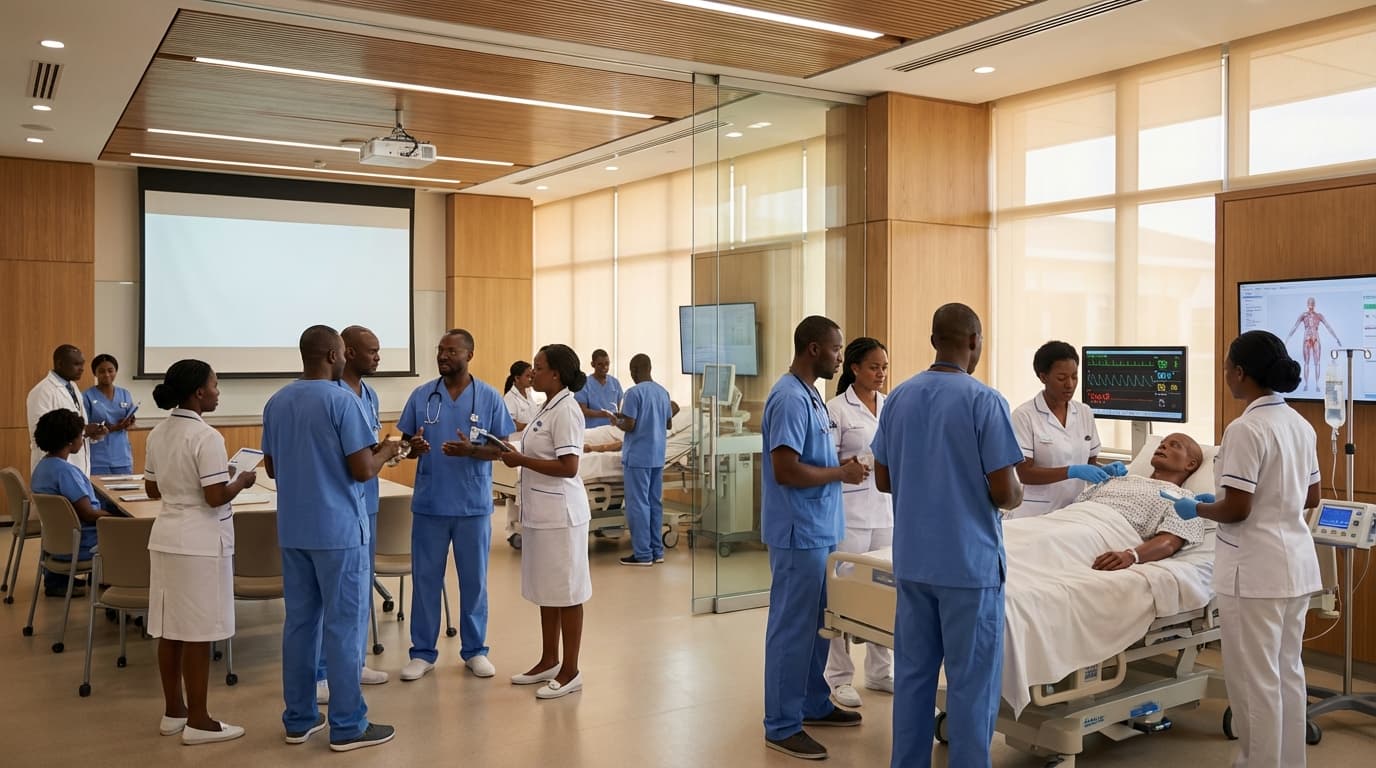
Equipment Training & Education in Niger
Engineering Excellence & Technical Support
Comprehensive equipment training and certification programs High-standard technical execution following OEM protocols and local regulatory frameworks.
Advanced Diagnostic Tool Training
Empowering Nigerien technicians with hands-on training on state-of-the-art diagnostic equipment, enabling rapid fault identification and resolution for critical machinery, reducing downtime and operational costs.
Sustainable Equipment Operation & Maintenance
Delivering specialized workshops focused on energy-efficient operation and preventative maintenance best practices for key industrial and agricultural equipment, fostering longevity and reducing resource consumption in Niger.
Localized Technical Documentation & e-Learning
Developing and deploying accessible, region-specific technical manuals and interactive e-learning modules in local languages, ensuring a robust knowledge base for operating and maintaining diverse equipment across Niger's sectors.
What Is Equipment Training & Education In Niger?
Equipment training and education in Niger refers to a structured process designed to impart theoretical knowledge and practical skills necessary for the safe, efficient, and effective operation, maintenance, and troubleshooting of specific machinery, tools, and systems relevant to various industries within the country. This service is crucial for ensuring workforce competency, enhancing productivity, minimizing downtime, and adhering to safety regulations, particularly in sectors experiencing growth or technological advancement. The objective is to bridge the gap between available equipment and the human capital required to utilize it optimally.
| Who Needs Equipment Training & Education? | Typical Use Cases & Industries | ||||||||
|---|---|---|---|---|---|---|---|---|---|
| Operational Personnel: Machine operators, technicians, and supervisors responsible for daily equipment utilization and oversight. | Agricultural Sector: Training on tractors, harvesters, irrigation systems, and processing machinery to improve yields and efficiency in crop production. | Maintenance Technicians: Individuals responsible for the upkeep, repair, and troubleshooting of industrial equipment. | Mining & Extractive Industries: Training on heavy machinery (excavators, haul trucks), drilling equipment, and processing plant components to ensure safe and productive operations. | Construction Professionals: Operators and site supervisors requiring proficiency in handling construction equipment such as cranes, bulldozers, concrete mixers, and specialized tools. | Energy Sector (Oil, Gas, Renewables): Technicians and engineers needing specialized training on drilling rigs, pipelines, power generation equipment, and solar panel installation/maintenance systems. | Manufacturing & Industrial Workers: Personnel operating production lines, assembly machines, and processing units in factories. | Logistics & Transportation Personnel: Training on forklifts, loading equipment, and specialized vehicles for warehouse and transport operations. | Healthcare Professionals: Education on the operation and maintenance of medical imaging devices, laboratory equipment, and surgical tools. | Telecommunications Technicians: Training on installation and maintenance of transmission equipment, fiber optic tools, and network infrastructure components. |
Key Components of Equipment Training & Education
- Curriculum Development: Tailoring training modules to specific equipment types, industry standards, and Niger's operational context.
- Theoretical Instruction: Covering principles of operation, technical specifications, safety protocols, and hazard identification.
- Practical Application: Hands-on exercises using actual equipment or simulators to develop operational proficiency.
- Maintenance & Troubleshooting: Training on routine checks, preventative maintenance, diagnostic procedures, and repair techniques.
- Safety & Compliance: Emphasizing regulatory requirements, personal protective equipment (PPE) usage, and emergency response procedures.
- Assessment & Certification: Evaluating trainee competency through written exams, practical demonstrations, and awarding relevant certifications.
- Ongoing Professional Development: Offering refresher courses and advanced training to adapt to new technologies or evolving operational demands.
Who Needs Equipment Training & Education In Niger?
Effective equipment training and education are crucial for various sectors and individuals in Niger to ensure operational efficiency, safety, and technological advancement. This program is designed to equip individuals and organizations with the necessary skills and knowledge to operate, maintain, and troubleshoot a wide range of equipment. Our training addresses the specific needs of Niger's developing economy and diverse industrial landscape.
| Customer/Department | Specific Training Needs | Impact of Training |
|---|---|---|
| Ministry of Agriculture | Tractor operation, irrigation system maintenance, pesticide application equipment | Increased food production, improved resource management |
| Ministry of Infrastructure | Heavy machinery operation (excavators, bulldozers), road construction equipment | Faster and safer infrastructure development, reduced project costs |
| Mining Companies (e.g., Uranium mines) | Drilling rigs, crushing machinery, safety equipment operation | Enhanced operational efficiency, improved worker safety, reduced equipment downtime |
| Regional Health Directorates | Diagnostic equipment (X-ray, ultrasound), laboratory equipment, sterilization units | Improved healthcare services, accurate diagnoses, better patient outcomes |
| Telecom Operators | Fiber optic installation tools, mobile tower maintenance equipment, network monitoring systems | Reliable communication networks, expanded service coverage |
| Water & Sanitation Authorities | Pumps, filtration systems, pipe laying equipment | Access to clean water, improved sanitation, public health |
| Vocational Training Centers | Welding machines, electrical testing equipment, engine repair tools | Skilled workforce development, increased employability of graduates |
| Local SMEs (e.g., bakeries, workshops) | Industrial ovens, sewing machines, basic machinery maintenance | Increased productivity, improved product quality, business growth |
Target Customers & Departments for Equipment Training & Education in Niger
- Government Ministries & Agencies: Essential for the proper functioning and maintenance of public infrastructure and services.
- Agricultural Sector: Farmers, agricultural cooperatives, and extension workers needing to operate and maintain modern farming machinery.
- Mining & Extractive Industries: Technicians, operators, and supervisors involved in the operation of heavy machinery and specialized extraction equipment.
- Construction & Infrastructure Development: Engineers, site managers, and machine operators working on roads, buildings, and other vital infrastructure projects.
- Energy & Utilities Sector: Personnel responsible for operating and maintaining power generation equipment, water treatment plants, and distribution networks.
- Healthcare Sector: Technicians and medical staff requiring training on specialized medical equipment for diagnosis and treatment.
- Telecommunications & IT: Technicians and engineers involved in installing, maintaining, and troubleshooting communication infrastructure and IT hardware.
- Transportation & Logistics: Drivers, mechanics, and logistics personnel operating and maintaining vehicles, specialized transport equipment, and warehousing machinery.
- Small & Medium Enterprises (SMEs): Business owners and employees who rely on various types of equipment for their operations.
- Educational Institutions: Vocational training centers, technical schools, and universities looking to enhance their curriculum and provide practical skills to students.
- Non-Governmental Organizations (NGOs): Staff involved in development projects requiring the operation and maintenance of equipment in fields like health, agriculture, and water access.
Equipment Training & Education Process In Niger
This document outlines the typical workflow for equipment training and education processes within Niger. It covers the journey from the initial inquiry from a requesting entity (e.g., government agency, NGO, private company) to the successful execution and completion of the training program. The process emphasizes clarity, collaboration, and accountability to ensure effective knowledge transfer and skill development for operating and maintaining equipment relevant to various sectors in Niger.
| Stage | Key Activities | Responsible Parties | Deliverables | Key Considerations in Niger |
|---|---|---|---|---|
| Requesting entity identifies a need for equipment training. Initial discussions to define training objectives, target audience, and specific equipment. | Requesting Entity, Potential Training Provider (e.g., manufacturer, specialized training firm, government institution) | Training Request Document, Initial Scope of Work | Alignment with national development priorities, existing infrastructure, and local capacity. |
| Training provider develops a comprehensive proposal detailing training methodology, curriculum, duration, trainers, budget, and expected outcomes. | Potential Training Provider | Training Proposal | Cost-effectiveness, cultural sensitivity of training materials, language considerations (French, local languages). |
| The requesting entity reviews the proposal against requirements and budget. May involve technical committees or relevant ministries. | Requesting Entity (Procurement/Technical Departments, Ministries) | Approved Proposal, Letter of Intent | Transparency in selection process, adherence to public procurement regulations if applicable. |
| Formalization of the agreement, including terms, conditions, payment schedules, and final budget allocation. | Requesting Entity, Training Provider | Signed Contract/Agreement, Allocated Budget | Clear payment milestones, currency of payment, potential for in-kind contributions. |
| Tailoring of training content to specific equipment and audience. Development of manuals, presentations, practical exercises, and assessments. | Training Provider (with input from Requesting Entity) | Training Curriculum, Participant Manuals, Trainer Guides, Assessment Tools | Use of relevant case studies, inclusion of safety protocols specific to Niger's environment, translation if necessary. |
| Selection of qualified and experienced trainers. Briefing on the specific training context in Niger and any pre-training requirements. | Training Provider | Identified & Briefed Trainers | Local trainer availability and expertise, trainer cultural competence, visa and travel arrangements. |
| The requesting entity identifies and nominates participants based on job roles and training needs. | Requesting Entity | Participant List, Participant Profiles | Ensuring representation from relevant geographical areas and operational units, pre-qualification assessments if needed. |
| Arrangement of training venue, equipment, transportation, accommodation, and catering. Finalization of the training schedule. | Training Provider (in coordination with Requesting Entity) | Confirmed Venue, Scheduled Dates, Logistics Plan | Reliable transportation options, availability of electricity and internet, potential for mobile training units. |
| Delivery of theoretical and practical training sessions. Hands-on practice with the equipment. Q&A sessions and interactive learning. | Training Provider (Trainers) | Delivered Training Sessions, Practical Demonstrations | Flexibility to adapt to participant pace, real-world scenarios relevant to Niger, safety adherence during practical sessions. |
| Assessment of participant learning through tests and practical evaluations. Collection of feedback from participants and trainers on the training effectiveness. | Training Provider, Participants | Assessment Results, Participant Feedback Forms, Trainer Reports | Measuring knowledge retention and skill improvement, identifying areas for future improvement in training delivery. |
| Issuance of certificates of completion to successful participants. Submission of a final report to the requesting entity detailing training outcomes, participant performance, and recommendations. | Training Provider | Certificates of Completion, Final Training Report | Recognition of successful participants, clear reporting on project impact and resource utilization. |
| Post-training support, including troubleshooting, refresher courses, or advanced training as needed. Monitoring the application of learned skills. | Training Provider, Requesting Entity | Follow-up Support Mechanism, Impact Monitoring Reports | Long-term sustainability of skills, establishing channels for ongoing technical assistance. |
Equipment Training & Education Process Workflow in Niger
- Inquiry & Needs Assessment
- Proposal Development & Submission
- Review & Approval
- Contracting & Budgeting
- Curriculum Design & Material Development
- Trainer Identification & Preparation
- Participant Identification & Selection
- Logistics & Scheduling
- Training Execution
- Post-Training Evaluation & Feedback
- Certification & Reporting
- Follow-up & Support
Equipment Training & Education Cost In Niger
Training and education for equipment in Niger is a crucial investment for businesses and individuals operating in sectors like agriculture, construction, mining, and transportation. The cost of such programs can vary significantly due to several factors. These include the complexity and type of equipment, the duration and depth of the training, the qualifications and experience of the trainers, the training methodology (e.g., classroom, on-site, simulation), the location of the training provider, and the specific certifications or accreditations offered. Demand for skilled operators and technicians also plays a role in pricing.
| Training Type/Equipment Category | Typical Duration | Estimated Cost Range (XOF - West African CFA franc) |
|---|---|---|
| Basic Equipment Operation (e.g., small generator, basic farming tools) | 1-2 days | 15,000 - 50,000 XOF |
| Intermediate Equipment Operation (e.g., tractor, small excavator, welding basics) | 3-5 days | 40,000 - 120,000 XOF |
| Advanced Equipment Operation (e.g., bulldozer, crane, heavy-duty trucks) | 1-2 weeks | 100,000 - 300,000 XOF |
| Equipment Maintenance & Repair (basic) | 3-7 days | 50,000 - 150,000 XOF |
| Equipment Maintenance & Repair (advanced/specialized) | 1-3 weeks | 150,000 - 400,000+ XOF |
| Safety & Compliance Training (e.g., for specific machinery) | 1-2 days | 20,000 - 75,000 XOF |
| Customized/On-site Corporate Training (variable) | Varies | Negotiable, often higher due to logistics and specialization |
Key Pricing Factors for Equipment Training in Niger
- Type and complexity of equipment (e.g., basic agricultural tools vs. heavy-duty construction machinery)
- Training duration and intensity (e.g., a few hours for basic operation vs. weeks for advanced maintenance)
- Trainer qualifications and experience (certified instructors, industry experts)
- Training methodology (classroom lectures, practical hands-on sessions, simulator training)
- Training location (urban centers vs. remote areas, on-site company training vs. external provider)
- Certification and accreditation (issuance of official certificates recognized by industry)
- Inclusion of materials (manuals, study guides, safety equipment)
- Class size and customization of the curriculum
- Market demand for specific skills
Affordable Equipment Training & Education Options
Acquiring and maintaining the right equipment for your business can be a significant investment. To maximize your ROI and ensure your team is proficient, investing in affordable equipment training and education is crucial. This involves exploring various cost-effective options and understanding how value bundles and smart cost-saving strategies can benefit your organization. From online courses and manufacturer-led programs to in-house training and certification, there are numerous avenues to explore that won't break the bank.
| Strategy | Description | Potential Savings |
|---|---|---|
| Value Bundles | Purchasing training as part of a larger equipment package, or bundled training courses for related equipment. This can offer a discount compared to purchasing individual courses. | 5-20% discount on training when bundled with equipment or multiple courses. |
| Group Discounts | Registering multiple employees for the same training program often qualifies for a per-person discount. The more employees, the greater the potential savings. | 10-30% discount for groups of 5 or more employees. |
| Early Bird Registration | Signing up for training courses well in advance of the start date often comes with a reduced price. | 5-15% discount for registering early. |
| Online vs. In-Person | Online training often eliminates travel, accommodation, and facility rental costs, making it significantly more affordable. | Significant savings on travel, accommodation, and overhead. |
| Train-the-Trainer Programs | Investing in a few key employees to become trainers within your organization can provide ongoing, cost-effective training for new and existing staff. | Long-term savings by reducing reliance on external trainers. |
| Leveraging Free Resources | Utilizing free online tutorials, manufacturer documentation, and open-source educational materials can supplement paid training. | Minimal cost, focusing on time investment. |
| Negotiation | Don't be afraid to negotiate pricing, especially for bulk training or long-term contracts with training providers. | Variable, depending on negotiation skills and provider. |
| Certification Renewal Discounts | Some certification bodies offer reduced rates for renewing existing certifications. | Variable discounts on renewal fees. |
Affordable Equipment Training & Education Options
- Online Courses & E-Learning Platforms: Many platforms offer flexible and affordable courses covering a wide range of equipment, from software to heavy machinery. These often come with self-paced learning modules, video tutorials, and quizzes.
- Manufacturer-Led Training: Direct training from the equipment manufacturer can be highly specialized and valuable. While sometimes perceived as expensive, look for introductory offers, group discounts, or online modules.
- Community Colleges & Vocational Schools: These institutions often provide hands-on training programs and certifications for specific equipment, typically at a lower cost than private specialized training providers.
- Industry Associations & Trade Groups: Many industry-specific associations offer workshops, webinars, and educational resources, often at discounted rates for members.
- In-House Training Programs: Developing your own training materials and utilizing experienced internal staff can be a cost-effective solution, especially for recurring training needs.
- Apprenticeship Programs: For skilled trades and machinery, apprenticeships combine on-the-job training with formal education, offering a structured and often subsidized learning path.
- Certification Programs: Industry-recognized certifications demonstrate proficiency and can be a valuable investment in employee development and company credibility. Explore options that offer tiered pricing or group registration.
- Webinars & Virtual Workshops: These offer a convenient and often less expensive way to gain specific knowledge and skills without the need for travel or extended time away from work.
Verified Providers In Niger
In Niger, ensuring access to reliable and high-quality healthcare is paramount. "Verified Providers" signifies organizations that have undergone rigorous vetting processes to guarantee their commitment to ethical practices, patient safety, and the delivery of exceptional medical services. Among these, Franance Health stands out as a beacon of excellence. Their stringent credentialing process not only validates the expertise of their medical professionals but also their adherence to international standards of care and operational integrity. Choosing a Franance Health verified provider means opting for transparency, accountability, and a patient-centered approach that prioritizes your well-being above all else. This commitment translates into better health outcomes and a more trustworthy healthcare experience.
| Credentialing Aspect | Franance Health Verification Ensures | Benefit to Patients in Niger |
|---|---|---|
| Medical Expertise & Qualifications | Validated credentials, continuous professional development, and proven clinical skills. | Access to competent doctors and specialists for accurate diagnoses and effective treatments. |
| Ethical Practice & Professional Conduct | Adherence to a strict code of ethics, patient rights, and professional integrity. | Trustworthy interactions, respect for patient confidentiality, and fair treatment. |
| Patient Safety & Quality of Care | Implementation of robust safety protocols, infection control, and evidence-based medical practices. | Reduced risk of medical errors, complications, and exposure to unsafe environments. |
| Operational Standards & Infrastructure | Assessment of facilities, equipment, and administrative processes to ensure efficiency and safety. | Access to well-maintained clinics and hospitals with necessary resources for quality care. |
| Accountability & Grievance Redressal | Established mechanisms for patient feedback and resolution of complaints. | A system for addressing concerns and ensuring continuous improvement in service delivery. |
Why Franance Health Credentials Represent the Best Choice:
- Rigorous Vetting Process: Franance Health goes beyond basic licensing, employing a comprehensive assessment of medical expertise, ethical conduct, and operational efficiency.
- Commitment to International Standards: Verified providers meet and often exceed globally recognized benchmarks for healthcare quality and patient safety.
- Enhanced Patient Trust and Transparency: The verification process fosters confidence by ensuring providers are accountable and operate with integrity.
- Focus on Patient-Centered Care: Franance Health credentials prioritize practitioners who are dedicated to the individual needs and well-being of their patients.
- Improved Health Outcomes: The assurance of high-quality care directly contributes to more effective diagnoses, treatments, and overall better health results.
- Access to Leading Medical Professionals: Verification identifies and endorses highly skilled and experienced healthcare practitioners.
- Reduced Risk for Patients: Choosing a verified provider minimizes the risk of encountering substandard or unethical medical practices.
Scope Of Work For Equipment Training & Education
This Scope of Work (SOW) outlines the training and educational services to be provided for the designated equipment. The objective is to ensure that designated personnel possess the necessary knowledge and skills to operate, maintain, and troubleshoot the equipment effectively and safely. This document details the technical deliverables, standard specifications, and general requirements for the training program.
| Category | Specification/Requirement | Details/Description |
|---|---|---|
| Training Venue | Classroom Facilities | Adequate seating for X participants, whiteboard/projector, internet access (if required for digital materials). |
| Training Venue | Practical Training Area | Designated space with the actual equipment, necessary safety equipment, and unobstructed access. |
| Equipment | Availability | All specified equipment to be fully operational and accessible for the duration of the practical training sessions. |
| Equipment | Calibration | All measurement and calibration instruments used during training must be within their calibration period. |
| Training Materials | Language | All training materials and instruction shall be provided in [Specify Language]. |
| Training Materials | Content Accuracy | Content must be accurate, up-to-date, and reflect the latest equipment specifications and operational procedures. |
| Training Duration | Total Hours | Minimum of [Specify Number] hours of instruction and practical application per participant. |
| Training Duration | Break Schedule | Scheduled breaks for participants as per industry best practices and client request. |
| Trainer Qualifications | Experience | Minimum of [Specify Number] years of experience in operating, maintaining, and training on similar equipment. |
| Trainer Qualifications | Certifications | Relevant certifications or accreditations demonstrating expertise in the subject matter. |
| Assessment | Methodology | Combination of written tests, practical demonstrations, and oral questioning. |
| Assessment | Passing Score | A minimum score of [Specify Percentage]% required for successful completion and certification. |
| Safety | Compliance | All training activities must strictly adhere to relevant health, safety, and environmental regulations and site-specific safety protocols. |
Technical Deliverables
- Comprehensive Training Manuals (Print and Digital Formats)
- User Operation Guides
- Maintenance Procedures Manuals
- Troubleshooting Guides
- Safety Data Sheets (SDS) for relevant materials
- Post-Training Assessment Reports (including pass/fail criteria)
- Certificates of Completion for successful participants
- Training Agenda and Schedule
- Trainer Qualifications and Experience Documentation
Service Level Agreement For Equipment Training & Education
This Service Level Agreement (SLA) outlines the commitment of [Training Provider Name] (hereinafter referred to as 'Provider') to [Client Name] (hereinafter referred to as 'Client') regarding the provision of training and education services for specified equipment. This SLA details the response times for support requests and uptime guarantees for online learning platforms and scheduled training sessions.
| Service Component | Severity Level | Response Time Target (Business Hours) | Uptime Guarantee (Online Platforms) | Uptime Guarantee (Scheduled Training Sessions) |
|---|---|---|---|---|
| Technical Support for Online Learning Platform | Critical | 1 Hour | 99.5% Monthly | N/A |
| Technical Support for Online Learning Platform | High | 2 Business Hours | 99.5% Monthly | N/A |
| Technical Support for Online Learning Platform | Medium | 4 Business Hours | 99.5% Monthly | N/A |
| Content Clarification/Inquiry | All | 8 Business Hours | N/A | N/A |
| Rescheduling of Scheduled Training Session (Client Initiated) | N/A | N/A | N/A | As per cancellation policy (typically 48-72 hours notice) |
| Rescheduling of Scheduled Training Session (Provider Initiated - Unforeseen Circumstances) | N/A | N/A | N/A | Minimum 24 hours notice; alternative sessions to be offered within [e.g., 5] business days. |
| Cancellation of Scheduled Training Session (Provider Initiated - Less than 24 hours notice) | N/A | N/A | N/A | Automatic credit for full session value; priority rescheduling. |
Definitions
- Equipment: Refers to the specific machinery, software, or systems for which training is being provided, as detailed in the attached Scope of Work.
- Training Services: Includes but is not limited to, instructor-led sessions (on-site or remote), online courses, workshops, webinars, and documentation related to the operation, maintenance, and troubleshooting of the Equipment.
- Support Request: Any communication from the Client to the Provider seeking assistance, clarification, or resolution of issues related to the Training Services.
- Downtime: For online platforms, this refers to the period during which the platform is unavailable and inaccessible to the Client. For scheduled training, this refers to the cancellation or significant disruption of a confirmed training session by the Provider with less than 24 hours' notice.
- Scheduled Training Session: A training session that has been mutually agreed upon by the Client and Provider, with a confirmed date, time, and duration.
- Response Time: The maximum time allowed for the Provider to acknowledge a Support Request and initiate action to address it.
- Resolution Time: The maximum time allowed for the Provider to fully resolve a Support Request. (Note: This is often dependent on the complexity of the issue and may be defined separately or with tiered targets).
- Business Hours: Defined as [e.g., Monday to Friday, 9:00 AM to 5:00 PM local time of the Provider], excluding public holidays.
- Critical Issue: An issue that significantly impairs the ability of the Client to conduct essential operations or learn critical functionalities related to the Equipment, as mutually agreed upon.
Frequently Asked Questions

Ready when you are
Let's scope your Equipment Training & Education in Niger project in Niger.

Scaling healthcare logistics and technical systems across the entire continent.