
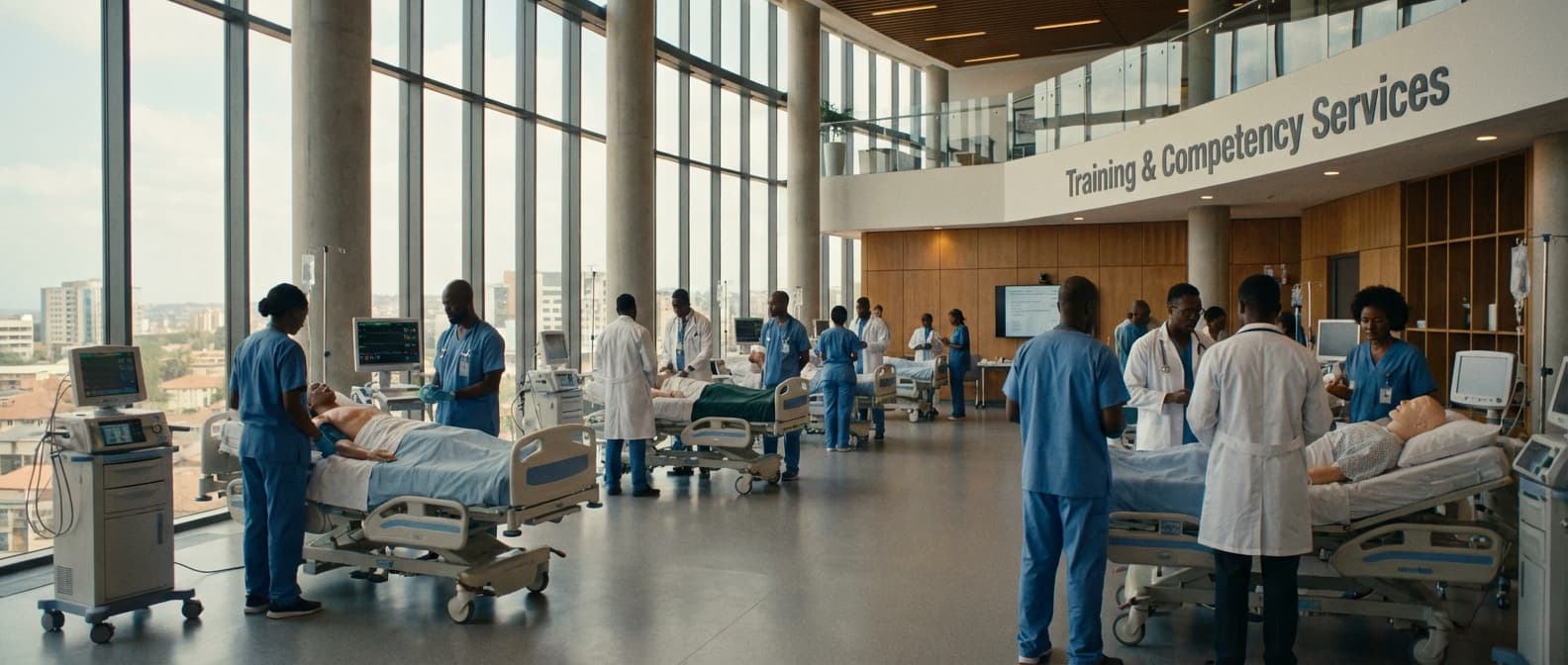
Ventilator User Training Service (Nurses) in Niger
Engineering Excellence & Technical Support
Ventilator User Training Service (Nurses) High-standard technical execution following OEM protocols and local regulatory frameworks.
Mastering Ventilator Settings for Optimal Ventilation
Gain hands-on expertise in configuring and adjusting key ventilator parameters like tidal volume, respiratory rate, PEEP, and FiO2, tailored to the specific needs of patients in Niger's healthcare context. Understand the physiological impact of each setting to ensure effective oxygenation and CO2 removal while minimizing ventilator-induced lung injury.
Essential Ventilator Monitoring and Troubleshooting for Critical Care
Develop critical skills in continuous patient monitoring, including waveform analysis and alarm interpretation. Learn to identify and respond promptly to common ventilator-related complications such as pneumothorax, disconnection, or circuit leaks, ensuring patient safety and optimizing care delivery in resource-limited settings.
Safe Ventilator Management in Diverse Clinical Scenarios
Acquire practical knowledge of ventilator management across various clinical situations encountered in Niger, from acute respiratory distress to specific conditions relevant to the region. This module emphasizes safe weaning strategies and transitioning patients to non-invasive ventilation or spontaneous breathing, adapting to available resources and patient populations.
What Is Ventilator User Training Service (Nurses) In Niger?
Ventilator User Training Service (Nurses) in Niger refers to a specialized educational program designed to equip registered nurses with the essential knowledge and practical skills required for the safe and effective operation of mechanical ventilators. This service is crucial for ensuring optimal patient care in critical care settings where respiratory support is necessitated. The training focuses on understanding ventilator principles, operation, patient assessment, troubleshooting, and management of ventilator-associated complications, tailored to the specific ventilator models commonly deployed within Niger's healthcare infrastructure. It aims to enhance the competency of nursing personnel, thereby improving patient outcomes and reducing morbidity and mortality associated with respiratory failure.
| Who Needs Ventilator User Training (Nurses) | Typical Use Cases |
|---|---|
| Registered nurses working in Intensive Care Units (ICUs), Emergency Departments (EDs), and Critical Care Units (CCUs) within hospitals and healthcare facilities in Niger. | Management of patients with acute respiratory failure due to conditions such as severe pneumonia, acute respiratory distress syndrome (ARDS), sepsis, trauma, post-operative complications, neurological conditions affecting respiration, and exacerbations of chronic respiratory diseases. |
| Nurses involved in the transport of critically ill patients requiring mechanical ventilation. | Providing respiratory support to patients during inter-facility transfers or within the hospital during diagnostic imaging or procedures. |
| Healthcare professionals in remote or resource-limited settings in Niger where access to specialized respiratory therapists may be limited. | Ensuring essential life support is available and adequately managed when advanced respiratory care is required. |
| Newly graduated nurses or nurses transitioning to critical care roles in Niger. | Building foundational competencies for safe and effective ventilator management. |
Key Components of Ventilator User Training for Nurses in Niger
- Principles of Mechanical Ventilation: Understanding gas exchange, respiratory mechanics, and the physiological effects of positive pressure ventilation.
- Ventilator Modes and Settings: Comprehensive instruction on various ventilation modes (e.g., Volume Control, Pressure Control, SIMV, PSV), including parameter selection and adjustment based on patient condition.
- Interface Management: Training on selecting, applying, and managing endotracheal tubes, tracheostomy tubes, and non-invasive ventilation interfaces (e.g., masks).
- Patient Monitoring and Assessment: Techniques for continuous monitoring of vital signs, respiratory parameters, and patient response to ventilation, including interpretation of ventilator waveforms and alarms.
- Troubleshooting and Alarm Management: Systematic approach to identifying and resolving common ventilator-related issues and managing alarm conditions.
- Ventilator-Associated Pneumonia (VAP) Prevention: Protocols and best practices for minimizing the risk of VAP, including oral care and suctioning techniques.
- Weaning from Mechanical Ventilation: Understanding the criteria and process for initiating and managing ventilator weaning.
- Emergency Procedures: Protocols for managing acute ventilator failure or patient deterioration.
- Infection Control: Strict adherence to infection prevention and control measures during ventilator management.
- Documentation: Accurate and timely recording of ventilator settings, patient responses, and interventions.
Who Needs Ventilator User Training Service (Nurses) In Niger?
This document outlines the essential target customers and departments that would benefit from Ventilator User Training Services for nurses in Niger. Effective training is crucial for ensuring safe and optimal use of ventilators, leading to improved patient outcomes and reduced complications.
| Target Customer Group | Specific Departments/Units | Rationale for Training Need |
|---|---|---|
| Registered Nurses | Intensive Care Units (ICUs) | Directly manage critically ill patients requiring mechanical ventilation. High volume of ventilator use and complex patient conditions necessitate advanced training. |
| Registered Nurses | High Dependency Units (HDUs) / Step-Down Units | Care for patients transitioning from ICU or those requiring closer monitoring and potential ventilatory support. Training ensures continuity of care. |
| Registered Nurses | Emergency Departments (EDs) / Accident & Emergency (A&E) | First responders to respiratory emergencies. Training enables immediate and appropriate initiation of ventilation and stabilization. |
| Registered Nurses | Pediatric Intensive Care Units (PICUs) | Specific training is required for pediatric ventilators and the unique physiological needs of neonates and children. |
| Registered Nurses | Neonatal Intensive Care Units (NICUs) | Specialized training for neonatal ventilators and the delicate respiratory management of premature infants. |
| Registered Nurses | Operating Rooms (ORs) | Anesthesia and post-operative care often involve mechanical ventilation. Training ensures seamless management during and after surgical procedures. |
| Nurse Educators/Preceptors | All departments listed above | To equip them with the knowledge and skills to train and mentor junior nurses in ventilator management. |
| Nursing Supervisors/Charge Nurses | All departments listed above | To ensure competent oversight and support for nurses using ventilators, and to manage any escalations. |
Target Customers and Departments
- Nurses are the primary end-users of ventilators in clinical settings.
- Training will directly impact their ability to manage patients requiring mechanical ventilation.
- Departments with a high incidence of respiratory distress or critical illness will see the most significant benefit.
Ventilator User Training Service (Nurses) Process In Niger
This document outlines the workflow for the Ventilator User Training Service for nurses in Niger, from initial inquiry to the successful execution of the training. The process is designed to ensure efficient communication, resource allocation, and effective knowledge transfer, ultimately leading to competent nurses in operating and managing ventilators.
| Stage | Key Activities | Responsible Party | Outputs/Deliverables | Key Considerations | ||||
|---|---|---|---|---|---|---|---|---|
| 2. Proposal Approval & Agreement |
|
|
|
|
|
|
| |
| 3. Pre-Training Preparations |
|
|
|
|
|
|
|
|
| 4. Training Execution |
|
|
|
|
|
|
|
|
| 5. Assessment & Evaluation |
|
|
|
|
|
|
| |
| 6. Post-Training Support & Follow-up |
|
|
|
|
|
|
|
Ventilator User Training Service (Nurses) Process in Niger
- 1. Inquiry and Needs Assessment:
- Initiation: A healthcare facility or relevant health authority in Niger expresses interest in the Ventilator User Training Service.
- Contact: Designated representative from the facility contacts the training service provider (e.g., through email, phone, or a dedicated portal).
- Information Gathering: The training provider gathers initial information regarding the number of nurses requiring training, their current skill levels, the types of ventilators available at the facility, and the desired training timeline.
- Needs Assessment: A more in-depth assessment may be conducted, potentially involving a site visit or detailed questionnaires, to understand specific training needs, challenges, and any pre-existing knowledge gaps.
- Proposal Development: Based on the needs assessment, the training provider develops a tailored training proposal outlining objectives, curriculum, duration, methodology, required resources, and estimated costs.
Ventilator User Training Service (Nurses) Cost In Niger
Training nurses on ventilator usage in Niger involves several cost factors that influence the overall price. These factors are dynamic and can vary significantly based on the provider, location within Niger, the duration and depth of the training, and the specific equipment used. While providing exact figures is challenging due to market fluctuations and individualized training packages, a general understanding of these components is crucial for budgeting. The primary goal is to ensure nurses are proficient and safe in operating and managing ventilators, directly impacting patient care.
| Cost Component | Estimated Range (CFA Francs) | Notes |
|---|---|---|
| Basic Training (1-2 days, limited scope) | 50,000 - 150,000 | Focuses on fundamental operation and safety checks. |
| Intermediate Training (3-5 days, broader scope) | 150,000 - 350,000 | Includes more advanced modes, basic troubleshooting, and patient scenarios. |
| Advanced/Comprehensive Training (5+ days, in-depth) | 350,000 - 700,000+ | Covers complex ventilation strategies, critical care integration, and extensive hands-on practice. |
| Trainer Fees (per day, if separate) | 30,000 - 80,000 | Varies based on expertise and demand. |
| Training Materials (per participant) | 5,000 - 15,000 | Includes manuals, handouts, and assessment forms. |
| Venue Rental (if applicable, per day) | 10,000 - 40,000 | Dependent on facility size and amenities. |
| Equipment Usage/Rental (if applicable, per day) | 20,000 - 70,000 | For specialized or multiple ventilator models. |
Key Pricing Factors for Ventilator User Training (Nurses) in Niger:
- Training Provider: Reputable medical training institutions, specialized healthcare education companies, or even directly by ventilator manufacturers often offer training services. Their overhead, expertise, and established reputation will influence their pricing.
- Training Duration and Intensity: A comprehensive, multi-day course covering theoretical aspects, practical simulations, and hands-on experience with various ventilator models will naturally cost more than a shorter, introductory session.
- Curriculum Depth: Training that includes advanced ventilator management, troubleshooting, specific disease protocols, and emergency scenarios will command higher fees compared to basic operation.
- Number of Participants: While group discounts are common, the per-nurse cost might be calculated based on a fixed total price for the training, then divided by the number of attendees. Larger groups might negotiate lower per-person rates.
- Location and Logistics: Training conducted in major cities like Niamey or Zinder might have different cost structures compared to more remote areas. Travel and accommodation for trainers, as well as venue rental (if not conducted at the healthcare facility), are additional expenses.
- Equipment Used for Training: If the training requires the use of specific ventilator models, especially advanced or specialized ones, this can add to the cost. This might involve rental fees for the equipment or a component of the overall service charge if the provider supplies it.
- Materials and Resources: The cost of training manuals, assessment tools, case studies, and any supplementary learning materials will be factored in.
- Trainer Qualifications and Experience: Highly experienced and specialized respiratory therapists or critical care nurses serving as trainers will likely command higher fees.
- Accreditation and Certification: Training programs that offer recognized accreditation or certification often have higher costs due to the rigorous standards and validation processes involved.
- Customization of Training: Tailoring the training program to the specific needs of a healthcare facility, including their existing equipment and patient population, can incur additional development costs.
- Ongoing Support and Refresher Courses: Some training packages might include post-training support or discounted rates for future refresher courses, which are factored into the initial pricing.
Affordable Ventilator User Training Service (Nurses) Options
This document outlines affordable ventilator user training service options specifically designed for nurses, focusing on value bundles and cost-saving strategies. Effective ventilator management is crucial for patient outcomes, and equipping nurses with comprehensive training is paramount. We aim to provide high-quality, accessible training that maximizes value and minimizes expenditure.
| Training Option | Description | Value Bundle Inclusions | Cost-Saving Strategies | Estimated Price Range (per nurse) |
|---|---|---|---|---|
| Core Online Module Package | Self-paced, comprehensive online courses covering essential ventilator concepts and management. Accessible anytime, anywhere. | Access to all core modules, downloadable study guides, pre- and post-module quizzes, certificate of completion. | Reduced overhead costs compared to in-person training, flexible scheduling, no travel expenses. | $150 - $300 |
| Blended Learning (Online + Simulation Lab) | Combines online theoretical learning with hands-on simulation lab sessions for practical skill development. | Core online modules, access to simulation lab hours, facilitated debriefing sessions, scenario-based practice. | Efficient use of simulation resources, focused practical training reduces need for extensive on-the-job supervision, potential for group discounts. | $300 - $500 |
| On-Demand Virtual Mentorship | Live virtual sessions with experienced respiratory therapists or critical care nurses for personalized Q&A and case reviews. | Scheduled 1-on-1 or small group virtual sessions, case study analysis, alarm troubleshooting guidance, skill reinforcement. | Targeted support addresses specific knowledge gaps, reduces overall training duration, minimizes disruptions to patient care. | Add-on: $75 - $150 per session |
| Institutional License (Bulk Purchase) | Annual subscription providing unlimited access to all online modules for a specified number of nurses within an organization. | Unlimited access to all online training content, regular content updates, basic reporting on completion rates. | Significant per-nurse cost reduction, predictable budgeting, fosters a culture of continuous learning. | Varies based on number of nurses and contract duration (e.g., $100 - $250 per nurse/year) |
| Train-the-Trainer Program (Online Delivery) | Equips experienced nurses or educators within your institution to deliver in-house ventilator training, leveraging our core curriculum. | Access to all core online modules, facilitator guides, presentation slides, assessment tools, ongoing support for trainers. | Long-term cost savings by building internal training capacity, customizable training delivery to specific institutional needs. | $500 - $1000 (per trainer) |
Key Training Modules Covered
- Introduction to Mechanical Ventilation Principles
- Ventilator Modes and Settings (Volume Control, Pressure Control, etc.)
- Initiating and Managing Mechanical Ventilation
- Monitoring and Troubleshooting Ventilator Alarms
- Weaning Strategies and Extubation
- Ventilator-Associated Pneumonia (VAP) Prevention
- Specific Ventilator Device Operation (e.g., [Specify common models/brands])
- Communication and Teamwork in Ventilator Management
- Ethical Considerations in Mechanical Ventilation
Verified Providers In Niger
In Niger, identifying reliable and trustworthy healthcare providers is paramount for individuals seeking quality medical care. Franance Health has emerged as a leader in this space, distinguishing itself through its rigorous vetting process and commitment to patient well-being. Their credentialing standards ensure that all affiliated providers meet high benchmarks for expertise, ethical practice, and adherence to best medical protocols. This meticulous approach not only builds patient confidence but also contributes to a more robust and accessible healthcare ecosystem in Niger. Choosing a Franance Health-verified provider means opting for a level of assurance that is unmatched, offering peace of mind and a commitment to superior health outcomes.
| Credential Type | Verification Standard | Benefit to Patient |
|---|---|---|
| Medical License Verification | Confirms current, valid license to practice in Niger. | Ensures the provider is legally qualified and authorized to offer medical services. |
| Specialty Board Certification | Validates advanced training and expertise in a specific medical field. | Guarantees access to specialized knowledge and treatment for complex conditions. |
| Professional Experience Review | Assesses a minimum number of years of practical experience. | Provides confidence in the provider's practical skills and ability to handle diverse medical situations. |
| Background Checks | Screening for any disciplinary actions or criminal records. | Protects patients by ensuring providers have a clean professional history and a commitment to integrity. |
| Continuing Medical Education (CME) | Verification of ongoing professional development and knowledge updates. | Confirms that providers are current with the latest medical advancements and treatment protocols. |
Why Franance Health Credentials Matter
- Rigorous Vetting Process: Franance Health employs a comprehensive evaluation of medical professionals, examining qualifications, experience, and licensure.
- Commitment to Ethics: Verified providers adhere to strict ethical guidelines, ensuring patient-centered care and respect.
- Quality Assurance: Ongoing monitoring and evaluation guarantee that providers maintain high standards of practice.
- Patient Safety Focus: Credentials signify a dedication to patient safety and the implementation of best medical practices.
- Access to Expertise: Franance Health connects patients with highly qualified specialists and general practitioners.
Scope Of Work For Ventilator User Training Service (Nurses)
This Scope of Work (SOW) outlines the requirements for providing comprehensive ventilator user training services specifically tailored for nurses. The training aims to equip nurses with the necessary knowledge and practical skills to safely and effectively operate and manage patients on mechanical ventilation.
| Section | Description | Technical Deliverables | Standard Specifications |
|---|---|---|---|
| Development of a comprehensive training curriculum covering theoretical knowledge and practical skills for nurses using mechanical ventilators. | Detailed training curriculum document, including learning objectives, modules, content outlines, and assessment methods. Presentation slides, handouts, and case studies. | Curriculum aligned with current clinical guidelines (e.g., ATS, SCCM), evidence-based practices, and manufacturer recommendations. Training materials should be clear, concise, and culturally appropriate. Minimum reading level: Grade 10 equivalent. Language: English (or specified language). |
| Conducting hands-on and theoretical training sessions for registered nurses. Training should be delivered by qualified and experienced respiratory therapists or critical care nurses with expertise in mechanical ventilation. | Delivered training sessions (in-person or virtual). Trainee attendance records. Facilitator notes and feedback forms. | Training sessions should be interactive and engaging. Optimal trainee-to-instructor ratio: 1:8 for hands-on sessions. Total training duration: Minimum 16 hours per module, adaptable based on complexity. Virtual training must include high-fidelity simulation capabilities or live demonstration. All trainers must possess relevant certifications and demonstrable experience in mechanical ventilation and adult education. |
| Training on the specific ventilator models commonly used by the client institution. This includes detailed operation, alarm management, and troubleshooting for each model. | Model-specific training modules and demonstrations. User manuals or quick reference guides for each ventilator model. | Training to cover at least [Specify number, e.g., 3] commonly used ventilator models. Training should address advanced modes, ventilation graphics interpretation, and specific safety features for each model. All provided documentation must be the latest version from the manufacturer. |
| Evaluation of nurses' practical skills in setting up, operating, and managing patients on ventilators. This will include simulated scenarios and direct observation. | Competency checklists for practical skills. Assessment reports for individual trainees. Remediation plans for trainees requiring additional support. | Assessment methods to include at least 3 distinct simulated patient scenarios. Competency to be evaluated based on accuracy, timeliness, and adherence to safety protocols. A passing score of 85% or higher required for all practical assessments. |
| Assessment of nurses' theoretical understanding of mechanical ventilation principles, physiology, and management strategies. | Written or online examinations. Summary of assessment results by module and overall. | Examinations to include multiple-choice, true/false, and short-answer questions. Minimum passing score of 80% required for theoretical assessment. Questions to be relevant to common clinical scenarios. |
| Provision of all necessary training materials, including presentations, handouts, case studies, and access to simulation equipment (if applicable). | Digital and/or hard copies of all training materials. Equipment log for simulation devices (if applicable). | All materials to be in a readily accessible digital format (e.g., PDF, PPT). Printed materials should be high-quality and durable. Simulation equipment to be functional, calibrated, and representative of actual clinical devices. |
| Providing limited post-training support to address follow-up questions and reinforce learning. | Designated point of contact for post-training queries. FAQ document based on common queries. | Post-training support to be available for a period of [Specify duration, e.g., 4 weeks] post-completion of training. Support channels to include email and scheduled Q&A sessions. |
| Comprehensive reporting on training activities, trainee performance, and overall program effectiveness. | Final training report including executive summary, training conducted, attendance, assessment results, identified areas for improvement, and recommendations. Certificate of completion for successful trainees. | Reports to be submitted within [Specify timeframe, e.g., 2 weeks] of training completion. Certificates to be professionally designed and include trainee name, training title, date, and issuing organization. |
Objectives of the Training Program
- To ensure nurses understand the fundamental principles of mechanical ventilation.
- To train nurses on the proper setup, operation, and monitoring of various ventilator models.
- To empower nurses to identify and respond to common ventilator alarms and patient complications.
- To enhance nurses' ability to perform routine ventilator maintenance and troubleshooting.
- To promote adherence to best practices and patient safety protocols related to mechanical ventilation.
Service Level Agreement For Ventilator User Training Service (Nurses)
This Service Level Agreement (SLA) outlines the response times and uptime guarantees for the Ventilator User Training Service (Nurses) provided by [Your Company Name] to [Client Name]. This SLA is an addendum to the Master Service Agreement (MSA) dated [MSA Date].
| Service Component | Service Level Objective (SLO) | Measurement Interval | Remedy for Breach |
|---|---|---|---|
| Technical Support (for training platform access/issues) | Response Time: 4 Business Hours | Continuous | 10% discount on the next training module invoice per incident. |
| Training Content Availability (scheduled sessions) | Uptime Guarantee: 99.5% | Monthly | 15% discount on the next training module invoice for every 0.5% below the guaranteed uptime. |
| Trainer Availability (scheduled sessions) | Uptime Guarantee: 99.0% | Monthly | 10% discount on the next training module invoice for every 1.0% below the guaranteed uptime. |
Key Performance Indicators
- Response Time: The maximum time taken by [Your Company Name] to acknowledge and begin addressing a reported issue or request.
- Uptime Guarantee: The percentage of time the Ventilator User Training Service is available and operational for scheduled training sessions.
Frequently Asked Questions

Ready when you are
Let's scope your Ventilator User Training Service (Nurses) in Niger project in Niger.

Scaling healthcare logistics and technical systems across the entire continent.