
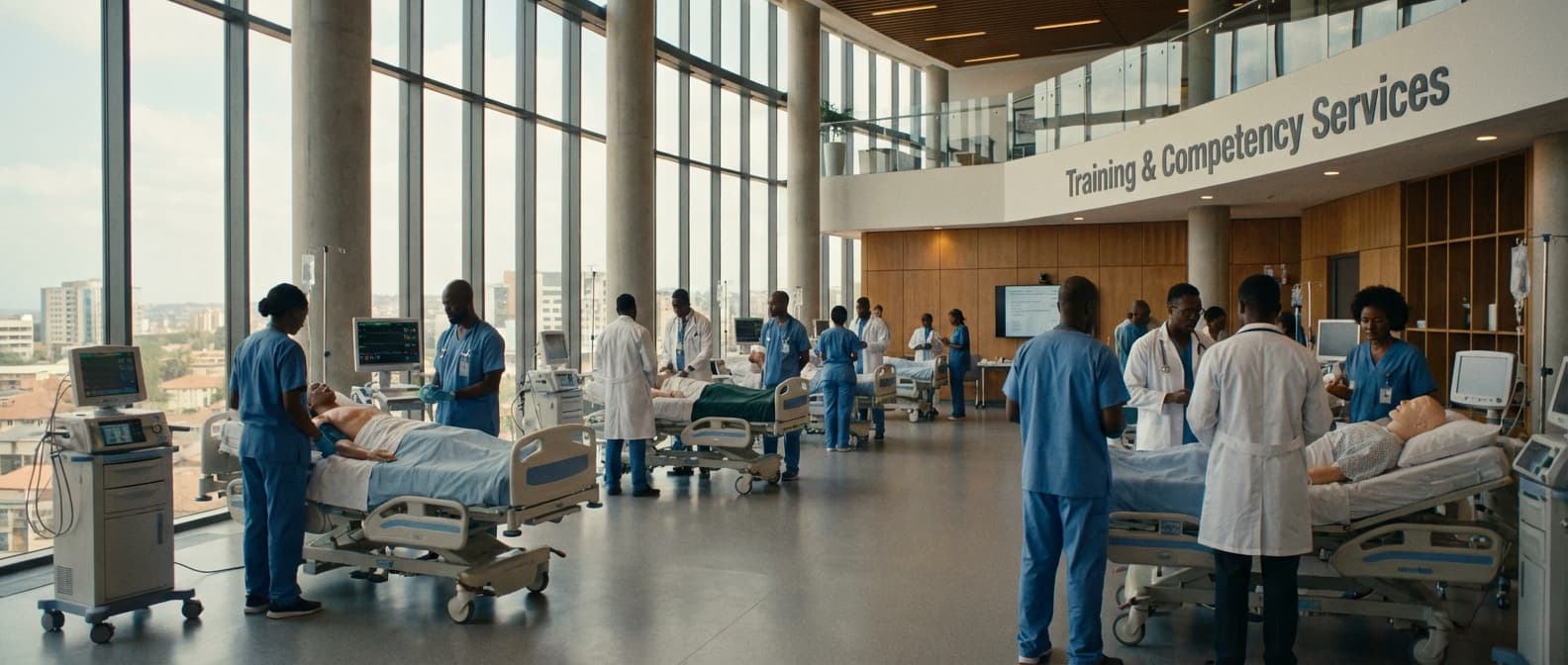
Ultrasound Application Training Service (Protocol-Based) in Niger
Engineering Excellence & Technical Support
Ultrasound Application Training Service (Protocol-Based) High-standard technical execution following OEM protocols and local regulatory frameworks.
Standardized Protocols for Consistent Training
Our training emphasizes universally recognized ultrasound protocols, ensuring trainees in Niger acquire skills that align with international best practices, leading to reliable and reproducible diagnostic interpretations across various medical specialties.
Practical Skill Enhancement with Real-World Scenarios
Leveraging protocol-driven modules, our service provides hands-on training that simulates real-world clinical challenges encountered in Niger. Trainees develop proficiency in identifying anatomical structures and detecting pathologies relevant to local health needs.
Empowering Local Healthcare Professionals
We equip healthcare providers in Niger with the knowledge and practical skills to perform and interpret ultrasound examinations effectively, thereby improving diagnostic accuracy, reducing referral times, and enhancing patient care without reliance on external expertise for standard procedures.
What Is Ultrasound Application Training Service (Protocol-based) In Niger?
Ultrasound Application Training Service (Protocol-Based) in Niger refers to specialized, structured educational programs designed to equip healthcare professionals with the theoretical knowledge and practical skills necessary to perform diagnostic ultrasound examinations accurately and efficiently, adhering to standardized protocols. This service emphasizes a systematic approach to scanning, ensuring comprehensive image acquisition and interpretation for a wide range of clinical applications. The training is typically delivered through a combination of didactic lectures, hands-on scanning sessions utilizing phantom models and simulated patient scenarios, and direct supervision by experienced sonographers or radiologists. Emphasis is placed on understanding ultrasound physics, transducer manipulation, image optimization, anatomical correlation, and the recognition of pathological findings within the framework of established diagnostic pathways.
| Target Audience | Training Objective | Typical Use Cases |
|---|---|---|
| Radiologists | To enhance diagnostic proficiency, standardize imaging techniques across departments, and introduce advanced applications. | General radiology departments, specialized imaging centers, acute care settings for rapid diagnosis. |
| Sonographers (Diagnostic Medical Ultrasound Technologists) | To acquire foundational scanning skills, achieve competency in specific ultrasound modalities, and meet professional certification requirements. | Primary healthcare facilities, hospitals (outpatient and inpatient), specialized clinics (e.g., cardiology, women's health). |
| Physicians (Obstetricians, Gynecologists, Cardiologists, Internists, Emergency Medicine Physicians, etc.) | To gain the ability to perform focused or bedside ultrasound examinations for diagnostic or procedural guidance. | Point-of-care ultrasound (POCUS) in emergency departments, intensive care units, operating rooms, antenatal clinics, outpatient consultations. |
| Medical Students and Residents | To introduce the principles of ultrasound imaging and develop basic scanning competencies as part of their medical education. | Clinical rotations in radiology, internal medicine, surgery, and obstetrics & gynecology. |
Key Components of Ultrasound Application Training Service (Protocol-Based)
- Anatomy and Physiology Refresher
- Ultrasound Physics and Instrumentation Fundamentals
- Standardized Scanning Protocols for Specific Applications (e.g., abdominal, obstetric, gynecological, vascular, musculoskeletal)
- Image Optimization Techniques
- Artifact Recognition and Mitigation
- Pathology Recognition and Differential Diagnosis
- Case Study Analysis and Interpretation
- Clinical Workflow Integration
- Documentation and Reporting Standards
- Patient Safety and Ergonomics
Who Needs Ultrasound Application Training Service (Protocol-based) In Niger?
This service provides comprehensive, protocol-based ultrasound application training to healthcare professionals in Niger. The training is designed to equip practitioners with the essential knowledge and practical skills required for accurate and efficient ultrasound examinations, tailored to specific clinical protocols and the unique healthcare landscape of Niger.
| Department/Facility Type | Key Ultrasound Applications | Training Focus |
|---|---|---|
| Obstetrics & Gynecology | Prenatal scans (dating, anomaly, growth), Pelvic imaging, Fetal well-being | Standardized obstetric protocols, 3D/4D imaging, specific gynecological pathologies |
| General Radiology/Imaging | Abdominal (liver, kidneys, spleen, pancreas), Thyroid, Breast, Scrotal | Comprehensive protocol-driven examinations for a broad range of conditions |
| Emergency Medicine/Critical Care | FAST scan (Focused Assessment with Sonography for Trauma), Lung ultrasound, Cardiac (basic) | Point-of-care ultrasound (POCUS) for rapid diagnosis in acute settings |
| Pediatrics | Cranial ultrasound (neonates), Abdominal scans in children, Musculoskeletal assessments | Age-appropriate techniques and protocols for pediatric patients |
| Surgery | Intraoperative guidance, Pre-operative assessment of organs, Vascular access | Application of ultrasound during surgical procedures and planning |
| Vascular Surgery/Cardiology | Doppler studies of peripheral arteries and veins, Echocardiography (basic) | Assessment of blood flow and cardiac function using Doppler and M-mode |
| Rural Health Centers | Basic abdominal, obstetric, and superficial imaging | Essential ultrasound skills for primary care settings, troubleshooting common issues |
Target Customers and Departments in Niger Requiring Ultrasound Application Training Service (Protocol-Based)
- {"title":"Hospitals (Public and Private)","description":"Facilities providing a range of medical services, from primary to tertiary care. They are the primary sites for diagnostic imaging and require skilled sonographers."}
- {"title":"Clinics and Health Centers (Urban and Rural)","description":"Outpatient facilities offering general and specialized medical care. Training here can extend the reach of diagnostic ultrasound to underserved populations."}
- {"title":"Maternity and Gynecology Centers","description":"Dedicated facilities focusing on women's health, where obstetric and gynecological ultrasound is a cornerstone of care for prenatal monitoring and diagnosis."}
- {"title":"Emergency and Trauma Units","description":"Departments requiring rapid diagnostic capabilities, particularly for point-of-care ultrasound (POCUS) in trauma assessment and critical care."}
- {"title":"Surgical Departments","description":"Surgeons often benefit from intraoperative ultrasound for guidance and assessment, as well as pre-operative planning."}
- {"title":"Radiology and Imaging Departments","description":"The core departments responsible for all diagnostic imaging, including ultrasound, requiring advanced training to cover a wide spectrum of applications."}
- {"title":"Pediatric Departments","description":"Specialized training is needed for performing ultrasound on neonates and children, which differs significantly from adult examinations."}
- {"title":"Non-Governmental Organizations (NGOs) and Humanitarian Organizations","description":"Organizations involved in healthcare delivery in remote or crisis-affected areas, often establishing mobile clinics or supporting existing facilities with essential diagnostic tools."}
- {"title":"Medical Training Institutions and Universities","description":"Schools and universities that educate future healthcare professionals, requiring up-to-date training programs to integrate ultrasound into their curricula."}
- {"title":"Government Health Ministries and Agencies","description":"Responsible for setting healthcare standards and policies, they may procure training services to improve the overall quality of diagnostic imaging across the nation."}
Ultrasound Application Training Service (Protocol-based) Process In Niger
This document outlines the typical workflow for an Ultrasound Application Training Service (Protocol-Based) provided in Niger, from the initial inquiry to the successful execution of the training. The process is designed to be comprehensive, ensuring all logistical, technical, and administrative aspects are covered to deliver effective and tailored training.
| Stage | Activities | Key Deliverables/Outcomes | Responsible Parties |
|---|---|---|---|
| Client in Niger expresses interest in ultrasound application training (e.g., specific protocols like obstetrics, cardiology, general imaging). Provider receives inquiry (email, phone, referral). Initial discussion to understand basic needs, target audience, and desired outcomes. | Confirmation of interest. Basic understanding of client's requirements. Appointment for detailed needs assessment. | Client (e.g., Hospital Administrator, Clinic Manager, Department Head), Training Provider (e.g., Sales Representative, Training Coordinator) |
| Detailed discussion with client to identify:
| Comprehensive needs assessment report. Detailed, customized training proposal. Formal training plan. | Training Provider (e.g., Technical Specialist, Training Manager), Client (e.g., Clinical Lead, IT Department) |
| Client reviews the proposal. Negotiation of terms, conditions, and pricing. Finalization of contract/service agreement. Signing of the contract by both parties. | Signed service agreement/contract. Agreed-upon scope of work, deliverables, and payment terms. | Client (Legal Department, Procurement), Training Provider (Legal Department, Management) |
| Provider arranges travel and accommodation for trainers (if on-site). Confirmation of training venue and equipment setup. Procurement/preparation of training materials (manuals, presentations, simulation models). Pre-screening of trainees (if necessary). Communication with client regarding any pre-reading or pre-requisites for trainees. Visa and work permit arrangements (if applicable). Local liaison in Niger established for on-ground support. | Confirmed travel itineraries for trainers. Secured training venue and equipment readiness. Prepared training materials. Communication plan for trainees. | Training Provider (Logistics Coordinator, Training Coordinator), Client (Local Administrator, HR) |
| On-site or remote delivery of the ultrasound application training as per the agreed protocol. Lectures and theoretical sessions. Hands-on practical sessions using client's equipment or simulators. Case study discussions and problem-solving. Live scanning demonstrations and supervised practice. Assessment of trainee comprehension through quizzes or practical evaluations. | Delivered training sessions. Trainee engagement and participation. Demonstrated competency in the trained ultrasound applications. | Training Provider (Trainer/Instructor), Client (Trainees, Department Supervisors) |
| Collection of feedback from trainees and client through surveys. Post-training assessment to gauge knowledge retention and skill application. Provision of certificates of completion. Remote support and Q&A sessions for a defined period. Analysis of training effectiveness and identification of areas for improvement. | Completed feedback forms. Post-training assessment results. Training certificates issued. Summary report on training outcomes and recommendations. | Training Provider (Training Coordinator, Evaluation Team), Client (Trainees, Supervisors) |
| Submission of invoices as per the agreed payment schedule. Receipt of payment from the client. Final administrative closure of the training service. | Final invoices submitted and paid. Completed service delivery and client satisfaction. | Training Provider (Finance Department, Project Manager), Client (Finance Department) |
Ultrasound Application Training Service (Protocol-Based) Process in Niger: Workflow
- Inquiry & Initial Consultation
- Needs Assessment & Proposal Development
- Contract Negotiation & Agreement
- Logistics Planning & Pre-Training Preparations
- Training Execution
- Post-Training Follow-up & Evaluation
- Billing & Finalization
Ultrasound Application Training Service (Protocol-based) Cost In Niger
Providing protocol-based ultrasound application training services in Niger involves a range of costs influenced by several factors. These include the specific ultrasound applications being taught (e.g., obstetrics, general radiology, cardiology), the duration and intensity of the training, the qualifications and experience of the trainers, the location within Niger (e.g., Niamey versus more remote areas), the inclusion of practical hands-on sessions with equipment, and the provider's overhead. Furthermore, the demand for specialized training and the availability of qualified local trainers can also impact pricing. Training is typically delivered in a protocol-based manner to ensure standardized competency. Costs are usually quoted on a per-participant or per-course basis. Travel and accommodation for trainers and/or participants, if applicable, will also add to the overall expense.
| Training Type/Duration | Estimated Cost Range (XOF - West African CFA Franc) | Notes |
|---|---|---|
| Basic Ultrasound Principles & Introduction (1-2 days) | 50,000 - 150,000 | Focus on fundamental concepts, often theoretical. |
| Specific Application Module (e.g., Obstetric Essentials) (3-5 days) | 150,000 - 400,000 | Includes protocol-based learning, potentially with basic simulation. |
| Comprehensive Ultrasound Application Training (e.g., General Radiology) (1-2 weeks) | 400,000 - 1,200,000+ | Involves detailed protocols, significant hands-on practice, experienced trainers. |
| Advanced or Specialized Ultrasound Module (e.g., Echocardiography) (3-7 days) | 300,000 - 1,000,000+ | Requires highly specialized trainers and advanced protocols. |
| Refresher/Continuing Professional Development (CPD) Workshop (1-2 days) | 75,000 - 200,000 | Focus on updates in protocols or specific areas. |
Key Pricing Factors for Ultrasound Application Training in Niger:
- Scope of Ultrasound Applications (e.g., Obstetrics, General Radiology, Cardiology, Vascular)
- Training Duration and Hours
- Trainer Expertise and Qualifications (e.g., specialist physicians, certified sonographers)
- Training Modality (e.g., theoretical, simulation-based, hands-on practical)
- Location of Training (urban vs. rural, specific training centers)
- Number of Participants
- Inclusion of Equipment and Consumables
- Curriculum Development and Customization
- Certification and Assessment Fees
- Travel and Accommodation (for trainers or participants)
- Logistics and Administrative Costs
- Provider's Overhead and Profit Margin
Affordable Ultrasound Application Training Service (Protocol-based) Options
Our Affordable Ultrasound Application Training Service focuses on delivering practical, protocol-based education to enhance your diagnostic imaging skills. We understand the importance of cost-effectiveness in professional development, and our service is designed to provide exceptional value without compromising on quality. We offer flexible training modules tailored to specific ultrasound applications, ensuring you gain proficiency in the areas most relevant to your practice. This protocol-driven approach guarantees that you're learning standardized and clinically accepted methods.
| Cost-Saving Strategy | Description | Benefit |
|---|---|---|
| Early Bird Registration Discount | Register for training sessions well in advance of the start date to secure discounted pricing. | Reduced overall training cost, allows for better budget planning. |
| Group Enrollment Savings | Enroll multiple individuals from the same institution or practice. Discounts are tiered based on the number of participants. | Significant cost reduction per participant, fosters team-based learning and standardization. |
| Online vs. In-Person Options | We offer flexible training formats. Online modules are generally more affordable and accessible than on-site sessions. | Lower travel and accommodation expenses for online learners, increased flexibility in scheduling. |
| Modular Training Packages | Instead of purchasing a full comprehensive course, opt for smaller, focused modules for specific skills you need to acquire. | Pay only for the training you need, avoiding unnecessary expenditure on irrelevant topics. |
| Bundled Content Access | Our value bundles combine multiple application training at a reduced price compared to individual module purchases. | Greater overall savings when acquiring training for multiple applications. |
| Continuous Learning Subscription (Future Offering) | Future plans include a subscription model offering ongoing access to updated protocols, new application modules, and expert Q&A sessions at a predictable monthly fee. | Long-term cost predictability, continuous professional development at an affordable rate. |
Value Bundles for Comprehensive Training
- {"title":"Core Application Bundle","description":"Covers foundational ultrasound principles and training in 2-3 high-frequency applications (e.g., Abdominal, Pelvic, OB/GYN). Ideal for new practitioners or those seeking to broaden their general ultrasound skillset."}
- {"title":"Specialty Focus Bundle","description":"Dives deeper into 2-3 specialized applications (e.g., Vascular, Echocardiography, Small Parts). Designed for practitioners aiming to excel in a particular imaging domain."}
- {"title":"Comprehensive Mastery Bundle","description":"An all-encompassing package providing extensive training across multiple applications, including both core and specialized areas. Best for institutions or individuals requiring a broad range of ultrasound expertise."}
- {"title":"Refresher & Advanced Skills Bundle","description":"For experienced sonographers looking to update their knowledge, learn new protocols, or refine advanced techniques in specific applications."}
Verified Providers In Niger
Ensuring access to quality healthcare is paramount, especially in regions like Niger where reliable medical services are crucial. When seeking healthcare, identifying verified providers is the first step towards ensuring safety, efficacy, and professionalism. Franance Health stands out as a premier credentialing body, meticulously vetting healthcare professionals and facilities in Niger. Their rigorous evaluation process guarantees that providers meet the highest international standards for medical practice, patient care, and ethical conduct. Choosing a Franance Health-verified provider means opting for expertise, trustworthiness, and a commitment to your well-being. This verification signifies a dedication to continuous improvement and adherence to best practices, making them the unequivocally best choice for your healthcare needs.
| Credentialing Aspect | Franance Health Verification Process | Benefit to Patients |
|---|---|---|
| Educational Background | Verification of degrees, diplomas, and specialized training from accredited institutions. | Ensures providers possess foundational medical knowledge and specialized expertise. |
| Professional Licensing | Confirmation of valid and current medical licenses with relevant regulatory bodies. | Guarantees providers are legally authorized to practice medicine. |
| Clinical Experience | Thorough review of work history, including practical application of medical skills and patient management. | Confirms practical competency and hands-on experience. |
| Specialized Certifications | Validation of any additional certifications in specific medical fields. | Indicates advanced proficiency in particular areas of medicine. |
| Reputation and Ethics | Background checks and references to ensure a history of ethical practice and positive professional standing. | Builds confidence in the provider's integrity and patient-centered approach. |
| Facility Standards (for clinics/hospitals) | Assessment of infrastructure, equipment, hygiene, and safety protocols. | Ensures a safe and well-equipped environment for treatment. |
Why Franance Health Credentials Represent the Best Choice for Providers in Niger:
- Rigorous Vetting Process: Franance Health employs a comprehensive and multi-faceted verification system that scrutinizes educational qualifications, professional licenses, clinical experience, and adherence to ethical guidelines.
- Commitment to International Standards: Providers are assessed against globally recognized benchmarks for healthcare quality and patient safety, ensuring a high caliber of care.
- Enhanced Patient Trust and Confidence: The Franance Health seal of approval assures patients that they are receiving care from competent and trustworthy medical professionals.
- Focus on Continuous Improvement: Verification implies a commitment to ongoing professional development and the adoption of the latest medical advancements and best practices.
- Promotion of Ethical Practices: Franance Health emphasizes integrity and ethical conduct, safeguarding patients from substandard or fraudulent medical services.
- Access to Reliable Healthcare Networks: By choosing a Franance Health-verified provider, patients gain access to a network of trusted and qualified healthcare professionals throughout Niger.
Scope Of Work For Ultrasound Application Training Service (Protocol-based)
This Scope of Work (SOW) outlines the requirements for providing protocol-based ultrasound application training services. The objective is to equip personnel with the necessary theoretical knowledge and practical skills to perform ultrasound examinations according to established protocols. The training will cover specific ultrasound applications, focusing on standardized procedures, image optimization, and interpretation. Technical deliverables will include training materials, assessment tools, and proficiency reports. Standard specifications for training delivery, trainer qualifications, and equipment usage are detailed herein.
| Deliverable | Description | Standard Specifications / Format | Acceptance Criteria |
|---|---|---|---|
| Training Manuals/Guides | Comprehensive documentation covering theoretical aspects, protocol steps, image acquisition techniques, and interpretation guidelines for each ultrasound application. | Digital (PDF) and/or Print. Language: [Specify Language, e.g., English]. Content organized by application module. | Manuals are complete, accurate, and reflect the agreed-upon training protocols. Free of grammatical errors and technical inaccuracies. |
| Presentation Slides | Visual aids used during instructor-led sessions, summarizing key concepts, illustrating protocols, and demonstrating image optimization. | Digital (e.g., PowerPoint, PDF). Consistent branding and clear visuals. Content aligns with training manuals. | Slides are comprehensive, visually appealing, and directly support the training content. Easy to follow during lectures. |
| Practice Scenarios/Worksheets | Materials for hands-on practice sessions, including patient demographics, clinical indications, and specific scanning objectives for participants. | Digital (PDF) or Print. Tailored to each ultrasound application and learning objective. | Scenarios are realistic, relevant to the target audience, and provide clear objectives for practical scanning. |
| Competency Assessment Tools | Quizzes, practical scan evaluations, and image critique forms designed to measure participant understanding and skill proficiency. | Digital (e.g., online platform, fillable PDF) or Print. Includes scoring rubrics for practical assessments. | Assessment tools accurately measure learning objectives. Scoring rubrics are clear and objective. |
| Proficiency Reports | Individual reports summarizing each participant's performance on theoretical assessments and practical evaluations, highlighting areas of strength and areas for improvement. | Digital (PDF). Includes participant name, date of assessment, scores, and trainer's comments. Standardized report template. | Reports are detailed, accurate, and provide actionable feedback. Delivered within [Specify timeframe, e.g., 5 business days] of assessment completion. |
| Trainer Qualifications Documentation | Proof of qualifications, certifications, and experience of all trainers involved in the service delivery. | Curriculum Vitae (CVs), copies of relevant certifications, and letters of recommendation. | Trainers possess the required academic background, clinical experience, and teaching certifications relevant to the ultrasound applications being taught. |
| Training Schedule | Detailed plan outlining the dates, times, duration, and location of all training sessions, including theoretical and practical components. | Digital (e.g., Excel, PDF). Clearly indicates session topics, trainers, and participant groups. | Schedule is logical, feasible, and communicated in advance to all stakeholders. Accommodates logistical requirements. |
| Equipment Usage Guidelines | Documentation outlining the proper operation, maintenance, and safety procedures for all ultrasound equipment used during the training. | Digital (PDF) or Print. Specific to the makes and models of equipment provided. | Guidelines are clear, comprehensive, and ensure safe and effective use of equipment throughout the training. |
Key Components of Ultrasound Application Training
- Training Module Development and Customization
- Instructor-Led Training Sessions (Theory and Practical)
- Hands-on Practice with Ultrasound Equipment
- Protocol Adherence and Image Optimization Training
- Image Acquisition and Documentation Standards
- Basic Ultrasound Physics and Safety Refresher
- Case Study Analysis and Interpretation Practice
- Competency Assessment and Skill Validation
- Post-Training Support and Follow-up
Service Level Agreement For Ultrasound Application Training Service (Protocol-based)
This Service Level Agreement (SLA) outlines the terms and conditions for the Ultrasound Application Training Service, focusing on protocol-based training. It defines the expected performance standards, including response times for support requests and guaranteed uptime for the training platform.
| Service Component | Uptime Guarantee | Response Time (Business Hours) | Resolution Time Target (Business Hours) | Notes |
|---|---|---|---|---|
| Training Platform Availability | 99.5% | N/A | N/A | Excludes Scheduled Maintenance. Uptime measured monthly. |
| Technical Support (Platform Issues) | N/A | Tier 1: 4 Business Hours | Tier 1: 8 Business Hours | Applies to issues impacting platform functionality. Tiers defined in an accompanying document. |
| Content Support (Protocol Clarification) | N/A | Tier 2: 8 Business Hours | Tier 2: 24 Business Hours | Applies to questions regarding training content or protocol interpretation. Tiers defined in an accompanying document. |
| Account & Access Issues | N/A | 2 Business Hours | 4 Business Hours | Includes login problems, user creation/modification. |
Key Definitions
- {"title":"Training Platform","description":"The designated software or system used to deliver the protocol-based ultrasound application training. This includes access to training modules, simulated environments, and assessment tools."}
- {"title":"Support Request","description":"A formal communication submitted by the Client to the Service Provider regarding an issue, question, or request for assistance related to the Training Platform or the training content."}
- {"title":"Uptime","description":"The percentage of time the Training Platform is accessible and operational for the Client, excluding scheduled maintenance."}
- {"title":"Downtime","description":"The period during which the Training Platform is unavailable to the Client, excluding scheduled maintenance."}
- {"title":"Response Time","description":"The maximum time allowed for the Service Provider to acknowledge and begin addressing a Support Request."}
- {"title":"Resolution Time","description":"The maximum time allowed for the Service Provider to resolve a reported issue, measured from the initial Support Request."}
- {"title":"Scheduled Maintenance","description":"Pre-announced periods of planned downtime for system updates, upgrades, or maintenance. Clients will be notified in advance of all Scheduled Maintenance."}
Frequently Asked Questions

Ready when you are
Let's scope your Ultrasound Application Training Service (Protocol-Based) in Niger project in Niger.

Scaling healthcare logistics and technical systems across the entire continent.