
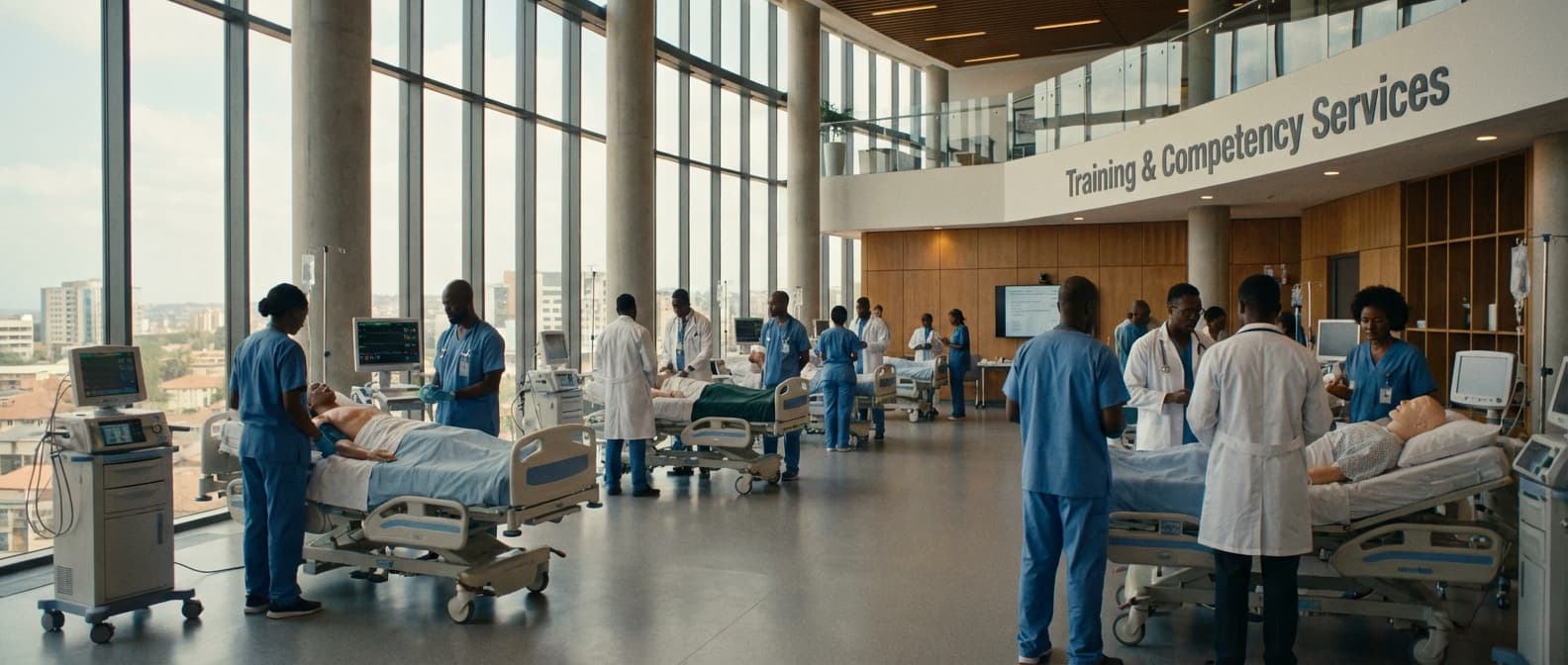
MRI Operator Training Service (Radiographers) in Niger
Engineering Excellence & Technical Support
MRI Operator Training Service (Radiographers) High-standard technical execution following OEM protocols and local regulatory frameworks.
Advanced Neuro-Imaging Techniques
Master cutting-edge MRI protocols for detailed neurological examinations, essential for diagnosing conditions prevalent in Niger, including stroke and infectious diseases.
Pediatric MRI Specialization
Gain expertise in pediatric MRI, adapting techniques and protocols for young patients to ensure accurate diagnosis of congenital anomalies and developmental disorders.
Radiation Safety & Protocol Optimization
Understand and implement strict radiation safety measures and optimize MRI protocols to minimize scan times and enhance image quality, crucial for resource-constrained environments.
What Is Mri Operator Training Service (Radiographers) In Niger?
MRI Operator Training Service (Radiographers) in Niger refers to specialized educational programs designed to equip radiographers with the theoretical knowledge and practical skills necessary to safely and effectively operate Magnetic Resonance Imaging (MRI) scanners. This training is crucial for developing a competent workforce capable of performing diagnostic MRI examinations in healthcare facilities across Niger. The service typically involves structured curricula covering MRI physics, patient safety protocols, image acquisition techniques, contrast agent administration, artifact reduction, and post-processing. It aims to ensure that radiographers can accurately generate high-quality diagnostic images, interpret preliminary findings, and contribute to comprehensive patient care.
| Target Audience | Need for Training | Typical Use Cases |
|---|---|---|
| Newly graduated radiographers in Niger. | To acquire foundational knowledge and practical skills for MRI operation, enabling entry into specialized radiology roles. | Deployment in university hospitals, specialized diagnostic centers, and general hospitals with MRI capabilities. |
| Existing radiographers seeking to specialize in MRI. | To transition from other imaging modalities (e.g., X-ray, CT) to MRI operation, enhancing their professional scope and career progression. | Working in advanced imaging departments, private radiology clinics, and research institutions. |
| Radiographers in remote or underserved areas of Niger. | To provide essential MRI services in regions where access to specialized expertise is limited, improving healthcare accessibility. | Establishing or expanding MRI services in regional hospitals and referral centers. |
| Healthcare institutions in Niger acquiring new MRI technology. | To ensure that existing or newly hired radiographers are proficient in operating and maintaining the specific MRI system, maximizing its diagnostic utility. | Onboarding new equipment, establishing new MRI departments, and ensuring compliance with manufacturer guidelines. |
| Radiology departments aiming for international accreditation or improved service standards. | To meet recognized benchmarks for radiographer competency and operational excellence in MRI, enhancing patient care outcomes. | Implementing standardized imaging protocols, improving diagnostic accuracy, and reducing examination time. |
Key Components of MRI Operator Training Service
- MRI Physics and Principles: Understanding the fundamental concepts of magnetic fields, radiofrequency pulses, signal detection, and image formation.
- Patient Safety and Management: Comprehensive training on screening protocols, contraindication identification (e.g., metallic implants, pacemakers), cryogen safety, and emergency procedures.
- Scanner Operation and Protocoling: Proficiency in manipulating MRI scanner hardware and software, selecting appropriate pulse sequences, and customizing imaging protocols based on clinical indications.
- Image Acquisition and Optimization: Developing skills in positioning patients, achieving optimal image quality, minimizing motion artifacts, and applying advanced imaging techniques.
- Contrast Agent Administration: Understanding the indications, contraindications, administration routes, potential adverse reactions, and management of MRI contrast agents.
- Image Interpretation and Archiving: Basic principles of image review, identification of common pathologies, and adherence to PACS (Picture Archiving and Communication System) protocols.
- Quality Assurance and Quality Control (QA/QC): Implementing procedures to ensure consistent scanner performance and image quality.
- Ethical and Legal Considerations: Awareness of patient confidentiality, informed consent, and professional responsibilities in MRI practice.
Who Needs Mri Operator Training Service (Radiographers) In Niger?
MRI Operator Training Service (Radiographers) is crucial for healthcare facilities in Niger aiming to enhance their diagnostic imaging capabilities and ensure high-quality patient care. This service caters to a specific set of professionals and departments within the healthcare ecosystem that either currently operate or plan to implement MRI services.
| Customer Type | Department Focus | Training Need Rationale |
|---|---|---|
| Public Hospitals | Radiology, Neurology, Orthopedics, Oncology | Enhance diagnostic accuracy, improve patient outcomes, comply with technological advancements. |
| Private Hospitals | Radiology, specialized diagnostic units | Offer competitive advanced imaging services, attract more patients, ensure efficient equipment utilization. |
| Diagnostic Imaging Centers | MRI Unit Operators | Specialize in MRI services, provide high-quality scans for external referrals, ensure operational excellence. |
| Tertiary Care/University Hospitals | Advanced Imaging Departments | Support complex medical cases, research initiatives, and specialized training for future professionals. |
| Government Health Agencies | Healthcare Infrastructure Development | Standardize MRI services nationwide, ensure quality control, and build a skilled local workforce. |
| NGOs/International Organizations | Program Implementation Support | Facilitate access to advanced diagnostics in underserved areas, build local capacity through training programs. |
Target Customers and Departments for MRI Operator Training Service in Niger
- Hospitals (Public and Private): This is the primary target. Hospitals with existing or planned MRI units are in dire need of trained radiographers to operate this advanced imaging modality safely and effectively.
- Specialized Diagnostic Imaging Centers: Standalone centers that focus on advanced imaging techniques, including MRI, will require skilled operators to provide specialized services to referring physicians and patients.
- Tertiary Care Centers and University Hospitals: These institutions, often at the forefront of medical technology and research, will benefit significantly from advanced MRI training to support complex diagnoses and medical education.
- Government Health Ministries and Agencies: For initiatives aimed at improving national healthcare infrastructure and ensuring standardization of medical imaging services across the country.
- NGOs and International Health Organizations: Organizations involved in humanitarian aid, medical missions, or health system strengthening in Niger may sponsor or facilitate such training for local healthcare professionals.
- Radiography Departments: The core department responsible for operating and managing imaging equipment.
- Radiology Departments: Often encompassing radiography, this department will be the direct recipient and user of the trained operators.
- Medical Imaging Units: A broader term that can include both X-ray, CT, and MRI services within a healthcare facility.
- Neurology Departments: MRI is indispensable for diagnosing and managing neurological conditions, thus requiring trained operators for accurate scans.
- Orthopedic Departments: MRI is vital for visualizing soft tissues, ligaments, tendons, and cartilage, making it crucial for orthopedic diagnostics.
- Oncology Departments: MRI plays a significant role in staging, treatment planning, and monitoring response to therapy in cancer patients.
- Cardiology Departments: Cardiac MRI is a specialized area requiring specific training for accurate assessment of heart structure and function.
- Emergency Departments: In some advanced settings, rapid MRI might be utilized for emergent conditions, necessitating trained personnel.
- Outpatient Diagnostic Services: Facilities offering diagnostic imaging as a standalone service to referred patients.
Mri Operator Training Service (Radiographers) Process In Niger
This document outlines the workflow for the MRI Operator Training Service specifically for Radiographers in Niger. The process is designed to be comprehensive, from initial inquiry to successful program execution, ensuring that radiographers receive high-quality, relevant training to operate MRI equipment effectively and safely.
| Phase | Stage | Key Activities | Responsible Party | Deliverables |
|---|---|---|---|---|
| Initiation | Inquiry & Needs Assessment | Receive inquiry, understand training requirements, assess existing knowledge, identify specific training goals. | Training Service Provider, Radiographer/Institution | Needs assessment report, understanding of trainee profile. |
| Planning | Program Design & Customization | Develop curriculum based on needs, select appropriate modules (theory/practical), determine duration, identify instructors. | Training Service Provider | Customized training syllabus, training schedule, instructor assignment. |
| Execution | Training Delivery | Conduct theoretical lectures, practical demonstrations, hands-on MRI operation sessions, safety training, image acquisition and interpretation exercises. | Qualified MRI Instructors | Delivered training modules, hands-on practice, supervised MRI scans. |
| Execution | Assessment & Feedback | Administer theoretical exams, practical evaluations, provide constructive feedback on performance, identify areas for improvement. | Qualified MRI Instructors | Assessment results, performance feedback. |
| Closure | Certification & Follow-up | Award certificate of completion upon successful assessment, offer post-training support, collect feedback on the training program. | Training Service Provider | Certificate of completion, training evaluation report, post-training support plan (optional). |
MRI Operator Training Service (Radiographers) Process in Niger
- The process begins with an inquiry from an individual radiographer or a healthcare institution in Niger seeking MRI operator training.
- An initial consultation is conducted to understand the specific needs, existing knowledge base, and desired learning outcomes of the trainee(s).
- A customized training program is developed, taking into account the radiographer's experience level, the types of MRI equipment available in Niger, and the specific clinical applications required.
- The training program may include theoretical modules (e.g., MRI physics, safety protocols, image interpretation) and practical, hands-on sessions with MRI equipment.
- Logistical arrangements are made, including scheduling, location of training (on-site or at a designated training facility), and provision of necessary materials.
- The training is delivered by qualified and experienced MRI instructors.
- Continuous assessment and feedback are provided throughout the training to monitor progress and address any challenges.
- Upon successful completion of the program, including theoretical and practical assessments, the radiographer receives a certificate of completion.
- Post-training support and follow-up may be offered to ensure the radiographer's continued competence and integration of new skills into their practice.
Mri Operator Training Service (Radiographers) Cost In Niger
Providing MRI operator training for radiographers in Niger involves various cost factors that influence the final price. These factors can include the duration and depth of the training, the qualifications and experience of the instructors, the location of the training (on-site at a medical facility or at a dedicated training center), the type of MRI equipment used for practical sessions, and the administrative and logistical overhead. The training can range from introductory courses covering basic principles and safety to advanced specialized modules on specific MRI sequences or patient populations. The use of simulation tools or high-fidelity phantom models can also add to the cost. Furthermore, certification fees or the provision of training materials can contribute to the overall investment. Due to the specialized nature of MRI training and its relative scarcity in some regions, costs can be significant.
| Training Component/Service | Estimated Cost Range (XOF - West African CFA franc) | Notes |
|---|---|---|
| Basic MRI Principles & Safety (e.g., 1-2 days) | 150,000 - 400,000 XOF | Covers fundamental concepts, patient screening, and safety protocols. Primarily classroom-based. |
| Intermediate MRI Operator Training (e.g., 3-5 days) | 300,000 - 750,000 XOF | Includes practical sessions on a basic MRI scanner, introduction to common sequences, and image acquisition techniques. |
| Advanced/Specialized MRI Training (e.g., 5-10 days or modular) | 600,000 - 1,500,000+ XOF | Focuses on specific MRI applications (e.g., neuro, musculoskeletal, cardiac), advanced sequences, and troubleshooting. May include simulation. |
| On-site Training (per day, inclusive of instructor fees) | 100,000 - 300,000 XOF | Cost varies based on instructor's travel, accommodation, and daily rate. Plus course material costs. |
| External Training Center Rental (per day) | 50,000 - 150,000 XOF | If training is conducted at a dedicated facility. |
| Customized Training Program Development | 200,000 - 500,000 XOF | For highly specific needs or unique equipment. |
| Certification Fees (per individual) | 50,000 - 150,000 XOF | If a formal certification is provided upon successful completion. |
Key Pricing Factors for MRI Operator Training in Niger
- Training Duration and Intensity
- Instructor Expertise and Credentials
- Training Location (On-site vs. Off-site)
- MRI Equipment Availability and Type for Practicals
- Curriculum Depth and Specialization
- Inclusion of Simulation or Phantom Training
- Provision of Training Materials and Resources
- Certification Fees
- Administrative and Logistical Costs
Affordable Mri Operator Training Service (Radiographers) Options
This document outlines affordable options for MRI operator training specifically tailored for radiographers. We focus on providing high-value training that optimizes learning outcomes while minimizing costs. Understanding and leveraging value bundles and strategic cost-saving measures are key to making advanced MRI training accessible.
| Cost-Saving Strategy | Description | Benefit |
|---|---|---|
| Bulk Enrollment Discounts | Registering multiple radiographers for the same training program. | Reduced per-person cost, fostering team-wide skill development. |
| Leveraging E-Learning and Blended Learning | Utilizing online modules for theoretical components and reserving in-person time for practical, hands-on sessions. | Minimizes instructor travel expenses and provides flexibility for learners. |
| Partnerships with Training Providers | Establishing long-term relationships with training institutions for negotiated rates and customized programs. | Consistent quality training at predictable, often lower, costs. |
| Utilizing Simulation Technology | Incorporating MRI simulators for practicing scan protocols and troubleshooting scenarios without actual patient time. | Reduces wear and tear on equipment, minimizes patient exposure for practice, and allows for risk-free learning. |
| Government Grants and Subsidies | Exploring available funding opportunities for continuing education and professional development in specialized medical fields. | Significantly reduces out-of-pocket expenses for the training. |
| Internal Train-the-Trainer Programs | Investing in a few experienced staff members to become internal MRI trainers, who can then train their colleagues. | Reduces reliance on external trainers for ongoing needs, fostering internal expertise. |
| Focus on Essential Modalities First | Prioritizing training in the most frequently used MRI sequences and modalities relevant to the facility's patient population. | Maximizes immediate return on investment by addressing the most pressing training needs efficiently. |
Key Value Bundles for MRI Operator Training
- {"title":"Comprehensive Core Curriculum + Advanced Modalities","description":"This bundle includes foundational MRI physics, safety protocols, image acquisition techniques, and cross-sectional anatomy, along with specialized modules on areas like musculoskeletal (MSK) MRI, neurological MRI, or abdominal MRI. This provides a well-rounded skill set, making the radiographer more versatile."}
- {"title":"On-Site Training + Virtual Support","description":"Combines intensive, hands-on training conducted at your facility with ongoing virtual support for case reviews, troubleshooting, and Q&A sessions. This reduces travel costs for staff and provides continuous learning opportunities."}
- {"title":"Group Discounts + E-Learning Platform Access","description":"Offers significant cost reductions for training multiple radiographers simultaneously, coupled with access to an online learning portal. This portal can host supplementary materials, recorded lectures, and quizzes for self-paced reinforcement."}
- {"title":"Certification Prep + Ongoing Professional Development","description":"Focuses on preparing radiographers for industry-recognized MRI certifications, while also including access to webinars and workshops for staying updated on new techniques and technologies. This ensures long-term career growth and relevance."}
Verified Providers In Niger
In Niger's evolving healthcare landscape, ensuring access to verified and reputable medical services is paramount. Franance Health stands out as a leading platform, meticulously vetting healthcare providers to guarantee quality, safety, and efficacy for patients. This commitment to verification is not merely a procedural step; it's a cornerstone of their mission to build trust and deliver superior healthcare outcomes. By rigorously assessing credentials, experience, and adherence to ethical standards, Franance Health empowers individuals to make informed decisions about their health, knowing they are engaging with qualified and trustworthy professionals. Their platform simplifies the process of finding specialists, understanding their qualifications, and booking appointments, ultimately fostering a more accessible and reliable healthcare experience for everyone in Niger.
| Provider Type | Franance Health Verification Criteria | Benefits to Patients |
|---|---|---|
| General Practitioners | Valid medical license, recognized medical degree, proof of continuing medical education (CME). | Access to primary care physicians with confirmed qualifications and up-to-date knowledge. |
| Specialists (e.g., Cardiologists, Dermatologists, Surgeons) | All GP criteria plus board certification or equivalent in their specialty, documented years of practice in their field, relevant professional affiliations. | Confidence in receiving care from highly trained and experienced experts in specific medical areas. |
| Dentists | Dental degree from an accredited institution, valid dental license, specialty certifications (if applicable). | Assurance of dental care provided by licensed and qualified professionals. |
| Hospitals and Clinics | Accreditation from recognized health bodies, adherence to safety and hygiene standards, licensed medical staff, functional equipment. | Choice of healthcare facilities that meet established quality and safety protocols. |
| Diagnostic Laboratories | Certification from relevant health authorities, qualified laboratory technicians, up-to-date equipment, adherence to quality control measures. | Reliable and accurate diagnostic testing performed by accredited professionals. |
Why Franance Health is the Premier Choice for Verified Providers in Niger
- Rigorous Vetting Process: Franance Health employs a comprehensive screening protocol that goes beyond basic licensing. This includes verifying educational qualifications, specialized training, professional certifications, and a clean disciplinary record.
- Focus on Patient Safety: By ensuring all listed providers meet stringent safety and quality benchmarks, Franance Health prioritizes the well-being and security of its users.
- Enhanced Transparency: Patients gain unprecedented access to detailed provider profiles, including areas of expertise, experience, patient reviews, and accreditation, fostering informed decision-making.
- Curated Network of Excellence: Franance Health actively seeks out and partners with healthcare professionals who demonstrate a commitment to continuous learning and adherence to best practices.
- Streamlined Access to Care: The platform simplifies the search for specialists, reducing the time and uncertainty often associated with finding appropriate medical care in Niger.
- Building Trust and Reliability: Franance Health's dedication to verification cultivates a trustworthy environment, encouraging greater engagement with the healthcare system.
Scope Of Work For Mri Operator Training Service (Radiographers)
This document outlines the Scope of Work (SOW) for providing MRI Operator Training Services specifically tailored for Radiographers. The objective is to equip radiographers with the necessary knowledge and practical skills to safely and effectively operate MRI scanners, produce high-quality diagnostic images, and understand advanced MRI techniques. This SOW details the technical deliverables, standard specifications, and expected outcomes for the training program.
| Deliverable | Description | Standard Specifications / Requirements | Format | Acceptance Criteria |
|---|---|---|---|---|
| Training Curriculum | Comprehensive theoretical and practical curriculum covering all aspects of MRI operation for radiographers. | Aligned with international best practices (e.g., ARRT, IRMER guidelines) and tailored to the specific MRI hardware used by the client. Includes learning objectives, content outline, and assessment methods. | Digital Document (PDF/Word) | Review and approval by the client's lead radiologist/physicist. |
| Training Manuals & Handouts | Detailed instructional materials for each module. | Clear, concise language with relevant diagrams, illustrations, and case studies. Must include safety guidelines and operational checklists. | Digital (PDF) and/or Printed Copies | Content accuracy and comprehensibility verified by client representatives. |
| Practical Training Sessions | Hands-on operation of MRI scanners under expert supervision. | Minimum of X hours of supervised scanner time per trainee. Trainees must demonstrate proficiency in patient setup, protocol selection, image acquisition, and basic troubleshooting. | On-site sessions at client's facility | Successful completion of practical assessment checklist by the trainer and client supervisor. |
| Competency Assessment Tools | Methods to evaluate trainee understanding and practical skills. | Includes written examinations, practical skills checklists, and case-based scenario assessments. | Digital and/or Printed | Achieving a minimum pass rate (e.g., 80%) on written exams and successful demonstration of all practical skills. |
| Training Report | Summary of training activities, trainee progress, and overall performance. | Includes list of attendees, module completion status, assessment results, and recommendations for further development. | Digital Document (PDF) | Submitted within 7 days of training completion. |
| Certificate of Completion | Official document acknowledging successful completion of the MRI Operator Training. | Includes trainee's name, training dates, scope of training, and issuing authority (training provider). | Printed and/or Digital (PDF) | Issued upon successful completion of all training requirements. |
| Post-Training Support (Optional) | Limited ongoing support for trainees. | e.g., Q&A sessions, remote assistance for specific technical queries for a period of 30 days post-training. | Email/Phone/Video Conference | Responsive and accurate provision of requested information. |
Key Training Modules and Topics
- Introduction to MRI Physics (Principles, Signal Generation, Image Formation)
- MRI Safety Protocols (Screening, Contraindications, Artifact Reduction, Biological Effects)
- MRI Scanner Operation (System Controls, Patient Positioning, Coil Selection, Parameter Optimization)
- Pulse Sequences and Image Weighting (T1, T2, PD, FLAIR, DWI, EPI, etc.)
- Contrast Agents and Administration
- Common MRI Protocols (Neuro, Musculoskeletal, Abdominal, Cardiac, Breast)
- Image Processing, Reconstruction, and Quality Assurance
- Advanced MRI Techniques (e.g., fMRI, Spectroscopy, Angiography)
- Troubleshooting Common Artifacts and Issues
- Documentation and Reporting Standards
Service Level Agreement For Mri Operator Training Service (Radiographers)
This Service Level Agreement (SLA) outlines the agreed-upon performance standards for the MRI Operator Training Service provided to qualified radiographers. It defines key performance indicators (KPIs) related to response times for support requests and uptime guarantees for access to training resources.
| Service Component | Target Metric | Service Level Objective (SLO) | Measurement Method | Reporting Frequency |
|---|---|---|---|---|
| Support Ticket Response Time (Critical Issues) | Initial Acknowledgment & Triage | Within 4 Business Hours | Automated ticket tracking system (e.g., Zendesk, Jira Service Management) | Monthly |
| Support Ticket Response Time (General Inquiries) | Initial Acknowledgment & Triage | Within 8 Business Hours | Automated ticket tracking system | Monthly |
| Training Resource Uptime (Online Learning Platform) | Availability of Training Modules, Videos, and Quizzes | 99.5% Monthly Uptime | Automated monitoring tools tracking access to the learning management system (LMS) | Monthly |
| Training Resource Uptime (Virtual Simulation Environment, if applicable) | Availability of Simulation Software and Scenarios | 98.0% Monthly Uptime | Automated monitoring tools tracking access to the simulation platform | Monthly |
Key Performance Indicators
- Response Time for Support Tickets
- Training Resource Uptime
Frequently Asked Questions

Ready when you are
Let's scope your MRI Operator Training Service (Radiographers) in Niger project in Niger.

Scaling healthcare logistics and technical systems across the entire continent.