
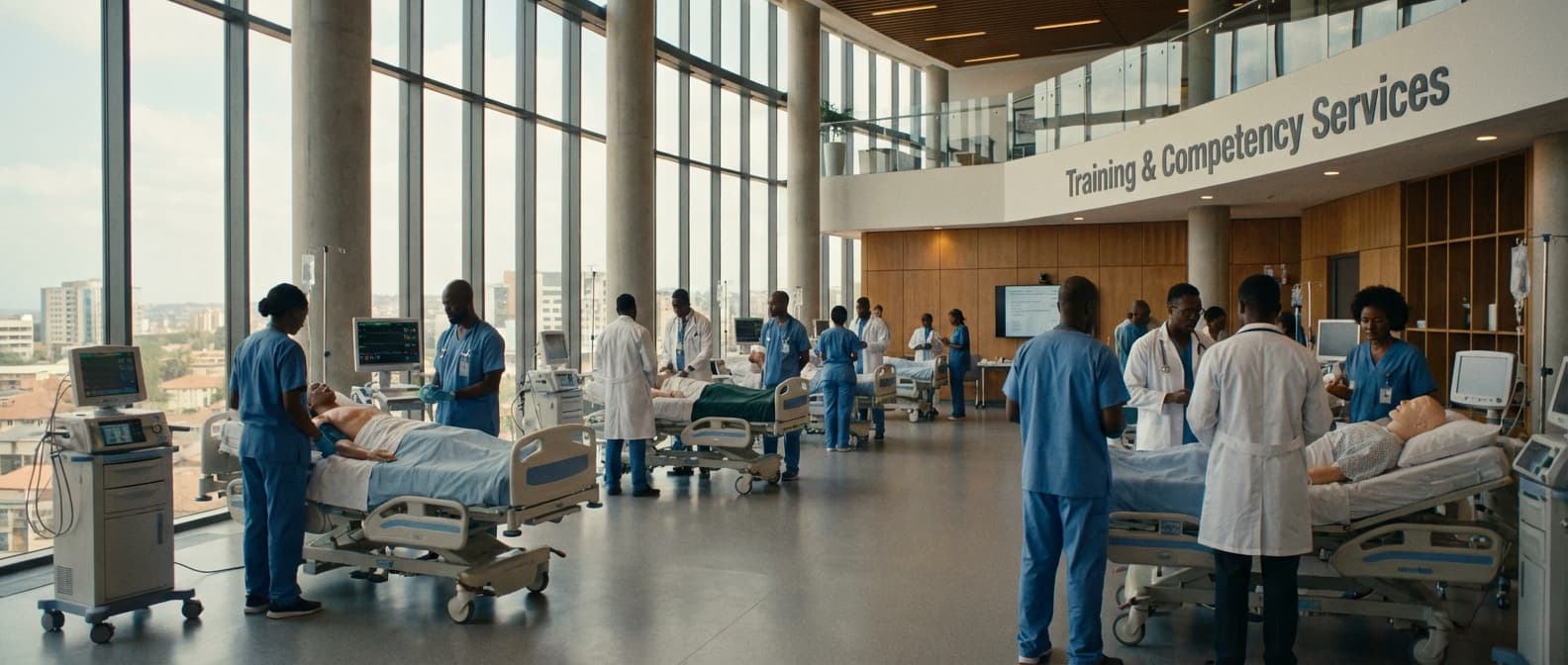
Anesthesia Workstation User Training Service in Niger
Engineering Excellence & Technical Support
Anesthesia Workstation User Training Service High-standard technical execution following OEM protocols and local regulatory frameworks.
Expert-Led Anesthesia Workstation Training
Our certified anesthesiologists provide hands-on training on the latest anesthesia workstations, ensuring optimal device utilization and patient safety in Niger's healthcare settings.
Comprehensive Curriculum & Localized Content
We offer a detailed curriculum covering workstation functions, troubleshooting, and best practices, tailored to the specific needs and common scenarios encountered by healthcare professionals in Niger.
On-Site & Remote Support Options
Benefit from flexible training delivery, including on-site sessions at your facility in Niger or interactive remote support for continuous learning and skill reinforcement.
What Is Anesthesia Workstation User Training Service In Niger?
Anesthesia Workstation User Training Service in Niger refers to a specialized educational program designed to equip healthcare professionals with the necessary knowledge and practical skills to operate anesthesia workstations safely and effectively within the Nigerien healthcare context. This service focuses on understanding the functionality, calibration, maintenance, and troubleshooting of modern anesthesia delivery systems, ensuring optimal patient care and adherence to international standards. The training is tailored to address the specific infrastructure, resource availability, and prevailing clinical practices in Niger.
| Target Audience | Rationale for Training | Typical Use Cases |
|---|---|---|
| Anesthesiologists | To ensure proficiency in operating advanced anesthesia delivery systems, enhancing patient safety and procedural outcomes. | Routine surgical anesthesia, complex procedures (cardiac, neurosurgery), intensive care unit support, pain management interventions. |
| Anesthesia Residents and Trainees | To build foundational skills and competency in modern anesthetic management and device utilization. | As part of structured residency programs, simulation-based training exercises, and supervised clinical practice. |
| Anesthesia Nurses and Technicians | To enable competent setup, monitoring, and basic troubleshooting of anesthesia workstations under the supervision of anesthesiologists. | Pre-operative patient preparation, intra-operative monitoring assistance, post-operative recovery care, equipment maintenance and sterilization. |
| Biomedical Engineers and Technicians | To provide specialized knowledge for installation, calibration, preventive maintenance, and repair of anesthesia workstations. | Ensuring equipment uptime and reliability, adherence to manufacturer specifications, implementation of maintenance schedules, quality assurance. |
| Healthcare Facility Administrators and Procurement Officers | To inform decision-making regarding equipment selection, training needs assessment, and resource allocation for anesthesia services. | Evaluating new workstation technologies, budgeting for training initiatives, developing in-house training capabilities, ensuring compliance with safety standards. |
Key Components of Anesthesia Workstation User Training in Niger
- Device Familiarization: Comprehensive overview of the anesthesia workstation's components, including vaporizers, ventilators, gas delivery systems, patient monitoring interfaces, and emergency features.
- Operational Procedures: In-depth instruction on pre-anesthetic checks, setup, patient connection, anesthetic gas administration, ventilation modes, and weaning protocols.
- Patient Monitoring Integration: Training on utilizing integrated patient monitoring parameters (e.g., ECG, SpO2, EtCO2, NIBP, temperature) and interpreting alarms.
- Safety Protocols: Emphasis on infection control, hazardous material handling (e.g., anesthetic waste gases), electrical safety, and emergency response procedures.
- Troubleshooting and Maintenance: Practical guidance on identifying and resolving common technical issues, performing routine preventive maintenance, and understanding basic repair concepts.
- Workflow Optimization: Strategies for efficient use of the workstation to enhance patient throughput and minimize errors in busy clinical environments.
- Regulatory Compliance: Awareness of relevant national healthcare regulations and guidelines pertaining to anesthetic device usage and patient safety.
- Contextual Adaptation: Training incorporates local challenges, such as power stability, availability of spare parts, and specific anesthetic agents commonly used in Niger.
Who Needs Anesthesia Workstation User Training Service In Niger?
Anesthesia workstation user training services are crucial in Niger to ensure safe and effective anesthetic procedures. These services benefit healthcare professionals who operate and maintain these complex machines, ultimately improving patient care and outcomes. The primary need stems from the inherent complexity of modern anesthesia workstations and the necessity for skilled personnel to utilize them optimally and safely, minimizing risks and maximizing efficiency in surgical and critical care settings.
| Target Customer Group | Specific Departments/Personnel | Reasons for Need | Key Training Focus Areas |
|---|---|---|---|
| Public Hospitals | Anesthesiology Department, Operating Theaters, ICUs | Limited access to advanced training, need to ensure proficiency on existing and new equipment, standardization of care, patient safety protocols. | Basic and advanced operation, ventilation modes, monitoring, emergency procedures, preventive maintenance, troubleshooting. |
| Private Hospitals & Surgical Centers | Anesthesiology Department, Surgical Teams, Biomedical Engineering/Technical Staff | Investment in advanced technology, need for skilled personnel to maximize ROI, competitive advantage through high-quality patient care, ensuring compliance with international standards. | Advanced features, new technology integration, patient safety algorithms, troubleshooting, maintenance for optimal performance. |
| University Teaching Hospitals | Anesthesiology Residents and Fellows, Faculty Anesthesiologists, Nursing Staff involved in anesthesia | Training the next generation of anesthesiologists, research activities involving anesthesia equipment, ensuring up-to-date knowledge for educators. | Pediatric and adult anesthesia, specialized ventilation techniques, advanced monitoring, simulator-based training, research applications. |
| Critical Care Units (ICUs) | Intensivists, Critical Care Nurses, Anesthesiologists | Management of critically ill patients requiring ventilatory support, weaning from ventilation, monitoring of vital signs. | Advanced ventilation strategies for ARDS, lung protective ventilation, non-invasive ventilation, hemodynamic monitoring, integration with other ICU devices. |
| Medical Training Institutions | Anesthesiology Faculty, Simulation Center Staff, Students (medical, nursing) | Curriculum development, training on simulated patient scenarios, hands-on practice for students before clinical exposure. | Foundational principles of anesthesia delivery, simulation exercises, understanding of core functionalities, safety checks. |
| Biomedical Engineering & Technical Support Staff | Hospital Maintenance Teams, Third-party service providers | Preventive maintenance, calibration, routine servicing, and troubleshooting of anesthesia workstations to ensure continuous operational readiness and patient safety. | Technical specifications, diagnostic tools, repair procedures, parts replacement, firmware updates, safety testing. |
Target Customers and Departments in Niger Requiring Anesthesia Workstation User Training Service:
- Hospitals (Public and Private)
- University Teaching Hospitals
- Surgical Centers
- Critical Care Units / Intensive Care Units (ICUs)
- Emergency Departments
- Maternity Wards (for Cesarean sections)
- Medical Training Institutions
Anesthesia Workstation User Training Service Process In Niger
This document outlines the standardized workflow for the Anesthesia Workstation User Training Service Process in Niger. It details the steps involved from initial customer inquiry to the successful execution of the training program, ensuring a consistent and high-quality experience for all participants.
| Phase | Step | Description | Key Stakeholders | Output/Deliverable | Timeline |
|---|---|---|---|---|---|
| Initial Contact | Prospective client (hospital, clinic, training institution) contacts the service provider to express interest in anesthesia workstation user training. | Client (e.g., Head of Anesthesia, Training Coordinator), Service Provider Sales/Liaison | Inquiry logged, initial contact established | Immediate upon receipt of inquiry |
| Needs Analysis | Detailed discussion to understand the client's specific requirements, including the number of trainees, workstation models, existing knowledge base, desired learning outcomes, and logistical constraints. | Client (Technical Staff, End-Users), Service Provider Training Coordinator/Technical Expert | Needs assessment report, list of required training modules | 1-3 Business Days |
| Proposal Development | Creation of a comprehensive training proposal detailing the curriculum, training methodology, trainer qualifications, duration, venue requirements, and learning objectives tailored to the client's needs. | Service Provider Training Coordinator/Technical Expert | Detailed Training Proposal | 2-5 Business Days |
| Quotation Generation | Issuance of a formal quotation including all associated costs for the training program, covering trainer fees, materials, travel, accommodation (if applicable), and any equipment rental. | Service Provider Finance/Sales Department | Formal Quotation | 1-2 Business Days (after proposal approval) |
| Negotiation & Approval | Client reviews the proposal and quotation. Negotiations may occur. Upon agreement, the client provides formal approval. | Client Management, Service Provider Management | Approved Proposal and Quotation | 3-7 Business Days |
| Contract/Agreement Signing | A formal service agreement or contract is drafted and signed by both parties, outlining terms and conditions, payment schedule, and cancellation policy. | Client Legal/Procurement, Service Provider Legal/Management | Signed Service Agreement/Contract | 2-5 Business Days |
| Date & Venue Confirmation | Joint agreement on the training dates, times, and location. The client confirms the availability of suitable training facilities and workstations. | Client Logistics, Service Provider Training Coordinator | Confirmed Training Schedule and Venue | 1-3 Business Days (after contract signing) |
| Trainer Assignment & Briefing | Qualified trainers are assigned to the specific training program and are thoroughly briefed on the client's needs and curriculum. | Service Provider Training Manager | Assigned Trainer(s) | 2-4 Business Days (prior to training) |
| Material Development & Procurement | Training materials (presentations, manuals, exercises, case studies) are finalized and printed/prepared. Any necessary demonstration equipment or consumables are procured. | Service Provider Trainers, Procurement Department | Ready Training Materials and Equipment | 3-7 Business Days (prior to training) |
| Client Communication & Logistics | Service provider communicates training logistics (start times, agenda, what to bring) to the client and trainees. Client confirms trainee attendance and any required access. | Service Provider Training Coordinator, Client Training Coordinator/Trainees | Trainee List, Pre-Training Information Pack | 1-2 Business Days (prior to training) |
| On-Site/Remote Training Delivery | The trainer(s) deliver the scheduled training program using approved methodologies, ensuring active participation and addressing trainee questions. | Service Provider Trainer(s), Trainees | Delivered Training Sessions | As per agreed schedule (e.g., 1-5 Days) |
| Practical Exercises & Demonstrations | Hands-on sessions with anesthesia workstations, simulations, and practical exercises to reinforce learning and build practical skills. | Service Provider Trainer(s), Trainees | Completed Practical Exercises | Integrated within training sessions |
| Q&A and Troubleshooting | Dedicated time for trainees to ask questions, resolve doubts, and address specific operational challenges they might encounter with the workstation. | Service Provider Trainer(s), Trainees | Addressed Queries | Integrated within training sessions |
| Knowledge Assessment | Evaluation of trainee learning through written tests, practical assessments, or simulations to measure understanding and skill acquisition. | Service Provider Trainer(s), Trainees | Assessment Results | End of Training |
| Feedback Collection | Trainees and the client provide feedback on the training program, trainers, materials, and overall experience. | Trainees, Client Representative, Service Provider Trainer(s) | Completed Feedback Forms | End of Training |
| Certification Issuance | Issuance of certificates of completion to trainees who have successfully met the learning objectives and passed the assessments. | Service Provider Training Department | Certificates of Completion | 1-3 Business Days (after successful assessment) |
| Report Generation | A comprehensive report is compiled detailing the training activities, assessment results, feedback summary, and any recommendations. | Service Provider Training Coordinator | Training Report | 3-5 Business Days (after training completion) |
| Post-Training Support | Provision of limited post-training support, including answering follow-up questions, clarifying procedures, and offering guidance on workstation usage. | Service Provider Technical Support/Trainers | Resolved Inquiries | As per agreement (e.g., 30 days) |
| Client Relationship Management | Ongoing communication with the client to ensure satisfaction and identify any future training or service needs. | Service Provider Account Manager/Sales | Client Satisfaction | Ongoing |
Anesthesia Workstation User Training Service Process Workflow
- Inquiry & Needs Assessment
- Proposal & Quotation
- Agreement & Scheduling
- Pre-Training Preparation
- Training Execution
- Post-Training Evaluation & Certification
- Follow-up & Support
Anesthesia Workstation User Training Service Cost In Niger
The cost of anesthesia workstation user training services in Niger can vary significantly based on several key factors. These include the duration and depth of the training program, the qualifications and experience of the instructors, the location of the training (on-site at a hospital or off-site at a training facility), and the specific anesthesia workstation model being covered. Additionally, the number of participants, the need for specialized modules (e.g., troubleshooting, advanced ventilation modes), and the inclusion of hands-on practice with simulated or actual equipment all influence the overall price. Logistical considerations like travel and accommodation for trainers, if applicable, will also be factored in. Due to limited specific market data for this niche service in Niger, the following ranges are estimates and should be confirmed with local service providers.
| Training Duration | Estimated Cost Range (CFA Francs - XOF) |
|---|---|
| 1-Day Basic Introduction | 100,000 - 250,000 |
| 2-3 Day Standard User Training | 200,000 - 500,000 |
| 5-Day Comprehensive/Advanced Training | 400,000 - 1,000,000+ |
| Customized/Specialized Modules (per module) | 50,000 - 150,000 |
Key Pricing Factors for Anesthesia Workstation User Training in Niger
- Duration of the training program (e.g., 1-day, 3-day, 5-day)
- Depth and comprehensiveness of the curriculum
- Experience and qualifications of the instructors
- Location of training (on-site vs. off-site)
- Specific anesthesia workstation model requiring training
- Number of participants
- Inclusion of hands-on practice and simulation
- Requirement for specialized modules
- Logistical costs (travel, accommodation for trainers)
- Provider's reputation and service guarantees
Affordable Anesthesia Workstation User Training Service Options
This document outlines affordable anesthesia workstation user training service options, focusing on value bundles and cost-saving strategies to ensure comprehensive and accessible training for healthcare professionals. Investing in proper training enhances patient safety, improves procedural efficiency, and maximizes the utilization of valuable anesthesia equipment.
| Training Package | Description | Value Proposition | Cost-Saving Strategy |
|---|---|---|---|
Key Features of Affordable Anesthesia Workstation Training
- Customizable training modules tailored to specific workstation models and user skill levels.
- Flexible delivery formats including on-site, remote (virtual), and blended learning approaches.
- Focus on core functionalities, advanced features, troubleshooting, and safety protocols.
- Certification or competency assessment upon completion.
- Ongoing support and refresher training options.
- Integration with existing hospital training programs and workflows.
Verified Providers In Niger
When seeking healthcare services in Niger, it is paramount to engage with Verified Providers who demonstrate a commitment to quality, ethics, and patient well-being. Franance Health stands as a beacon in this regard, setting a high standard for healthcare provision. Their rigorous credentialing process ensures that all affiliated healthcare professionals and institutions meet stringent criteria, offering patients peace of mind and confidence in the care they receive. Choosing Franance Health means opting for transparency, accountability, and a superior healthcare experience.
| Credential Area | Franance Health Standard | Benefit to Patients |
|---|---|---|
| Medical Licenses & Certifications | Valid and up-to-date licenses/certifications from recognized bodies. | Ensures providers possess the fundamental qualifications and expertise. |
| Professional Experience | Demonstrated track record of successful patient care and specialization. | Access to experienced professionals with proven expertise in their fields. |
| Ethical Conduct & Compliance | Strict adherence to medical ethics and regulatory guidelines. | Protects patients from malpractice and ensures respectful treatment. |
| Facility Standards | Well-equipped facilities meeting safety and hygiene protocols. | Provides a safe and comfortable environment for treatment and recovery. |
| Patient Feedback & Reviews | Active monitoring and incorporation of patient feedback. | Drives continuous improvement and ensures patient satisfaction. |
Why Franance Health Credentials Matter
- Rigorous vetting of medical professionals and facilities.
- Adherence to international quality and safety standards.
- Commitment to ethical medical practices and patient rights.
- Focus on continuous professional development for providers.
- Empowerment of patients through informed choice and transparency.
Scope Of Work For Anesthesia Workstation User Training Service
This Scope of Work (SOW) outlines the requirements for providing comprehensive user training services for Anesthesia Workstations. The objective is to ensure that all designated personnel are proficient in the safe, effective, and efficient operation, maintenance, and troubleshooting of the anesthesia workstation. This includes both theoretical knowledge and practical hands-on experience. The training will cover system features, clinical applications, patient monitoring, alarms, safety protocols, and basic maintenance procedures.
| Category | Standard Specification | Description | Verification Method |
|---|---|---|---|
| Training Content | Accurate and Up-to-Date | All training materials must accurately reflect the current version and specifications of the anesthesia workstation. Content must be evidence-based and adhere to relevant clinical guidelines and manufacturer recommendations. | Review of training materials by subject matter experts; validation through practical demonstration. |
| Training Methodology | Blended Learning Approach | Training shall incorporate a combination of instructor-led lectures, interactive demonstrations, case studies, simulations, and hands-on practice. Emphasis on adult learning principles for effective knowledge transfer. | Observation of training sessions; trainee feedback analysis. |
| Trainer Competency | Certified and Experienced | Trainers must possess demonstrable expertise in anesthesia, experience in operating and troubleshooting the specific anesthesia workstation model, and recognized training/teaching certifications. | Review of trainer CVs and certifications; reference checks. |
| Hands-on Equipment | Functional and Representative | Sufficient number of fully functional anesthesia workstations, including relevant accessories and simulation equipment, must be available for hands-on training. Equipment should be representative of what trainees will encounter in their clinical environment. | On-site inspection of training facilities and equipment. |
| Assessment Validity | Reliable and Objective | Assessment tools must be designed to objectively measure the attainment of learning objectives. Questionnaires and practical assessments should be clear, concise, and free from ambiguity. | Pilot testing of assessment tools; statistical analysis of results. |
| Training Duration | Sufficient and Comprehensive | The total training duration must be adequate to cover all critical aspects of the workstation without rushing. Specific durations for theoretical vs. practical components will be defined. | Review of training schedule and agenda against learning objectives. |
| Safety Protocols | Integrated and Emphasized | All training must thoroughly integrate and emphasize patient safety, equipment safety, and staff safety protocols related to the anesthesia workstation. This includes alarm management and error prevention. | Review of training materials and trainer delivery for emphasis on safety. |
| Language | Clear and Understandable | All training materials and instruction will be delivered in the agreed-upon language (e.g., English) using clear, concise, and technically accurate terminology. | Review of training materials; observation of instructor delivery. |
Technical Deliverables
- Comprehensive Training Manual (Digital and/or Print): A detailed guide covering all aspects of the anesthesia workstation, including system architecture, components, functionalities, clinical workflows, troubleshooting, and maintenance. It should be easily navigable and searchable.
- Hands-on Training Sessions: Practical, supervised sessions where trainees operate the anesthesia workstation under realistic clinical scenarios. This includes setup, operation, patient connection, ventilation modes, drug administration, and shutdown procedures.
- Competency Assessment Tools: A set of standardized assessments (e.g., quizzes, practical exams, simulations) to evaluate the trainees' understanding and practical skills. Results will be documented.
- Certificate of Completion: Issued to each trainee upon successful completion of the training program and passing the competency assessments.
- Training Schedule and Agenda: A detailed schedule outlining the duration, topics, and activities for each training session.
- Trainer Qualifications and Biographies: Documentation of the trainers' expertise, experience, and relevant certifications in anesthesia and medical device training.
- Post-Training Support Plan: Outline of available support channels (e.g., help desk, online resources, refresher courses) and response times for user inquiries after the initial training.
- Feedback Forms/Surveys: Tools to gather feedback from trainees on the quality of the training, trainers, and materials, to facilitate continuous improvement.
Service Level Agreement For Anesthesia Workstation User Training Service
This Service Level Agreement (SLA) outlines the guaranteed response times and uptime for the Anesthesia Workstation User Training Service. It is designed to ensure timely support and reliable access to training resources for all authorized users. The training service includes access to online modules, virtual instructor-led sessions, and simulation-based training environments. This SLA applies to the availability and performance of these training resources as accessed through the designated platform.
| Service Component | Availability Guarantee (Uptime) | Response Time for Critical Issues | Response Time for Non-Critical Issues | Resolution Time Target |
|---|---|---|---|---|
| Online Learning Modules & Knowledge Base | 99.5% (excluding scheduled maintenance) | 2 Business Hours | 8 Business Hours | 24 Business Hours |
| Virtual Instructor-Led Training (VILT) Platform | 99.8% (during scheduled session times) | 1 Business Hour (for issues preventing session start) | 4 Business Hours (for connectivity or feature issues) | 4 Business Hours (for issues impacting active session) |
| Simulation Environments | 99.5% (excluding scheduled maintenance) | 2 Business Hours | 8 Business Hours | 24 Business Hours |
| Technical Support for Training Platform | 99.5% (platform availability) | 1 Business Hour | 4 Business Hours | 8 Business Hours |
Scope of Training Services
- Online Learning Modules: Self-paced courses covering workstation operation, safety protocols, and advanced features.
- Virtual Instructor-Led Training (VILT): Scheduled live sessions with certified trainers, including Q&A and interactive exercises.
- Simulation Environments: Hands-on practice using virtual anesthesia workstations for skill development.
- Knowledge Base & FAQs: A comprehensive repository of information and common troubleshooting guides.
- Technical Support for Training Platform: Assistance with accessing and navigating the training portal.
Frequently Asked Questions

Ready when you are
Let's scope your Anesthesia Workstation User Training Service in Niger project in Niger.

Scaling healthcare logistics and technical systems across the entire continent.