
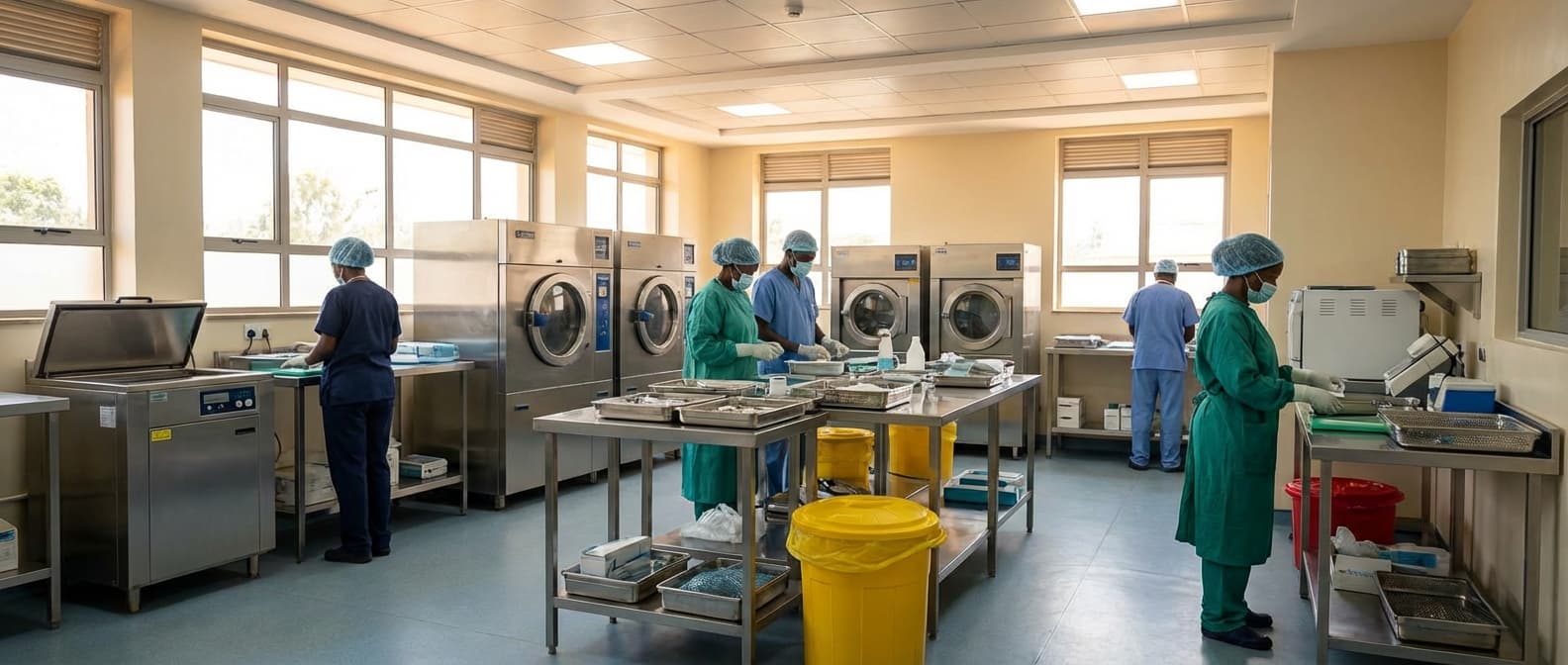
Medical Equipment Decontamination Service (Pre-Repair/Pre-Relocation) in Niger
Engineering Excellence & Technical Support
Medical Equipment Decontamination Service (Pre-Repair/Pre-Relocation) High-standard technical execution following OEM protocols and local regulatory frameworks.
Pathogen Eradication for Equipment Integrity
Our advanced decontamination protocols effectively eliminate all harmful pathogens (bacteria, viruses, fungi) from medical equipment prior to repair or relocation. This ensures the safety of technicians and recipients, preventing cross-contamination and preserving the functional integrity of critical medical devices.
Safe & Compliant Liquid Hazard Neutralization
We specialize in the safe and comprehensive neutralization of residual bodily fluids, chemical reagents, and other hazardous liquids often found on medical equipment. Our methods adhere to international safety standards, protecting personnel and the environment in Niger during the pre-service handling process.
Secure Transport-Ready Decontamination
Ensuring equipment is fully decontaminated and sealed prevents biological and chemical contamination during transit for repair or relocation. Our service provides peace of mind, guaranteeing that equipment arrives at its destination sterile and compliant, minimizing delays and risks associated with unauthorized biohazards.
What Is Medical Equipment Decontamination Service (Pre-repair/pre-relocation) In Niger?
Medical Equipment Decontamination Service (Pre-Repair/Pre-Relocation) in Niger refers to the process of rendering medical devices safe for subsequent handling, such as repair, maintenance, or relocation, by eliminating or reducing biological and chemical contaminants to acceptable levels. This service is critical for preventing the transmission of infectious agents between patients, healthcare professionals, and equipment, thereby safeguarding public health and ensuring operational continuity within healthcare facilities. The decontamination process adheres to established protocols and utilizes appropriate chemical agents or physical methods to achieve a state of reduced bioburden.
| Who Needs the Service | Typical Use Cases | Examples of Equipment |
|---|---|---|
| Hospitals and Clinics in Niger | Routine maintenance and repair of diagnostic and therapeutic medical devices. | Diagnostic imaging equipment (X-ray machines, ultrasound devices), patient monitoring systems, surgical instruments, laboratory analyzers. |
| Medical Equipment Manufacturers/Distributors | Preparation of devices for return to the manufacturer for repair or refurbishment. | Any medical device requiring specialized repair or servicing by the original equipment manufacturer (OEM). |
| Healthcare Facilities Undergoing Relocation or Renovation | Ensuring the safety and hygiene of medical equipment before moving it to a new location or after temporary storage. | All types of medical equipment that will be disconnected, transported, and reinstalled in a new or renovated space. |
| Outbreak Response Situations | Decontaminating equipment used in areas affected by infectious disease outbreaks before it can be safely reused or repaired. | Ventilators, infusion pumps, sterilization equipment that may have been exposed to highly infectious agents. |
| Third-Party Biomedical Engineering Service Providers | To ensure their technicians can safely work on returned or collected medical equipment. | Medical equipment that has been sent out for third-party repair or servicing. |
Key Aspects of Medical Equipment Decontamination Service (Pre-Repair/Pre-Relocation) in Niger
- Scope of Work: Encompasses the removal of gross soil, organic matter, and microbial contaminants from medical equipment surfaces and internal components. This can involve cleaning, disinfection, and, in some cases, sterilization depending on the equipment and its intended use.
- Regulatory Compliance: Adherence to national and international guidelines for medical device reprocessing and infection control, as applicable in Niger.
- Safety Protocols: Implementation of stringent safety measures for personnel involved in the decontamination process, including the use of personal protective equipment (PPE) and safe handling of decontamination agents.
- Documentation: Meticulous record-keeping of decontamination procedures, including equipment identification, date, personnel involved, and methods employed, to ensure traceability and accountability.
- Environmental Considerations: Responsible management and disposal of chemical waste generated during the decontamination process to minimize environmental impact.
- Quality Assurance: Verification of decontamination efficacy through appropriate testing or visual inspection, as per established protocols.
Who Needs Medical Equipment Decontamination Service (Pre-repair/pre-relocation) In Niger?
Medical equipment decontamination services, especially for pre-repair and pre-relocation needs in Niger, are crucial for ensuring patient safety, preventing cross-contamination, and maintaining the integrity of medical devices. These services are designed to remove biological contaminants, chemical residues, and other hazardous materials from medical equipment before they are handled by repair technicians or moved to a new location. This proactive approach is vital for infection control and operational efficiency within healthcare facilities. In Niger, where resources and specialized services might be limited, such decontamination is paramount, particularly for complex and reusable medical devices.
| Target Customer/Facility Type | Key Departments Requiring Service | Reasons for Decontamination (Pre-Repair/Pre-Relocation) | Types of Equipment Commonly Decontaminated |
|---|---|---|---|
| Hospitals (Public and Private) | Operating Rooms, Intensive Care Units (ICUs), Emergency Departments, Sterilization Units, Biomedical Engineering Departments | Preventing spread of infections to repair personnel and other patients during relocation. Ensuring equipment is safe for maintenance. Compliance with safety regulations. | Surgical instruments, endoscopes, anesthesia machines, ventilators, patient monitors, imaging equipment (e.g., ultrasound probes), infusion pumps. |
| Clinics and Health Centers | Outpatient Departments, Minor Procedure Rooms, Laboratory Sections | Safe handling for repairs or when consolidating services. Minimizing biohazard risks for staff. | Diagnostic tools (e.g., microscopes, centrifuges), minor surgical instruments, blood pressure monitors, thermometers. |
| Diagnostic Laboratories | Microbiology, Pathology, Hematology, Biochemistry Labs | Ensuring no biological or chemical contamination is transferred during repair or relocation, protecting lab personnel and preventing false test results. | Centrifuges, incubators, microscopes, spectrophotometers, PCR machines, automated analyzers. |
| Surgical Centers | Surgical Suites, Recovery Rooms | Critical for infection control. Decontamination is essential before any equipment leaves the surgical environment for repair or storage. | Surgical lights, operating tables, electrosurgical units, laparoscopic instruments, endoscopes. |
| Medical Equipment Repair and Maintenance Companies | Workshop/Service Centers | Protecting their technicians from infectious agents and hazardous materials. Ensuring a clean working environment for effective repairs. | All types of medical equipment they service, particularly those with direct patient contact or known bioburden. |
| Medical Equipment Suppliers and Distributors | Warehousing, Logistics, Installation Teams | Ensuring equipment being returned for warranty repair or being relocated to new facilities is clean and safe to handle, preventing cross-contamination in storage and during installation. | New equipment for installation, returned equipment for service, demo units. |
| Non-Governmental Organizations (NGOs) providing healthcare services | Mobile clinics, remote health posts, established health facilities | Often operate in challenging environments with limited infrastructure. Decontamination is vital for mobile units and equipment transferred between remote locations. | Portable diagnostic equipment, basic surgical kits, water purification systems with medical components, generators powering medical equipment. |
| Government Health Agencies | Ministry of Health Departments, Public Health Laboratories, National Medical Stores | Overseeing public health standards. Ensuring that all public healthcare facilities adhere to decontamination protocols before equipment repair or relocation to maintain national health standards. | Large-scale medical equipment for public hospitals, national laboratory equipment, essential medical supplies with integrated equipment. |
Target Customers and Departments for Medical Equipment Decontamination Service (Pre-Repair/Pre-Relocation) in Niger
- Hospitals (Public and Private)
- Clinics and Health Centers
- Diagnostic Laboratories
- Surgical Centers
- Medical Equipment Repair and Maintenance Companies
- Medical Equipment Suppliers and Distributors
- Non-Governmental Organizations (NGOs) providing healthcare services
- Government Health Agencies
Medical Equipment Decontamination Service (Pre-repair/pre-relocation) Process In Niger
The Medical Equipment Decontamination Service (Pre-Repair/Pre-Relocation) in Niger is a critical process ensuring that medical devices are safe to handle, transport, and repair. This service mitigates risks associated with biohazards, infectious agents, and chemical contaminants, protecting healthcare workers, repair technicians, and the general public. The workflow is designed to be systematic and traceable, ensuring compliance with safety standards and regulations.
| Stage | Description | Key Activities | Responsible Parties | Output/Outcome |
|---|---|---|---|---|
| The initial point of contact where the client (hospital, clinic, or manufacturer) expresses the need for decontamination services for medical equipment slated for repair or relocation. | Receive client request, gather details about the equipment (type, model, intended use, last known condition, any known contaminants), understand the reason for decontamination (repair, relocation, decommissioning). | Client (requester), Decontamination Service Provider (initial contact) | Understanding of the decontamination requirement, preliminary equipment assessment. |
| Based on the assessment, the service provider prepares a detailed quotation outlining the scope of work, methodology, timeline, and costs. Upon acceptance, a formal agreement is established. | Conduct a more detailed assessment (if necessary), determine appropriate decontamination methods, estimate resource needs (personnel, chemicals, equipment, time), prepare and submit a formal quotation, negotiate terms, finalize and sign a service agreement. | Decontamination Service Provider (quoting, negotiation), Client (review, acceptance) | Formal service agreement, agreed upon quotation. |
| Once the agreement is in place, the decontamination process is scheduled, and all necessary preparations are made for on-site execution. | Confirm client availability and site access, schedule the decontamination team, procure and prepare necessary decontamination agents and equipment (PPE, disinfectants, sterilization agents, containment systems), brief the decontamination team on the specific equipment and risks. | Decontamination Service Provider (scheduling, logistics, team briefing), Client (site access, coordination) | Confirmed schedule, prepared decontamination team and resources. |
| The core execution phase where the decontamination team performs the actual cleaning and sterilization of the medical equipment at the client's location or a designated secure facility. | Implement appropriate decontamination protocols based on equipment type and contaminants, perform thorough cleaning of surfaces, apply disinfectants or sterilization agents, ensure proper contact times and procedures, manage waste generated during the process, maintain a safe working environment. | Decontamination Service Provider (decontamination team) | Decontaminated medical equipment, controlled waste disposal. |
| Following successful decontamination, the service provider issues a certificate confirming the process and provides comprehensive documentation for the client's records. | Verify the efficacy of the decontamination process (if applicable, through sampling or visual inspection), complete a decontamination certificate detailing the equipment, methods used, date, and personnel, prepare a service report including any observations or recommendations, provide copies to the client. | Decontamination Service Provider (quality assurance, documentation team) | Decontamination certificate, service report. |
| The final stage where the client formally takes possession of the decontaminated equipment, now safe for repair, relocation, or further handling. | Present the decontamination certificate and service report to the client, obtain client sign-off on the completion of services, hand over the decontaminated equipment for its intended purpose (repair, relocation, etc.). | Decontamination Service Provider (completion), Client (acceptance) | Released and certified decontaminated medical equipment, finalized service transaction. |
Workflow Stages
- Inquiry & Assessment
- Quotation & Agreement
- Scheduling & Preparation
- On-Site Decontamination
- Certification & Documentation
- Equipment Release
Medical Equipment Decontamination Service (Pre-repair/pre-relocation) Cost In Niger
The cost of medical equipment decontamination services in Niger, particularly for pre-repair or pre-relocation purposes, can vary significantly due to several influencing factors. These factors determine the overall price a facility or individual will incur for ensuring medical devices are free from biological and chemical contaminants before being serviced or moved. It's important to note that while there isn't a standardized national price list, understanding these determinants allows for better budgeting and negotiation. The local currency in Niger is the West African CFA franc (XOF).
| Equipment Type/Complexity | Estimated Range (XOF) | Notes |
|---|---|---|
| Basic Instruments (Scalpels, Forceps - after standard use) | 5,000 - 15,000 | Manual cleaning with standard disinfectants. |
| Mid-Complexity Devices (e.g., Blood Pressure Monitors, Stethoscopes) | 10,000 - 30,000 | May involve more detailed cleaning and surface disinfection. |
| High-Complexity Devices (e.g., Small diagnostic tools, Endoscopes - non-invasive) | 25,000 - 75,000 | Requires careful handling and specialized cleaning agents. May involve partial disassembly for thoroughness. |
| Complex Medical Equipment (e.g., Ventilators, Dialysis Machines - requiring internal decontamination) | 50,000 - 200,000+ | Significantly higher due to specialized protocols, potential use of autoclaving or EtO if applicable, and extended time. Costs can escalate rapidly based on specific internal components and level of contamination. |
| Equipment with High Biohazard Exposure (e.g., after infectious disease use) | 75,000 - 300,000+ | Requires stringent protocols, specialized disinfectants, and disposal of contaminated materials. Price heavily dependent on the specific pathogen and extent of exposure. |
| Add-on for Urgent Service | 10,000 - 50,000+ | Applied as a percentage or flat fee for expedited service. |
Key Pricing Factors for Medical Equipment Decontamination in Niger
- {"title":"Type and Complexity of Equipment","description":"The more intricate and technologically advanced a piece of medical equipment, the more specialized and time-consuming the decontamination process will be. Devices with multiple components, sensitive electronics, or those that have been in contact with highly infectious agents will naturally command higher decontamination fees. For instance, a simple sterile instrument will be less expensive to decontaminate than a complex imaging machine or a ventilator."}
- {"title":"Level of Contamination","description":"The extent and nature of the contamination are critical. Equipment that has been exposed to common bacteria or viruses will require a standard decontamination protocol. However, if the equipment has been used in an outbreak of a highly contagious disease (e.g., Ebola, Lassa fever) or has been exposed to hazardous chemicals, a more rigorous and specialized decontamination procedure with potent disinfectants will be necessary, increasing the cost."}
- {"title":"Decontamination Method Employed","description":"Different decontamination methods have varying costs. These can range from manual cleaning with chemical disinfectants to more advanced techniques like autoclaving (steam sterilization), ethylene oxide sterilization (EtO), or even irradiation. The choice of method depends on the equipment's material compatibility and the required level of sterility. Autoclaving and EtO sterilization, for example, require specialized equipment and are generally more expensive than manual cleaning."}
- {"title":"Service Provider's Expertise and Reputation","description":"Established and reputable decontamination service providers with experienced technicians and certified protocols often charge higher rates. Their expertise ensures compliance with safety standards and effective elimination of contaminants, which is crucial for medical environments. Smaller, less experienced providers might offer lower prices but may not offer the same level of assurance."}
- {"title":"Location within Niger","description":"Costs can differ based on the geographical location within Niger. Services in major cities like Niamey or Zinder might have slightly higher operational costs and thus higher service fees compared to more remote areas, although specialized decontamination services might be less readily available in rural regions."}
- {"title":"Urgency and Turnaround Time","description":"If the decontamination service is needed on an urgent basis, with a quick turnaround time required for repair or relocation, providers may charge a premium for expedited service. Standard service times will be more cost-effective."}
- {"title":"Volume of Equipment","description":"For facilities needing to decontaminate a large quantity of medical equipment, bulk discounts may be negotiated. Conversely, decontaminating a single item might incur a minimum service charge."}
- {"title":"Consumables and Disinfectants Used","description":"The cost of specialized disinfectants, cleaning agents, personal protective equipment (PPE) for technicians, and other consumables used during the decontamination process will be factored into the final price."}
Affordable Medical Equipment Decontamination Service (Pre-repair/pre-relocation) Options
Ensuring medical equipment is thoroughly decontaminated before repair or relocation is crucial for patient safety, staff well-being, and preventing cross-contamination. This service not only adheres to regulatory standards but also safeguards the integrity of the equipment and the subsequent processes. Our Affordable Medical Equipment Decontamination Service offers flexible options designed to meet diverse needs and budgets, emphasizing value through bundled services and strategic cost-saving measures. We understand that healthcare facilities often operate under tight financial constraints, and our aim is to provide essential decontamination solutions without compromising on quality or efficacy.
| Cost-Saving Strategy | Description | Benefit |
|---|---|---|
| Volume Discounts | Achieve lower per-unit costs by bundling multiple decontamination services for a single facility or over a contractual period. | Significant savings on overall decontamination expenditure, predictable budgeting. |
| Scheduled Service Agreements | Pre-schedule regular decontamination services for high-use equipment or for routine preventative maintenance, ensuring timely service and often at a reduced rate. | Proactive risk management, enhanced equipment lifespan, cost predictability, potential for preferred scheduling. |
| Bundle Combinations | Combine different service packages (e.g., standard for minor repairs, enhanced for relocations) under a single agreement to leverage bundled pricing. | Maximized value by tailoring services to specific needs while still benefiting from package discounts. |
| Off-Peak Scheduling | For non-urgent decontamination needs, consider scheduling during off-peak hours or days to potentially access lower rates. | Reduced service costs without compromising essential decontamination. |
| Partnership Programs | Establish long-term partnerships for consistent decontamination needs, often leading to customized pricing and priority service. | Deepened cost efficiencies, dedicated support, and streamlined processes. |
| Client-Supplied Consumables (if applicable) | In some cases, facilities may opt to provide approved cleaning agents or specific consumables, which can reduce the service cost. | Direct reduction in service fees, leveraging existing procurement advantages. |
Value Bundles for Enhanced Decontamination Services
- {"title":"Standard Decontamination Package","description":"This foundational package includes surface cleaning and disinfection of non-critical areas of the medical equipment using EPA-approved disinfectants. Ideal for routine decontamination needs prior to minor repairs or standard relocations within the same facility."}
- {"title":"Enhanced Decontamination Package","description":"Goes beyond the standard by incorporating targeted disinfection of high-touch surfaces and accessible internal components (where applicable). This package is recommended for equipment that has been used in higher-risk patient care settings or before relocation to a different department."}
- {"title":"Comprehensive Decontamination & Bioburden Reduction Package","description":"Our most thorough offering, this package includes advanced disinfection techniques, specialized cleaning agents for specific biohazards, and where appropriate, mild sterilization methods for critical components. This is essential for equipment returning from external repairs, after known contamination events, or before relocation between facilities."}
- {"title":"Equipment-Specific Decontamination Bundles","description":"Tailored decontamination protocols and pricing for common medical equipment types such as imaging machines, patient monitors, surgical instruments, and laboratory equipment. These bundles are optimized for the specific cleaning challenges and requirements of each device."}
Verified Providers In Niger
Ensuring access to quality healthcare is paramount, and in Niger, identifying verified healthcare providers is crucial for receiving safe and effective treatment. Franance Health stands out as a premier organization dedicated to this mission, meticulously vetting and endorsing healthcare professionals and facilities. Their rigorous credentialing process guarantees that all listed providers meet stringent standards of expertise, ethical practice, and patient care. Choosing a Franance Health verified provider offers unparalleled peace of mind, assuring individuals that they are in capable and trustworthy hands, backed by a commitment to excellence in the Nigerien healthcare landscape.
| Credential Type | Verification Process | Benefits for Patients |
|---|---|---|
| Medical Doctor Certification | Verification of medical degree, specialization, board certifications, and a clean professional record. | Ensures access to highly qualified and specialized medical expertise for accurate diagnosis and treatment. |
| Nursing License and Competency | Confirmation of nursing degrees, valid licenses, and ongoing training in patient care protocols. | Guarantees skilled and compassionate nursing care, crucial for recovery and ongoing health management. |
| Specialized Clinic Accreditation | Assessment of facility infrastructure, equipment, hygiene standards, and staff qualifications for specific medical services (e.g., maternity, diagnostics). | Provides assurance of a safe and well-equipped environment for specialized medical needs. |
| Pharmacy and Medication Safety | Scrutiny of pharmacy licensing, drug sourcing practices, dispensing protocols, and pharmacist qualifications. | Ensures the availability of genuine medications dispensed by knowledgeable professionals, safeguarding against counterfeit or substandard drugs. |
| Ethical Practice Compliance | Review of patient feedback, disciplinary records, and adherence to a strict code of conduct. | Upholds patient rights and ensures that healthcare is delivered with integrity and respect. |
Why Franance Health Credentials Represent the Best Choice:
- Uncompromising Verification Standards: Franance Health employs a multi-faceted vetting system that goes beyond basic licensing, assessing qualifications, experience, continuous professional development, and adherence to ethical guidelines.
- Commitment to Patient Safety: Their primary focus is patient well-being. Verified providers have demonstrated a track record of safe practices and a dedication to minimizing risks.
- Enhanced Trust and Reliability: By providing a curated list of accredited professionals, Franance Health significantly reduces the guesswork for patients seeking care, fostering trust and confidence.
- Promotion of Best Practices: The credentialing process encourages healthcare providers to maintain and elevate their standards, leading to an overall improvement in the quality of healthcare services available.
- Access to Competent Professionals: Franance Health ensures that individuals gain access to healthcare practitioners who are not only skilled but also possess the latest knowledge and techniques in their respective fields.
Scope Of Work For Medical Equipment Decontamination Service (Pre-repair/pre-relocation)
This Scope of Work (SOW) outlines the requirements for providing medical equipment decontamination services. The primary objective is to ensure that medical equipment is rendered safe and free from biohazardous materials and chemical contaminants prior to undergoing repair or relocation. This process is critical for the safety of biomedical technicians, logistics personnel, and ultimately, patients.
| Technical Deliverable | Standard Specification | Description | Verification Method |
|---|---|---|---|
| Pre-Decontamination Assessment Report | ISO 13485:2016 (Quality Management Systems for Medical Devices) | Detailed report outlining the type of equipment, intended service (repair/relocation), identified potential contaminants (biological, chemical, radioactive), and risk assessment. Includes photographic evidence of the equipment's condition. | Review of assessment data, photographic evidence, and confirmation of risk category. |
| Decontamination Protocol | CDC Guidelines for Disinfection and Sterilization in Healthcare Facilities | A documented protocol specific to the identified equipment and contaminants. Includes choice of cleaning agents, disinfectants, contact times, and procedures for handling hazardous waste. Must comply with all local, state, and federal regulations. | Audit of protocol against applicable guidelines and regulations. Review of training records for personnel implementing the protocol. |
| Cleaning and Disinfection Records | OSHA Hazard Communication Standard (29 CFR 1910.1200) | Record of each decontamination procedure performed. Includes date, time, technician name, equipment ID, decontamination agents used, lot numbers, expiration dates, contact times, and any deviations from the protocol. Includes SDS for all chemicals used. | Cross-referencing of records with equipment logs and decontamination protocols. Verification of chemical compatibility with equipment materials. |
| Bioburden Testing Results (if applicable) | ASTM E2197-11 (Standard Test Method for Determining the Effectiveness of Disinfectants Against Fungi) | For high-risk equipment or when mandated. Results of microbial testing performed on representative surfaces after decontamination to confirm the absence of viable microorganisms. | Review of accredited laboratory test reports. Comparison of results against established acceptable limits. |
| Chemical Residue Analysis Report (if applicable) | EPA Method 8270 (Semivolatile Organic Compounds by Gas Chromatography–Mass Spectrometry) | For equipment that utilized hazardous chemicals. Analysis of representative surfaces to confirm the absence of harmful chemical residues. | Review of accredited laboratory test reports. Comparison of results against established safety thresholds. |
| Decontamination Certificate | ISO 9001:2015 (Quality Management Systems) | A formal certificate issued for each decontaminated equipment item. Confirms that the decontamination process was performed in accordance with the approved protocol and relevant standards. Includes equipment ID, date of service, technician signature, and company stamp. | Review of all supporting documentation (reports, records) to ensure completeness and accuracy. Validation of certificate format and content. |
| Packaging and Labeling for Transit | DOT Hazardous Materials Regulations (49 CFR Parts 100-185) | Equipment must be securely packaged in appropriate containment to prevent the release of any residual contaminants during transport. Packaging must be clearly labeled with appropriate hazard symbols and warnings. | Visual inspection of packaging integrity and labeling compliance. Verification against transportation regulations. |
Key Stages of Decontamination Service
- Initial Assessment and Hazard Identification
- Containment and Isolation
- Cleaning and Disinfection
- Decontamination Verification
- Documentation and Certification
- Safe Packaging and Handover
Service Level Agreement For Medical Equipment Decontamination Service (Pre-repair/pre-relocation)
This Service Level Agreement (SLA) outlines the response times and uptime guarantees for the Medical Equipment Decontamination Service provided by [Your Company Name] (hereinafter referred to as "Provider") for pre-repair and pre-relocation decontamination of medical equipment for [Client Name] (hereinafter referred to as "Client"). This SLA is effective from [Start Date] to [End Date].
| Service Type | Request Type | Response Time Target | Uptime Guarantee |
|---|---|---|---|
| Medical Equipment Decontamination (Pre-Repair/Pre-Relocation) | Emergency Request | Within 2 Business Hours of notification | 98% availability during Business Hours for scheduling and dispatch |
| Medical Equipment Decontamination (Pre-Repair/Pre-Relocation) | Standard Request | Within 8 Business Hours of notification | 95% availability during Business Hours for scheduling and dispatch |
Definitions
- Decontamination: The process of reducing or eliminating microbial contamination to a safe level, rendering medical equipment safe for handling, repair, or relocation.
- Response Time: The maximum time allowed for the Provider to acknowledge a decontamination request and initiate the service process (e.g., dispatching a technician, confirming scheduled service).
- Uptime Guarantee: A commitment to the availability of the decontamination service, ensuring that the Client can access the service when needed within the defined parameters.
- Business Hours: [Specify your business hours, e.g., Monday to Friday, 9:00 AM to 5:00 PM Local Time, excluding public holidays].
- Emergency Request: A decontamination request for equipment that poses an immediate risk to patient safety or critical operational continuity.
- Standard Request: A decontamination request that does not meet the criteria for an Emergency Request.
Frequently Asked Questions

Ready when you are
Let's scope your Medical Equipment Decontamination Service (Pre-Repair/Pre-Relocation) in Niger project in Niger.

Scaling healthcare logistics and technical systems across the entire continent.