
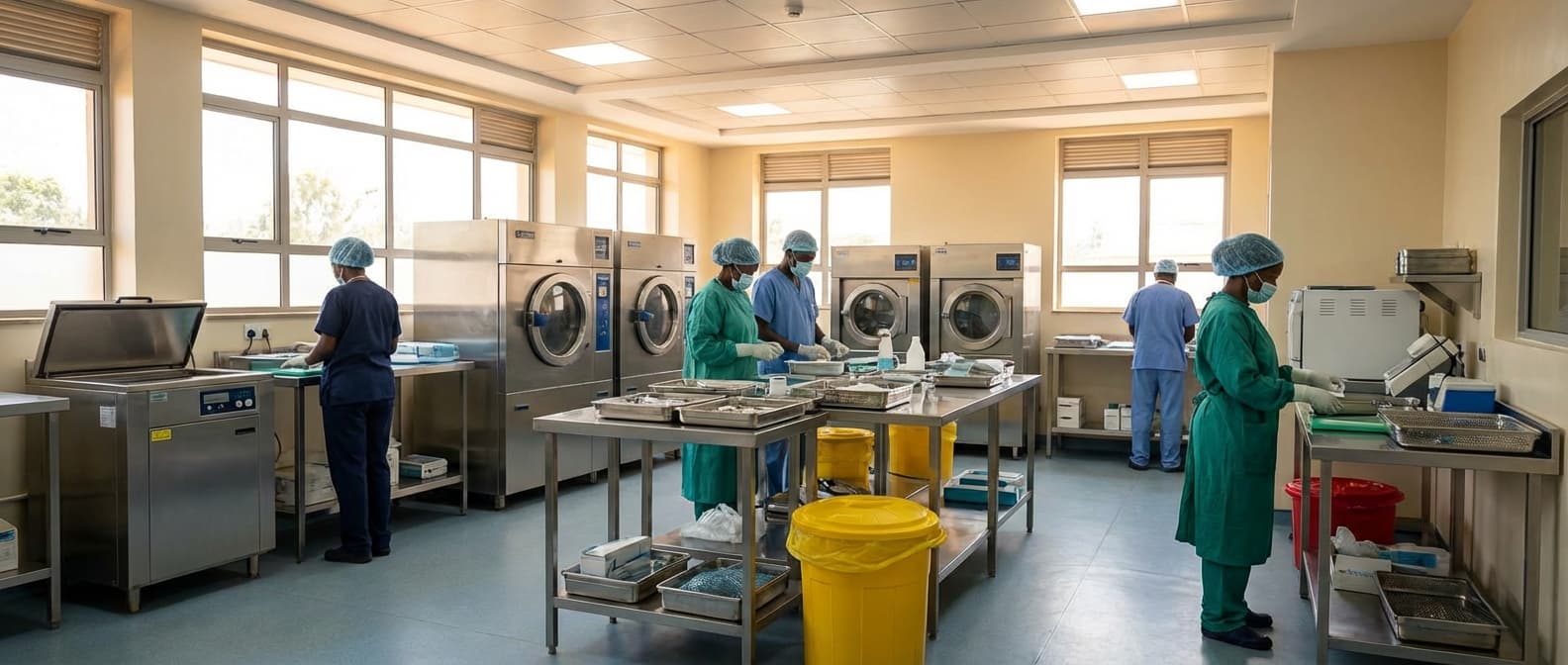
Infection-Control Readiness Support Service for Reusable Equipment in Niger
Engineering Excellence & Technical Support
Infection-Control Readiness Support Service for Reusable Equipment High-standard technical execution following OEM protocols and local regulatory frameworks.
Centralized Sterilization Unit (CSU) Optimization
Implementing a standardized, robust Centralized Sterilization Unit (CSU) protocol for reusable medical equipment across Niger's healthcare facilities. This includes enhanced infrastructure, validated sterilization processes (steam, chemical), and rigorous quality control checks to ensure the eradication of pathogens and prevent healthcare-associated infections (HAIs).
Digital Tracking & Traceability System
Deploying a digital system to meticulously track the lifecycle of all reusable medical equipment. This system will monitor sterilization cycles, maintenance schedules, and user accountability, providing real-time data for infection control risk assessment and proactive intervention, significantly reducing the risk of compromised equipment re-entry into circulation.
Advanced Training & Capacity Building
Developing and delivering comprehensive, hands-on training programs for healthcare workers and technicians on the latest best practices in reprocessing and sterilization of reusable equipment. This program will focus on practical application, competency assessment, and continuous professional development to build a highly skilled and informed workforce dedicated to infection prevention.
What Is Infection-control Readiness Support Service For Reusable Equipment In Niger?
Infection-Control Readiness Support Service for Reusable Equipment (ICR-SRE) in Niger is a comprehensive programmatic intervention designed to ensure healthcare facilities maintain robust infection prevention and control (IPC) practices specifically related to the sterilization, disinfection, and safe handling of reusable medical devices. This service addresses critical gaps in infrastructure, training, consumables, and adherence to established protocols, thereby minimizing the risk of healthcare-associated infections (HAIs) transmitted through contaminated equipment. The core objective is to enhance the capacity of healthcare providers and institutions to safely reprocess reusable instruments and devices, ensuring their efficacy and patient safety.
| Who Needs ICR-SRE? | Typical Use Cases |
|---|---|
All public and private healthcare facilities in Niger, particularly:
| A surgical team utilizing sterilized instruments for a procedure. A breakdown in the autoclave's steam circulation system necessitates immediate technical support for repair to resume safe surgical practices. Frontline healthcare workers at a rural health center lack adequate disinfectant supplies and training for reprocessing reusable syringes and speculums. ICR-SRE provides necessary consumables and trains staff on proper immersion disinfection techniques and frequency. A hospital's central sterile supply department (CSSD) is identified as having outdated sterilization equipment with poor record-keeping for sterilization cycles. ICR-SRE facilitates the assessment, potential upgrade, and retraining on proper loading, monitoring, and documentation of sterilization processes using chemical indicators and biological indicators. Dental clinics requiring the sterilization of dental instruments like probes, mirrors, and forceps. ICR-SRE ensures the availability of appropriate chemical disinfectants and validated sterilization methods for these critical items. Community health workers performing minor procedures or examinations requiring sterile or disinfected equipment (e.g., wound care, injections). ICR-SRE supports the provision of basic disinfection kits and training on their safe use and storage. |
Key Components of ICR-SRE:
- Assessment of existing IPC infrastructure and practices for reusable equipment.
- Provision of essential supplies and consumables for sterilization and disinfection (e.g., disinfectants, detergents, sterilization wraps, indicators).
- Installation, maintenance, and repair of sterilization and disinfection equipment (e.g., autoclaves, washer-disinfectors, chemical sterilizers).
- Development and implementation of Standard Operating Procedures (SOPs) for reprocessing reusable equipment, aligned with national and international guidelines.
- Training and capacity building for healthcare personnel involved in equipment reprocessing (e.g., nurses, technicians, sterilization staff).
- Supervision and mentorship to ensure adherence to reprocessing protocols and quality assurance.
- Establishment of monitoring and evaluation mechanisms to track the effectiveness of the service and identify areas for improvement.
- Waste management integration for biohazardous waste generated during the reprocessing cycle.
Who Needs Infection-control Readiness Support Service For Reusable Equipment In Niger?
This document outlines the critical need for Infection-Control Readiness Support Services for reusable medical equipment in Niger. The services aim to enhance the safety and efficacy of healthcare delivery by ensuring that reusable equipment is consistently and correctly sterilized, disinfected, and maintained, thereby preventing healthcare-associated infections (HAIs). The target customers are primarily healthcare facilities and departments within Niger that utilize reusable medical equipment and are committed to upholding stringent infection control standards.
| Healthcare Facility Type | Key Departments Requiring Support | Rationale for Need |
|---|---|---|
| Public Hospitals (National, Regional, District) | Central Sterile Supply Department (CSSD), Operating Theatres, Maternity Wards, Intensive Care Units (ICUs), Emergency Departments, Outpatient Clinics, Laboratories | High volume of reusable equipment, diverse range of procedures, resource constraints often impacting dedicated infection control expertise and infrastructure. |
| Private Hospitals and Clinics | Sterilization Units, Surgical Departments, Gynecology/Obstetrics, Dentistry, Endoscopy Units | Varying levels of infrastructure and training, need for standardized protocols, ensuring compliance with national guidelines and international best practices. |
| Non-Governmental Organization (NGO) Clinics and Health Centers | Minor Procedure Rooms, Consultation Rooms, Basic Surgical Units | Often operate in remote or underserved areas, may lack specialized training and equipment for effective reprocessing, critical for patient safety in vulnerable populations. |
| Specialized Medical Centers (e.g., Tuberculosis Centers, HIV Clinics) | Diagnostic Labs, Treatment Rooms, Procedure Areas | Specific reusable equipment used in specialized diagnostics and treatments requires meticulous handling and reprocessing to prevent transmission of infectious agents. |
| Maternal and Child Health Centers | Delivery Rooms, Neonatal Units, Pediatric Wards | High-risk areas for infections; critical for the health of mothers and newborns, requiring robust sterilization of instruments and equipment. |
| Central Medical Stores/Warehousing (for equipment management) | Equipment Maintenance and Distribution Units | Ensuring that equipment distributed for use is properly maintained and ready for safe reprocessing at the facility level. |
Target Customers and Departments
- Primary Target Customers: Healthcare Facilities
- Secondary Target Customers: Ministry of Health and Partner Organizations
Infection-control Readiness Support Service For Reusable Equipment Process In Niger
This service focuses on bolstering infection-control readiness for the reusable medical equipment process in Niger. It ensures that facilities have the necessary protocols, training, and resources to safely clean, disinfect, and sterilize reusable equipment, thereby preventing healthcare-associated infections.
| Stage | Description | Key Activities | Deliverables | Responsible Party |
|---|---|---|---|---|
| Initial Inquiry and Needs Assessment | Healthcare facility or Ministry of Health expresses interest and outlines initial challenges. | Initial contact, clarification of needs, preliminary scope definition. | Confirmation of interest, basic understanding of facility's context. | Client (Facility/MoH), Service Provider |
| Service Proposal and Agreement | Service provider develops a detailed proposal outlining services, timelines, costs, and expected outcomes. | Proposal development, cost estimation, contract negotiation, service agreement signing. | Signed Service Agreement, detailed project plan. | Service Provider, Client |
| On-site Assessment and Baseline Data Collection | Comprehensive evaluation of current reusable equipment processes, infrastructure, and staffing. | Facility walkthroughs, interviews with staff, observation of processes, review of existing protocols, data collection (e.g., infection rates, equipment availability, staff competency). | Baseline assessment report, identified gaps and challenges. | Service Provider Team |
| Development of Customized Action Plan | Creation of a tailored strategy to address identified weaknesses and improve infection control. | Analysis of baseline data, development of specific recommendations, creation of detailed step-by-step plan, stakeholder consultations. | Approved Customized Action Plan with specific objectives, timelines, and responsibilities. | Service Provider Team, Client Stakeholders |
| Training and Capacity Building | Equipping healthcare workers with the knowledge and skills to implement best practices. | Development of training materials, delivery of workshops on cleaning, disinfection, sterilization, waste management, and infection control principles, practical demonstrations, competency assessments. | Trained personnel, enhanced staff knowledge and skills, training reports. | Service Provider Trainers, Healthcare Staff |
| Supply Chain Support and Equipment Procurement | Ensuring availability of necessary consumables, cleaning agents, and equipment. | Needs assessment for supplies, identification of reliable suppliers, assistance with procurement processes, recommendations for equipment upgrades or maintenance. | Recommendations for supply chain improvements, facilitated procurement processes (if applicable). | Service Provider, Client Procurement Department |
| Implementation and Monitoring | Putting the action plan into practice and tracking progress. | Rollout of new protocols, provision of on-site mentorship, regular data collection and analysis, identification and resolution of implementation challenges. | Adherence to new protocols, improved equipment reprocessing quality, progress monitoring reports. | Client Staff, Service Provider Mentors |
| Evaluation and Reporting | Assessing the impact of the intervention and documenting achievements. | Post-implementation assessment, comparison of baseline and end-line data, analysis of key performance indicators (KPIs), report generation. | Final evaluation report detailing outcomes, impact, and lessons learned. | Service Provider Team |
| Ongoing Support and Follow-up | Ensuring sustainability of improvements and addressing any emerging issues. | Periodic follow-up visits, remote support, refresher training as needed, development of sustainability plans. | Sustained improved practices, mechanisms for continuous quality improvement. | Service Provider, Client Facility Management |
Workflow: Infection-Control Readiness Support Service for Reusable Equipment Process in Niger
- Initial Inquiry and Needs Assessment
- Service Proposal and Agreement
- On-site Assessment and Baseline Data Collection
- Development of Customized Action Plan
- Training and Capacity Building
- Supply Chain Support and Equipment Procurement
- Implementation and Monitoring
- Evaluation and Reporting
- Ongoing Support and Follow-up
Infection-control Readiness Support Service For Reusable Equipment Cost In Niger
The cost of infection-control readiness support services for reusable medical equipment in Niger is influenced by several key pricing factors. These services are crucial for ensuring that reusable instruments are properly cleaned, disinfected, and sterilized, thereby preventing the transmission of healthcare-associated infections. The overall cost can vary significantly based on the scope of services, the types and volume of equipment, the location within Niger, and the specific expertise of the service provider. Local currency is the primary medium of exchange, and all pricing will be discussed in terms of Nigerien Franc (XOF).
| Service Component | Estimated Price Range (XOF) | Notes |
|---|---|---|
| Basic Training Workshop (1-2 days, on-site for ~20 staff) | 150,000 - 300,000 | Covers core principles of reusable equipment infection control, local context considered. |
| Development of Standard Operating Procedures (SOPs) | 200,000 - 500,000 | Per facility, depending on the number of SOPs and complexity of equipment. |
| Comprehensive Audit and Gap Analysis | 250,000 - 750,000 | For a medium-sized health facility. Includes on-site assessment and report. |
| Ongoing Monthly Support (Consultation & Remote Monitoring) | 100,000 - 300,000 | For continuous guidance and troubleshooting. May be lower for remote support. |
| Full-Scale Implementation Support (e.g., setting up a CSSD) | 1,000,000 - 5,000,000+ | Highly variable; depends on the scale, infrastructure needs, and duration. This is a broad estimate for consultancy and planning. |
| Specialized Training (e.g., for specific sterilization technologies) | 50,000 - 150,000 per participant | For highly technical or niche training modules. |
Key Pricing Factors for Infection-Control Readiness Support Services in Niger
- {"title":"Scope of Services:","description":"The breadth of support provided is a primary cost driver. This can range from basic training and guideline development to comprehensive implementation, ongoing monitoring, and auditing of infection control protocols for reusable equipment."}
- {"title":"Equipment Volume and Type:","description":"The number of reusable medical devices that require support, along with their complexity and the specific sterilization/disinfection methods needed, will directly impact costs. High-volume facilities or those with specialized equipment (e.g., complex surgical instruments, endoscopes) will incur higher expenses."}
- {"title":"Geographic Location:","description":"Service delivery costs can differ based on the accessibility and logistical challenges within different regions of Niger. Services in major urban centers like Niamey might be more readily available and potentially less expensive due to economies of scale compared to remote rural areas where transportation and accommodation costs for personnel increase."}
- {"title":"Provider Expertise and Reputation:","description":"Highly experienced and specialized infection control consultants or organizations may command higher fees. Their proven track record and ability to deliver effective solutions contribute to their pricing."}
- {"title":"Training and Capacity Building:","description":"The extent of training provided to healthcare staff on proper cleaning, disinfection, and sterilization techniques is a significant component. The duration, format (e.g., on-site, virtual), and number of participants will influence the cost."}
- {"title":"Equipment and Consumables:","description":"While the service is for reusable equipment, the support might include recommendations, procurement assistance, or even provision of essential cleaning agents, disinfectants, and sterilization consumables. Costs associated with these can be factored in."}
- {"title":"Monitoring and Evaluation:","description":"Ongoing monitoring of practices, auditing of processes, and reporting on infection control indicators are often part of comprehensive support packages. The frequency and depth of these activities impact pricing."}
- {"title":"Duration of Engagement:","description":"Short-term, project-based support will have different pricing structures compared to long-term, retainer-based services that offer continuous oversight and problem-solving."}
Affordable Infection-control Readiness Support Service For Reusable Equipment Options
Our Affordable Infection-Control Readiness Support Service for Reusable Equipment offers a comprehensive and cost-effective solution for healthcare facilities. We understand the critical need for robust infection control protocols, especially with the increasing reliance on reusable medical devices. This service is designed to ensure your equipment is consistently safe, compliant, and operational, minimizing risks and maximizing your investment in reusable assets. We achieve this through flexible value bundles and strategically implemented cost-saving measures.
| Cost-Saving Strategy | Description | Benefit |
|---|---|---|
| Predictable Budgeting | Fixed monthly or annual fees for chosen value bundles ensure consistent and predictable operational costs for infection control. | Avoids unexpected expenses related to equipment failures, re-processing errors, or compliance issues. |
| Proactive Maintenance & Early Issue Detection | Regular inspections and validation testing identify potential problems before they lead to equipment downtime or patient safety risks. | Reduces costly emergency repairs and extends the lifespan of your reusable equipment. |
| Optimized Re-processing Efficiency | Our expertise in best practices for reusable equipment reprocessing helps streamline workflows and minimize waste. | Saves on consumables, labor, and reprocessing cycle times. |
| Reduced Staff Training Overhead | Access to our knowledge base and optional training modules equips your staff with essential infection control knowledge, reducing the need for extensive in-house training development. | Frees up internal resources and ensures staff are up-to-date with current best practices. |
| Minimized Compliance Penalties | Our support helps ensure adherence to regulatory standards and guidelines, reducing the risk of fines or sanctions. | Protects your facility from significant financial and reputational damage. |
| Bulk Purchasing & Preferred Vendor Access (Optional) | For Comprehensive Bundle clients, we can leverage our network for potential discounts on cleaning agents, disinfectants, and replacement parts. | Further reduces direct material costs for infection control supplies. |
Value Bundles to Suit Your Needs
- {"title":"Essentials Bundle","description":"Our foundational package, perfect for smaller practices or facilities with basic reusable equipment needs. Includes routine cleaning and inspection support, basic documentation assistance, and access to our knowledge base."}
- {"title":"Advanced Bundle","description":"Ideal for medium-sized facilities or those with a diverse range of reusable equipment. Builds on the Essentials Bundle with enhanced validation testing, advanced troubleshooting support, and customized training modules."}
- {"title":"Comprehensive Bundle","description":"Our premium offering for larger hospitals or facilities with complex reusable equipment inventories. Includes all features of the Advanced Bundle plus proactive equipment lifecycle management, specialized compliance audits, and dedicated account management."}
- {"title":"Customizable Add-ons","description":"Tailor your support further with specific services like on-site staff training, advanced sterilization monitoring, or emergency equipment readiness planning."}
Verified Providers In Niger
Finding reliable and qualified healthcare providers is paramount for individuals seeking quality medical care, especially in regions where access to verified services can be challenging. In Niger, a country undergoing continuous development in its healthcare infrastructure, the identification of trusted healthcare professionals and facilities is a critical concern. Franance Health has emerged as a leading organization dedicated to ensuring that individuals can access verifiable and competent healthcare services. Their rigorous credentialing process and commitment to transparency make them a cornerstone for locating the best providers in Niger.
| Provider Type | Franance Health Verified Benefits | What it Means for Patients |
|---|---|---|
| Hospitals & Clinics | Adherence to international safety standards, documented operational protocols, and qualified medical staff. | Access to well-equipped facilities with trained personnel, ensuring a higher standard of care and reduced risk. |
| Specialist Physicians | Verification of medical degrees, board certifications, specializations, and a clean professional record. | Confidence in receiving expert diagnosis and treatment from genuinely qualified doctors in their respective fields. |
| General Practitioners | Confirmation of medical licenses and adherence to ethical practice guidelines. | Reliable primary healthcare services from trusted professionals capable of managing common health issues and referrals. |
| Diagnostic Laboratories | Validation of equipment calibration, quality control measures, and qualified laboratory technicians. | Accurate and dependable test results, crucial for effective diagnosis and treatment planning. |
| Pharmacies | Verification of drug sourcing, storage protocols, and licensed pharmacists. | Assurance of receiving genuine and properly stored medications, safeguarding against counterfeit or substandard drugs. |
Why Franance Health Credentials Matter:
- Rigorous Vetting Process: Franance Health employs a multi-faceted approach to verify the qualifications, licenses, and ethical standing of healthcare professionals and institutions. This includes checking medical degrees, specializations, board certifications, and any disciplinary actions.
- Commitment to Quality and Safety: The credentialing standards set by Franance Health are designed to uphold the highest levels of patient care, safety protocols, and ethical practices within the healthcare sector.
- Enhanced Patient Confidence: By presenting a clear and verifiable mark of approval, Franance Health credentials empower patients to make informed decisions about their healthcare, fostering trust and reducing anxiety associated with seeking medical attention.
- Support for Healthcare Excellence: Franance Health's work not only benefits patients but also encourages healthcare providers to maintain and elevate their professional standards, contributing to the overall improvement of healthcare delivery in Niger.
- Access to Specialized Care: Franance Health's network often includes specialists and facilities equipped to handle a wide range of medical needs, ensuring patients can find the specific care they require.
Scope Of Work For Infection-control Readiness Support Service For Reusable Equipment
This Scope of Work (SOW) outlines the services to be provided for Infection-Control Readiness Support, specifically focusing on reusable medical equipment. The objective is to ensure that healthcare facilities have robust processes, trained personnel, and appropriate infrastructure in place to effectively manage the cleaning, disinfection, and sterilization of reusable medical equipment, thereby minimizing the risk of healthcare-associated infections (HAIs). The service will encompass assessment, planning, implementation, and ongoing support, with a strong emphasis on technical deliverables and adherence to standard specifications.
| Technical Deliverable | Standard Specification / Reference | Description | Key Activities |
|---|---|---|---|
| Infection Control Readiness Assessment Report | ISO 13485:2016, FDA 21 CFR Part 820, CDC Guidelines, Relevant National Standards | A comprehensive report detailing the current state of infection control practices for reusable equipment, identifying gaps, risks, and areas for improvement. | Site visits, interviews with staff, review of existing documentation, observation of processes, equipment inventory. |
| Standard Operating Procedures (SOPs) for Cleaning, Disinfection, and Sterilization | AAMI ST79: Comprehensive Guide to Sterilization, AAMI TIR34: Water for reprocessing medical devices, Manufacturer's Instructions for Use (IFU), Relevant national and international guidelines (e.g., WHO, national health ministries) | Detailed, step-by-step SOPs for the entire lifecycle of reusable equipment processing, including pre-cleaning, manual cleaning, automated cleaning, high-level disinfection (HLD), sterilization (e.g., steam, EtO, H2O2), and storage. | Process mapping, hazard identification, SOP drafting, validation of cleaning efficacy, review and approval by facility stakeholders. |
| Staff Training Materials and Competency Assessment Tools | Principles of Aseptic Technique, Microbiology basics, Chemical safety, Equipment operation manuals | Educational materials (presentations, handouts) and assessment tools (quizzes, practical evaluations) to ensure staff understand and can perform reprocessing tasks correctly and safely. | Curriculum development, content creation, train-the-trainer sessions, competency evaluation frameworks. |
| Equipment and Consumables Recommendation Report | Manufacturer specifications, FDA cleared/CE marked devices, Environmental impact assessments | A report recommending appropriate cleaning, disinfection, and sterilization equipment, as well as chemical agents and consumables, based on facility needs, throughput, and budget. | Needs analysis, market research, evaluation of performance data, cost-benefit analysis. |
| Validation Protocols for Cleaning and Sterilization Processes | ISO 17665 (Steam Sterilization), ISO 11135 (EtO Sterilization), ISO 14937 (General Requirements for Sterilization of Health Care Products), Manufacturer's IFU | Protocols for validating the effectiveness of cleaning and sterilization processes to ensure they consistently achieve the intended level of microbial reduction. | Protocol development, coordination of validation testing, analysis of results, documentation of validation reports. |
| Quality Assurance and Monitoring Plan | Statistical Process Control (SPC) principles, Auditing standards, Regulatory compliance frameworks | A plan outlining methods for ongoing monitoring, auditing, and quality control of reusable equipment reprocessing, including performance indicators and corrective action procedures. | Development of KPIs, audit checklists, root cause analysis frameworks, continuous improvement strategies. |
| Final Project Report and Recommendations | Project management standards, Reporting guidelines | A comprehensive report summarizing the project's activities, outcomes, and providing recommendations for sustained infection control readiness. | Data analysis, report writing, presentation of findings. |
Key Service Areas
- Assessment of Current Infection Control Practices for Reusable Equipment
- Development of Standard Operating Procedures (SOPs) for Cleaning, Disinfection, and Sterilization
- Training and Competency Assessment of Staff Involved in Reusable Equipment Processing
- Review and Recommendation of Equipment and Consumables
- Implementation Support and Quality Assurance
- Development of Monitoring and Auditing Mechanisms
- Documentation and Reporting
Service Level Agreement For Infection-control Readiness Support Service For Reusable Equipment
This Service Level Agreement (SLA) outlines the response times and uptime guarantees for the Infection-Control Readiness Support Service for Reusable Equipment. This service ensures that critical reusable medical equipment is maintained in a state of readiness with appropriate infection control protocols in place. The scope of this SLA covers technical support, equipment validation, and preventative maintenance related to infection control aspects of reusable equipment.
| Service Component | Priority Level | Response Time Guarantee | Uptime Guarantee | Notes |
|---|---|---|---|---|
| 24/7 Emergency Support for Critical Equipment Failure impacting Infection Control | Critical | 15 minutes acknowledgment, 1 hour commencement of work | 99.5% (for validated equipment) | Applies to equipment failure that directly compromises infection control and patient safety. Support provided 24/7/365. |
| Support for Non-Critical Equipment Protocol Deviations or Malfunctions | High | 1 hour acknowledgment, 4 hours commencement of work | 98.0% (for validated equipment) | Applies to issues that do not immediately compromise patient safety but require attention within the standard workday. Support provided during standard business hours (8 AM - 6 PM, Mon-Fri). |
| Scheduled Preventative Maintenance and Validation | Scheduled | N/A (Scheduled in advance) | N/A (Planned downtime excluded from uptime calculations) | Advance notification of at least 7 days will be provided for all scheduled maintenance and validation activities. Uptime is calculated excluding these planned events. |
| Routine Infection Control Protocol Audits and Compliance Checks | Routine | N/A (Scheduled in advance) | N/A | These are proactive measures to ensure ongoing readiness and are scheduled in collaboration with the client. |
Key Service Components and Definitions
- Reusable Equipment: Medical devices that are designed to be used on more than one patient and require cleaning, disinfection, and/or sterilization between uses.
- Infection-Control Readiness: The state where reusable equipment is compliant with all relevant infection control standards, guidelines, and internal protocols, and is available for immediate use when required.
- Support Request: A formal notification from the client requesting assistance with an issue related to infection-control readiness of reusable equipment. This includes technical malfunctions, protocol deviations, or requests for validation.
- Critical Equipment: Reusable equipment whose failure or unavailability poses an immediate risk to patient safety or disrupts essential clinical services.
- Uptime Guarantee: The percentage of time that critical reusable equipment is confirmed to be in an infection-control ready state, excluding scheduled maintenance and planned downtime.
- Response Time: The maximum time allowed for the support team to acknowledge and begin addressing a reported support request.
- Resolution Time: The maximum time allowed to fully resolve a reported support request.
Frequently Asked Questions

Ready when you are
Let's scope your Infection-Control Readiness Support Service for Reusable Equipment in Niger project in Niger.

Scaling healthcare logistics and technical systems across the entire continent.