
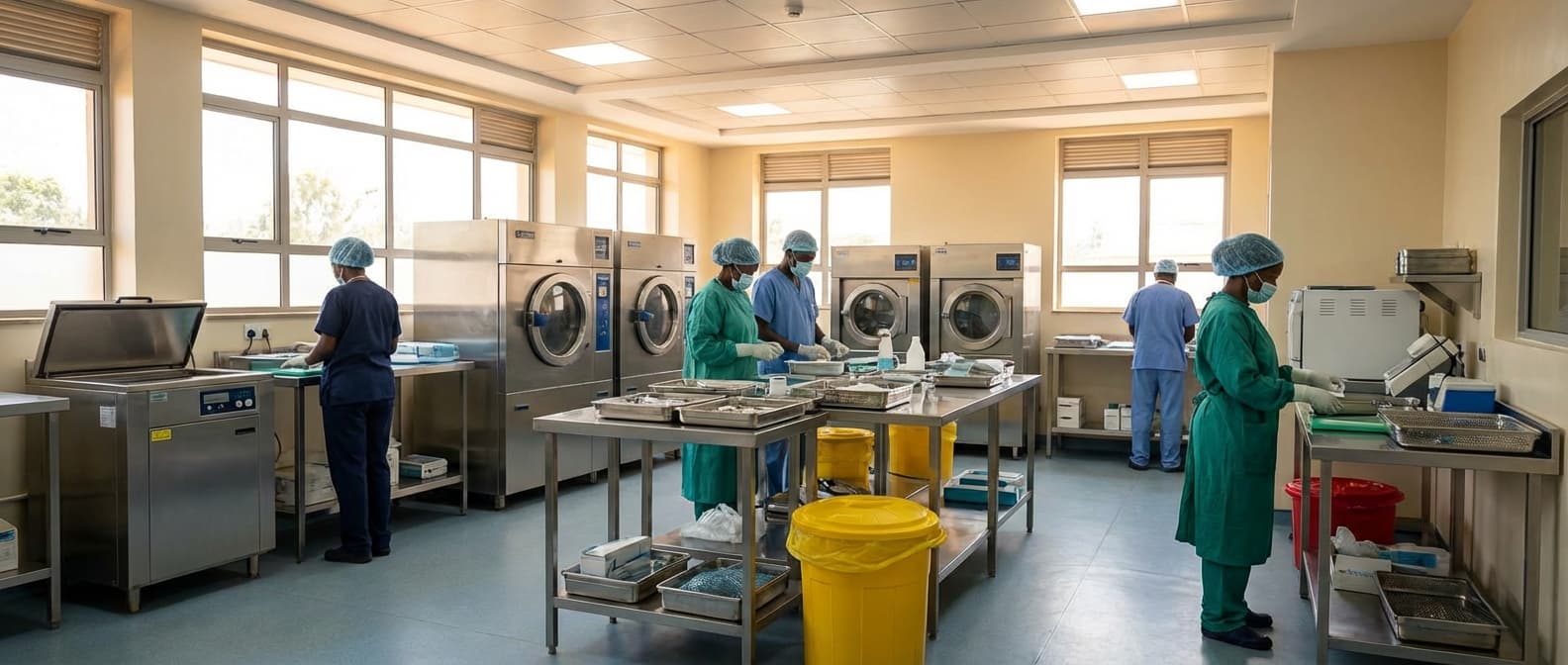
Endoscope Reprocessing Equipment Support Service in Niger
Engineering Excellence & Technical Support
Endoscope Reprocessing Equipment Support Service High-standard technical execution following OEM protocols and local regulatory frameworks.
Rapid On-Site Repair & Maintenance
We provide swift and efficient on-site repair and preventative maintenance services for all your endoscope reprocessing equipment across Niger. Our certified technicians minimize downtime, ensuring your critical sterilization processes remain uninterrupted.
Authentic Spare Parts Supply
Access a reliable supply of genuine, high-quality spare parts for your endoscope reprocessing equipment. We maintain a localized inventory in Niger, guaranteeing timely delivery and the integrity of your reprocessing systems.
Expert Technical Consultation & Training
Benefit from our expert technical support and tailored training programs for your staff. We empower your healthcare professionals in Niger with the knowledge to operate and maintain reprocessing equipment optimally, adhering to the highest safety standards.
What Is Endoscope Reprocessing Equipment Support Service In Niger?
Endoscope reprocessing equipment support service in Niger refers to the provision of specialized technical assistance, maintenance, and repair for automated endoscope reprocessors (AERs) and associated equipment used in medical facilities. This service is critical for ensuring the safety, efficacy, and longevity of these complex devices, which are vital for preventing the transmission of healthcare-associated infections (HAIs) through endoscopes. The service encompasses preventive maintenance, diagnostic troubleshooting, emergency repairs, spare parts management, calibration, and operator training, all delivered within the geographical context of Niger. It is essential for healthcare institutions that utilize flexible endoscopes for diagnostic and therapeutic procedures, such as gastroenterology, pulmonology, and urology.
| Who Needs the Service | Typical Use Cases | Significance in Niger |
|---|---|---|
| Hospitals and Tertiary Care Centers | Reprocessing flexible endoscopes (gastroscopes, colonoscopes, bronchoscopes, cystoscopes) used in diagnostic and surgical procedures. | Crucial for maintaining high standards of patient safety and preventing HAIs in facilities performing complex medical interventions. |
| Specialty Clinics (Gastroenterology, Pulmonology, Urology) | Routine disinfection and sterilization of endoscopes between patient uses to ensure patient-to-patient safety. | Enables the continuous operation of essential diagnostic and therapeutic services with minimal risk of infection transmission. |
| Government Health Facilities | Supporting public health infrastructure by ensuring the reliable operation of essential medical equipment. | Aids in providing accessible and safe endoscopic procedures to a broader population, contributing to public health outcomes. |
| Private Medical Practices | Ensuring compliance with infection control protocols and maintaining the operational readiness of their endoscopic equipment. | Facilitates the provision of quality private healthcare services while mitigating the risk of malpractice claims related to infections. |
| Non-Governmental Organizations (NGOs) and International Aid Organizations | Supporting healthcare initiatives and medical missions that involve endoscopic procedures. | Ensures that donated or deployed reprocessing equipment remains functional and effective in resource-limited settings. |
Key Components of Endoscope Reprocessing Equipment Support Service in Niger
- Preventive Maintenance: Scheduled inspections, cleaning, lubrication, and functional testing of AERs to identify and address potential issues before they lead to failures.
- Corrective Maintenance and Repair: Rapid response to equipment malfunctions, including on-site diagnostics, component replacement, and system recalibration to minimize downtime.
- Spare Parts Management: Ensuring the availability and timely delivery of genuine and compatible spare parts for various AER models, crucial in regions with potentially limited supply chains.
- Calibration and Performance Verification: Periodic calibration of critical parameters (e.g., temperature, pressure, flow rates, cycle times) to guarantee that the reprocessing cycles meet established efficacy standards.
- Technical Consultation and Support: Providing expert advice on equipment operation, troubleshooting, and optimal reprocessing protocols.
- Operator Training and Competency Assessment: Educating healthcare personnel on the correct operation, basic maintenance, and troubleshooting of AERs, and verifying their understanding.
- Regulatory Compliance Assistance: Supporting facilities in meeting national and international standards for medical device reprocessing and infection control.
- Documentation and Reporting: Maintaining detailed records of all service interventions, maintenance history, and performance data.
Who Needs Endoscope Reprocessing Equipment Support Service In Niger?
Endoscope reprocessing equipment support services are crucial for healthcare facilities in Niger that utilize endoscopic procedures. These services ensure the proper functioning, maintenance, and repair of the complex machinery used to clean and sterilize endoscopes, which is vital for patient safety and infection control. Without reliable support, these facilities risk equipment downtime, compromised reprocessing quality, and potential outbreaks of infections.
| Customer Type | Key Departments Involved |
|---|---|
| Public Hospitals and Tertiary Care Centers | Gastroenterology, Pulmonology, Urology, Gynecology, Surgery, Central Sterile Services Department (CSSD) / Sterilization Unit, Biomedical Engineering Department |
| Private Hospitals and Clinics | Gastroenterology, Pulmonology, Urology, Gynecology, Surgery, Endoscopy Suite, Sterilization Unit |
| Specialty Endoscopy Centers | Endoscopy Suite, Technical Support Staff, Infection Control Department |
| Diagnostic and Imaging Centers | Endoscopy Department, Equipment Maintenance Team |
| Non-Governmental Organization (NGO) Healthcare Projects | Clinical Services, Medical Equipment Management Team, Infection Prevention and Control Unit |
Target Customers and Departments Requiring Endoscope Reprocessing Equipment Support Service in Niger:
- Public Hospitals and Tertiary Care Centers
- Private Hospitals and Clinics
- Specialty Endoscopy Centers
- Diagnostic and Imaging Centers
- Non-Governmental Organization (NGO) Healthcare Projects
Endoscope Reprocessing Equipment Support Service Process In Niger
This document outlines the Endoscope Reprocessing Equipment Support Service Process in Niger, detailing the workflow from initial customer inquiry to the successful completion of service execution. This process is designed to ensure efficient and effective support for essential medical equipment, thereby contributing to patient safety and healthcare quality in Niger.
| Phase | Step | Description | Responsible Party | Key Outcomes |
|---|---|---|---|---|
| Phase 1: Inquiry and Initial Assessment | 1.1 Customer Inquiry | Healthcare facility identifies a need for support (e.g., malfunction, maintenance, installation) for endoscope reprocessing equipment and contacts the service provider. | Healthcare Facility (Client) | Service request initiated. |
| Phase 1: Inquiry and Initial Assessment | 1.2 Information Gathering & Triage | Service provider receives the inquiry, gathers initial details (equipment type, nature of issue, location), and assesses urgency and type of support required. | Service Provider (Support Team) | Basic understanding of the issue and required resources. |
| Phase 1: Inquiry and Initial Assessment | 1.3 Preliminary Diagnosis/Recommendation | Based on the gathered information, the support team may offer preliminary advice or determine the need for a site visit and detailed assessment. | Service Provider (Support Team) | Initial guidance provided, or decision for site visit made. |
| Phase 2: Service Request and Planning | 2.1 Formal Service Request/Quotation | If a site visit or planned service is required, a formal service request is generated. A quotation for services, parts, and labor is provided to the client for approval. | Service Provider (Commercial/Sales Team) | Client receives a clear proposal for services. |
| Phase 2: Service Request and Planning | 2.2 Client Approval and Scheduling | Client reviews and approves the quotation. The service visit is scheduled based on mutual availability, considering equipment criticality and technician availability. | Healthcare Facility (Client) & Service Provider (Scheduling) | Service appointment confirmed and scheduled. |
| Phase 2: Service Request and Planning | 2.3 Resource Allocation | Necessary parts, tools, and specialized equipment are identified and reserved for the service call. Technician(s) with the relevant expertise are assigned. | Service Provider (Logistics & Technical Management) | All required resources are prepared for dispatch. |
| Phase 3: Dispatch and Execution | 3.1 Technician Dispatch | Assigned technician(s) are dispatched to the healthcare facility with all necessary equipment and documentation. | Service Provider (Dispatch & Technician) | Technician en route to the client site. |
| Phase 3: Dispatch and Execution | 3.2 On-site Assessment and Diagnosis | Upon arrival, the technician performs a thorough assessment and detailed diagnosis of the endoscope reprocessing equipment. | Service Provider (Technician) | Accurate identification of the problem. |
| Phase 3: Dispatch and Execution | 3.3 Service Execution (Repair/Maintenance) | The technician carries out the necessary repairs or planned maintenance according to established protocols and manufacturer guidelines. This may involve replacing parts, calibration, or software updates. | Service Provider (Technician) | Equipment repaired or maintained. |
| Phase 3: Dispatch and Execution | 3.4 Testing and Validation | After the service is completed, the equipment is rigorously tested and validated to ensure it is functioning correctly and meets all performance specifications. | Service Provider (Technician) | Confirmation of equipment functionality and safety. |
| Phase 4: Completion and Follow-up | 4.1 Service Report Generation | A detailed service report is completed by the technician, documenting the issue, actions taken, parts used, time spent, and test results. This report is reviewed for accuracy. | Service Provider (Technician & Supervisor) | Comprehensive record of the service performed. |
| Phase 4: Completion and Follow-up | 4.2 Client Sign-off and Invoice | The service report is presented to the client for review and sign-off. An invoice for the completed services is generated and submitted to the client. | Service Provider (Technician/Administrator) & Healthcare Facility (Client) | Acknowledgement of service completion and commencement of billing process. |
| Phase 4: Completion and Follow-up | 4.3 Post-Service Follow-up | The service provider may contact the client after a period to ensure satisfaction and address any further concerns. This also provides an opportunity to gather feedback for service improvement. | Service Provider (Customer Service/Account Manager) | Ensured client satisfaction and gathered feedback. |
| Phase 4: Completion and Follow-up | 4.4 Record Keeping and Analysis | All service records, including reports and client feedback, are stored for future reference, warranty tracking, and trend analysis to improve service quality. | Service Provider (Administration & Quality Assurance) | Improved service delivery through data analysis and record management. |
Endoscope Reprocessing Equipment Support Service Process Workflow in Niger
- Phase 1: Inquiry and Initial Assessment
- Phase 2: Service Request and Planning
- Phase 3: Dispatch and Execution
- Phase 4: Completion and Follow-up
Endoscope Reprocessing Equipment Support Service Cost In Niger
Providing support services for endoscope reprocessing equipment in Niger involves a complex interplay of factors that influence pricing. These services are crucial for maintaining the functionality, safety, and longevity of expensive and critical medical devices, directly impacting patient care. The cost is not a simple fixed rate but rather a dynamic figure influenced by the type of equipment, the nature of the service, the location of the facility, and the availability of specialized technicians and parts. Given Niger's economic landscape and logistical challenges, these costs can be significantly higher compared to more developed regions. Understanding these pricing drivers is essential for healthcare institutions in Niger to budget effectively and ensure the uninterrupted operation of their endoscopic suites.
| Service Type | Typical Frequency | Estimated Price Range (CFA Francs per year) | Notes |
|---|---|---|---|
| Preventive Maintenance (PM) | Quarterly/Bi-annually | 250,000 - 750,000 CFA | Covers routine checks, calibration, and minor adjustments to prevent breakdowns. May include basic cleaning supplies and consumables. |
| Corrective Maintenance (On-Demand Repair) | As needed (unscheduled) | 100,000 - 500,000+ CFA per incident | Cost varies significantly based on the complexity of the issue, parts required, and emergency nature of the service. Excludes parts cost, which can be substantial. |
| Full Service Contract (PM + Unlimited PM) | Annual contract | 750,000 - 2,500,000+ CFA | Comprehensive coverage including scheduled PM, unlimited on-demand repairs, and often priority response. Best for high-usage or critical equipment. |
| Installation and Commissioning | One-time | 300,000 - 1,000,000+ CFA | Setting up new equipment, calibration, and initial training. Price depends on equipment size and complexity. |
| Training and Skill Development | As needed | 50,000 - 200,000+ CFA per session | Training for in-house technicians on operation, basic troubleshooting, and maintenance. Can be more expensive for specialized advanced training. |
| Spare Parts Procurement and Installation | As needed | Variable (50,000 CFA to millions of CFA) | Highly dependent on the specific part. Imported parts can incur significant additional costs due to shipping, duties, and taxes. |
Key Pricing Factors for Endoscope Reprocessing Equipment Support Service in Niger
- Type and Complexity of Endoscope Reprocessing Equipment:
- Nature and Scope of Service Required:
- Geographic Location within Niger:
- Availability and Cost of Spare Parts:
- Technician Expertise and Availability:
- Warranty and Service Level Agreements (SLAs):
- Logistical and Transportation Costs:
- Import Duties and Taxes:
- Currency Exchange Rates and Inflation:
Affordable Endoscope Reprocessing Equipment Support Service Options
Endoscope reprocessing is a critical aspect of infection control in healthcare facilities, but the equipment and its maintenance can be a significant financial burden. This document outlines affordable endoscope reprocessing equipment support service options, focusing on value bundles and cost-saving strategies. These strategies aim to reduce operational costs, extend equipment lifespan, and ensure compliance with stringent reprocessing standards without compromising patient safety.
| Cost-Saving Strategy | Description | Potential Savings |
|---|---|---|
| Negotiate Service Contracts: | Actively negotiate terms, pricing, and scope of service with multiple vendors. Consider longer-term contracts for potential discounts. | 10-25% on annual service costs. |
| Prioritize Preventative Maintenance (PM): | Regular PM significantly reduces the likelihood of costly emergency repairs and extends equipment lifespan. Many bundles include PM at a reduced rate. | Up to 50% reduction in major repair costs; extended equipment life. |
| Bundle Services: | Purchasing multiple services (PM, repairs, training) from a single provider often results in package discounts. | 5-15% on combined service offerings. |
| Standardize Equipment: | Using a single or limited range of equipment brands simplifies maintenance and allows for bulk purchasing of parts and service agreements. | Reduced training costs; potential for volume discounts on parts and service. |
| In-House Technician Training: | Train a qualified internal technician to perform basic troubleshooting and preventative maintenance tasks. This reduces reliance on external service calls for minor issues. | Significant reduction in on-demand service fees; faster resolution of minor issues. |
| Parts Management & Inventory: | Proactively manage critical spare parts inventory. Purchasing common parts in bulk when they are less expensive can save money during unexpected breakdowns. | 15-30% on replacement parts. |
| Evaluate Equipment Usage & Needs: | Ensure you are not over-serviced or paying for features you don't utilize. Tailor service plans to your specific equipment volume and usage patterns. | Variable; optimize spending based on actual needs. |
| Leverage Manufacturer Rebates & Promotions: | Stay informed about manufacturer-offered discounts, promotions, and upgrade programs. | Can range from a few hundred to thousands of dollars per piece of equipment. |
Value Bundles for Endoscope Reprocessing Equipment Support
- Comprehensive Preventative Maintenance (PM) Bundle: Includes scheduled inspections, calibration, cleaning, and replacement of wear-and-tear parts for all major reprocessing equipment (e.g., automated reprocessors, drying cabinets, leak testers). This bundle often offers a discounted rate compared to individual service calls.
- On-Demand Repair & PM Package: Combines a set number of on-demand repair visits with regular preventative maintenance. This provides peace of mind by covering both routine upkeep and unexpected breakdowns at a predictable cost.
- Parts & Labor Discount Bundle: Offers a reduced hourly rate for labor and discounted pricing on replacement parts when purchasing a support contract. This can significantly lower the cost of unexpected repairs.
- Extended Warranty & PM Program: Extends the manufacturer's warranty period and includes all necessary preventative maintenance throughout the extended term. This protects against large, unforeseen repair expenses.
- Training & Compliance Bundle: Integrates equipment support services with staff training on proper equipment operation, maintenance, and infection control protocols. This ensures staff proficiency and reduces errors, leading to fewer equipment issues and better compliance.
- Equipment Upgrade & Trade-in Program Integration: Some service providers offer bundled packages that include discounts on new equipment when trading in older models, alongside ongoing support for the new machinery. This facilitates technology upgrades while managing costs.
- Managed Services & Outsourcing Option: For facilities looking to fully offload the burden, some providers offer managed services where they take over all aspects of endoscope reprocessing, including equipment maintenance, operation, and compliance. This can be a cost-effective solution for smaller departments or those with limited internal resources.
Verified Providers In Niger
Access to reliable and trustworthy healthcare providers is paramount in Niger. Franance Health distinguishes itself by its rigorous verification process, ensuring that all listed healthcare professionals and facilities meet stringent quality and ethical standards. This commitment to verification provides peace of mind to patients seeking care, guaranteeing they will receive competent and compassionate medical services. Franance Health's credentials represent the best choice for several key reasons: unparalleled vetting of providers, a comprehensive network encompassing diverse specializations, and a user-friendly platform designed for accessibility. Their dedication to transparency and patient safety makes them the premier resource for healthcare needs in Niger.
| Credential Aspect | Franance Health's Approach | Benefit to Patients |
|---|---|---|
| Licensing & Accreditation | Mandatory verification of all professional licenses and facility accreditations. | Ensures providers are legally qualified and meet industry standards. |
| Professional Background Checks | Thorough review of education, training, and previous practice history. | Confirms competency and experience in their respective fields. |
| Ethical Conduct Review | Assessment of adherence to medical ethics and patient care principles. | Guarantees respectful and responsible treatment. |
| Patient Testimonials & Reviews | Incorporation of verified patient feedback to assess service quality. | Provides real-world insights into provider performance. |
| Continuous Monitoring | Ongoing evaluation and updates on provider credentials and performance. | Maintains the integrity and reliability of the network over time. |
Why Franance Health is the Best Choice:
- Rigorous Provider Verification: Franance Health employs a multi-stage vetting process to ensure all listed providers are licensed, accredited, and adhere to the highest professional standards.
- Comprehensive Network: Access a wide array of medical specialties and healthcare facilities, catering to diverse health needs.
- Commitment to Patient Safety: Prioritizing your well-being through verified quality and ethical practices.
- Transparency and Trust: Clear information about providers and services builds confidence and informed decision-making.
- User-Friendly Accessibility: An intuitive platform makes finding and connecting with verified healthcare providers easy and efficient.
Scope Of Work For Endoscope Reprocessing Equipment Support Service
This Scope of Work (SOW) outlines the requirements for comprehensive support services for endoscope reprocessing equipment. The objective is to ensure the optimal performance, reliability, and compliance of these critical medical devices, thereby safeguarding patient safety and adhering to regulatory standards. The services encompass preventative maintenance, corrective maintenance, technical support, and compliance assistance for a range of endoscope reprocessing equipment including automated endoscope reprocessors (AERs), ultrasonic cleaners, drying cabinets, and associated accessories. The vendor will be responsible for maintaining equipment according to manufacturer specifications and industry best practices, minimizing downtime, and providing necessary documentation for audit purposes.
| Equipment Type | Manufacturer(s) (Examples) | Model(s) (Examples) | Maintenance Frequency (PM) | Response Time (CM - Critical Failure) | Response Time (CM - Non-Critical Failure) | Standard Specification/Requirement |
|---|---|---|---|---|---|---|
| Automated Endoscope Reprocessor (AER) | Olympus, Steris, Getinge | ETD-2, Reliance 705, Steris 3000 | Quarterly | 4 hours | 24 hours | Maintain manufacturer's recommended cycle parameters; Verification of leak testing; Disinfection efficacy testing; Electrical safety checks. |
| Ultrasonic Cleaner | Tuttnauer, Skytron | UC-200, SC-U5 | Semi-Annually | 8 hours | 48 hours | Calibration of frequency and power output; Cleaning efficacy verification; Temperature and timer accuracy. |
| Endoscope Drying Cabinet | MIE Medical Research, Steelco | HCD-1, DS-500 | Annually | 24 hours | 72 hours | Verification of air filtration and HEPA filter integrity; Temperature and humidity monitoring; Airflow rate verification. |
| Leak Tester | Ambu, Pentax | Aura, LT-200 | Annually | 8 hours | 48 hours | Calibration of pressure sensors; Verification of alarm functionality; Accuracy of leak detection. |
| Associated Accessories (e.g., tubing, filters) | Varies by Equipment | N/A | As per PM schedule of main equipment or bi-annually | N/A | N/A | Ensure correct part numbers and specifications are used for replacements. |
Key Technical Deliverables
- Preventative Maintenance (PM) Schedule Adherence
- Corrective Maintenance (CM) Response Times & Resolution
- Calibration Certificates for Equipment
- Performance Verification Reports
- Troubleshooting and Diagnostic Support
- Software Updates and Patching (if applicable)
- Training for Clinical Staff on Equipment Operation and Basic Troubleshooting
- Root Cause Analysis (RCA) for Recurring Issues
- Detailed Service Reports for all Interventions
- Compliance Documentation for Regulatory Audits (e.g., FDA, Joint Commission)
- Inventory of Spare Parts and Consumables Used
- Recommendations for Equipment Upgrades or Replacements
Service Level Agreement For Endoscope Reprocessing Equipment Support Service
This Service Level Agreement (SLA) outlines the terms and conditions for the support services provided for Endoscope Reprocessing Equipment. It defines the guaranteed response times for technical issues and the expected uptime for the supported equipment. This SLA aims to ensure the continuous and efficient operation of endoscope reprocessing, critical for patient safety and operational efficiency.
| Service Level | Response Time Target (from ticket creation) | Uptime Guarantee (%) |
|---|---|---|
| Critical Incident (e.g., complete system failure impacting all reprocessing) | 1 hour (24/7) | 99.5% (monthly average) |
| Major Incident (e.g., partial system failure, reduced capacity) | 4 business hours | 98.0% (monthly average) |
| Minor Incident (e.g., minor functional issue, performance degradation) | 8 business hours | 95.0% (monthly average) |
Key Service Components
- Scope of Service
- Definitions
- Response Times
- Uptime Guarantees
- Exclusions
- Service Credits
- Reporting and Review
- Term and Termination
Frequently Asked Questions

Ready when you are
Let's scope your Endoscope Reprocessing Equipment Support Service in Niger project in Niger.

Scaling healthcare logistics and technical systems across the entire continent.