
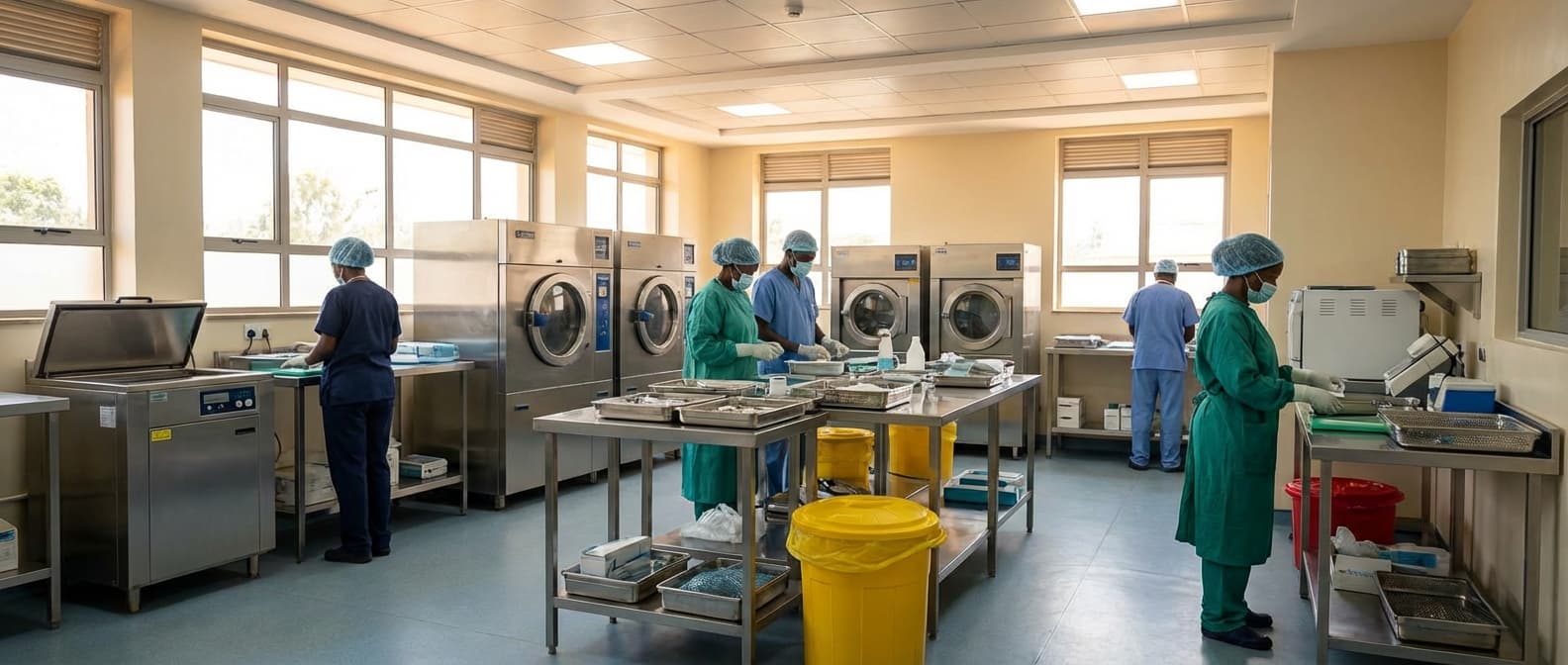
Autoclave Validation Support Service in Niger
Engineering Excellence & Technical Support
Autoclave Validation Support Service High-standard technical execution following OEM protocols and local regulatory frameworks.
Comprehensive Autoclave Validation Protocols
Leverage our expertly designed validation protocols, tailored to meet international standards and the specific requirements of Niger's healthcare and industrial sectors, ensuring optimal sterilization efficacy and regulatory compliance.
On-Site Technical Expertise & Calibration
Our certified technicians provide on-site installation, calibration, and performance qualification of autoclaves across Niger, minimizing downtime and guaranteeing accurate, repeatable sterilization cycles with state-of-the-art equipment.
Detailed Validation Documentation & Reporting
Receive meticulously compiled validation reports, including IQ, OQ, and PQ documentation, providing irrefutable evidence of autoclave performance and facilitating smooth audits and operational integrity for your critical sterilization processes in Niger.
What Is Autoclave Validation Support Service In Niger?
Autoclave validation support services in Niger are critical for ensuring the efficacy and reliability of steam sterilization processes employed by various institutions. These services are designed to provide objective evidence that an autoclave consistently achieves and maintains the necessary conditions (temperature, pressure, time, and steam quality) to render microbial inactivation.
| Who Needs Autoclave Validation Support Service in Niger? | Typical Use Cases |
|---|---|
| Healthcare Facilities: Hospitals, clinics, dental practices, diagnostic laboratories, and blood banks that sterilize medical instruments, equipment, and supplies. | Sterilization of surgical instruments, dental tools, laboratory glassware, diagnostic consumables, and personal protective equipment (PPE). |
| Pharmaceutical and Biotechnology Companies: Manufacturing facilities involved in producing sterile drug products, vaccines, or research reagents. | Sterilization of manufacturing equipment, production vessels, vials, stoppers, and laboratory consumables for aseptic processing. |
| Research and Development Laboratories: Academic, government, and private research institutions that require sterile consumables and equipment for experiments. | Sterilization of glassware, media, petri dishes, tips, and other laboratory supplies for microbiology, cell culture, and molecular biology research. |
| Veterinary Clinics and Animal Research Facilities: Facilities sterilizing surgical instruments and equipment for animal care and research. | Sterilization of veterinary surgical kits, cages, and laboratory equipment. |
| Food and Beverage Industry (Specific Applications): Companies requiring sterilization for certain packaging materials or ingredients, though less common than steam sterilization for general food processing. | Sterilization of specialized packaging components or food-grade components where high-level microbial inactivation is critical. |
What this Service Involves:
- Installation Qualification (IQ): Verifying that the autoclave is installed according to the manufacturer's specifications and relevant regulatory standards. This includes checking physical setup, utilities, and documentation.
- Operational Qualification (OQ): Testing the autoclave's operational parameters across its designed range to ensure it consistently meets critical sterilization parameters. This typically involves running empty and loaded cycles with calibrated probes and data loggers.
- Performance Qualification (PQ): Demonstrating that the autoclave, when operated under normal conditions and with representative loads, consistently achieves the validated sterilization cycle. This often involves biological and chemical indicator studies.
- Validation Protocol Development: Creating detailed, documented protocols for IQ, OQ, and PQ that align with international standards (e.g., ISO 17665) and local regulatory requirements.
- Calibration of Monitoring Equipment: Ensuring all temperature probes, pressure gauges, and data loggers used during validation are calibrated and traceable to recognized standards.
- Load Studies: Evaluating the penetration of steam and heat into various types of loads (e.g., porous materials, instruments, liquids) to confirm cycle effectiveness for specific applications.
- Documentation and Reporting: Generating comprehensive validation reports that document all testing procedures, results, deviations, and conclusions, providing auditable evidence of validation.
- Revalidation Support: Assisting institutions with periodic revalidation or revalidation after significant repairs, modifications, or when performance issues are suspected.
Who Needs Autoclave Validation Support Service In Niger?
In Niger, access to reliable and sterilized medical equipment is paramount for effective healthcare delivery. Autoclave validation is a critical process that ensures these sterilization devices are functioning optimally and meeting international standards. This validation is not just a regulatory requirement but a fundamental step in preventing hospital-acquired infections and safeguarding patient well-being. Therefore, a robust Autoclave Validation Support Service is essential for various healthcare institutions and related entities across the country. The service provides the expertise, equipment, and documentation necessary to verify the efficacy of autoclaves, offering peace of mind and contributing to a safer healthcare environment.
| Target Customer Group | Key Departments Requiring Service | Reasons for Validation |
|---|---|---|
| Hospitals (Public & Private) | Central Sterile Supply Department (CSSD), Operating Theatres, Maternity Wards, Infection Control Department, Emergency Rooms | Ensuring sterility of surgical instruments, dressings, and other medical supplies to prevent surgical site infections and cross-contamination. |
| Clinics & Health Centers | Treatment Rooms, Minor Procedure Areas, Sterilization Units | Maintaining patient safety during routine procedures and minor surgeries by guaranteeing effective sterilization of reusable instruments. |
| Diagnostic Laboratories | Microbiology Labs, Pathology Labs, Blood Banks | Sterilizing culture media, glassware, instruments, and biohazardous waste to prevent contamination and ensure accurate diagnostic results. |
| Dental Practices | Sterilization Area, Treatment Rooms | Validating the sterilization of dental instruments, handpieces, and other reusable equipment to prevent transmission of infectious diseases. |
| Veterinary Clinics | Surgical Suites, Treatment Areas | Ensuring the sterility of veterinary surgical instruments and equipment to protect animal health and prevent zoonotic disease transmission. |
| Medical Device Manufacturers | Quality Control, Production, Research & Development | Verifying the effectiveness of their own sterilization processes for medical devices prior to distribution, ensuring product safety and regulatory compliance. |
| Research Institutions | Biotechnology Labs, Life Sciences Labs | Sterilizing laboratory equipment, glassware, and consumables for research to prevent experimental contamination and ensure data integrity. |
| NGOs with Healthcare Programs | Mobile Clinics, Health Posts, Training Centers | Ensuring safe and effective sterilization practices in resource-limited settings, where maintaining healthcare standards is crucial. |
Who Needs Autoclave Validation Support Service in Niger? (Target Customers & Departments)
- Hospitals (Public and Private)
- Clinics and Health Centers
- Diagnostic Laboratories
- Dental Practices
- Veterinary Clinics
- Medical Device Manufacturers (for their own internal sterilization processes)
- Research Institutions with medical/biological labs
- Non-Governmental Organizations (NGOs) with healthcare programs
Autoclave Validation Support Service Process In Niger
This document outlines the standard workflow for Autoclave Validation Support Services in Niger, from initial client inquiry to the successful execution of the validation process.
| Phase | Key Activities | Deliverables/Outcomes | Responsible Parties | Estimated Timeline (Niger Context) |
|---|---|---|---|---|
| Client contacts service provider to inquire about autoclave validation. Discussion to understand the type of autoclave, intended use, existing documentation, and specific validation requirements (IQ, OQ, PQ). | Initial understanding of client needs, confirmation of service scope. | Client, Service Provider Representative | 1-3 Business Days |
| Service provider prepares a detailed proposal outlining the scope of work, methodology, equipment to be used, timeline, and cost. Client reviews and approves the proposal. | Formal proposal document, agreed-upon quotation. | Service Provider, Client | 3-7 Business Days |
| Formal agreement/contract is signed by both parties. Negotiation and agreement on the validation dates, considering client's operational schedule and availability of critical personnel. Coordination of travel arrangements for the validation team. | Signed service agreement, confirmed validation schedule. | Client, Service Provider | 5-10 Business Days (includes contract finalization and travel booking) |
| Client ensures the autoclave is in good working condition, properly maintained, and all relevant documentation (manuals, maintenance logs) is readily available. Service provider may provide a pre-validation checklist. | Autoclave ready for testing, documentation organized. | Client, Service Provider (guidance) | 1-2 Business Days (prior to on-site visit) |
| Service provider's qualified technicians arrive on-site. Performance of Installation Qualification (IQ), Operational Qualification (OQ), and Performance Qualification (PQ) as per agreed protocol. Collection of all necessary data, including temperature, pressure, and time profiles. | Raw validation data, completed test records, initial observations. | Service Provider Validation Team | 2-5 Business Days (depending on complexity and number of cycles) |
| Service provider analyzes the collected data against established acceptance criteria. Development of a comprehensive validation report including executive summary, methodology, results, deviations (if any), and conclusions. | Draft validation report. | Service Provider Validation Team, Data Analyst | 5-10 Business Days |
| The draft validation report is submitted to the client for review. Client provides feedback and requests clarification if needed. Final report is issued after incorporating client feedback. | Final, approved validation report. | Service Provider, Client | 3-7 Business Days (for review and revisions) |
| If the validation fails to meet acceptance criteria, the client, with support from the service provider, identifies root causes and implements corrective actions. Revalidation of specific parameters or the entire cycle may be performed. | Records of corrective actions, revalidation data (if applicable). | Client, Service Provider | Variable (depends on corrective actions required) |
| Upon successful validation and client acceptance of the final report, the service provider issues a formal certificate of validation. Invoicing and finalization of the service engagement. Archiving of all validation documentation. | Certificate of validation, final invoice, closed service project. | Service Provider, Client | 1-3 Business Days |
Autoclave Validation Support Service Process Flow
- Inquiry & Needs Assessment
- Proposal & Quotation
- Agreement & Scheduling
- Pre-Validation Site Preparation
- On-Site Validation Execution
- Data Analysis & Report Generation
- Validation Report Submission & Review
- Corrective Actions & Revalidation (if necessary)
- Certification & Closure
Autoclave Validation Support Service Cost In Niger
Autoclave validation is a critical process for ensuring the sterility and effectiveness of autoclaves used in healthcare, research, and industrial settings. The cost of autoclave validation support services in Niger can vary significantly based on several factors. These factors include the scope of validation required (IQ, OQ, PQ), the number and type of autoclaves to be validated, the complexity of the equipment, the qualifications and experience of the service provider, and the geographical location within Niger. Service providers may be local Namibian companies, or international firms with a presence or representatives in Niger. Costs are typically quoted in the local currency, the West African CFA franc (XOF).
| Service Component | Estimated Cost Range (XOF) |
|---|---|
| Initial Consultation & Site Assessment | 50,000 - 150,000 |
| Installation Qualification (IQ) per Autoclave | 150,000 - 300,000 |
| Operational Qualification (OQ) per Autoclave | 200,000 - 400,000 |
| Performance Qualification (PQ) per Autoclave (e.g., 3-5 cycles) | 300,000 - 600,000 |
| Full Validation Package (IQ+OQ+PQ) per Autoclave | 650,000 - 1,300,000 |
| Travel and Accommodation (if applicable) | Variable (depends on distance and duration) |
| Report Generation and Documentation | Included in service components, but complex reports may incur additional charges. |
| Revalidation (typically OQ/PQ annually) | 300,000 - 700,000 |
Key Pricing Factors for Autoclave Validation Support Services in Niger:
- Scope of Validation: Installation Qualification (IQ), Operational Qualification (OQ), and Performance Qualification (PQ) each contribute to the overall cost. PQ, which involves testing under actual operating conditions, is often the most comprehensive and expensive.
- Number and Type of Autoclaves: More units and different types (e.g., gravity displacement vs. pre-vacuum) will increase the service cost due to the time and resources involved.
- Equipment Complexity and Size: Larger, more complex, or specialized autoclaves may require more specialized equipment and expertise to validate, leading to higher costs.
- Service Provider's Reputation and Expertise: Established providers with a strong track record and certified technicians may command higher prices.
- Geographical Location: Travel and logistical expenses for technicians can influence the final quote, especially for remote locations within Niger.
- Revalidation Frequency: While not a direct cost for a single validation, the need for frequent revalidation (e.g., annually) is a consideration for budget planning.
- Additional Services: Some providers might bundle services like preventative maintenance or calibration, which would affect the overall price.
- Documentation and Reporting: The level of detail and formality required in validation reports can impact the service cost.
Affordable Autoclave Validation Support Service Options
Affordable autoclave validation support services are crucial for healthcare facilities and research institutions to ensure compliance with regulatory standards and maintain instrument sterility. Finding cost-effective solutions doesn't mean compromising on quality. This guide explores value bundles and cost-saving strategies to make essential validation accessible. Value bundles often combine multiple validation services, like initial qualification (IQ/OQ/PQ), routine performance testing, and documentation support, at a reduced combined price. Cost-saving strategies can include proactive maintenance, DIY documentation templates (with professional review), and leveraging multi-year service contracts.
| Cost-Saving Strategy | Description | Potential Savings |
|---|---|---|
| Proactive Preventative Maintenance | Regularly scheduled maintenance by qualified technicians to identify and address potential issues before they lead to costly downtime or re-validation. | Reduces emergency repair costs, minimizes downtime, and extends the lifespan of the autoclave, delaying the need for premature replacement. |
| DIY Documentation with Professional Review | Utilize provided templates for validation protocols and reports, then have a validation service provider review and finalize them. This shifts some labor to internal staff. | Significantly reduces the service provider's time spent on documentation, lowering overall service fees. |
| Multi-Year Service Contracts | Commit to a validation and maintenance contract for multiple years. Service providers often offer discounts for longer-term commitments. | Locks in current pricing, provides budget predictability, and often includes preferential scheduling and response times. |
| Batching Validation Services | Schedule validation for multiple autoclaves or for different types of sterilization equipment (e.g., washers, dryers) within the same visit. | Reduces travel costs for the service provider and can lead to bundled service discounts. |
| Focus on Essential Parameters | Work with your validation provider to ensure you're only validating what's strictly required by regulatory bodies and your specific processes, avoiding unnecessary tests. | Streamlines the validation process, reducing testing time and the amount of consumables used. |
Value Bundle Options for Autoclave Validation
- Basic Validation Package: Includes Initial Installation Qualification (IQ) and Operational Qualification (OQ) for new or relocated autoclaves.
- Comprehensive Validation Package: Extends the basic package to include Performance Qualification (PQ) cycles, ensuring the autoclave meets sterilization parameters under various load conditions.
- Annual Maintenance & Validation Package: Combines scheduled preventative maintenance with an annual full validation (IQ/OQ/PQ or re-validation), offering a recurring cost saving.
- Multi-Unit Discount Bundle: For facilities with multiple autoclaves, this package offers a significant discount when all units are validated concurrently or under a single contract.
- Documentation & Training Bundle: Includes comprehensive validation reports, standard operating procedure (SOP) development assistance, and basic staff training on autoclave operation and validation principles.
Verified Providers In Niger
Ensuring access to quality healthcare is paramount, especially in regions like Niger where reliable health services are crucial. Franance Health has emerged as a trusted name, offering a network of verified providers who adhere to the highest standards of care. Their commitment to patient well-being, coupled with stringent credentialing processes, makes them the premier choice for healthcare needs in Niger. This document outlines why Franance Health's verified providers stand out and the benefits of choosing their services.
| Provider Type | Key Features of Franance Health Affiliation | Benefits for Patients |
|---|---|---|
| Hospitals & Clinics | Equipped with modern facilities, adherence to hygiene protocols, trained medical staff, emergency services. | Access to comprehensive medical services, timely treatment for critical conditions, improved health outcomes. |
| Specialist Physicians | Certified specialists in various fields (e.g., cardiology, pediatrics, obstetrics), continuous professional development, patient-focused consultations. | Expert diagnosis and treatment for specific health concerns, personalized care plans, reduced need for referrals outside the network. |
| General Practitioners (GPs) | Experienced in primary care, strong diagnostic skills, emphasis on preventative medicine, patient education. | First point of contact for health issues, ongoing health management, early detection of diseases, accessible everyday healthcare. |
| Diagnostic Laboratories | Utilize advanced testing equipment, maintain strict quality control, timely and accurate result reporting. | Reliable diagnostic information for accurate treatment, faster turnaround times for tests, confidence in test results. |
| Pharmacies | Stock a wide range of quality medications, dispense prescriptions accurately, offer patient counseling on medication use. | Convenient access to prescribed medications, assurance of drug authenticity, guidance on safe and effective drug usage. |
Why Franance Health Providers are the Best Choice:
- Rigorous Credentialing and Verification: Franance Health employs a multi-stage vetting process to ensure all its healthcare providers meet and exceed industry standards. This includes background checks, verification of medical licenses, professional certifications, and ongoing performance reviews.
- Commitment to Quality Care: Franance Health providers are dedicated to delivering patient-centered care, emphasizing empathy, expertise, and ethical practices. They are trained to stay updated with the latest medical advancements and treatment protocols.
- Accessibility and Reach: With a growing network across Niger, Franance Health aims to make quality healthcare accessible to a wider population, including remote and underserved areas.
- Patient-Centric Approach: The focus is on understanding individual patient needs and providing personalized treatment plans. This includes clear communication, shared decision-making, and ensuring patient comfort and safety.
- Technological Integration: Many Franance Health facilities are integrating modern healthcare technologies to enhance diagnostic accuracy, treatment efficiency, and patient record management.
- Affordability and Transparency: Franance Health strives to offer competitive pricing and transparent billing practices, making quality healthcare more affordable for the community.
Scope Of Work For Autoclave Validation Support Service
This Scope of Work (SOW) outlines the services to be provided by [Service Provider Name] for Autoclave Validation Support, ensuring that the autoclave equipment meets all regulatory requirements and operational standards. This includes comprehensive technical deliverables and adherence to standard specifications throughout the validation lifecycle.
| Phase/Activity | Description | Technical Deliverables | Standard Specifications/References |
|---|---|---|---|
| Define the scope, objectives, and methodology for autoclave validation. This includes identifying critical parameters, acceptance criteria, and test procedures. | Validation Master Plan (VMP) Amendment (if applicable), Site-Specific Validation Protocol, Risk Assessment Report (e.g., FMEA on sterilization process) | ISO 17665-1: Sterilization of health care products — Moist heat — Part 1: Requirements for the development, validation and routine control of a sterilization process for medical devices; USP General Chapter <1211> Sterilization, and relevant company SOPs. |
| Verify that the autoclave has been installed and configured correctly according to manufacturer specifications and design intentions. | Installation Qualification Protocol, Installation Qualification Report, Equipment Manuals & Documentation Review | Manufacturer's Installation Manual, relevant electrical and mechanical safety standards (e.g., IEC 60601). |
| Verify that the autoclave operates within its specified limits and performs consistently under expected operating conditions. | Operational Qualification Protocol, Operational Qualification Report, Calibration Certificates for instruments (temperature, pressure sensors) | Manufacturer's O&M Manual, process parameter ranges specified in the Validation Protocol. |
| Demonstrate that the autoclave consistently performs its intended function (sterilization) under normal operating conditions and with representative loads. | Performance Qualification Protocol, Performance Qualification Report, Sterilization Cycle Challenge Studies (e.g., biological indicators, chemical indicators, temperature mapping), Load Pattern Studies | ISO 11135: Sterilization of health care products — Ethylene oxide; ISO 11140-1: Sterilization of health care products — Chemical indicators; ISO 13683: Sterilization of health care products — Moist heat — Requirements for the validation and routine control of moist heat sterilization; Load distribution data. |
| Support revalidation activities after major maintenance, modifications, or at predefined intervals. Assist in assessing the impact of changes on the validated status. | Revalidation Protocol, Change Control Document Assessment, Revalidation Report | Company Change Control Procedures, Revalidation criteria as defined in the VMP or initial validation protocols. |
| Compile all validation data, test results, and analyses into comprehensive reports for regulatory submission and internal quality records. | Final Validation Report (summarizing IQ, OQ, PQ), Validation Summary Report, As-built drawings (if applicable) | Good Documentation Practices (GDP), company SOPs for report generation and archival. |
Key Objectives
- To ensure the autoclave consistently sterilizes materials according to defined parameters.
- To provide documented evidence of autoclave performance and compliance with regulatory standards (e.g., FDA, ISO, local health authorities).
- To identify and mitigate any risks associated with the sterilization process.
- To support the client in meeting their quality assurance and regulatory obligations.
Service Level Agreement For Autoclave Validation Support Service
This Service Level Agreement (SLA) outlines the response times and uptime guarantees for the Autoclave Validation Support Service provided by [Your Company Name] to [Client Company Name]. This SLA is designed to ensure timely and reliable support for your critical autoclave validation processes.
| Service Category | Response Time Target (Business Hours) | Resolution Target (Business Hours) | Uptime Guarantee |
|---|---|---|---|
| Critical Issue (Validation Failure, Major System Outage) | 1 Hour | 4 Business Hours | 99.9% (excluding scheduled maintenance) |
| High Priority Issue (Significant impact on validation workflow, but not a complete outage) | 2 Business Hours | 8 Business Hours | 99.5% (excluding scheduled maintenance) |
| Medium Priority Issue (Minor impact on workflow, performance degradation) | 4 Business Hours | 2 Business Days | 99.0% (excluding scheduled maintenance) |
| Low Priority Issue (General inquiries, feature requests, non-critical bugs) | 8 Business Hours | 5 Business Days | 98.0% (excluding scheduled maintenance) |
Scope of Service
- Remote troubleshooting and diagnostics for autoclave validation software and hardware issues.
- Guidance on validation protocols and execution.
- Assistance with data analysis and report generation.
- Software updates and patches related to validation tools.
- On-site support for critical failures (subject to additional terms and conditions).
Frequently Asked Questions

Ready when you are
Let's scope your Autoclave Validation Support Service in Niger project in Niger.

Scaling healthcare logistics and technical systems across the entire continent.