
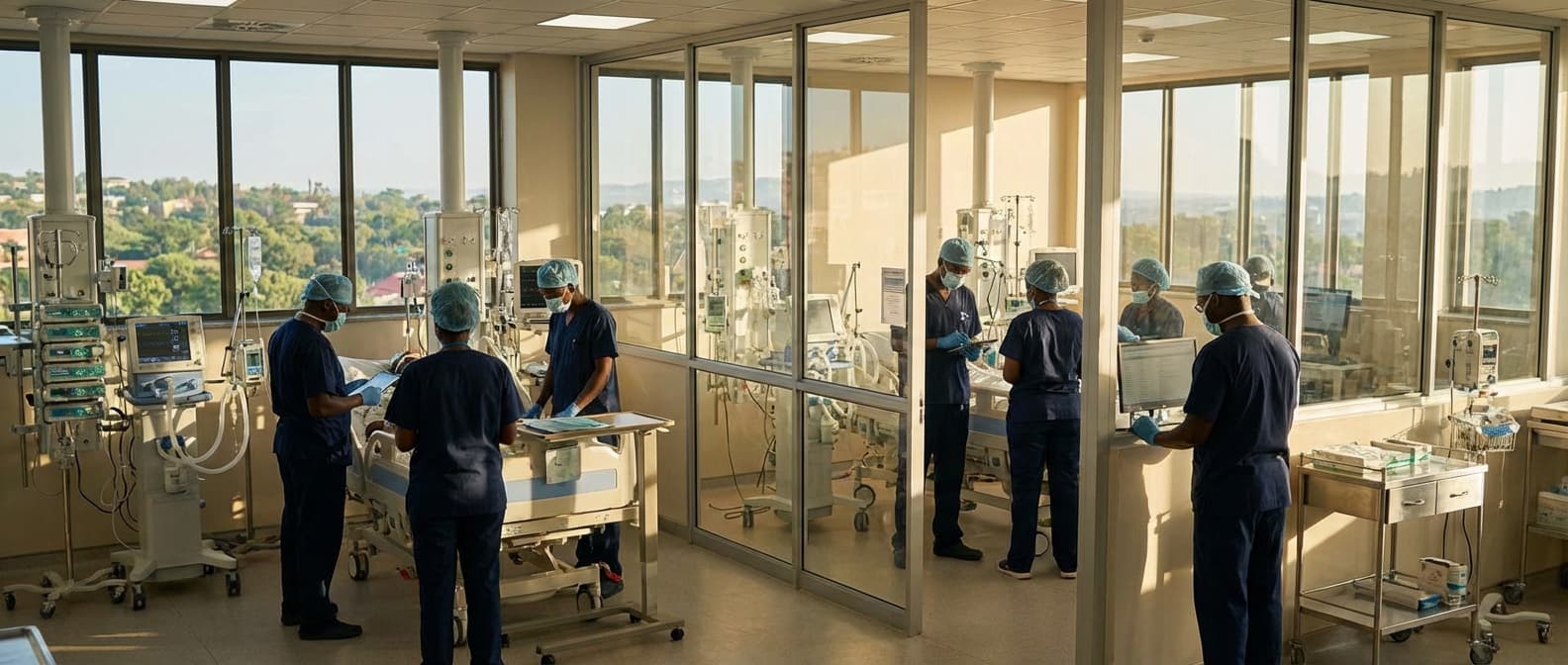
Ventilator Fleet Management & PM in Niger
Engineering Excellence & Technical Support
Preventive maintenance and fleet management for ICU ventilators High-standard technical execution following OEM protocols and local regulatory frameworks.
Centralized Ventilator Fleet Dashboard
Real-time visibility into the operational status, location, and maintenance history of Niger's entire ventilator fleet, accessible via a secure cloud-based platform. This enables proactive identification of underutilized or malfunctioning equipment, optimizing allocation and minimizing downtime across remote health facilities.
Predictive Maintenance Alerts & Scheduling
Leveraging IoT sensors and historical data, our system generates predictive maintenance alerts for ventilators based on usage patterns and component wear. This allows for scheduled servicing before critical failures occur, reducing emergency repairs and ensuring consistent availability of life-saving equipment in critical care settings.
Optimized Mobile Maintenance & Spare Parts Logistics
Geo-location services integrated with the fleet management system pinpoint the nearest available maintenance technician and optimal routes for spare parts delivery. This significantly reduces response times and travel costs for servicing ventilators in geographically challenging regions of Niger, enhancing efficiency and patient care.
What Is Ventilator Fleet Management & Pm In Niger?
Ventilator Fleet Management & Preventative Maintenance (PM) in Niger refers to the comprehensive lifecycle management of mechanical ventilators deployed within healthcare facilities and emergency response organizations. This service encompasses the acquisition, deployment, operational oversight, routine servicing, calibration, repair, and eventual decommissioning of ventilator units. The objective is to ensure optimal functionality, maximize availability, extend equipment lifespan, and maintain patient safety through adherence to stringent maintenance protocols. This is particularly critical in resource-constrained environments like Niger, where reliable access to advanced medical equipment is paramount for managing respiratory illnesses and critical care needs.
| Service Component | Description | Target Beneficiaries in Niger | Typical Use Cases |
|---|---|---|---|
| Acquisition & Procurement Support | Assisting in the selection, procurement, and importation of appropriate ventilator models based on local healthcare needs and infrastructure. | Ministry of Health, large public hospitals, international NGOs, disaster relief agencies. | Equipping newly built or upgraded intensive care units (ICUs), establishing emergency respiratory support reserves for public health crises (e.g., pandemics, natural disasters). |
| Installation & Commissioning | Professional installation, configuration, and initial testing of new ventilator units to ensure they are operational and integrated into facility systems. | All healthcare facilities receiving new ventilator equipment. | Setting up new medical equipment in hospitals and clinics, ensuring immediate readiness for patient care. |
| Routine Preventative Maintenance | Scheduled inspections, cleaning, lubrication, and replacement of consumables (filters, batteries) to maintain optimal function and prevent breakdowns. | Hospitals (all levels), clinics with critical care capabilities, research institutions. | Regular servicing of ventilators in ICUs, operating rooms, and emergency departments to ensure availability for patients requiring mechanical ventilation. |
| Emergency Repairs & Technical Support | On-demand repair services, troubleshooting, and technical assistance to resolve ventilator malfunctions and minimize downtime. | All healthcare facilities with deployed ventilators, especially those in remote or underserved areas. | Responding to ventilator failures during patient care, rapid deployment of functional units during outbreaks or emergencies. |
| Calibration & Performance Testing | Ensuring ventilators are delivering accurate and safe therapeutic interventions through periodic calibration and functional performance testing. | Hospitals with specialized respiratory care departments, facilities adhering to international quality standards. | Verifying the accuracy of settings for critically ill patients, quality assurance for advanced respiratory support modalities. |
| Training & Capacity Building | Educating clinical and technical personnel on the safe and effective use, maintenance, and troubleshooting of ventilator equipment. | Nurses, respiratory therapists, biomedical technicians, physicians in healthcare facilities, Ministry of Health training programs. | Onboarding new staff, upgrading skills for existing personnel, establishing in-country expertise for long-term equipment management. |
| Fleet Optimization & Asset Lifecycle Management | Strategic planning for fleet expansion, replacement, and decommissioning, including inventory management and end-of-life disposition. | Ministry of Health, large hospital networks, international development partners. | Developing long-term equipment replacement plans, ensuring efficient utilization of existing resources, managing the disposal of obsolete or non-functional equipment. |
Key Components of Ventilator Fleet Management & PM in Niger
- Asset Inventory and Tracking: Establishing and maintaining a detailed database of all ventilator units, including serial numbers, model, acquisition date, location, service history, and current operational status.
- Deployment and Distribution: Strategic placement of ventilators across various healthcare facilities based on assessed needs, patient demographics, and potential outbreak scenarios. This includes logistical planning for transport and installation.
- Preventative Maintenance (PM) Scheduling and Execution: Implementing a rigorous PM schedule based on manufacturer recommendations and operational usage. This involves routine inspections, cleaning, lubrication, filter replacement, and functional testing to identify and rectify potential issues before failure.
- Calibration and Performance Verification: Regular calibration of all ventilator parameters (e.g., tidal volume, pressure, flow rates, FiO2) to ensure accuracy and adherence to clinical requirements. This often involves specialized testing equipment.
- Repair and Troubleshooting: Prompt diagnosis and repair of malfunctioning units by trained biomedical engineers or technicians. This includes access to spare parts and technical documentation.
- User Training and Competency Assurance: Providing comprehensive training to clinical staff on the proper operation, basic troubleshooting, and emergency procedures for specific ventilator models. This ensures safe and effective utilization.
- End-of-Life Management: Planning for the decommissioning, disposal, or refurbishment of ventilators that have reached their service life, in compliance with environmental and safety regulations.
- Performance Monitoring and Reporting: Continuous monitoring of fleet performance metrics such as uptime, mean time between failures (MTBF), and service response times. Generating regular reports for operational assessment and strategic planning.
Who Needs Ventilator Fleet Management & Pm In Niger?
Ventilator fleet management and preventative maintenance (PM) are crucial for ensuring the reliable operation of essential medical equipment in any healthcare system, particularly in regions facing resource constraints like Niger. Effective management optimizes equipment lifespan, reduces downtime, and guarantees patient safety by ensuring ventilators are always ready for critical care. This proactive approach directly impacts patient outcomes, reduces the need for emergency repairs, and allows for better resource allocation within the healthcare facilities.
| Department | Key Personnel | Primary Need | Impact of Management & PM |
|---|---|---|---|
| Intensive Care Unit (ICU) | Critical Care Physicians, Respiratory Therapists, ICU Nurses | Reliable and functional ventilators for critical patients | Reduced patient mortality, improved recovery rates, consistent patient care |
| Anesthesiology Department | Anesthesiologists, Anesthesia Technicians | Ventilators for surgical procedures and post-operative care | Safer surgical outcomes, efficient operating room turnover |
| Emergency Department (ED) | Emergency Physicians, ED Nurses, Paramedics | Immediate availability of ventilators for life-threatening conditions | Stabilization of critically ill patients, improved survival rates from trauma and acute respiratory distress |
| Biomedical Engineering Department | Biomedical Engineers, Technicians | Maintenance, calibration, and repair of medical equipment, including ventilators | Extended equipment lifespan, reduced repair costs, compliance with safety standards, optimized resource utilization |
| Hospital Administration/Management | Hospital Directors, Procurement Officers, Finance Managers | Cost-effective equipment management, budget forecasting, operational efficiency | Reduced capital expenditure on premature replacements, predictable maintenance costs, improved overall hospital efficiency |
| Ministry of Health (Public Health Department) | Public Health Officials, National Health Program Managers | Ensuring equitable access to life-saving equipment across the nation, setting standards | Improved national health indicators, standardized quality of care, effective resource allocation for public health initiatives |
| Pediatrics/Neonatal Intensive Care Unit (NICU) | Pediatricians, Neonatologists, Pediatric Respiratory Therapists, NICU Nurses | Specially designed and calibrated ventilators for infants and children | Improved survival rates for vulnerable neonates and children, optimized growth and development |
Target Customers and Departments
- Hospitals (Public and Private)
- Tertiary Care Centers
- Regional Hospitals
- District Hospitals
- Specialized Clinics (e.g., Intensive Care Units, Neonatal Units)
- Non-Governmental Organizations (NGOs) providing healthcare services
- Ministry of Health (National and Regional Level)
- Disaster Relief and Emergency Medical Services
- Medical Equipment Suppliers and Distributors (for after-sales service contracts)
- International Health Organizations operating in Niger
Ventilator Fleet Management & Pm Process In Niger
This document outlines the workflow for ventilator fleet management and preventative maintenance (PM) processes in Niger. It details the steps from initial inquiry to the successful execution of maintenance tasks, ensuring the optimal functioning and longevity of the ventilator fleet.
| Step | Description | Key Stakeholders | Input | Output | Potential Challenges |
|---|---|---|---|---|---|
| Formal or informal request for ventilator service, repair, or PM is received. | Healthcare Facility Staff, Ministry of Health (MoH) Representative | Notification of need (e.g., malfunctioning ventilator, scheduled PM) | Service request ticket/form | Lack of clear communication channels, delayed reporting |
| The request is reviewed to determine the urgency and scope of work. Critical equipment failures are prioritized. | Fleet Manager, Biomedical Engineering Department, MoH | Service request ticket/form, ventilator condition report | Prioritized service list, work order generation | Inaccurate condition reports, difficulty in assessing criticality |
| Availability of spare parts, trained technicians, and necessary tools is confirmed. A maintenance schedule is developed. | Fleet Manager, Biomedical Engineering Department, Procurement Department | Prioritized service list, inventory of spare parts, technician availability | Maintenance schedule, work order assignment, parts requisition | Shortage of spare parts, limited technician availability, scheduling conflicts |
| Internal biomedical teams or external service providers are identified and engaged based on expertise and availability. | Fleet Manager, Procurement Department, Service Providers | Work order, technical specifications, vendor agreements | Service contract/agreement, confirmed service provider | Unreliable service providers, lengthy procurement processes |
| Ventilators are safely transported to maintenance centers or technicians are dispatched to the facility. This includes ensuring proper handling and tracking. | Logistics Team, Biomedical Engineering Department, Service Providers | Maintenance schedule, ventilator location, transportation resources | Transport arrangements, shipment tracking | Inadequate transportation infrastructure, damage during transit |
| Preventative maintenance or repair activities are performed by qualified technicians according to established protocols and manufacturer guidelines. | Biomedical Technicians, Service Providers | Work order, spare parts, tools, technical manuals | Completed maintenance/repair, functional ventilator | Lack of specialized tools, incomplete technical documentation, unforeseen technical issues |
| Performed maintenance is checked for accuracy and completeness. Ventilator performance is tested to ensure it meets specifications. | Biomedical Engineering Department, Quality Control Officer | Completed work order, test results, quality checklist | Verified maintenance, signed-off work order | Inconsistent QA procedures, lack of calibrated testing equipment |
| All maintenance activities, parts used, and test results are meticulously documented. Reports are generated for records and accountability. | Biomedical Technicians, Fleet Manager, Administration | Signed-off work order, parts requisition forms, test reports | Maintenance logs, inventory updates, performance reports | Incomplete record-keeping, data entry errors, reporting delays |
| The performance of maintained ventilators is monitored. Feedback is collected to identify areas for improvement in the PM process. | Fleet Manager, MoH, Healthcare Facility Staff | Maintenance reports, facility feedback | Updated fleet status, performance trends, process improvement recommendations | Lack of ongoing monitoring, insufficient feedback mechanisms |
Ventilator Fleet Management & PM Process Workflow in Niger
- Inquiry and Request Initiation
- Needs Assessment and Prioritization
- Resource Allocation and Planning
- Service Provider Engagement
- Logistics and Transportation
- On-Site Execution (PM/Repair)
- Quality Assurance and Verification
- Documentation and Reporting
- Fleet Monitoring and Follow-up
Ventilator Fleet Management & Pm Cost In Niger
Managing a ventilator fleet in Niger, as in any developing nation, presents unique challenges related to cost. These costs are influenced by a variety of factors, from the initial acquisition and the specific types of ventilators chosen to the ongoing maintenance, training, and logistical complexities within the country. Accurate pricing is difficult to pinpoint without specific tender details, but we can explore the key pricing factors and provide estimated ranges in the local currency, the West African CFA franc (XOF).
| Cost Component | Estimated Range (XOF) | Notes |
|---|---|---|
| Basic Transport Ventilator (Acquisition per unit) | 1,500,000 - 5,000,000 | Entry-level, less sophisticated features. Bulk discounts possible. |
| Mid-Range ICU Ventilator (Acquisition per unit) | 5,000,000 - 25,000,000 | Standard ICU capabilities, more advanced modes. Brand and features are key. |
| High-End/Specialized ICU Ventilator (Acquisition per unit) | 25,000,000 - 60,000,000+ | Advanced monitoring, specific disease management features. High-end brands. |
| Annual Preventive Maintenance (PM) per ventilator (contracted) | 500,000 - 2,000,000 | Varies by SLA, number of checks, and parts included. Excludes major component replacement. |
| Replacement of Key Component (e.g., compressor, valve) | 1,000,000 - 10,000,000+ | Highly dependent on the specific part and ventilator model. Import costs apply. |
| Biomedical Technician Salary (monthly, experienced) | 200,000 - 600,000 | Reflects expertise and experience. May be higher in urban centers. |
| Basic User Training (per session/group) | 100,000 - 500,000 | Covers initial operation and basic troubleshooting. Varies by trainer expertise. |
| Consumables per Ventilator per year (filters, tubing etc.) | 100,000 - 500,000 | Continuous usage and replacement needs. |
| Annual Fleet Management Overhead (per unit, estimate) | 200,000 - 1,000,000 | Includes logistics, administration, and minor repairs. Highly variable. |
Key Pricing Factors for Ventilator Fleet Management & PM in Niger
- Ventilator Acquisition Cost: The most significant upfront expense. This varies greatly based on the technology, features (e.g., invasive/non-invasive, critical care capabilities), brand reputation, and the quantity purchased.
- Type and Complexity of Ventilators: Basic transport ventilators will be considerably cheaper than advanced ICU ventilators with sophisticated monitoring and ventilation modes.
- Supplier and Negotiation: Bulk purchasing discounts can significantly reduce per-unit costs. Relationships with suppliers and effective negotiation are crucial.
- Shipping and Import Duties: International shipping costs, insurance, and applicable import taxes and duties in Niger will add to the total acquisition price.
- Installation and Commissioning: Setting up and ensuring the proper functioning of ventilators requires skilled technicians, adding to the initial cost.
- Preventive Maintenance (PM) Contracts: These are essential for ensuring the longevity and reliability of ventilators. Costs depend on the service level agreement (SLA), frequency of checks, and parts included.
- Spare Parts Availability and Cost: The cost and accessibility of genuine spare parts can significantly impact PM costs. Local availability versus importing parts will create price differentials.
- Skilled Technical Personnel: The cost of hiring, training, and retaining qualified biomedical engineers and technicians for PM and repairs is a major operational expense.
- Training and Capacity Building: Training healthcare staff on the proper use and basic troubleshooting of ventilators is a recurring cost, especially with new equipment or staff turnover.
- Consumables and Accessories: This includes disposables like filters, tubing, and masks, which are a continuous cost associated with ventilator usage and PM.
- Calibration and Testing Equipment: Specialized equipment is needed for accurate calibration and performance testing during PM, representing an investment.
- Logistics and Transportation: Moving ventilators for PM or repairs within Niger, especially to remote areas, incurs transportation and associated costs.
- Inflation and Exchange Rates: Fluctuations in the XOF against major currencies (USD, EUR) can impact the cost of imported parts and equipment.
- Warranty Period: The length and coverage of the manufacturer's warranty will influence the need for and cost of immediate post-acquisition PM.
- Service Level Agreements (SLAs): The terms of PM contracts, including response times, guaranteed uptime, and coverage for unexpected breakdowns, will dictate pricing.
Affordable Ventilator Fleet Management & Pm Options
Managing a ventilator fleet efficiently and ensuring their optimal performance through preventative maintenance (PM) is crucial for healthcare facilities. This involves not only maintaining equipment reliability but also controlling associated costs. This document outlines affordable ventilator fleet management and PM options, focusing on value bundles and cost-saving strategies to maximize your investment and patient care.
| Value Bundle Option | Description | Cost-Saving Strategies | Benefits |
|---|---|---|---|
| Basic PM & On-Demand Repair | Includes scheduled PM inspections and labor for repairs as needed. Parts costs are separate. | Prioritize PM completion to reduce emergency repairs. Negotiate hourly labor rates. Bulk purchasing of common replacement parts. | Predictable PM costs. Immediate response to breakdowns. Lower upfront investment. |
| Comprehensive PM & Parts Coverage | Includes scheduled PM and coverage for most common replacement parts. Labor for repairs is also included. | Reduces unexpected parts expenses. Improved budget predictability. Faster turnaround times due to readily available parts. | Enhanced cost control for routine maintenance and common repairs. Increased equipment uptime. |
| Full-Service Lease with Integrated PM | A leasing agreement that includes the ventilator and all associated PM and repair services for the lease term. Often includes loaner units. | Eliminates capital expenditure. Fixed monthly costs. Access to the latest technology. Reduced administrative burden. | Predictable operational expenses. Guaranteed equipment availability. No obsolescence concerns. Minimal in-house technical expertise required for maintenance. |
| Tiered PM Packages | Offers different levels of PM, from basic visual inspections to comprehensive functional testing and calibration, allowing customization based on equipment age and criticality. | Tailor maintenance to specific equipment needs, avoiding unnecessary services. Allocate resources effectively based on risk. | Optimized maintenance spend. Increased focus on high-risk equipment. Improved asset utilization. |
| Bundled Repair & Refurbishment Program | A program where a service provider manages the repair and refurbishment of older or broken ventilators, offering a cost-effective alternative to purchasing new. | Significantly lower cost per unit compared to new purchases. Extended lifespan of existing assets. Reduced e-waste. | Substantial cost savings on fleet expansion or replacement. Sustainable asset management. |
Key Components of Affordable Ventilator Fleet Management & PM
- Proactive Preventative Maintenance (PM): Regular, scheduled maintenance to identify and address potential issues before they lead to equipment failure.
- Inventory Management & Optimization: Tracking ventilator location, usage, and service history to ensure availability and prevent overstocking or understocking.
- Repair & Refurbishment Programs: Cost-effective solutions for repairing broken ventilators and extending their lifespan.
- Staff Training & Competency: Equipping biomedical technicians and clinical staff with the knowledge to operate and perform basic checks on ventilators.
- Data Analytics & Reporting: Utilizing data to track PM compliance, repair costs, and equipment performance to inform future decisions.
- Leasing & Rental Options: Flexible acquisition strategies that can reduce upfront capital expenditure.
- Extended Service Contracts: Negotiated contracts that offer predictable maintenance and repair costs over a defined period.
Verified Providers In Niger
Ensuring access to quality healthcare in Niger is paramount, and identifying verified providers is a crucial step. Franance Health stands out as a leading credentialing body, setting a high bar for healthcare professionals and institutions in the region. Their rigorous verification process ensures that providers meet stringent standards of competence, ethics, and patient care, offering Nigeriens the assurance they need when seeking medical services.
| Benefit for Patients | Benefit for Verified Providers | Benefit for the Nigerien Healthcare System |
|---|---|---|
| Confidence in receiving safe, effective, and ethical medical care. | Enhanced professional reputation and increased patient trust. | Improved overall quality and accessibility of healthcare services. |
| Reduced risk of medical errors and substandard treatment. | Access to a trusted network of patients seeking quality care. | Attraction of investment and resources towards reputable healthcare entities. |
| Empowerment to make informed decisions about healthcare providers. | Opportunities for professional growth and recognition. | Development of a robust and reliable healthcare infrastructure. |
Why Franance Health Credentials Represent the Best Choice:
- Uncompromising Quality Standards: Franance Health's verification protocols are designed to identify practitioners and facilities that consistently deliver high-quality care, adhering to international best practices.
- Patient Safety and Trust: Their rigorous vetting process significantly reduces the risk of encountering unqualified or unethical providers, fostering a safer healthcare environment and building patient trust.
- Ethical Practice Assurance: Franance Health emphasizes ethical conduct and professional integrity, ensuring that credentialed providers operate with honesty and respect for patient rights.
- Continuous Monitoring and Improvement: Beyond initial credentialing, Franance Health often implements mechanisms for ongoing monitoring, encouraging continuous professional development and adaptation to evolving medical knowledge.
- Access to Competent Specialists: By identifying and endorsing verified specialists, Franance Health helps patients connect with skilled professionals equipped to handle a wide range of medical needs.
- Transparency and Accountability: Their transparent credentialing process and publicly available lists of verified providers promote accountability within the healthcare sector.
Scope Of Work For Ventilator Fleet Management & Pm
This Scope of Work (SOW) outlines the requirements for the comprehensive management and preventive maintenance (PM) of the hospital's ventilator fleet. The objective is to ensure the optimal performance, reliability, and safety of all ventilators, thereby supporting patient care and minimizing downtime. This includes a detailed breakdown of technical deliverables and standard specifications that must be adhered to.
| Technical Deliverable | Description | Standard Specification/Requirement | Acceptance Criteria |
|---|---|---|---|
| Asset Inventory Database | A comprehensive, centralized database detailing every ventilator in the fleet. | Must include unique asset ID, manufacturer, model, serial number, acquisition date, location, current status (in use, in repair, PM due), and service history. Data must be accessible via a secure web portal. | Database is populated with 100% of fleet assets. Data accuracy verified by random sampling of 10% of assets. |
| Preventive Maintenance (PM) Schedule | A proactive maintenance plan designed to prevent failures and ensure optimal performance. | PM tasks must be based on manufacturer recommendations, industry best practices, and hospital risk assessment. Schedule to be provided quarterly, with advance notification of at least 30 days. | All PM tasks completed within the scheduled window (within +/- 7 days of due date). PM completion reports submitted within 5 business days of completion. |
| PM Checklist & Procedures | Detailed checklists and standard operating procedures (SOPs) for all PM tasks. | Checklists must cover all functional checks, safety tests, cleaning procedures, and calibration steps specific to each ventilator model. SOPs must be clear, concise, and include visual aids. | Checklists and SOPs reviewed and approved by the hospital's Biomedical Engineering department. All technicians trained on approved procedures. |
| Calibration Certificates | Documentation verifying that ventilators are calibrated to manufacturer specifications. | Calibration must be performed using traceable standards and documented with a certificate for each event. Certificates must include date of calibration, results, standards used, and technician signature. | 100% of calibrated ventilators have a valid, current calibration certificate. Calibration results within manufacturer's tolerance. |
| Service/Repair Reports | Detailed documentation of all corrective maintenance actions. | Reports must include date of service, technician name, description of problem, parts used, labor hours, root cause analysis (for significant failures), and post-repair testing results. | Service reports submitted within 3 business days of repair completion. All reported issues resolved to patient-ready status. |
| Software Update Management Plan | A process for managing and deploying software updates and patches. | Plan must include procedures for testing updates in a non-clinical environment, scheduling deployment, and validating successful installation. All updates must address documented vulnerabilities or performance enhancements. | Software update process documented and approved. All deployed updates are validated for successful installation and no adverse impact on ventilator function. |
| Disinfection/Sterilization SOPs | Standard Operating Procedures for thorough cleaning and disinfection of ventilators between patients. | SOPs must align with hospital infection control policies and manufacturer guidelines, specifying approved disinfectants and methods. Training logs for all personnel involved in this process. | SOPs reviewed and approved by Infection Control and Biomedical Engineering. 100% compliance with documented procedures. |
| Technician Training & Certification | Ensuring all technicians performing maintenance are adequately trained and certified. | Technicians must possess relevant manufacturer certifications or equivalent training for the specific ventilator models they service. Proof of training and certification to be provided upon request. | All technicians servicing the fleet hold current, relevant certifications. Competency assessments conducted annually. |
| Performance Monitoring Reports | Regular reports detailing the performance and availability of the ventilator fleet. | Reports to be provided monthly, including metrics such as uptime, PM compliance rate, average repair time, and a summary of common issues. Reports should identify trends and recommend proactive measures. | Reports submitted by the 5th business day of each month. Identified trends are analyzed and actionable recommendations are provided. |
Key Areas of Ventilator Fleet Management & PM
- Asset Inventory and Tracking
- Preventive Maintenance Program
- Corrective Maintenance & Repair
- Calibration & Performance Verification
- Software Updates & Configuration Management
- Disinfection & Sterilization Procedures
- Training & Competency Assessment
- Reporting & Documentation
Service Level Agreement For Ventilator Fleet Management & Pm
This Service Level Agreement (SLA) outlines the agreed-upon response times and uptime guarantees for the Ventilator Fleet Management & Preventative Maintenance (PM) services provided by [Your Company Name] to [Client Name]. This SLA is effective as of [Start Date] and shall remain in effect for a period of [Duration].
| Service Level | Definition/Scope | Target Response Time | Uptime Guarantee | Escalation Protocol | Reporting Frequency |
|---|---|---|---|---|---|
| Critical Equipment Failure (e.g., Ventilation Failure, Alarms Not Responding) | Any malfunction that renders a ventilator inoperable or significantly impairs its core life-support function. | Within 15 minutes for initial acknowledgment; within 1 hour for on-site technician dispatch (if applicable). | 98% Uptime | Immediate notification to designated client contact and technical support escalation. | Weekly report on critical incidents and resolution times. |
| Major Equipment Malfunction (e.g., Display Issues, Sensor Malfunction impacting accuracy) | A malfunction that affects the reliable operation of the ventilator but does not immediately pose a life-threatening risk. | Within 1 hour for initial acknowledgment; within 4 hours for on-site technician dispatch (if applicable). | 97% Uptime | Notification to designated client contact; standard support escalation. | Monthly report on major incidents and resolution times. |
| Minor Equipment Issues (e.g., Cosmetic damage, non-critical alarm) | Issues that do not affect the primary function or safety of the ventilator. | Within 4 business hours for initial acknowledgment; resolution or scheduling of repair within 2 business days. | N/A (Focus on functionality) | Standard support ticket submission. | Included in monthly fleet status reports. |
| Preventative Maintenance (PM) | Scheduled maintenance tasks performed according to manufacturer recommendations and hospital protocols. | PM tasks will be scheduled within a pre-approved window (e.g., +/- 7 days) and completed within the scheduled timeframe. | N/A (Focus on completion rate) | Notification to client prior to rescheduling; documented reason for delay. | Monthly PM completion rate report. |
| Parts Availability (Critical Components) | Availability of essential spare parts for immediate replacement during critical or major equipment failures. | 95% availability of critical spare parts in stock or readily accessible through pre-approved vendor agreements. | N/A | Expedited shipping and sourcing protocols in place for out-of-stock critical parts. | Quarterly review of parts inventory and availability metrics. |
Key Performance Indicators (KPIs) and Guarantees
- Response Time: The maximum time allowed for [Your Company Name] to acknowledge and begin addressing a reported issue with the ventilator fleet.
- Uptime Guarantee: The minimum percentage of time the ventilator fleet is expected to be fully operational and available for use.
- Preventative Maintenance (PM) Completion Rate: The percentage of scheduled PM tasks that are completed on time.
- Parts Availability: The guaranteed availability of critical spare parts required for repairs and PM.
Frequently Asked Questions

Ready when you are
Let's scope your Ventilator Fleet Management & PM in Niger project in Niger.

Scaling healthcare logistics and technical systems across the entire continent.