
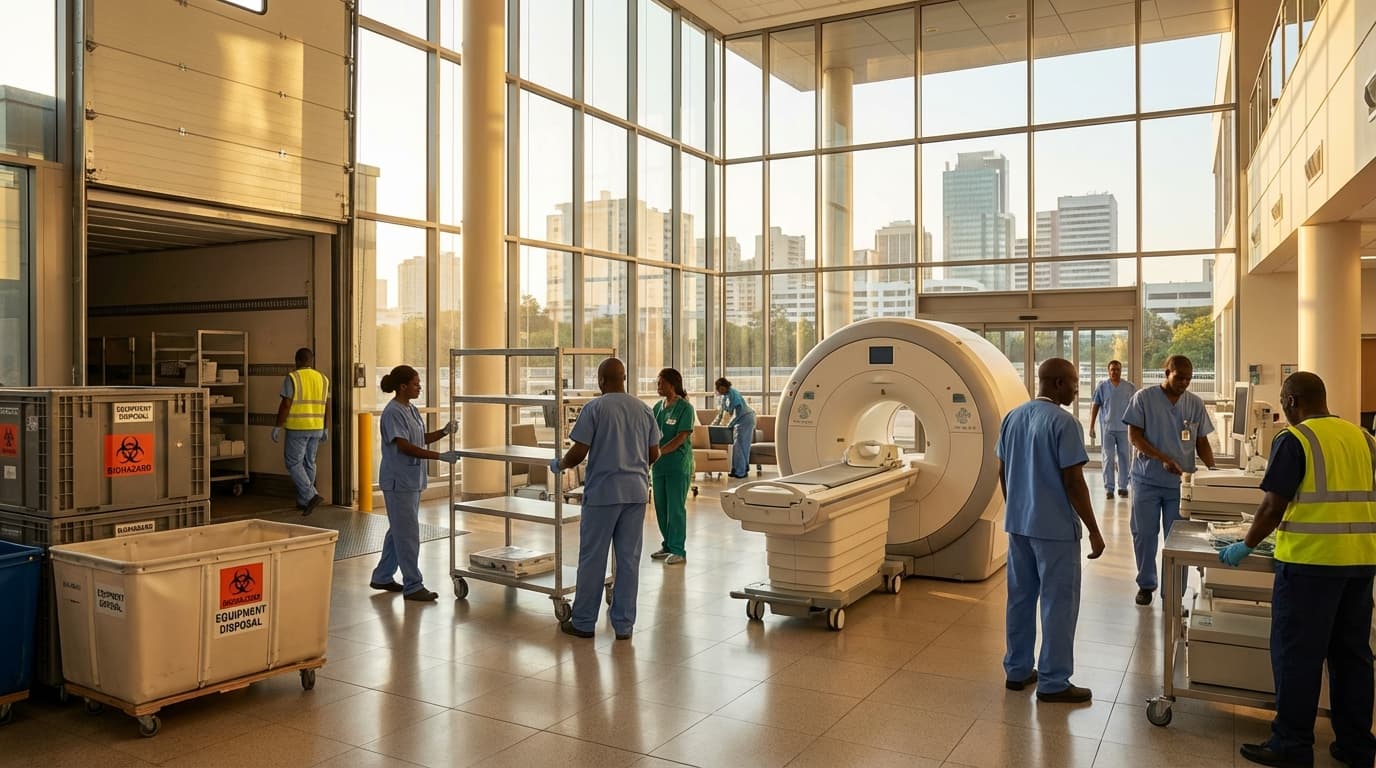
Medical Equipment Relocation Service (Move & Re-Install) in Niger
Engineering Excellence & Technical Support
Medical Equipment Relocation Service (Move & Re-Install) High-standard technical execution following OEM protocols and local regulatory frameworks.
Specialized Handling & Transport
Our expert technicians employ a meticulous approach to packing, crating, and transporting sensitive medical equipment in Niger, ensuring zero compromise on calibration and structural integrity during transit across diverse terrains.
Certified Re-Installation & Calibration
We provide certified technicians for the precise re-installation and calibration of all medical devices at your new Nigerien facility, guaranteeing immediate operational readiness and compliance with all relevant standards.
Regulatory Adherence & Documentation
Navigating Niger's specific regulatory landscape for medical equipment, our service ensures all relocation and re-installation processes are fully compliant, with comprehensive documentation provided for seamless handover and auditing.
What Is Medical Equipment Relocation Service (Move & Re-install) In Niger?
Medical Equipment Relocation Service (Move & Re-Install) in Niger refers to a specialized logistical and technical undertaking involving the safe and compliant transportation of medical devices and machinery from one location to another within Niger, followed by their precise reassembly and functional verification at the new site. This service is critical for healthcare facilities undergoing expansion, renovation, or relocation, as well as for ensuring continuity of care during emergencies or disaster response. It necessitates adherence to stringent safety protocols, regulatory standards, and manufacturer specifications to prevent damage, maintain calibration, and ensure immediate operational readiness of the equipment.
| Service Provider Category | Target Beneficiaries | Typical Use Cases |
|---|---|---|
| Specialized Medical Logistics Companies | Hospitals (public and private), clinics, diagnostic centers, research institutions, government health ministries, NGOs, and international aid organizations operating in Niger. | Facility Relocation: Moving an entire hospital or clinic to a new building due to expansion, renovation, or closure of the old facility. Departmental Consolidation/Expansion: Relocating imaging departments (X-ray, CT, MRI), operating theaters, laboratories, or intensive care units within a larger healthcare campus. Emergency/Disaster Response: Rapid deployment of medical equipment to temporary medical facilities established in response to natural disasters, outbreaks, or conflict. Equipment Upgrades/Replacements: Moving older equipment out and bringing new, larger, or more complex equipment in, requiring significant logistical and technical expertise. Inter-Facility Transfers: Shifting specialized equipment between different branches of a healthcare network or to fulfill specific patient care needs in another location. Research Project Deployment: Setting up temporary or semi-permanent research facilities requiring the relocation of sophisticated scientific and medical instruments. |
Key Components of Medical Equipment Relocation Service (Move & Re-Install) in Niger
- Pre-relocation Assessment and Planning: Site surveys, inventory verification, risk assessment, and development of a detailed relocation plan including logistics, timelines, and resource allocation.
- Dismantling and Decontamination: Careful disassembly of equipment, following manufacturer guidelines. Includes thorough cleaning and disinfection to prevent cross-contamination and ensure hygiene at the destination.
- Specialized Packing and Handling: Utilization of protective packaging materials, climate-controlled transport if required, and specialized lifting/handling equipment to mitigate shock, vibration, and environmental damage during transit.
- Secure Transportation: Employing trained personnel and appropriate vehicles (e.g., temperature-controlled, air-ride suspension) to ensure the integrity of sensitive medical equipment during road transport within Niger.
- Re-installation and Re-assembly: Precise re-assembly of equipment at the new location, adhering to original configuration and manufacturer specifications.
- Calibration and Testing: Post-installation verification of all operational parameters. This includes recalibrating sensors, verifying performance metrics, and conducting full functional tests to ensure accuracy and reliability.
- Regulatory Compliance and Documentation: Ensuring all relocation activities comply with Nigerien health regulations, radiation safety standards (if applicable), and electrical safety requirements. Comprehensive documentation of the entire process is maintained.
- Training and Handover: Providing on-site training to relevant personnel on the re-installed equipment's operation and maintenance, ensuring a smooth transition and continued operational capacity.
Who Needs Medical Equipment Relocation Service (Move & Re-install) In Niger?
This document outlines the critical need for specialized medical equipment relocation and re-installation services in Niger. The safe, efficient, and compliant transfer and recommissioning of vital medical technology are essential for maintaining healthcare delivery standards, especially in a context where resources can be strained and the availability of skilled technicians for such specific tasks might be limited. The focus is on ensuring that essential medical functions are not disrupted during transitions and that equipment is operational and calibrated according to manufacturer specifications upon re-installation.
| Customer Type | Relevant Departments | Specific Equipment Considerations |
|---|---|---|
| Hospitals (Public & Private) | Radiology, Cardiology, Oncology, Surgery, ICU, ER, Pharmacy, Central Sterilization, Laboratories | MRI, CT Scanners, X-ray machines, Cath labs, Linear accelerators, Ventilators, Anesthesia machines, Sterilizers, High-end microscopes, HPLC systems |
| Clinics and Health Centers | General Practice, Pediatrics, Maternity, Minor Surgery, Basic Laboratory | Ultrasound machines, ECG machines, basic X-ray units, centrifuges, patient monitors |
| Diagnostic Imaging Centers | Radiology, MRI, CT, Ultrasound | High-field MRI, multi-slice CT scanners, specialized ultrasound probes, PACS systems |
| Laboratories and Research Facilities | Pathology, Biochemistry, Microbiology, Hematology, Molecular Biology | Automated analyzers, PCR machines, flow cytometers, incubators, fume hoods, ultra-low freezers |
| Surgical Centers and Operating Theaters | Surgery, Anesthesia, Post-Anesthesia Care Unit (PACU) | Surgical tables, operating lights, anesthesia machines, electrocautery units, patient warming systems |
| NGOs and Humanitarian Organizations | Field Hospitals, Mobile Clinics, Primary Healthcare Units | Portable X-ray, generators, water purification systems (medical context), basic surgical kits, commutable diagnostic tools |
| Government Health Ministries | Public Health Programs, Central Medical Stores, National Laboratories | Wide range of equipment from basic to specialized, depending on program focus and facility level |
Target Customers and Departments Requiring Medical Equipment Relocation & Re-Installation Services in Niger
- Hospitals (Public & Private): This is the primary target. Hospitals, regardless of size or ownership, frequently undergo renovations, expansions, or have equipment reaching the end of its lifecycle and requiring relocation to newer facilities or specialized departments. Internal departmental moves are also common.
- Clinics and Health Centers (Urban & Rural): Smaller healthcare facilities, including those in remote areas, may need to relocate or upgrade equipment due to expansion, damage, or the introduction of new services. Ensuring continuity of care is paramount.
- Diagnostic Imaging Centers: Facilities specializing in X-rays, CT scanners, MRI machines, and ultrasound equipment require highly specialized handling and re-installation by certified professionals to maintain image quality and safety.
- Laboratories and Research Facilities: Medical laboratories often house sensitive and expensive equipment (e.g., centrifuges, microscopes, analytical instruments) that need precise relocation and recalibration to ensure accurate diagnostic results and research integrity.
- Surgical Centers and Operating Theaters: The relocation of surgical equipment, anesthesia machines, patient monitors, and surgical lighting systems demands meticulous planning and execution to prevent any compromise in surgical procedure safety and efficiency.
- Emergency Medical Services (EMS) Stations: While less common for large-scale relocation, EMS may require moving specialized equipment to new stations or during facility upgrades.
- NGOs and Humanitarian Organizations: Organizations operating healthcare programs in Niger will often set up temporary or permanent clinics and require relocation services for their medical assets, especially during project setup or relocation.
- Government Health Ministries and Agencies: These entities may oversee the relocation of equipment between public health facilities, during the establishment of new health initiatives, or in response to public health emergencies.
- Medical Training Institutions: Universities and colleges with medical programs often have simulation labs or practical training facilities that house medical equipment needing relocation or updating.
Medical Equipment Relocation Service (Move & Re-install) Process In Niger
This document outlines the standard operating procedure for medical equipment relocation services (move and re-installation) in Niger, detailing the workflow from initial client inquiry to successful completion. The process is designed to ensure the safe, efficient, and compliant transfer and recommissioning of sensitive medical devices, adhering to Nigerien regulations and international best practices. Emphasis is placed on risk mitigation, proper handling, and thorough testing to guarantee the equipment's functionality post-relocation.
| Stage | Description | Key Activities | Responsible Party/Parties | Potential Challenges & Mitigation (Niger Context) |
|---|---|---|---|---|
| The process begins with a client (hospital, clinic, research facility) expressing interest in relocating medical equipment. | Receive inquiry, understand client's needs (type of equipment, origin/destination, timeline), preliminary discussion on scope of work. | Client, Service Provider | Language barriers (French/local dialects), differing understanding of 'relocation' scope. Mitigation: Use clear, bilingual communication; provide a detailed service outline for client review. |
| A thorough evaluation of both the origin and destination sites to plan the logistics and technical requirements. | On-site visit to both locations, identify access points, power requirements, environmental conditions, space availability, security, potential hazards, inventory verification, identify specific de/re-installation needs. | Service Provider (Technical Specialists, Logistics Coordinators), Client (Facility Management, Biomedical Engineers) | Poor infrastructure at origin/destination sites, limited access for large equipment, unpredictable power supply. Mitigation: Detailed site surveys with photographic evidence; develop contingency plans for access and power (generators); factor in potential delays due to infrastructure issues. |
| A detailed proposal outlining the scope of work, timeline, costs, and terms is presented to the client. | Develop a comprehensive quotation based on site assessment, equipment specifics, distance, and complexity. Present quotation, negotiate terms, finalize contract/service agreement. | Service Provider, Client | Currency fluctuations, unpredictable fuel costs for transportation. Mitigation: Include clauses for fuel price adjustments; specify payment terms clearly to mitigate financial risks. |
| All necessary preparations are made before the physical relocation of equipment. | Obtain necessary permits/licenses (if any, especially for international transfers), secure specialized packing materials, arrange for trained personnel, confirm insurance coverage, schedule downtime with the client. | Service Provider, Client | Bureaucratic delays in obtaining permits, availability of specialized packing materials. Mitigation: Initiate permit applications early; maintain a stock of specialized materials; establish strong relationships with local authorities and suppliers. |
| Careful disconnection, disassembly (if necessary), and protective packing of the medical equipment. | Safely disconnect power and ancillaries, drain fluids (if applicable), perform minor disassembly (if required), clean equipment, use anti-static and shock-absorbent packing materials, label all components clearly, document condition before packing. | Service Provider (Biomedical Technicians, Specialized Movers) | Lack of original packaging or manuals, potential for damage due to improper handling. Mitigation: Use custom-built crates and padding; meticulously document each step; employ technicians experienced with the specific equipment types. |
| The safe and secure transit of the packed equipment from the origin to the destination. | Loading onto appropriate vehicles, securing the load, route planning considering road conditions and security, real-time tracking (if available), adherence to transport regulations. | Service Provider (Logistics Team, Drivers) | Poor road conditions, potential security risks (theft, tampering), unpredictable weather. Mitigation: Utilize reinforced vehicles; employ experienced drivers familiar with local routes; implement security measures during transit (escorts if necessary); monitor weather forecasts. |
| Careful unpacking and assembly of the equipment at the new location. | Unload equipment, carefully remove packing materials, inspect for any transit damage, reassemble (if disassembled), position equipment according to facility layout and safety guidelines. | Service Provider (Biomedical Technicians, Specialized Movers) | Damage during unpacking, incorrect placement affecting workflow. Mitigation: Rigorous inspection process; follow pre-defined installation plans; clear communication with facility staff on placement. |
| Ensuring the equipment functions correctly and meets performance standards after re-installation. | Perform functional tests, calibration checks, safety assessments, run diagnostic routines, verify all parameters against manufacturer specifications. | Service Provider (Biomedical Technicians, Certified Technicians) | Lack of access to calibration standards or specialized testing equipment, potential for subtle performance degradation. Mitigation: Ensure technicians are equipped with appropriate tools; use manufacturer-recommended testing protocols; consider third-party validation if required. |
| Educating the client's staff on the operation and basic maintenance of the relocated equipment. | Conduct operational training for end-users and technical staff, provide updated manuals and documentation, obtain client sign-off on successful re-installation and handover. | Service Provider (Biomedical Technicians, Trainers), Client (End-users, Biomedical Department) | Language barriers in training, varying technical proficiency of staff. Mitigation: Provide training materials in local languages where possible; tailor training to the audience's skill level; offer refresher sessions. |
| Ensuring ongoing client satisfaction and addressing any emergent issues. | Schedule follow-up visits, address any post-installation queries, provide warranty support (if applicable), gather client feedback for service improvement. | Service Provider (Client Relations, Technical Support) | Difficulty in reaching client after handover, unforeseen technical glitches. Mitigation: Establish clear communication channels; offer a dedicated support contact; maintain a log of all interactions and resolutions. |
Key Stages of Medical Equipment Relocation Process in Niger
- Inquiry & Initial Consultation
- Site Assessment & Planning
- Quotation & Agreement
- Pre-Relocation Preparation
- Equipment Decommissioning & Packing
- Transportation
- Equipment Unpacking & Re-installation
- Testing & Calibration
- Training & Handover
- Post-Relocation Follow-up
Medical Equipment Relocation Service (Move & Re-install) Cost In Niger
Relocating medical equipment in Niger involves a specialized service that goes beyond standard moving. This often includes disassembly, careful packing, secure transport, reassembly, and calibration/testing at the new location. The cost of such a service can vary significantly based on several factors. It's important to obtain detailed quotes from experienced providers who understand the intricacies of handling sensitive medical machinery.
| Equipment Category | Estimated Cost Range (XOF) | Notes |
|---|---|---|
| Small Diagnostic Devices (e.g., portable ultrasound, ECG machines) | 150,000 - 400,000 | Relatively straightforward, less specialized packing needed. |
| Medium-Sized Laboratory Equipment (e.g., centrifuges, basic analyzers) | 300,000 - 800,000 | Requires careful handling and some disassembly. |
| Large Imaging Equipment (e.g., X-ray machines, smaller CT scanners) | 800,000 - 3,000,000+ | Significant disassembly, specialized transport, and reassembly required. Professional technicians are essential. |
| Very Large/Complex Equipment (e.g., MRI scanners, high-end CT scanners) | 3,000,000 - 15,000,000+ | Extensive project requiring expert engineers, complex logistics, specialized transport (potentially air freight in some cases), and extensive calibration. Costs can escalate rapidly. |
Key Pricing Factors for Medical Equipment Relocation in Niger:
- Type and Size of Equipment: Larger, more complex, and heavier machines (e.g., MRI scanners, CT scanners, large laboratory analyzers) will naturally incur higher costs due to specialized handling, larger transport vehicles, and more extensive disassembly/reassembly procedures.
- Distance and Accessibility: The distance between the old and new location is a primary driver of cost. Furthermore, the accessibility of both sites plays a crucial role. Remote locations, areas with poor road infrastructure, or sites requiring specialized access equipment (cranes, forklifts) will increase the overall price.
- Dismantling and Reassembly Complexity: Some medical equipment requires intricate dismantling and reassembly processes, often needing manufacturer-certified technicians. The more complex the process, the higher the labor costs and the longer the project will take.
- Packing and Protective Materials: Medical equipment requires specialized, often custom-built, crates and cushioning materials to protect it from damage during transit. The cost of these materials is factored into the service.
- Insurance: Adequate insurance coverage for high-value medical equipment during transit is essential. Premiums will be influenced by the total value of the equipment being moved.
- Time Sensitivity and Urgency: If the relocation needs to be completed on an expedited timeline, there will likely be an additional charge for urgency.
- Specialized Personnel and Expertise: The involvement of trained technicians, engineers, and specialized movers with experience in handling medical devices will contribute to the overall cost.
- Calibration and Testing: Post-relocation calibration and testing are crucial to ensure the equipment functions correctly. This service, often performed by qualified technicians, adds to the expense.
- Permits and Regulatory Compliance: Depending on the type of equipment and local regulations, certain permits or compliance checks might be required, adding to administrative and service costs.
- Additional Services: This could include temporary storage, specialized warehousing, or disposal of old equipment, all of which will impact the final price.
Affordable Medical Equipment Relocation Service (Move & Re-install) Options
Moving and re-installing specialized medical equipment requires a unique set of skills, attention to detail, and careful planning. Our Affordable Medical Equipment Relocation Service (Move & Re-Install) is designed to provide a seamless transition for your valuable assets, minimizing downtime and ensuring your operational readiness at the new location. We understand the critical nature of medical devices and prioritize their safety and functionality throughout the entire process. We offer flexible value bundles tailored to your specific needs, along with proven cost-saving strategies to make this essential service accessible and budget-friendly.
| Value Bundle | Description | Ideal For | Estimated Price Range (Indicative) |
|---|---|---|---|
| Essentials Move | Includes secure transportation of up to 5 standard medical devices (e.g., exam tables, basic diagnostic machines) and basic on-site re-positioning. | Small clinics, individual practices, or single department moves. | $750 - $2,000 |
| Standard Relocation | Covers transportation of up to 10 mixed medical devices (including some specialized equipment) with professional de-installation and re-installation, plus basic testing. | Medium-sized clinics, multi-departmental facilities, or larger practices. | $2,000 - $5,000 |
| Comprehensive Medical Center Move | Full-service relocation for a significant number of diverse medical equipment, including complex diagnostic and surgical machinery, with detailed testing and calibration. | Hospitals, large medical centers, or facilities undergoing significant expansion/renovation. | $5,000+ |
| Custom Bundle | Tailored to your unique requirements, including specialized equipment, multiple locations, or expedited services. | Unique or complex relocation projects. | Quoted per project |
Our Medical Equipment Relocation Service Includes:
- Expert Planning & Consultation: Dedicated project managers to assess your equipment, site requirements, and develop a customized relocation plan.
- Specialized Packing & Handling: Use of industry-standard, shock-absorbent, and climate-controlled packaging materials to protect sensitive instruments.
- Secure Transportation: GPS-tracked, climate-controlled, and fully insured vehicles operated by trained professionals.
- Careful De-installation & Re-installation: Certified technicians with expertise in a wide range of medical equipment, ensuring proper dismantling, transportation, and reassembly.
- System Testing & Calibration: Post-installation checks and basic calibration to verify functionality and readiness for use.
- Disposal & Recycling Options: Environmentally responsible disposal or recycling of old or unneeded equipment (additional service).
- On-site Support & Training: Basic orientation for your staff on the re-installed equipment, if required (additional service).
Verified Providers In Niger
In Niger, accessing reliable and high-quality healthcare is paramount. When seeking medical services, it's crucial to identify providers who meet stringent standards. Franance Health has established itself as a trusted network, meticulously vetting its partners to ensure they offer exceptional care. This commitment to verification distinguishes Franance Health providers as the premier choice for individuals and families in Niger.
| Provider Type | Key Franance Health Verification Criteria | Benefits for Patients |
|---|---|---|
| Hospitals | Accreditation, advanced medical equipment, adherence to hygiene protocols, availability of specialist doctors. | Access to comprehensive medical services, emergency care, surgical procedures, and advanced diagnostics. |
| Clinics | Qualified medical staff, well-maintained facilities, patient record management, availability of essential medications. | Routine check-ups, treatment for common ailments, preventative care, and access to primary healthcare services. |
| Specialist Centers (e.g., Cardiology, Pediatrics) | Board-certified specialists, specialized diagnostic tools, evidence-based treatment protocols, patient outcome tracking. | Expert diagnosis and treatment for specific medical conditions, access to highly trained professionals. |
| Diagnostic Laboratories | Certified technicians, calibration of equipment, adherence to quality control standards, timely and accurate reporting. | Reliable and precise diagnostic test results crucial for accurate medical decisions. |
Why Franance Health Credentials Matter:
- Rigorous Vetting Process: Franance Health employs a comprehensive evaluation of medical facilities and practitioners, assessing their qualifications, ethical practices, and adherence to international healthcare standards.
- Quality Assurance: Their network is built on a foundation of consistent quality. Patients can expect a high level of medical expertise, up-to-date technology, and a commitment to patient safety.
- Accessibility and Convenience: Franance Health partners are strategically located to offer accessible care across Niger, minimizing travel time and ensuring timely medical attention.
- Patient-Centric Approach: Verified providers are dedicated to a patient-first philosophy, emphasizing clear communication, personalized treatment plans, and compassionate care.
- Trust and Reliability: The Franance Health seal of approval signifies a provider that can be trusted for accurate diagnoses, effective treatments, and a positive healthcare experience.
Scope Of Work For Medical Equipment Relocation Service (Move & Re-install)
This Scope of Work (SOW) outlines the requirements for the relocation and re-installation of medical equipment. It details the technical deliverables and standard specifications expected from the service provider to ensure a safe, efficient, and compliant move that minimizes disruption to medical operations and maintains equipment integrity.
| Section | Description | Standard Specifications / Deliverables |
|---|---|---|
| Detailed site surveys at both origin and destination, risk assessments, and development of a comprehensive move plan. | • Detailed floor plans of origin and destination sites, including equipment placement diagrams. • Risk assessment report for each piece of equipment and potential hazards during transit. • Comprehensive move plan outlining timelines, logistics, personnel, and resource allocation. • Equipment inventory list with serial numbers, model numbers, and condition reports. • Communication plan with all stakeholders (clinical staff, facilities management, IT). • Pre-move technical assessments of essential utilities (power, water, gas, ventilation) at the destination. |
| Safe and systematic disconnection and dismantling of medical equipment from existing infrastructure. | • De-installation procedures documented and approved by the client. • Certified technicians qualified for specific equipment types (e.g., biomedical engineers). • Proper labeling and tagging of all components, cables, and accessories. • Secure containment and protection of sensitive components. • Disconnection from all associated utilities (power, data, medical gases, etc.) with proper safety protocols. |
| Appropriate packing and protective measures to safeguard equipment during transit. | • Use of specialized, padded, and shock-absorbent materials (e.g., custom crates, anti-static packaging). • Environmental controls (temperature, humidity) for sensitive equipment as required. • Secure strapping and bracing within transport vehicles. • Moisture and dust protection. • Clear labeling of all packages indicating contents, fragility, and handling instructions. |
| Secure and efficient transport of medical equipment from origin to destination. | • Use of specialized vehicles equipped for medical equipment transport (e.g., air-ride suspension, climate control). • Trained and experienced personnel for loading and unloading. • Adherence to all transportation regulations and safety standards. • Real-time tracking and communication during transit. • Insurance coverage for all transported equipment. |
| Accurate and safe re-installation and setup of medical equipment at the new location. | • Re-installation in accordance with manufacturer's guidelines and client's floor plan. • Connection to all required utilities (power, data, medical gases, etc.) by qualified personnel. • Initial functional checks and basic setup. • Verification of all connections and safety interlocks. |
| Verification of equipment performance and calibration to ensure operational readiness and accuracy. | • Full calibration of all relocated equipment to manufacturer specifications. • Performance testing using validated test equipment and procedures. • Verification of all safety features and alarm systems. • Issuance of calibration certificates for each piece of equipment. • Documented test results and pass/fail criteria. |
| Final checks, user training (if applicable), and formal handover of operational equipment. | • Site acceptance testing (SAT) with client representatives. • User training on basic operation and safety features (if specified in the contract). • Provision of all relevant documentation (manuals, test reports, calibration certificates). • Sign-off on successful relocation and re-installation by the client. |
| Troubleshooting and support following the relocation. | • Defined period of post-move support for addressing any immediate issues. • Clear escalation procedures for reporting and resolving problems. • Availability of technical support. |
| Comprehensive documentation throughout the entire process. | • Detailed move plan and pre-move assessment report. • Pre- and post-condition reports with photographic evidence. • De-installation and re-installation checklists. • Calibration and test reports for each equipment. • Final project report summarizing the relocation process, any deviations, and successful completion. • Asset tag verification and reconciliation. |
Key Objectives of Medical Equipment Relocation
- Ensure the safe and secure transport of all specified medical equipment from the origin site to the destination site.
- Minimize downtime and impact on clinical operations during the relocation process.
- Re-install and calibrate all equipment to manufacturer specifications and operational readiness.
- Maintain the integrity, functionality, and compliance of all relocated medical equipment.
- Provide comprehensive documentation of the entire relocation and re-installation process.
Service Level Agreement For Medical Equipment Relocation Service (Move & Re-install)
This Service Level Agreement (SLA) outlines the response times and uptime guarantees for the Medical Equipment Relocation Service (Move & Re-Install) provided by [Your Company Name] (hereinafter referred to as 'Provider') to [Client Name] (hereinafter referred to as 'Client'). This SLA is an integral part of the overall service agreement between the Provider and the Client.
| Service Component | Response Time Target | Uptime Guarantee | Remedy for Failure |
|---|---|---|---|
| Initial acknowledgement of relocation request (for scheduling) | Within 2 business days | N/A | Expedited scheduling of relocation |
| On-site arrival for relocation commencement (post-scheduling) | As per agreed schedule (e.g., within 30 minutes of scheduled time) | N/A | Rescheduling with priority, partial refund for delay exceeding 2 hours |
| Post-re-installation operational verification (initial) | Within 4 business hours of completion of re-installation | 99.0% within the first 72 hours post-re-installation | Waived relocation fee for the affected equipment; priority re-diagnosis and repair |
| Critical Equipment Downtime (during first 72 hours post-re-installation, due to relocation/re-install fault) | N/A (issue resolution is priority) | N/A (focus on minimizing downtime) | 10% service credit per 24-hour period of downtime exceeding 4 hours for critical equipment |
| Non-Critical Equipment Downtime (during first 72 hours post-re-installation, due to relocation/re-install fault) | N/A (issue resolution is priority) | N/A (focus on minimizing downtime) | 5% service credit per 24-hour period of downtime exceeding 8 hours for non-critical equipment |
| Resolution of critical operational issues post-re-installation | Within 12 business hours | N/A | Extended warranty on re-installation services (30 days) |
| Resolution of non-critical operational issues post-re-installation | Within 24 business hours | N/A | Extended warranty on re-installation services (15 days) |
Key Performance Indicators (KPIs)
- Response Time: The time taken by the Provider to acknowledge a reported issue and initiate remedial action.
- Downtime: The period during which the relocated medical equipment is unavailable for use due to issues directly attributable to the relocation or re-installation process.
- Uptime Guarantee: The percentage of time the medical equipment is expected to be operational after successful re-installation.
Frequently Asked Questions

Ready when you are
Let's scope your Medical Equipment Relocation Service (Move & Re-Install) in Niger project in Niger.

Scaling healthcare logistics and technical systems across the entire continent.