
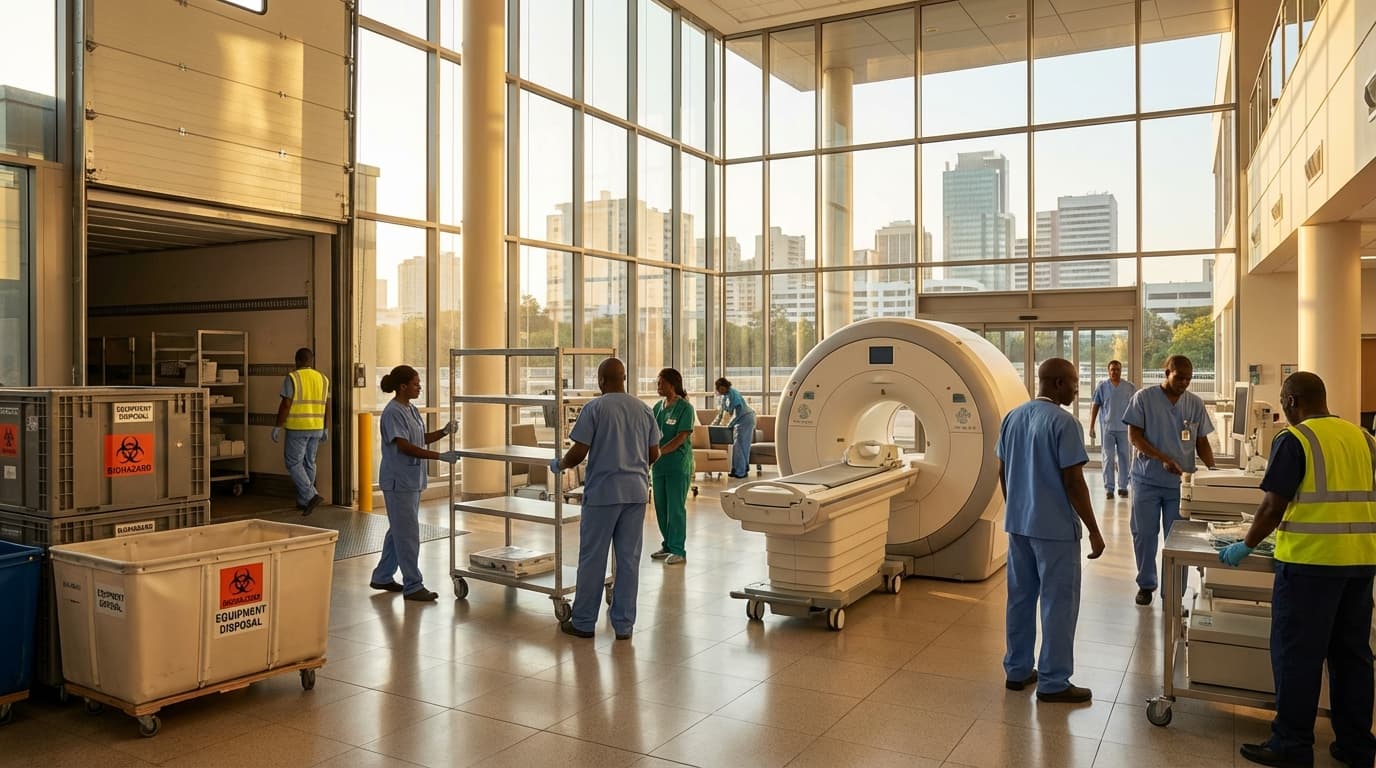
Decommissioning Service for Medical Devices in Niger
Engineering Excellence & Technical Support
Decommissioning Service for Medical Devices High-standard technical execution following OEM protocols and local regulatory frameworks.
Regulatory Compliance Assurance
Ensures all medical device decommissioning activities in Niger strictly adhere to national health regulations and international best practices, providing auditable documentation for full compliance.
Secure Data Eradication & Environmental Safety
Implements advanced data sanitization protocols for sensitive patient information on medical devices, coupled with environmentally responsible disposal methods to prevent hazardous material contamination in Niger.
Specialized Decommissioning Expertise
Leverages a team of highly trained technicians with specialized knowledge in handling and rendering various medical device categories (e.g., imaging, laboratory, surgical) inoperable and safe for disposal within Niger's unique operational context.
What Is Decommissioning Service For Medical Devices In Niger?
Decommissioning service for medical devices in Niger refers to the formal process of safely and irreversibly removing medical equipment from service. This involves a comprehensive set of procedures designed to ensure that the device is no longer functional, its data is securely erased or destroyed, and it is disposed of in an environmentally and legally compliant manner. The primary objective is to prevent unauthorized use, protect patient privacy, and mitigate any potential environmental hazards associated with the device's materials or residual components. This service is critical for healthcare facilities to manage their asset lifecycle effectively, adhere to regulatory requirements, and maintain operational security and compliance.
| Who Needs Decommissioning Service? | Typical Use Cases | |||||
|---|---|---|---|---|---|---|
| Hospitals and Clinics (Public and Private): For outdated, malfunctioning, or end-of-life medical equipment. | Replacement of existing equipment with newer technologies. | Upgrades and expansions of medical facilities. | End of contractual agreements for leased medical devices. | Healthcare institutions undergoing facility closures or consolidations. | Research institutions retiring specialized diagnostic or therapeutic equipment. | Government health agencies managing national medical equipment inventories. |
| Diagnostic Imaging Equipment (X-ray, CT, MRI): When replaced by newer models or become obsolete. | Surgical Instruments and Equipment: Upon wear and tear, obsolescence, or sterilization failures. | Laboratory Analyzers and Equipment: Due to technological advancements or irreparable damage. | Patient Monitoring Systems: When updated or no longer supported by manufacturers. | Therapeutic Devices (e.g., Dialysis Machines, Ventilators): At the end of their operational lifespan. | Sterilization Equipment: When maintenance costs outweigh replacement or efficiency declines. | Medical Information Systems (Hardware Components): After data migration and with strict adherence to data destruction protocols. |
Key Components of Medical Device Decommissioning Service in Niger
- Inventory and Identification: Cataloging all devices slated for decommissioning, including make, model, serial number, and location.
- Data Sanitization/Destruction: Securely erasing or physically destroying all sensitive patient data stored on or accessible by the device, adhering to relevant data privacy regulations.
- Functional Disablement: Rendering the device non-operational through physical means (e.g., removal of critical components, disabling power sources) or software-based methods.
- Environmental Assessment and Disposal: Evaluating the device for hazardous materials (e.g., mercury, lead, batteries) and ensuring proper segregation, transportation, and disposal through licensed waste management facilities.
- Asset Retirement Documentation: Generating comprehensive records of the decommissioning process, including certificates of destruction/sanitization, for audit and compliance purposes.
- Regulatory Compliance Verification: Ensuring all decommissioning activities align with national and international standards and regulations pertaining to medical devices and waste management in Niger.
Who Needs Decommissioning Service For Medical Devices In Niger?
Decommissioning medical devices in Niger is crucial for ensuring data security, environmental compliance, and efficient resource management. This service is essential for a range of healthcare providers and organizations that handle sensitive patient information and manage a lifecycle of medical equipment. Proper decommissioning prevents unauthorized access to protected health information (PHI), avoids improper disposal of hazardous materials, and allows for the responsible reuse or recycling of valuable components.
| Target Customer/Department | Specific Needs/Reasons for Decommissioning | Examples of Devices |
|---|---|---|
| Hospitals (e.g., Hôpital National de Niamey, Hôpital National Lamordé) | End-of-life equipment disposal, data sanitization from imaging systems, replacement of outdated diagnostic machines, compliance with national regulations for medical waste. | MRI machines, CT scanners, X-ray machines, patient monitors, defibrillators, surgical equipment. |
| Clinics and Health Centers (Rural and Urban) | Closure of facilities, relocation of services, upgrading to newer diagnostic tools, secure erasure of patient data from electronic health records systems. | Ultrasound machines, ECG machines, laboratory analysers, sterilizers, basic diagnostic equipment. |
| Ministry of Public Health (and its regional offices) | Management of national medical equipment inventory, ensuring proper disposal protocols are followed across the public health sector, data privacy compliance for centralized health information systems. | Any medical device managed by the public health infrastructure, including those in national medical stores. |
| NGOs (e.g., Médecins Sans Frontières (MSF), local health initiatives) | Project closure and handover of facilities, replacing aging equipment in remote areas, ensuring sensitive patient data is protected before equipment is donated or disposed of. | Portable ultrasound units, basic laboratory equipment, dental chairs, surgical kits. |
| Medical Research Institutions | Decommissioning of equipment used in clinical trials, data sanitization from research-specific diagnostic or analytical devices, compliance with research ethics and data protection. | Sequencing machines, specialized imaging devices, analytical instruments. |
| Medical Equipment Vendors/Service Providers | Responsible disposal of trade-in units, decommissioning of rental equipment at client sites, ensuring data removal before resale or refurbishment. | All types of medical devices they service, sell, or rent. |
Who Needs Decommissioning Service for Medical Devices in Niger?
- Hospitals and Clinics (Public and Private)
- Government Health Agencies
- Non-Governmental Organizations (NGOs) operating healthcare facilities
- Research Institutions with medical equipment
- Medical Equipment Vendors and Service Providers (during upgrades or replacements)
- International Health Organizations with operations in Niger
Decommissioning Service For Medical Devices Process In Niger
This document outlines the typical workflow for decommissioning medical devices within Niger, from the initial inquiry to the final execution of the service. The process emphasizes safety, regulatory compliance, and environmental responsibility. Note that specific procedures and responsible parties may vary slightly depending on the institution and the nature of the medical device.
| Stage | Description | Key Activities | Responsible Parties | Considerations |
|---|---|---|---|---|
| Initial Inquiry and Needs Assessment | The process begins when an organization (e.g., hospital, clinic) identifies a medical device requiring decommissioning. This could be due to obsolescence, malfunction, or end-of-life. | Identify device(s) needing decommissioning. Contact potential service providers. Define decommissioning scope and requirements. Initial assessment of device type and potential hazards. | Device Owner/Institution Medical Device Administrator Procurement Department | Timeliness of request. Clarity of decommissioning needs. Availability of internal resources. |
| Service Provider Selection and Agreement | The institution evaluates and selects a qualified service provider capable of safely and compliantly decommissioning medical devices. | Request for proposals (RFPs) or quotations. Evaluation of provider credentials, experience, and certifications. Contract negotiation and signing. | Device Owner/Institution Procurement Department Legal Department Selected Service Provider | Compliance with Nigerien regulations. Cost-effectiveness. Reputation and track record of the provider. Insurance and liability coverage. |
| Planning and Preparation | Once a provider is selected, a detailed plan is developed and executed to ensure a smooth and safe decommissioning process. | Site visit and risk assessment. Develop a detailed decommissioning plan. Secure necessary permits or approvals (if any). Coordinate logistics (scheduling, access, power). Prepare the work area. | Selected Service Provider Device Owner/Institution (Facility Management, IT) | Safety protocols. Environmental impact assessment. Availability of specialized tools and equipment. Training of personnel. |
| Disassembly and Data Destruction | The physical dismantling of the medical device occurs, with a critical focus on securely destroying any sensitive patient data. | Power down and disconnect device. Disassemble the device according to the plan. Remove and secure all components. Securely wipe, erase, or physically destroy data storage media (hard drives, memory chips). Segregate hazardous materials. | Selected Service Provider (Supervised by Device Owner/Institution) | Data privacy regulations. Use of certified data destruction methods. Safe handling of potentially hazardous components (e.g., batteries, refrigerants). |
| Waste Management and Disposal | All components and waste generated from the decommissioning process are managed and disposed of in an environmentally responsible and compliant manner. | Categorize waste streams (e.g., electronic waste, hazardous waste, non-hazardous waste). Transport waste to designated disposal or recycling facilities. Adhere to Nigerien waste management regulations. | Selected Service Provider Certified Waste Management Companies Environmental Protection Agency (if applicable) | Compliance with local and national environmental laws. Tracking and traceability of waste disposal. Minimizing landfill waste through recycling and reuse where possible. |
| Documentation and Certification | The final stage involves comprehensive documentation and certification to confirm the successful and compliant decommissioning. | Generate a decommissioning report detailing all activities. Provide certificates of destruction for data media. Issue a certificate of decommissioning. Update asset registers. Final invoicing and payment. | Selected Service Provider Device Owner/Institution Auditors (if required) | Completeness and accuracy of records. Compliance with audit trails. Retention periods for documentation. |
Key Stages in Medical Device Decommissioning Workflow
- Initial Inquiry and Needs Assessment
- Service Provider Selection and Agreement
- Planning and Preparation
- Disassembly and Data Destruction
- Waste Management and Disposal
- Documentation and Certification
Decommissioning Service For Medical Devices Cost In Niger
Decommissioning medical devices in Niger is a crucial but often overlooked service. It ensures that old or non-functional equipment is disposed of safely and responsibly, preventing environmental contamination and the misuse of sensitive technology. The cost of this service is influenced by a variety of factors, leading to a range of pricing in the local currency, Nigerien CFA Franc (XOF). Understanding these pricing factors is essential for healthcare facilities and governmental bodies when budgeting for these operations.
| Device Category | Estimated Cost Range (XOF) | Notes |
|---|---|---|
| Small Laboratory Equipment (e.g., microscopes, centrifuges) | 50,000 - 150,000 XOF | Simpler dismantling, minimal hazardous materials. |
| Medium-Sized Equipment (e.g., X-ray machines, dental chairs) | 200,000 - 750,000 XOF | May involve some hazardous components and requires more specialized handling. |
| Large Diagnostic Imaging Equipment (e.g., older ultrasound, basic CT scanners) | 800,000 - 2,500,000 XOF | Significant bulk, potential for hazardous materials, and data security considerations. |
| Specialized/High-Value Equipment (e.g., older MRI, advanced laboratory analyzers) | 3,000,000 - 10,000,000+ XOF | Complex dismantling, significant hazardous material concerns, extensive data destruction protocols, and specialized disposal pathways. |
| General Office/Ancillary Equipment (e.g., old computers, printers) | 10,000 - 50,000 XOF per unit | Focus on data destruction and basic material recycling. Often bundled. |
Key Pricing Factors for Medical Device Decommissioning in Niger:
- Device Type and Complexity: The more sophisticated and larger the medical device (e.g., MRI machines, CT scanners, complex laboratory equipment), the higher the decommissioning costs. This is due to the specialized knowledge, tools, and disposal methods required.
- Volume of Devices: A larger number of devices to be decommissioned often results in a lower per-unit cost due to economies of scale, allowing for more efficient resource allocation.
- Condition of the Device: Devices that are heavily damaged, contain hazardous materials, or are particularly difficult to dismantle will incur higher costs. Some components may require specialized handling and disposal protocols.
- Location of the Facility: The geographical location of the medical facility within Niger can impact transportation costs for both the decommissioning crew and the eventual disposal of materials. Remote areas might see higher pricing due to increased logistics challenges.
- Hazardous Material Content: Medical devices often contain hazardous components such as mercury, lead, batteries, or refrigerants. The safe removal, containment, and specialized disposal of these materials significantly add to the overall cost.
- Data Security and Destruction: For devices containing patient data (e.g., imaging machines, electronic health records systems), secure data wiping or physical destruction is paramount. This adds a layer of complexity and cost to the decommissioning process.
- Regulatory Compliance and Certification: Adhering to local and international environmental and health regulations is mandatory. Services that provide certified decommissioning and disposal documentation will typically command higher prices.
- Service Provider's Expertise and Reputation: Experienced and reputable decommissioning service providers in Niger may charge more due to their proven track record, specialized training, and established relationships with certified disposal facilities.
- Disposal and Recycling Fees: The cost of sending devices or their components to licensed recycling or disposal facilities, especially for hazardous waste, is a direct component of the overall price.
- Transportation and Logistics: The cost of transporting equipment, specialized tools, and personnel to and from the decommissioning site is a significant factor, particularly in a country with varying infrastructure quality.
Affordable Decommissioning Service For Medical Devices Options
Decommissioning medical devices is a critical and often overlooked aspect of healthcare operations. It involves the safe and compliant removal of equipment from service, ensuring data privacy, environmental responsibility, and the prevention of unauthorized use. Finding affordable options is paramount for budget-conscious healthcare facilities. Value bundles offer a comprehensive approach to decommissioning, bundling essential services for cost efficiency. Cost-saving strategies focus on optimizing the decommissioning process and leveraging strategic partnerships.
| Cost-Saving Strategy | Description | Potential Benefit |
|---|---|---|
| Bulk Decommissioning | Scheduling decommissioning of multiple devices or an entire department at once to leverage economies of scale. | Reduced per-unit service fees, streamlined logistics. |
| Early Planning & Integration | Incorporating decommissioning into the initial procurement or budgeting process, rather than treating it as an afterthought. | Better forecasting, potential for negotiated bulk discounts with manufacturers or service providers. |
| Strategic Partnerships | Collaborating with specialized decommissioning vendors who offer competitive pricing for bundled services. | Access to expertise, potentially lower rates than in-house solutions or fragmented service providers. |
| Asset Recovery & Resale | Working with vendors who can refurbish or facilitate the resale of functional or reusable medical equipment. | Offsetting decommissioning costs, generating revenue from retired assets. |
| Consolidated Vendor Management | Utilizing a single vendor for multiple decommissioning needs, simplifying contracts and potentially securing volume discounts. | Reduced administrative overhead, stronger negotiation power. |
| Environmental Compliance Optimization | Ensuring proper recycling and disposal methods to avoid fines and penalties associated with non-compliance. | Avoiding costly fines, promoting a positive environmental image. |
| Data Security Standards Adherence | Selecting vendors who strictly adhere to data destruction standards (e.g., HIPAA, GDPR), mitigating risks of data breaches. | Preventing expensive lawsuits and reputational damage from data breaches. |
Understanding Value Bundles in Medical Device Decommissioning
- {"title":"Core Decommissioning Bundle","description":"Includes essential services such as data sanitization, physical dismantling, asset tracking, and basic environmental disposal. This bundle is ideal for standard equipment with straightforward decommissioning needs."}
- {"title":"Enhanced Decommissioning Bundle","description":"Adds value beyond the core by incorporating services like certified data destruction (e.g., NIST 800-88), asset refurbishment or resale facilitation, and specialized waste management (e.g., biohazardous materials). This is suited for devices with sensitive data or those with potential resale value."}
- {"title":"Full-Service Lifecycle Management Bundle","description":"A comprehensive solution encompassing acquisition consulting, maintenance management, upgrade planning, and end-of-life decommissioning. This offers the highest level of cost control and operational efficiency over the entire device lifecycle."}
- {"title":"Customizable Bundles","description":"Many providers offer the flexibility to tailor bundles to specific facility needs, allowing for the inclusion or exclusion of services to match the exact requirements and budget."}
Verified Providers In Niger
In Niger, ensuring access to quality healthcare is paramount. This is where the importance of verified providers and trusted credentials like those offered by Franance Health comes into play. Choosing a healthcare provider with verified credentials offers a multitude of benefits, guaranteeing expertise, adherence to ethical standards, and a commitment to patient safety and well-being. Franance Health, through its rigorous vetting process, identifies and endorses healthcare professionals and institutions that meet the highest benchmarks of quality and reliability. This verification not only builds trust but also empowers patients to make informed decisions about their health, knowing they are in capable and ethical hands.
| Credential Type | Verification Criteria | Benefit to Patient |
|---|---|---|
| Medical Licenses & Certifications | Up-to-date, accredited, and recognized by national/international health bodies. | Guarantees foundational competency and legal authorization to practice. |
| Specialty Board Certifications | Evidence of advanced training and expertise in a specific medical field. | Ensures care is provided by specialists with in-depth knowledge. |
| Professional Affiliations & Memberships | Membership in reputable medical associations and organizations. | Indicates engagement with current medical practices and peer recognition. |
| Continuing Medical Education (CME) | Proof of ongoing learning and professional development to stay updated. | Confirms provider's commitment to maintaining and enhancing their skills. |
| Clinical Experience & Performance Records | Review of past performance, patient outcomes, and disciplinary actions (if any). | Provides assurance of practical proficiency and a track record of good practice. |
| Franance Health Endorsement | Successful completion of Franance Health's independent, stringent vetting process. | Represents the highest level of trust and assurance in quality, ethics, and reliability. |
Why Verified Providers with Franance Health Credentials are the Best Choice:
- Uncompromising Quality of Care: Franance Health verifies providers based on their educational background, specialized training, practical experience, and ongoing professional development. This ensures you receive care from highly skilled and knowledgeable practitioners.
- Adherence to Ethical Standards: Verified providers are committed to upholding the highest ethical principles in their practice, prioritizing patient confidentiality, informed consent, and compassionate care.
- Patient Safety and Reliability: The verification process includes checks on licensing, regulatory compliance, and operational standards, minimizing risks and ensuring a safe healthcare environment.
- Access to Specialized Expertise: Franance Health can help you identify specialists in various fields, ensuring you find the right expert for your specific medical needs.
- Enhanced Trust and Confidence: Knowing your provider has been rigorously vetted by a reputable organization like Franance Health instills confidence and reduces the anxiety often associated with seeking medical attention.
- Streamlined Healthcare Navigation: Franance Health’s network of verified providers simplifies the process of finding and accessing quality healthcare services in Niger.
Scope Of Work For Decommissioning Service For Medical Devices
This Scope of Work (SOW) outlines the requirements for the decommissioning of medical devices. It details the technical deliverables and standard specifications to ensure safe, compliant, and environmentally responsible disposal or repurposing of used medical equipment. The decommissioning process will encompass all stages from site preparation to final documentation.
| Stage | Technical Deliverables | Standard Specifications/Requirements | Verification Method |
|---|---|---|---|
| Site Assessment and Planning | Decommissioning Plan, Site Access Protocols, Safety Plan | Compliance with local health and safety regulations (e.g., OSHA, COSHH), Risk assessment for handling hazardous materials, Environmental impact assessment, Secure access procedures for authorized personnel only. | Review of decommissioning plan by client, Pre-site inspection report, Signed safety protocols. |
| Device Identification and Inventory | Detailed device inventory list (model, serial number, condition, location) | Accurate identification of all devices subject to decommissioning, Cross-referencing with asset management systems, Inclusion of manufacturer's specifications for each device. | Client sign-off on final inventory list, Photographic evidence of each device before decommissioning. |
| Data Sanitization/Destruction | Certificate of Data Destruction/Sanitization for each device containing patient data | Adherence to HIPAA, GDPR, or equivalent data privacy regulations. Methods include overwriting, degaussing, or physical destruction of storage media. NIST 800-88 or similar standards for media sanitization. | Issuance of Certificates of Data Destruction, Audit logs of data sanitization procedures, Visual inspection of storage media after destruction (if applicable). |
| Disassembly and Component Segregation | Segregated waste streams (e.g., hazardous, recyclable, general waste), Component breakdown report | Segregation of materials based on regulatory requirements for disposal/recycling (e.g., batteries, mercury switches, plastics, metals). Compliance with environmental regulations for hazardous waste handling and disposal. | Waste manifests for hazardous materials, Photographic evidence of segregated waste streams, Client review of breakdown report. |
| Packaging and Transportation | Securely packaged devices/components, Transportation manifests, Chain of custody records | Use of appropriate packaging materials to prevent damage and environmental release. Transportation in compliance with local, national, and international regulations for transport of goods (including potentially hazardous materials). Licensed and insured transporters. | Verification of packaging integrity upon arrival at destination, Signed transportation manifests, Review of chain of custody records. |
| Disposal/Recycling/Donation | Waste disposal certificates, Recycling certificates, Donation receipts (if applicable) | Disposal through licensed and accredited facilities. Maximization of recycling opportunities for reusable components and materials. Adherence to ethical guidelines for donation of functional equipment to approved charities. | Receipt of official certificates from disposal/recycling facilities, Confirmation of donation to designated recipients. |
| Documentation and Reporting | Final Decommissioning Report including all certificates and manifests | Comprehensive report detailing all activities, materials handled, disposal methods, and regulatory compliance. Report should be clear, concise, and easily auditable. | Client review and approval of the Final Decommissioning Report. |
Key Stages of Medical Device Decommissioning
- Site Assessment and Planning
- Device Identification and Inventory
- Data Sanitization/Destruction
- Disassembly and Component Segregation
- Packaging and Transportation
- Disposal/Recycling/Donation
- Documentation and Reporting
Service Level Agreement For Decommissioning Service For Medical Devices
This Service Level Agreement (SLA) outlines the response times and uptime guarantees for the Decommissioning Service for Medical Devices provided by [Your Company Name]. This SLA applies to all active decommissioning service contracts between [Your Company Name] and its clients for medical devices.
| Service Component | Service Level Objective (SLO) | Monitoring and Measurement | Remedy for Failure |
|---|---|---|---|
| Response Time for Service Initiation Request (Non-Emergency) | Acknowledge and begin planning for decommissioning within 2 business days of receiving a valid request via the agreed-upon channel (e.g., portal, email). | Timestamp of request receipt and confirmation of initial planning commencement. | Escalation to senior management. Client may be eligible for a discount on future services based on the severity and duration of the delay. |
| Response Time for Emergency Decommissioning Request | Acknowledge and assign a dedicated technician within 4 business hours of receiving an emergency request (defined as a critical device failure requiring immediate removal to prevent patient harm or regulatory violation). | Timestamp of emergency request receipt and assignment confirmation. | Escalation to emergency response team. Client may be eligible for a credit towards future services for significant delays. |
| Scheduled Maintenance Downtime | Maximum of 4 hours per month, communicated at least 7 days in advance. | Internal maintenance logs and client notification records. | No remedy applies for scheduled downtime that adheres to the notification period. |
| Uptime Guarantee (Excluding Scheduled Downtime) | 99.5% availability of our decommissioning support infrastructure and personnel for scheduled activities. | Monthly tracking of total service hours versus downtime hours. | For every 1% of downtime below the 99.5% guarantee in a given month, the client will receive a credit of 5% on their monthly service fee. |
| Data Sanitization Success Rate | 100% success rate for all data sanitization procedures performed according to documented protocols. | Verification reports from sanitization equipment and final client sign-off. | Re-performance of sanitization at no additional cost. Investigation into the root cause of failure. |
| Documentation Delivery | Delivery of all required decommissioning documentation within 10 business days following physical device removal. | Timestamp of completion of physical removal and date of documentation delivery. | A daily penalty of $50 per device for late documentation, capped at 20% of the total decommissioning cost for that device. |
Definitions
- Decommissioning Service: The process of safely and securely removing medical devices from service, including data sanitization, physical disposal, and necessary documentation, in compliance with all relevant regulations.
- Downtime: Any period during which the decommissioning service is unavailable or significantly impaired, preventing the client from initiating or continuing a scheduled decommissioning process as per the agreed-upon schedule and procedure.
- Response Time: The maximum time allowed for [Your Company Name] to acknowledge and begin addressing a reported service issue or request.
- Resolution Time: The maximum time allowed for [Your Company Name] to resolve a reported service issue and restore the decommissioning service to its operational state.
- Scheduled Downtime: Planned periods for maintenance or upgrades, communicated to the client in advance.
- Unscheduled Downtime: Any downtime not classified as Scheduled Downtime.
Frequently Asked Questions

Ready when you are
Let's scope your Decommissioning Service for Medical Devices in Niger project in Niger.

Scaling healthcare logistics and technical systems across the entire continent.