
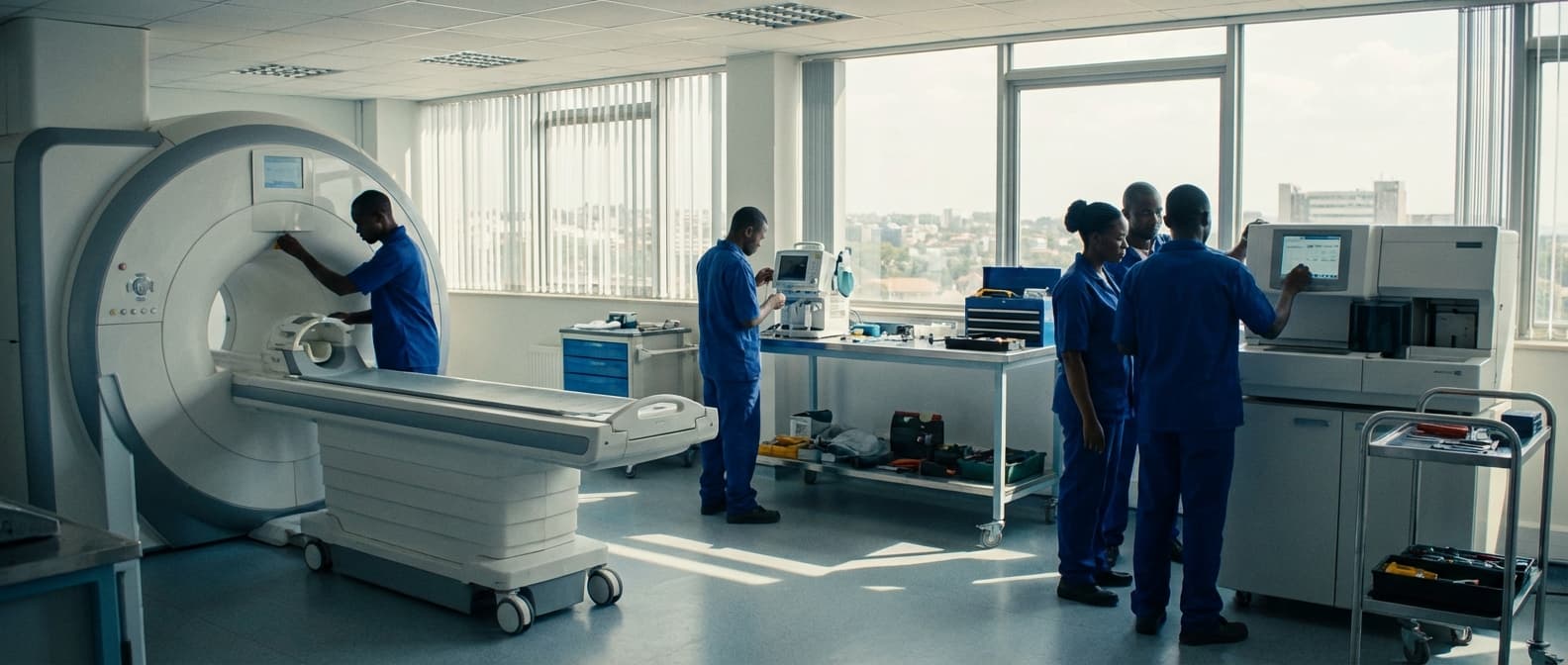
Uptime, Downtime & Root-Cause Analysis Reporting Service in Niger
Engineering Excellence & Technical Support
Uptime, Downtime & Root-Cause Analysis Reporting Service High-standard technical execution following OEM protocols and local regulatory frameworks.
Real-Time Uptime Monitoring & Alerting
Leverage cutting-edge technology for continuous, real-time monitoring of your critical IT infrastructure across Niger. Receive immediate, actionable alerts for any deviation from optimal performance, minimizing potential business disruption.
Proactive Downtime Prediction & Prevention
Our advanced analytical engine identifies subtle anomalies and predicts potential downtime events before they occur. This allows for proactive maintenance and intervention, safeguarding your operations and revenue streams.
Automated Root-Cause Analysis & Resolution
Swiftly identify the origin of issues with our automated root-cause analysis tools. Gain clear insights into recurring problems, empowering you to implement targeted solutions and prevent future outages, optimizing your service availability.
What Is Uptime, Downtime & Root-cause Analysis Reporting Service In Niger?
This service pertains to the systematic monitoring, reporting, and analysis of system availability and failures within IT infrastructures operating in Niger. It encompasses the measurement of Uptime (the period during which a system or service is operational and accessible) and Downtime (the period during which a system or service is unavailable or non-functional). Root-Cause Analysis (RCA) is a critical component, involving the diligent investigation of the underlying reasons for downtime events to prevent recurrence. The service provides comprehensive reporting on these metrics, enabling organizations to assess the reliability of their IT assets and the effectiveness of their operational procedures.
Who needs this service?
Organizations with critical IT infrastructure in Niger requiring high availability and robust operational resilience. This includes, but is not limited to:
- Telecommunications providers
- Financial institutions (banks, payment processors)
- Government agencies and public services
- Energy and utilities companies
- E-commerce platforms and online service providers
- Large enterprises with significant digital operations
- Cloud service providers operating data centers or points of presence in Niger.
| Typical Use Case | Description | Key Metrics/Outputs |
|---|---|---|
| Telecom Network Availability | Ensuring continuous connectivity for mobile and fixed-line services, internet access, and data transmission. | Uptime percentage of base stations, core network elements, and customer-facing services; downtime incident frequency and duration related to network failures. |
| Financial Transaction Processing | Maintaining the availability of banking systems, ATM networks, point-of-sale terminals, and online payment gateways. | Uptime of transaction processing servers and payment gateways; downtime impacting transaction success rates and customer access to funds. |
| Government Service Delivery | Ensuring the operational readiness of essential government IT systems for public services, e-governance platforms, and citizen portals. | Uptime of e-government websites and databases; downtime affecting citizen access to services and administrative processes. |
| E-commerce Platform Stability | Guaranteeing the uptime of online retail websites, shopping carts, order fulfillment systems, and payment integrations. | Website uptime and response times; downtime impacting sales, customer experience, and order processing. |
| Cloud Service Reliability | Verifying the availability and performance of cloud-based applications, storage, and compute resources hosted or accessed within Niger. | Uptime of virtual machines, databases, and APIs; downtime impacting customer applications hosted on the cloud. |
| Infrastructure Resilience Assessment | Evaluating the overall robustness of IT infrastructure against various failure scenarios (e.g., power outages, hardware failures, cyber-attacks). | Mean Time Between Failures (MTBF), Mean Time To Repair (MTTR), availability reports, RCA findings for significant outages. |
Key Components of the Service
- Uptime Monitoring: Continuous or scheduled checks to verify the operational status and accessibility of servers, applications, networks, and other IT components.
- Downtime Event Logging: Detailed recording of all service interruptions, including timestamps (start and end), affected systems, and observed symptoms.
- Performance Metrics Collection: Gathering data on key performance indicators (KPIs) that can indirectly indicate potential issues or contribute to downtime (e.g., latency, error rates, resource utilization).
- Automated Alerting: Proactive notification systems to inform relevant stakeholders of detected downtime or critical performance deviations.
- Root-Cause Analysis (RCA): Methodical investigation processes to identify the fundamental reasons behind downtime incidents. This may involve log analysis, configuration audits, traceback, and team collaboration.
- RCA Reporting: Documentation of findings from RCA, including the identified root cause, contributing factors, impact assessment, and recommended corrective and preventive actions.
- Availability Reporting: Generation of periodic reports (daily, weekly, monthly) summarizing uptime percentages, total downtime duration, frequency of incidents, and SLA (Service Level Agreement) compliance.
- Trend Analysis: Examination of historical uptime and downtime data to identify patterns, recurring issues, and areas for improvement.
- Incident Management Integration: Seamless integration with existing incident management workflows to ensure efficient resolution and documentation.
Who Needs Uptime, Downtime & Root-cause Analysis Reporting Service In Niger?
In Niger, where reliable infrastructure and operational efficiency are paramount for economic growth and service delivery, a comprehensive Uptime, Downtime & Root-Cause Analysis Reporting Service is crucial. This service provides invaluable insights into system performance, enabling organizations to proactively identify and address issues before they lead to significant disruptions. For businesses operating in sectors like telecommunications, energy, finance, and critical infrastructure, understanding the causes and impact of downtime is essential for maintaining customer trust, minimizing financial losses, and ensuring continuous operations. The ability to perform rigorous root-cause analysis allows for targeted improvements, ultimately enhancing overall resilience and efficiency.
| Customer Type | Key Departments Benefiting | Why they need the service |
|---|---|---|
| Telecommunications Companies | Network Operations Center (NOC), IT Operations, Customer Service, Engineering | Ensure network availability, reduce call center load from service outages, diagnose network faults quickly, and improve service quality. |
| Energy and Utilities Providers | Operations Management, Grid Control, Maintenance Departments, IT Security | Maintain power supply reliability, prevent blackouts, identify equipment failures, and ensure operational continuity for essential services. |
| Financial Institutions | IT Operations, Risk Management, Compliance, Security Operations Center (SOC) | Prevent system downtime that leads to financial loss, reputational damage, and regulatory non-compliance. Ensure secure and uninterrupted transaction processing. |
| Government Agencies | IT Infrastructure Management, Public Service Delivery, National Security, Disaster Management | Ensure the availability of critical public services (e.g., e-governance portals, emergency response systems), protect national infrastructure, and respond effectively to crises. |
| Oil and Gas Sector | Operations, Maintenance, HSE (Health, Safety, Environment), IT/OT | Prevent production stoppages due to equipment failure or IT system issues, ensure worker safety, and maintain operational efficiency in a high-risk environment. |
| Mining Operations | Mine Operations, Equipment Maintenance, IT Systems, Safety | Minimize downtime of heavy machinery and processing plants, ensure efficient resource extraction, and maintain safety standards by understanding equipment failure causes. |
| Logistics and Transportation | Fleet Management, Operations, IT Systems, Warehouse Management | Ensure smooth and uninterrupted movement of goods, optimize delivery schedules, and maintain visibility of the supply chain by preventing disruptions in tracking and communication systems. |
| Healthcare Providers | IT Department, Clinical Operations, Administration | Guarantee the uptime of patient record systems, diagnostic equipment interfaces, and communication tools, ensuring uninterrupted patient care and data integrity. |
| Large Industrial Manufacturers | Production Management, Maintenance, Industrial Control Systems (ICS) Engineering, IT | Reduce manufacturing line stoppages, optimize production output, and prevent costly breakdowns by analyzing the root causes of equipment and system failures. |
| Internet Service Providers (ISPs) | Network Operations, Customer Support, Engineering | Maintain consistent internet connectivity for customers, diagnose service disruptions promptly, and improve network performance to reduce churn and enhance customer satisfaction. |
Target Customers and Departments in Niger:
- Telecommunications Companies
- Energy and Utilities Providers (Electricity, Water)
- Financial Institutions (Banks, Microfinance)
- Government Agencies (Critical Infrastructure Management, Public Services)
- Oil and Gas Sector
- Mining Operations
- Logistics and Transportation Companies
- Healthcare Providers (Hospitals, Clinics with IT systems)
- Large Industrial Manufacturers
- Internet Service Providers (ISPs)
Uptime, Downtime & Root-cause Analysis Reporting Service Process In Niger
This document outlines the workflow for the Uptime, Downtime & Root-Cause Analysis Reporting Service in Niger. This service is designed to help organizations identify, analyze, and resolve issues that lead to system or service disruptions, ensuring improved reliability and performance. The process begins with an initial inquiry from a client and concludes with a comprehensive root-cause analysis report and actionable recommendations.
| Phase | Stage/Step | Description | Key Activities | Deliverables/Outcomes | Responsible Party (Client/Service Provider) | Typical Timeline (Niger Context) |
|---|---|---|---|---|---|---|
| Phase 1: Inquiry & Scoping | Initial Contact & Needs Assessment | Understanding the client's requirements, systems, and past issues. | Discussing service objectives, identifying critical systems/services, defining scope of reporting, and understanding existing monitoring capabilities. | Scope of Service Document, Service Level Agreement (SLA) draft, Initial understanding of client needs. | Client (Initiates) / Service Provider (Responds) | 1-3 Business Days |
| Phase 1: Inquiry & Scoping | Proposal & Agreement | Formalizing the service offering, pricing, and contractual terms. | Developing and submitting a detailed proposal, contract negotiation, and final agreement. | Signed Service Agreement, Detailed Proposal. | Service Provider / Client | 3-7 Business Days |
| Phase 2: Data Collection & Monitoring Setup | Information Gathering | Collecting technical details, access credentials, and documentation from the client. | Gathering system architecture diagrams, network configurations, application logs, access for monitoring tools, and relevant historical incident data. | Comprehensive System Information Package. | Client | 2-5 Business Days |
| Phase 2: Data Collection & Monitoring Setup | Monitoring Tool Deployment/Configuration | Setting up or integrating monitoring tools to capture uptime, downtime, and performance metrics. | Installing and configuring monitoring agents, setting up dashboards, defining alert thresholds, and establishing data ingestion pipelines. | Operational Monitoring System, Configured Dashboards & Alerts. | Service Provider | 5-15 Business Days (depending on complexity) |
| Phase 3: Incident Detection & Initial Assessment | Proactive Monitoring | Continuously observing system health and performance. | Collecting real-time data on system availability, response times, error rates, and resource utilization. | Live monitoring data, alerts triggered. | Service Provider | Ongoing (24/7) |
| Phase 3: Incident Detection & Initial Assessment | Downtime/Degradation Event Identification | Recognizing and classifying any deviation from expected system behavior. | Detecting unexpected service unavailability, significant performance degradation, or critical error spikes. | Incident Notification. | Service Provider | Immediate upon detection |
| Phase 3: Incident Detection & Initial Assessment | Preliminary Impact Assessment | Quickly evaluating the scope and severity of the incident. | Determining which systems/services are affected, the estimated number of users impacted, and the business criticality of the affected services. | Initial Incident Report, Severity Level Assignment. | Service Provider (with Client input) | 15-60 Minutes |
| Phase 4: Root-Cause Analysis (RCA) | Data Triage & Correlation | Gathering and analyzing all relevant data surrounding the incident. | Reviewing logs (system, application, network), performance metrics, configuration changes, and user reports. Correlating events across different sources. | Identified potential causes, timeline of events. | Service Provider | 1-4 Hours |
| Phase 4: RCA | Hypothesis Generation & Testing | Formulating and validating potential root causes for the incident. | Developing theories (e.g., software bug, hardware failure, network issue, human error, external factor) and testing them against collected data. | Validated or eliminated potential root causes. | Service Provider | 2-8 Hours |
| Phase 4: RCA | Root Cause Identification | Pinpointing the fundamental reason for the incident. | Determining the single or primary underlying cause that, if addressed, would prevent recurrence of the incident. | Identified Root Cause. | Service Provider | 1-3 Hours |
| Phase 5: Reporting & Recommendations | Drafting the RCA Report | Documenting the incident, analysis, and findings. | Creating a detailed report including incident summary, timeline, data analyzed, root cause, impact assessment, and contributing factors. | Draft Root Cause Analysis Report. | Service Provider | 4-8 Business Days |
| Phase 5: Reporting & Recommendations | Review and Validation | Presenting the draft report to the client for feedback and verification. | Discussing findings, clarifying details, and ensuring accuracy of the report with client stakeholders. | Feedback on draft report, confirmation of findings. | Service Provider / Client | 2-5 Business Days |
| Phase 5: Reporting & Recommendations | Finalizing Recommendations | Developing actionable steps to prevent future occurrences. | Proposing specific solutions, process improvements, configuration changes, or training initiatives based on the identified root cause. | Actionable Recommendations List. | Service Provider | 1-2 Business Days (integrated into report) |
| Phase 5: Reporting & Recommendations | Final Report Delivery | Providing the client with the complete and finalized RCA report. | Delivering the final RCA report, including executive summary, detailed analysis, root cause, and recommendations. | Final Root Cause Analysis Report. | Service Provider | 1 Business Day |
| Phase 6: Follow-up & Continuous Improvement | Implementation Support (Optional) | Assisting the client in implementing recommended solutions. | Providing technical guidance, project management, or hands-on support for remediation efforts (as per SLA). | Progress on remediation, implementation of solutions. | Service Provider / Client | As per agreement |
| Phase 6: Follow-up & Continuous Improvement | Post-Incident Review | Assessing the effectiveness of implemented solutions and gathering lessons learned. | Monitoring systems to ensure the incident does not reoccur, documenting lessons learned for future service improvements. | Confirmation of incident resolution, updated knowledge base. | Service Provider / Client | Ongoing / Periodic |
Uptime, Downtime & Root-Cause Analysis Reporting Service Workflow in Niger
- Phase 1: Inquiry & Scoping
- Phase 2: Data Collection & Monitoring Setup
- Phase 3: Incident Detection & Initial Assessment
- Phase 4: Root-Cause Analysis (RCA)
- Phase 5: Reporting & Recommendations
- Phase 6: Follow-up & Continuous Improvement
Uptime, Downtime & Root-cause Analysis Reporting Service Cost In Niger
The cost of Uptime, Downtime, and Root-Cause Analysis (RCA) reporting services in Niger is influenced by several key factors. These factors determine the overall pricing structure, which can range significantly based on the scope, complexity, and duration of the service engagement. Understanding these elements is crucial for businesses seeking to budget for such essential IT operational reporting.
| Service Level / Scope | Estimated Monthly Cost Range (XOF) | Description |
|---|---|---|
| Basic Uptime/Downtime Monitoring (Standard Reports) | 50,000 - 150,000 | Covers monitoring of a limited number of critical systems with standard weekly or monthly uptime/downtime reports and basic incident logging. |
| Intermediate Reporting & Basic RCA (Customizable Reports) | 150,000 - 400,000 | Includes more extensive system coverage, customizable reporting templates, bi-weekly or monthly detailed reports, and initial root-cause identification for common issues. |
| Advanced Reporting, Comprehensive RCA & Proactive Analysis | 400,000 - 1,000,000+ | Encompasses all systems, sophisticated dashboards, frequent (daily/weekly) detailed reports, in-depth root-cause analysis for complex incidents, performance trend analysis, and proactive recommendations. Costs can escalate significantly for very large or complex infrastructures. |
| On-Demand RCA Investigations (Project-Based) | 200,000 - 750,000+ per investigation | Charged on a per-incident basis for deep dive RCA investigations, particularly for critical or recurring issues. Pricing depends on the complexity and time required. |
Key Pricing Factors for Uptime, Downtime & RCA Reporting Services in Niger
- Scope of Services: The breadth of the reporting is a primary driver. This includes the number of systems or applications monitored, the level of detail required in reports (e.g., high-level summaries vs. granular technical logs), and the frequency of reporting (daily, weekly, monthly, on-demand).
- Data Volume and Complexity: The sheer volume of data to be collected, analyzed, and presented impacts cost. More complex systems generating extensive logs and metrics will naturally require more resources for processing and analysis.
- Customization Requirements: Standardized reporting templates are generally less expensive than custom-built dashboards and reports tailored to specific business needs and key performance indicators (KPIs).
- Monitoring Tooling and Infrastructure: Whether the client provides existing monitoring tools or requires the service provider to implement and manage them can affect costs. The integration of diverse monitoring systems also adds complexity.
- Root-Cause Analysis Depth: The level of investigation for downtime events is critical. Simple incident logging differs greatly from in-depth forensic analysis requiring specialized tools and expertise to pinpoint the exact root cause of failures.
- Service Level Agreements (SLAs): The uptime and response time guarantees embedded within the reporting service contract can influence pricing. More stringent SLAs often come with a higher premium.
- Provider Expertise and Reputation: Highly experienced and reputable service providers with proven track records in IT operations and RCA may command higher fees.
- Contract Duration: Longer-term contracts often come with discounted rates compared to short-term or ad-hoc engagements.
- Geographic Reach and Support: While focused on Niger, the provider's operational footprint and the need for local support or remote access capabilities can play a role.
- Reporting Frequency and Automation: The level of automation in report generation and the need for real-time alerts versus periodic summaries will impact resource allocation and cost.
Affordable Uptime, Downtime & Root-cause Analysis Reporting Service Options
We offer a comprehensive and cost-effective Uptime, Downtime & Root-Cause Analysis Reporting Service designed to empower your organization with actionable insights into system reliability. Our service helps you minimize disruptions, improve performance, and reduce operational costs through detailed incident tracking, analysis, and proactive recommendations. We understand that budget is a key consideration, so we've developed flexible value bundles and implemented cost-saving strategies to ensure you receive maximum value without compromising on quality or depth of analysis.
| Service Bundle | Description | Key Features Included | Ideal For | Pricing Model | Estimated Cost Range (Monthly) |
|---|---|---|---|---|---|
| Essential Uptime Monitor | Provides foundational monitoring and basic reporting for critical systems. | Real-time Uptime/Downtime Monitoring, Automated Incident Alerting, Basic Downtime Reports. | Small businesses, startups, or teams prioritizing core availability tracking. | Tiered subscription based on number of monitored endpoints. | $49 - $199 |
| Pro RCA Essentials | Combines robust monitoring with detailed downtime reporting and initial RCA support. | All Essential Uptime Monitor features + Detailed Downtime Reports, Basic Root-Cause Analysis (automated findings). | Growing businesses needing to understand incident impacts and immediate causes. | Tiered subscription + add-ons for complex RCA. | $199 - $499 |
| Enterprise Performance Suite | Our most comprehensive offering, providing in-depth RCA, proactive insights, and strategic recommendations. | All Pro RCA Essentials features + Advanced Root-Cause Analysis (human-assisted), Actionable Recommendations, Historical Performance Trending, Customizable Dashboards, SLA Compliance Reporting. | Medium to large enterprises with complex IT infrastructures and a need for deep reliability optimization. | Custom-quoted based on scope, number of systems, and dedicated support. | $499 - $2000+ |
| Add-on Modules | Enhance your chosen bundle with specialized capabilities. | Deep-dive performance analysis, specific application monitoring, cybersecurity incident correlation. | Organizations with unique or highly specialized monitoring requirements. | Per-module subscription. | Varies |
Key Features of Our Service:
- Real-time Uptime & Downtime Monitoring: Continuous tracking of your critical systems to identify availability issues promptly.
- Automated Incident Detection & Alerting: Immediate notifications upon detection of any service interruptions.
- Detailed Downtime Reporting: Comprehensive reports outlining the duration, impact, and affected systems during outages.
- Root-Cause Analysis (RCA): In-depth investigation to pinpoint the fundamental reasons behind incidents.
- Actionable Recommendations: Clear, prioritized suggestions for preventing future occurrences and improving system resilience.
- Historical Performance Trending: Analysis of past performance to identify patterns and potential vulnerabilities.
- Customizable Reporting Dashboards: Tailored views to suit your specific needs and stakeholders.
- SLA Compliance Reporting: Verification of service level agreement adherence.
Verified Providers In Niger
In Niger, accessing reliable and high-quality healthcare is paramount. Franance Health distinguishes itself by providing a network of verified healthcare providers, ensuring that individuals can receive professional and trustworthy medical attention. This verification process is crucial in a landscape where quality can vary, and it offers a significant advantage for patients seeking the best possible care. Franance Health's commitment to credentialing and vetting its providers is a testament to their dedication to patient safety and positive health outcomes.
| Provider Type | Franance Health Verification Benefits | Why it Matters for Patients |
|---|---|---|
| General Practitioners | Verified qualifications, consistent adherence to best practices, ongoing professional development. | Reliable first point of contact for general health concerns, accurate diagnoses, and appropriate referrals. |
| Specialist Physicians (e.g., Cardiologists, Dermatologists, Pediatricians) | Verified specialist training, board certifications, proven track record in their field. | Access to experts for complex conditions, advanced diagnostics, and specialized treatment plans. |
| Surgeons | Extensive surgical experience, verified training in specific procedures, strong safety records. | Confidence in receiving safe and effective surgical interventions from highly skilled professionals. |
| Nurses and Allied Health Professionals | Verified licenses, relevant certifications, demonstrated competency in their roles. | Assurance of receiving skilled and compassionate care in nursing and therapeutic services. |
Why Franance Health Verified Providers are the Best Choice in Niger:
- Rigorous Vetting Process: Franance Health employs a stringent vetting process for all its affiliated healthcare professionals, going beyond basic licensing to assess qualifications, experience, and ethical standards.
- Credential Verification: Each provider's credentials, including educational background, specialized training, and professional certifications, are meticulously verified to ensure they meet the highest industry benchmarks.
- Patient Safety Focus: The verification system prioritizes patient safety by ensuring providers adhere to best practices and maintain up-to-date knowledge and skills.
- Enhanced Trust and Reliability: Patients can have greater confidence and peace of mind knowing they are engaging with providers who have been thoroughly assessed and approved by Franance Health.
- Access to Specialized Expertise: Franance Health's network often includes specialists across various medical fields, making it easier for patients to find the specific expertise they require.
- Improved Healthcare Outcomes: By connecting patients with qualified and verified professionals, Franance Health contributes to better diagnosis, treatment, and overall health outcomes.
Scope Of Work For Uptime, Downtime & Root-cause Analysis Reporting Service
This document outlines the Scope of Work for the Uptime, Downtime, and Root-Cause Analysis Reporting Service. It details the technical deliverables and standard specifications for providing comprehensive monitoring, analysis, and reporting on system availability and performance.
| Service Component | Description | Technical Deliverables | Standard Specifications |
|---|---|---|---|
| Uptime Monitoring | Continuous tracking of the availability of defined systems, applications, and services. | Real-time uptime dashboards, historical uptime reports (daily, weekly, monthly, quarterly, annual), availability percentage calculations. | Monitoring agents deployed on all critical infrastructure. Defined monitoring intervals (e.g., every 1 minute). SLA-based reporting accuracy (e.g., 99.9% accuracy). Support for various protocols (HTTP/S, TCP, ICMP, etc.). Alerting thresholds defined and configurable. |
| Downtime Tracking | Recording and categorizing all periods where systems or services are unavailable or degraded. | Downtime logs with timestamps (start/end), duration, affected services, severity levels, and incident IDs. | Automated detection and logging of downtime events. Manual reporting for non-automated events. Standardized downtime severity levels (e.g., Critical, Major, Minor, Warning). Categorization of downtime by cause (e.g., hardware failure, software bug, network issue, human error, scheduled maintenance). |
| Root-Cause Analysis (RCA) | In-depth investigation to identify the underlying reasons for system downtime. | Detailed RCA reports for each significant downtime event, including incident timeline, contributing factors, impact assessment, and corrective/preventive actions. | RCA methodology (e.g., 5 Whys, Fishbone diagram). Timeliness of RCA report submission (e.g., within 24-48 hours of incident resolution). Inclusion of technical data supporting the analysis (logs, metrics, configuration changes). Identification of both immediate and systemic causes. |
| Reporting and Dashboards | Regular and on-demand generation of reports and visualizations on system availability and incident trends. | Executive summaries, operational reports, trend analysis reports, incident post-mortems, customizable dashboards. | Reporting frequency as per agreement (e.g., weekly operational, monthly executive). Report formats (PDF, CSV, interactive dashboards). Data visualization standards. Secure access to reporting portals. Data retention policies (e.g., 1 year historical data). |
| Alerting and Notification | Proactive notification of system outages and critical performance degradations. | Configurable alert rules, multi-channel notifications (email, SMS, Slack, PagerDuty), escalation policies. | Defined alert triggers and thresholds. Tiered escalation for unacknowledged alerts. Clear notification content with relevant incident details. Integration with existing incident management tools. |
| Service Level Agreement (SLA) Compliance Monitoring | Tracking system performance against agreed-upon Service Level Agreements. | SLA compliance reports, performance deviation alerts, identification of SLA breaches. | Defined SLAs for uptime, response time, resolution time. Automated comparison of actual performance against SLA targets. Reporting on SLA compliance metrics. |
Key Objectives of the Service
- To accurately measure and report system uptime and downtime across critical infrastructure and applications.
- To conduct thorough root-cause analysis (RCA) for all significant downtime events.
- To provide actionable insights and recommendations for preventing future incidents and improving system resilience.
- To establish clear reporting standards and communication protocols for incident management.
- To deliver timely and accurate reports to relevant stakeholders.
Service Level Agreement For Uptime, Downtime & Root-cause Analysis Reporting Service
This Service Level Agreement (SLA) outlines the guarantees and reporting procedures for the Uptime, Downtime & Root-Cause Analysis Reporting Service provided by [Your Company Name] (hereinafter referred to as "Provider") to [Client Company Name] (hereinafter referred to as "Client"). This SLA defines the expected performance levels, response times for critical issues, and the process for investigating and reporting on service disruptions.
| Service Component | Uptime Guarantee (Monthly) | Response Time (Critical Incident - P1) | Response Time (Major Incident - P2) | Response Time (Minor Incident - P3) | RCA Report Delivery (Post-Incident) |
|---|---|---|---|---|---|
| Uptime, Downtime & RCA Reporting Service | 99.9% | 15 minutes (initial acknowledgement) | 30 minutes (initial acknowledgement) | 60 minutes (initial acknowledgement) | Within 2 business days of incident resolution |
Key Definitions
- Uptime: The percentage of time the Service is operational and accessible to the Client, measured over a calendar month.
- Downtime: The percentage of time the Service is not operational or accessible to the Client, measured over a calendar month. Downtime excludes Scheduled Maintenance.
- Scheduled Maintenance: Pre-announced periods of planned downtime for system updates, upgrades, or repairs. Client will be notified at least [Number] days in advance of any Scheduled Maintenance.
- Unscheduled Downtime: Any Downtime that is not classified as Scheduled Maintenance.
- Incident: Any event that causes or may cause a disruption to the Service.
- Critical Incident: An Incident that renders the Service entirely unavailable to the Client or significantly impairs core functionality, preventing the Client from performing essential operations. This is typically rated as P1 (Priority 1).
- Major Incident: An Incident that negatively impacts a significant portion of the Client's users or services, but does not render the entire service unavailable. This is typically rated as P2 (Priority 2).
- Minor Incident: An Incident that affects a limited number of users or has a minimal impact on overall service functionality. This is typically rated as P3 (Priority 3).
- Root-Cause Analysis (RCA): A systematic process to identify the fundamental cause of an Incident to prevent recurrence.
Frequently Asked Questions

Ready when you are
Let's scope your Uptime, Downtime & Root-Cause Analysis Reporting Service in Niger project in Niger.

Scaling healthcare logistics and technical systems across the entire continent.