
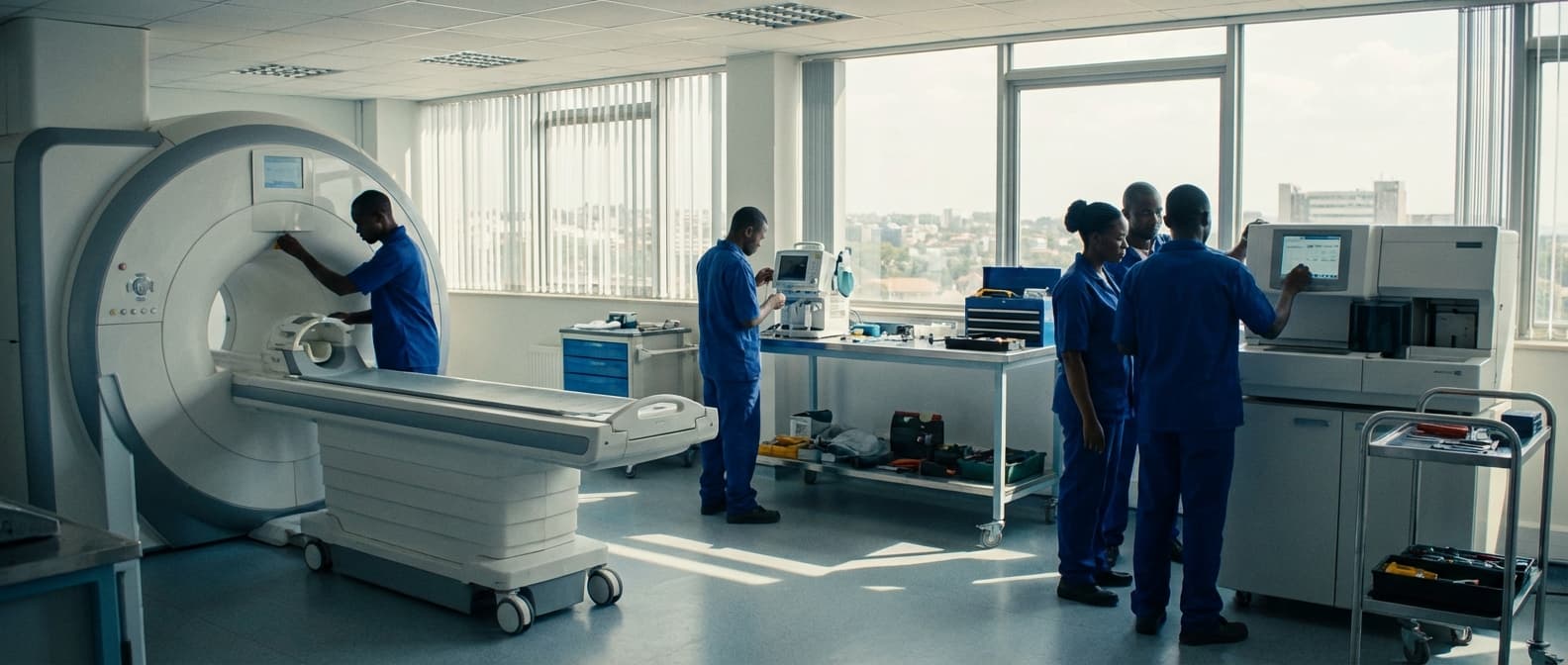
Planned Shutdown Coordination Service for Critical Equipment in Niger
Engineering Excellence & Technical Support
Planned Shutdown Coordination Service for Critical Equipment High-standard technical execution following OEM protocols and local regulatory frameworks.
Optimized Equipment Uptime & Performance
Our Planned Shutdown Coordination Service leverages advanced scheduling algorithms and predictive analytics to minimize downtime for critical equipment. By meticulously planning maintenance windows and ensuring resource availability, we proactively address potential issues, extending equipment lifespan and maximizing operational efficiency in Niger's unique energy landscape.
Mitigated Risk & Enhanced Safety Protocols
Safety is paramount. Our service implements rigorous risk assessment methodologies and adheres to international safety standards throughout the shutdown process. We ensure all personnel are properly trained and equipped, and that all procedures are meticulously documented, drastically reducing the likelihood of accidents and ensuring the integrity of critical infrastructure in Niger.
Seamless Supply Chain Integration & Material Management
We streamline the procurement and delivery of specialized parts and consumables for planned shutdowns. Our service establishes robust supply chain links, tracks inventory meticulously, and forecasts material needs with precision, guaranteeing that all necessary components are on-site when and where required. This ensures swift and efficient execution of maintenance tasks, minimizing delays for critical equipment in Niger.
What Is Planned Shutdown Coordination Service For Critical Equipment In Niger?
The Planned Shutdown Coordination Service for Critical Equipment in Niger is a specialized operational and logistical framework designed to manage the scheduled cessation of operation for essential industrial and infrastructure assets. This service aims to minimize disruption, optimize resource allocation, and ensure safety during planned maintenance, upgrades, or decommissioning activities for critical equipment. It is indispensable for maintaining the operational integrity and longevity of high-value, high-impact assets within Niger's developing industrial and energy sectors.
| Service Component | Description | Objective |
|---|---|---|
| Pre-Shutdown Planning | Involves defining the objectives, scope, and feasibility of the shutdown, including asset assessment, historical data review, and initial risk identification. | To ensure the shutdown is technically sound, economically viable, and aligns with overall asset management strategies. |
| Scope and Schedule Development | Creation of detailed work packages, task sequencing, critical path analysis, and realistic timelines, accounting for interdependencies between tasks. | To provide a clear roadmap for execution, optimize resource utilization, and minimize downtime duration. |
| Resource Mobilization | Identification, procurement, and deployment of qualified personnel (internal and external), specialized tools, heavy equipment, and necessary spare parts. | To ensure all required resources are available and accessible when and where needed, preventing delays. |
| Permit to Work (PTW) Management | Establishment and rigorous enforcement of a robust PTW system to control hazardous activities, ensuring all safety protocols are met before work commences. | To prevent accidents, injuries, and environmental incidents during the shutdown execution phase. |
| Safety and Emergency Preparedness | Development and implementation of comprehensive safety procedures, including lockout/tagout (LOTO), confined space entry protocols, and emergency response plans. | To safeguard personnel, assets, and the environment throughout the shutdown lifecycle. |
| Stakeholder Coordination | Facilitation of communication and alignment among all relevant parties, including plant operations, maintenance, engineering, contractors, and regulatory bodies. | To ensure seamless information flow, manage expectations, and resolve conflicts proactively. |
| Execution Monitoring | Real-time tracking of work progress against the schedule, identification of deviations, and implementation of corrective actions. | To maintain control over the shutdown process and ensure adherence to the plan. |
| Post-Shutdown Handover | Formal transfer of the equipment back to operational status, verification of work completion, and review of performance against shutdown objectives. | To confirm asset readiness, document lessons learned, and facilitate a smooth transition back to normal operations. |
Key Components of Planned Shutdown Coordination Service
- Pre-shutdown planning and risk assessment.
- Development of detailed shutdown scope and schedules.
- Resource mobilization (personnel, equipment, materials).
- Permit to Work (PTW) system management and enforcement.
- Safety management and emergency preparedness.
- Coordination with internal departments and external stakeholders.
- Execution monitoring and progress reporting.
- Post-shutdown handover and performance verification.
- Documentation and knowledge management.
Who Needs Planned Shutdown Coordination Service For Critical Equipment In Niger?
Planned Shutdown Coordination Service for critical equipment in Niger is essential for industries reliant on continuous operations and uptime. These services minimize disruptions, reduce associated costs, and ensure the safety of personnel and assets during planned maintenance, upgrades, or installations. The primary target customers are organizations operating critical infrastructure and heavy industrial machinery within Niger.
| Target Customer Type | Key Departments Involved | Specific Needs Addressed |
|---|---|---|
Target Customers and Departments for Planned Shutdown Coordination Service in Niger
- {"items":["Oil & Gas (Upstream, Midstream, Downstream)","Mining & Minerals Processing","Power Generation & Distribution","Telecommunications","Water & Wastewater Treatment","Large-scale Manufacturing","Infrastructure Development (Ports, Airports)"],"category":"Industries"}
- {"items":["National Utilities (e.g., electricity, water)","Regulatory Bodies overseeing critical infrastructure","Public Works Departments"],"category":"Government & Public Sector"}
Planned Shutdown Coordination Service For Critical Equipment Process In Niger
This document outlines the workflow for the Planned Shutdown Coordination Service for Critical Equipment Process in Niger, from initial inquiry through successful execution. The service aims to ensure minimal disruption to operations by meticulously planning and managing scheduled shutdowns of critical equipment.
| Stage | Description | Key Activities | Deliverables/Outcomes | Responsible Parties |
|---|---|---|---|---|
| Inquiry & Initial Consultation | Client expresses interest in a planned shutdown for critical equipment. | Receive inquiry, schedule initial meeting, understand broad requirements, discuss preliminary feasibility. | Understanding of client's general needs, confirmation of service interest, preliminary service proposal. | Client, Coordination Service Provider (CSP) |
| Scope Definition & Planning | Detailed planning and defining the exact scope of the shutdown. | Conduct site visits, identify critical equipment, assess current condition, determine specific maintenance tasks, define objectives, establish safety protocols, develop preliminary schedule and budget. | Detailed Scope of Work document, Risk Assessment report, preliminary Maintenance Plan, preliminary Budget, Preliminary Schedule. | CSP, Client Technical Team, Safety Officers |
| Resource Allocation & Scheduling | Mobilizing necessary personnel, equipment, and materials. | Confirm availability of internal and external resources (technicians, specialized tools, spare parts), finalize detailed work schedule, obtain necessary permits and approvals, establish communication channels. | Confirmed resource list, Finalized Detailed Schedule, Approved Permits, Communication Plan. | CSP Project Manager, Procurement Team, Site Management |
| Pre-Shutdown Preparation | Ensuring all prerequisites are met before the shutdown commences. | Procure and stage all required materials and spare parts, conduct pre-shutdown safety briefings, ensure all equipment is isolated and de-energized according to plan, verify access and work permits. | All materials and parts on-site, completed safety briefings, confirmed equipment isolation, issued work permits. | CSP Site Supervisor, Client Operations Team, Safety Officers |
| Shutdown Execution | The actual execution of the planned maintenance and repair activities. | Implement the detailed work schedule, manage on-site activities, monitor progress, address unforeseen issues, maintain strict adherence to safety protocols, conduct quality checks throughout. | Completed maintenance and repair tasks, regular progress reports, immediate resolution of any incidents. | CSP Technicians, CSP Site Supervisor, Client Representatives |
| Post-Shutdown Activities & Review | Returning equipment to service and evaluating the shutdown's success. | Conduct final inspections and testing, safely re-energize equipment, document all work performed, demobilize resources, conduct a post-shutdown review meeting with the client, generate a final report. | Fully operational equipment, As-built documentation, Final Project Report, Lessons Learned document. | CSP Team, Client Operations & Maintenance Teams |
Key Stages of the Planned Shutdown Coordination Service
- Inquiry & Initial Consultation
- Scope Definition & Planning
- Resource Allocation & Scheduling
- Pre-Shutdown Preparation
- Shutdown Execution
- Post-Shutdown Activities & Review
Planned Shutdown Coordination Service For Critical Equipment Cost In Niger
Coordinating planned shutdowns for critical equipment in Niger involves a complex interplay of factors that influence cost. These factors range from the scope and duration of the shutdown to the specific expertise required and the geographical location within Niger. The ultimate aim is to minimize downtime and associated production losses while ensuring safety and adherence to regulatory standards. The pricing for such a service is typically project-specific, with vendors offering tailored quotes based on a detailed assessment of the client's needs.
| Service Component | Estimated Cost Range (XOF) | Notes |
|---|---|---|
| Initial Assessment & Planning | 200,000 - 750,000 | Includes site visits, scope definition, preliminary scheduling, and risk identification. |
| On-site Coordination (Per Day) | 150,000 - 500,000 | Covers coordination team, supervisors, and project management on-site. Varies with team size and seniority. |
| Specialized Technical Supervision | 250,000 - 800,000 | For highly complex or critical equipment, requiring specialized engineers or technicians. |
| Logistics & Transportation (Variable) | 100,000 - 1,000,000+ | Highly dependent on distance, number of personnel, and type of transport. Can include accommodation and per diems. |
| Safety Management & Compliance | 100,000 - 300,000 | Costs associated with safety officers, safety equipment, and ensuring adherence to regulations. |
| Reporting & Documentation | 50,000 - 200,000 | Preparation of detailed shutdown reports, incident logs, and recommendations. |
| Contingency (Percentage of Total) | 5% - 15% | To cover unforeseen issues and minor scope changes. |
Key Pricing Factors for Planned Shutdown Coordination Services in Niger
- Scope of Work: The breadth of activities covered, including pre-shutdown planning, on-site supervision, resource management, risk assessment, scheduling, communication, and post-shutdown reporting.
- Duration of Shutdown: The total time the critical equipment will be offline. Longer shutdowns naturally incur higher coordination costs due to extended personnel presence and management.
- Complexity of Equipment: The type, age, and complexity of the critical equipment being serviced. More sophisticated machinery may require specialized technicians and more intricate coordination efforts.
- Number of Equipment Units: The quantity of critical equipment requiring coordinated shutdown. Managing multiple units simultaneously adds layers of complexity and resource allocation challenges.
- Required Expertise and Skill Sets: The specific technical skills and certifications needed for the coordination team and any specialized personnel involved (e.g., engineers, safety officers, experienced technicians).
- Logistics and Travel: Costs associated with transporting personnel, equipment, and materials to and from the site, especially if it's in remote or challenging-to-access locations within Niger.
- Site Accessibility and Infrastructure: The ease of access to the operational site and the availability of necessary infrastructure (e.g., accommodation, power, communication) can impact logistical costs.
- Safety and Regulatory Compliance: The level of safety protocols and regulatory adherence required, which may necessitate additional training, equipment, and oversight.
- Vendor's Overhead and Profit Margin: The internal operational costs of the service provider, including administrative expenses, marketing, and their desired profit.
- Market Demand and Competition: The general demand for such services in Niger and the number of qualified vendors available can influence pricing.
- Force Majeure and Unforeseen Circumstances: Contingency planning for unexpected events can be factored into pricing, although this is often addressed through specific contractual clauses.
- Reporting and Documentation Requirements: The extent and detail of post-shutdown reports and documentation required by the client.
Affordable Planned Shutdown Coordination Service For Critical Equipment Options
Our Affordable Planned Shutdown Coordination Service offers businesses a streamlined and cost-effective approach to managing critical equipment downtime. We understand that unplanned outages are costly and disruptive, which is why we focus on meticulous planning to minimize impact and maximize efficiency during scheduled shutdowns. Our service is designed to be adaptable to your specific needs, offering flexible value bundles and implementing proven cost-saving strategies to ensure you receive the best possible return on investment.
| Cost-Saving Strategy | Description | Example Application |
|---|---|---|
| Early and Thorough Planning | Investing time in detailed planning upfront reduces the likelihood of unexpected issues, delays, and emergency expenditures during the shutdown. This includes identifying all necessary tasks, dependencies, and potential risks. | Creating a detailed Gantt chart outlining all shutdown activities, identifying critical path items, and proactively scheduling required resources well in advance. |
| Resource Optimization | Ensuring the right people, equipment, and materials are available at the right time and place minimizes idle time and reduces the need for expedited shipping or overtime labor. | Consolidating vendor orders to achieve bulk discounts and coordinating delivery schedules to align with shutdown timelines, avoiding storage costs and potential damage. |
| Preventive Maintenance Integration | Leveraging the shutdown window for planned preventive maintenance on other critical equipment can prevent future unplanned outages and associated costs. | Scheduling minor repairs or inspections on adjacent equipment during the main shutdown to capitalize on existing site access and resource availability. |
| Clear Communication Protocols | Establishing clear and consistent communication channels among all stakeholders (internal teams, vendors, management) prevents misunderstandings, rework, and delays. | Implementing daily stand-up meetings during the shutdown with defined agendas and action item tracking to ensure everyone is informed and aligned. |
| Post-Shutdown Analysis and Learning | Reviewing the shutdown process to identify areas for improvement leads to more efficient future shutdowns and reduced costs over time. | Conducting a 'lessons learned' session after the shutdown to document what worked well and what could be improved for the next scheduled event. |
Value Bundles Explained
- {"title":"Essential Package","description":"Our foundational offering, ideal for smaller operations or those with less complex equipment. Includes core planning, scheduling, and communication support for a single critical equipment shutdown event. Focuses on basic coordination to prevent immediate conflicts and ensure essential tasks are covered."}
- {"title":"Pro Package","description":"A comprehensive solution for businesses with multiple critical assets or more intricate shutdown requirements. This bundle expands on the Essential Package by including detailed risk assessment, resource allocation optimization, vendor management, and a dedicated point of contact throughout the planning and execution phases. Suitable for routine but significant shutdowns."}
- {"title":"Enterprise Package","description":"Our premium service tailored for large-scale operations, complex industrial sites, or organizations facing particularly challenging shutdown scenarios. This package encompasses advanced scenario planning, detailed safety protocol integration, post-shutdown performance analysis, and proactive identification of potential bottlenecks. Includes continuous support and optimization recommendations for an entire shutdown cycle or program."}
- {"title":"Customizable Add-ons","description":"Beyond our core packages, we offer a range of optional services that can be added to any bundle. These include specialized training for your internal teams, advanced predictive maintenance integration, or extended on-site support. This allows you to tailor the service precisely to your unique operational demands."}
Verified Providers In Niger
In Niger, accessing reliable and trustworthy healthcare services is paramount. Franance Health stands out as a leading provider, distinguished by its rigorous credentialing process and commitment to excellence. This dedication ensures that every healthcare professional and facility affiliated with Franance Health meets the highest standards of competence, ethics, and patient care. Choosing Franance Health means prioritizing your well-being with providers who are not only qualified but also deeply invested in delivering optimal health outcomes. Their stringent verification protocols encompass in-depth background checks, verification of licenses and certifications, and continuous performance evaluations. This meticulous approach guarantees that patients are in the hands of experienced and reputable medical professionals, fostering trust and confidence in the healthcare system.
| Credentialing Component | Franance Health Standard | Benefit to Patients |
|---|---|---|
| License and Certification Verification | Mandatory verification of all active and unencumbered medical licenses and certifications. | Ensures providers are legally qualified and possess the necessary expertise. |
| Education and Training Verification | Thorough review of academic records and training completion from accredited institutions. | Confirms providers have received comprehensive and up-to-date medical education. |
| Professional References and Peer Review | Collection of feedback from former colleagues and supervisors, with potential peer review for specialized roles. | Provides insights into a provider's practical skills, work ethic, and collegiality. |
| Background Checks | Comprehensive checks for criminal history, professional sanctions, and disciplinary actions. | Safeguards against potential risks and ensures patient safety and trust. |
| Continuous Professional Development (CPD) Monitoring | Verification of ongoing participation in CPD activities and relevant training. | Guarantees providers remain current with medical advancements and best practices. |
| Primary Source Verification | Direct confirmation of credentials with the issuing bodies (e.g., universities, licensing boards). | Eliminates the risk of falsified documents and ensures ultimate authenticity. |
Why Franance Health Credentials Matter
- Rigorous Verification: Franance Health employs a multi-faceted verification process, including background checks, license validation, and educational credential confirmation.
- Experienced Professionals: All affiliated providers have proven experience and a track record of successful patient care.
- Ethical Standards: Franance Health ensures adherence to the highest ethical guidelines and professional conduct.
- Commitment to Quality: Continuous performance monitoring and patient feedback mechanisms drive ongoing quality improvement.
- Patient Safety First: The credentialing process prioritizes patient safety through thorough vetting and ongoing oversight.
- Access to Specialists: Franance Health facilitates access to a wide network of verified specialists across various medical disciplines.
- Transparent Practices: Franance Health maintains transparency in its credentialing process, allowing patients to be confident in their choice of provider.
Scope Of Work For Planned Shutdown Coordination Service For Critical Equipment
This Scope of Work (SOW) outlines the services required for the planning and coordination of planned shutdown activities for critical equipment. The objective is to ensure minimal disruption to operations, adherence to safety protocols, and efficient execution of maintenance and inspection tasks. This SOW covers the technical deliverables and standard specifications required for a comprehensive shutdown coordination service.
| Technical Deliverable | Description | Standard Specification/Format |
|---|---|---|
| Detailed Shutdown Schedule | A comprehensive Gantt chart or equivalent visual representation of all shutdown activities, dependencies, durations, and milestones. | Microsoft Project, Primavera P6, or equivalent industry-standard scheduling software. Deliverable in PDF and native editable format. |
| Work Package Documentation | Detailed breakdown of all tasks to be performed during the shutdown, including scope, required resources, safety procedures, and estimated duration. | Standardized work order forms, checklists, and technical procedure documents. Delivered in PDF and editable formats. |
| Critical Path Analysis Report | Identification and analysis of critical path activities that, if delayed, will impact the overall shutdown duration. | Report generated from scheduling software. Delivered in PDF format. |
| Risk Assessment Register | A documented list of potential risks, their likelihood and impact, and proposed mitigation strategies for each identified risk. | Standard risk register template (e.g., Excel or dedicated risk management software). Delivered in PDF and editable formats. |
| Resource Allocation Plan | Detailed plan outlining the allocation of personnel (internal and external), equipment, and materials required for each task. | Spreadsheet or database format. Delivered in PDF and editable formats. |
| Communication Plan | Defines communication channels, frequency, stakeholders, and reporting mechanisms throughout the shutdown process. | Document outlining communication matrix and escalation procedures. Delivered in PDF format. |
| Technical Procedure Review Checklist | A standardized checklist used to ensure all maintenance and inspection procedures are reviewed for safety, accuracy, and completeness. | Customizable checklist based on industry best practices and client-specific requirements. Delivered in PDF and editable formats. |
| Daily/Weekly Progress Reports | Regular updates on shutdown progress, including achievements, deviations from the plan, identified issues, and upcoming activities. | Standardized report template. Delivered in PDF format via email or designated reporting portal. |
| Post-Shutdown Review Report | A comprehensive analysis of the shutdown execution, including actual versus planned durations, cost analysis, lessons learned, and recommendations for future shutdowns. | Formal report document. Delivered in PDF format. |
| As-Built Drawings/Documentation | Updated drawings and documentation reflecting any changes made to the equipment or systems during the shutdown. | CAD drawings (e.g., AutoCAD, MicroStation) and technical documentation in industry-standard formats (e.g., PDF, DOCX). |
Key Service Areas
- Shutdown Planning and Scheduling
- Resource Management and Coordination
- Technical Procedure Review and Approval
- Risk Assessment and Mitigation
- Communication and Reporting
- On-site Supervision and Coordination (if applicable)
- Post-Shutdown Analysis and Lessons Learned
Service Level Agreement For Planned Shutdown Coordination Service For Critical Equipment
This Service Level Agreement (SLA) outlines the terms and conditions for the Planned Shutdown Coordination Service for Critical Equipment, focusing on response times for scheduling and coordination, and uptime guarantees for the service itself. This SLA is intended to ensure efficient and reliable planning for scheduled maintenance and upgrades, minimizing operational impact. It applies to all authorized personnel and systems interacting with the Planned Shutdown Coordination Service.
| Service Metric | Target | Measurement Period | Remedy/Escalation |
|---|---|---|---|
| Response Time for New Shutdown Request | Within 2 business hours | Per request | If target is missed, an automated notification is sent to the service owner. Repeated misses may trigger a review of resource allocation. |
| Response Time for Rescheduling Request | Within 4 business hours | Per request | If target is missed, an automated notification is sent to the service owner. Repeated misses may trigger a review of resource allocation. |
| Confirmation Time for Approved Shutdowns | Within 1 business day of final approval | Per approved shutdown | If target is missed, the responsible coordinator will be notified and must provide an update within 4 business hours. Continued delays will escalate to management. |
| Uptime Guarantee for the Coordination Platform | 99.5% | Monthly | For every 1% downtime below 99.5%, a report detailing the cause and mitigation plan will be provided. Exceeding 2% downtime in a month will trigger a service review and potential improvement initiatives. |
Key Service Level Objectives (SLOs)
- Response Time for New Shutdown Request: The time taken for the service to acknowledge and initiate processing of a new planned shutdown request.
- Response Time for Rescheduling Request: The time taken for the service to acknowledge and initiate processing of a request to modify an existing planned shutdown.
- Confirmation Time for Approved Shutdowns: The time taken for the service to confirm the scheduled date and time of an approved planned shutdown.
- Uptime Guarantee for the Coordination Platform: The percentage of time the Planned Shutdown Coordination Service platform is available and fully functional.
Frequently Asked Questions

Ready when you are
Let's scope your Planned Shutdown Coordination Service for Critical Equipment in Niger project in Niger.

Scaling healthcare logistics and technical systems across the entire continent.