
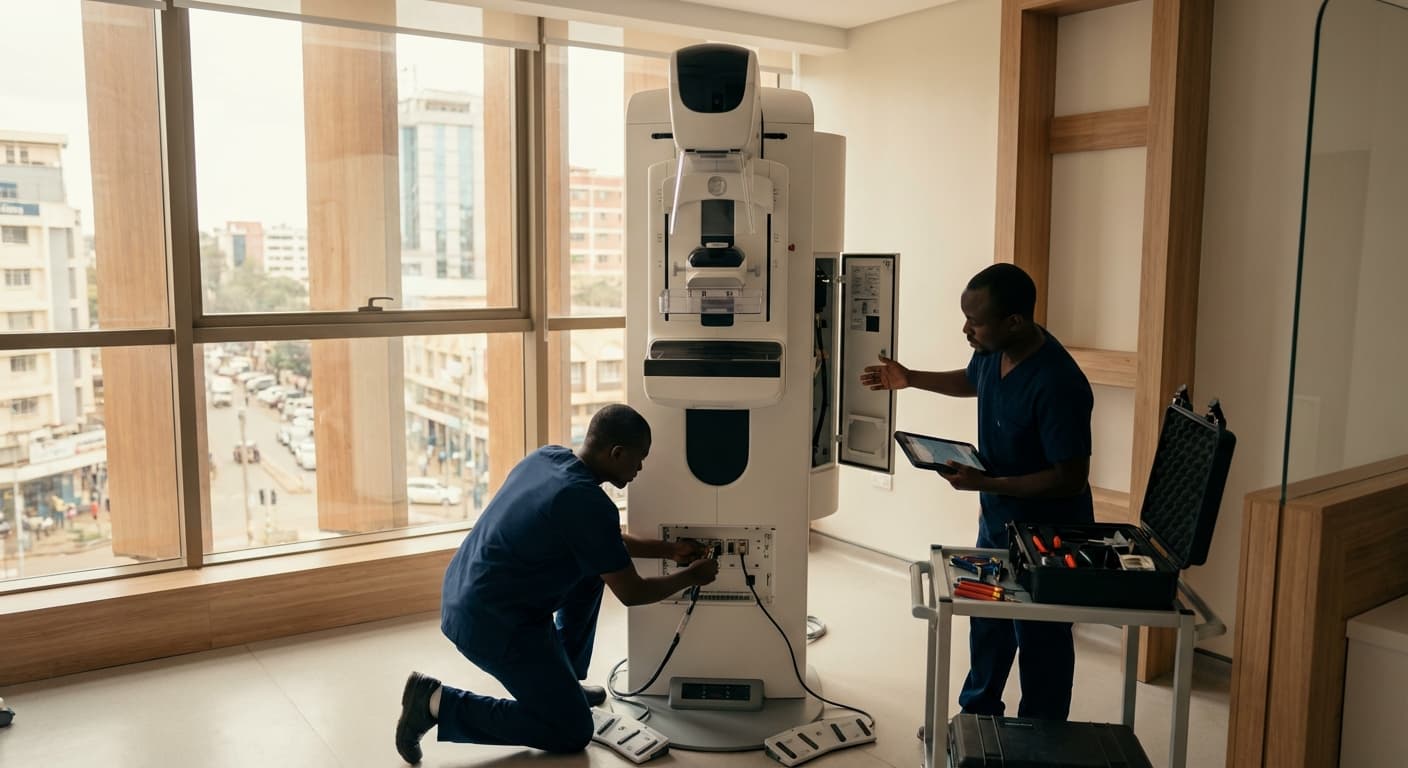
Mammography Installation Service in Niger
Engineering Excellence & Technical Support
Mammography Installation Service High-standard technical execution following OEM protocols and local regulatory frameworks.
Certified Installation Technicians
Our team in Niger comprises highly trained and certified technicians with extensive experience in mammography equipment installation. We adhere to stringent international standards, ensuring precise alignment and optimal performance of your critical imaging systems.
Comprehensive Site Assessment & Planning
Before installation begins, we conduct thorough site assessments in Niger to evaluate power requirements, room shielding, environmental conditions, and workflow integration. This meticulous planning phase minimizes disruption and guarantees a seamless deployment of your mammography unit.
Rigorous Quality Assurance & Testing
Post-installation, our commitment extends to comprehensive quality assurance and performance testing. We employ advanced calibration tools and phantoms to verify image quality, radiation safety, and adherence to regulatory compliance standards specific to Niger, ensuring your mammography service is operational and reliable from day one.
What Is Mammography Installation Service In Niger?
Mammography installation service in Niger refers to the professional process of setting up, calibrating, and testing mammography equipment within healthcare facilities in Niger. This service ensures that the sophisticated diagnostic imaging systems are properly integrated into the existing infrastructure and are ready for clinical use, adhering to established safety and quality standards.
| Who Needs Mammography Installation Service in Niger? | Typical Use Cases | |||||
|---|---|---|---|---|---|---|
| Healthcare facilities (hospitals, clinics, diagnostic imaging centers) in Niger requiring new mammography equipment. | Establishing new breast imaging departments or upgrading existing ones. | Replacing outdated or malfunctioning mammography systems. | Healthcare providers aiming to comply with national or international breast cancer screening guidelines and standards. | Facilities seeking to improve diagnostic accuracy and patient outcomes for breast health. | Government or non-governmental organizations (NGOs) involved in public health initiatives for breast cancer detection and prevention. | Medical research institutions requiring advanced mammography technology for studies. |
| Routine screening mammography for asymptomatic women to detect early signs of breast cancer. | Diagnostic mammography for evaluating palpable breast masses, breast pain, nipple discharge, or other clinical symptoms suggestive of breast disease. | Follow-up examinations for women with a history of breast cancer or high-risk individuals. | Use of advanced mammography techniques such as 3D mammography (tomosynthesis) for improved detection and reduced recall rates. | Integration with other imaging modalities for comprehensive breast assessment. |
Key Aspects of Mammography Installation Service in Niger
- Site Preparation: Assessment of the installation site, including power supply, environmental controls (temperature, humidity), radiation shielding requirements, and network connectivity.
- Equipment Delivery and Unpacking: Secure transportation and careful unpacking of the mammography unit, associated components (workstation, printer, etc.), and accessories.
- Physical Installation: Assembly and connection of all hardware components according to manufacturer specifications and architectural plans.
- Electrical and Network Integration: Connection to the facility's power grid, ensuring stable power delivery and proper grounding. Integration with Picture Archiving and Communication Systems (PACS) and Radiology Information Systems (RIS) via network infrastructure.
- Calibration and Alignment: Precise adjustment of X-ray beam geometry, detector sensitivity, image processing parameters, and other critical settings to ensure optimal image quality and diagnostic accuracy.
- Quality Assurance (QA) Testing: Performance of a comprehensive suite of QA tests to verify compliance with regulatory standards and manufacturer benchmarks. This includes tests for radiation output, spatial resolution, contrast resolution, artifact detection, and dose monitoring.
- System Configuration and Software Installation: Installation and configuration of the mammography software, including image acquisition, processing, viewing, and storage functionalities. Setup of user accounts and access controls.
- Operator Training: Provision of initial training for radiology technologists and medical physicists on the operation, basic maintenance, and routine QA procedures for the installed mammography system.
- Documentation and Handover: Delivery of all relevant documentation, including installation reports, calibration certificates, user manuals, and warranty information. Formal handover of the operational system to the healthcare facility.
Who Needs Mammography Installation Service In Niger?
Mammography installation services are crucial for ensuring the proper functioning and accuracy of mammography equipment. This specialized service is essential for healthcare facilities that are acquiring new mammography machines, upgrading existing ones, or relocating them. The precise calibration and setup of these devices are paramount for generating reliable diagnostic images, directly impacting patient care and early cancer detection.
| Department/Role | Responsibility Related to Mammography Installation | Key Stakeholders |
|---|---|---|
| Radiology Department | Oversight of imaging equipment, ensuring proper placement and integration into workflow, staff training on new equipment. | Chief Radiologist, Lead Radiographer, Radiology Technicians |
| Biomedical Engineering Department | Technical assessment of installation site, liaison with installation technicians, ensuring compliance with safety and technical standards, ongoing maintenance planning. | Biomedical Engineers, Technical Officers |
| Procurement Department | Managing the purchasing process of mammography equipment and related installation services. | Procurement Officers, Supply Chain Managers |
| Information Technology (IT) Department | Ensuring seamless integration of the mammography system with Picture Archiving and Communication Systems (PACS) and Electronic Health Records (EHR). | IT Managers, Network Administrators, PACS Specialists |
| Facility Management/Administration | Preparing the physical space for installation, ensuring adequate power, ventilation, and shielding, managing building access for installers. | Hospital Administrators, Facility Managers |
| Clinical Management/Medical Director | Overall responsibility for patient care services, approving new equipment purchases, ensuring the quality of diagnostic services. | Medical Director, Clinical Department Heads |
Target Customers for Mammography Installation Service in Niger
- Public Hospitals and Health Centers
- Private Hospitals and Clinics
- Diagnostic Imaging Centers
- Specialized Cancer Treatment Centers
- Research Institutions with Imaging Capabilities
- Non-Governmental Organizations (NGOs) focused on women's health
- Government Ministry of Health (for national health initiatives and equipment procurement)
Mammography Installation Service Process In Niger
This document outlines the Mammography Installation Service Process in Niger, detailing the workflow from initial inquiry to successful execution. It covers essential steps, key personnel involved, and considerations specific to the Nigerien context, including logistics and regulatory aspects. The aim is to provide a clear and comprehensive understanding for all stakeholders involved in mammography equipment installation within the country.
| Stage | Description | Key Activities | Responsible Parties | Key Considerations (Niger) |
|---|---|---|---|---|
| The process begins with a prospective client (hospital, clinic, or government health body) expressing interest in mammography installation services. | Receive client inquiry, understand needs, provide preliminary information on services and available mammography technologies. | Client (Healthcare Facility/Organization), Service Provider (Sales/Technical Team) | Language barriers (French/local dialects), understanding of specific healthcare needs in Niger. |
| A thorough evaluation of the intended installation site to determine feasibility and requirements. | On-site visit, assess space, power supply, ventilation, radiation shielding requirements, accessibility for delivery, network infrastructure. | Service Provider (Technical Team/Project Manager), Client (Facility Manager/Technical Staff) | Local building codes/standards, availability of qualified local contractors for modifications, power grid stability. |
| Based on the assessment, a detailed proposal and quotation are prepared, followed by contract finalization. | Develop detailed quotation including equipment, installation, training, warranty; negotiate terms and conditions, finalize service contract. | Service Provider (Sales/Legal Team), Client (Procurement/Legal Department) | Payment terms (consider currency fluctuations), local tax regulations, import duties. |
| Ordering and preparing the mammography equipment for shipment to Niger. | Place order with manufacturer, quality control checks, packaging for transit. | Service Provider (Procurement/Logistics), Manufacturer | Lead times for equipment manufacturing, reliable shipping routes to landlocked Niger. |
| Managing the transportation of equipment to Niger and navigating customs procedures. | Arrange international shipping, manage freight forwarding, prepare all necessary import documentation, liaise with customs brokers, handle duties and taxes. | Service Provider (Logistics Team), Customs Broker, Shipping Company | Port of entry (e.g., Cotonou, Benin, then land transport), documentation accuracy to avoid delays, potential for corrupt practices, import permits/licenses. |
| Ensuring the installation site is fully ready according to the plan. | Confirm all necessary electrical, plumbing, HVAC modifications are complete, verify radiation shielding efficacy (if applicable), ensure adequate access for equipment movement. | Client (Facility Management/Contractors), Service Provider (Technical Team) | Quality of local construction work, availability of specialized materials for shielding, timely completion by local contractors. |
| Safely transporting and unpacking the mammography equipment at the installation site. | Coordinate on-site delivery, supervise unloading, carefully unpack equipment, inspect for any transit damage. | Service Provider (Installation Team/Logistics), Client (Facility Staff) | Road conditions for final mile delivery, availability of appropriate lifting equipment, secure storage of components. |
| Physically installing and setting up the mammography system. | Assemble and connect all components, install software, configure system settings according to clinical protocols and site requirements. | Service Provider (Installation Engineers/Technicians) | Availability of spare parts for unforeseen issues, network connectivity for software updates/remote support. |
| Verifying the proper functioning and accuracy of the installed equipment. | Perform comprehensive system tests, calibrate image acquisition parameters, conduct quality assurance (QA) checks, ensure compliance with international standards. | Service Provider (Installation Engineers/QA Specialists), Client (Radiology Department Staff) | Availability of phantom materials for calibration, consistency of test results. |
| Educating the facility's medical and technical staff on operating and maintaining the mammography system. | Provide theoretical and practical training on equipment operation, image acquisition techniques, basic troubleshooting, and routine maintenance. | Service Provider (Applications Specialist/Trainers), Client (Radiologists, Technologists, Biomedical Engineers) | Language of instruction, varying levels of prior technical knowledge, availability of staff for training sessions. |
| Completing all necessary documentation and formally transferring responsibility for the installed system. | Provide user manuals, service manuals, training records, warranty certificates, and a handover protocol. Obtain client sign-off. | Service Provider (Project Manager/Technical Team), Client (Facility Management/Technical Lead) | Ensuring documentation is in an accessible language and format. |
| Providing ongoing support and ensuring the long-term success of the installation. | Offer remote and on-site technical support, schedule planned maintenance visits, address any emergent issues, gather feedback for service improvement. | Service Provider (Customer Support/Field Service Engineers), Client (Biomedical Department) | Geographic distance impacting response times, availability of local support infrastructure, establishing trust for long-term partnership. |
Mammography Installation Service Process in Niger - Workflow
- Inquiry & Initial Consultation
- Site Assessment & Planning
- Quotation & Contract Negotiation
- Equipment Procurement & Shipment
- Logistics & Customs Clearance
- Site Preparation & Infrastructure Verification
- Equipment Delivery & Unpacking
- Installation & Configuration
- Testing & Calibration
- Staff Training
- Documentation & Handover
- Post-Installation Support & Follow-up
Mammography Installation Service Cost In Niger
Installing a mammography unit is a complex process that requires specialized expertise, equipment, and adherence to strict safety and regulatory standards. The cost of mammography installation services in Niger can vary significantly based on several key factors. These factors influence the overall price, making it crucial for healthcare facilities to obtain detailed quotes from qualified service providers.
| Service Component | Estimated Cost Range (CFA Francs - XOF) | Notes |
|---|---|---|
| Site Assessment and Consultation | 150,000 - 400,000 | Initial evaluation of facility readiness and technical requirements. |
| Electrical System Upgrades (if needed) | 300,000 - 1,500,000+ | Varies greatly depending on existing infrastructure. |
| Radiation Shielding (if applicable) | 500,000 - 3,000,000+ | Depends on the type of shielding and area to be covered. |
| Installation Labor (Technicians & Engineers) | 800,000 - 3,500,000 | Based on team size, duration, and specialization. |
| Equipment Transportation and Logistics | 200,000 - 1,000,000 | Influenced by distance and complexity of transport. |
| Calibration, Testing, and Commissioning | 400,000 - 1,200,000 | Ensuring the unit operates within specifications. |
| Basic User Training | 200,000 - 700,000 | Introduction to operation for medical staff. |
| Project Management & Regulatory Liaison | 100,000 - 500,000 | Coordination and administrative support. |
| Total Estimated Installation Cost (Excluding Mammography Unit) | 2,550,000 - 11,800,000+ | This is a broad estimate and can be significantly higher for complex installations. |
Key Pricing Factors for Mammography Installation in Niger
- Type and Model of Mammography Unit: The sophistication, brand, and specific features of the mammography machine (e.g., 2D, 3D tomosynthesis, contrast-enhanced mammography) will directly impact installation complexity and cost. High-end, advanced systems often require more intricate setup.
- Site Preparation and Infrastructure: This includes assessing and potentially upgrading electrical systems, ensuring adequate cooling and ventilation, reinforcing floors for heavy equipment, and preparing radiation shielding (if required and not pre-installed). The existing condition of the facility plays a major role.
- Installation Labor and Expertise: The number of technicians, their skill level, and the duration of the installation process are significant cost components. Specialized engineers with experience in medical imaging equipment are essential.
- Geographic Location within Niger: Installation costs can differ based on the accessibility of the site and the logistics involved in transporting equipment and personnel. Remote areas might incur higher travel and accommodation expenses.
- Regulatory Compliance and Licensing: Ensuring the installation meets all national and local health and safety regulations, including radiation safety protocols, may involve inspections and documentation fees.
- Ancillary Equipment and Software: The installation might include associated equipment like PACS (Picture Archiving and Communication System) workstations, image printers, or specialized software, each adding to the overall cost.
- Training and Commissioning: Post-installation training for radiographers and technicians on operating the new mammography unit and the subsequent commissioning and calibration process are often part of the service package.
- Warranty and Maintenance Agreements: While not strictly installation, initial warranty periods and optional long-term maintenance contracts can be bundled into the overall service cost or negotiated separately.
Affordable Mammography Installation Service Options
Acquiring and installing mammography equipment is a significant investment for healthcare facilities. This guide explores affordable installation service options, focusing on value bundles and effective cost-saving strategies to help you make informed decisions.
| Cost-Saving Strategy | Description | Potential Benefit |
|---|---|---|
| Value Bundles (Equipment + Installation + Training) | Purchasing a comprehensive package from a single provider that includes the mammography unit, professional installation, and initial staff training. | Streamlined process, potential for discounted overall price, reduced administrative overhead. |
| Certified Refurbished Equipment with Installation | Investing in pre-owned mammography machines that have been professionally inspected, refurbished, and certified by reputable vendors. Installation services are often included or offered at a reduced rate. | Significant upfront cost reduction compared to new equipment, access to advanced technology at a lower price point. |
| Negotiated Installation Only Services | Separately sourcing the installation service from the equipment purchase, potentially from specialized third-party installers who may offer more competitive rates than the OEM. | Lower installation costs, flexibility in choosing the best equipment vendor and installation provider. |
| Extended Warranty and Service Contract Management | Carefully evaluating and negotiating long-term service contracts. Comparing different service levels and durations can lead to better value. | Predictable maintenance costs, avoidance of unexpected repair expenses, potential for bundled discounts on service over multiple years. |
| Early Planning and Site Preparation | Thoroughly assessing and preparing the installation site (e.g., power, cooling, structural requirements) before installation begins. | Minimizing delays, preventing costly rework, ensuring a smoother and faster installation process. |
Key Considerations for Affordable Mammography Installation
- Bundled Services: Look for packages that combine equipment purchase, installation, calibration, and initial training. This can often lead to better pricing and a streamlined process.
- Refurbished Equipment: Consider high-quality, certified refurbished mammography units. These can offer substantial savings compared to new models while still meeting performance standards.
- Phased Installation: For larger projects, explore phased installation plans to spread costs over time. This can be beneficial for budget management.
- Service Contract Negotiation: Carefully review and negotiate service contracts. Understand what is included, the duration, and potential for future price increases.
- Independent Installers vs. Manufacturer: Compare pricing for installation services from original equipment manufacturers (OEMs) versus independent, certified third-party installers. Third-party options can sometimes be more cost-effective.
- Site Preparation Planning: Thoroughly plan and execute site preparation to avoid costly delays or rework during installation. This includes ensuring adequate space, power, and environmental controls.
- Leasing Options: Explore leasing agreements for both equipment and installation services, which can offer predictable monthly costs and preserve capital.
- Training Packages: Opt for installation providers that include comprehensive user and technical training as part of their service. Well-trained staff can reduce errors and optimize equipment utilization.
Verified Providers In Niger
In Niger, ensuring access to quality healthcare is paramount. Identifying verified providers is crucial for individuals seeking reliable and competent medical services. Franance Health stands out as a leading credentialing body, meticulously vetting healthcare professionals and institutions. This rigorous process guarantees that providers affiliated with Franance Health meet the highest standards of medical expertise, ethical practice, and patient care. Their commitment to verification translates into enhanced patient safety, improved health outcomes, and greater trust in the healthcare system. Choosing a Franance Health-credentialed provider means opting for assurance and excellence in your healthcare journey.
| Provider Type | Franance Health Verification Benefits | Why They Are the Best Choice |
|---|---|---|
| Hospitals and Clinics | Ensures adherence to national and international standards of care, patient safety, and operational efficiency. | Access to well-equipped facilities, skilled medical teams, and a commitment to patient well-being. |
| Physicians (Specialists & General Practitioners) | Confirms medical expertise, licensure, and ethical conduct, ensuring competent diagnosis and treatment. | Reliable medical advice and treatment from highly qualified and ethical professionals. |
| Nurses and Allied Health Professionals | Verifies qualifications, skills, and adherence to professional standards for excellent patient support. | Receiving compassionate and competent care from trained and certified healthcare support staff. |
| Diagnostic Laboratories and Imaging Centers | Validates accuracy, reliability of results, and use of advanced technology for precise diagnostics. | Trustworthy and accurate diagnostic results essential for effective treatment planning. |
Key Credentials Verified by Franance Health
- Medical Licensure and Board Certification
- Educational Background and Training
- Professional Experience and Competency
- Adherence to Ethical Medical Standards
- Patient Safety Protocols
- Continuing Medical Education (CME)
Scope Of Work For Mammography Installation Service
This Scope of Work (SOW) outlines the requirements for the installation of a new mammography system at [Hospital Name/Facility Location]. It details the technical deliverables, standard specifications, and project management responsibilities to ensure a successful and compliant installation.
| Section | Description | Deliverables | Standard Specifications / References |
|---|---|---|---|
| Site Preparation and Infrastructure | Ensuring the installation site meets all prerequisites for the mammography system, including power, shielding, HVAC, and network connectivity. | Pre-installation site survey report, documented readiness confirmation. | Manufacturer's site planning guide, local building codes, radiation safety regulations (e.g., FDA, state-specific), electrical codes. |
| System Delivery and Unpacking | Receipt, inspection, and careful unpacking of the mammography system components. | Delivery confirmation, undamaged component checklist. | Manufacturer's shipping and handling specifications. |
| System Assembly and Installation | Physical assembly of the mammography unit, including gantry, detector, workstation, and associated peripherals. | Completed system assembly report, photographic documentation of installation. | Manufacturer's installation manual, OEM technical documentation. |
| Electrical and Network Connections | Proper connection of the system to dedicated power outlets and hospital network infrastructure. | Successful connection verification, network integration report. | Facility electrical drawings, hospital IT network standards, DICOM standards. |
| Radiation Shielding Verification | Ensuring that any existing or newly installed radiation shielding meets regulatory requirements for the mammography system. | Radiation shielding survey report by a qualified professional. | State and federal radiation safety regulations, manufacturer's shielding recommendations. |
| System Calibration and Alignment | Performing initial calibration and alignment of the mammography system components to ensure optimal performance and image quality. | Calibration report, alignment verification checklist. | Manufacturer's calibration procedures, quality control protocols. |
| Image Quality Assurance (QA) and Testing | Conducting comprehensive QA tests to verify image acquisition parameters, resolution, contrast, and signal-to-noise ratio. | Image quality test results, phantom image analysis, performance metrics. | ACR (American College of Radiology) Mammography Accreditation Program requirements, manufacturer's QA procedures. |
| System Functionality Testing | Testing all system features, including image acquisition modes, patient positioning aids, compression mechanisms, and safety interlocks. | Functional test report, recorded system parameters. | Manufacturer's operational manual, system specification sheet. |
| Integration with PACS/RIS/EMR | Connecting and configuring the mammography system to communicate with the hospital's Picture Archiving and Communication System (PACS), Radiology Information System (RIS), and Electronic Medical Record (EMR) systems. | Successful data transfer and retrieval tests (e.g., DICOM send/receive, HL7 messages), integration confirmation report. | DICOM conformance statement, HL7 interface specifications, hospital IT system integration protocols. |
| Radiation Safety Inspection and Certification | Facilitating and participating in the final radiation safety inspection by regulatory bodies and obtaining necessary certifications. | Inspection readiness, submission of required documentation, certification documentation. | FDA Mammography Quality Standards Act (MQSA) regulations, state radiation control agency requirements. |
| User Training | Providing comprehensive training to radiologists, technologists, and support staff on system operation, troubleshooting, and basic maintenance. | Training plan, training attendance records, post-training assessment report. | Manufacturer's user manual, facility-specific training protocols. |
| Documentation and Handover | Providing all necessary documentation, including user manuals, service manuals, test reports, and warranty information. | Complete documentation package, signed acceptance form. | Manufacturer's standard documentation set. |
Project Objectives
- To install the specified mammography system according to manufacturer guidelines and all applicable regulatory standards.
- To ensure the system is fully operational, calibrated, and tested for image quality and safety.
- To provide comprehensive training to designated personnel.
- To integrate the mammography system with existing hospital IT infrastructure (PACS, RIS, EMR) as specified.
- To complete the installation within the agreed-upon timeline and budget.
Service Level Agreement For Mammography Installation Service
This Service Level Agreement (SLA) outlines the response times and uptime guarantees for the Mammography Installation Service provided by [Your Company Name] to [Client Company Name]. This SLA is an addendum to the Master Service Agreement (MSA) dated [Date of MSA].
| Service Component | Response Time (Business Hours) | Uptime Guarantee |
|---|---|---|
| Critical Installation Issue (e.g., system failure preventing go-live) | 2 Hours | N/A (Focus is on rapid resolution) |
| High Priority Installation Issue (e.g., significant functionality impairment) | 4 Business Hours | N/A (Focus is on rapid resolution) |
| Medium Priority Installation Issue (e.g., minor configuration problem) | 8 Business Hours | N/A (Focus is on rapid resolution) |
| Low Priority Installation Issue (e.g., documentation clarification) | 24 Business Hours | N/A (Focus is on rapid resolution) |
| Post-Installation System Uptime (after successful go-live) | N/A | 99.5% per calendar month |
Scope of Service
- Installation of new mammography equipment.
- Decommissioning and removal of old mammography equipment (if applicable).
- Initial system configuration and testing.
- Basic user training for core functionalities.
- On-site support during the installation and initial go-live period.
Frequently Asked Questions

Ready when you are
Let's scope your Mammography Installation Service in Niger project in Niger.

Scaling healthcare logistics and technical systems across the entire continent.