
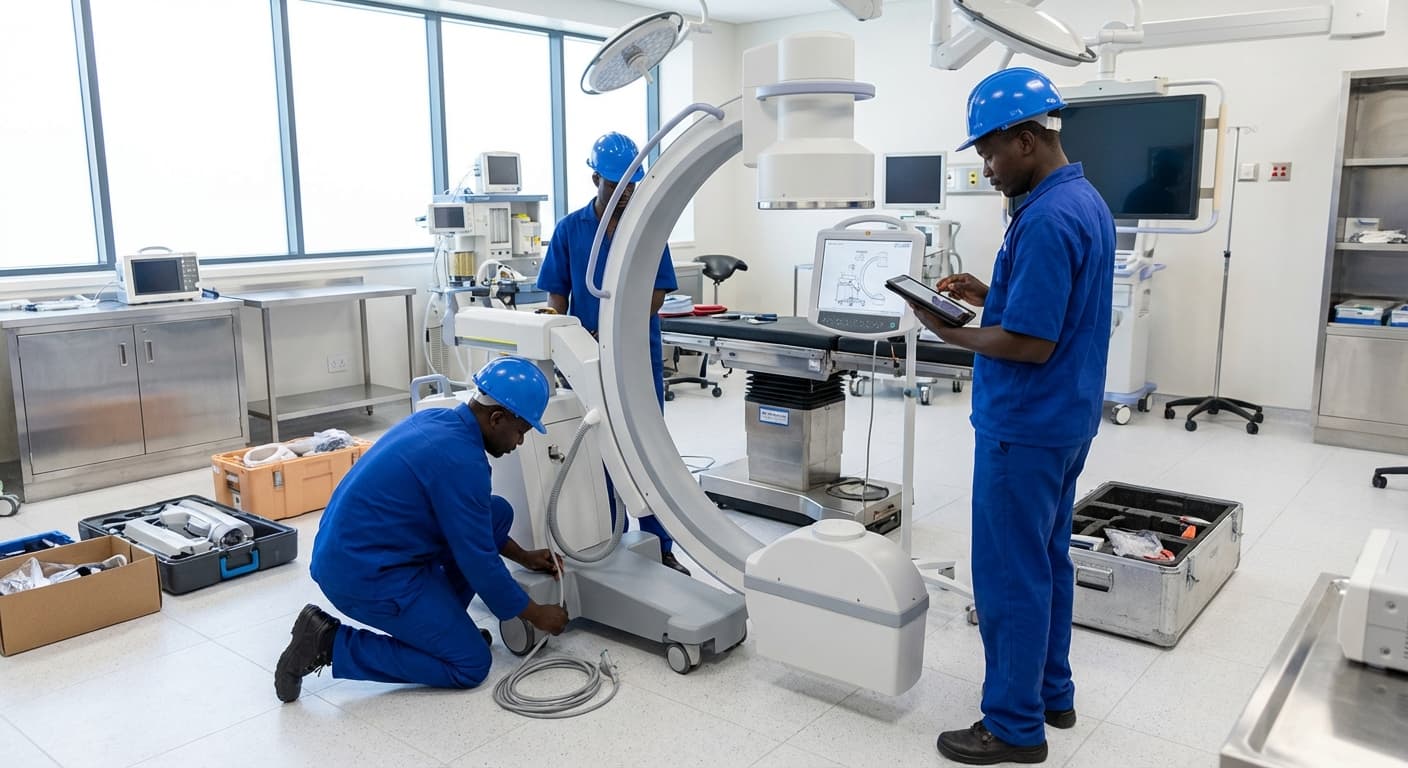
C-Arm Installation Service in Niger
Engineering Excellence & Technical Support
C-Arm Installation Service High-standard technical execution following OEM protocols and local regulatory frameworks.
Expert C-Arm Deployment & Validation
Our certified technicians ensure precise C-arm installation and comprehensive system validation in Niger's healthcare facilities, guaranteeing optimal performance and patient safety from day one.
Remote & On-Site Technical Support
Benefit from our hybrid support model, offering responsive remote troubleshooting and timely on-site interventions for C-arm installations and maintenance, minimizing downtime across Niger.
Customized Integration & Calibration
We provide tailored C-arm integration with existing hospital infrastructure and meticulous calibration to meet the specific diagnostic needs and regulatory standards of Niger's medical community.
What Is C-arm Installation Service In Niger?
C-Arm installation service in Niger refers to the specialized process of setting up and integrating a C-arm fluoroscopy system within a healthcare facility in the country. This service encompasses a comprehensive range of activities, from the initial site assessment and preparation to the final testing and commissioning of the equipment. It ensures the C-arm is correctly positioned, powered, connected to imaging networks, and calibrated to meet stringent medical imaging standards and regulatory requirements specific to Niger.
| Who Needs C-Arm Installation Service? | Typical Use Cases | |||||
|---|---|---|---|---|---|---|
| Hospitals and Clinics: Especially those performing orthopedic, surgical, pain management, and interventional radiology procedures. | Orthopedic Surgery: Intraoperative imaging for fracture reduction, implant placement, and spinal procedures. | Interventional Radiology: Guiding procedures like angioplasty, stent placement, and biopsies. | Pain Management Clinics: Fluoroscopically guided injections for diagnostic and therapeutic purposes. | Emergency Departments: For rapid assessment of injuries and guiding fracture reductions. | Surgical Centers: Particularly for minimally invasive surgical techniques requiring real-time imaging. | Diagnostic Imaging Departments: As a complementary tool for specialized fluoroscopic examinations. |
Key Components of C-Arm Installation Service:
- Site Assessment and Planning: Evaluating the physical space, power requirements, ventilation, and necessary structural modifications for optimal C-arm placement and operation.
- Unpacking and Physical Placement: Carefully unboxing the C-arm system and positioning it according to the approved layout, ensuring proper access for maintenance and patient positioning.
- Electrical Connection and Grounding: Connecting the C-arm to the facility's power supply with appropriate surge protection and ensuring robust grounding for safety and signal integrity.
- Imaging System Integration: Connecting the C-arm to the Picture Archiving and Communication System (PACS) or other digital imaging networks for seamless image acquisition, storage, and retrieval.
- Calibration and Quality Assurance: Performing precise calibration of the C-arm's imaging components, including the X-ray generator, image intensifier or flat panel detector, and monitor, to ensure accurate dose delivery and image quality.
- Functional Testing and Validation: Conducting comprehensive tests to verify all operational modes, safety features, and emergency shutdown procedures.
- Operator Training: Providing initial training to radiographers, physicians, and biomedical engineers on the proper operation, maintenance, and safety protocols of the C-arm system.
- Documentation and Certification: Providing all necessary documentation, including installation reports, calibration certificates, and user manuals, to comply with local health regulations.
Who Needs C-arm Installation Service In Niger?
C-arm installation services are crucial for ensuring the proper functioning, safety, and longevity of medical imaging equipment. In Niger, as healthcare infrastructure develops and access to advanced diagnostic tools expands, the need for specialized installation expertise for C-arms becomes increasingly important. This service ensures that these complex medical devices are set up correctly according to manufacturer specifications and regulatory requirements, leading to accurate imaging, reduced downtime, and improved patient care.
| Target Customer Type | Key Departments/Users | Specific Needs/Reasons for Installation |
|---|---|---|
| Public Hospitals | Orthopedics, General Surgery, Emergency, Urology, Pain Management, Radiology | Upgrading existing C-arms, installing new units in newly built wings, ensuring compliance with national health standards, supporting a high volume of patients. |
| Private Hospitals & Clinics | Orthopedics, Neurosurgery, Cardiovascular Surgery, Pain Management, Gastroenterology, Radiology | Implementing advanced imaging capabilities for specialized procedures, attracting patients seeking higher-end medical services, ensuring optimal image quality for complex diagnoses and treatments. |
| Diagnostic Imaging Centers | Radiology, Interventional Radiology, Pain Management | Expanding service offerings, enhancing diagnostic accuracy, improving workflow efficiency with correctly calibrated and positioned C-arms. |
| Medical Equipment Suppliers/Distributors | Sales and Service Departments | Providing a complete service package to their clients, ensuring successful integration of C-arm systems, minimizing post-installation issues, building client trust and satisfaction. |
| Government Health Ministries/Agencies | Procurement and Planning Departments, Regional Health Offices | Overseeing the installation of C-arms in government-funded facilities, ensuring standardization and quality control, optimizing the use of public health resources. |
Target Customers for C-Arm Installation Service in Niger:
- Hospitals (Public and Private)
- Specialty Clinics (e.g., Orthopedic, Surgical, Pain Management)
- Diagnostic Imaging Centers
- Medical Equipment Suppliers and Distributors (for their clients)
- Government Health Ministries and Agencies (for public health facilities)
C-arm Installation Service Process In Niger
This document outlines the typical workflow for a C-arm installation service process in Niger, from initial client inquiry to successful execution and post-installation support.
| Phase | Key Activities | Responsible Parties | Deliverables/Outcomes | Typical Timeline (Niger Context) |
|---|---|---|---|---|
| Phase 1: Initial Inquiry and Consultation | Client contacts service provider with a need for C-arm installation. Initial discussion of requirements, C-arm model, intended use, and existing infrastructure. Answering preliminary questions about the service. | Client, Service Provider Sales/Technical Team | Understanding of client needs, preliminary scope definition. | 1-3 Business Days |
| Phase 2: Site Assessment and Planning | Service provider dispatches a technical team to the client's site in Niger. Detailed assessment of the installation location (space, power, ventilation, radiation shielding requirements). Identification of potential logistical challenges (transport, access). Development of a detailed installation plan. | Service Provider Technical Team, Client Facility Management | Detailed site survey report, confirmed installation plan, risk assessment. | 2-5 Business Days (can be longer due to travel) |
| Phase 3: Quotation and Contract | Based on the site assessment and scope, a detailed quotation is prepared, including equipment, installation labor, consumables, and potential site modifications. Negotiation of terms and conditions. Formal contract signing. | Service Provider Sales/Project Management, Client Procurement/Management | Formal quotation, signed contract/purchase order. | 3-7 Business Days |
| Phase 4: Pre-Installation Preparation | Client prepares the installation site according to the approved plan (e.g., structural modifications, electrical upgrades, radiation shielding). Service provider procures necessary parts and prepares installation tools. Arrangement of logistics for equipment transport to Niger. | Client, Service Provider Logistics/Procurement | Site ready for installation, all necessary materials and tools gathered, equipment en route. | Variable (weeks to months, depending on site readiness and logistics) |
| Phase 5: C-Arm Delivery and Unpacking | C-arm equipment arrives at the client's facility in Niger. Careful unpacking and inspection for any shipping damage. Verification of all components against the delivery manifest. | Service Provider Logistics/Installation Team, Client Warehouse Staff | C-arm equipment physically present and inspected, all components accounted for. | 1-2 Business Days |
| Phase 6: Installation and Configuration | Skilled technicians assemble and connect the C-arm system according to the manufacturer's specifications and installation plan. Installation of necessary software and initial configuration. Integration with existing hospital IT infrastructure (if applicable). | Service Provider Installation Team (certified technicians) | Physically installed and powered C-arm system. | 2-5 Business Days |
| Phase 7: Testing and Calibration | Comprehensive testing of all C-arm functionalities (imaging, fluoroscopy, power, safety features). Calibration of image parameters to ensure optimal diagnostic quality. Performance checks against manufacturer specifications. | Service Provider Installation/Field Service Engineers | Fully functional and calibrated C-arm system, test reports. | 2-4 Business Days |
| Phase 8: Client Training | Training sessions for radiographers, physicians, and relevant technical staff on the operation, basic maintenance, and safety protocols of the C-arm system. Demonstration of typical use cases. | Service Provider Application Specialists/Field Service Engineers, Client End-Users | Trained end-users, training completion records. | 1-3 Business Days |
| Phase 9: Handover and Documentation | Formal handover of the installed and tested C-arm system to the client. Provision of all relevant documentation: user manuals, service manuals, warranty information, test reports, certificates. | Service Provider Project Manager/Lead Technician, Client Representative | Signed acceptance form, complete documentation package. | 1 Business Day |
| Phase 10: Post-Installation Support | Initial period of on-site or remote support to address any immediate issues. Activation of the service/maintenance contract. Scheduled follow-up to ensure client satisfaction and system performance. | Service Provider Field Service Engineers, Technical Support Team | Satisfied client, ongoing system maintenance and support. | Ongoing (initial intensive support for 1-2 weeks, then regular maintenance) |
C-Arm Installation Service Workflow in Niger
- Phase 1: Initial Inquiry and Consultation
- Phase 2: Site Assessment and Planning
- Phase 3: Quotation and Contract
- Phase 4: Pre-Installation Preparation
- Phase 5: C-Arm Delivery and Unpacking
- Phase 6: Installation and Configuration
- Phase 7: Testing and Calibration
- Phase 8: Client Training
- Phase 9: Handover and Documentation
- Phase 10: Post-Installation Support
C-arm Installation Service Cost In Niger
Installing a C-arm in Niger involves several costs, influenced by factors like the C-arm's model, features, and the complexity of the installation site. The pricing can also vary depending on the chosen service provider, their experience, and the specific location within Niger. It's crucial to obtain detailed quotes from multiple reputable medical equipment installation companies to ensure competitive pricing and quality service. This service is vital for ensuring the proper functioning and safety of these advanced medical imaging devices, which are essential for a wide range of diagnostic and surgical procedures.
| Service Component | Estimated Cost Range (XOF) | Notes |
|---|---|---|
| C-arm Installation Labor (Technician Fees) | 150,000 - 600,000 | Varies based on installer's rates, hours worked, and complexity. |
| Site Assessment and Preparation | 50,000 - 250,000 | Includes minor electrical work, structural adjustments, and room readiness checks. |
| Transportation and Logistics | 75,000 - 300,000 | Depends on distance, accessibility of the site, and volume of equipment. |
| Initial Calibration and Testing | 100,000 - 400,000 | Crucial for ensuring diagnostic accuracy and safety. |
| Basic Operator Training | 50,000 - 200,000 | Introductory training on C-arm operation and safety protocols. |
| Total Estimated Installation Cost (Excluding C-arm Unit) | 425,000 - 1,750,000 | This is a broad estimate and can vary significantly. |
Key Factors Influencing C-Arm Installation Service Costs in Niger
- C-arm Model and Specifications: Higher-end C-arms with advanced imaging capabilities, robotic arms, or specialized features will generally incur higher installation costs due to their complexity.
- Site Preparation Requirements: The existing infrastructure of the hospital or clinic plays a significant role. This includes assessing and potentially upgrading electrical systems, ensuring adequate ventilation, and preparing the physical space for the C-arm's footprint and operational needs.
- Installation Complexity: The difficulty of maneuvering the C-arm into position, especially in crowded or less accessible medical facilities, can impact labor costs.
- Geographical Location within Niger: Transportation costs for equipment and personnel to remote or less developed regions of Niger might increase the overall price.
- Service Provider's Expertise and Reputation: Established companies with a proven track record and specialized technicians may charge more but offer greater reliability and warranty.
- Additional Services: This can include initial training for medical staff, calibration, system testing, and integration with existing hospital IT networks.
- Warranty and Maintenance Packages: While not strictly installation cost, these are often bundled or offered as an add-on, influencing the total financial outlay.
- Import Duties and Taxes (if applicable): For newly imported C-arms and installation components, any applicable import duties and taxes in Niger will factor into the final cost.
Affordable C-arm Installation Service Options
Installing a C-arm in a medical facility is a significant investment, and understanding the available service options can lead to substantial cost savings. This guide explores affordable C-arm installation service options, focusing on value bundles and effective cost-saving strategies. When choosing an installation service, consider the expertise of the technicians, the scope of services included, and the overall value proposition.
| Strategy | Description | Potential Savings |
|---|---|---|
| Value Bundles | Many providers offer comprehensive installation packages that include multiple services at a discounted rate compared to individual components. This can streamline the process and reduce the overall cost. | 5-15% |
| Negotiate Service Contracts | Don't accept the initial quote without negotiation. Discuss the scope of work and see if any services can be adjusted or if there's room for price reduction. | 3-7% |
| Independent Service Organizations (ISOs) | For post-installation maintenance and repairs, consider third-party ISOs. They often offer more competitive pricing than original equipment manufacturers (OEMs) while providing comparable quality. | 10-25% on maintenance |
| Refurbished C-Arms | Purchasing a certified refurbished C-arm can significantly reduce upfront costs. Ensure it comes with a warranty and is installed by a reputable service provider. | 30-60% on equipment |
| Phased Installation | For larger facilities or those with budget constraints, explore the possibility of a phased installation, breaking down the cost over time. This requires careful planning and coordination. | Improved cash flow, not direct savings |
| Outsourcing vs. In-House | Evaluate if your in-house IT and facilities teams have the necessary expertise for certain aspects of installation. Outsourcing specialized tasks might be more cost-effective than training internal staff. | Varies based on in-house capabilities |
| Long-Term Service Agreements | While an upfront cost, a well-negotiated long-term service agreement can lock in rates and provide predictable budgeting for maintenance, avoiding unexpected spikes. | Price stability |
| Compare Multiple Quotes | Always obtain quotes from at least three different installation service providers. This competitive pressure can lead to better pricing and service offerings. | 5-10% |
| Consider Used Equipment | Similar to refurbished, explore the used C-arm market. Ensure thorough inspection and professional installation by experienced technicians. | 20-50% on equipment |
Key Components of C-Arm Installation Services
- Site assessment and planning
- Physical installation of the C-arm unit
- Electrical and power requirements
- Radiation shielding considerations
- Network integration and PACS connectivity
- System testing and calibration
- User training and orientation
- Post-installation support and maintenance
Verified Providers In Niger
In the challenging healthcare landscape of Niger, identifying and trusting healthcare providers is paramount. Franance Health stands out as a beacon of reliability, offering a network of verified providers who meet rigorous credentialing standards. This commitment to quality assurance ensures that patients receive safe, effective, and compassionate care. Choosing a Franance Health verified provider means opting for expertise, ethical practice, and a patient-centered approach, making them the superior choice for your healthcare needs in Niger.
| Provider Type | Franance Health Verification Criteria | Benefits for Patients |
|---|---|---|
| Doctors | Valid medical license, board certification, verified training, clean disciplinary record. | Access to qualified specialists, accurate diagnoses, effective treatment plans. |
| Nurses | Valid nursing license, verified education and training, background checks. | Competent and compassionate care, medication administration, patient monitoring. |
| Specialists (e.g., Surgeons, Pediatricians, Gynecologists) | Advanced degrees, specialized training, peer reviews, proven track record. | Expert care for specific medical conditions, complex procedures. |
| Clinics & Hospitals | Facility accreditation, adherence to hygiene and safety protocols, quality management systems. | Safe treatment environments, reliable medical equipment, coordinated patient care. |
| Pharmacies | Valid pharmacy license, proper storage of medications, dispensing protocols. | Access to safe and authentic medications, professional advice on drug use. |
Why Franance Health Credentials Matter
- Rigorous verification process for all practitioners.
- Ensures adherence to international quality and safety standards.
- Promotes ethical medical practices and patient-centered care.
- Provides access to specialists with proven expertise.
- Reduces the risk of substandard or unqualified medical services.
- Builds patient trust and confidence in the healthcare system.
Scope Of Work For C-arm Installation Service
This Scope of Work (SOW) outlines the requirements for the professional installation of a C-arm imaging system. It details the technical deliverables expected from the service provider and the standard specifications that must be adhered to throughout the installation process. The goal is to ensure a safe, functional, and compliant C-arm system ready for clinical use.
| Category | Technical Deliverables | Standard Specifications & Requirements |
|---|---|---|
| Site Preparation | Assessment of installation site suitability. | Adequate space, appropriate floor loading capacity, environmental controls (temperature, humidity, ventilation), EMI shielding if required, and accessibility for equipment transport. |
| Equipment Unpacking & Inspection | Careful unpacking and visual inspection of all delivered C-arm components. | No visible damage to any component. Report any discrepancies or damage immediately to the vendor and installer. |
| Physical Installation & Positioning | Assembly and precise positioning of the C-arm unit and accessories. | Installation according to manufacturer's guidelines and approved room layout. Secure mounting of all components, including monitors, workstations, and cabling. |
| Electrical Connections | Connection of the C-arm system to the facility's power supply. | Compliance with local electrical codes and hospital safety standards. Dedicated power circuits with appropriate grounding and surge protection. Use of hospital-grade power cords and outlets. |
| Networking & Data Integration | Integration of the C-arm with the hospital's PACS/RIS network. | Successful network connectivity, DICOM conformance, data transfer verification, and adherence to hospital IT security protocols. |
| Environmental Controls Verification | Confirmation that environmental conditions meet system requirements. | Temperature and humidity within manufacturer's specified operating ranges. Adequate airflow to prevent overheating. |
| System Calibration & Testing | Performing initial calibration and diagnostic tests. | All system parameters calibrated according to manufacturer's procedures. Verification of image quality, radiation output, and safety features. |
| Radiation Safety Compliance | Ensuring all radiation safety measures are in place and tested. | Verification of shielding, interlocks, dose monitoring, and compliance with ALARA principles and regulatory requirements. Radiation survey conducted and documented. |
| User Training | Comprehensive training for identified personnel on system operation. | Training on basic operation, image acquisition, post-processing, troubleshooting, and safety procedures for radiographers, physicians, and biomedical engineers. |
| Documentation & Handover | Provision of all relevant installation and operational documentation. | Includes installation report, test results, user manuals, service manuals, training materials, and warranty information. Formal sign-off by hospital representative. |
| Post-Installation Support | Initial period of on-site support post-installation. | Availability to address immediate operational issues and answer user questions for a defined period (e.g., 1-2 weeks). |
Key Objectives of C-Arm Installation
- Safe and secure installation of the C-arm unit and associated components.
- Proper integration with existing medical facility infrastructure (power, network, environmental controls).
- Verification of system functionality and performance against manufacturer specifications.
- Compliance with all relevant regulatory standards and hospital policies.
- Comprehensive training for designated clinical and technical staff.
- Delivery of all required documentation for future reference and maintenance.
Service Level Agreement For C-arm Installation Service
This Service Level Agreement (SLA) outlines the commitment to providing reliable and timely C-Arm installation services. It defines the expected response times for critical issues and guarantees a certain level of availability for the installed C-Arm system, excluding scheduled maintenance. This SLA applies to all new C-Arm installations performed by [Your Company Name] for its clients.
| Service Component | Response Time Target (Business Hours) | Uptime Guarantee |
|---|---|---|
| Initial Response to Critical Issue | Within 2 business hours of report | N/A (Focus on response and resolution) |
| Resolution of Critical Issue | Within 8 business hours of initial response (target, subject to part availability and complexity) | N/A (Focus on response and resolution) |
| Initial Response to Non-Critical Issue | Within 4 business hours of report | N/A (Focus on response and resolution) |
| Resolution of Non-Critical Issue | Within 24 business hours of initial response (target) | N/A (Focus on response and resolution) |
| Scheduled Maintenance Notification | Minimum 48 hours advance notice | N/A (Scheduled maintenance is excluded from uptime guarantees) |
| System Uptime Guarantee (Post-Installation, excluding scheduled maintenance) | N/A (Focus on proactive maintenance and rapid issue resolution) | 99.5% monthly uptime |
Key Service Elements
- Installation Service Scope: Covers the physical installation, connection, and initial testing of the C-Arm system as per manufacturer specifications and client site requirements.
- Support Hours: Standard business hours, Monday to Friday, 9:00 AM to 5:00 PM [Your Time Zone], excluding national holidays.
- Critical Issue Definition: An issue that renders the C-Arm system completely inoperable, significantly impacting patient care or diagnostic capabilities.
- Non-Critical Issue Definition: An issue that degrades performance but does not prevent the C-Arm system from functioning, or cosmetic issues not affecting functionality.
Frequently Asked Questions

Ready when you are
Let's scope your C-Arm Installation Service in Niger project in Niger.

Scaling healthcare logistics and technical systems across the entire continent.