
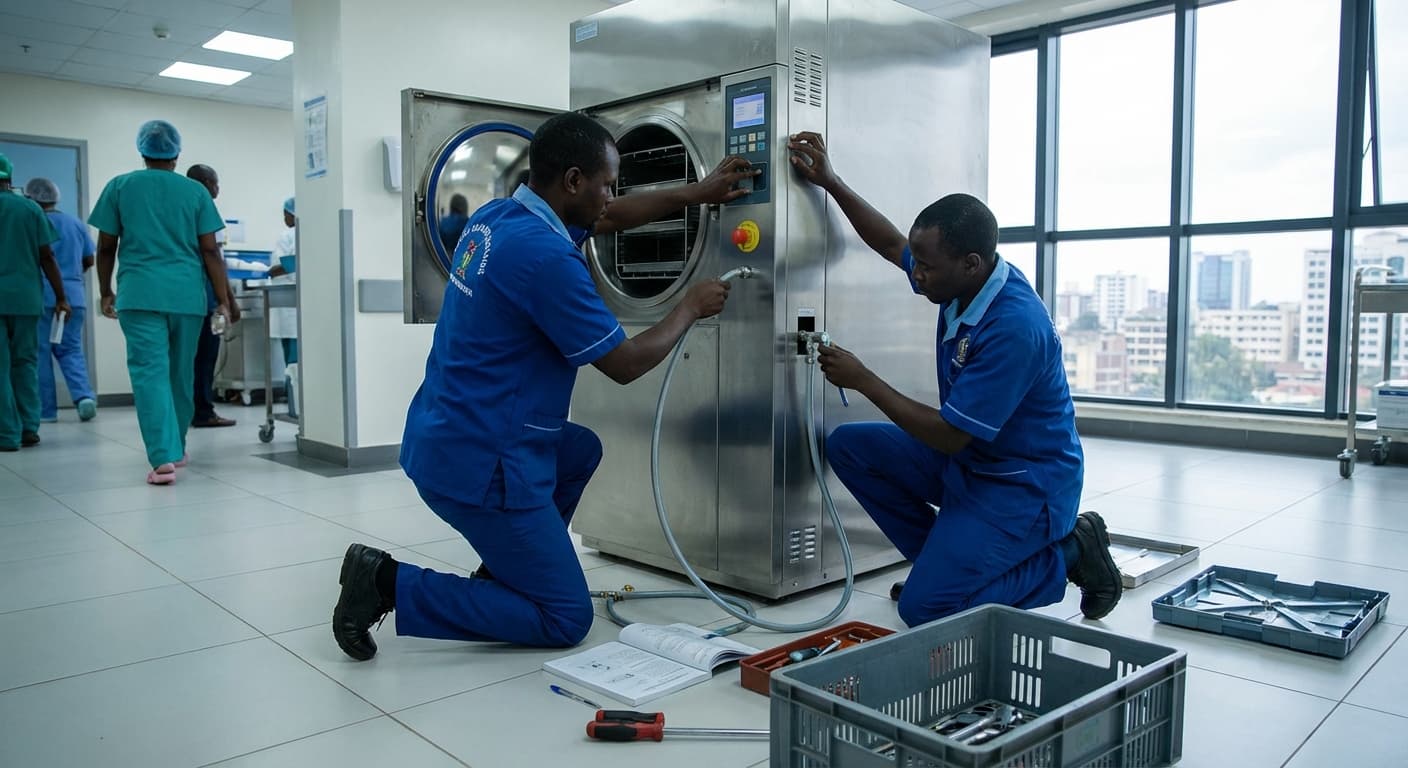
Autoclave & Sterilizer Installation Service in Niger
Engineering Excellence & Technical Support
Autoclave & Sterilizer Installation Service High-standard technical execution following OEM protocols and local regulatory frameworks.
Expert Autoclave & Sterilizer Installation
We provide precise and compliant installation of all types of autoclaves and sterilizers in Niger, ensuring optimal performance and safety for your critical healthcare or laboratory equipment. Our certified technicians adhere to rigorous industry standards and local regulations.
Seamless Integration & Calibration
Our service goes beyond basic setup. We ensure seamless integration with your existing infrastructure and perform meticulous calibration to guarantee the accuracy and effectiveness of your sterilization cycles, vital for infection control and research integrity.
Temperature & Pressure Validation
We specialize in the critical validation of temperature and pressure parameters for all installed autoclaves and sterilizers, providing comprehensive documentation and peace of mind that your sterilization processes meet the highest international standards.
What Is Autoclave & Sterilizer Installation Service In Niger?
Autoclave & Sterilizer Installation Service in Niger refers to the professional and technical process of setting up, calibrating, and verifying the operational readiness of autoclaves and various sterilization equipment within healthcare, laboratory, and industrial facilities in Niger. This service ensures that these critical systems are installed according to manufacturer specifications, relevant safety standards, and local regulations, guaranteeing their efficacy in eliminating microbial contamination. It encompasses a range of activities from initial site assessment and equipment delivery to final testing and user training.
| Who Needs This Service? | Typical Use Cases | |||||
|---|---|---|---|---|---|---|
| Hospitals and Clinics: For the sterilization of surgical instruments, medical devices, glassware, and patient care equipment. | Sterilization of surgical tools (scalpels, forceps, retractors). | Autoclaving of medical implants and prosthetics. | Sterilization of laboratory consumables (pipette tips, petri dishes, culture media). | Disinfection of waste materials (biohazardous waste). | Sterilization of dental instruments. | Processing of linens and fabrics used in sterile environments. |
| Laboratories (Research, Diagnostic, Industrial): For sterilizing media, glassware, instruments, and waste to ensure sterile conditions for experiments and testing. | Sterilizing growth media for microbiology and cell culture. | Decontaminating laboratory glassware and equipment. | Sterilizing waste materials before disposal. | Ensuring aseptic conditions in pharmaceutical manufacturing. | Sterilization of forensic evidence handling materials. | |
| Pharmaceutical and Biotechnology Companies: For sterilizing manufacturing equipment, raw materials, and packaging components to maintain product sterility. | Sterilization of bioreactors and fermentation equipment. | Processing of sterile drug products and injectables. | Decontamination of cleanroom environments. | |||
| Veterinary Clinics and Animal Hospitals: For sterilizing surgical instruments and equipment. | Sterilization of surgical instruments for animal procedures. | Disinfection of animal housing equipment. | ||||
| Any Facility Requiring High-Level Disinfection/Sterilization: Including dental practices, cosmetic surgery clinics, and tattoo parlors. | Sterilization of tattoo needles and piercing instruments. | Processing of instruments in cosmetic and aesthetic procedures. |
Key Components of Autoclave & Sterilizer Installation Service:
- Site Assessment and Planning: Evaluating the installation location for space, utility requirements (power, water, drainage, ventilation), and structural integrity.
- Equipment Delivery and Positioning: Safely transporting and precisely placing the autoclave or sterilizer unit in its designated area.
- Utility Connections: Connecting the equipment to essential services, including electrical power (ensuring proper voltage and amperage), water supply (if applicable for steam generation or rinsing), and drainage systems.
- Ventilation and Exhaust Systems: Installing and connecting appropriate ventilation or exhaust ducting to safely dissipate steam, heat, and potential chemical vapors.
- Mounting and Securing: Permanently fixing the unit to the floor or wall as per manufacturer guidelines to prevent movement during operation.
- Pre-Installation Checks: Verifying that all components are present and undamaged, and that the installation site meets all prerequisite conditions.
- Initial Start-up and Configuration: Powering up the unit, performing initial system diagnostics, and configuring operational parameters (temperature, pressure, time cycles) according to application needs.
- Calibration and Validation: Calibrating critical sensors (temperature, pressure) and performing performance qualification (PQ) tests to ensure the sterilizer achieves and maintains the required sterilization parameters for effective microbial inactivation.
- Safety System Checks: Verifying the functionality of all safety interlocks, pressure relief valves, and emergency shut-off mechanisms.
- User Training: Providing comprehensive training to facility personnel on the correct operation, routine maintenance, troubleshooting, and safety protocols associated with the installed equipment.
- Documentation and Handover: Providing all relevant documentation, including installation certificates, calibration records, user manuals, and warranty information.
Who Needs Autoclave & Sterilizer Installation Service In Niger?
Maintaining sterile environments is paramount in numerous sectors within Niger. For organizations and facilities that rely on the critical function of autoclaves and sterilizers to ensure the safety and efficacy of their operations, professional installation services are not just a convenience, but a necessity. This service guarantees that these vital pieces of equipment are set up correctly, efficiently, and in compliance with industry standards, thereby preventing costly downtime, potential contamination, and ensuring optimal performance.
| Target Customer Segment | Key Departments/Functions Requiring Service | Primary Need for Autoclave/Sterilizer |
|---|---|---|
| Hospitals | Central Sterile Supply Department (CSSD), Operating Rooms, Dental Clinics, Emergency Rooms, Laboratories | Sterilization of surgical instruments, medical devices, and laboratory equipment to prevent healthcare-associated infections (HAIs). |
| Clinics (General & Specialized) | Treatment Rooms, Examination Rooms, Minor Surgery Units, Laboratories | Sterilization of reusable medical instruments, ensuring patient safety during procedures. |
| Diagnostic Laboratories | Microbiology Labs, Pathology Labs, Biochemistry Labs | Sterilization of glassware, culture media, and instruments for accurate and contamination-free diagnostic testing. |
| Research Institutions | Biology Labs, Chemistry Labs, Biotechnology Labs, Medical Research Facilities | Sterilization of equipment, consumables, and media for research experiments, preventing cross-contamination and ensuring reliable results. |
| Pharmaceutical Companies | Quality Control Labs, Manufacturing Units, R&D Labs | Sterilization of manufacturing equipment, laboratory tools, and packaging materials to meet regulatory standards and ensure product safety and efficacy. |
| Veterinary Hospitals & Clinics | Surgical Suites, Examination Rooms, Dental Units | Sterilization of surgical instruments, dental tools, and equipment for animal health procedures. |
| Beauty Salons & Tattoo/Piercing Studios | Treatment Stations, Sterilization Areas | Sterilization of needles, tools, and equipment to prevent the transmission of bloodborne pathogens and ensure client safety. |
Who Needs Autoclave & Sterilizer Installation Service in Niger?
- Healthcare Facilities: Hospitals, clinics, dental offices, and diagnostic laboratories are primary users of autoclaves and sterilizers for instrument and equipment disinfection.
- Research and Development Laboratories: Academic institutions and private research centers require sterile conditions for experiments, sample handling, and culture growth.
- Pharmaceutical and Biotechnology Companies: These industries demand stringent sterilization protocols for manufacturing processes, product quality control, and laboratory operations.
- Veterinary Clinics and Animal Hospitals: Sterilization is crucial for surgical instruments and general hygiene in animal care settings.
- Beauty and Tattoo/Piercing Studios: To prevent the spread of infections and ensure client safety, these establishments utilize sterilizers for their tools.
- Food and Beverage Processing Plants: Certain food production facilities may require sterilization for equipment and packaging to maintain product integrity and safety.
- Industrial Settings (Specific Applications): Some specialized industrial processes may involve sterilization for components or materials.
- Educational Institutions (Science Departments): Universities and colleges with chemistry, biology, or medical science departments will use autoclaves for lab work.
Autoclave & Sterilizer Installation Service Process In Niger
This document outlines the typical workflow for Autoclave & Sterilizer Installation Services in Niger, from the initial customer inquiry through to the successful execution and completion of the installation. This process is designed to ensure clarity, efficiency, and client satisfaction throughout the project lifecycle.
| Phase | Stage/Step | Description | Key Activities | Deliverables/Outcomes |
|---|---|---|---|---|
| Phase 1: Inquiry & Consultation | Initial Contact | Customer reaches out with a need for autoclave/sterilizer installation. | Receive inquiry (phone, email, website). Understand customer's basic requirements (type of sterilizer, intended use, location). | Acknowledgement of inquiry, preliminary understanding of project scope. |
| Phase 1: Inquiry & Consultation | Needs Assessment & Consultation | Detailed discussion to understand specific needs and constraints. | Conduct detailed consultation (in-person or remote). Discuss sterilizer type, capacity, application (medical, laboratory, industrial), site conditions, power and water availability, existing infrastructure. | Clear understanding of customer's technical and operational requirements. |
| Phase 2: Site Assessment & Planning | Site Visit | On-site evaluation of the installation location. | Visit the intended installation site. Assess space availability, accessibility, ventilation, power supply (voltage, amperage), water source, drainage, potential structural modifications needed, safety regulations compliance. | Detailed site report, identification of any challenges or prerequisites. |
| Phase 2: Site Assessment & Planning | Technical Planning & Design | Develop a comprehensive installation plan. | Based on consultation and site assessment, create a detailed technical plan including equipment placement, utility connections, required modifications, and safety protocols. Coordinate with client on any facility upgrades if necessary. | Approved installation plan, including drawings and technical specifications. |
| Phase 3: Quotation & Agreement | Preparation of Quotation | Generate a detailed cost estimate for the service. | Develop a formal quotation encompassing equipment (if supplied), installation labor, materials, transportation, testing, and training. Include terms and conditions. | Formal quotation document. |
| Phase 3: Quotation & Agreement | Client Review & Approval | Client reviews and accepts the quotation. | Client reviews the quotation. Clarification of any points. Negotiation if required. Formal approval by the client. | Accepted quotation. |
| Phase 3: Quotation & Agreement | Contract/Agreement Signing | Formalize the service agreement. | Sign a service contract detailing scope of work, timeline, payment terms, warranties, and responsibilities of both parties. | Signed service agreement. |
| Phase 4: Procurement & Logistics | Equipment & Material Procurement | Acquire the necessary autoclave/sterilizer and installation materials. | Order the specified autoclave/sterilizer (if not provided by client). Procure all required ancillary materials (piping, wiring, fittings, consumables). | Ordered and received equipment and materials. |
| Phase 4: Logistics | Transportation & Delivery | Arrange safe and timely delivery to the site. | Plan and execute transportation of equipment and materials to the installation site in Niger. Ensure proper handling and customs clearance if applicable. | Equipment and materials safely at the installation site. |
| Phase 5: Installation & Commissioning | Site Preparation | Prepare the installation area according to the plan. | Carry out any required modifications to the site (e.g., structural reinforcement, utility point adjustments). Ensure the area is clean and safe for work. | Site ready for installation. |
| Phase 5: Installation & Commissioning | Equipment Installation | Physically install the autoclave/sterilizer. | Unpack and position the equipment. Connect to power, water, and drainage as per design. Install any associated peripherals. | Autoclave/sterilizer physically installed. |
| Phase 5: Installation & Commissioning | System Testing & Commissioning | Verify functionality and performance. | Conduct initial power-on tests. Run calibration cycles. Test all operational functions, safety features, and alarms. Perform validation (e.g., temperature, pressure, sterilization efficacy checks). | Fully functional and calibrated autoclave/sterilizer. Commissioning report. |
| Phase 6: Training & Handover | User Training | Educate client staff on operation and maintenance. | Provide comprehensive training to the designated client personnel on the proper operation, routine maintenance, basic troubleshooting, and safety procedures of the autoclave/sterilizer. | Trained client personnel. |
| Phase 6: Handover | Final Handover | Official transfer of responsibility. | Present the completed installation, commissioning report, user manuals, and warranty information to the client. Obtain final sign-off. | Client sign-off confirming successful installation and handover. |
| Phase 7: Post-Installation Support & Follow-up | Warranty & Support | Provide ongoing support as per agreement. | Address any issues arising during the warranty period. Offer scheduled maintenance services. Be available for technical queries. | Ongoing client support and satisfaction. |
| Phase 7: Follow-up | Post-Installation Review | Ensure long-term client satisfaction. | Conduct a follow-up after a specified period to check on the performance of the installed unit and address any further client needs or feedback. | Resolved any post-installation queries, maintained client relationship. |
Autoclave & Sterilizer Installation Service Process in Niger
- Phase 1: Inquiry & Consultation
- Phase 2: Site Assessment & Planning
- Phase 3: Quotation & Agreement
- Phase 4: Procurement & Logistics
- Phase 5: Installation & Commissioning
- Phase 6: Training & Handover
- Phase 7: Post-Installation Support & Follow-up
Autoclave & Sterilizer Installation Service Cost In Niger
Installing an autoclave or sterilizer is a critical process that ensures the effectiveness of sterilization procedures in healthcare, laboratories, and other critical environments. The cost of this service in Niger can vary significantly due to several factors. Understanding these elements will help in budgeting and obtaining accurate quotes from service providers. The installation process typically involves ensuring proper electrical connections, plumbing (if applicable for steam autoclaves), ventilation, and initial calibration and testing. Safety protocols and adherence to regulatory standards are paramount and often included in the service fee.
| Service Type | Estimated Cost Range (XOF - West African CFA Franc) |
|---|---|
| Small Tabletop Autoclave/Sterilizer Installation | 50,000 - 150,000 |
| Medium-Sized Autoclave/Sterilizer Installation | 100,000 - 300,000 |
| Large/Industrial Autoclave/Sterilizer Installation | 250,000 - 700,000+ |
| Complex Installation (e.g., extensive plumbing/electrical work) | 300,000 - 1,000,000+ |
| On-site Consultation and Quote | 10,000 - 30,000 (often waived if service is contracted) |
Factors Influencing Autoclave & Sterilizer Installation Service Cost in Niger
- Type and Size of Autoclave/Sterilizer: Larger, more complex units (e.g., large-capacity steam autoclaves) will naturally incur higher installation costs than smaller, simpler models (e.g., tabletop autoclaves).
- Location and Accessibility: The distance of the installation site from the service provider's base, as well as the ease of access to the installation location within the facility (e.g., upper floors, confined spaces), can affect labor and transportation costs.
- Electrical and Plumbing Requirements: The complexity of the required electrical and plumbing modifications can significantly impact the cost. Older facilities may require more extensive upgrades to meet the demands of modern sterilization equipment.
- Site Preparation: If the installation site requires any preparation (e.g., leveling, structural reinforcement, dedicated ventilation systems), these costs will be added.
- Brand and Model Specifics: Some brands or models may have unique installation requirements or necessitate specialized tools and expertise, leading to variations in pricing.
- Additional Features and Integrations: If the installation includes integration with existing building management systems, data logging, or specialized accessories, this will increase the overall cost.
- Service Provider Expertise and Reputation: Highly experienced and reputable installation companies may charge more for their services due to their proven track record and assurance of quality.
- Permits and Inspections: Depending on local regulations, obtaining necessary permits and undergoing inspections can add to the total installation cost.
- Urgency of Service: Emergency or expedited installation requests may come with a premium fee.
Affordable Autoclave & Sterilizer Installation Service Options
Finding the right autoclave or sterilizer for your practice is crucial, and so is ensuring its proper installation. Our Affordable Autoclave & Sterilizer Installation Service offers expert setup at competitive prices, focusing on providing value and transparency. We understand that budget is a key consideration, which is why we've developed flexible service options and cost-saving strategies to make professional installation accessible for everyone.
| Cost-Saving Strategy | Description | Benefit |
|---|---|---|
| Bundle Discounts | Purchasing an installation package that includes multiple services often comes with a reduced overall cost compared to booking each service individually. | Significant savings on comprehensive installation needs. |
| Off-Peak Scheduling | Scheduling your installation during non-peak hours or days can sometimes lead to lower labor rates. | Reduced labor costs, especially for larger or more complex installations. |
| Pre-Site Assessment & Planning | Thorough pre-installation assessment allows us to identify potential challenges and plan the most efficient installation route, minimizing on-site time and unexpected issues. | Avoids costly delays and unforeseen expenses due to site surprises. |
| Bundled with Equipment Purchase | Often, purchasing your autoclave or sterilizer directly from us with an installation service can unlock special discounted rates on both the equipment and the installation. | Streamlined process and bundled savings on your total equipment and setup cost. |
| DIY Preparation (where applicable) | For minor tasks that you are comfortable with and that do not compromise safety or warranty (e.g., clearing the installation area), we can guide you on preparation steps to reduce on-site time. | Potentially reduces labor hours needed, leading to lower installation fees. |
| Clear Scope of Work | Ensuring a clearly defined scope of work upfront helps prevent scope creep, which can lead to additional charges. We provide detailed quotes based on your specific needs. | Predictable costs and avoidance of unexpected add-on fees. |
Our Value Bundles
- {"title":"Basic Installation Package","description":"Includes standard site assessment, professional placement and leveling, basic plumbing and electrical connections (if applicable and within scope), initial functional testing, and user orientation. Ideal for straightforward installations with existing accessible utilities."}
- {"title":"Standard Installation Package","description":"Builds upon the Basic Package with added services such as minor utility modifications (e.g., extending existing lines within reasonable distance), integration with existing waste disposal systems, and more in-depth operational training. Suitable for most common clinic setups."}
- {"title":"Premium Installation Package","description":"Our most comprehensive option, featuring a detailed pre-installation site survey, all necessary utility modifications and upgrades, custom venting solutions if required, integration with practice management software (if applicable), and extended warranty on installation workmanship. Perfect for complex installations, new builds, or practices needing specialized setup."}
Verified Providers In Niger
Navigating healthcare options in Niger requires a focus on verified providers who offer reliable and high-quality services. Franance Health stands out as a leading choice due to its stringent credentialing process, which ensures that all affiliated healthcare professionals and facilities meet established standards for expertise, ethics, and patient care. This commitment to verification offers patients peace of mind and a higher degree of confidence in the medical services they receive.
| Provider Type | Key Credentials Verified | Benefits for Patients |
|---|---|---|
| Doctors (General & Specialists) | Medical Degree & Licensing, Board Certifications, Fellowship Training (if applicable), Years of Experience, Peer Reviews, Criminal Background Checks | Access to competent and specialized medical advice, accurate diagnoses, and effective treatment plans. |
| Hospitals & Clinics | Accreditation by national or international bodies, Adherence to safety protocols, Quality of infrastructure and equipment, Staff qualifications and training, Patient satisfaction scores | Safe and well-equipped facilities for procedures, surgeries, and inpatient care, with a focus on positive patient outcomes. |
| Diagnostic Laboratories | Accreditation, Quality control measures, Calibration of equipment, Qualifications of technicians and pathologists, Turnaround times for results | Accurate and reliable diagnostic testing, crucial for effective medical management. |
| Pharmacies | Licensing, Proper storage and handling of medications, Availability of essential drugs, Qualifications of pharmacists | Access to safe and authentic medications, dispensed by qualified professionals. |
Why Franance Health Credentials Matter
- Rigorous Vetting Process: Franance Health employs a comprehensive vetting system that scrutinizes the qualifications, experience, and licensing of all providers.
- Commitment to Excellence: Their credentialing goes beyond basic requirements, focusing on providers who demonstrate a dedication to patient safety, continuous learning, and ethical practice.
- Patient-Centric Approach: By partnering with verified providers, Franance Health ensures that patients are connected with healthcare professionals who prioritize their well-being and provide compassionate care.
- Access to Specialized Care: The network includes specialists across various medical fields, ensuring that individuals can find the appropriate expertise for their specific health needs.
- Trust and Transparency: Franance Health's verification process fosters trust by providing a transparent overview of provider credentials, empowering patients to make informed decisions.
- Reduced Risk: Choosing a Franance Health verified provider significantly reduces the risk of encountering unqualified or fraudulent medical services.
Scope Of Work For Autoclave & Sterilizer Installation Service
This Scope of Work (SOW) outlines the requirements for the professional installation of an Autoclave and Sterilizer unit. It details the technical deliverables, standard specifications, and responsibilities of both the service provider and the client to ensure a successful and safe installation, conforming to industry best practices and regulatory standards.
| Section | Description | Key Deliverables | Standard Specifications |
|---|---|---|---|
| Evaluation of the installation site to ensure it meets the requirements for the Autoclave/Sterilizer. Includes assessment of space, access, structural integrity, and existing utilities. | Site survey report, pre-installation checklist completion. | Adequate ventilation, sufficient floor load capacity, environmental temperature range (e.g., 15-25°C), humidity control, clear access for delivery and installation. |
| Safe transportation and uncrating of the Autoclave/Sterilizer unit to the designated installation location. | Confirmation of equipment integrity upon arrival, minimal transit damage. | Use of appropriate lifting equipment, protection of unit and surrounding areas during transit. |
| Physical installation of the Autoclave/Sterilizer unit. Includes connection to all required utilities. | Unit securely positioned and leveled, all utility connections made and verified. | Electrical: Verified voltage, amperage, grounding, circuit protection (as per manufacturer's specifications). Water: Potable water supply, pressure, flow rate, filtration (if required). Drainage: Proper connection to sanitary or dedicated drainage system. Ventilation: Connection to building exhaust or dedicated ventilation system. |
| Functional testing of all operational modes and safety features. Calibration of sensors and control systems. | Test cycle logs, calibration certificates, functional test report. | Performance validation against manufacturer's specified parameters (e.g., temperature, pressure, time, steam penetration). Safety interlocks tested. Calibration traceable to national/international standards. |
| Final checks, client demonstration, and official handover of the installed unit. | Completed commissioning checklist, client acceptance form, operational demonstration. | User training provided, operation manual and warranty information shared. |
| Provision of all necessary documentation for the client's records and regulatory compliance. | Installation report, test certificates, calibration records, user manual, warranty information. | All documentation to be clear, accurate, and readily accessible. |
| Initial support period for troubleshooting or minor adjustments. | Resolution of any immediate post-installation issues. | Defined support period (e.g., 30 days), contact details for support. |
Key Objectives of the Installation Service
- Ensure the Autoclave/Sterilizer is installed according to manufacturer's specifications and all applicable codes and standards.
- Verify that all utility connections (power, water, drainage, ventilation) are correctly and safely established.
- Perform thorough testing and calibration to guarantee optimal performance and safety.
- Provide necessary training to client personnel on the operation and basic maintenance of the unit.
- Deliver all required documentation for compliance and record-keeping.
Service Level Agreement For Autoclave & Sterilizer Installation Service
This Service Level Agreement (SLA) outlines the performance standards and guarantees for the Autoclave & Sterilizer Installation Service provided by [Your Company Name]. This SLA defines response times for support requests and uptime guarantees for the installed systems during the warranty period.
| Service Component | Priority Level | Response Time | Resolution Time Target | Uptime Guarantee |
|---|---|---|---|---|
| Installation & Commissioning | N/A | As per agreed project timeline | N/A | N/A |
| Post-Installation Support | Critical Failure | 2 Business Hours | 8 Business Hours | 99.5% (during Warranty Period, excluding scheduled maintenance) |
| Post-Installation Support | Non-Critical Failure | 4 Business Hours | 24 Business Hours | 99.5% (during Warranty Period, excluding scheduled maintenance) |
| Preventative Maintenance (if contracted) | N/A | As per scheduled agreement | N/A | N/A |
Key Definitions
- Autoclave & Sterilizer Installation Service: Refers to the professional installation of autoclave and sterilizer units as per manufacturer specifications and industry best practices.
- Critical Failure: An event that renders the installed autoclave or sterilizer completely non-functional, preventing its intended use.
- Non-Critical Failure: An event that impairs the functionality of the installed autoclave or sterilizer but does not completely prevent its use.
- Response Time: The time taken by [Your Company Name] to acknowledge and begin working on a support request after it has been officially logged.
- Resolution Time: The time taken by [Your Company Name] to resolve a reported issue.
- Uptime Guarantee: The percentage of time the installed autoclave or sterilizer is expected to be operational and functioning correctly.
- Warranty Period: The duration specified in the installation contract during which this SLA is applicable.
Frequently Asked Questions

Ready when you are
Let's scope your Autoclave & Sterilizer Installation Service in Niger project in Niger.

Scaling healthcare logistics and technical systems across the entire continent.