
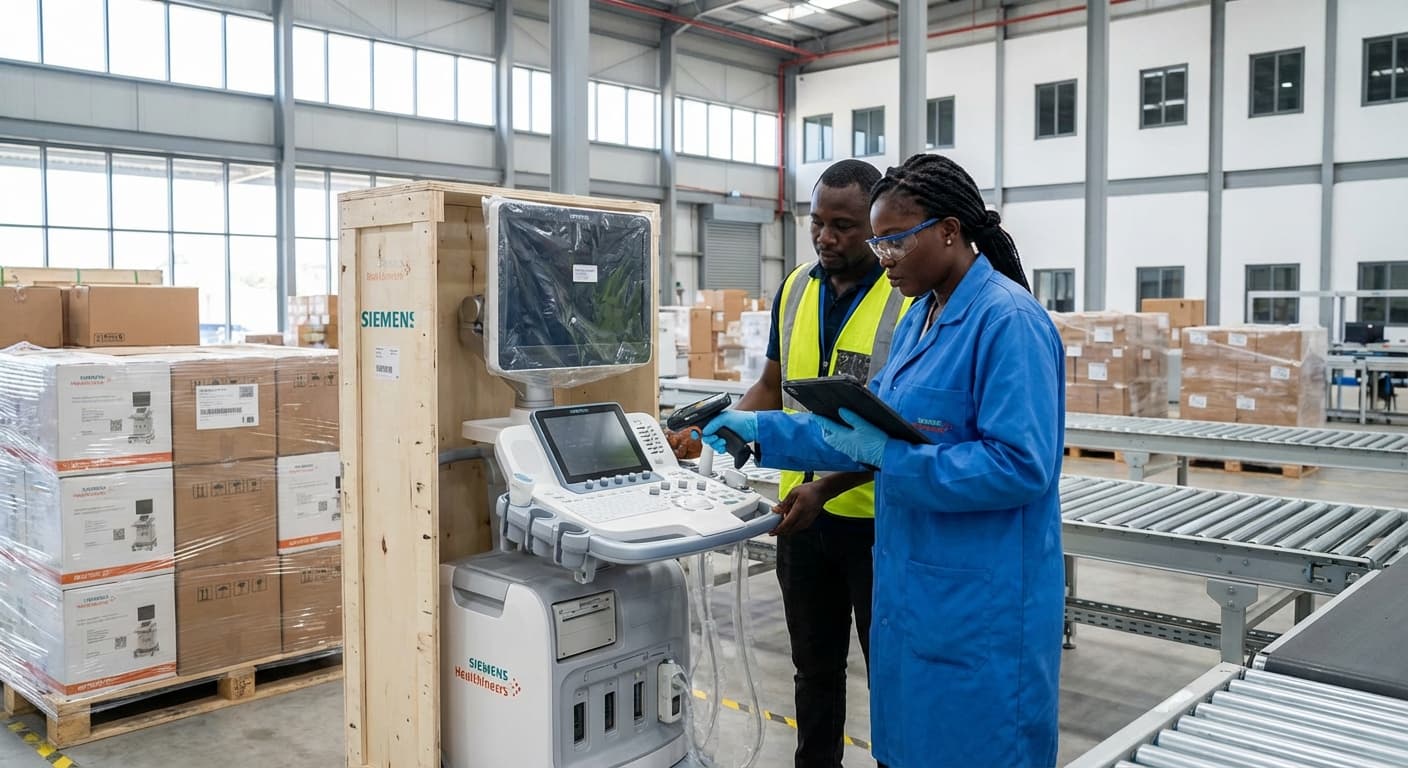
Warehouse Receiving Inspection Service (Medical Equipment) in Niger
Engineering Excellence & Technical Support
Warehouse Receiving Inspection Service (Medical Equipment) High-standard technical execution following OEM protocols and local regulatory frameworks.
ISO 13485 Certified Inspection Processes
Our receiving inspection service adheres strictly to ISO 13485 quality management system standards, ensuring that all medical equipment in Niger meets rigorous global regulatory requirements and patient safety protocols from the moment it arrives at your facility.
Advanced Traceability & Serialization Verification
We implement cutting-edge digital tools for end-to-end traceability, verifying serial numbers, batch codes, and manufacturing details against purchase orders and manufacturer documentation, minimizing counterfeit risks and ensuring supply chain integrity for medical devices in Niger.
On-Site Regulatory Compliance Audits
Our expert inspectors conduct comprehensive on-site audits of incoming medical equipment against Niger's national health regulations and international standards, providing immediate actionable insights and documentation to prevent non-compliant devices from entering clinical use.
What Is Warehouse Receiving Inspection Service (Medical Equipment) In Niger?
Warehouse Receiving Inspection Service (Medical Equipment) in Niger refers to a comprehensive process of verifying and documenting the condition, quantity, and conformity of medical equipment upon its arrival at a designated warehouse or storage facility within Niger. This service is critical for ensuring the integrity, functionality, and compliance of medical supplies before they are released for distribution or use within the healthcare system. It encompasses a systematic examination to detect any damage, defects, or discrepancies that may have occurred during transit or were present prior to shipment. The objective is to safeguard public health by preventing the introduction and deployment of substandard, non-functional, or counterfeit medical equipment.
| Stakeholder | Need for Service | Typical Use Cases |
|---|---|---|
| Government Health Ministries/Agencies (e.g., Ministry of Public Health, National Drug and Medical Equipment Agency) | To ensure public health and safety by preventing the entry and use of substandard or counterfeit medical equipment. To maintain accurate inventory records and facilitate effective resource allocation. To comply with national and international regulations for medical device importation and distribution. | Procurement and importation of bulk medical supplies for public hospitals and health centers. Distribution of essential medicines and medical devices to remote clinics. Verification of donations and humanitarian aid shipments. National emergency preparedness stock management. |
| International Organizations (e.g., WHO, UNICEF, NGOs involved in healthcare) | To verify the quality and integrity of medical equipment procured and distributed through their programs. To ensure accountability and transparency in the use of donor funds. To meet their organizational standards for supply chain management and patient safety. | Delivery of medical equipment for specific health programs (e.g., maternal and child health, infectious disease control). Distribution of emergency medical supplies during health crises or natural disasters. Support for healthcare infrastructure development projects. |
| Private Healthcare Providers (hospitals, clinics, laboratories) | To ensure that procured medical equipment meets quality standards and is fit for purpose, thereby safeguarding patient care and minimizing liability. To maintain accurate stock levels and optimize operational efficiency. | Importation of specialized medical equipment for private hospitals. Receiving shipments of diagnostic reagents and consumables. Stock management for private pharmacies and medical supply distributors. |
| Medical Equipment Manufacturers/Suppliers (local and international) | To ensure that their products arrive at their destination in good condition, thereby minimizing returns and customer complaints. To demonstrate compliance with import and quality requirements in Niger. | Delivery of newly manufactured or refurbished medical equipment to Nigerien clients. Submission of goods to their appointed agents for receiving inspection. |
| Logistics and Warehousing Companies | To provide a verifiable record of the condition of goods upon receipt, protecting them from liability for pre-existing damage. To offer value-added services to their clients in the healthcare sector. | Warehousing and distribution of medical equipment for various clients. Third-party logistics (3PL) services for the healthcare supply chain. |
Key Components of Warehouse Receiving Inspection Service (Medical Equipment)
- Documentation Review: Verification of shipping manifests, bills of lading, packing lists, certificates of origin, quality control reports, and any other relevant import/export documentation against the physical consignment.
- Physical Inspection: A thorough examination of the exterior of packages for damage, tampering, or signs of compromise. This includes checking seals, labeling, and overall packaging integrity.
- Quantity Verification: Accurate counting and reconciliation of all items received against the documented quantities on the shipping and packing lists.
- Quality and Condition Assessment: Detailed inspection of individual medical equipment items. This involves assessing for visible damage, defects, expiration dates (where applicable), proper sealing, and any signs of contamination or degradation. For certain sensitive equipment, functional checks or preliminary operational tests might be included if feasible within the receiving environment.
- Labeling and Identification Verification: Confirmation that each item is correctly labeled with the appropriate product name, manufacturer, model number, serial number, batch/lot number, and any other required identification or regulatory markings specific to Niger.
- Compliance Check: Ensuring that the equipment meets specified regulatory standards, technical specifications, and any import requirements mandated by the Nigerien Ministry of Public Health or other relevant authorities.
- Sampling and Testing (if required): In specific cases, a statistically representative sample of the equipment may be selected for more in-depth laboratory testing or performance validation to confirm functionality and safety.
- Discrepancy Reporting: Meticulous recording and reporting of any discrepancies identified, including damaged items, shortages, overages, or non-conforming products. This report serves as the basis for claims against carriers or suppliers.
- Secure Storage Procedures: Proper handling and immediate placement of inspected equipment into designated, secure, and environmentally controlled warehouse storage areas to prevent further damage or loss.
Who Needs Warehouse Receiving Inspection Service (Medical Equipment) In Niger?
Warehouse Receiving Inspection Service for medical equipment is crucial for organizations in Niger that procure, store, and distribute medical devices. This service ensures that incoming medical equipment meets quality standards, specifications, and regulatory requirements before it enters the supply chain. This is vital for patient safety, operational efficiency, and financial accountability.
| Customer Type | Key Departments Involved | Specific Needs/Reasons for Inspection |
|---|---|---|
| Government Ministries and Agencies (e.g., Ministry of Public Health) | Procurement Department, Logistics and Supply Chain Management, Quality Assurance Department, National Drug and Medical Device Regulatory Authority (if applicable) | Ensuring compliance with national standards and regulations, verifying the quality and safety of equipment procured for public health programs, preventing the entry of counterfeit or substandard medical devices, managing national medical stockpiles. |
| Non-Governmental Organizations (NGOs) (local and international) | Procurement and Logistics Department, Program Management, Quality Control Unit | Verifying the suitability and functionality of equipment for specific health projects (e.g., maternal health, infectious disease control), ensuring donor-funded equipment meets required specifications, maintaining accountability for donated or purchased medical supplies. |
| Hospitals and Healthcare Facilities (public and private) | Materials Management/Procurement, Biomedical Engineering Department, Pharmacy Department, Clinical Departments (e.g., Surgery, Radiology) | Confirming that equipment functions correctly before deployment, ensuring it meets clinical needs and safety standards, preventing costly repairs or replacements due to faulty initial reception, managing inventory accurately. |
| Medical Equipment Suppliers and Distributors | Receiving Department, Quality Control Department, Warehouse Management | Ensuring incoming shipments from manufacturers match orders and specifications, identifying damages during transit, maintaining product integrity, complying with import regulations, safeguarding their reputation by distributing only high-quality equipment. |
| International Aid Organizations (e.g., WHO, UNICEF, UNFPA) | Logistics and Supply Chain Management, Procurement and Contracts, Health Sector Focal Points | Overseeing the reception of large-scale medical aid shipments, ensuring equipment is appropriate for the local context and specific health interventions, verifying compliance with international quality standards, facilitating efficient distribution to recipient facilities. |
| Research Institutions | Laboratory Management, Procurement Department, Research Project Coordinators | Confirming the accuracy and functionality of specialized research equipment, ensuring it meets the precise requirements for scientific studies, preventing contamination or damage to sensitive research materials due to equipment malfunction. |
Target Customers and Departments in Niger Requiring Medical Equipment Warehouse Receiving Inspection Service
- Government Ministries and Agencies
- Non-Governmental Organizations (NGOs)
- Hospitals and Healthcare Facilities
- Medical Equipment Suppliers and Distributors
- International Aid Organizations
- Research Institutions
Warehouse Receiving Inspection Service (Medical Equipment) Process In Niger
This document outlines the standard workflow for a Warehouse Receiving Inspection Service for medical equipment in Niger, from the initial client inquiry to the final execution of the inspection.
| Stage | Description | Key Activities | Deliverables/Outcomes | Responsible Party | ||||||
|---|---|---|---|---|---|---|---|---|---|---|
| The initial contact from a client seeking warehouse receiving inspection services for medical equipment. This can come via email, phone, or through a formal request document. | Client articulates their needs (type of equipment, volume, location, desired inspection scope). | Understanding of client requirements. | Client & Inspection Service Provider | ||||||
| The inspection service provider prepares and submits a detailed proposal outlining the scope of work, methodology, timelines, personnel, and associated costs. | Develop a tailored inspection plan. | Prepare and submit a comprehensive proposal and quotation. | Inspection Service Provider | ||||||
| Discussion and finalization of the terms and conditions of the service agreement. This may involve adjustments to the proposal. | Review and negotiate contract terms. | Sign a formal service agreement/contract. | Client & Inspection Service Provider | ||||||
| Preparation for the on-site inspection, including logistical arrangements, team assignment, and documentation gathering. | Assign inspection team members. | Coordinate logistics (travel, accommodation in Niger). | Prepare inspection checklists and equipment. | Obtain necessary permits or access from relevant Nigerien authorities (if applicable). | Confirmed inspection schedule and team readiness. | Inspection Service Provider | |||
| The core of the service, where the inspection team physically assesses the medical equipment upon arrival at the warehouse in Niger. | Verify shipment details against documentation (PO, BOL, packing lists). | Conduct visual inspection for damage, defects, and conformity with specifications. | Check quantity and part numbers. | Perform functional tests (where applicable and feasible). | Assess packaging integrity and labeling. | Document findings with photographs and detailed notes. | Physical inspection of all received medical equipment. | Detailed findings and evidence. | Inspection Team |
| Compilation and submission of a formal inspection report to the client, detailing all findings, conclusions, and recommendations. | Analyze inspection data and evidence. | Prepare a comprehensive inspection report. | Include recommendations for corrective actions or acceptance. | Submit the report to the client. | Formal inspection report. | Inspection Service Provider | |||
| Addressing any queries from the client regarding the report and formally closing the service engagement. | Respond to client questions or requests for clarification. | Facilitate any necessary follow-up actions (e.g., re-inspection if required). | Obtain client acceptance of the report. | Finalize billing and administrative closure. | Client's resolution of issues identified in the report. | Completed service engagement. | Inspection Service Provider & Client |
Key Stages of the Warehouse Receiving Inspection Service
- Client Inquiry & Service Request
- Proposal & Quotation
- Contract Negotiation & Agreement
- Pre-Inspection Planning & Mobilization
- On-Site Receiving Inspection Execution
- Reporting & Documentation
- Follow-up & Closure
Warehouse Receiving Inspection Service (Medical Equipment) Cost In Niger
Providing accurate cost estimations for Warehouse Receiving Inspection Services for Medical Equipment in Niger is complex due to several influencing factors. The service typically involves a thorough examination of incoming medical equipment to ensure it meets specified standards, is undamaged, and correctly documented before being accepted into a warehouse. Costs are generally quoted on a per-shipment or per-item basis, with variations depending on the scope of work and the specific type of medical equipment being inspected.
| Inspection Service Scope | Estimated Range (XOF) | Notes |
|---|---|---|
| Basic Visual Inspection & Documentation Check (per shipment) | 50,000 - 150,000 | Covers general condition, packaging, and basic paperwork verification for smaller, less complex shipments. |
| Standard Inspection (per shipment) | 150,000 - 500,000 | Includes visual check, basic functional verification (if feasible), and thorough documentation review for a moderate volume of standard medical equipment. |
| Comprehensive Inspection (per shipment) | 500,000 - 2,000,000+ | For large, complex, or high-value medical equipment. May involve detailed functional tests, calibration checks, sample testing, and extensive reporting. Price is highly variable. |
| Per Item Inspection (simple equipment, e.g., syringes, bandages) | 1,000 - 5,000 | Applicable for high-volume, low-complexity items where a per-unit inspection is more practical. A minimum fee may apply. |
| Per Item Inspection (moderate complexity, e.g., basic lab equipment, small diagnostic tools) | 5,000 - 25,000 | For individual items requiring more than a visual check but less than full diagnostic assessment. |
| Per Item Inspection (complex/high-value equipment, e.g., MRI machines, ventilators) | 50,000 - 500,000+ | This is an indicative range. The actual cost will depend heavily on the specific equipment, required tests, and expert involvement. Often quoted on a project basis. |
| Expedited Service Surcharge | 25% - 75% additional | Applied for urgent inspections or those outside standard business hours. |
| Travel and Accommodation (if applicable) | Variable (based on distance and duration) | Charged on top of inspection fees for remote locations. |
Key Pricing Factors for Warehouse Receiving Inspection Services (Medical Equipment) in Niger:
- {"title":"Scope of Inspection:","description":"The depth and breadth of the inspection are primary cost drivers. This can range from a basic visual check and documentation review to a comprehensive assessment including functional testing, calibration verification, and detailed photographic evidence."}
- {"title":"Type and Complexity of Medical Equipment:","description":"More complex, high-value, or specialized medical equipment (e.g., imaging machines, surgical robots) will command higher inspection fees due to the expertise, specialized tools, and time required."}
- {"title":"Volume of Equipment per Shipment:","description":"While per-shipment pricing might be an option, larger volumes of individual items can sometimes lead to a lower per-unit cost due to efficiency gains for the inspector. Conversely, very small, infrequent shipments might incur higher minimum charges."}
- {"title":"Inspector's Expertise and Qualifications:","description":"Inspectors with specialized knowledge in medical equipment, relevant certifications, and a proven track record will typically charge more."}
- {"title":"Location of Warehouse:","description":"Accessibility and remoteness of the warehouse can influence costs. Inspections in remote areas might incur additional travel and logistical charges."}
- {"title":"Turnaround Time and Urgency:","description":"Expedited inspection services or those required outside of standard working hours will generally be priced at a premium."}
- {"title":"Reporting Requirements:","description":"The complexity and detail of the inspection report, including the need for specific formats, extensive documentation, or photographic evidence, will impact the overall cost."}
- {"title":"Customization of Services:","description":"Any bespoke inspection protocols or additional services requested beyond a standard checklist will increase the price."}
- {"title":"Service Provider Reputation and Overhead:","description":"Established inspection firms with a strong reputation and higher overheads may have different pricing structures compared to smaller, independent operators."}
Affordable Warehouse Receiving Inspection Service (Medical Equipment) Options
Securing affordable warehouse receiving inspection services for medical equipment is crucial for maintaining product integrity, ensuring compliance, and mitigating risks. This service is vital to catch any damage, discrepancies, or non-compliance issues upon arrival, preventing costly returns, recalls, or patient safety incidents. Finding cost-effective solutions involves understanding value bundles and implementing smart cost-saving strategies.
| Value Bundle Type | Description | Benefits | Cost-Saving Strategies Within Bundle |
|---|---|---|---|
| Basic Inspection Bundle | Covers essential checks: visual damage, quantity, and basic documentation verification. | Lower upfront cost, ideal for lower-risk, high-volume equipment. | Standardized inspection checklists, automated data entry, remote reporting. |
| Enhanced Inspection Bundle | Includes basic checks plus more in-depth documentation review, labeling verification, and basic functional tests. | Better for moderately sensitive equipment, adds a layer of assurance. | Tiered pricing based on equipment complexity, combining inspections for similar items, scheduled inspection slots. |
| Comprehensive Inspection Bundle | All aspects of enhanced inspection, plus compliance checks, detailed functional testing, and risk-based sampling. | Highest level of assurance, essential for high-value, high-risk, or highly regulated medical equipment. | Long-term contracts with volume discounts, bundled with warehousing services, proactive issue identification and resolution to minimize future costs. |
| Custom/Modular Bundle | Allows clients to select specific inspection services based on their unique needs and equipment types. | Maximum flexibility, tailored to specific risk profiles and budget constraints. | Pay-per-service options, phased implementation of inspection services, leveraging client-provided resources for certain checks. |
Key Components of Warehouse Receiving Inspection for Medical Equipment:
- Damage Assessment: Visual inspection for dents, scratches, tears, or any signs of transit damage.
- Quantity Verification: Cross-referencing received items against purchase orders and shipping manifests.
- Documentation Review: Checking for completeness and accuracy of accompanying documents like Certificates of Analysis (CoA), Certificates of Conformance (CoC), and user manuals.
- Labeling and Barcode Verification: Ensuring proper labeling, including lot numbers, expiration dates, and regulatory markings.
- Initial Functional Checks (where applicable): Basic operational tests to confirm the equipment powers on or performs rudimentary functions.
- Compliance Checks: Verifying adherence to specific regulatory requirements (e.g., FDA, CE marking).
- Sampling and Quarantine Procedures: Implementing procedures for specific items requiring further testing or quarantine.
Verified Providers In Niger
In Niger's evolving healthcare landscape, identifying trustworthy and capable medical professionals is paramount. Franance Health has established itself as a key player in verifying and promoting such providers, offering a crucial service to individuals seeking quality healthcare. This commitment ensures that patients are connected with practitioners who meet rigorous standards of expertise, ethical conduct, and patient care. By prioritizing verified providers, Franance Health empowers individuals to make informed decisions and access reliable medical services, ultimately contributing to improved health outcomes across the nation.
| Credential Type | Verification Benchmarks | Patient Benefit |
|---|---|---|
| Medical Licensing & Certification | Valid and current professional licenses, board certifications in relevant specialties. | Ensures providers possess the fundamental legal and educational qualifications. |
| Clinical Experience & Specialization | Documented years of practice, specific expertise in particular medical fields. | Connects patients with specialists best suited for their unique health needs. |
| Professional Reputation & Peer Review | Background checks, absence of disciplinary actions, positive peer feedback. | Affirms a provider's ethical conduct and consistent quality of care. |
| Continuing Medical Education (CME) | Proof of ongoing professional development and staying abreast of medical advancements. | Guarantees patients receive care informed by the latest medical knowledge and techniques. |
| Facility Standards (where applicable) | Inspection of clinics and hospitals for safety, sanitation, and equipment. | Ensures a safe and well-equipped environment for medical procedures. |
Why Franance Health Credentials Matter:
- Rigorous Vetting Process: Franance Health employs a comprehensive evaluation framework that assesses a provider's qualifications, experience, and track record.
- Commitment to Ethical Standards: Verified providers adhere to strict ethical guidelines, ensuring patient well-being and trust.
- Focus on Patient Safety: The credentialing process prioritizes safety protocols and best practices in medical treatment.
- Enhanced Trust and Transparency: Franance Health provides a transparent platform where patients can confidently identify reputable healthcare professionals.
- Access to Quality Care: By connecting patients with verified providers, Franance Health facilitates access to higher standards of medical services.
Scope Of Work For Warehouse Receiving Inspection Service (Medical Equipment)
This Scope of Work (SOW) outlines the requirements for a comprehensive Warehouse Receiving Inspection Service specifically for medical equipment. The service aims to ensure that all incoming medical equipment meets predefined quality, safety, and functional standards before being accepted into warehouse inventory. This SOW details the technical deliverables expected from the service provider and the standard specifications against which the inspections will be performed.
| Inspection Area | Standard Specification/Checklist Item | Acceptance Criteria | Methodology/Tools |
|---|---|---|---|
| Physical Condition | Damage Assessment (packaging and equipment) | No visible damage, dents, scratches, or signs of mishandling. | Visual inspection, tactile examination, magnifying glass. |
| Physical Condition | Packaging Integrity | Sealed, intact, and appropriate for medical equipment transport. Labels legible. | Visual inspection. |
| Identification & Documentation | Correct Item Verification (Part/Model Number) | Matches Purchase Order (PO) and accompanying documentation. | Visual comparison against PO/packing list, barcode scanning (if applicable). |
| Identification & Documentation | Serial Number Verification | Present, legible, and unique for each unit. Matches documentation. | Visual inspection, comparison against PO/packing list. |
| Identification & Documentation | Lot/Batch Number Verification (if applicable) | Present, legible, and matches documentation. | Visual inspection, comparison against PO/packing list. |
| Identification & Documentation | Expiration Date Verification (if applicable) | Within acceptable range as per internal policy or manufacturer guidelines. | Visual inspection, comparison against internal/manufacturer standards. |
| Quantity Verification | Count of Units Received | Matches PO and packing list quantities. | Physical count, weighing (if applicable). |
| Functional Testing (Basic) | Power On/Off Functionality | Equipment powers on and off without error. | Basic power cycle test. |
| Functional Testing (Basic) | Indicator Lights/Display Functionality | All essential indicator lights and display elements function correctly. | Visual inspection during power on. |
| Functional Testing (Basic) | Audible Alarms/Alerts (if applicable) | Audible alerts sound as expected. | Activation of alarm features (if safely possible). |
| Documentation & Accessories | Presence of User Manuals/Instructions | Original, legible, and correct version included. | Visual inspection. |
| Documentation & Accessories | Presence of Accessories (cables, adapters, etc.) | All specified accessories are present and appear functional/undamaged. | Visual inspection against a pre-defined accessory list. |
| Regulatory Compliance (Initial Check) | Presence of CE Mark/FDA Approval (if applicable) | Markings are present and appear legitimate. | Visual inspection. |
Technical Deliverables
- Detailed Inspection Reports: Comprehensive reports for each batch of received medical equipment, including inspection findings, any deviations, and recommendations.
- Defect/Non-Conformance Logs: A separate log detailing all identified defects or non-conformances, categorized by severity and type.
- Photo/Video Evidence: Photographic or video documentation of identified defects, damage, or discrepancies.
- Compliance Certificates (if applicable): Verification and documentation of any required regulatory or manufacturer compliance certificates.
- Inventory Discrepancy Notifications: Prompt notification of any discrepancies between the received goods and the accompanying documentation (e.g., packing list, purchase order).
- Root Cause Analysis (for recurring issues): If recurring defects are identified, a basic root cause analysis report may be requested.
- Trend Analysis Reports (periodically): Summary reports highlighting trends in inspection findings over a specified period to identify systemic issues.
- Digital Audit Trail: A secure and accessible digital record of all inspection activities, findings, and actions taken.
Service Level Agreement For Warehouse Receiving Inspection Service (Medical Equipment)
This Service Level Agreement (SLA) outlines the agreed-upon standards for the Warehouse Receiving Inspection Service for Medical Equipment provided by [Service Provider Name] to [Client Name]. It specifically addresses response times for critical issues and uptime guarantees for the inspection service infrastructure.
| Service Component | Uptime Guarantee (%) | Response Time (Critical Incident) | Response Time (Standard Request) |
|---|---|---|---|
| Core Receiving Inspection System (Software & Hardware) | 99.9% | 1 hour | 4 business hours |
| Inspection Personnel Availability (during agreed hours) | 98% | 1 hour (for critical workflow blockage) | 2 business hours (for routine queries) |
| Data Reporting & Access Portal | 99.8% | 2 hours | 8 business hours |
Service Level Objectives
- Response Time: This refers to the time taken by the Service Provider to acknowledge and begin addressing a reported issue or request. Acknowledgment means confirmation of receipt and initiation of troubleshooting or service delivery.
- Uptime Guarantee: This refers to the percentage of time the Warehouse Receiving Inspection Service infrastructure is available and operational, excluding scheduled maintenance.
- Scheduled Maintenance: Planned periods where the service may be unavailable for updates, upgrades, or preventative maintenance. Clients will be notified at least [Number] business days in advance of any scheduled maintenance. Scheduled maintenance will ideally occur outside of core business hours for the client.
Frequently Asked Questions

Ready when you are
Let's scope your Warehouse Receiving Inspection Service (Medical Equipment) in Niger project in Niger.

Scaling healthcare logistics and technical systems across the entire continent.