
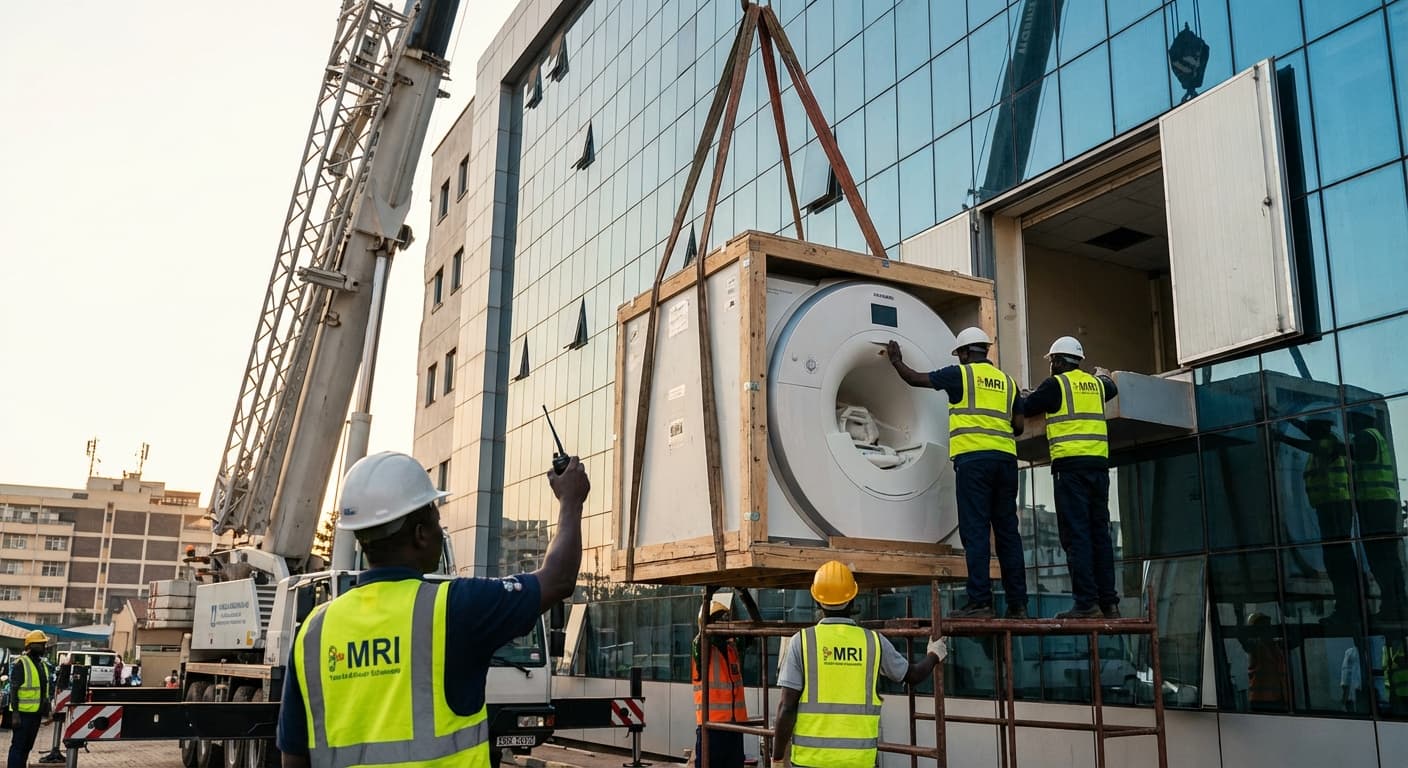
Cranage & Rigging Supervision Service in Niger
Engineering Excellence & Technical Support
Cranage & Rigging Supervision Service High-standard technical execution following OEM protocols and local regulatory frameworks.
Specialized Heavy Lift Planning & Execution
Our expert supervisors meticulously plan and oversee complex heavy lift operations, ensuring the safe and efficient mobilization, positioning, and rigging of oversized and overweight loads in Niger's challenging environments. We utilize advanced load analysis, rigging proficiency, and precise communication to mitigate risks and optimize lifting sequences, even in remote or demanding conditions.
Rigorous Safety & Compliance Management
We implement stringent safety protocols and ensure full compliance with international standards and local regulations throughout all rigging and lifting activities in Niger. Our supervisors conduct daily pre-task safety briefings, rigorous equipment inspections, and continuous risk assessments, fostering a robust safety culture to protect personnel, assets, and the environment.
Logistical Optimization & Site Integration
Beyond the lift itself, our services encompass the strategic integration of rigging operations with broader project logistics in Niger. We coordinate crucial aspects such as access routes, site preparation, and the seamless transfer of materials, ensuring that lifting activities are optimally sequenced within the overall project timeline and effectively support field operations.
What Is Cranage & Rigging Supervision Service In Niger?
Cranage & Rigging Supervision Service in Niger refers to the professional oversight and management of lifting operations involving cranes and rigging equipment. This service ensures that all lifting activities are conducted safely, efficiently, and in compliance with relevant industry standards and local regulations within Niger. The core objective is to mitigate risks associated with heavy lifting, prevent accidents, and optimize the deployment and utilization of lifting assets. This service is crucial for organizations undertaking projects that require the movement of heavy, oversized, or sensitive loads using mechanical lifting devices.
| Who Needs It? | Typical Use Cases in Niger | |||
|---|---|---|---|---|
| Oil and Gas Companies (Upstream, Midstream, Downstream) | Installation and decommissioning of offshore platforms and onshore facilities | Refinery construction and maintenance | Pipeline heavy lifting operations | Loading and unloading of specialized equipment and materials |
| Mining and Extractive Industries | Installation of large mining equipment (e.g., crushers, excavators, conveyors) | Ore handling and processing plant construction | Extraction and transport of heavy mineral loads | |
| Construction and Infrastructure Development | Erection of bridges and overpasses | Construction of power plants (thermal, hydro, solar) | Installation of pre-fabricated modules and structural components | Port and terminal expansion projects |
| Industrial Manufacturing and Processing | Installation and relocation of heavy machinery | Assembly of large industrial units | Handling of raw materials and finished goods | |
| Logistics and Warehousing | Loading and unloading of oversized cargo in ports and distribution centers | Installation of heavy storage systems | ||
| Emergency and Disaster Relief Operations | Removal of debris and wreckage | Deployment of heavy equipment for infrastructure repair |
Key Aspects of Cranage & Rigging Supervision Service
- Pre-lift Planning and Assessment
- Equipment Inspection and Certification Verification
- Development and Implementation of Lift Plans
- On-site Supervision and Control of Lifting Operations
- Coordination of Crane and Rigging Personnel
- Risk Identification and Mitigation
- Ensuring Compliance with Safety Standards and Regulations
- Load Integrity and Securing Checks
- Communication and Reporting
- Emergency Response Preparedness
Who Needs Cranage & Rigging Supervision Service In Niger?
Cranage & Rigging Supervision services are crucial for any project in Niger that involves the lifting, moving, or precise placement of heavy or oversized loads. These services ensure safety, efficiency, and compliance with industry standards, minimizing risks and potential damages. The demand for such specialized expertise is growing as Niger's industrial and infrastructure development expands.
| Target Customer Segment | Key Departments Involved | Typical Projects Requiring Service |
|---|---|---|
| Oil & Gas Companies | Operations, Engineering, Projects, Maintenance, Safety | Offshore platform installation, onshore facility construction, pipeline laying, equipment relocation |
| Mining Corporations | Engineering, Operations, Asset Management, Safety, Construction | Mine site development, heavy equipment installation, material handling system erection, plant maintenance |
| Construction Firms (EPCs) | Project Management, Site Operations, Engineering, Safety, Logistics | Bridge construction, dam building, airport expansion, commercial complex development |
| Power & Utility Providers | Engineering, Construction, Operations, Maintenance, Safety | Power plant construction, transmission tower erection, substation equipment installation |
| Industrial Manufacturers | Engineering, Production, Maintenance, Project Management | New plant setup, machinery installation, factory expansion, equipment upgrades |
| Logistics & Port Authorities | Operations, Warehousing, Safety, Facilities Management | Container handling, heavy lift cargo management, warehouse expansion |
| Government Ministries (e.g., Public Works, Defense) | Project Management, Engineering, Procurement, Operations | National infrastructure projects, military base construction, disaster response logistics |
| International Aid & Development Agencies | Project Implementation, Engineering, Procurement, Monitoring & Evaluation | Humanitarian projects, infrastructure development funded by international bodies |
Target Customers and Departments for Cranage & Rigging Supervision in Niger
- {"title":"Oil & Gas Sector","description":"Companies involved in exploration, extraction, refining, and transportation of oil and gas are major consumers. This includes construction of new facilities, maintenance of existing infrastructure, and decommissioning of old equipment. Projects often involve handling massive drilling equipment, pipelines, and processing units."}
- {"title":"Mining Sector","description":"Niger's burgeoning mining industry, particularly for uranium, gold, and other minerals, requires heavy machinery and large-scale material handling. Cranage and rigging are essential for installing and maintaining excavators, crushers, conveyor systems, and for transporting extracted resources."}
- {"title":"Infrastructure & Construction","description":"Development of roads, bridges, dams, airports, and other public and private infrastructure projects necessitate the lifting of pre-fabricated components, steel structures, and heavy construction materials. This also extends to the development of commercial and residential buildings."}
- {"title":"Power Generation & Utilities","description":"Construction and maintenance of power plants (thermal, renewable), transmission lines, and other utility infrastructure often involve lifting and positioning large turbines, generators, transformers, and other heavy equipment."}
- {"title":"Manufacturing & Industrial Plants","description":"Establishment or expansion of manufacturing facilities, including cement plants, food processing units, and assembly lines, requires precise rigging and lifting of heavy machinery and production components."}
- {"title":"Logistics & Warehousing","description":"Companies involved in large-scale warehousing and distribution centers that handle heavy goods or require specialized lifting equipment for loading and unloading oversized cargo."}
- {"title":"Government & Public Sector Projects","description":"Government ministries and agencies overseeing large-scale public works, defense projects, or disaster relief efforts that involve the movement of heavy equipment or materials."}
- {"title":"International Development Organizations","description":"Organizations funding and overseeing development projects that require significant construction or installation of heavy infrastructure."}
Cranage & Rigging Supervision Service Process In Niger
Our Cranage & Rigging Supervision Service process in Niger is designed to ensure safe, efficient, and compliant lifting operations. From the initial inquiry to the final project closeout, each step is meticulously managed to deliver optimal results for our clients.
| Phase | Key Activities | Deliverables/Outcomes |
|---|---|---|
| Inquiry & Consultation | Client contact, information gathering, scope definition | Understanding of project requirements, initial proposal |
| Site Assessment & Risk Analysis | Site visit, condition evaluation, hazard identification | Risk assessment report, site-specific considerations |
| Lifting Plan Development | Method statement creation, engineering, equipment selection | Approved lifting plan, method statements, rigging diagrams |
| Mobilization | Equipment delivery, personnel deployment | Certified cranes, rigging gear, skilled supervisors on-site |
| Pre-Job Safety Meeting | Team briefing, risk review, role clarification | Documented toolbox talk, team alignment on safety |
| Execution | Safe and controlled lifting operations | Successful, incident-free lifts |
| Monitoring & Quality Control | Continuous oversight, adherence to plan, safety checks | Safe execution, optimal lift performance |
| Post-Lift Review & Reporting | Performance evaluation, documentation, lesson learned | Project completion report, incident logs (if any) |
| Project Closeout | Finalization, equipment demobilization | Project sign-off, client satisfaction |
Cranage & Rigging Supervision Service Workflow in Niger
- {"title":"1. Inquiry & Initial Consultation","description":"The process begins with a client's inquiry, typically initiated via phone, email, or through our website. This initial contact is followed by a detailed consultation where we gather essential project information, including scope of work, load specifications (weight, dimensions, center of gravity), site conditions, required lifting equipment, and desired timelines."}
- {"title":"2. Site Assessment & Risk Analysis","description":"Our expert supervisors conduct a thorough site visit to assess the lifting environment. This includes evaluating ground conditions, access routes, overhead obstructions, proximity of personnel and structures, and prevailing weather patterns. A comprehensive risk assessment is performed to identify potential hazards and develop mitigation strategies."}
- {"title":"3. Development of Lifting Plan","description":"Based on the information gathered during the consultation and site assessment, our team develops a detailed and project-specific lifting plan. This plan includes method statements, engineering calculations, crane selection, rigging gear specifications, exclusion zones, communication protocols, and emergency response procedures."}
- {"title":"4. Equipment & Personnel Mobilization","description":"Once the lifting plan is approved, we mobilize the necessary certified cranes, rigging equipment, and our experienced supervision team to the project site. All equipment undergoes pre-use inspections to ensure it meets safety standards and is fit for purpose."}
- {"title":"5. Pre-Job Safety Meeting (Toolbox Talk)","description":"Before commencing any lifting operation, a mandatory pre-job safety meeting is conducted. This involves all personnel involved in the lift (crane operators, riggers, spotters, supervisors) to review the lifting plan, discuss individual roles and responsibilities, highlight potential risks, and reinforce safety procedures."}
- {"title":"6. Execution of Lifting Operations","description":"Under the direct supervision of our qualified personnel, the lifting operations are carried out strictly in accordance with the approved lifting plan and relevant safety regulations. Continuous monitoring of the lift, communication between the team, and adherence to safe working practices are paramount during this phase."}
- {"title":"7. Monitoring & Quality Control","description":"Throughout the execution, our supervisors provide constant oversight, ensuring that the lift is proceeding safely and efficiently. This includes verifying load balance, checking rigging connections, monitoring crane load charts, and ensuring proper communication channels are maintained. Any deviations from the plan are immediately addressed."}
- {"title":"8. Post-Lift Review & Reporting","description":"Upon completion of the lifting operation, a post-lift review is conducted to assess the success of the operation, identify any lessons learned, and document any incidents or near misses. A comprehensive report, including photographic evidence and key performance indicators, is provided to the client."}
- {"title":"9. Project Closeout & Demobilization","description":"Following the successful completion and reporting of all lifting activities, the project is formally closed out. All equipment and personnel are demobilized from the site in a safe and orderly manner."}
Cranage & Rigging Supervision Service Cost In Niger
The cost of Cranage & Rigging Supervision services in Niger can vary significantly based on several key pricing factors. These factors influence the overall expenditure for businesses requiring specialized oversight for lifting and moving heavy equipment or materials. Understanding these elements is crucial for accurate budgeting and procurement. Local currency for pricing is typically the West African CFA franc (XOF).
| Service Level/Complexity | Estimated Daily Rate (XOF) |
|---|---|
| Basic Supervision (e.g., simple lift, limited duration) | 50,000 - 100,000 |
| Standard Supervision (e.g., moderate complexity, full day) | 100,000 - 175,000 |
| Advanced Supervision (e.g., complex lifts, specialized equipment, multiple personnel) | 175,000 - 300,000+ |
| Project-Based Supervision (Negotiated based on scope and duration) | Variable (can be higher daily rates for extended projects) |
| Emergency Call-Out Fee (Additional to daily rate) | 25,000 - 50,000 |
Key Pricing Factors for Cranage & Rigging Supervision in Niger
- Complexity of the Lift: Simple, single-lift operations will be less expensive than complex, multi-component lifts requiring intricate planning and execution.
- Duration of the Service: The longer the supervision is required, the higher the cost. This can be measured in hours, days, or project duration.
- Type and Capacity of Cranes/Rigging Equipment Used: While the supervisor's cost is independent of the equipment itself, the complexity and potential risks associated with larger, more specialized equipment can indirectly influence supervision fees due to the increased responsibility and expertise needed.
- Site Conditions and Accessibility: Difficult terrain, confined spaces, or remote locations can increase the time and effort required from supervisors, leading to higher costs.
- Level of Supervision Required: A single supervisor for a straightforward task will cost less than a team of supervisors overseeing multiple simultaneous operations.
- Supervisor's Experience and Qualifications: Highly experienced and certified supervisors (e.g., certified riggers, crane operators with supervisory roles) command higher rates.
- Risk Assessment and Method Statement Development: The extent of pre-project planning, risk assessment, and the development of detailed method statements will factor into the overall service cost.
- Emergency Call-out Fees: For urgent or unplanned supervision needs, call-out fees are typically higher.
- Travel and Accommodation: If supervisors need to travel to remote sites within Niger, these expenses will be added to the service cost.
- Regulatory Compliance and Permitting: Ensuring all lifting operations adhere to local safety regulations and obtaining necessary permits can add to the administrative and supervisory workload.
Affordable Cranage & Rigging Supervision Service Options
Finding reliable and cost-effective cranage and rigging supervision is crucial for the success of any project involving heavy lifting. This service provides essential expertise to ensure safety, efficiency, and compliance. We offer a range of options designed to fit various project scales and budgets, emphasizing value bundles and proactive cost-saving strategies.
| Value Bundle Tier | Included Services | Ideal For | Cost-Saving Highlights |
|---|---|---|---|
| Basic Safety Oversight | Certified Rigging Supervisor, Basic Lift Plan Review | Smaller, routine lifts, minimal complexity | Focuses on essential safety, reduces need for extensive planning for simple jobs. |
| Standard Lift Support | Full Rigging Supervision, Crane Operator, Basic JHA, Standard Lift Plan | Medium-sized projects, common lifting scenarios | Bundled services offer a competitive rate compared to individual hires; efficient planning reduces site time. |
| Comprehensive Project Management | Senior Rigging Supervisor, Crane Operator, Detailed JHA & Lift Planning, Site Logistics Coordination, Safety Compliance Monitoring | Large-scale projects, complex lifts, high-risk environments | Integrated approach minimizes coordination overhead; proactive planning prevents costly delays and incidents. |
| Customized Solutions | Tailored to specific project needs, combining elements from other tiers as required. | Unique or highly specialized projects | Pay only for the services truly needed, maximizing budget efficiency. |
Key Service Offerings & Value Proposition
- {"title":"Experienced Rigging Supervision","description":"Our certified and experienced rigging supervisors oversee all aspects of the lifting operation, ensuring adherence to safety protocols, best practices, and regulatory requirements. They manage the rigging crew, inspect equipment, and plan lift sequences for optimal safety and efficiency."}
- {"title":"Cranage Equipment Provision","description":"Access to a diverse fleet of cranes, from mobile to crawler cranes, suitable for a wide range of lifting capacities and site conditions. We ensure timely delivery, setup, and operation by qualified crane operators."}
- {"title":"Job Hazard Analysis (JHA) & Lift Planning","description":"Comprehensive development of JHAs and detailed lift plans, identifying potential risks and outlining mitigation strategies. This proactive approach minimizes unexpected issues and potential cost overruns."}
- {"title":"Safety Training & Compliance","description":"Ensuring all personnel involved are properly trained and compliant with industry standards and site-specific safety regulations, reducing the likelihood of accidents and associated costs."}
- {"title":"Logistics & Site Management","description":"Efficient coordination of crane placement, site access, and material movement to optimize workflow and minimize downtime."}
Verified Providers In Niger
In Niger, ensuring you access reliable healthcare services is paramount. Verified providers, particularly those with credentials from reputable organizations like Franance Health, offer a crucial layer of assurance. Franance Health is a leading accreditation body that sets rigorous standards for healthcare facilities and professionals, focusing on patient safety, quality of care, and ethical practices. Choosing providers accredited by Franance Health means opting for a healthcare experience that prioritizes your well-being and adheres to international best practices.
| Feature | Franance Health Verified Provider | Non-Verified Provider |
|---|---|---|
| Quality Assurance | Undergoes rigorous, independent evaluation and meets high standards. | No standardized external verification of quality. |
| Patient Safety Protocols | Implemented and regularly audited safety measures. | May vary widely; no guarantee of adherence to best practices. |
| Staff Competence | Professionals' qualifications and skills are assessed. | Qualifications may not be consistently verified. |
| Ethical Standards | Adheres to strict ethical guidelines and transparent practices. | Practices can be inconsistent and less regulated. |
| Access to Modern Care | Likely to utilize up-to-date medical technologies and methodologies. | May lag behind in adopting new treatments and technologies. |
| Patient Confidence | High level of trust due to recognized accreditation. | Lower level of guaranteed trust; requires individual assessment. |
Why Franance Health Credentials Represent the Best Choice:
- Demonstrated Commitment to Quality: Franance Health accreditation signifies that a provider has undergone a thorough and independent evaluation of their facilities, processes, and staff qualifications.
- Enhanced Patient Safety: Accredited providers have implemented robust safety protocols to minimize risks and ensure a secure environment for patients.
- High Standards of Clinical Excellence: Franance Health's criteria often include evidence of adherence to up-to-date medical guidelines and the employment of skilled, competent healthcare professionals.
- Ethical Practice and Transparency: Accreditation by Franance Health indicates a commitment to ethical conduct, transparency in billing, and patient-centered care.
- Access to Best Practices: Franance Health benchmarks providers against leading international standards, ensuring access to modern and effective healthcare solutions.
- Improved Patient Outcomes: Facilities and professionals that meet Franance Health's stringent requirements are more likely to achieve better health outcomes for their patients.
Scope Of Work For Cranage & Rigging Supervision Service
This Scope of Work (SOW) outlines the requirements for Cranage & Rigging Supervision services. The service encompasses providing qualified and experienced personnel to oversee all cranage and rigging operations, ensuring they are conducted safely, efficiently, and in accordance with project specifications, industry best practices, and relevant regulations. The primary objective is to minimize risks, prevent incidents, and ensure the successful completion of lifting activities.
| Service Component | Description | Technical Deliverables | Standard Specifications / References |
|---|---|---|---|
| Personnel Provision | Deployment of certified and experienced personnel, including lifting supervisors, riggers, and crane operators. | CVs and certifications of all assigned personnel, pre-mobilization. | Relevant national and international certifications (e.g., LEEA, OSHA, local governing bodies), minimum experience levels as per project requirements. |
| Pre-Lift Planning & Review | Review and approval of lifting plans, risk assessments, and method statements (RAMS) prior to execution. | Signed-off RAMS for all critical and complex lifts. | Project-specific lifting plan templates, adherence to BS 7121 (Crane stability and safety), LOLER (Lifting Operations and Lifting Equipment Regulations), or equivalent. |
| On-Site Supervision | Direct oversight of all cranage and rigging activities, ensuring adherence to approved plans and safety procedures. | Daily supervision reports detailing activities, observations, and any corrective actions. | Continuous monitoring of exclusion zones, communication protocols, and personnel behavior. |
| Equipment Inspection & Verification | Visual inspection and verification of all lifting gear (slings, shackles, spreader beams, etc.) and cranes before use. | Certificates of Thorough Examination (CTE) for all lifting equipment, ensuring they are within their valid certification period. | Compliance with manufacturer's guidelines, project-specific inspection checklists, and relevant standards (e.g., EN 13155, ASME B30 series). |
| Communication & Coordination | Establish and maintain clear communication channels between the lifting team, ground crew, and relevant stakeholders. | Documentation of communication protocols and established signal systems. | Standard hand signals for lifting operations, use of two-way radios, adherence to project communication plan. |
| Hazard Identification & Risk Mitigation | Proactive identification of potential hazards (e.g., weather, ground conditions, obstructions, personnel) and implementation of mitigation measures. | Incident/near-miss reports, corrective action plans. | Site-specific hazard register, implementation of permit-to-work systems where applicable. |
| Load Calculation & Verification | Verification of load weights and centers of gravity to ensure they are within crane and rigging capacity. | Documentation of load weight calculations and verification methods. | Accurate load charts for all cranes, manufacturer's specifications for rigging components. |
| Emergency Response Planning | Participation in the development and review of emergency response plans related to lifting operations. | Emergency response drills and debriefing reports. | Project-specific emergency procedures, contact lists for emergency services. |
| Reporting & Documentation | Provision of regular progress reports, including daily logs, weekly summaries, and incident reports. | Final project report summarizing all lifting activities, safety performance, and lessons learned. | Project-specific reporting templates, adherence to company and client reporting requirements. |
| Quality Assurance & Control | Ensuring all lifting operations meet the defined quality standards and project requirements. | Quality audit reports and non-conformance reports (NCRs) with corrective actions. | Project quality plan, adherence to ISO 9001 principles. |
Key Objectives
- Ensure all lifting operations are performed safely and efficiently.
- Verify compliance with project specifications, safety regulations, and industry standards.
- Provide expert guidance and oversight to lifting crews.
- Identify and mitigate potential hazards associated with lifting operations.
- Maintain accurate records of all lifting activities.
- Promote a strong safety culture on site.
Service Level Agreement For Cranage & Rigging Supervision Service
This Service Level Agreement (SLA) outlines the expected response times and uptime guarantees for the Cranage & Rigging Supervision Service provided by [Your Company Name] to [Client Company Name]. This SLA is an integral part of the Master Service Agreement between the parties.
| Incident Type | Response Time | Resolution Time Target | Uptime Guarantee |
|---|---|---|---|
| Critical Incident | 15 minutes | 2 hours | 99.9% (monthly) |
| Major Incident | 30 minutes | 4 hours | 99.9% (monthly) |
| Minor Incident | 1 hour | 8 business hours | 99.9% (monthly) |
Definitions
- Cranage & Rigging Supervision Service: The provision of qualified and experienced personnel to oversee and manage all aspects of crane operations and rigging activities, ensuring safety, efficiency, and adherence to project specifications.
- Service Hours: The period during which the Cranage & Rigging Supervision Service is actively required and available, typically defined by project schedules and operational needs. Unless otherwise specified, this is assumed to be 24 hours a day, 7 days a week.
- Downtime: Any period during which the Cranage & Rigging Supervision Service is unavailable or not operational due to a failure or issue caused by [Your Company Name]'s personnel or management. Exclusions apply as detailed in this SLA.
- Critical Incident: An event that directly and significantly impacts the ability to perform safe and efficient cranage or rigging operations, posing an immediate risk to personnel, equipment, or the project timeline.
- Major Incident: An event that causes a significant disruption to cranage or rigging operations but does not pose an immediate critical risk. It requires attention and resolution but can be managed without immediate cessation of all related activities.
- Minor Incident: An event that causes a minor disruption or inconvenience to cranage or rigging operations, requiring attention but not impacting overall safety or critical project timelines.
- Response Time: The maximum time allowed for [Your Company Name] to acknowledge and initiate troubleshooting or resolution activities following the reporting of an incident.
- Resolution Time: The maximum time allowed for [Your Company Name] to restore the Cranage & Rigging Supervision Service to full operational capability following the reporting of an incident.
Frequently Asked Questions

Ready when you are
Let's scope your Cranage & Rigging Supervision Service in Niger project in Niger.

Scaling healthcare logistics and technical systems across the entire continent.