
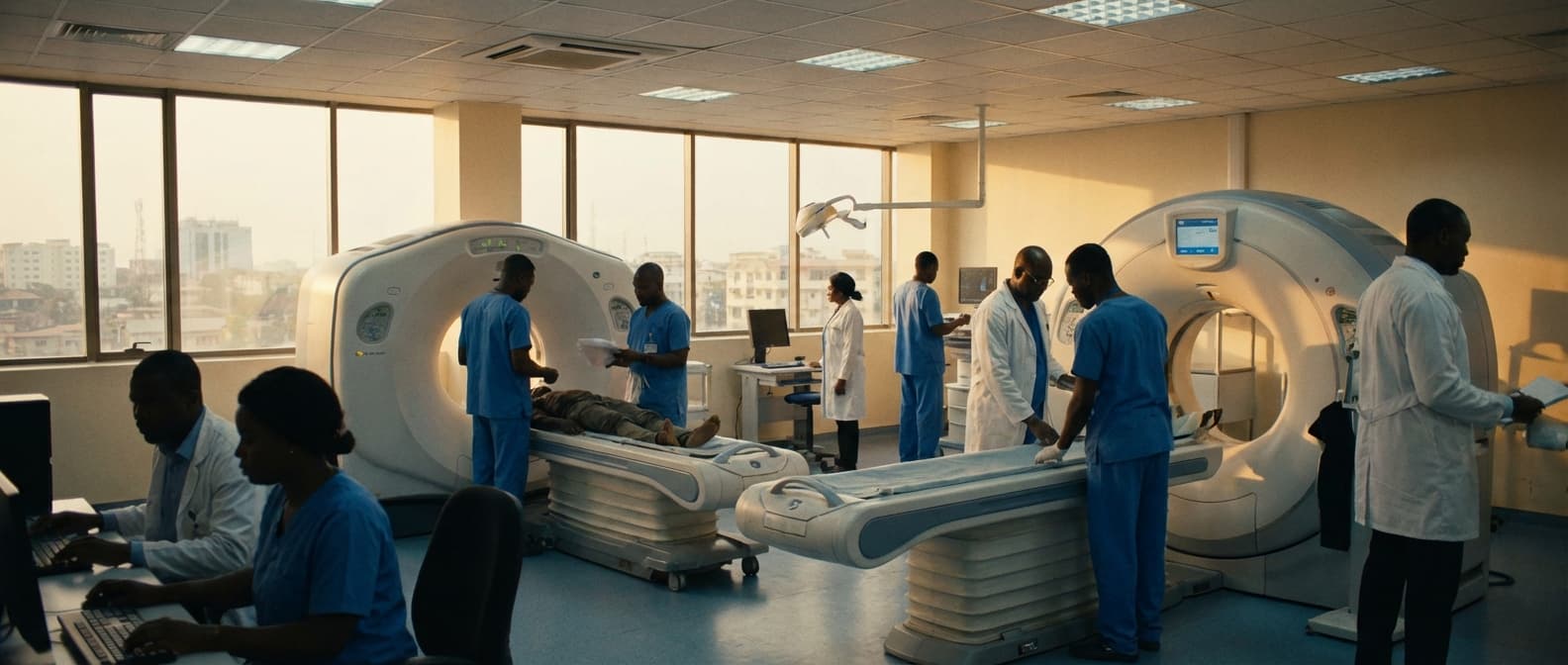
Radiology Room Design & Shielding Calculation in Niger
Engineering Excellence & Technical Support
Turnkey room planning, shielding drawings and approvals for imaging suites. High-standard technical execution following OEM protocols and local regulatory frameworks.
Optimized Radiation Shielding Design
Engineered comprehensive lead and concrete shielding calculations for radiography, CT, and fluoroscopy rooms in Niger, ensuring compliance with international radiation safety standards (e.g., ICRP recommendations) and minimizing occupational and patient exposure in diverse environmental conditions and building materials.
Ergonomic Radiology Room Layouts for Workflow Efficiency
Developed intelligent room layouts for diagnostic imaging facilities in Niger, prioritizing patient throughput, technologist ergonomics, and optimal equipment placement. Designs facilitate efficient patient positioning, image acquisition, and post-procedure processes, considering local operational workflows and space constraints.
Site-Specific Shielding Analysis & Material Optimization
Conducted detailed analysis of local building materials and environmental factors in Niger to refine shielding calculations, identifying cost-effective and readily available materials. This ensures robust radiation protection while minimizing project expenditure for new and upgraded radiology suites.
What Is Radiology Room Design & Shielding Calculation In Niger?
Radiology room design and shielding calculations in Niger refer to the specialized engineering and architectural planning required to construct or modify medical imaging facilities, ensuring optimal radiation safety for patients, staff, and the public. This service encompasses the meticulous design of room layouts, selection of construction materials, and precise calculation of radiation shielding requirements (typically lead or concrete thickness) to attenuate ionizing radiation emitted from X-ray, CT, fluoroscopy, and nuclear medicine equipment. The objective is to meet or exceed international and national radiation protection standards and regulatory requirements stipulated by Nigerien health authorities.
| Service Component | Description | Relevance in Niger |
|---|---|---|
| Facility Planning | Defining space requirements, equipment placement, and workflow for optimal operational efficiency and radiation safety. | Crucial for new hospital constructions, upgrades of existing diagnostic imaging departments, and establishment of dedicated radiology centers. Addresses the growing demand for advanced medical imaging services in Niger. |
| Radiation Shielding Design | Calculation and specification of the precise thickness and type of shielding materials (e.g., lead lining, concrete walls) required for different areas of the radiology suite. | Essential to protect healthcare professionals, other patients, and the general public from occupational and public exposure to ionizing radiation, aligning with international best practices and national safety standards enforced by the Nigerien Ministry of Public Health. |
| Regulatory Compliance and Approval | Ensuring the design meets all applicable national radiation protection laws, regulations, and licensing requirements, and facilitating the approval process with relevant authorities. | Mandatory for obtaining operating licenses and permits for medical imaging facilities in Niger. Services often involve liaison with the National Radiation Protection Authority (if established or designated) or equivalent bodies. |
| Quality Assurance and Verification | Post-construction verification of shielding efficacy through radiation surveys and acceptance testing to confirm compliance with design specifications. | Ensures that the constructed facility provides the intended level of radiation protection, maintaining patient and staff safety standards within the Nigerien healthcare system. |
Key Components of Radiology Room Design & Shielding Calculation:
- Room Layout and Workflow Analysis: Optimizing the placement of imaging equipment, control booths, patient waiting areas, changing rooms, and associated infrastructure for efficient workflow and radiation containment.
- Radiation Source Characterization: Identifying the type, energy spectrum, and intensity of radiation produced by the specific imaging modalities (e.g., X-ray tube voltage and current, scanning parameters).
- Shielding Material Selection: Evaluating the efficacy of various shielding materials (lead, concrete, specialized composites) based on radiation type, energy, and required attenuation.
- Dose Rate Calculations: Performing detailed calculations using established methodologies (e.g., Monte Carlo simulations, empirical formulas) to determine the necessary shielding thickness for walls, floors, ceilings, doors, and viewing windows.
- Compliance Verification: Ensuring that the design adheres to relevant national regulations and international recommendations (e.g., IAEA safety guides, ICRP publications) concerning radiation protection in medical facilities.
- Ventilation and HVAC Integration: Designing appropriate air exchange rates to maintain optimal environmental conditions and prevent the accumulation of radioactive contaminants.
- Electrical and Mechanical System Integration: Incorporating requirements for power supply, cooling, and other services essential for the operation of imaging equipment and the room environment.
- Emergency Preparedness: Considering provisions for emergency power, ventilation overrides, and access for maintenance and emergency personnel.
Who Needs Radiology Room Design & Shielding Calculation In Niger?
Radiology room design and shielding calculations are crucial for ensuring patient and staff safety, as well as optimizing diagnostic imaging equipment performance in Niger. The primary target customers for these services are healthcare facilities that operate or plan to install diagnostic imaging equipment. This includes a range of institutions, from large public hospitals to private clinics and specialized medical centers. The specific departments within these facilities that directly benefit are those utilizing X-ray, CT scanners, MRI machines, mammography units, and fluoroscopy equipment. Proper design and shielding mitigate radiation exposure, comply with national and international safety standards, and contribute to a secure and efficient medical environment.
| Department | Imaging Modalities Requiring Design & Shielding | Key Considerations |
|---|---|---|
| Radiology/Medical Imaging | X-ray (General, Mobile, Dental) | Lead shielding in walls, doors, windows; room layout for workflow efficiency; ventilation. |
| Radiology/Medical Imaging | Computed Tomography (CT) | Higher lead shielding requirements due to higher radiation doses; radiation safety interlocks; patient comfort and accessibility. |
| Radiology/Medical Imaging | Magnetic Resonance Imaging (MRI) | RF shielding (Faraday cage); acoustic shielding; cryogenic safety considerations; patient access and emergency protocols. |
| Radiology/Medical Imaging | Mammography | Specific shielding for low-energy X-rays; ergonomic design for patient positioning; light control. |
| Radiology/Medical Imaging | Fluoroscopy (Interventional Radiology) | High lead shielding for staff and patient; lead aprons and curtains; radiation dose monitoring systems. |
| Nuclear Medicine | PET/CT, SPECT | Specific shielding for radioactive isotopes (e.g., concrete, specialized materials); ventilation for radioactive gases; waste management considerations. |
Target Customers & Departments for Radiology Room Design & Shielding in Niger
- Public Hospitals (Regional, National)
- Private Hospitals and Clinics
- Specialized Medical Centers (e.g., Oncology Centers, Diagnostic Imaging Centers)
- Military Hospitals
- Research and Educational Institutions with Medical Imaging Facilities
Radiology Room Design & Shielding Calculation Process In Niger
This document outlines the typical workflow for Radiology Room Design and Shielding Calculation in Niger, from initial inquiry to project execution. The process emphasizes adherence to international safety standards and local regulatory requirements.
| Phase | Key Activities | Responsible Parties | Deliverables | Nigerien Context Considerations |
|---|---|---|---|---|
| Inquiry & Initial Consultation | Client brief, site visit coordination, preliminary needs assessment. | Client, Project Manager, Radiation Safety Consultant. | Project scope, preliminary budget, site assessment report. | Understanding local healthcare infrastructure and potential for expansion. |
| Site Survey & Assessment | Detailed measurements, structural analysis, existing infrastructure review. | Architect, Structural Engineer, Radiation Safety Consultant. | Detailed site survey report, structural integrity assessment. | Availability of skilled labor for construction and material sourcing logistics. |
| Requirements Gathering & Specification | Defining equipment needs, room layout, workflow, and technical specifications. | Radiologist, Physicist, Project Manager, Equipment Vendor. | Detailed technical specifications document, room layout plans. | Alignment with Ministry of Public Health guidelines and national standards. |
| Shielding Calculation & Design | Radiation source analysis, dose rate calculations, shielding material selection. | Radiation Physicist, Shielding Design Engineer. | Shielding calculation report, detailed shielding design drawings. | Adherence to international best practices (e.g., ICRP, NCRP) as primary reference. |
| Architectural & Structural Design | Integrating shielding into building plans, ensuring structural compliance. | Architect, Structural Engineer. | Architectural drawings, structural design plans. | Consideration of local building materials and construction techniques. |
| Equipment Integration Planning | Optimizing equipment placement, ensuring access and serviceability. | Equipment Vendor, Radiologist, Project Manager. | Equipment placement plan, service access schematics. | Ensuring compatibility with local power supply and environmental conditions. |
| Regulatory Submission & Approval | Preparation and submission of documentation, responding to queries. | Project Manager, Radiation Safety Consultant, Legal Advisor. | Approved plans and permits from regulatory bodies. | Navigating the specific regulatory framework and approval timelines of Niger. |
| Procurement & Material Sourcing | Identifying suppliers, obtaining quotes, ordering materials. | Procurement Manager, Project Manager. | Material procurement orders, supplier contracts. | Challenges in importing specialized materials and lead, lead times. |
| Construction & Installation | Building the room, installing shielding, doors, windows, and systems. | Construction Contractor, Specialized Installers (e.g., lead workers). | Completed radiology room structure, installed components. | Ensuring skilled labor is available for precise installation of shielding. |
| Quality Assurance & Testing | Inspections, material verification, system checks. | Quality Control Engineer, Project Manager. | QA reports, test results. | Independent verification of critical components and installations. |
| Radiation Survey & Commissioning | Post-construction radiation measurements, equipment testing. | Independent Radiation Physicist, Equipment Vendor. | Commissioning report, radiation survey certificate. | Confirmation of compliance with safety standards before operational use. |
| Final Approval & Handover | Final inspections, documentation handover, client training. | Project Manager, Client Representatives. | Project completion certificate, operational manuals. | Ensuring the client has all necessary documentation for future reference and compliance. |
| Ongoing Monitoring & Maintenance | Scheduled inspections, equipment servicing, record keeping. | Client Facilities Management, Service Technicians. | Maintenance logs, periodic safety reports. | Establishing a sustainable maintenance plan for long-term safety and functionality. |
Radiology Room Design & Shielding Calculation Workflow in Niger
- Inquiry & Initial Consultation: The process begins with a client (hospital, clinic, etc.) expressing interest in a new radiology suite or an upgrade. This involves understanding their specific needs, including the type of imaging modality (X-ray, CT, MRI, etc.), room size requirements, patient throughput, and budget.
- Site Survey & Assessment: A qualified team visits the proposed site. This involves measuring the room dimensions, assessing the existing structural integrity, identifying potential limitations, and understanding the building's layout and surrounding areas. This is crucial for determining structural load-bearing capacity and proximity to occupied spaces.
- Requirements Gathering & Specification: Based on the inquiry and site survey, detailed specifications are developed. This includes imaging equipment parameters (kVp, mA, workload, beam filtration, etc.), room layout preferences, workflow considerations, ventilation, electrical, and plumbing needs.
- Shielding Calculation & Design (Core Process): This is a critical phase. Using specialized software and adhering to international guidelines (e.g., ICRP, NCRP) and any relevant Nigerien radiation safety regulations, the team calculates the necessary shielding. This involves:
- Determining Primary and Secondary Radiation Sources: Identifying the types and energies of radiation emitted by the specific imaging equipment.
- Defining Controlled and Supervised Areas: Establishing zones within and around the radiology suite with varying levels of radiation exposure limits.
- Calculating Shielding Thickness: Determining the required thickness and type of shielding material (e.g., lead, concrete, baryte plaster) for walls, floors, ceilings, doors, and viewing windows to ensure radiation levels remain below permissible limits in all areas.
- Door and Window Design: Specifying lead-lined doors with interlocks and leaded glass viewing windows.
- Ventilation System Design: Incorporating adequate ventilation to manage heat generated by equipment and ensure air quality.
- Architectural & Structural Design: Integrating the shielding requirements into the architectural and structural design of the room. This includes drawings for walls, doors, windows, and any necessary structural reinforcements.
- Equipment Integration Planning: Coordinating the placement of imaging equipment with the room design, ensuring adequate space for operation, maintenance, and patient access.
- Regulatory Submission & Approval: Preparing and submitting all necessary documentation, including shielding calculations, architectural plans, and safety reports, to the relevant Nigerien regulatory authorities (e.g., Ministry of Public Health, National Radiation Protection Agency) for review and approval. This is a crucial step that can involve multiple iterations.
- Procurement & Material Sourcing: Once approvals are obtained, sourcing and procuring the specified shielding materials and construction components.
- Construction & Installation: Undertaking the construction and installation of the radiology room according to the approved designs and specifications. This includes precise installation of lead shielding, doors, windows, and all associated systems.
- Quality Assurance & Testing: Conducting rigorous quality assurance checks throughout the construction process. This includes verifying shielding thicknesses, door functionality, and electrical and ventilation systems.
- Radiation Survey & Commissioning: Upon completion, a comprehensive radiation survey is performed by a qualified radiation physicist to verify that shielding is adequate and radiation levels are within permissible limits. This includes testing the equipment in operation.
- Final Approval & Handover: Once all tests are satisfactory and regulatory requirements are met, the project is formally approved, and the radiology suite is handed over to the client.
- Ongoing Monitoring & Maintenance: Establishing a schedule for periodic radiation safety checks and equipment maintenance to ensure continued compliance and optimal performance.
Radiology Room Design & Shielding Calculation Cost In Niger
Designing and calculating the shielding requirements for a radiology room in Niger involves a complex interplay of factors that influence the final cost. These costs are typically denominated in the local currency, the West African CFA franc (XOF). The scope of the project, the specific imaging modalities to be installed, and the chosen professional expertise all play significant roles. It's important to understand that these are estimates, and actual costs can vary significantly based on specific project details and vendor negotiations.
| Service/Component | Estimated Cost Range (XOF) | Notes |
|---|---|---|
| Architectural Design (Basic Layout & Planning) | 750,000 - 2,500,000 | Covers initial space planning and basic architectural drawings. |
| Specialized Medical Architecture (Healthcare Focus) | 1,500,000 - 5,000,000+ | For designs incorporating specific medical workflows and equipment integration. |
| Radiation Shielding Calculation (Medical Physicist) | 500,000 - 2,000,000 | Essential for determining precise material needs. Varies with equipment complexity. |
| Lead Shielding Materials | 2,000,000 - 10,000,000+ (per room) | Highly dependent on the thickness and surface area required. This is often the most significant material cost. |
| Concrete Shielding (if applicable) | 1,000,000 - 5,000,000+ (per room) | For thicker barriers, often used in conjunction with lead or as primary shielding for less intense sources. |
| Installation Labor (Shielding & Construction) | 1,500,000 - 7,000,000+ | Skilled labor is crucial for proper shielding installation. Varies with project size and complexity. |
| Project Management | 1,000,000 - 4,000,000+ | If a dedicated project manager is engaged. |
| Permits & Approvals | 200,000 - 1,000,000 | Variable depending on local government fees. |
| Contingency (10-20%) | Variable | Recommended for unforeseen costs. |
Key Pricing Factors for Radiology Room Design & Shielding in Niger
- Scope of Work: This includes the size of the radiology suite, the number of rooms, and the complexity of the layout. Larger and more intricate designs will naturally incur higher costs for architectural planning and design services.
- Imaging Modalities: Different imaging equipment (e.g., X-ray, CT scanner, MRI, mammography) have varying radiation output and shielding requirements. The more advanced or powerful the equipment, the more robust and expensive the shielding will need to be.
- Shielding Material & Thickness: The type of shielding material (e.g., lead, concrete) and its thickness are determined by the radiation levels. Higher radiation requires thicker and more specialized shielding, directly impacting material and installation costs.
- Professional Expertise: Engaging experienced radiologists, medical physicists (for shielding calculations), architects with healthcare experience, and specialized construction firms will command higher fees. The reputation and track record of these professionals will influence their pricing.
- Geographical Location within Niger: While XOF is the national currency, the cost of labor, materials, and transportation can differ between major cities like Niamey and more remote regions. Logistics and accessibility can add to the overall expense.
- Regulatory Compliance & Approvals: Obtaining necessary permits and ensuring compliance with national health and safety regulations may involve fees and specific consulting services.
- Project Management: If a dedicated project manager is hired to oversee the entire process, this will add to the overall cost.
- Site Conditions: The existing structure of the building where the radiology room will be built can impact costs. Modifications or structural reinforcements needed to accommodate shielding and equipment can increase expenses.
- Contingency: It's prudent to include a contingency fund for unforeseen issues that may arise during the design and construction phases.
Affordable Radiology Room Design & Shielding Calculation Options
Designing an affordable radiology room requires a strategic approach to both layout and radiation shielding. This involves careful consideration of material selection, efficient space utilization, and smart procurement. Understanding the interplay between these factors can lead to significant cost savings without compromising safety or functionality. This document outlines value bundles and cost-saving strategies for affordable radiology room design and shielding calculations.
| Value Bundle | Included Services/Materials | Cost-Saving Benefit | Target User |
|---|---|---|---|
| 'Starter' Radiology Suite Package | Basic room layout design, standard lead-lined wall panels, single-door installation, and essential shielding calculations for common X-ray procedures. | Reduces initial design and material costs by leveraging standardized components and focused scope. | Small clinics, private practices with limited budgets, new facility setups. |
| 'Smart Shield' Optimization Bundle | Advanced shielding calculations using simulation software, analysis of alternative shielding materials (e.g., concrete, baryte), and recommendations for optimized thickness and placement. | Identifies the most cost-effective shielding solution for specific needs, potentially reducing material quantities and overall cost. | Facilities with complex imaging needs, those looking to minimize lead usage, budget-conscious developers. |
| 'Turnkey Radiology Room' Solution | Comprehensive service including architectural design, structural considerations, all shielding materials, room construction, ventilation, electrical, and basic equipment integration. Often includes a single point of contact. | Simplifies project management, reduces coordination overhead, and can offer bulk purchasing discounts on all components. | Hospitals, large imaging centers, developers building multiple radiology suites. |
| 'Retrofit & Refurbish' Package | Assessment of existing radiology rooms for shielding upgrades, recommendations for cost-effective material additions or replacements, and integration of refurbished imaging equipment. | Maximizes the value of existing infrastructure and reduces capital expenditure on new equipment. | Existing healthcare facilities looking to modernize or expand capacity on a budget. |
Key Cost-Saving Strategies
- Modular Design Elements: Utilizing pre-fabricated modular components for walls, doors, and control booths can reduce on-site labor and construction time, leading to lower overall costs.
- Optimized Shielding Material Selection: While lead is traditional, exploring alternative materials like concrete, baryte plaster, or even specialized composites can be more cost-effective depending on the required shielding levels and local availability.
- Consolidated Procurement: Bundling the purchase of multiple shielding materials, diagnostic equipment, and room finishing materials from a single supplier can often unlock volume discounts and reduce shipping costs.
- Standardized Room Layouts: Developing a few standardized, efficient room layouts that cater to common radiology procedures can streamline the design process and allow for bulk purchasing of standard-sized components.
- Phased Implementation: For new facilities or major renovations, consider a phased approach to room construction and equipment installation to spread costs over a longer period.
- Professional Consultation Packages: Opt for consultants who offer bundled services for both room design and shielding calculations. This can be more economical than engaging separate specialists.
- Exploring Used or Refurbished Equipment: While caution is advised, carefully vetted and refurbished imaging equipment can offer substantial savings over new purchases, especially for less critical applications.
- Smart Lighting and Ventilation: Efficient LED lighting and energy-conscious HVAC systems can reduce long-term operational costs, contributing to the overall affordability of the room.
- Focus on Essential Features: Prioritize essential imaging capabilities and shielding requirements, avoiding unnecessary luxury finishes or features that add significant cost without a direct impact on diagnostic output or safety.
Verified Providers In Niger
Navigating the landscape of healthcare providers in Niger requires a discerning approach, especially when prioritizing quality and trustworthiness. Franance Health stands out as a leading organization dedicated to ensuring patients access the highest caliber of medical professionals. Their rigorous credentialing process is not merely a bureaucratic step; it's a fundamental commitment to patient safety and optimal health outcomes. By meticulously vetting each provider, Franance Health guarantees that their network comprises experienced, licensed, and ethically sound practitioners. This commitment translates into a superior healthcare experience for all individuals seeking medical assistance in Niger.
| Credential Type | Franance Health Verification Standard | Patient Benefit |
|---|---|---|
| Medical Licensing | Verification of current and valid medical license from the relevant Nigerien authorities. | Guarantees providers meet the minimum legal requirements for practice. |
| Education and Training | Scrutiny of academic qualifications, medical school diplomas, and specialized training certificates. | Ensures providers possess the necessary theoretical knowledge and practical skills. |
| Professional Experience | Thorough review of past employment history, surgical logs (where applicable), and clinical experience. | Confirms hands-on experience and a proven track record in patient care. |
| Specialty Certification | Validation of board certifications and accreditations in specific medical fields. | Assures patients are receiving care from recognized experts in their respective specialties. |
| Background Checks | Checks for any disciplinary actions, malpractice claims, or criminal records. | Safeguards patients against providers with compromised professional histories. |
| Continuing Medical Education (CME) | Confirmation of participation in ongoing professional development and skill enhancement. | Ensures providers stay updated with the latest medical advancements and best practices. |
Why Franance Health Credentials Matter
- Ensures access to qualified and licensed medical professionals.
- Prioritizes patient safety through rigorous vetting processes.
- Promotes ethical conduct and professional integrity among providers.
- Facilitates access to specialized medical expertise.
- Builds trust and confidence in the Nigerien healthcare system.
Scope Of Work For Radiology Room Design & Shielding Calculation
This Scope of Work (SOW) outlines the requirements for the design and radiation shielding calculations for a new radiology room. The objective is to ensure the facility is compliant with all relevant safety regulations and provides a safe environment for patients, staff, and the public while optimizing workflow and equipment functionality. This SOW covers the technical deliverables and standard specifications expected from the consultant.
| Deliverable Category | Specific Deliverables | Standard Specifications / References | ||
|---|---|---|---|---|
| Architectural Design | Radiology Room Layout Drawings (Floor Plans, Elevations, Sections) | ACGIH (American Conference of Governmental Industrial Hygienists), ANSI (American National Standards Institute), Local Building Codes, HIPAA (Health Insurance Portability and Accountability Act) for patient privacy. | Room dimensions, door and window locations, patient/staff pathways, equipment placement areas, waiting areas, control rooms, changing areas. | ADA (Americans with Disabilities Act) Standards. |
| Radiation Shielding | Radiation Shielding Calculations Report | NCRP (National Council on Radiation Protection and Measurements) Reports (e.g., NCRP Report No. 147, 151), ICRP (International Commission on Radiological Protection) Publications, State/Local Radiation Control Regulations. | Calculation methodology, materials used (e.g., lead, concrete), required thicknesses, transmission calculations, dose rate estimations at various locations (e.g., adjacent rooms, corridors, outside the facility). | |
| Shielding Design | Shielding Details Drawings | Construction specifications detailing the type, thickness, and installation method of shielding materials. | Integration with architectural and structural plans. | Lead shielding around doorways, windows, and wall penetrations. |
| Electrical & Mechanical | Electrical Load Calculations and Wiring Diagrams | National Electrical Code (NEC), local electrical codes, equipment manufacturer specifications. | Power requirements for imaging equipment, lighting, HVAC, emergency power. | Dedicated circuits, UPS considerations. |
| Mechanical & Environmental | HVAC Design Considerations | ASHRAE (American Society of Heating, Refrigerating and Air-Conditioning Engineers) Standards, local building codes. | Temperature and humidity control for equipment and patient comfort, ventilation for radiation control areas (if applicable). | Filtration and air exchange rates. |
| Equipment Integration | Equipment Placement and Workflow Analysis | Collaboration with equipment vendors, manufacturer installation manuals. | Layout adjustments to accommodate imaging equipment (e.g., X-ray tube, detector, gantry, console). | Clearance requirements for maintenance and operation. |
| Safety & Compliance | Radiation Safety Compliance Report | State and local radiation control agency regulations, ALARA (As Low As Reasonably Achievable) principle. | Verification of shielding adequacy against regulatory limits. | Recommendations for signage and safety protocols. |
| Documentation | Final Design Report | Comprehensive summary of all design elements, calculations, and specifications. | As-built drawing potential. |
Key Objectives
- Develop a comprehensive radiology room layout optimized for patient flow, staff efficiency, and equipment integration.
- Perform detailed radiation shielding calculations to ensure compliance with national and local radiation safety standards.
- Provide detailed design documentation, including architectural drawings, electrical schematics, and shielding specifications.
- Ensure all design elements meet accessibility requirements and ergonomic best practices.
- Facilitate coordination with equipment vendors to ensure seamless integration of imaging modalities.
Service Level Agreement For Radiology Room Design & Shielding Calculation
This Service Level Agreement (SLA) outlines the response times and uptime guarantees for the Radiology Room Design & Shielding Calculation service. It defines the expected performance standards and remedies for service deviations, ensuring the reliable and timely delivery of critical design and calculation services to support the safe and efficient operation of radiology facilities.
| Service Element | Response Time (Business Hours) | Uptime Guarantee (%) |
|---|---|---|
| Initial Consultation & Needs Assessment | Within 4 business hours of request | N/A (Service is project-based, not uptime-dependent) |
| Delivery of Preliminary Shielding Design Options | Within 3 business days after receiving all necessary information | N/A (Service is project-based, not uptime-dependent) |
| Delivery of Final Shielding Calculation Report & Specifications | Within 5 business days after approval of preliminary design | N/A (Service is project-based, not uptime-dependent) |
| Response to Clarification Questions on Design/Calculations | Within 2 business hours | 99.5% |
| Availability of Dedicated Project Manager/Point of Contact | During standard business hours | 99.5% |
| Access to Calculation Tools/Software (if applicable, for remote collaboration) | 24/7 access with minimal planned downtime | 99.9% |
Service Components
- Radiology Room Design Consultation
- Shielding Calculation for X-ray, CT, MRI, and other imaging modalities
- Review of architectural plans and equipment specifications
- Issuance of shielding design reports and specifications
- Consultation on regulatory compliance related to radiation safety
Frequently Asked Questions

Ready when you are
Let's scope your Radiology Room Design & Shielding Calculation in Niger project in Niger.

Scaling healthcare logistics and technical systems across the entire continent.