
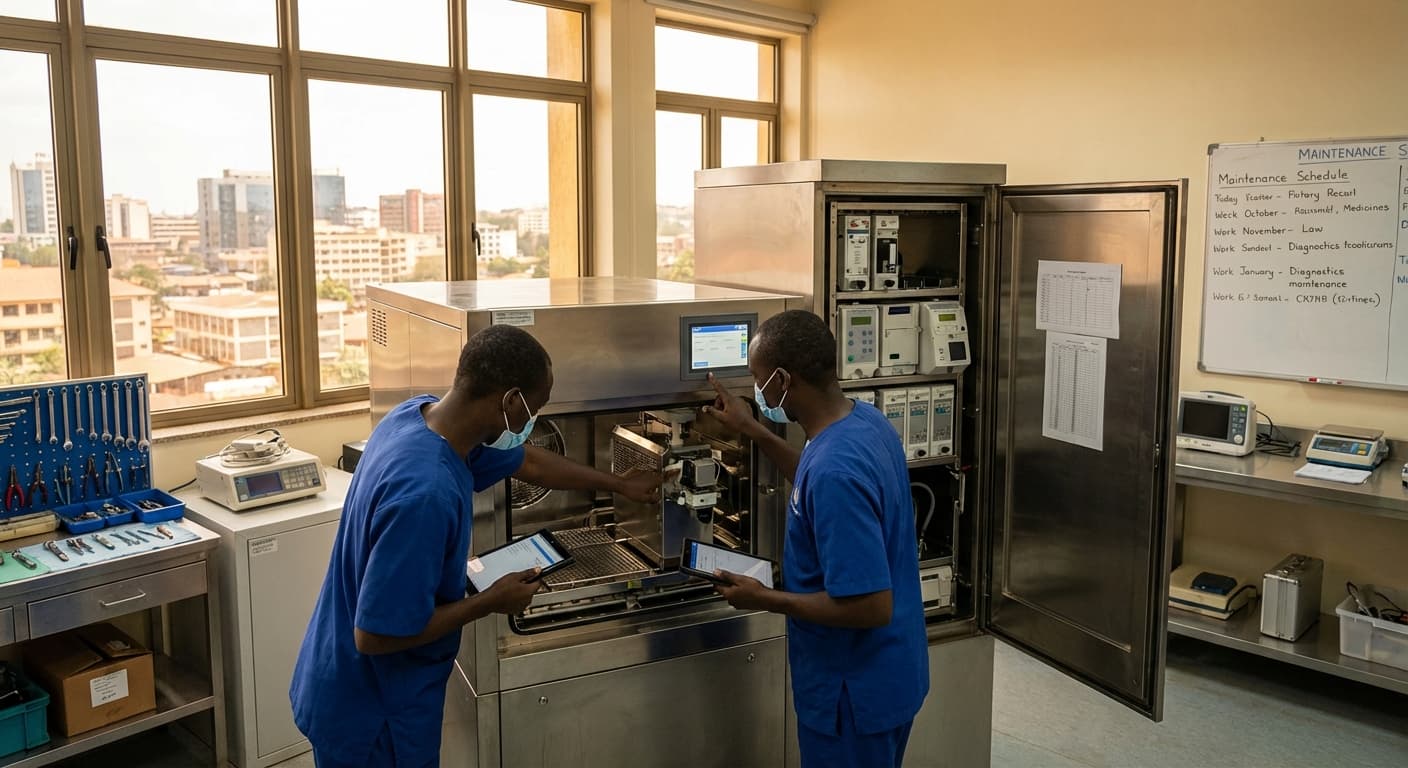
Total Cost of Ownership (TCO) & Lifecycle Budgeting Service in Niger
Engineering Excellence & Technical Support
Total Cost of Ownership (TCO) & Lifecycle Budgeting Service High-standard technical execution following OEM protocols and local regulatory frameworks.
Predictive Cost Optimization for Infrastructure Projects
Leverage advanced data analytics and predictive modeling to forecast and mitigate potential cost overruns across the entire lifecycle of infrastructure projects in Niger, from initial procurement through decommissioning, ensuring predictable financial outcomes and maximizing return on investment.
Lifecycle Cost Management for Energy Assets
Implement robust lifecycle budgeting strategies for vital energy infrastructure in Niger, including solar farms and power grids. Our service meticulously accounts for operational expenditures, maintenance, potential upgrades, and end-of-life disposal, guaranteeing sustained energy supply and financial viability.
Risk-Informed TCO for Sustainable Development Initiatives
Integrate comprehensive risk assessments into TCO calculations for development projects in Niger. We identify and quantify financial exposures related to regulatory changes, environmental factors, and geopolitical shifts, enabling proactive risk management and ensuring long-term project sustainability and budgetary resilience.
What Is Total Cost Of Ownership (Tco) & Lifecycle Budgeting Service In Niger?
Total Cost of Ownership (TCO) & Lifecycle Budgeting is a financial methodology and service designed to comprehensively assess and forecast all direct and indirect costs associated with acquiring, operating, maintaining, and eventually disposing of an asset or system over its entire lifespan. This is particularly relevant in Niger, where strategic resource allocation, long-term asset performance, and predictable operational expenditure are crucial for economic development and organizational sustainability. The service involves a rigorous data-driven analysis, incorporating initial capital expenditures, ongoing operational costs (energy, labor, consumables), maintenance and repair expenses, upgrade and refurbishment costs, and end-of-life disposal or decommissioning expenses. It extends beyond simple purchase price to include all factors that influence the true economic impact of an investment. Lifecycle Budgeting complements TCO by projecting these costs over time, enabling organizations to develop realistic financial plans, identify potential cost-saving opportunities, and mitigate financial risks throughout the asset's operational tenure.
| Who Needs TCO & Lifecycle Budgeting Service in Niger? | Typical Use Cases in Niger | |||||||||
|---|---|---|---|---|---|---|---|---|---|---|
| Government Agencies: Responsible for public infrastructure (roads, utilities, education, healthcare) and public procurement. Need to ensure long-term value for taxpayer money and sustainable service delivery. | Infrastructure Projects: Assessing the TCO of roads, bridges, power plants, water treatment facilities, and telecommunication networks over their projected lifespans to inform investment decisions and maintenance planning. | Public Sector Organizations: Evaluating the TCO of IT systems, fleet vehicles, office equipment, and buildings to optimize procurement and operational budgets. | Energy Sector (Oil, Gas, Renewable): Analyzing the TCO of exploration equipment, production facilities, power generation assets (solar farms, wind turbines), and transmission infrastructure, considering long operational periods and environmental factors. | Mining and Extractive Industries: Determining the TCO of heavy machinery, processing plants, and logistical infrastructure, factoring in harsh operating conditions and fluctuating commodity prices. | Telecommunications Companies: Evaluating the TCO of network infrastructure (base stations, fiber optic cables), switching equipment, and customer premise equipment for long-term service provision. | Agricultural and Agribusiness Sector: Assessing the TCO of large-scale farming equipment, processing facilities, and storage infrastructure to ensure profitability and efficient resource utilization. | International Development Organizations & NGOs: When funding projects in Niger, TCO analysis is critical to ensure the long-term sustainability and cost-effectiveness of interventions (e.g., water wells, clinics, schools). | Private Enterprises: Any business in Niger, from manufacturing to logistics, that makes significant capital investments and needs to manage operational costs effectively. | Healthcare Providers: Evaluating the TCO of medical equipment (MRI machines, CT scanners), hospital buildings, and fleet of ambulances for optimized service delivery and maintenance planning. | Educational Institutions: Assessing the TCO of campus infrastructure, IT systems, and specialized equipment to ensure long-term affordability and functionality. |
Key Components of TCO & Lifecycle Budgeting Service in Niger:
- Acquisition Costs: Includes purchase price, taxes, import duties, shipping, installation, and initial setup.
- Operational Costs: Encompasses energy consumption, labor (operation and management), consumables, licensing fees, and software subscriptions.
- Maintenance and Repair Costs: Covers routine preventative maintenance, unscheduled repairs, spare parts, and contractor fees.
- Upgrade and Refurbishment Costs: Accounts for planned enhancements, retrofits, or significant overhauls to extend asset life or improve performance.
- Disposal and Decommissioning Costs: Includes dismantling, removal, environmental remediation, and recycling or disposal fees.
- Indirect Costs: May involve training, insurance, downtime losses, and potential obsolescence.
- Financial Modeling: Development of detailed financial models to project costs over the asset's lifecycle.
- Risk Assessment: Identification and quantification of financial risks associated with cost overruns or unforeseen expenditures.
- Scenario Planning: Creation of 'what-if' scenarios to evaluate the financial impact of different operational strategies or technological advancements.
- Reporting and Recommendations: Provision of comprehensive reports with actionable recommendations for cost optimization and budget allocation.
Who Needs Total Cost Of Ownership (Tco) & Lifecycle Budgeting Service In Niger?
Organizations in Niger looking to optimize their spending, improve financial planning, and ensure long-term asset viability are ideal candidates for Total Cost of Ownership (TCO) and Lifecycle Budgeting services. These services are particularly valuable for entities that:
- Manage significant capital assets (e.g., infrastructure, vehicles, heavy machinery, IT systems).
- Operate in sectors with long asset lifespans and substantial ongoing maintenance or operational costs.
- Are seeking to reduce unexpected expenses and improve budget predictability.
- Are subject to regulatory requirements or donor mandates for robust financial management and accountability.
- Are planning major new investments or asset replacements.
These services are crucial for making informed decisions about procurement, operations, maintenance, and eventual disposal, leading to greater efficiency and cost savings over the entire lifespan of an asset.
| Customer Type | Relevant Departments | Key Needs Addressed by TCO/Lifecycle Budgeting |
|---|---|---|
| Government Ministries and Agencies | Ministry of Finance, Ministry of Public Works, Ministry of Transport, Ministry of Mines, Ministry of Health, Ministry of Education | Strategic procurement for public assets, long-term infrastructure planning, budget forecasting for capital projects, ensuring value for taxpayer money, compliance with financial regulations. |
| Public and Private Sector Infrastructure Developers | Project Management, Engineering, Finance, Procurement, Operations & Maintenance | Accurate cost estimation for construction and long-term operation of roads, bridges, power plants, water systems; optimizing investment decisions; managing ongoing maintenance budgets. |
| Mining and Extractive Industries | Asset Management, Operations, Finance, Procurement, Engineering | Managing high-value, heavy equipment costs; planning for replacement and upgrades; optimizing operational efficiency; ensuring compliance with environmental and safety regulations impacting asset lifespan. |
| Telecommunications Companies | Network Operations, Finance, Procurement, Technology Development | Long-term planning for network infrastructure (towers, fiber optics, equipment); managing technology obsolescence; forecasting CAPEX and OPEX for network expansion and maintenance. |
| Energy and Utility Providers | Operations, Asset Management, Finance, Engineering, Planning | Budgeting for power generation equipment, transmission lines, distribution networks; managing maintenance and upgrade cycles; forecasting energy demand and associated asset costs. |
| Large-Scale Agricultural Enterprises | Operations, Farm Management, Finance, Procurement | Optimizing investment in farm machinery, irrigation systems, processing equipment; forecasting maintenance and operational costs; planning for asset replacement. |
| Transportation and Logistics Companies | Fleet Management, Operations, Finance, Procurement | Calculating true cost of vehicle ownership (purchase, fuel, maintenance, insurance, resale); optimizing fleet size and composition; planning for vehicle replacement cycles. |
| International Development Organizations and NGOs | Program Management, Finance, Procurement, Logistics | Ensuring efficient use of donor funds for long-term projects; accurate budgeting for assets in development projects; accountability for asset management and sustainability. |
| Educational and Research Institutions | Facilities Management, IT Department, Finance, Procurement | Managing the lifecycle costs of campus infrastructure, laboratory equipment, IT systems; planning for technology upgrades and replacements; ensuring efficient resource allocation. |
| Healthcare Providers | Hospital Administration, Biomedical Engineering, Finance, Procurement | Calculating the full cost of medical equipment (purchase, installation, maintenance, consumables, eventual disposal); planning for equipment upgrades and replacements; ensuring operational continuity. |
Target Customers in Niger
- Government Ministries and Agencies
- Public and Private Sector Infrastructure Developers
- Mining and Extractive Industries
- Telecommunications Companies
- Energy and Utility Providers
- Large-Scale Agricultural Enterprises
- Transportation and Logistics Companies
- International Development Organizations and NGOs
- Educational and Research Institutions
- Healthcare Providers with significant equipment investments
Total Cost Of Ownership (Tco) & Lifecycle Budgeting Service Process In Niger
This document outlines the workflow for our Total Cost of Ownership (TCO) & Lifecycle Budgeting Service, specifically tailored for clients in Niger. Our service aims to provide a comprehensive understanding of the financial implications of an asset or project throughout its entire lifespan, from initial acquisition to disposal, enabling informed decision-making and optimized resource allocation.
| Stage | Description | Key Activities | Deliverables | Estimated Timeline (Niger Context) |
|---|---|---|---|---|
| The client expresses interest and provides a preliminary overview of their needs regarding TCO and lifecycle budgeting. | Initial contact, discussion of client objectives, scope clarification, preliminary risk identification. | Understanding of client needs, identification of key stakeholders. | 1-3 business days |
| Based on the needs assessment, a detailed proposal is created, outlining the service scope, methodology, timeline, and cost. | Developing a tailored service proposal, defining key performance indicators (KPIs), legal and commercial agreement negotiation. | Signed service agreement, agreed-upon scope of work, pricing structure, and payment terms. | 3-7 business days |
| Gathering all relevant information pertaining to the asset(s) or project(s) under consideration. | Identifying and collecting data on initial acquisition costs, operational expenses (maintenance, energy, labor), repair/replacement costs, training, disposal costs, and any other relevant lifecycle factors. This may involve site visits, interviews with stakeholders, and review of existing documentation. Data verification and validation are crucial in the Niger context. | Comprehensive dataset for TCO and lifecycle analysis, clearly defined asset/project boundaries. | 1-4 weeks (dependent on complexity and accessibility of data in Niger) |
| Applying established methodologies and financial modeling techniques to calculate TCO and project future costs. | Developing TCO models, incorporating inflation, discount rates, and relevant local economic factors specific to Niger. Forecasting operating, maintenance, and end-of-life costs. Utilizing specialized software or custom spreadsheets. | Detailed TCO calculations, lifecycle cost projections, identification of major cost drivers. | 1-3 weeks |
| Exploring the impact of different assumptions and potential future events on the overall costs. | Developing and analyzing 'what-if' scenarios (e.g., changes in energy prices, regulatory shifts, technological advancements). Performing sensitivity analysis to identify key variables that significantly influence TCO. Considering the unique economic and logistical challenges within Niger. | Insights into cost vulnerabilities, identification of risk mitigation strategies. | 1 week |
| Consolidating findings into a clear, actionable report and presenting it to the client. | Preparing a comprehensive TCO and lifecycle budgeting report, including executive summary, detailed analysis, graphical representations, and actionable recommendations. Presenting findings to client stakeholders, answering questions, and facilitating discussion. | Final TCO & Lifecycle Budgeting Report, presentation slides, Q&A session. | 1-2 weeks |
| Assisting the client in implementing the recommended strategies to optimize TCO and lifecycle budgeting. | Providing guidance on procurement strategies, maintenance planning, operational efficiency improvements, and end-of-life management. Supporting decision-making based on the TCO analysis. | Actionable implementation plans, improved decision-making processes. | Ongoing, as per client agreement |
| Ensuring the ongoing effectiveness of the implemented strategies and providing updates as needed. | Periodic review of asset performance against TCO projections, updates to models based on new data or changing market conditions, ongoing advisory services. | Performance reviews, updated TCO models, continuous improvement insights. | As per agreement (e.g., quarterly, annually) |
Service Workflow: Inquiry to Execution
- Initial Inquiry & Needs Assessment
- Proposal Development & Client Agreement
- Data Collection & Asset/Project Definition
- TCO & Lifecycle Cost Modeling
- Scenario Analysis & Sensitivity Testing
- Report Generation & Presentation
- Implementation Support & Recommendations
- Follow-up & Periodic Review
Total Cost Of Ownership (Tco) & Lifecycle Budgeting Service Cost In Niger
Providing accurate pricing for Total Cost of Ownership (TCO) and Lifecycle Budgeting services in Niger requires considering several factors. These services are crucial for organizations to understand the long-term financial implications of their assets, projects, or investments, extending beyond the initial purchase price to include all associated costs throughout their lifespan. In Niger, as with many developing economies, the pricing can be influenced by local market conditions, the availability of specialized expertise, and the complexity of the TCO/lifecycle models required. Understanding these dynamics is key to budgeting effectively.
| Service Component | Description | Estimated Price Range (XOF) | Notes |
|---|---|---|---|
| Initial Consultation & Scoping | Understanding client needs, defining scope, and preliminary assessment. | 100,000 - 300,000 | Varies based on meeting duration and complexity of initial requirements. |
| Data Collection & Validation | Gathering financial, operational, and maintenance data from various sources. | 200,000 - 700,000 | Heavily dependent on data availability, accessibility, and client cooperation. |
| TCO Model Development (per asset/project) | Building the analytical framework for cost breakdown across the lifecycle. | 400,000 - 1,500,000 | Factors in asset type, lifecycle duration, and number of cost categories. |
| Lifecycle Budgeting & Forecasting | Projecting future costs, including operational, maintenance, and potential upgrade/disposal expenses. | 300,000 - 1,200,000 | Complexity of financial modeling and time horizon are key drivers. |
| Risk Analysis & Sensitivity Testing | Identifying and quantifying potential cost risks and their impact. | 250,000 - 800,000 | Involves scenario planning and probabilistic modeling. |
| Report Generation & Presentation | Compiling detailed reports, visualizations, and presenting findings. | 150,000 - 500,000 | Depends on the level of detail and number of deliverables. |
| Ongoing Monitoring & Updates | Periodic reviews and updates to the TCO/lifecycle models. | Variable (Retainer-based or per update) | Typically on a contractual basis for long-term engagements. |
| Full TCO & Lifecycle Budgeting Project (Comprehensive) | A complete service package from initial assessment to final reporting for a significant asset or project. | 1,500,000 - 7,000,000+ | Represents a significant investment for major projects or portfolios. This is a broad range and depends heavily on the factors listed above. |
Key Pricing Factors for TCO & Lifecycle Budgeting Services in Niger
- Scope and Complexity of Analysis: The depth and breadth of the TCO and lifecycle assessment significantly impact costs. This includes the number of assets or projects to be analyzed, the granularity of cost categories (e.g., operational, maintenance, disposal), and the incorporation of factors like inflation, depreciation, and risk.
- Data Availability and Quality: The ease of accessing reliable data for cost estimation is a major determinant. If comprehensive historical data is scarce or of poor quality, significant effort may be required for data collection, validation, and imputation, increasing service costs.
- Expertise and Experience of Service Provider: Specialized consultants or firms with a proven track record in TCO and lifecycle budgeting, particularly within the Nigerien context or similar African markets, will command higher fees due to their knowledge and efficiency.
- Duration of the Lifecycle: Longer lifecycles for assets or projects necessitate more extensive forecasting and modeling, leading to higher costs. This is particularly relevant for infrastructure or long-term investments.
- Geographic Location and Accessibility: While TCO/lifecycle budgeting is largely analytical, on-site assessments or data collection in remote areas of Niger might incur additional travel and logistical expenses.
- Technology and Tools Used: The sophistication of the software and analytical tools employed by the service provider can influence pricing. Advanced modeling software or proprietary databases may lead to higher rates.
- Reporting and Deliverables: The format and detail of the final reports, presentations, and dashboards required by the client will affect the time and effort invested by the provider.
- Market Demand and Competition: The level of demand for these specialized services in Niger and the number of qualified providers available will play a role in pricing dynamics. In markets with limited competition, prices may be higher.
Affordable Total Cost Of Ownership (Tco) & Lifecycle Budgeting Service Options
Our Affordable Total Cost of Ownership (TCO) and Lifecycle Budgeting services are designed to provide organizations with comprehensive financial planning and cost optimization across the entire lifespan of their assets, projects, or systems. We understand that initial purchase price is only a fraction of the true cost. Therefore, our services focus on identifying, quantifying, and managing all direct and indirect expenses, from acquisition and operation to maintenance, support, and eventual disposal. By leveraging advanced analytical tools and deep industry expertise, we empower you to make informed decisions, reduce unexpected expenditures, and achieve significant cost savings over time. Our approach goes beyond simple budgeting; it's about strategic financial foresight that aligns with your long-term business objectives.
| Service Component | Initial Cost (Acquisition) | Operational Costs (Energy, Staffing) | Maintenance & Support Costs | End-of-Life Costs (Disposal, Retirement) | Total Cost of Ownership (TCO) |
|---|---|---|---|---|---|
Value Bundles & Cost-Saving Strategies
- {"title":"Value Bundle 1: Foundational TCO Assessment","description":"Ideal for organizations new to TCO analysis. This bundle provides a baseline understanding of your current asset or project costs. Includes initial data gathering, identification of key cost drivers, and a preliminary TCO report with actionable insights for immediate savings opportunities."}
- {"title":"Value Bundle 2: Comprehensive Lifecycle Budgeting","description":"Expands on the foundational assessment by incorporating detailed lifecycle cost modeling. This bundle includes scenario planning, risk assessment related to cost fluctuations, and the development of a multi-year budget aligned with your operational roadmap. Focuses on proactive cost management and predictive budgeting."}
- {"title":"Value Bundle 3: Strategic Cost Optimization & Innovation","description":"Our premium offering. This bundle integrates TCO and lifecycle budgeting with advanced cost optimization strategies. It includes benchmarking against industry best practices, identifying opportunities for technological upgrades that reduce long-term costs, and developing strategies for process improvements that enhance efficiency and minimize waste. Aims to achieve sustained cost leadership and competitive advantage."}
- {"title":"Cost-Saving Strategy: Procurement Optimization","description":"Leveraging TCO data to negotiate better purchase terms, explore alternative suppliers, and standardize equipment to benefit from bulk discounts and reduce support complexity."}
- {"title":"Cost-Saving Strategy: Predictive Maintenance","description":"Implementing proactive maintenance schedules based on lifecycle data to prevent costly breakdowns and extend asset lifespan, reducing unplanned repair expenses."}
- {"title":"Cost-Saving Strategy: Energy & Resource Efficiency","description":"Identifying and implementing solutions to reduce energy consumption, water usage, and material waste throughout an asset's lifecycle, directly impacting operational costs."}
- {"title":"Cost-Saving Strategy: End-of-Life Planning & Disposal","description":"Developing strategies for asset retirement, refurbishment, or responsible disposal to maximize residual value and minimize environmental impact and associated fees."}
- {"title":"Cost-Saving Strategy: Vendor Management & Contract Negotiation","description":"Utilizing lifecycle cost insights to negotiate more favorable long-term contracts with vendors for maintenance, support, and consumables."}
Verified Providers In Niger
In Niger, ensuring access to reliable healthcare is paramount. Verified providers stand out for their commitment to quality, safety, and ethical practices. Franance Health plays a crucial role in this ecosystem by meticulously vetting healthcare professionals and facilities, offering a layer of assurance to individuals seeking medical care. Their credentialing process examines qualifications, experience, adherence to regulatory standards, and patient feedback, ultimately identifying providers who consistently meet high benchmarks. Choosing a Franance Health-verified provider means opting for expertise, trustworthiness, and a patient-centered approach that prioritizes your well-being.
| Criterion | Franance Health Verification Standard | Benefits for Patients |
|---|---|---|
| Professional Qualifications | Mandatory verification of degrees, licenses, and certifications from recognized institutions. | Ensures providers possess the foundational knowledge and legal authorization to practice. |
| Clinical Experience | Assessment of years of practice and specialization in relevant fields. | Guarantees that providers have practical experience and have successfully treated diverse cases. |
| Regulatory Compliance | Confirmation of adherence to national and international healthcare regulations and guidelines. | Assures that providers operate within legal frameworks and maintain ethical operational standards. |
| Patient Feedback and Outcomes | Collection and analysis of patient testimonials and reported outcomes. | Highlights providers with a history of positive patient experiences and successful treatment results. |
| Facility Standards (for clinics/hospitals) | Evaluation of infrastructure, equipment, hygiene, and safety protocols. | Confirms a safe, well-equipped, and clean environment conducive to effective treatment. |
| Continuing Professional Development | Verification of participation in ongoing training and educational programs. | Indicates providers are up-to-date with the latest medical advancements and best practices. |
Why Franance Health Verified Providers in Niger are the Best Choice:
- Unwavering Commitment to Quality: Verified providers undergo rigorous scrutiny, ensuring they meet and exceed established healthcare standards.
- Enhanced Patient Safety: Franance Health's credentialing process prioritizes protocols and practices that minimize risks and promote a safe environment for all patients.
- Demonstrated Expertise and Experience: Only providers with proven track records and relevant qualifications are granted verification, guaranteeing you are in capable hands.
- Adherence to Ethical Standards: Verified providers are committed to upholding the highest ethical principles in their practice, fostering trust and transparency.
- Patient-Centric Care: The verification process considers patient feedback and satisfaction, indicating a focus on individual needs and a positive healthcare experience.
- Access to Reliable Information: Franance Health provides a trusted directory, simplifying the search for dependable healthcare services in Niger.
- Peace of Mind: Knowing your provider has been verified by a reputable organization like Franance Health offers significant reassurance during times when you need it most.
Scope Of Work For Total Cost Of Ownership (Tco) & Lifecycle Budgeting Service
This Scope of Work (SOW) outlines the services to be provided for a comprehensive Total Cost of Ownership (TCO) and Lifecycle Budgeting analysis. The objective is to establish a clear understanding of all costs associated with an asset, project, or system throughout its entire lifecycle, from acquisition to disposal, and to develop robust lifecycle budgets for strategic financial planning and decision-making.
| Phase | Description of Activities | Technical Deliverables | Standard Specifications |
|---|---|---|---|
| Phase 1: Project Initiation & Scoping | Define the scope of the TCO and lifecycle budgeting analysis, including the asset/project/system, lifecycle duration, and key stakeholders. Establish data collection methodologies and reporting requirements. | Project Charter, Stakeholder Register, Initial Scope Document, Data Collection Plan | Clearly defined scope boundaries (e.g., asset type, system, project). Agreed-upon lifecycle duration (e.g., 5, 10, 20 years). Documented stakeholder roles and responsibilities. Standardized data templates and collection protocols. |
| Phase 2: Data Collection & Analysis | Gather all relevant cost data across the entire lifecycle, including acquisition, operation, maintenance, support, upgrades, decommissioning, and disposal costs. Analyze historical data and forecast future costs. | Raw Data Repository, Cost Data Categorization Matrix, Cost Driver Analysis Report, Historical Trend Analysis | Comprehensive data sourcing from finance, operations, procurement, and engineering departments. Adherence to defined cost categories (e.g., CAPEX, OPEX, labor, materials, energy). Statistical analysis techniques applied. Data validation and verification processes. |
| Phase 3: TCO Modeling & Calculation | Develop and implement a TCO model incorporating all identified cost elements. Calculate the TCO for the asset/project/system based on the collected and analyzed data. | TCO Model Spreadsheet/Software Output, TCO Calculation Report, Sensitivity Analysis Report | Use of industry-standard TCO calculation methodologies. Clear documentation of model assumptions and logic. Presentation of results with clear units and currency. Sensitivity analysis to demonstrate impact of variable changes. |
| Phase 4: Lifecycle Budget Development | Translate TCO findings into detailed lifecycle budgets for each stage of the lifecycle. Forecast cash flows and identify funding requirements. | Lifecycle Budget Document (Year-by-Year Forecast), Cash Flow Projections, Funding Requirement Analysis | Detailed breakdown of budget line items aligned with TCO categories. Projections in agreed-upon time intervals (e.g., annual, quarterly). Alignment with organizational financial planning cycles. Identification of budget risks and contingencies. |
| Phase 5: Reporting & Recommendations | Present the TCO analysis and lifecycle budgets to stakeholders. Provide insights and recommendations for cost optimization, risk mitigation, and strategic decision-making. | Final TCO & Lifecycle Budgeting Report, Executive Summary, Cost Optimization Recommendations, Risk Mitigation Strategies, Presentation Deck | Clear, concise, and visually engaging reports. Actionable recommendations with supporting data. Clear articulation of assumptions, limitations, and opportunities. Facilitation of stakeholder review and sign-off. |
| Phase 6: Implementation Support (Optional) | Provide support for the implementation of recommended cost optimization strategies and the integration of lifecycle budgeting into ongoing financial processes. | Implementation Plan for Recommendations, Training Materials, Process Integration Guidelines | Collaborative development of implementation plans. Tailored training for relevant teams. Documentation of updated financial processes and procedures. |
Key Objectives of TCO & Lifecycle Budgeting Service
- Quantify all direct and indirect costs associated with an asset/project/system over its defined lifecycle.
- Identify and analyze cost drivers and their impact on TCO.
- Develop detailed lifecycle budgets to support strategic planning, capital allocation, and operational forecasting.
- Provide actionable insights for cost optimization and risk mitigation.
- Establish a framework for ongoing lifecycle cost management and reporting.
Service Level Agreement For Total Cost Of Ownership (Tco) & Lifecycle Budgeting Service
This Service Level Agreement (SLA) outlines the performance and availability commitments for the Total Cost of Ownership (TCO) & Lifecycle Budgeting Service. This service aims to provide comprehensive tools, analytics, and support for organizations to effectively manage their IT investments over their entire lifecycle.
| Service Component | Response Time Guarantee (for support requests) | Uptime Guarantee |
|---|---|---|
| TCO Calculation Engine & Lifecycle Cost Modeling (Core Functionality) | Within 4 business hours for critical issues (e.g., system outage impacting calculations), 8 business hours for major issues (e.g., significant data import errors), 24 business hours for minor issues (e.g., report formatting questions). | 99.8% (measured monthly, excluding scheduled maintenance) |
| Scenario Analysis Tools | Within 8 business hours for critical issues (e.g., inability to run scenarios), 24 business hours for major issues (e.g., inaccurate simulation results). | 99.5% (measured monthly, excluding scheduled maintenance) |
| Reporting & Dashboarding | Within 8 business hours for critical issues (e.g., reports not generating), 24 business hours for major issues (e.g., incorrect data displayed). | 99.5% (measured monthly, excluding scheduled maintenance) |
| Data Integration Capabilities | Within 4 business hours for critical issues (e.g., integration failure preventing data flow), 12 business hours for major issues (e.g., intermittent connection problems). | 99.0% (measured monthly, excluding scheduled maintenance) |
| Expert Support (General Inquiries & Guidance) | Within 1 business day for standard inquiries, 4 business hours for urgent requests. | N/A (Support availability is governed by published operating hours, typically 9 AM - 5 PM in the primary time zone, Monday-Friday, excluding public holidays.) |
Key Service Components
- TCO Calculation Engine: Provides accurate and customizable calculations for IT assets and projects.
- Lifecycle Cost Modeling: Enables forecasting and budgeting for all phases of an IT asset's life.
- Scenario Analysis Tools: Supports 'what-if' scenarios for budget optimization and investment decisions.
- Reporting & Dashboarding: Delivers insights into TCO and lifecycle costs.
- Expert Support: Access to specialists for guidance on TCO and lifecycle budgeting.
- Data Integration Capabilities: Facilitates seamless import and export of relevant cost data.
Frequently Asked Questions

Ready when you are
Let's scope your Total Cost of Ownership (TCO) & Lifecycle Budgeting Service in Niger project in Niger.

Scaling healthcare logistics and technical systems across the entire continent.