
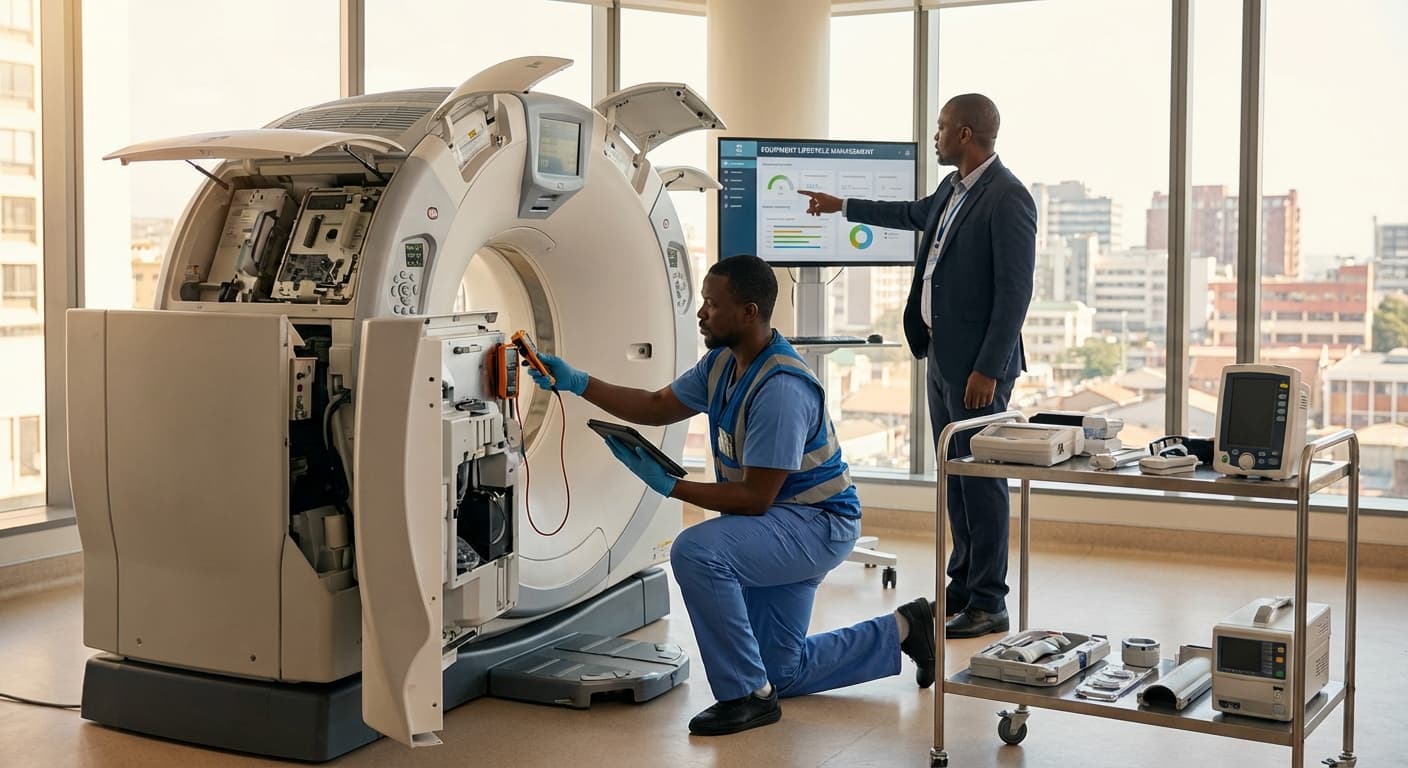
Equipment Replacement Planning & Obsolescence Strategy Service in Niger
Engineering Excellence & Technical Support
Equipment Replacement Planning & Obsolescence Strategy Service High-standard technical execution following OEM protocols and local regulatory frameworks.
Predictive Lifecycle Analytics
Leveraging advanced data analytics and AI to forecast equipment lifespan, identify critical obsolescence points, and generate optimized replacement schedules tailored to Niger's operational environment and resource availability.
Supply Chain Risk Mitigation
Developing robust obsolescence management strategies that proactively identify and mitigate risks associated with long lead times, limited local supplier availability, and geopolitical factors impacting spare parts and new equipment procurement in Niger.
Integrated Maintenance & Replacement Roadmaps
Creating comprehensive, phased roadmaps that seamlessly integrate planned maintenance activities with strategic equipment replacement, ensuring minimal operational disruption and maximizing asset utilization throughout Niger's evolving infrastructure landscape.
What Is Equipment Replacement Planning & Obsolescence Strategy Service In Niger?
Equipment Replacement Planning & Obsolescence Strategy Service in Niger is a specialized offering designed to assist organizations in proactively managing the lifecycle of their critical assets, focusing on timely replacement and mitigating the risks associated with technological obsolescence. This service encompasses a comprehensive assessment of existing equipment, analysis of operational requirements, forecasting of future needs, and the development of strategic roadmaps for asset renewal. It aims to optimize capital expenditure, minimize operational disruptions, enhance performance, and ensure compliance with evolving industry standards and regulations within the Nigerien context.
| Who Needs This Service? | Typical Use Cases | ||||||
|---|---|---|---|---|---|---|---|
| Organizations with significant capital investments in physical equipment, across various sectors operating in Niger. | The energy sector (oil & gas, power generation and distribution) requiring continuous operation and high-reliability equipment. | Telecommunications companies managing extensive networks and subscriber-facing infrastructure. | Manufacturing and industrial facilities relying on machinery for production processes. | Mining and resources operations with specialized and heavy-duty equipment. | Government agencies and public utilities responsible for critical infrastructure (e.g., water treatment, transportation). | Large agricultural enterprises utilizing advanced machinery and technology. | Any entity seeking to proactively manage asset lifecycles and avoid costly emergency replacements or operational failures. |
| Planning for the replacement of aging power transformers or generators to prevent blackouts. | Developing a roadmap for upgrading outdated mobile network base stations to support new generation technologies (e.g., 4G/5G). | Strategizing the replacement of worn-out production lines in a factory to maintain output and quality. | Assessing and planning for the renewal of drilling or processing equipment in a mining operation. | Forecasting the need for new water pumps or filtration systems in a municipal water supply network. | Determining the optimal time to replace agricultural machinery to maximize yield and minimize downtime during harvest seasons. | Managing the end-of-life for critical IT infrastructure such as servers, storage, and network devices. | Evaluating the obsolescence of safety systems or control equipment to ensure regulatory compliance and operational integrity. |
What this Service Involves:
- Asset Inventory and Condition Assessment: Cataloging all existing equipment, evaluating its current operational status, performance metrics, and remaining useful life (RUL).
- Obsolescence Risk Analysis: Identifying equipment at risk of becoming obsolete due to technological advancements, lack of spare parts, or unsupported software/firmware.
- Life Cycle Costing (LCC) Analysis: Evaluating the total cost of ownership for assets, including acquisition, operation, maintenance, and eventual disposal costs.
- Demand Forecasting and Capacity Planning: Projecting future operational needs and required equipment capacities to inform replacement decisions.
- Technology Trend Monitoring: Staying abreast of emerging technologies and industry best practices relevant to the organization's sector in Niger.
- Replacement Strategy Development: Formulating prioritized plans for equipment renewal, considering factors like criticality, ROI, and budget constraints.
- Vendor and Supplier Assessment: Evaluating the reliability and availability of vendors and suppliers for new equipment and support services within Niger or the West African region.
- Budgetary Planning and Financial Modeling: Developing financial projections and securing funding for planned replacement initiatives.
- Implementation Roadmapping: Creating detailed plans for the phased acquisition, installation, and commissioning of new equipment.
- Disposal and Decommissioning Planning: Establishing protocols for the responsible and environmentally sound disposal of retired assets.
- Risk Management Framework: Identifying and mitigating potential risks associated with equipment failure, obsolescence, and replacement projects.
- Performance Monitoring and Optimization: Establishing metrics to track the performance of new and existing equipment and identify areas for improvement.
Who Needs Equipment Replacement Planning & Obsolescence Strategy Service In Niger?
Organizations operating in Niger, particularly those reliant on aging or complex machinery and technology, face significant risks from equipment failure and obsolescence. Proactive planning is crucial to mitigate these risks, ensure operational continuity, and optimize capital expenditure. This service is vital for sectors where downtime is costly and replacement cycles are long.
| Customer Type | Specific Needs Addressed | Why it's Crucial in Niger |
|---|---|---|
| Mining Companies | Ensuring availability of heavy machinery (e.g., excavators, crushers) and processing equipment. Managing obsolescence of specialized mining technology. | High operational costs of downtime, remote locations with limited access to spare parts and new equipment, long lead times for international procurement. |
| Telecommunications Providers | Planning for replacement of aging network infrastructure (base stations, switches) and IT hardware. Managing the obsolescence of older mobile technologies. | Criticality of service uptime for national connectivity, rapid technological advancements requiring continuous upgrades, potential challenges in importing specialized electronics. |
| Oil & Gas Operators | Maintaining and planning for the replacement of exploration, drilling, and refining equipment. Managing obsolescence of safety-critical systems and legacy control systems. | High-value assets, significant safety and environmental risks associated with equipment failure, complex supply chains, and harsh operating environments. |
| Power Utilities | Planning for the replacement of aging generation turbines, transmission lines, and distribution equipment. Managing obsolescence of control and SCADA systems. | Essential service for economic development and public welfare, potential for cascading failures, long lifespan of core infrastructure requiring structured replacement planning. |
| Large Manufacturers | Optimizing replacement cycles for production lines, machinery, and automation systems. Mitigating risks from outdated manufacturing technology. | Maintaining competitiveness, ensuring product quality, potential for reliance on imported machinery with long delivery times, limited local technical support for older equipment. |
| Government Infrastructure Agencies | Planning for the replacement of essential public infrastructure (e.g., airport equipment, water treatment plants). Managing the lifecycle of critical national assets. | Public safety, long-term national development, budgetary constraints requiring careful investment planning, potential for bureaucratic procurement processes. |
Target Customers & Departments in Niger
- {"items":["Mining and Extractive Industries","Oil and Gas Exploration and Production","Telecommunications","Energy and Utilities (Power Generation, Water Treatment)","Manufacturing and Industrial Production","Transportation and Logistics (Airports, Railways, Ports)","Agriculture and Agribusiness (Large-scale mechanization)","Healthcare (Hospitals with critical medical equipment)","Government Agencies (Infrastructure, Defense, Public Services)"],"heading":"Key Industries & Sectors"}
- {"items":["Operations/Production","Maintenance and Engineering","Procurement and Supply Chain","Finance and Capital Planning","IT/Technology","Asset Management","Risk Management","Strategic Planning"],"heading":"Typical Departments Benefiting"}
Equipment Replacement Planning & Obsolescence Strategy Service Process In Niger
This document outlines the Equipment Replacement Planning & Obsolescence Strategy Service process for clients in Niger. This structured workflow ensures efficient planning and execution of equipment lifecycle management, addressing potential obsolescence and optimizing capital expenditure.
| Stage | Description | Key Activities | Deliverables | Responsible Party |
|---|---|---|---|---|
| Initial contact and understanding of the client's specific requirements, current equipment inventory, and business objectives related to replacement and obsolescence. | Client inquiry, initial consultation, identification of scope and objectives, understanding of regulatory context in Niger. | Needs assessment report, preliminary scope document. | Client, Service Provider Sales/Consulting Team |
| Development and presentation of a tailored service proposal based on the needs assessment, followed by contract finalization. | Proposal creation, cost estimation, service level agreement (SLA) definition, contract negotiation and signing. | Detailed service proposal, signed contract/Statement of Work (SOW). | Service Provider Consulting Team, Client Procurement/Legal |
| Gathering comprehensive data on existing equipment, maintenance records, performance metrics, vendor support, and market trends for obsolete items. | Inventory audit (on-site or remote), review of maintenance logs, performance data extraction, vendor interviews, market research on replacement options and obsolescence timelines, consideration of local availability and support in Niger. | Equipment inventory database, performance analysis report, obsolescence risk assessment, cost-benefit analysis of replacement options. | Service Provider Technical Team, Client Operations/Maintenance Staff |
| Formulating a strategic plan for equipment replacement and obsolescence management, including prioritization, budget allocation, and risk mitigation. | Development of replacement schedules, identification of critical equipment for early replacement, formulation of obsolescence avoidance strategies, recommendation of phased vs. immediate replacement, consideration of local sourcing and integration challenges. | Equipment Replacement Plan, Obsolescence Management Strategy Document, Risk Mitigation Plan, Budgetary Recommendations. | Service Provider Strategy & Consulting Team |
| Detailed planning for the execution of the developed strategy, including procurement timelines, installation schedules, and training requirements. | Development of detailed project plans, vendor selection criteria, procurement process definition (including local procurement considerations in Niger), installation logistics, change management plan, training needs assessment. | Detailed Project Implementation Plan, Procurement Strategy, Training Plan. | Service Provider Project Management Team, Client Project Lead |
| Procurement of new equipment and execution of replacement activities according to the implementation plan. | Vendor bidding and selection, contract award, equipment ordering and delivery, installation, testing and commissioning, decommissioning of old equipment, potential training delivery. | New equipment installed and operational, decommissioned old equipment, updated asset register. | Service Provider Project Management Team, Procurement Specialists, Installation Teams, Client Operations Staff |
| Ongoing tracking of the effectiveness of the implemented strategy, performance of new equipment, and identification of any emerging obsolescence issues. | Performance monitoring of new equipment, review of maintenance costs, feedback collection from users, periodic review meetings, assessment of any new obsolescence threats. | Performance review reports, updated obsolescence risk assessments, recommendations for adjustments. | Service Provider Project Management Team, Client Operations/Maintenance Staff |
| Formal conclusion of the service engagement, including final reporting and knowledge transfer. | Final project report, lessons learned documentation, handover of all project documentation, post-implementation review, final invoicing. | Final Project Report, Lessons Learned Document, Signed Project Acceptance. | Service Provider Project Management Team, Client Project Lead |
Workflow Stages
- Inquiry & Needs Assessment
- Proposal & Agreement
- Data Collection & Analysis
- Strategy Development
- Implementation Planning
- Execution & Procurement
- Monitoring & Review
- Project Closure
Equipment Replacement Planning & Obsolescence Strategy Service Cost In Niger
Estimating the cost of Equipment Replacement Planning & Obsolescence Strategy services in Niger involves considering a variety of factors that influence pricing. These services are crucial for businesses to maintain operational efficiency, avoid costly breakdowns, and mitigate risks associated with outdated or unsupported equipment. The pricing will depend on the scope of the project, the complexity of the equipment inventory, the level of detail required in the strategy, and the expertise of the service provider. Local currency pricing in Niger is typically done in the West African CFA franc (XOF).
| Service Scope/Complexity | Estimated Price Range (XOF) |
|---|---|
| Basic Equipment Inventory Assessment (High-level overview of key assets, identification of immediate obsolescence risks) | 300,000 - 800,000 XOF |
| Standard Equipment Replacement Planning (Detailed analysis of a moderate equipment inventory, development of a 3-5 year replacement roadmap, basic obsolescence mitigation) | 800,000 - 2,500,000 XOF |
| Comprehensive Obsolescence Strategy & Replacement Planning (In-depth analysis of a large or complex inventory, detailed risk assessment, multi-year phased replacement plans, vendor benchmarking, integration considerations, advanced obsolescence mitigation strategies) | 2,500,000 - 7,000,000+ XOF |
| Add-on: Specialized Obsolescence Threat Analysis (e.g., cybersecurity risks, regulatory compliance) | 500,000 - 1,500,000 XOF per specialized area |
| Add-on: Vendor Selection & Procurement Support | 10% - 20% of equipment procurement value, or a fixed fee based on complexity |
| Add-on: On-site Audits & Data Collection (per day/week) | 100,000 - 300,000 XOF (plus travel expenses) |
Key Pricing Factors for Equipment Replacement Planning & Obsolescence Strategy Services in Niger:
- Scope of Service: A comprehensive assessment of all equipment versus a focus on critical assets. This includes the number of assets to be evaluated, the types of equipment (e.g., IT, industrial machinery, vehicles), and the geographical spread of operations.
- Complexity of Equipment Inventory: The diversity and interconnectedness of the equipment. Complex systems with many dependencies will require more in-depth analysis and thus higher costs.
- Data Availability and Quality: The ease of accessing reliable data on equipment history, maintenance logs, purchase dates, and manufacturer support. If significant data collection and cleansing are required, it will increase the service cost.
- Level of Detail in the Strategy: The desired granularity of the replacement plan. This can range from high-level recommendations to detailed, phased implementation plans with specific vendor proposals and budget allocations.
- Obsolescence Risk Assessment: The depth of analysis into potential obsolescence risks, including technological advancements, regulatory changes, and supply chain disruptions affecting spare parts and maintenance.
- Market Research and Benchmarking: The extent to which market research is needed to identify suitable replacement equipment, compare vendors, and establish industry best practices.
- Integration with Existing Systems: The need to integrate the replacement plan with existing enterprise resource planning (ERP) or asset management systems.
- Provider's Expertise and Reputation: Experienced and reputable consultants or firms may command higher fees due to their proven track record and specialized knowledge.
- Project Timeline: Urgent projects requiring expedited services may incur additional charges.
- Travel and On-site Requirements: If the service provider needs to conduct on-site assessments or engage with stakeholders across different locations in Niger, travel and accommodation costs will be factored in.
- Reporting and Deliverables: The complexity and format of the final reports and presentations.
- Post-Implementation Support: Whether the service includes ongoing monitoring, review, and adjustments to the strategy.
Affordable Equipment Replacement Planning & Obsolescence Strategy Service Options
Our Affordable Equipment Replacement Planning & Obsolescence Strategy Service empowers your organization to proactively manage asset lifecycles, mitigate risks associated with outdated technology, and optimize capital expenditures. We provide tailored solutions to ensure your operations remain efficient and competitive by making informed decisions about equipment upgrades and replacements.
| Cost-Saving Strategy | Description | Impact on Replacement Planning & Obsolescence |
|---|---|---|
Our Service Value Bundles
- {"title":"Essential Planning Bundle","features":["Initial Asset Inventory & Categorization","Basic Obsolescence Risk Assessment","High-Level Replacement Timeline","Standardized Reporting Template"],"description":"Ideal for organizations seeking foundational replacement planning. Includes an initial asset inventory assessment, basic obsolescence risk identification, and a high-level replacement roadmap.","price_point":"Entry-Level"}
- {"title":"Optimized Strategy Bundle","features":["Detailed Asset Lifecycle Analysis","Obsolescence Risk Mitigation Strategies","Cost-Benefit Analysis for Replacements","Funding & Budgeting Recommendations","Customizable Reporting & Dashboards"],"description":"A comprehensive package for proactive lifecycle management. Builds upon the Essential bundle with detailed analysis, cost-benefit evaluations, and strategic recommendations for replacement timing and funding.","price_point":"Mid-Tier"}
- {"title":"Proactive Lifecycle Management Bundle","features":["All features of the Optimized Strategy Bundle","Ongoing Obsolescence Monitoring & Alerts","Predictive Maintenance & Replacement Forecasting","Procurement Process Integration Support","Regular Strategic Reviews & Adjustments"],"description":"Our most advanced offering, designed for organizations prioritizing long-term asset health and continuous improvement. Includes ongoing monitoring, predictive analytics, and integration with procurement processes.","price_point":"Premium"}
Verified Providers In Niger
When seeking healthcare services in Niger, prioritizing 'Verified Providers' is paramount for ensuring quality, safety, and ethical medical care. This certification signifies that healthcare professionals and facilities have met rigorous standards of competence, ethical conduct, and operational excellence. Franance Health, a prominent organization in the healthcare sector, plays a crucial role in establishing and maintaining these verification processes. Their credentials represent a commitment to the highest standards, making their verified providers the best choice for your health needs.
| Credential/Standard | Description | Benefit to Patient |
|---|---|---|
| Licensure and Certification Review | Verification of current and valid professional licenses and certifications. | Ensures providers meet basic legal and professional requirements for practice. |
| Education and Training Verification | Confirmation of academic qualifications and specialized training. | Guarantees that providers have the foundational knowledge and specific skills needed. |
| Professional Experience Assessment | Evaluation of past work experience and clinical practice history. | Indicates a track record of practical application of medical knowledge. |
| Adherence to Ethical Codes | Review of commitment to professional ethics and patient rights. | Ensures respectful, confidential, and patient-centered care. |
| Quality and Safety Protocols | Assessment of facility and practice protocols for patient safety and quality of care. | Reduces risks and ensures effective medical interventions. |
| Continuing Professional Development (CPD) | Evidence of ongoing learning and skill enhancement. | Ensures providers stay updated with the latest medical advancements. |
Why Franance Health Verified Providers are the Best Choice:
- Rigorous Vetting Process: Franance Health employs a comprehensive and multi-faceted vetting process that goes beyond basic licensing. This includes scrutinizing educational backgrounds, professional experience, ongoing training, and adherence to ethical guidelines.
- Commitment to Patient Safety: Verified providers have demonstrated a strong commitment to patient safety through adherence to established protocols, infection control measures, and quality improvement initiatives.
- Upholding Ethical Standards: Franance Health ensures that their verified providers uphold the highest ethical standards in patient care, including informed consent, confidentiality, and respectful treatment.
- Access to Competent Professionals: By choosing a Franance Health verified provider, you are assured of accessing healthcare professionals who possess the necessary skills, knowledge, and expertise to address your medical concerns effectively.
- Enhanced Trust and Reliability: The 'Verified Provider' status acts as a mark of trust and reliability, giving patients peace of mind knowing they are receiving care from qualified and reputable individuals and institutions.
- Promoting Continuous Improvement: Franance Health's verification process often includes elements that encourage continuous professional development and adherence to evolving best practices in healthcare.
- Facilitating Informed Decisions: Franance Health's verification system empowers patients to make informed decisions about their healthcare by clearly identifying providers who meet established quality benchmarks.
Scope Of Work For Equipment Replacement Planning & Obsolescence Strategy Service
This Scope of Work (SOW) outlines the services to be provided for Equipment Replacement Planning and Obsolescence Strategy. The objective is to develop a comprehensive plan and strategy to proactively manage equipment lifecycles, mitigate risks associated with obsolescence, and optimize capital expenditure for future equipment investments. The services will encompass data gathering, analysis, strategy development, and the creation of actionable roadmaps. Technical deliverables will include detailed reports, asset registers, risk assessments, and strategic recommendations, all adhering to established industry standards and best practices for asset management and lifecycle planning.
| Deliverable Name | Description | Standard Specifications/Format | Key Information Included |
|---|---|---|---|
| Current State Equipment Assessment Report | A comprehensive report detailing the existing equipment inventory, condition, age, maintenance history, and performance data. | Microsoft Word (.docx) or PDF format. Data can be provided in Excel (.xlsx) for detailed asset registers. | Asset ID, Manufacturer, Model, Serial Number, Installation Date, Current Condition Rating, Maintenance Costs (last X years), Performance Metrics, End-of-Life (EOL) dates (if available). |
| Obsolescence Risk Assessment & Prioritization Matrix | Identifies equipment and components at high risk of obsolescence, assessing the potential impact on operations and proposing mitigation strategies. | Microsoft Excel (.xlsx) or PDF format. Visualizations (e.g., heatmaps) are encouraged. | Equipment/Component Name, Risk Level (High, Medium, Low), Potential Impact (Operational, Safety, Cost), Obsolescence Driver (e.g., manufacturer support, component availability), Recommended Mitigation Actions, Priority Level. |
| Equipment Replacement Plan (Multi-Year) | A detailed, phased plan for replacing critical equipment over a defined period (e.g., 5-10 years), including budget forecasts. | Microsoft Excel (.xlsx) or PDF format. Can include Gantt chart visualizations. | Replacement Year, Equipment/Asset Tag, Recommended Replacement Equipment (or category), Estimated Cost (CAPEX), Justification (e.g., EOL, performance improvement, risk reduction), Dependencies, Funding Source (proposed). |
| Obsolescence Management Strategy Document | A strategic framework outlining how to proactively manage obsolescence, including processes for monitoring, forecasting, and managing end-of-life components. | Microsoft Word (.docx) or PDF format. | Obsolescence monitoring processes, forecasting methodologies, spare parts management strategy for obsolete items, alternative sourcing strategies, vendor management for obsolescence, training requirements. |
| Standardization Recommendations Report | Analysis and recommendations for standardizing equipment types, manufacturers, and critical components to simplify maintenance and procurement. | Microsoft Word (.docx) or PDF format. | Current standardization levels, proposed standardized equipment/components, benefits of standardization (cost savings, efficiency), implementation roadmap, impact on existing inventory. |
| Executive Summary & Roadmap Presentation | A high-level overview of findings, key recommendations, and a visual roadmap for implementing the replacement and obsolescence strategies. | Microsoft PowerPoint (.pptx) or PDF format. | Key findings, primary risks and opportunities, strategic recommendations, implementation roadmap with key milestones and ownership, high-level budget overview. |
Key Objectives of the Service
- Develop a robust understanding of the current equipment inventory and its condition.
- Identify and assess critical equipment and components at risk of obsolescence.
- Define clear criteria for equipment replacement based on technical, economic, and strategic factors.
- Create a multi-year equipment replacement plan aligned with business objectives and budgetary constraints.
- Formulate a proactive obsolescence management strategy to mitigate risks and ensure continuity of operations.
- Provide recommendations for standardization, inventory management, and technology adoption.
- Establish a framework for ongoing monitoring and updating of the replacement and obsolescence strategy.
Service Level Agreement For Equipment Replacement Planning & Obsolescence Strategy Service
This Service Level Agreement (SLA) outlines the guaranteed response times and uptime for the Equipment Replacement Planning & Obsolescence Strategy Service. This service is designed to proactively manage the lifecycle of client equipment, ensuring timely replacements and mitigating risks associated with obsolescence.
| Service Component | Response Time Guarantee (Business Hours) | Uptime Guarantee (Monthly) |
|---|---|---|
| Initial Consultation & Assessment (New Client) | 48 Hours | N/A |
| Obsolete Equipment Identification & Reporting | 7 Business Days (for scheduled reports) | N/A |
| Replacement Planning & Strategy Report Generation | 10 Business Days (after data provision) | N/A |
| Urgent Query/Escalation Support (System Critical Impact) | 4 Business Hours | N/A |
| Platform Availability (for data access and reporting) | N/A | 99.5% |
Service Objectives
- To provide clients with actionable insights into their current and future equipment needs.
- To minimize the financial and operational impact of equipment obsolescence.
- To ensure that critical equipment is replaced or upgraded before it becomes unreliable or unsupported.
- To optimize capital expenditure related to equipment lifecycle management.
Frequently Asked Questions

Ready when you are
Let's scope your Equipment Replacement Planning & Obsolescence Strategy Service in Niger project in Niger.

Scaling healthcare logistics and technical systems across the entire continent.