
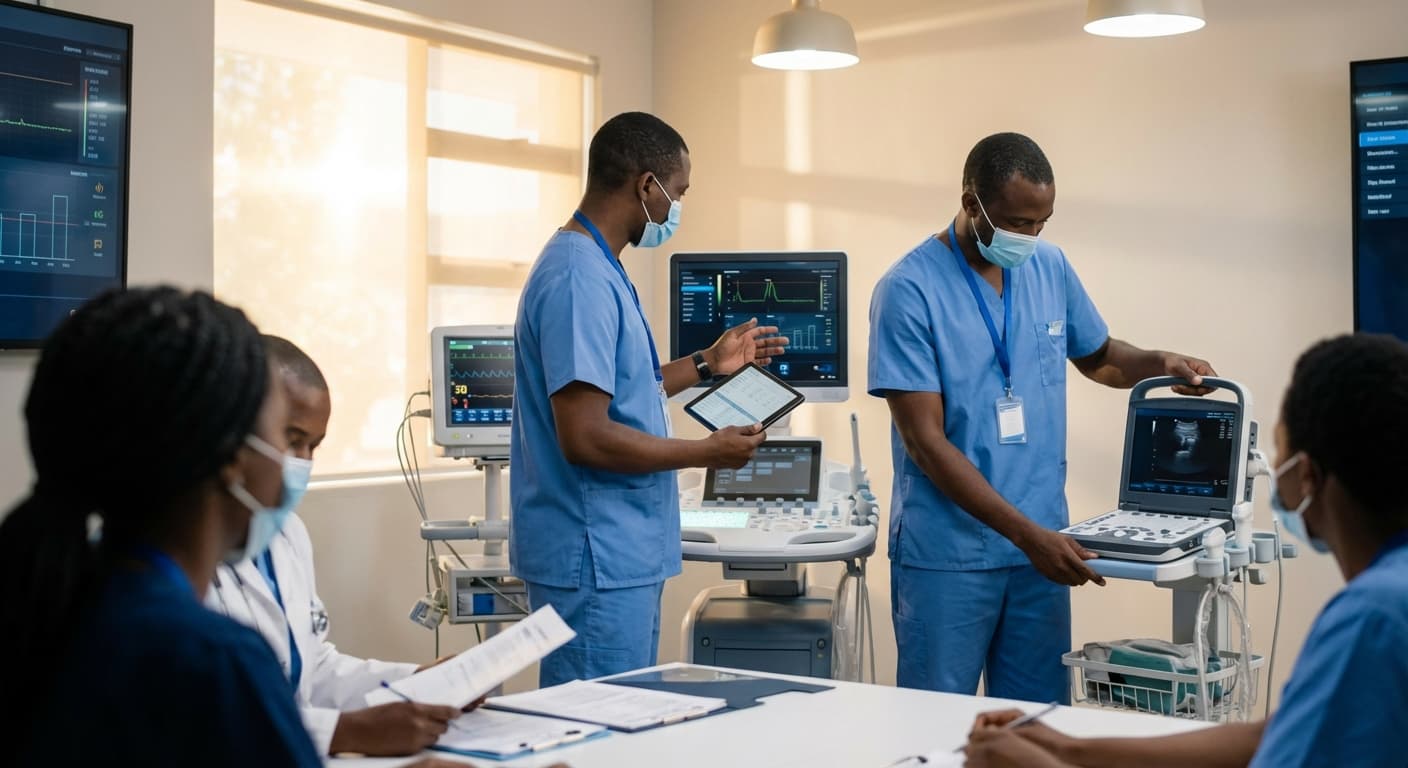
Clinical Needs Assessment for Medical Equipment in Niger
Engineering Excellence & Technical Support
Clinical Needs Assessment for Medical Equipment High-standard technical execution following OEM protocols and local regulatory frameworks.
Community Health Worker Empowerment
Leveraging mobile-based data collection tools and visual aids to empower community health workers in remote areas of Niger to conduct accurate needs assessments for essential medical equipment, bridging the gap between local realities and national healthcare planning.
Geospatial Mapping of Healthcare Gaps
Utilizing GIS technology to map existing healthcare infrastructure, population density, and disease prevalence across Niger, enabling targeted identification of underserved regions and the precise equipment needs for improved access to medical services.
Data-Driven Equipment Prioritization Framework
Developing a robust, multi-criteria decision analysis framework that integrates epidemiological data, cost-effectiveness, and local maintenance capacity to objectively prioritize medical equipment procurement and deployment strategies in Niger.
What Is Clinical Needs Assessment For Medical Equipment In Niger?
A Clinical Needs Assessment for Medical Equipment in Niger is a systematic process designed to identify, quantify, and prioritize the medical equipment requirements of healthcare facilities within the country. This service involves a comprehensive evaluation of existing infrastructure, human resource capacity, patient demographics, disease prevalence, and the current state of medical technology. The objective is to ensure that healthcare providers have access to appropriate, functional, and sustainable medical equipment to deliver effective and quality patient care, aligning with national health strategies and public health priorities. The assessment considers factors such as maintenance capabilities, user training, power availability, and integration with existing workflows to promote long-term sustainability and optimal utilization of resources.
| Who Needs Clinical Needs Assessment for Medical Equipment in Niger? | Typical Use Cases |
|---|---|
| Government Ministries of Health (e.g., Ministry of Public Health, Population and Social Affairs): To inform national health infrastructure development plans, budget allocations, and procurement strategies. Essential for ensuring equitable distribution of resources and addressing public health emergencies. | Developing national medical equipment procurement plans. Formulating national strategies for health technology management. Responding to disease outbreaks or public health crises. Guiding infrastructure development and renovation projects. |
| International Non-Governmental Organizations (INGOs) and Humanitarian Aid Agencies: To identify critical equipment needs for specific projects, emergency response, or long-term development initiatives. Crucial for targeted interventions and effective resource deployment. | Planning for the establishment or upgrading of healthcare facilities in specific regions. Determining essential equipment for emergency medical missions. Supporting the implementation of health programs (e.g., maternal and child health, infectious disease control). Assessing equipment needs for post-conflict or disaster recovery efforts. |
| Local Healthcare Providers (Hospitals, Health Centers): To understand their current equipment status, identify deficiencies, and advocate for necessary upgrades or replacements. Empowers facilities to articulate their needs based on direct patient care requirements. | Requesting funding or donations for specific equipment. Justifying the need for new technology or replacement of obsolete equipment. Developing internal maintenance and replacement schedules. Optimizing the utilization of existing equipment. |
| Development Banks and Funding Institutions: To assess the feasibility and impact of potential investments in the healthcare sector. Provides evidence-based justification for financial aid and loan programs. | Evaluating the need for financing large-scale hospital construction or renovation. Assessing the impact of equipment procurement on health outcomes for loan programs. Ensuring that funded projects are technically sound and sustainable. |
| Medical Equipment Manufacturers and Suppliers: To understand the specific demands and specifications of the Nigerien market. Facilitates the development of relevant products and service offerings. | Tailoring product lines to meet identified clinical needs. Developing appropriate pricing and service models. Identifying opportunities for partnerships and local representation. |
Key Components of a Clinical Needs Assessment for Medical Equipment in Niger:
- Facility-level assessment (hospitals, health centers, specialized clinics)
- Review of patient caseload and service utilization statistics
- Analysis of disease burden and epidemiological data
- Inventory and condition assessment of existing medical equipment
- Evaluation of technical infrastructure (power, water, ventilation)
- Assessment of human resource capacity for operation and maintenance
- Identification of gaps in essential medical equipment and technology
- Prioritization of equipment based on clinical impact and urgency
- Consideration of local repair and maintenance infrastructure
- Development of procurement recommendations with technical specifications
- Planning for user training and capacity building
- Integration with national health policies and procurement frameworks
Who Needs Clinical Needs Assessment For Medical Equipment In Niger?
A comprehensive clinical needs assessment for medical equipment in Niger is crucial for a range of healthcare stakeholders. This process ensures that the acquisition of medical devices is strategic, cost-effective, and aligned with the actual demands of patient care. The focus is on optimizing resource allocation, improving service delivery, and ultimately enhancing health outcomes for the Nigerien population.
| Target Customer/Department | Specific Needs & Focus Areas | Key Equipment Categories |
|---|---|---|
| Hospitals (Public and Private) | Comprehensive diagnostic and treatment capabilities, emergency care, surgical procedures, advanced patient monitoring, laboratory services. | Imaging (X-ray, Ultrasound, CT), Anesthesia machines, Ventilators, Surgical instruments, ICU equipment, Hematology/Chemistry analyzers, Dialysis machines. |
| Health Centers (District, Rural, Urban) | Primary healthcare services, maternal and child health, basic diagnostics, essential treatment, emergency stabilization. | Vital signs monitors, ECG machines, basic diagnostic kits, minor surgical equipment, infant incubators, oxygen concentrators. |
| Specialized Clinics (Maternity, Pediatrics, Diagnostics) | Focused care for specific patient groups, advanced diagnostic tools relevant to their specialty. | Obstetric ultrasound, fetal monitors, neonatal incubators, pediatric ventilators, specialized laboratory equipment (e.g., for TB, malaria testing), endoscopes. |
| NGOs in Healthcare Delivery | Equipment for outreach programs, mobile clinics, specific disease control initiatives, and training. | Portable diagnostic tools, basic life support equipment, consumables for specific treatments, training simulators. |
| Ministry of Public Health | Epidemiological surveillance, national health programs, training initiatives, referral system support, procurement planning. | Data management systems, laboratory equipment for national testing, training equipment for health professionals, communication devices. |
| Training Institutions | Equipment for hands-on training of doctors, nurses, technicians, and other healthcare professionals. | Manikins, simulators, basic diagnostic equipment, anatomical models, laboratory equipment for educational purposes. |
Target Customers & Departments
- Hospitals (Public and Private)
- Health Centers (District, Rural, Urban)
- Specialized Clinics (e.g., maternity, pediatrics, diagnostics)
- Non-Governmental Organizations (NGOs) involved in healthcare delivery
- Ministry of Public Health and its regional directorates
- Training Institutions for healthcare professionals
Clinical Needs Assessment For Medical Equipment Process In Niger
This document outlines the workflow for conducting a clinical needs assessment for medical equipment in Niger, ensuring that procured equipment aligns with the actual healthcare demands and resource availability. The process begins with an initial inquiry and culminates in the execution of recommendations, involving multiple stakeholders to guarantee a comprehensive and effective outcome.
| Stage | Key Activities | Responsible Parties | Deliverables | Timeline (Indicative) |
|---|---|---|---|---|
| Formal request for a needs assessment received (e.g., from Ministry of Health, NGOs). Initial consultation to define the scope, geographical focus, and specific healthcare sectors/levels (primary, secondary, tertiary) to be assessed. | Requesting Entity, Ministry of Health (MoH) Representatives, Lead Assessor | Scope of Assessment Document, Initial Project Plan | 1-2 Weeks |
| Review existing health statistics, disease burden reports, national health strategies, and current service delivery challenges. Engage stakeholders to identify critical unmet needs and prioritize areas for the assessment. | Assessor Team, MoH Officials, Healthcare Facility Managers, Community Leaders | Prioritized List of Healthcare Needs, Key Areas for Assessment | 2-3 Weeks |
| Conduct site visits to healthcare facilities. Interview healthcare professionals, administrators, and patients. Collect data on existing equipment inventory, maintenance status, user feedback, patient flow, and service utilization. Analyze collected data to understand current capacity and demand. | Assessor Team, Healthcare Professionals, Facility Staff | Facility Assessment Reports, Data Analysis Summary | 4-6 Weeks |
| Compare identified needs with existing infrastructure, equipment, and human resources. Determine the specific types, quantities, and technical specifications of medical equipment required. Consider factors like sustainability, local context, and maintenance capacity. | Assessor Team, Technical Specialists (e.g., biomedical engineers) | Gap Analysis Report, Detailed Equipment Requirements List (Specifications, Quantities) | 3-4 Weeks |
| Present preliminary findings and equipment recommendations to stakeholders for feedback and validation. Ensure consensus on the identified needs and proposed solutions. Consult with potential donors and funding agencies. | Assessor Team, MoH, Healthcare Facility Representatives, NGOs, Potential Donors | Validated Needs Assessment Report, Stakeholder Consultation Minutes | 2-3 Weeks |
| Compile all findings into a comprehensive needs assessment report. Formulate clear, actionable recommendations for equipment procurement, including justification, estimated costs, and proposed implementation strategies. | Assessor Team, Lead Assessor | Final Clinical Needs Assessment Report, Procurement Recommendations | 2-3 Weeks |
| Develop detailed procurement plans based on the recommendations. Identify potential funding sources (government budget, international aid, NGOs). Initiate fundraising and proposal development where necessary. | MoH Procurement Unit, Project Management Team, Funding Agencies | Procurement Plan, Funding Proposals, Secured Funding Commitments | Ongoing (dependent on funding availability) |
| Execute procurement processes according to established regulations and the recommendations. Oversee the acquisition, delivery, installation, and initial testing of the procured medical equipment. | MoH Procurement Unit, Procurement Service Providers, Suppliers, Installation Technicians | Procured and Installed Medical Equipment, Installation Certificates | Variable (dependent on lead times and logistics) |
| Provide comprehensive training to healthcare professionals on the operation, maintenance, and troubleshooting of the newly acquired equipment. Build local capacity for ongoing technical support and repairs. | Suppliers/Manufacturers, Training Institutions, MoH Technical Staff | Trained Personnel, Training Materials, Capacity Building Reports | Ongoing (post-installation) |
| Implement a system for ongoing monitoring of equipment utilization, performance, and maintenance. Conduct periodic evaluations to assess the impact of the procured equipment on service delivery and patient outcomes. Feedback loop for future assessments. | MoH Monitoring & Evaluation Unit, Healthcare Facilities, Assessor Team (for follow-up) | Performance Monitoring Reports, Impact Evaluation Studies, Lessons Learned | Ongoing |
Clinical Needs Assessment Workflow for Medical Equipment in Niger
- Inquiry and Scoping
- Needs Identification and Prioritization
- Data Collection and Analysis
- Gap Analysis and Requirements Definition
- Validation and Consultation
- Report Generation and Recommendation Formulation
- Procurement Planning and Funding
- Equipment Procurement and Installation
- Training and Capacity Building
- Monitoring and Evaluation
Clinical Needs Assessment For Medical Equipment Cost In Niger
A thorough clinical needs assessment for medical equipment in Niger is crucial for ensuring effective healthcare delivery while managing costs. The pricing of medical equipment in Niger, as in many developing nations, is influenced by a complex interplay of factors. These include import duties and taxes, transportation and logistics costs (especially given Niger's landlocked status and infrastructure challenges), local market demand and competition, the availability of after-sales service and spare parts, and the specific brand and model of the equipment. Furthermore, the sourcing strategy – whether through direct import, local distributors, or international aid organizations – significantly impacts the final price. Understanding these variables is essential for accurate budgeting and procurement. Local currency, the West African CFA franc (XOF), is used for all transactions, and prices can fluctuate based on exchange rates with major international currencies like the US Dollar and Euro.
| Equipment Category | Typical Local Currency (XOF) Price Range (Estimates) | Notes on Range |
|---|---|---|
| Basic Diagnostic Tools (e.g., Stethoscope, Sphygmomanometer, Thermometer) | 5,000 - 50,000 XOF | Highly variable based on brand quality and digital vs. manual. |
| Laboratory Equipment (e.g., Microscope, Centrifuge, Basic Hematology Analyzer) | 500,000 - 15,000,000 XOF | Depends heavily on automation level and throughput. |
| Imaging Equipment (e.g., Portable Ultrasound, X-ray Machine - basic) | 5,000,000 - 50,000,000 XOF | Ultrasound is more accessible; X-ray costs are higher due to infrastructure and maintenance needs. |
| Surgical Instruments (Basic Sets) | 50,000 - 500,000 XOF | Varies by material quality and comprehensiveness of the set. |
| Patient Monitoring Systems (Basic) | 1,000,000 - 10,000,000 XOF | Factors include number of parameters monitored and brand. |
| Sterilization Equipment (e.g., Autoclave - medium size) | 1,000,000 - 5,000,000 XOF | Capacity and type (steam, chemical) influence price. |
| Emergency/Resuscitation Equipment (e.g., Defibrillator - manual) | 2,000,000 - 8,000,000 XOF | AEDs can be cheaper but manual defibrillators are more common in resource-limited settings. |
Key Pricing Factors for Medical Equipment in Niger
- Import Duties and Taxes
- Transportation and Logistics Costs
- Local Market Demand and Competition
- Availability of After-Sales Service and Spare Parts
- Brand and Model Specificity
- Sourcing Strategy (Direct Import vs. Local Distributors vs. Aid)
- Exchange Rate Fluctuations (USD/EUR to XOF)
Affordable Clinical Needs Assessment For Medical Equipment Options
This document outlines an approach to conducting affordable clinical needs assessments for medical equipment, focusing on value bundles and cost-saving strategies. A thorough assessment ensures that procured equipment aligns with clinical requirements, enhances patient care, and optimizes resource utilization. By understanding true needs rather than pursuing the latest technology, healthcare providers can make more informed and financially sound decisions. This involves a collaborative process with clinical staff, IT, procurement, and finance departments.
| Strategy | Description | Cost-Saving Impact |
|---|---|---|
| Value Bundles | Procuring multiple related pieces of equipment or services (e.g., equipment, training, maintenance contracts, consumables) from a single vendor or in a package deal. | Reduces negotiation complexity, potential for bulk discounts, and streamlined vendor management. Can lock in favorable pricing for longer periods. Ensures compatibility and integrated support. |
| Phased Procurement | Acquiring equipment in stages based on priority and budget availability, rather than attempting to purchase everything at once. | Spreads capital expenditure over time, allowing for better cash flow management. Provides flexibility to adapt to changing needs or new technologies as they emerge. Minimizes risk of over-investment in underutilized assets. |
| Leasing vs. Purchasing | Evaluating whether leasing equipment offers financial advantages over outright purchase, especially for rapidly evolving technologies or equipment with high maintenance costs. | Lower upfront capital outlay. Predictable monthly payments. Options for upgrades or returns at the end of the lease term. Can include maintenance and service in lease payments, simplifying budgeting. |
| Refurbished or Pre-owned Equipment | Considering high-quality, certified refurbished equipment from reputable vendors, particularly for non-critical applications or when budget is a significant constraint. | Significant reduction in initial purchase price compared to new equipment. Often comes with warranties and performance guarantees. Requires careful vetting of vendors and equipment condition. |
| Standardization | Adopting a limited range of equipment models and manufacturers across departments or the entire facility where clinically appropriate. | Simplifies training, maintenance, and inventory management. Allows for bulk purchasing discounts. Reduces spare parts inventory needs. Enhances inter-operability and workflow efficiency. |
| Negotiation and Competitive Bidding | Actively engaging in negotiation with vendors and utilizing competitive bidding processes to secure the best possible pricing and terms. | Drives down acquisition costs. Encourages vendors to offer their most competitive proposals. Ensures transparency and fairness in the procurement process. |
| Consumables Management | Strategically sourcing consumables, often through value bundles or preferred vendor agreements, to manage ongoing operational costs. | Reduces recurring expenses. Can lead to better pricing through volume commitments. Ensures availability and quality of essential supplies. |
| Service and Maintenance Contracts | Negotiating comprehensive service and maintenance contracts that align with usage and risk tolerance, potentially as part of a value bundle. | Predictable maintenance costs. Minimizes downtime through proactive service. Can offer extended warranties, further protecting investment. |
Key Stages of an Affordable Clinical Needs Assessment
- Define Clinical Objectives: Clearly articulate the desired patient outcomes and service improvements.
- Identify Current Equipment Gaps: Assess existing equipment inventory, performance, and limitations.
- Analyze Workflow and Usage Patterns: Understand how equipment is used in daily practice to determine essential features and quantities.
- Research Available Technologies: Explore market options that meet identified clinical needs, considering various manufacturers and models.
- Evaluate Total Cost of Ownership (TCO): Go beyond the initial purchase price to include maintenance, consumables, training, and potential obsolescence.
- Engage Stakeholders: Solicit input from clinicians, technicians, and administrators throughout the process.
- Develop a Prioritized Equipment List: Rank needs based on clinical impact, urgency, and budget constraints.
Verified Providers In Niger
In Niger, access to reliable healthcare services is paramount. Franance Health stands out as a leading provider, distinguished by its rigorous credentialing process and commitment to quality care. This verification ensures that all healthcare professionals and facilities associated with Franance Health meet stringent standards of expertise, ethics, and patient safety. Choosing a verified provider like Franance Health offers peace of mind and guarantees that you are receiving care from competent and trustworthy professionals.
| Credentialing Aspect | Franance Health's Approach | Benefit to Patients |
|---|---|---|
| Education & Training | Verification of degrees, certifications, and specialized training from accredited institutions. | Ensures providers possess the foundational knowledge and skills required for effective treatment. |
| Licensure & Certification | Confirmation of current and valid medical licenses and professional certifications. | Guarantees providers are legally authorized to practice and have met professional standards. |
| Professional Experience | Thorough review of past work history, including areas of practice and duration. | Confirms practical experience and the ability to handle various medical situations. |
| Peer Review & References | Collection of feedback and references from other healthcare professionals. | Provides an objective assessment of a provider's performance and collegiality. |
| Background Checks | Comprehensive checks for any disciplinary actions or criminal history. | Prioritizes patient safety and ethical practice by ensuring a clean record. |
| Continuous Professional Development (CPD) | Mandatory participation in ongoing training and educational activities. | Ensures providers stay updated with the latest medical advancements and techniques. |
Why Franance Health Credentials Represent the Best Choice:
- Rigorous Vetting Process: Franance Health employs a multi-stage credentialing system that scrutinizes the educational background, licensure, professional experience, and ethical conduct of all its providers.
- Commitment to Excellence: Our credentials go beyond basic requirements, focusing on providers who demonstrate a commitment to continuous learning, patient-centered care, and adherence to best medical practices.
- Enhanced Patient Safety: Verification significantly reduces the risk of medical errors and ensures that patients are treated by qualified individuals who have met recognized standards of competence.
- Access to Specialized Expertise: Franance Health's network includes a diverse range of specialists, all meticulously vetted, ensuring you can find the right care for your specific needs.
- Trust and Transparency: Our transparent credentialing process builds trust between patients and providers, fostering a more positive and effective healthcare experience.
- Adherence to International Standards: We align our credentialing practices with recognized international healthcare benchmarks, ensuring a globally competitive standard of care.
Scope Of Work For Clinical Needs Assessment For Medical Equipment
This Scope of Work (SOW) outlines the requirements for conducting a comprehensive clinical needs assessment for medical equipment for [Healthcare Facility Name/Project Name]. The primary objective is to identify, prioritize, and specify the medical equipment necessary to support current and future clinical services, ensuring optimal patient care, operational efficiency, and adherence to regulatory standards. This SOW details the technical deliverables and standard specifications required for the successful completion of this assessment.
| Technical Deliverable | Description | Format/Standard |
|---|---|---|
| Clinical Needs Assessment Report | A comprehensive document detailing the findings of the assessment, including current equipment inventory, gap analysis, departmental needs, and prioritized recommendations. This report will serve as the foundational document for subsequent procurement activities. | Written report (PDF, Word), Executive Summary (PDF) |
| Equipment Specification Documents | Detailed technical specifications for each identified piece of medical equipment. This includes functional requirements, performance metrics, safety features, compatibility requirements, user interface needs, and maintenance considerations. | Structured document template (Word, Excel), adhering to industry best practices for medical equipment specification |
| Procurement Recommendations | Prioritized list of recommended medical equipment for procurement, including justification for each item based on clinical need, impact, and potential return on investment. May include preliminary cost estimates. | Table format (Excel, PDF) |
| Gap Analysis Matrix | A matrix illustrating the identified gaps between current equipment and required equipment, categorized by department, clinical service, or equipment type. | Matrix format (Excel, PDF) |
| Risk Assessment Summary (Equipment Related) | Identification and assessment of risks associated with existing equipment (e.g., obsolescence, maintenance issues) and potential risks associated with new equipment procurement (e.g., integration challenges, training needs). | Written summary (PDF, Word) |
| Training and Implementation Plan Outline | A high-level outline of anticipated training needs for clinical staff and technical personnel, and a preliminary plan for the integration and implementation of new equipment. | Outline format (Word, PDF) |
Key Objectives
- To accurately identify the existing medical equipment inventory and assess its current condition, utilization, and relevance.
- To determine the current and projected clinical needs across all relevant departments and service lines.
- To identify gaps in existing medical equipment provision relative to clinical requirements and best practices.
- To define specific technical requirements, functionalities, and performance standards for new and replacement medical equipment.
- To provide recommendations for equipment procurement, including prioritization based on clinical impact, cost-effectiveness, and strategic alignment.
- To ensure compliance with all relevant national and international medical device regulations, safety standards, and quality benchmarks.
Service Level Agreement For Clinical Needs Assessment For Medical Equipment
This Service Level Agreement (SLA) outlines the guaranteed response times and uptime for the Clinical Needs Assessment service provided for medical equipment. This service is critical for ensuring that healthcare facilities acquire and utilize medical equipment that optimally meets their clinical requirements and operational efficiency.
| Service Component | Response Time (Business Hours) | Uptime Guarantee |
|---|---|---|
| Initial Consultation & Scoping | Within 2 business days of request | N/A (On-demand service) |
| Data Collection & Analysis | Within 5 business days of receiving required data from Client | N/A (Project-based) |
| Draft Report Submission | Within 10 business days of completing data analysis | N/A (Project-based) |
| Final Report Delivery | Within 3 business days of receiving client feedback on the draft report | N/A (Project-based) |
| Technical Support & Clarifications (Post-Delivery) | Within 1 business day for critical inquiries, 2 business days for non-critical inquiries | N/A (On-demand post-delivery support) |
| Platform/Tool Availability (if applicable for collaboration) | 99.5% Uptime during Service Availability hours | 99.5% |
Scope of Service
- Definition of Clinical Needs Assessment: A comprehensive process involving the evaluation of current and future clinical demands, patient populations, technological advancements, and budget constraints to determine the appropriate medical equipment specifications.
- Key Deliverables: A detailed report outlining recommended equipment, justification, implementation timelines, and training requirements.
- Service Availability: The service will be available during standard business hours, Monday to Friday, 8:00 AM to 5:00 PM Local Time, excluding public holidays.
- Escalation Procedures: Clear pathways for escalating urgent requests or critical issues.
Frequently Asked Questions

Ready when you are
Let's scope your Clinical Needs Assessment for Medical Equipment in Niger project in Niger.

Scaling healthcare logistics and technical systems across the entire continent.