
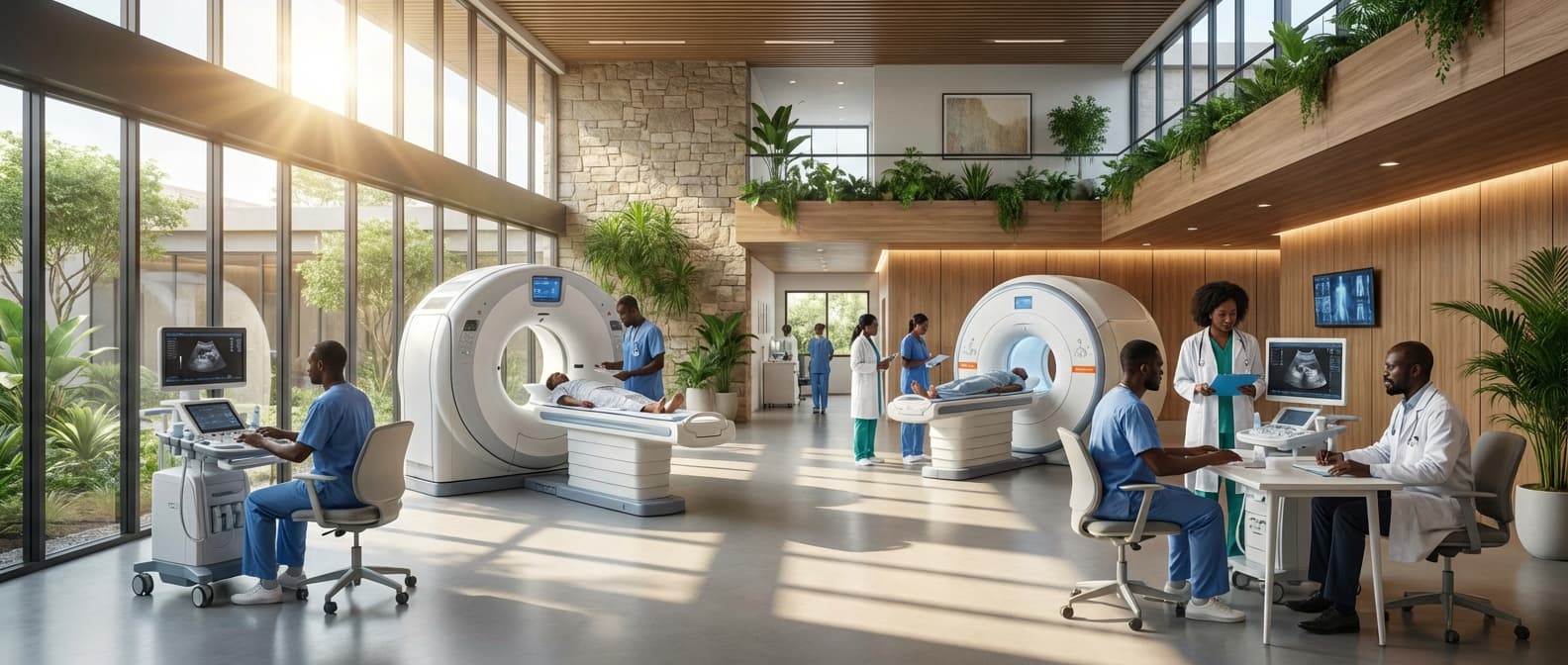
Diagnostic Imaging in Niger
Engineering Excellence & Technical Support
High-resolution imaging systems including CT scanners, MRI, X-ray, and ultrasound technology for accurate clinical diagnosis. High-standard technical execution following OEM protocols and local regulatory frameworks.
Mobile X-ray Units for Remote Outreach
Deployment of mobile X-ray units to provide essential diagnostic imaging services to underserved rural communities, significantly improving early detection rates for tuberculosis and other common respiratory illnesses where fixed facilities are inaccessible.
Portable Ultrasound for Maternal & Child Health
Introduction of portable ultrasound devices for antenatal care and pediatric diagnostics in primary healthcare centers. This enables crucial screenings for pregnancy complications and infant health issues, reducing maternal and child mortality in remote areas.
Digital Radiography Integration & PACS Implementation
Transitioning from analog to digital radiography systems and implementing a Picture Archiving and Communication System (PACS). This enhances image quality, reduces radiation exposure, facilitates remote consultations with specialists, and improves workflow efficiency in regional hospitals.
What Is Diagnostic Imaging In Niger?
Diagnostic imaging in Niger refers to the use of various medical technologies to create visual representations of the interior of the body for the purpose of clinical analysis and medical intervention. These imaging modalities allow healthcare professionals to visualize internal structures, identify abnormalities, and diagnose a wide range of conditions. The service is crucial for accurate diagnosis, treatment planning, and monitoring of patient progress in a healthcare system with limited resources, where the prevalence of certain diseases and the availability of specialized equipment necessitate efficient and targeted diagnostic approaches.
| Who Needs Diagnostic Imaging? | Typical Use Cases |
|---|---|
| Patients presenting with symptoms indicative of internal pathology (e.g., pain, swelling, fever, neurological deficits). | Diagnosis of fractures and bone abnormalities (Radiography). |
| Individuals undergoing routine health screenings or monitoring of chronic conditions. | Evaluation of pregnancy and fetal development (Ultrasound). |
| Patients suspected of having infections, tumors, or inflammatory processes affecting internal organs. | Assessment of abdominal organs (liver, kidneys, spleen) and the urinary tract (Ultrasound, CT). |
| Trauma victims requiring rapid assessment of internal injuries. | Diagnosis of stroke, brain tumors, and spinal cord conditions (CT, MRI). |
| Patients with suspected cardiovascular disease or vascular abnormalities. | Identification and staging of cancers (CT, MRI). |
| Individuals requiring pre-operative planning or post-operative follow-up. | Evaluation of chest conditions such as pneumonia and tuberculosis (Radiography). |
| Those with conditions requiring detailed visualization of soft tissues, joints, or the brain. | Monitoring the effectiveness of treatment and disease progression. |
Diagnostic Imaging Modalities in Niger
- Radiography (X-ray): Utilizes ionizing radiation to produce images of bones, lungs, and other dense structures. It is a fundamental imaging technique widely available in many healthcare facilities.
- Ultrasound (Sonography): Employs high-frequency sound waves to generate real-time images of soft tissues, organs, and blood flow. It is non-invasive, portable, and particularly useful for obstetrics, gynecology, abdominal imaging, and vascular studies.
- Computed Tomography (CT) Scan: Generates cross-sectional images of the body by combining multiple X-ray projections. It provides detailed anatomical information and is valuable for evaluating trauma, stroke, cancer, and complex anatomical regions.
- Magnetic Resonance Imaging (MRI): Uses strong magnetic fields and radio waves to create highly detailed images of soft tissues, organs, and the central nervous system. While less commonly available than X-ray and ultrasound due to cost and infrastructure requirements, it is indispensable for specific neurological, musculoskeletal, and oncological evaluations.
Who Needs Diagnostic Imaging In Niger?
Diagnostic imaging plays a crucial role in modern healthcare, enabling early detection, accurate diagnosis, and effective treatment planning. In Niger, a country facing significant healthcare challenges, understanding who needs diagnostic imaging and within which departments it is most critical is vital for resource allocation and service improvement. This document outlines the primary beneficiaries and the key departments that would benefit from enhanced diagnostic imaging capabilities.
| Patient Group/Condition | Primary Imaging Modality | Key Departments Involved |
|---|---|---|
| Fractures/Dislocations | X-ray | Orthopedics, Emergency Department |
| Trauma (Internal Injuries) | Ultrasound, CT Scan (if available) | Emergency Department, General Surgery |
| Pneumonia/Tuberculosis | X-ray | Pulmonology, Internal Medicine |
| Abdominal Pain (e.g., Appendicitis) | Ultrasound, X-ray, CT Scan (if available) | General Surgery, Internal Medicine, Emergency Department |
| Stroke/Head Injury | CT Scan (if available), Ultrasound (for carotid arteries) | Neurology, Emergency Department |
| High-Risk Pregnancy | Ultrasound | Obstetrics and Gynecology |
| Cardiovascular Issues | Echocardiography (Ultrasound of the heart) | Cardiology, Internal Medicine |
Target Customers & Departments for Diagnostic Imaging in Niger
- {"items":["Patients with suspected fractures or dislocations: Essential for orthopedic care.","Patients with suspected internal injuries from trauma (accidents, violence): Crucial for emergency medicine and surgery.","Patients with respiratory illnesses (e.g., pneumonia, tuberculosis, lung nodules): Vital for pulmonology and infectious disease management.","Patients with abdominal pain or suspected organ abnormalities (e.g., gallstones, appendicitis, tumors): Key for general surgery, gastroenterology, and internal medicine.","Patients with suspected neurological conditions (e.g., stroke, brain tumors, head injuries): Critical for neurology and neurosurgery.","Pregnant women with high-risk pregnancies or complications: Essential for obstetrics and gynecology.","Patients with suspected cardiovascular diseases (e.g., enlarged heart, fluid around the heart): Important for cardiology and internal medicine.","Patients requiring pre-operative assessment: To identify potential risks and plan surgical procedures.","Patients undergoing follow-up care for chronic conditions: To monitor disease progression and treatment effectiveness."],"title":"Target Customers (Patient Groups)"}
- {"items":["Emergency Department (ED): For rapid assessment of trauma, acute abdominal pain, and other life-threatening conditions.","Orthopedics Department: For diagnosing and managing bone and joint injuries.","General Surgery Department: For evaluating intra-abdominal pathology, pre-operative planning, and post-operative monitoring.","Internal Medicine Department: For diagnosing a wide range of conditions affecting various organ systems.","Pulmonology/Respiratory Department: For diagnosing and managing lung diseases.","Neurology Department: For evaluating neurological disorders and injuries.","Obstetrics and Gynecology (OB/GYN) Department: For prenatal care, monitoring fetal development, and diagnosing gynecological issues.","Pediatrics Department: For diagnosing childhood illnesses and injuries.","Radiology Department: The central hub for all imaging services, requiring skilled technologists and radiologists.","Outpatient Clinics: For initial diagnosis and referral to specialized services if imaging is required."],"title":"Key Departments Benefiting from Diagnostic Imaging"}
Diagnostic Imaging Process In Niger
The diagnostic imaging process in Niger, like in many developing countries, often navigates resource constraints and infrastructure limitations. The workflow from an initial inquiry (a patient's need for an imaging study) through its execution involves several key stages, influenced by the availability of equipment, trained personnel, and the healthcare system's overall organization. This process can vary significantly between urban centers and rural areas.
| Stage | Description | Key Actors | Challenges in Niger | Potential Solutions/Improvements |
|---|---|---|---|---|
| Inquiry/Referral | A healthcare provider identifies a clinical need for diagnostic imaging based on a patient's symptoms or condition. This often involves a written referral slip. | Clinician (Doctor, Nurse, Midwife) | Lack of awareness among some primary healthcare providers about available imaging services. Inadequate referral forms or information. Long distances to imaging facilities for rural patients. | Improved training for primary healthcare workers on when and how to request imaging. Standardized referral forms with essential clinical information. Mobile outreach services or referral networks. |
| Scheduling & Patient Preparation | The patient or their caregiver contacts the imaging center to schedule an appointment. The patient receives instructions on how to prepare for the specific imaging modality (e.g., fasting for ultrasound, contrast administration instructions). | Patient/Caregiver, Receptionist/Administrative Staff | Limited appointment slots due to high demand and equipment downtime. Difficulty in communicating preparation instructions effectively to patients with lower literacy. Lack of access to necessary preparations (e.g., contrast agents). | Digital appointment systems where feasible. Clear, simple, and visual preparation instructions. Pre-appointment calls or SMS reminders. Partnerships to ensure availability of essential contrast agents. |
| Image Acquisition | The imaging study is performed using the appropriate equipment (e.g., X-ray, ultrasound, CT scanner, MRI scanner - though CT and MRI are highly concentrated in major cities). Technologists operate the equipment and position the patient. | Radiographer/Radiologic Technologist, Sonographer | Frequent equipment breakdowns and lack of maintenance. Shortage of trained radiographers and sonographers. Limited availability of advanced imaging modalities (CT, MRI) outside of major urban hospitals. Power outages affecting equipment operation. | Investment in equipment maintenance and repair. Training and retention programs for technologists. Mobile imaging units for underserved areas. Backup power generators. Tele-radiology partnerships. |
| Image Processing & Archiving | The acquired images are processed (e.g., digital enhancement, film development for older systems). Images are then archived for future reference. | Radiographer/Radiologic Technologist, IT Support (if digital) | Outdated or non-existent PACS (Picture Archiving and Communication System) in many facilities, leading to reliance on physical films. Difficulty in storing and retrieving physical films. Limited digital storage capacity. | Gradual transition to digital systems (CR/DR and PACS) where funding allows. Robust digital archiving solutions. Efficient physical film archiving systems where digital is not yet feasible. |
| Radiologist Interpretation | A qualified radiologist reviews the images, analyzes findings, and correlates them with the clinical information provided. | Radiologist | Severe shortage of radiologists in Niger, leading to long waiting times for reports or reliance on non-specialists for interpretation. Limited access to continuing medical education for radiologists. | Tele-radiology services for remote interpretation. Training and support for general practitioners to read basic imaging findings. Incentives for radiologists to work in public health facilities. |
| Report Generation & Delivery | The radiologist dictates or writes a comprehensive report detailing the findings and their interpretation. This report is then transmitted back to the referring clinician. | Radiologist, Administrative Staff | Delays in report generation and delivery due to workload and communication challenges. Inconsistent report quality. Difficulty in securely delivering reports. | Standardized reporting templates. Utilizing digital reporting and communication where possible. Establishing clear protocols for report delivery timelines. |
| Follow-up/Treatment Planning | The referring clinician uses the imaging report to confirm a diagnosis, plan further management, or monitor treatment response. | Clinician, Patient | Lack of integration between imaging reports and patient electronic health records. Difficulty for patients to access and understand reports. Challenges in coordinating follow-up imaging. | Integration of imaging reporting into EMRs. Patient education on understanding their reports. Clear referral pathways for follow-up care. |
Diagnostic Imaging Workflow in Niger
- Inquiry/Referral
- Scheduling & Patient Preparation
- Image Acquisition
- Image Processing & Archiving
- Radiologist Interpretation
- Report Generation & Delivery
- Follow-up/Treatment Planning
Diagnostic Imaging Cost In Niger
Diagnostic imaging costs in Niger can vary significantly due to several factors, making it challenging to provide a single definitive price. These factors include the type of imaging modality used, the specific medical facility (public vs. private, urban vs. rural), the complexity of the examination, and the region within Niger where the service is sought. Generally, private facilities and those in major urban centers like Niamey tend to have higher prices than public hospitals or smaller clinics in more remote areas. The availability of specialized equipment and trained personnel also plays a role. Furthermore, the cost of imported consumables and maintenance for advanced machinery can inflate prices. It's important for patients to inquire directly with healthcare providers for the most accurate and up-to-date pricing information for their specific needs. Prices are typically quoted in the local currency, the West African CFA franc (XOF).
| Imaging Modality | Estimated Price Range (XOF) | Notes |
|---|---|---|
| X-ray (Standard) | 10,000 - 30,000 | Varies by number of views and body part. More common in public facilities. |
| Ultrasound (Abdominal, Pelvic) | 15,000 - 50,000 | More common in private clinics. Pregnancy scans might have different pricing. |
| CT Scan (Head, Abdomen) | 75,000 - 150,000+ | Less common, often available in larger private hospitals. Prices can be significantly higher for more complex scans or contrast agents. |
| MRI | 150,000 - 300,000+ | Very limited availability, typically only in major private centers. Often the most expensive modality. |
| Mammography | 25,000 - 60,000 | Availability varies. Often part of specialized women's health services. |
Factors Influencing Diagnostic Imaging Costs in Niger
- Type of Imaging Modality (e.g., X-ray, Ultrasound, CT Scan, MRI)
- Type of Healthcare Facility (Public Hospital, Private Clinic, Specialized Center)
- Location of the Facility (Urban vs. Rural, Major City vs. Smaller Town)
- Complexity and Scope of the Examination
- Availability of Specialized Equipment and Personnel
- Cost of Imported Consumables and Equipment Maintenance
- Geographic Region within Niger
Affordable Diagnostic Imaging Options
Diagnostic imaging plays a crucial role in diagnosing and monitoring a wide range of medical conditions. However, the cost of these services can be a significant barrier for many patients. Fortunately, there are ways to access affordable diagnostic imaging through value bundles and various cost-saving strategies.
| Cost-Saving Strategy | Description | Key Considerations |
|---|---|---|
| Shop Around and Compare Prices | Different imaging facilities (hospitals vs. independent imaging centers) and even different locations within a network can have vastly different pricing for the same scan. Actively compare prices before scheduling your appointment. | Ensure the facility is accredited and accepts your insurance. |
| Understand Your Insurance Benefits | Familiarize yourself with your health insurance plan's coverage for diagnostic imaging. Know your deductible, copay, coinsurance, and out-of-pocket maximum. Understand if prior authorization is required. | Contact your insurance provider directly or check their online portal. |
| Negotiate Self-Pay Discounts | If you are uninsured or have a high deductible, many imaging centers offer discounted 'self-pay' rates. Don't hesitate to ask for these discounts, as they can be substantial. | Inquire about cash prices and payment plans upfront. |
| Utilize Imaging Centers Over Hospitals | Independent imaging centers are generally more cost-effective than hospital-based imaging departments for the same procedures. The overhead costs are typically lower. | Verify that your physician will accept the report from an independent imaging center. |
| Consider Advance Payment Discounts | Some facilities may offer a small discount if you pay for the service in full before the procedure. | Ask about this option when scheduling. |
| Ask About Generic vs. Brand-Name Contrast Agents | While less common for imaging, in some cases, there might be options that could impact cost. Inquire if there are any choices that don't affect the diagnostic quality. | This is a niche strategy but worth asking if you are very cost-sensitive. |
| Health Savings Accounts (HSAs) and Flexible Spending Accounts (FSAs) | Use pre-tax dollars from your HSA or FSA to pay for diagnostic imaging. This directly reduces your taxable income, lowering your overall out-of-pocket cost. | Ensure the expense is eligible and keep detailed records. |
Understanding Value Bundles in Diagnostic Imaging
- {"title":"What are Value Bundles?","description":"Value bundles, often referred to as package deals or bundled services, are pre-negotiated pricing arrangements where a group of related diagnostic imaging tests are offered together at a reduced overall cost compared to purchasing each test individually. These bundles are typically designed to cover common diagnostic pathways for specific conditions."}
- {"title":"Benefits of Value Bundles","description":"By opting for a value bundle, patients can benefit from significant cost savings, streamlined billing processes, and the convenience of having all necessary imaging for a particular diagnosis completed under one umbrella price. This predictability in cost can greatly help with budgeting for healthcare expenses."}
- {"title":"Common Examples of Value Bundles","description":"Value bundles are frequently seen for conditions like: \n- Cardiology (e.g., echocardiogram, stress test) \n- Orthopedics (e.g., X-ray, MRI for a specific joint) \n- Oncology (e.g., CT scan for staging, follow-up imaging) \n- Neurology (e.g., MRI of the brain for headaches, neurological symptoms)"}
- {"title":"How to Access Value Bundles","description":"Value bundles are often offered by imaging centers, hospitals, and sometimes through insurance providers. It's advisable to inquire directly with your healthcare provider or the imaging facility about available bundles relevant to your suspected condition."}
Verified Providers In Niger
When seeking healthcare services in Niger, identifying verified providers is paramount for ensuring quality, safety, and ethical treatment. Franance Health has established itself as a leading platform dedicated to connecting individuals with trusted and credentialed healthcare professionals. This commitment to verification offers a significant advantage, providing peace of mind and confidence in the care received.
| Credential Type | Franance Health Verification Focus | Benefit to Patient |
|---|---|---|
| Medical Degrees & Diplomas | Authenticity and legitimacy of academic qualifications | Ensures provider has foundational medical knowledge |
| Professional Licenses | Current and valid licensing in Niger | Confirms legal authorization to practice medicine |
| Specialty Certifications | Verification of advanced training and expertise in specific fields | Guarantees specialized knowledge for complex conditions |
| Continuing Medical Education (CME) | Evidence of ongoing professional development | Ensures provider stays updated with latest medical advancements |
| Reputation & Disciplinary Records | Background checks and review of professional conduct | Minimizes risk of encountering unqualified or unethical practitioners |
| Patient Testimonials & Reviews | Collection and moderation of patient feedback | Provides insights into patient experience and satisfaction |
Why Franance Health Credentials Represent the Best Choice:
- Rigorous Vetting Process: Franance Health goes beyond basic licensing. They implement a comprehensive vetting process that scrutinizes the qualifications, experience, and ethical standing of every provider on their platform. This includes verifying educational degrees, certifications, and any relevant professional accreditations.
- Specialized Expertise Confirmation: For specialized medical needs, Franance Health ensures that providers possess the necessary advanced training and experience. This means you can be confident that a surgeon is truly a board-certified surgeon, or a cardiologist has a proven track record in heart health.
- Commitment to Ethical Practices: Beyond clinical skills, Franance Health evaluates providers for their adherence to ethical medical practices and patient care standards. This helps to mitigate the risk of malpractice or unethical treatment, prioritizing patient well-being above all else.
- Continuous Monitoring and Feedback: Franance Health doesn't stop at initial verification. They maintain a system for ongoing monitoring and incorporate patient feedback, ensuring that providers consistently meet high standards and that any concerns are addressed promptly.
- Transparency and Accessibility: By clearly displaying verified credentials, Franance Health provides transparency, allowing patients to make informed decisions about their healthcare. Accessing this verified information through their platform simplifies the search for reliable medical professionals.
- Reduced Risk for Patients: The primary benefit of choosing a Franance Health verified provider is the significantly reduced risk associated with seeking medical care. Patients can trust that they are engaging with professionals who have met stringent quality and safety benchmarks.
Scope Of Work For Diagnostic Imaging
This Scope of Work (SOW) outlines the requirements for providing diagnostic imaging services. It details the technical deliverables and standard specifications expected from the service provider to ensure high-quality, accurate, and timely diagnostic imaging interpretation and reporting for [Client Name/Department]. The scope encompasses various imaging modalities, including but not limited to X-ray, CT, MRI, Ultrasound, and Nuclear Medicine. The objective is to support clinical decision-making, patient diagnosis, and treatment planning through reliable and efficient imaging services.
| Category | Description | Standard Specifications | Technical Deliverables |
|---|---|---|---|
| Imaging Modalities | Provision of diagnostic imaging services across multiple modalities. | Compliance with ACR (American College of Radiology) guidelines for all modalities. Adherence to manufacturer recommendations for equipment maintenance and calibration. Appropriate use of contrast agents according to established protocols and safety guidelines. | Digital images in DICOM (Digital Imaging and Communications in Medicine) format. Acquisition protocols optimized for diagnostic quality. Radiologist-qualified interpretation of all images. |
| Equipment and Technology | State-of-the-art imaging equipment and associated technology. | Equipment must be current generation, well-maintained, and regularly calibrated. PACS (Picture Archiving and Communication System) compliant with latest DICOM standards. Integration with existing hospital IT infrastructure. | High-resolution images. Fast image acquisition and transfer speeds. Secure remote access for authorized personnel. Data backup and disaster recovery capabilities. |
| Radiologist Interpretation and Reporting | Qualified and experienced radiologists providing interpretations and reports. | All interpreting radiologists must be board-certified or eligible. Reports must be clear, concise, and directly address the clinical question. Adherence to turnaround time (TAT) targets for different urgency levels. | Written diagnostic reports in standardized formats. Verbal consultations with referring physicians when necessary. Identification of critical findings with immediate notification protocols. Access to prior imaging reports for comparison. |
| Quality Assurance and Control | Robust QA/QC programs for all imaging services. | Regular equipment performance testing and calibration. Peer review of imaging interpretations. Monitoring of radiation dose for CT and X-ray procedures. Compliance with all relevant regulatory standards (e.g., FDA, state health departments). | QA reports demonstrating compliance. Documentation of corrective actions. Patient safety incident reporting and analysis. |
| Data Management and Security | Secure storage, retrieval, and management of all imaging data. | Compliance with HIPAA (Health Insurance Portability and Accountability Act) and other relevant data privacy regulations. Robust cybersecurity measures to protect patient data. Long-term archiving of images and reports as per retention policies. | Secure access to patient images and reports via PACS or EHR. Audit trails for all data access. Data encryption in transit and at rest. |
| Turnaround Times (TAT) | Timely delivery of imaging interpretations and reports. | Routine exams: within [e.g., 24] hours. STAT exams: within [e.g., 1] hour. Critical findings: immediate verbal notification followed by a written report within [e.g., 4] hours. Specific TATs may vary by modality and clinical urgency. | Reports delivered electronically through PACS/EHR. Notification of report availability. |
Key Objectives of Diagnostic Imaging Services
- To provide accurate and timely diagnostic imaging interpretations.
- To ensure the quality and safety of all imaging procedures.
- To maintain comprehensive and secure patient imaging records.
- To facilitate efficient integration of imaging data into the patient's electronic health record (EHR).
- To offer a comprehensive range of diagnostic imaging modalities.
- To provide clear, concise, and clinically relevant diagnostic reports.
Service Level Agreement For Diagnostic Imaging
This Service Level Agreement (SLA) outlines the guaranteed performance standards for Diagnostic Imaging services, focusing on response times for critical examinations and overall system uptime. This SLA is applicable to all diagnostic imaging services provided by [Provider Name] to [Client Name].
| Service Component | Uptime Guarantee | Response Time (Critical) | Response Time (Routine) |
|---|---|---|---|
| MRI | 99.5% | [X] minutes | [Y] hours |
| CT Scan | 99.5% | [X] minutes | [Y] hours |
| X-Ray | 99.5% | [X] minutes | [Y] hours |
| Ultrasound | 99.5% | [X] minutes | [Y] hours |
| PACS System | 99.5% | N/A | N/A |
Key Performance Indicators (KPIs)
- Uptime Guarantee: The diagnostic imaging systems will be available and operational 99.5% of the time, excluding scheduled maintenance windows.
- Response Time for Critical Examinations: Critical imaging studies (as defined in Section 2.1) will have the initial image review completed within [X] minutes of image acquisition completion.
- Response Time for Routine Examinations: Routine imaging studies will have the initial image review completed within [Y] hours of image acquisition completion.
- System Availability: All diagnostic imaging equipment and associated PACS (Picture Archiving and Communication System) will be operational and accessible to authorized users during defined service hours.
- Data Accessibility: Images and reports will be accessible through the PACS within [Z] minutes of study completion and final report generation.
Frequently Asked Questions

Ready when you are
Let's scope your Diagnostic Imaging in Niger project in Niger.

Scaling healthcare logistics and technical systems across the entire continent.