
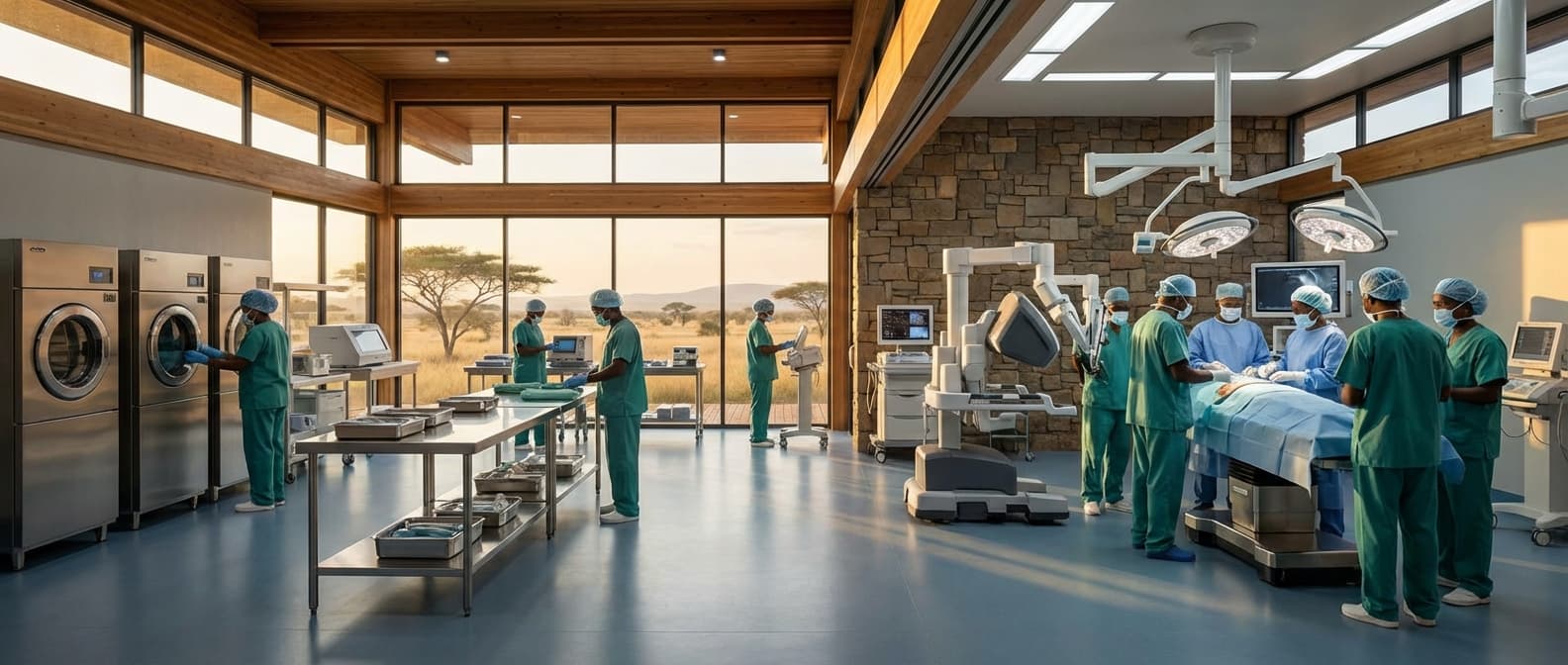
Operating Theatre Turnkey Build in Niger
Engineering Excellence & Technical Support
Complete OR design, equipment integration and commissioning High-standard technical execution following OEM protocols and local regulatory frameworks.
State-of-the-Art Operating Theatre Design
Our turnkey solutions for operating theatres in Niger are meticulously designed to meet international standards, incorporating advanced ventilation systems for infection control, optimized workflow layouts for surgical teams, and robust infrastructure to support cutting-edge medical equipment, ensuring a safe and efficient surgical environment.
Integrated Sustainable Power Solutions
Addressing potential power grid instability in Niger, our turnkey operating theatre builds integrate reliable, sustainable power solutions, including solar energy systems and backup generators, guaranteeing uninterrupted power supply critical for life-saving procedures and maintaining essential equipment functionality.
Rapid Deployment & Localized Expertise
Leveraging a streamlined project management approach and a network of experienced local engineers and technicians, we ensure rapid deployment and installation of turnkey operating theatres across Niger, facilitating swift access to advanced surgical facilities while prioritizing local capacity building and long-term operational support.
What Is Operating Theatre Turnkey Build In Niger?
An Operating Theatre Turnkey Build in Niger refers to a comprehensive service that encompasses the complete design, procurement, construction, installation, commissioning, and handover of a fully functional operating theatre (OT) suite. This integrated approach aims to deliver a ready-to-use facility, minimizing the client's involvement in the granular aspects of the project. The service typically includes not only the physical infrastructure but also the integration of specialized medical equipment, life support systems, sterilization units, and any ancillary spaces required for optimal surgical workflow.
| Stakeholder Group | Need for Turnkey Build | Typical Use Cases |
|---|---|---|
| Government Health Ministries/Agencies | Establishing or upgrading public healthcare infrastructure, ensuring standardized and high-quality surgical facilities across the nation, rapid deployment of essential services. | Building new hospitals or wings, expanding existing facilities, responding to public health emergencies requiring immediate surgical capacity. |
| Private Healthcare Providers/Hospitals | Expanding service offerings, enhancing competitiveness, ensuring compliance with international accreditation standards, optimizing operational efficiency, rapid market entry. | Establishing new private hospitals, renovating and modernizing existing surgical suites, specializing in specific surgical disciplines. |
| Non-Governmental Organizations (NGOs) & International Aid Organizations | Delivering essential medical services in resource-limited settings, providing specialized surgical interventions for specific populations, project management for humanitarian efforts. | Setting up field hospitals, establishing surgical capacity in remote or underserved areas, supporting disaster relief efforts. |
| Research and Academic Institutions | Creating state-of-the-art facilities for surgical training and research, integrating advanced technologies for clinical trials and innovation. | Developing specialized surgical training centers, establishing research-focused operating theatres with integrated imaging and data acquisition systems. |
Scope of Service
- Design and Planning: Conceptualization, architectural and engineering design, space planning, compliance with international and local building codes, infection control protocols, and HVAC system design for sterile environments.
- Procurement: Sourcing and acquisition of all construction materials, specialized OT finishes (e.g., anti-static flooring, seamless wall coatings), medical gases, lighting systems, and integrated OT equipment.
- Construction and Fit-out: Civil works, electrical and mechanical installations (including medical gas pipelines), plumbing, HVAC systems, interior finishing, installation of doors, windows, and specialized OT furniture.
- Equipment Integration: Installation and connection of major surgical equipment such as surgical lights, booms, anesthesia machines, patient monitors, electrosurgical units, and imaging modalities.
- Sterilization and Support Services: Integration of autoclaves, washer-disinfectors, and sterile supply units. Setup of pre-operative holding areas, recovery rooms, and staff changing facilities.
- Commissioning and Validation: Rigorous testing and calibration of all installed systems and equipment to ensure functionality, safety, and compliance with operational standards. This includes air quality testing, pressure differentials, and electrical safety checks.
- Training and Handover: Provision of training for hospital staff on the operation and maintenance of newly installed equipment and systems. Formal handover of the complete facility.
Who Needs Operating Theatre Turnkey Build In Niger?
Operating theatre turnkey builds are critical for healthcare facilities in Niger seeking to establish or significantly upgrade their surgical capabilities. These comprehensive solutions encompass the entire process from design and construction to equipment installation and commissioning, providing a ready-to-use, state-of-the-art surgical environment. This service is particularly valuable in regions where specialized expertise, access to advanced medical equipment, and integrated project management may be limited.
| Customer Type | Primary Need | Key Departments Benefiting |
|---|---|---|
| Public Hospitals | Modernizing outdated facilities, increasing surgical capacity, improving infection control, complying with international standards. | General Surgery, Obstetrics & Gynecology, Orthopedics, Ophthalmology, Emergency Surgery. |
| Private Hospitals and Clinics | Attracting specialized surgeons, offering advanced procedures, enhancing patient safety and outcomes, maintaining a competitive edge. | All surgical specialties, including but not limited to: Cardiology, Neurosurgery, Plastic Surgery, Urology. |
| Military Hospitals | Ensuring readiness for battlefield casualties, providing advanced care for personnel, maintaining operational efficiency. | Trauma Surgery, Orthopedics, General Surgery, Maxillofacial Surgery. |
| NGO-Operated Medical Facilities | Establishing essential surgical services in underserved areas, responding to humanitarian crises, providing specialized care for specific populations. | General Surgery, Maternal and Child Health Surgery, Emergency Medicine, Repair of congenital anomalies. |
| Teaching Hospitals and Medical Universities | Providing cutting-edge training environments for future surgeons and medical professionals, facilitating research, and offering complex patient care. | All surgical subspecialties, Research & Development areas, Simulation and Training Centers. |
| Emergency and Trauma Centers | Rapid deployment of life-saving surgical services, handling mass casualty incidents, ensuring immediate access to critical care. | Trauma Surgery, Emergency Surgery, General Surgery, Critical Care Units. |
Who Needs Operating Theatre Turnkey Build in Niger? Target Customers and Departments
- Public Hospitals (National, Regional, and District)
- Private Hospitals and Clinics
- Military Hospitals
- NGO-Operated Medical Facilities
- Teaching Hospitals and Medical Universities
- Emergency and Trauma Centers
Operating Theatre Turnkey Build Process In Niger
The turnkey operating theatre build process in Niger involves a structured workflow designed to deliver fully functional surgical suites. This process is crucial for healthcare infrastructure development, ensuring compliance with international standards and local regulations. It encompasses everything from initial client engagement to the final handover and commissioning of the operating theatre.
| Phase | Key Activities | Description | Key Deliverables/Milestones |
|---|---|---|---|
| Phase 1: Inquiry & Initial Consultation | Initial Contact, Needs Assessment, Budget Discussion | The process begins when a client (e.g., Ministry of Health, hospital administration) expresses interest. This involves understanding their specific requirements, the number of operating theatres needed, desired specialties, budget constraints, and project timeline. Site visits may be initiated for preliminary assessment. | Client Inquiry Form, Preliminary Needs Assessment Report, Initial Budget Estimate |
| Phase 2: Feasibility Study & Site Assessment | Detailed Site Survey, Regulatory Review, Risk Assessment | A comprehensive assessment of the proposed construction site is conducted, evaluating structural integrity, accessibility, utility availability (power, water, waste management), and environmental factors. Local building codes, health regulations, and import/export procedures relevant to medical equipment are reviewed. Potential risks and challenges are identified. | Detailed Site Survey Report, Feasibility Study Report, Regulatory Compliance Checklist, Risk Assessment Matrix |
| Phase 3: Design & Planning | Architectural & Engineering Design, Equipment Specification, Project Planning | Based on the needs assessment and site survey, detailed architectural, mechanical, electrical, and plumbing (MEP) designs are developed. This includes layouts, space planning, air filtration systems (e.g., HEPA filters), lighting, medical gas systems, and specialized equipment requirements. A detailed project plan with timelines, resource allocation, and budget breakdown is created. | Detailed Design Drawings (Architectural, MEP), Equipment Specifications, Bill of Quantities (BoQ), Project Schedule, Final Budget Proposal |
| Phase 4: Procurement & Manufacturing | Material Sourcing, Equipment Ordering, Manufacturing/Customization | All necessary construction materials, specialized medical equipment, and finishes are procured. This may involve local sourcing where feasible and international procurement for specialized items. Custom manufacturing or modification of equipment to fit the design specifications occurs. Strict quality control measures are implemented. | Procurement Orders Placed, Manufacturing Progress Reports, Equipment Delivery Schedule |
| Phase 5: Construction & Installation | Site Preparation, Civil Works, MEP Installation, Equipment Integration | The actual construction of the operating theatre facility takes place, including foundation, structural work, interior finishing, and installation of MEP systems. Medical equipment is then installed, integrated with the building systems, and tested for functionality. This phase is closely monitored for quality and adherence to design. | Construction Progress Reports, Installation Completion Certificates, MEP System Test Reports, Initial Equipment Functionality Tests |
| Phase 6: Commissioning & Training | System Testing, Validation, User Training, Regulatory Approvals | All systems are rigorously tested and validated to ensure they meet design specifications and performance standards (e.g., airflow rates, pressure differentials, sterile conditions). Healthcare staff and technicians are trained on the operation and maintenance of the new facility and its equipment. Necessary regulatory and health authority approvals are obtained. | Commissioning Reports, Validation Certificates, Training Manuals, Completed Training Records, Regulatory Approval Documents |
| Phase 7: Handover & Post-Completion Support | Final Inspection, Documentation, Training, Warranty, Maintenance | A final inspection is conducted with the client to ensure satisfaction and identify any minor rectifications. All project documentation, including as-built drawings, operation manuals, and warranties, is handed over. Post-completion support, including warranty services and optional maintenance contracts, is established to ensure long-term operational efficiency. | Project Handover Certificate, Final Project Documentation Package, Warranty Agreements, Maintenance Plan (if applicable) |
Operating Theatre Turnkey Build Process in Niger: Workflow from Inquiry to Execution
- Phase 1: Inquiry & Initial Consultation
- Phase 2: Feasibility Study & Site Assessment
- Phase 3: Design & Planning
- Phase 4: Procurement & Manufacturing
- Phase 5: Construction & Installation
- Phase 6: Commissioning & Training
- Phase 7: Handover & Post-Completion Support
Operating Theatre Turnkey Build Cost In Niger
The cost of a turnkey operating theatre build in Niger is highly variable, influenced by a multitude of factors that impact both the initial construction and the outfitting of sophisticated medical equipment. This analysis will delve into these pricing factors and provide estimated cost ranges in Nigerien CFA Franc (XOF). Turnkey solutions, encompassing design, construction, and complete equipment installation, offer a streamlined approach but typically come at a premium compared to phased or self-managed projects.
Key Pricing Factors:
- Size and Complexity: The square footage of the operating theatre, along with its complexity (e.g., number of integrated systems like HVAC, specialized lighting, gas lines), directly correlates with material and labor costs.
- Quality of Materials and Finishes: The choice of flooring (e.g., seamless epoxy vs. vinyl), wall finishes (e.g., anti-microbial panels vs. paint), ceiling types, and door materials will significantly affect the budget. Hospitals often opt for high-grade, durable, and easily sterilizable materials.
- Medical Equipment Sophistication: This is often the largest cost component. It includes surgical lights, anesthesia machines, ventilators, monitors, electro-surgical units, surgical instruments, imaging equipment (e.g., C-arm), and sterilization equipment. The brand, model, and features of each piece of equipment play a crucial role.
- Integrated Systems: The installation of advanced ventilation and air conditioning (HVAC) systems to maintain sterile environments (positive pressure, HEPA filtration), medical gas pipelines (oxygen, nitrous oxide, vacuum), specialized electrical systems (uninterruptible power supply - UPS, backup generators), and communication systems adds considerable expense.
- Location and Accessibility: Construction costs can vary within Niger based on the specific city or region due to differences in labor availability, material transportation costs, and local regulations. Remote locations might incur higher logistical expenses.
- Architectural and Engineering Design: The cost of professional design services, including architectural plans, structural engineering, and MEP (mechanical, electrical, and plumbing) design, is a necessary upfront investment.
- Contractor and Supplier Margins: The profit margins of the construction company, equipment suppliers, and any project management firms involved will be factored into the final price.
- Regulatory Approvals and Permits: Obtaining necessary building permits and health facility approvals can involve fees and bureaucratic processes.
- Contingency: It is prudent to include a contingency fund (typically 10-20%) to account for unforeseen issues that may arise during the construction and installation process.
- Installation and Commissioning: The labor and expertise required to install, test, and commission all medical equipment are significant cost drivers.
Estimated Cost Ranges in Nigerien CFA Franc (XOF):
It's important to note that these are broad estimates. Actual costs can fluctuate significantly. These ranges assume a standard, well-equipped operating theatre suitable for a medium-sized hospital or clinic.
For a basic, well-equipped operating theatre (excluding highly specialized imaging like MRI/CT scanners which would add substantially):
| Cost Component | Estimated Range (XOF) | Notes |
|---|---|---|
| Architectural & Engineering Design | 5,000,000 - 20,000,000 | Includes planning, blueprints, and site surveys. |
| Civil Construction & Fit-out (Basic) | 30,000,000 - 80,000,000 | Shell construction, walls, flooring, ceiling, basic electrical/plumbing infrastructure. |
| Advanced HVAC & Air Filtration (HEPA) | 15,000,000 - 40,000,000 | Crucial for sterile environments; includes specialized ducting and filtration. |
| Medical Gas Pipeline System | 8,000,000 - 25,000,000 | Installation of oxygen, vacuum, air, and nitrous oxide lines. |
| Specialized Electrical Systems (UPS, Generator) | 10,000,000 - 30,000,000 | Ensures continuous power supply during outages. |
| Surgical Lighting Systems | 7,000,000 - 25,000,000 | LED or halogen surgical lights with appropriate intensity and color rendering. |
| Anesthesia Machine & Ventilator | 10,000,000 - 30,000,000 | High-quality units with integrated monitoring capabilities. |
| Patient Monitors & Accessories | 5,000,000 - 15,000,000 | ECG, SpO2, NIBP, temperature monitors, etc. |
| Electrosurgical Unit (ESU) | 4,000,000 - 12,000,000 | For cutting and coagulation during surgery. |
| Basic Surgical Instrument Set | 3,000,000 - 10,000,000 | Essential general surgical instruments. |
| Sterilization Equipment (Autoclave) | 5,000,000 - 15,000,000 | Steam sterilizers for instruments and equipment. |
| Installation, Testing & Commissioning | 8,000,000 - 25,000,000 | Expert setup and validation of all systems and equipment. |
| Contingency (15%) | 14,000,000 - 42,000,000 | Recommended for unforeseen issues. |
| Estimated Total Turnkey Cost (Mid-Range) | 115,000,000 - 344,000,000 XOF | This is a broad estimate. Highly specialized equipment (e.g., C-arm, advanced imaging) will increase costs significantly. |
Key Factors Influencing Turnkey Operating Theatre Build Costs in Niger
- Size and Complexity of the Operating Theatre
- Quality of Construction Materials and Finishes
- Type and Sophistication of Medical Equipment
- Integration of Advanced HVAC and Medical Gas Systems
- Geographic Location and Logistical Challenges
- Professional Design and Engineering Services
- Contractor and Supplier Markups
- Permits, Licenses, and Regulatory Compliance
- Contingency for Unforeseen Expenses
- Installation, Testing, and Commissioning of Equipment
Affordable Operating Theatre Turnkey Build Options
Investing in a new operating theatre is a significant undertaking, but by exploring affordable turnkey build options, healthcare facilities can achieve state-of-the-art surgical environments without exorbitant costs. Turnkey solutions offer a streamlined, all-inclusive approach, managing every aspect from design and construction to equipment installation and commissioning. This integrated model inherently offers cost-saving benefits through coordinated project management and economies of scale. This document outlines value bundles and cost-saving strategies for affordable operating theatre turnkey builds.
| Cost-Saving Strategy | Description | Potential Impact on Cost |
|---|---|---|
| Standardized Design & Layouts | Utilizing pre-designed, proven layouts and specifications that meet regulatory requirements. This reduces custom design time and engineering fees. | Moderate to High: Reduces design complexity and accelerates project timelines. |
| Bulk Purchasing of Equipment | Negotiating with suppliers for significant discounts due to large volume orders for multiple operating theatres or as part of a larger project. | High: Can result in substantial savings on capital equipment costs. |
| Phased Build-Out | Instead of building all operating theatres at once, facilities can opt for a phased approach, building out theatres as funding becomes available or as demand increases. | Moderate: Spreads capital expenditure over time, improving cash flow. |
| Off-Site Prefabrication | Utilizing modular components or entire rooms built in a controlled factory environment. This reduces on-site labor, waste, and weather-related delays. | High: Significant reduction in on-site construction time and labor costs. |
| Value Engineering | A systematic review of designs and specifications to identify cost-saving opportunities without compromising functionality or quality. This might involve selecting alternative materials or simpler construction methods. | Moderate: Optimizes material and labor usage. |
| Experienced Turnkey Partner Selection | Choosing a provider with a proven track record of delivering affordable, high-quality operating theatre builds and strong supplier relationships. | High: Prevents costly mistakes, delays, and budget overruns. |
| Energy-Efficient Systems | Integrating energy-efficient lighting, HVAC, and other systems can reduce long-term operational costs, contributing to overall affordability. | Low to Moderate upfront, High long-term: Focuses on lifecycle cost reduction. |
| Negotiated Service & Maintenance Agreements | Bundling long-term service and maintenance contracts with the initial build can lead to preferential rates and predictable operational expenses. | Moderate: Secures predictable future costs and potential discounts. |
Understanding Value Bundles in Operating Theatre Turnkey Builds
- Core Surgical Suite Package: This foundational bundle typically includes the essential infrastructure of the operating room, such as the surgical lights, operating table, anesthesia workstation, sterile air handling units (HVAC), and basic wall and flooring finishes. It focuses on providing a fully functional, compliant surgical space.
- Advanced Imaging & Navigation Integration: Building upon the core package, this bundle incorporates integrated medical imaging systems (e.g., ceiling-mounted C-arms, digital radiography), navigation systems for minimally invasive procedures, and advanced video and communication systems for teaching and collaboration. This is ideal for specialized surgical departments.
- Robotic Surgery Ready Package: Designed for facilities adopting robotic-assisted surgery, this bundle includes enhanced structural support for robotic booms, dedicated power and data infrastructure, specialized lighting, and integrated control systems. It ensures the operating theatre is fully equipped to accommodate robotic surgical platforms.
- Modular & Pre-fabricated Solutions: Certain turnkey providers offer modular operating theatre components or even entire pre-fabricated rooms. These can be rapidly deployed and installed, significantly reducing on-site construction time and associated labor costs, making them a cost-effective and faster option.
- Customizable Design & Fit-Out: While turnkey solutions are often presented as packages, most reputable providers offer a degree of customization. This allows facilities to select specific equipment, finishes, and layouts that best suit their needs and budget, preventing the cost of unnecessary features.
- Integrated Equipment & Maintenance Contracts: Value bundles often include the purchase of all necessary medical equipment, bundled with extended warranties or service contracts. This can lead to bulk purchase discounts and predictable long-term maintenance costs.
Verified Providers In Niger
Ensuring access to reliable and ethical healthcare services is paramount. In Niger, understanding which providers are not only legitimate but also adhere to the highest standards of practice can be a challenge. This document outlines the significance of verified providers and highlights why Franance Health credentials represent the gold standard for healthcare in the region.
| Franance Health Credential | What it Signifies | Benefit to Patients | Examples of Verified Services |
|---|---|---|---|
| Accredited Medical Facilities | Demonstrates compliance with stringent standards for infrastructure, equipment, staffing, and patient care protocols. | Ensures access to safe, well-equipped facilities with trained personnel, leading to better treatment outcomes. | Hospitals, specialized clinics (e.g., maternity, diagnostics), and advanced diagnostic centers. |
| Certified Healthcare Professionals | Confirms that doctors, nurses, and specialists have valid licenses, relevant qualifications, and are in good standing with professional bodies. | Guarantees that you are being treated by qualified and competent medical practitioners. | General practitioners, surgeons, pediatricians, gynecologists, oncologists, and other specialists. |
| Specialized Program Certifications | Indicates that a provider or facility meets specific benchmarks for advanced or specialized medical services (e.g., surgical procedures, specific disease management). | Provides assurance of expertise and quality for complex medical needs. | Cardiac surgery units, cancer treatment centers, advanced diagnostic imaging departments, and fertility clinics. |
| Patient Rights and Grievance Mechanisms | Confirms the existence of clear policies and accessible channels for patients to voice concerns and seek resolution. | Empowers patients and ensures accountability, promoting a patient-centric approach to care. | Hospitals and clinics with established patient advocacy offices and transparent complaint procedures. |
| Infection Control and Safety Standards | Verifies adherence to rigorous protocols for preventing infections and ensuring a safe healthcare environment. | Minimizes the risk of healthcare-associated infections and ensures a secure treatment setting. | All accredited facilities and those participating in public health safety initiatives. |
Why Verified Providers Matter in Niger
- Patient Safety: Verified providers undergo rigorous checks, minimizing the risk of unqualified individuals or fraudulent services that could endanger patient health.
- Ethical Practice: Verification often includes adherence to ethical guidelines, ensuring respectful treatment, confidentiality, and informed consent.
- Quality of Care: Certified providers are more likely to possess the necessary qualifications, equipment, and updated knowledge to deliver effective medical care.
- Trust and Confidence: Knowing you are engaging with a verified professional builds essential trust, allowing patients to focus on their health without undue worry.
- Regulatory Compliance: Verification often signifies adherence to national and international healthcare regulations, protecting both patients and providers.
- Access to Modern Treatments: Verified institutions are more likely to invest in and offer access to up-to-date medical technologies and treatment protocols.
Scope Of Work For Operating Theatre Turnkey Build
This document outlines the Scope of Work (SOW) for the turnkey construction of an Operating Theatre (OT) suite. It details the technical deliverables and standard specifications required to ensure a fully functional, state-of-the-art surgical environment compliant with international healthcare standards.
| Category | Technical Deliverables | Standard Specifications/Requirements |
|---|---|---|
| Architectural | Room layout and dimensions, sterile corridor design, anteroom/scrub area specifications, material selection (walls, floors, ceilings), door types (interlocking, hermetic sealing), window specifications (if applicable). | Compliance with HTM (Health Technical Memorandum) or equivalent standards, seamless, non-porous, anti-microbial surfaces, adequate lighting levels, clear traffic flow. |
| HVAC & Air Filtration | Positive pressure regime for OT, HEPA filtration system design, airflow rates, temperature and humidity control, medical gas pipeline integration, air change rates per hour. | ISO 14644 Class 7 or better for OT, redundancy in filtration, energy efficiency, quiet operation, fail-safe mechanisms. |
| Electrical & Lighting | Emergency power supply (UPS, generator), medical-grade power outlets, isolated power systems, surgical lighting systems (LED, articulated arms), integrated control panels, data cabling for medical equipment. | Compliance with IEC 60601 series, dimmable lighting, shadowless illumination, adjustable color temperature, comprehensive surge protection. |
| Plumbing & Medical Gases | Medical air, oxygen, vacuum, nitrous oxide pipeline systems, sterile water supply, waste disposal systems, integrated scrub sinks, emergency shower/eyewash stations. | Compliance with ISO 7396 series, color-coded pipelines, pressure monitoring, leak testing, high-purity standards for gases. |
| Specialized OT Equipment | Surgical lights, operating tables, anesthesia machines, patient monitors, electrosurgical units, imaging equipment (e.g., C-arm), video integration systems, ceiling pendants. | Latest generation, user-friendly interfaces, compatibility with other systems, adherence to relevant medical device regulations, proper calibration and certification. |
| Acoustics | Noise reduction measures, sound insulation for walls and doors, control of noise from HVAC and equipment. | Low ambient noise levels (< 40 dBA), minimizing distractions for surgical teams and patients. |
| Infection Control | Seamless surfaces, anti-microbial coatings, adequate cleaning and disinfection protocols, waste management systems. | Minimizing microbial load, facilitating easy and effective terminal cleaning, segregated waste streams. |
| Safety & Ergonomics | Non-slip flooring, rounded corners, ergonomic design of workstations, emergency stop buttons, clear signage. | Minimizing risks of falls and injuries, optimizing workflow and comfort for staff. |
| IT & Communication | Network infrastructure, PACS integration, communication systems, nurse call systems, data security. | Reliable and secure data transmission, seamless integration with hospital IT infrastructure. |
| Commissioning & Validation | System testing, performance verification, airflow balancing, pressure testing, operational readiness checks, sterilization validation, training of staff. | Comprehensive testing against design specifications, certification by accredited bodies, documented validation reports, trained and competent staff. |
Key Project Phases
- Design & Planning
- Civil & Structural Works
- MEP (Mechanical, Electrical, Plumbing) Installations
- Specialized OT Equipment Installation
- Finishing & Commissioning
- Testing, Validation & Handover
Service Level Agreement For Operating Theatre Turnkey Build
This Service Level Agreement (SLA) outlines the expected response times and uptime guarantees for the turnkey build of an operating theatre. It aims to ensure a smooth and efficient construction process, minimizing delays and maximizing operational readiness.
| Service Component | Response Time Target | Uptime Guarantee (During Build Phase) | Definition |
|---|---|---|---|
| Critical Issue Notification | Within 2 business hours | N/A | Any issue that directly prevents further progress on a critical path activity of the build (e.g., inability to access site, major equipment failure). |
| Non-Critical Issue Notification | Within 8 business hours | N/A | Any issue that requires attention but does not immediately halt critical path activities (e.g., minor design clarification, material delivery delay). |
| Design Clarification Request | Within 4 business hours | N/A | Requests for clarification on drawings, specifications, or technical details. |
| Site Access Availability | 100% within agreed access windows | N/A | Ensuring the construction site is accessible and ready for work during scheduled hours. |
| Key Milestone Adherence | N/A | Target completion dates as per project schedule | Achieving agreed-upon project milestones within the defined timeline. |
| Material and Equipment Delivery | On-time, as per schedule | N/A | Delivery of all necessary materials and equipment to the site as planned. |
| Quality Assurance Inspections | As per schedule, with prompt resolution of findings | N/A | Completion of scheduled quality checks and addressing any identified deficiencies. |
| Post-Construction System Testing | 100% operational readiness on handover | N/A | All systems and equipment within the operating theatre functioning as per specifications upon completion. |
Key Service Level Objectives
- Prompt communication and issue resolution during the build.
- Minimizing downtime and disruptions that could impact project timelines.
- Ensuring the final operating theatre meets all specified functional and quality requirements on schedule.
Frequently Asked Questions

Ready when you are
Let's scope your Operating Theatre Turnkey Build in Niger project in Niger.

Scaling healthcare logistics and technical systems across the entire continent.