
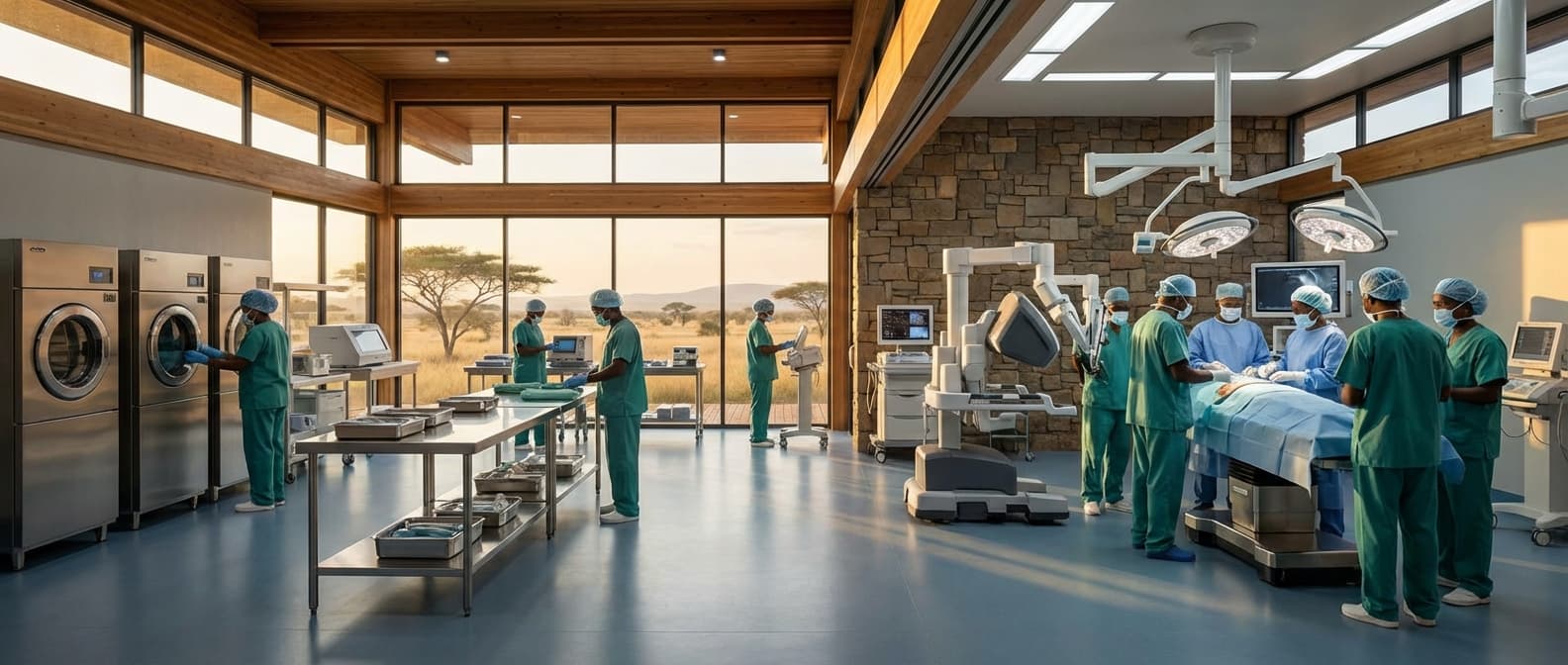
Medical Gas System Design & Installation in Niger
Engineering Excellence & Technical Support
Medical gas pipeline systems: O2, N2O, air, vacuum High-standard technical execution following OEM protocols and local regulatory frameworks.
Reliable Medical Oxygen Supply for Remote Clinics
Successfully designed and installed a robust medical oxygen generation and distribution system for a network of remote rural health clinics in Niger. This system ensures a continuous and reliable supply of life-saving oxygen, critical for treating respiratory illnesses and supporting critical care, even in areas with limited infrastructure and unreliable grid power. The design incorporates energy-efficient technology and redundant components for maximum uptime.
Integrated Medical Gas Pipeline Network for New Hospital Wing
Led the comprehensive design and installation of an integrated medical gas pipeline network for a newly constructed hospital wing in Niamey. This included high-purity medical air, oxygen, vacuum, and nitrous oxide systems, adhering to international safety and performance standards. The project involved meticulous planning for pipe routing, pressure regulation, and terminal unit integration to ensure seamless and safe delivery of gases to patient care areas, enhancing surgical and intensive care capabilities.
Specialized Nitrous Oxide System for Anesthesia Delivery
Engineered and implemented a specialized nitrous oxide (N2O) system for a major hospital's operating theaters in Agadez. This involved the safe storage, precise pressure regulation, and efficient distribution of N2O for anesthetic purposes. The design prioritizes patient safety through redundant supply lines, fail-safe alarms, and compliance with strict gas purity and handling protocols, significantly improving the quality and safety of surgical procedures.
What Is Medical Gas System Design & Installation In Niger?
Medical gas system design and installation in Niger refers to the specialized engineering and construction process of planning, developing, and implementing a network of piped medical gases within healthcare facilities. This system is critical for the safe and reliable delivery of essential gases like oxygen, medical air, nitrous oxide, vacuum, and specialized gas mixtures directly to patient care areas, operating rooms, and diagnostic suites. The service encompasses a comprehensive lifecycle from initial needs assessment and regulatory compliance to detailed schematic design, equipment specification, material procurement, precise installation, rigorous testing, commissioning, and ongoing maintenance strategy development. Adherence to international standards (e.g., NFPA 99, HTM 02-01) and local regulatory requirements is paramount to ensure patient safety, operational efficiency, and system longevity. The design phase focuses on gas source selection (e.g., bulk liquid, cylinders, concentrators), pipeline routing, pressure regulation, alarm systems, terminal unit integration, and ventilation considerations. Installation involves the meticulous layout and joining of medical-grade piping, brazing, welding, leak testing, and flushing to prevent contamination. Commissioning and validation are critical steps to verify system integrity, functionality, and purity before patient use.
| Service Element | Description | Target Audience | Typical Use Cases |
|---|---|---|---|
| Needs Assessment & Feasibility Study | Evaluating the current and future medical gas requirements of a healthcare facility, considering patient capacity, service lines, and regulatory mandates. | New hospital construction, existing facility expansion, upgrades to existing infrastructure. | Determining the optimal type and capacity of gas sources, pipeline network size, and regulatory compliance strategy. |
| System Design & Engineering | Developing detailed engineering plans, schematics, and specifications for the medical gas system, including piping layouts, equipment selection, and safety features. | Healthcare facility developers, hospital administrators, engineering consultants. | Designing for operating rooms, intensive care units (ICUs), emergency departments, recovery rooms, general wards, and specialized diagnostic areas. |
| Procurement & Material Supply | Sourcing and supplying all necessary components, including medical-grade piping, valves, regulators, alarm panels, and terminal units, compliant with relevant standards. | Contractors, facility management teams, purchasing departments. | Ensuring availability of certified materials for oxygen, medical air, vacuum, nitrous oxide, and other required gases. |
| Installation & Construction | The physical assembly and integration of the medical gas pipeline network, including brazing, welding, and connection of all system components. | Specialized medical gas installation contractors. | Routing pipelines through walls, ceilings, and service shafts; connecting gas sources, regulators, and terminal units; ensuring proper support and sealing. |
| Testing, Commissioning & Validation | Conducting rigorous tests to ensure the system's integrity, safety, and performance, including pressure, leak, and purity testing, followed by formal commissioning. | Qualified testing and commissioning engineers, regulatory bodies. | Certifying the medical gas system for safe patient use; verifying alarm functionality, pressure stability, and gas purity before handover. |
| As-Built Documentation & Training | Providing comprehensive 'as-built' drawings reflecting the final installed system and training facility staff on operation and basic maintenance. | Facility engineering departments, biomedical engineering teams, maintenance personnel. | Enabling effective troubleshooting, future modifications, and routine operational management of the medical gas system. |
| Ongoing Maintenance & Servicing | Implementing scheduled preventative maintenance, inspections, and emergency repairs to ensure continuous and safe operation of the medical gas system. | Facility management, biomedical engineering, specialized service providers. | Preventing system failures, ensuring gas purity, maintaining optimal pressure levels, and responding to alarm conditions. |
Key Components and Considerations in Medical Gas System Design & Installation:
- Gas Sources: Bulk liquid oxygen (LOX) tanks, medical air compressors, vacuum pumps, nitrous oxide cylinders/banks, specialized gas mixers.
- Piping Infrastructure: Medical-grade copper tubing (e.g., DHP copper), specialized fittings, inert gas purging during installation.
- Pressure Regulation and Control: Pressure regulators, pressure relief valves, isolation valves, shut-off valves for emergency access.
- Alarm Systems: Central and local alarms for pressure deviations, gas depletion, and system failures.
- Terminal Units: Outlets for immediate connection of medical equipment to the gas supply (e.g., DISS, NIST, international standards).
- Manifold Systems: Automated or manual switchover for backup gas sources.
- Ventilation and Exhaust Systems: For scavenging waste anesthetic gases (WAGs) and maintaining air quality.
- Regulatory Compliance: Adherence to Nigerien healthcare regulations, international safety standards (NFPA 99, HTM 02-01), and environmental protection guidelines.
- Material Selection: Use of materials certified for medical gas service to prevent contamination and ensure purity.
- Testing and Commissioning: Pressure testing, leak detection, gas purity analysis, flow rate verification, and alarm system functional checks.
- Documentation and Training: As-built drawings, operation and maintenance manuals, and training for facility staff.
- Maintenance and Monitoring: Scheduled preventative maintenance, routine inspections, and performance monitoring.
Who Needs Medical Gas System Design & Installation In Niger?
Designing and installing a robust medical gas system is crucial for healthcare facilities in Niger to ensure patient safety and the effective delivery of medical treatments. These systems are essential for a wide range of medical procedures and life support, making their proper functioning paramount. The need extends from major hospitals to specialized clinics, particularly those undertaking complex surgeries, intensive care, or emergency services.
| Customer Type | Primary Need for Medical Gases | Key Departments Involved |
|---|---|---|
| Government Hospitals | Comprehensive patient care, emergency response, and public health services. | ICU, Operating Theatres, Emergency Department, Anesthesiology, Pulmonology, Maternity/Neonatal |
| Private Hospitals | High-quality patient care, specialized treatments, and elective procedures. | Operating Theatres, ICU, Cardiology, Pulmonology, Anesthesiology, Recovery Rooms |
| University Teaching Hospitals | Advanced medical training, research, and treatment of complex conditions. | All major clinical departments, particularly ICU, Operating Theatres, Research Labs, Emergency |
| Specialized Clinics | Focused treatments for specific conditions requiring medical gases (e.g., oxygen therapy, anesthesia). | Surgical Suites, Treatment Rooms, Recovery Areas |
| Emergency Medical Services (EMS) | On-site patient stabilization and transport requiring portable oxygen and anesthetic gases. | Ambulance Bays, Paramedic Training Facilities |
| Maternity and Neonatal Units | Life support for premature infants and mothers requiring respiratory support. | Neonatal Intensive Care Unit (NICU), Labor & Delivery Rooms, Postnatal Wards |
| Intensive Care Units (ICU) | Continuous life support for critically ill patients requiring mechanical ventilation and oxygen therapy. | All areas within the ICU |
| Operating Theatres/Surgical Suites | Anesthesia, patient ventilation, and resuscitation during surgical procedures. | Pre-operative Rooms, Operating Rooms, Post-anesthesia Care Units (PACU) |
| Emergency Departments/A&E | Immediate life-saving interventions, resuscitation, and management of acute conditions. | Resuscitation Bays, Treatment Rooms, Observation Areas |
Target Customers & Departments in Niger Requiring Medical Gas System Design & Installation
- Government Hospitals
- Private Hospitals
- University Teaching Hospitals
- Specialized Clinics (e.g., cardiac, respiratory, surgical)
- Emergency Medical Services (EMS) bases
- Maternity and Neonatal Units
- Intensive Care Units (ICU)
- Operating Theatres/Surgical Suites
- Emergency Departments/Accident & Emergency (A&E)
- Anesthesiology Departments
- Pulmonology/Respiratory Care Units
- Critical Care Units
- Rehabilitation Centers (if requiring medical gases for therapy)
Medical Gas System Design & Installation Process In Niger
This document outlines the comprehensive workflow for the Medical Gas System Design & Installation process in Niger, from the initial client inquiry to the final execution and handover. The process emphasizes adherence to international standards and local regulations to ensure the highest quality and safety of medical gas supply.
| Phase | Key Activities | Deliverables | Key Stakeholders | Considerations (Niger Specific) |
|---|---|---|---|---|
| 1. Inquiry & Initial Consultation | Receive client inquiry (hospital, clinic, etc.). Conduct initial meetings to understand project scope, requirements, budget, and timeline. Discuss general needs for medical gases (oxygen, medical air, vacuum, nitrous oxide, etc.). | Initial project brief, meeting minutes, preliminary scope definition. | Client (Hospital Administration, Engineering Department), Project Manager, Sales/Business Development. | Understanding local healthcare infrastructure capacity and future expansion plans. Availability of reliable power for compressors/vacuum pumps. |
| 2. Needs Assessment & Site Survey | Detailed site visit to assess existing infrastructure, available space for plant rooms, pipeline routes, terminal units, and existing medical gas systems (if any). Measure and document all relevant areas. Identify potential challenges and constraints. | Detailed site survey report, photographic documentation, preliminary site layout sketches. | Client (Engineering Department, Clinical Staff), Project Manager, Design Engineer, Site Supervisor. | Assessment of building structure for pipeline routing. Understanding of local building codes and safety regulations. Availability of skilled labor for site work. |
| 3. Conceptual Design & Proposal | Develop a conceptual design based on the needs assessment. This includes identifying the types and quantities of medical gases required, preliminary sizing of the plant room and storage, and a general pipeline layout. Prepare a detailed technical and commercial proposal. | Conceptual design drawings, Bill of Materials (BOM) estimate, project timeline, cost estimate, proposal document. | Client, Project Manager, Design Engineer, Procurement Officer. | Sourcing of reliable and certified medical gas equipment suppliers. Understanding of import regulations and customs procedures for specialized equipment. |
| 4. Detailed Design & Engineering | Upon approval of the proposal, develop comprehensive detailed engineering designs. This includes P&ID (Piping and Instrumentation Diagrams), pipeline layouts, gas distribution network design, selection of specific equipment (compressors, vacuum pumps, manifolds, alarms, terminal units), and electrical integration. Ensure compliance with international standards (e.g., NFPA 99, ISO 7396) and any applicable local standards. | Detailed P&IDs, layout drawings, equipment specifications, electrical schematics, pressure drop calculations, alarm system design. | Design Engineer, Project Manager, Client's Technical Representative, Specialist Consultants. | Adaptation of designs to local climate conditions (e.g., heat, humidity) affecting equipment performance. Availability of qualified local engineers for review and approval. |
| 5. Procurement & Material Sourcing | Procure all necessary equipment, piping, fittings, valves, alarms, and accessories. This involves sourcing from reputable manufacturers and suppliers. Manage logistics, shipping, customs clearance, and delivery to the project site. | Procurement orders, supplier agreements, delivery schedules, customs documentation, material inspection reports. | Procurement Officer, Project Manager, Logistics Coordinator, Client's Procurement Department. | Establishing reliable supply chains for specialized medical gas components. Managing lead times for imported equipment. Navigating potential delays at customs. |
| 6. Site Preparation & Civil Works | Prepare the site for installation. This may include constructing or modifying plant rooms, creating trenches for underground pipelines, and ensuring secure mounting points for equipment. Coordinate with local contractors for civil works. | Completed civil works, prepared plant room, cleared pipeline routes, necessary permits obtained. | Site Supervisor, Civil Contractors, Project Manager, Client's Facilities Management. | Availability of local skilled labor for civil construction. Understanding of local land ownership and permitting processes. Environmental impact assessments. |
| 7. System Installation | Install all medical gas pipelines, plant equipment (compressors, vacuum pumps, purifiers), manifolds, receivers, alarms, and terminal units as per the detailed design drawings. Ensure proper welding, jointing, and support of all piping. Adhere to strict hygiene and safety protocols. | Installed piping network, mounted equipment, connected components, completed installation progress reports. | Installation Team, Site Supervisor, Project Manager, Client's Technical Team. | Ensuring qualified technicians with experience in medical gas systems. Implementing rigorous quality control during installation. Adherence to safety regulations on site. |
| 8. Testing, Commissioning & Validation | Conduct a series of tests to ensure the system's integrity, performance, and safety. This includes pressure testing, leak testing, purity testing of gases, flow rate verification, alarm functionality checks, and overall system commissioning. Validation ensures the system meets design intent and operational requirements. | Pressure test reports, leak test reports, gas purity certificates, flow rate charts, alarm test results, commissioning report, validation report. | Commissioning Engineer, Project Manager, Client's QA/QC team, Third-party validator (if required). | Availability of specialized testing equipment. Ensuring trained personnel for testing and calibration. Documentation requirements for regulatory bodies. |
| 9. Training & Handover | Provide comprehensive training to the client's clinical and engineering staff on the operation, maintenance, and safety procedures of the medical gas system. Hand over all relevant documentation, including as-built drawings, operation manuals, maintenance schedules, and test certificates. | Training materials, training attendance records, handover documentation package, signed handover certificate. | Training Specialist, Project Manager, Client's Staff (Clinical and Engineering). | Language of training materials and delivery. Cultural nuances in training delivery. Ensuring understanding of critical safety protocols. |
| 10. Post-Installation Support & Maintenance | Offer ongoing support, including routine maintenance services, emergency repairs, and spare parts supply. This ensures the long-term reliability and optimal performance of the medical gas system. | Maintenance contracts, service reports, spare parts inventory, emergency support availability. | After-Sales Service Team, Client's Facilities Management, Project Manager. | Establishing a local support presence for timely response. Availability of spare parts and trained service technicians. Long-term warranty considerations. |
Medical Gas System Design & Installation Process in Niger: Workflow
- Phase 1: Inquiry & Initial Consultation
- Phase 2: Needs Assessment & Site Survey
- Phase 3: Conceptual Design & Proposal
- Phase 4: Detailed Design & Engineering
- Phase 5: Procurement & Material Sourcing
- Phase 6: Site Preparation & Civil Works
- Phase 7: System Installation
- Phase 8: Testing, Commissioning & Validation
- Phase 9: Training & Handover
- Phase 10: Post-Installation Support & Maintenance
Medical Gas System Design & Installation Cost In Niger
Designing and installing a medical gas system in Niger involves several key pricing factors that significantly influence the overall cost. These systems are critical for healthcare facilities, ensuring the supply of essential gases like oxygen, medical air, vacuum, and nitrous oxide. The complexity of the system, the number and type of medical gases required, the size and layout of the facility, and the specific equipment chosen all play a role in determining the final price. Furthermore, the availability of specialized technicians, the cost of imported components, logistical challenges within Niger, and local regulatory requirements contribute to the pricing structure. A well-designed system not only ensures patient safety but also operational efficiency, making the initial investment a crucial consideration.
| Factor | Description | Estimated Cost Range (CFA Francs - XOF) |
|---|---|---|
| Basic System (e.g., Oxygen, Vacuum for a small clinic) | Includes essential piping, outlets, basic regulators, and cylinder connection. | 10,000,000 - 30,000,000 XOF |
| Intermediate System (e.g., Oxygen, Air, Vacuum for a medium hospital) | More extensive piping network, multiple gas lines, advanced alarm systems, and more outlets. | 30,000,000 - 70,000,000 XOF |
| Advanced System (e.g., Multiple gases including Nitrous Oxide, complex facility) | Comprehensive network for a large hospital with specialized units, sophisticated monitoring, and potentially a small on-site generation plant. | 70,000,000 - 150,000,000+ XOF |
| Oxygen Concentrator/Generator (Small to Medium Capacity) | Cost of the unit itself, installation, and initial setup. | 5,000,000 - 25,000,000 XOF |
| Medical Gas Cylinders (per unit) | Cost varies by gas type, size, and whether it's a rental or purchase. | 50,000 - 200,000 XOF (for purchase, excluding recurring rental fees) |
| Specialized Installation Labor (per day) | Rate for certified technicians, often requiring travel and accommodation. | 75,000 - 150,000 XOF |
| Importation Costs (estimated % of equipment value) | Includes duties, taxes, customs clearance, and freight. | 15% - 30% of CIF value |
Key Pricing Factors for Medical Gas Systems in Niger
- System Complexity and Design:
- Number and Type of Medical Gases:
- Facility Size and Layout:
- Equipment Selection and Quality:
- Source of Gas Supply (Cylinders vs. Centralized Plants):
- Installation Labor and Expertise:
- Import Duties and Taxes:
- Logistics and Transportation:
- Regulatory Compliance and Certification:
- Maintenance and Future Expansion Provisions:
Affordable Medical Gas System Design & Installation Options
Designing and installing a medical gas system is crucial for any healthcare facility, but it doesn't have to break the budget. Understanding various design options and cost-saving strategies is key to achieving an affordable yet compliant and reliable system. Value bundles can offer integrated solutions, while careful planning and material selection can significantly reduce overall expenses.
| Value Bundle / Cost-Saving Strategy | Description | Potential Benefits |
|---|---|---|
| Integrated Design-Build Services | A single provider handles both the design and installation phases. This often involves a comprehensive project management approach. | Streamlined communication, reduced coordination issues, potential for early cost identification, faster project completion, single point of accountability. |
| Modular System Components | Utilizing pre-fabricated modules for specific system functions (e.g., alarm panels, gas manifold systems). | Faster installation, reduced on-site labor, improved quality control, easier maintenance and upgrades, potential for standardized pricing. |
| Standardized Piping & Fittings | Opting for widely available, industry-standard medical gas piping (e.g., Type K copper) and fittings with reputable manufacturers. | Lower material costs, easier procurement, wider availability of replacement parts, reduced lead times, access to competitive pricing from multiple suppliers. |
| Phased Installation | If a new facility is being built or a major renovation is underway, consider phasing the medical gas installation in conjunction with other construction activities to minimize disruption and potentially leverage contractor availability. | Spreads out capital expenditure, allows for learning and refinement between phases, can align with construction milestones. |
| Energy-Efficient Equipment | Selecting medical air compressors and vacuum pumps that are designed for energy efficiency. | Reduced operational costs (electricity bills) over the system's lifespan, lower environmental impact. |
| Preventive Maintenance Contracts | Negotiating a comprehensive preventive maintenance contract with the installer or a specialized provider. | Avoids costly emergency repairs, extends equipment lifespan, ensures system reliability and compliance, predictable maintenance costs. |
| Bulk Purchasing of Gases | For facilities with high consumption, negotiating bulk purchase agreements for medical gases can lead to significant cost savings compared to cylinder purchases. | Lower per-unit cost of gases, reduced handling and storage logistics, increased supply chain reliability. |
| Value Engineering During Design | Actively seeking opportunities to optimize the design for cost-effectiveness without compromising safety or performance. This might involve alternative routing, valve placement, or alarm configurations. | Identifies cost-saving opportunities early in the project, ensures the most efficient use of resources, can lead to significant overall cost reductions. |
Key Considerations for Affordable Medical Gas Systems
- System Scope & Complexity: The number of medical gases required, the size of the facility, and the complexity of the distribution network directly impact cost. A simpler system with fewer gases will inherently be more affordable.
- Regulatory Compliance: Adhering to stringent standards (e.g., NFPA 99, ASSE 6000 Series) is non-negotiable, but choosing manufacturers and installers with a strong track record in compliance can prevent costly rework and delays.
- Technology & Automation: While advanced automation might have higher upfront costs, it can lead to long-term savings through improved efficiency, reduced manual intervention, and enhanced safety.
- Future Scalability: Designing for future expansion can be more cost-effective than retrofitting later. Considering modular designs or oversizing initial piping can accommodate growth without extensive disruption.
- Material Selection: The choice of piping materials (copper is standard but can vary in grade and cost), valves, and outlets can influence both initial investment and long-term maintenance expenses.
- Installation Expertise: Engaging experienced and certified medical gas installers is vital. Poor installation can lead to leaks, performance issues, and costly repairs, negating any initial cost savings.
Verified Providers In Niger
In Niger, ensuring access to reliable and high-quality healthcare is paramount. This necessitates identifying healthcare providers who are not only skilled but also adhere to stringent ethical and professional standards. Franance Health stands out as a leading credentialing body, meticulously vetting healthcare professionals and facilities across Niger. Their rigorous accreditation process guarantees that providers meet or exceed international benchmarks for patient care, safety, and operational excellence. Choosing Franance Health verified providers means opting for a level of trust, expertise, and commitment to well-being that is unmatched in the region.
| Credentialing Aspect | Franance Health Verification Process | Benefit to Patients |
|---|---|---|
| Clinical Competency | Review of medical licenses, certifications, and peer evaluations. | Ensures providers possess the necessary skills and knowledge for accurate diagnosis and effective treatment. |
| Patient Safety and Infection Control | Assessment of facility infrastructure, sterilization procedures, and adherence to safety guidelines. | Minimizes risks of hospital-acquired infections and ensures a secure treatment environment. |
| Ethical Conduct and Professionalism | Background checks and review of professional conduct records. | Guarantees providers operate with integrity and respect for patient rights. |
| Operational Efficiency | Evaluation of administrative processes, record-keeping, and resource management. | Leads to smoother patient experiences, timely appointments, and efficient service delivery. |
| Continuous Improvement | Mandatory participation in ongoing training and re-accreditation cycles. | Ensures providers stay updated with the latest medical advancements and maintain high standards over time. |
Why Choose Franance Health Verified Providers in Niger?
- Uncompromising Quality Standards: Franance Health implements a multi-faceted vetting process that examines clinical expertise, adherence to best practices, and patient safety protocols.
- Enhanced Patient Trust and Safety: Accreditation signifies a commitment to transparency and ethical conduct, providing patients with confidence in the care they receive.
- Access to Skilled Professionals: Verified providers have demonstrated their proficiency and dedication to continuous professional development.
- Regulatory Compliance: Franance Health ensures that accredited providers meet all relevant national and international healthcare regulations.
- Improved Healthcare Outcomes: By partnering with credentialed entities, patients are more likely to experience effective treatments and positive health results.
Scope Of Work For Medical Gas System Design & Installation
This Scope of Work (SOW) outlines the requirements for the comprehensive design and installation of a new Medical Gas System. The project encompasses all phases from conceptual design through to final commissioning and handover. Adherence to all relevant industry standards, codes, and regulatory requirements is mandatory. The scope includes the medical gas pipeline system (MGPS) for specified medical gases, vacuum systems, and related alarm systems.
| Technical Deliverable | Description | Standard Specification/Reference |
|---|---|---|
| System Design Report | Detailed report outlining the proposed medical gas pipeline system layout, pressure requirements, flow rates, material specifications, and safety features. Includes schematics and P&IDs. | NFPA 99, HTM 02-01, AS/NZS 2896 |
| Equipment Specifications | Detailed technical specifications for all major components including gas outlets, inlets, regulators, pressure relief valves, shut-off valves, alarm panels, and central supply equipment. | Manufacturer's Data Sheets, NFPA 99, HTM 02-01 |
| Piping and Material Specifications | Details on the type of piping (e.g., copper tubing), material grade, joining methods (brazing), and cleaning procedures for medical gas applications. | ASTM B88, NFPA 99, HTM 02-01 |
| Alarm System Design | Design of the medical gas alarm system, including pressure and flow monitoring, visual and audible alarms, and integration with building management systems (BMS) if applicable. | NFPA 99, HTM 02-01 |
| Installation Quality Plan | Procedures for ensuring the quality of installation, including pipe cleaning, brazing techniques, leak testing, and inspection protocols. | NFPA 99, HTM 02-01, Manufacturer's Installation Guidelines |
| Testing and Commissioning Plan | Detailed plan for all tests to be performed, including pressure testing, leak detection, flow rate verification, purity testing, and functional testing of alarms and valves. | NFPA 99, HTM 02-01, AS/NZS 2896 |
| Validation Report | Comprehensive report documenting the successful completion of all tests and commissioning activities, confirming the system meets all design intent and regulatory requirements. | NFPA 99, HTM 02-01, AS/NZS 2896 |
| As-Built Drawings | Accurate drawings reflecting the final installed system, including all pipe routing, valve locations, and connection points. | Project CAD Standards, NFPA 99, HTM 02-01 |
| Operations and Maintenance Manuals | User-friendly manuals for the operation and maintenance of the entire medical gas system, including troubleshooting guides and recommended maintenance schedules. | Manufacturer's Documentation, NFPA 99, HTM 02-01 |
| Training Materials | Comprehensive training materials for facility staff on the operation, maintenance, and emergency procedures for the medical gas system. | Project Specific Requirements |
Key Project Phases and Activities
- Design Development (Conceptual, Preliminary, and Detailed)
- System Specification and Equipment Selection
- Procurement of Materials and Equipment
- Installation and Integration of MGPS
- Testing, Commissioning, and Validation
- Training and Handover
- Documentation and As-Built Drawings
Service Level Agreement For Medical Gas System Design & Installation
This Service Level Agreement (SLA) outlines the guaranteed response times and uptime for the design and installation of medical gas systems. It is intended to ensure the timely and reliable delivery of critical medical gas infrastructure, minimizing disruption to healthcare operations.
| Service Component | Description | Service Level Objective (SLO) | Measurement Method | Escalation Protocol |
|---|---|---|---|---|
| Design Review Meeting Response | Acknowledgement of meeting request and proposed agenda/materials. | Acknowledge within 4 business hours. | Email confirmation timestamp. | If no acknowledgement within 4 business hours, escalate to Project Manager via phone. |
| Design Deliverable Submission | Submission of draft and final design documents. | Draft Submission: Within agreed project schedule (e.g., 2 weeks after kickoff). Final Submission: Within 5 business days of receiving client feedback on draft. | Date of file transfer. | If submission is delayed by more than 1 business day, notify client with updated timeline and reason. |
| Request for Design Clarification | Response to requests for clarification during the design phase. | Response within 1 business day. | Email timestamp. | If clarification not provided within 1 business day, escalate to Lead Designer via phone. |
| Installation Site Mobilization | Arrival of installation team on-site. | Within 2 business days of receiving notice to proceed with installation. | On-site arrival timestamp logged by Site Supervisor. | If delayed by more than 1 business day, notify client with updated mobilization date and reason. |
| Installation Progress Reporting | Regular updates on installation progress. | Weekly written reports and bi-weekly progress meetings. | Date of report submission and meeting scheduled. | If reporting is missed, notify client within 24 hours of scheduled report time. |
| Pre-Commissioning Testing | Completion of all pre-commissioning tests. | As per agreed project schedule and milestones. | Test report sign-off. | If a milestone is missed by more than 1 business day, notify client with revised timeline and corrective actions. |
| Commissioning and Handover | Completion of system commissioning and official handover. | Within agreed project schedule, no later than [Specific Date/Number of Days Post-Installation]. | Commissioning report sign-off and handover documentation date. | If handover is delayed, communicate revised handover date and reasons 48 hours in advance. |
| Emergency Response (Critical System Failure) | Immediate response to a diagnosed Critical System Failure in an operational healthcare facility. | On-site presence of a qualified technician within 4 business hours of notification. | Timestamp of technician arrival at site and initial diagnostic report. | If on-site presence is delayed beyond 4 hours, continuous phone support and communication with the client, with hourly updates. Client can escalate to Senior Management. |
| Routine Service Call (Non-Critical Issue) | Response to non-critical issues or requests for scheduled maintenance. | On-site presence within 2 business days of request, subject to technician availability. | Timestamp of technician arrival at site. | If on-site presence is delayed beyond 2 business days, provide client with a confirmed appointment within 5 business days. |
| Design Phase Uptime Guarantee | N/A (System is not operational during this phase). | N/A | N/A | N/A |
| Installation Phase Uptime Guarantee | N/A (System is under construction). | N/A | N/A | N/A |
| Post-Installation Operational Uptime Guarantee | 99.5% availability of the medical gas system during operational hours, excluding scheduled maintenance. | Calculated monthly. (Total Minutes in Month - Downtime Minutes) / Total Minutes in Month * 100%. | System monitoring logs, incident reports, and client-provided outage notifications. | If uptime falls below 99.5% for two consecutive months, a root cause analysis will be performed, and a remediation plan submitted within 10 business days. Service credits may apply as per contract. |
| Scheduled Maintenance Notification | Notification of planned maintenance activities. | Minimum of 7 days advance written notice for non-emergency scheduled maintenance. | Date of email/written notification. | If less than 7 days notice is given for non-emergency maintenance, the client reserves the right to reschedule the maintenance without penalty. |
Key Definitions
- Medical Gas System: Refers to the entire network of piping, outlets, alarms, regulators, and associated equipment used for the distribution of medical gases (e.g., oxygen, medical air, vacuum, nitrous oxide).
- Design Phase: The period during which architectural, engineering, and construction plans for the medical gas system are developed and finalized.
- Installation Phase: The period during which the medical gas system is physically constructed and commissioned.
- Critical System Failure: Any malfunction or outage of the medical gas system that renders a medical gas unusable in a patient care area or significantly compromises patient safety.
- Response Time: The maximum time allowed from the initiation of a support request (via designated channels) to the point where a qualified technician is actively engaged in diagnosing or resolving the issue.
- Uptime Guarantee: The percentage of time the medical gas system is expected to be fully operational and available for use during the operational period.
- Scheduled Maintenance: Pre-planned activities to inspect, test, and service the medical gas system to prevent failures and ensure optimal performance.
- Emergency Response: Immediate action taken to address a Critical System Failure.
- Design Review Meeting: A formal meeting to discuss and approve design proposals and changes.
- Installation Milestone: A defined stage in the installation process that must be completed by a specific date.
Frequently Asked Questions

Ready when you are
Let's scope your Medical Gas System Design & Installation in Niger project in Niger.

Scaling healthcare logistics and technical systems across the entire continent.