
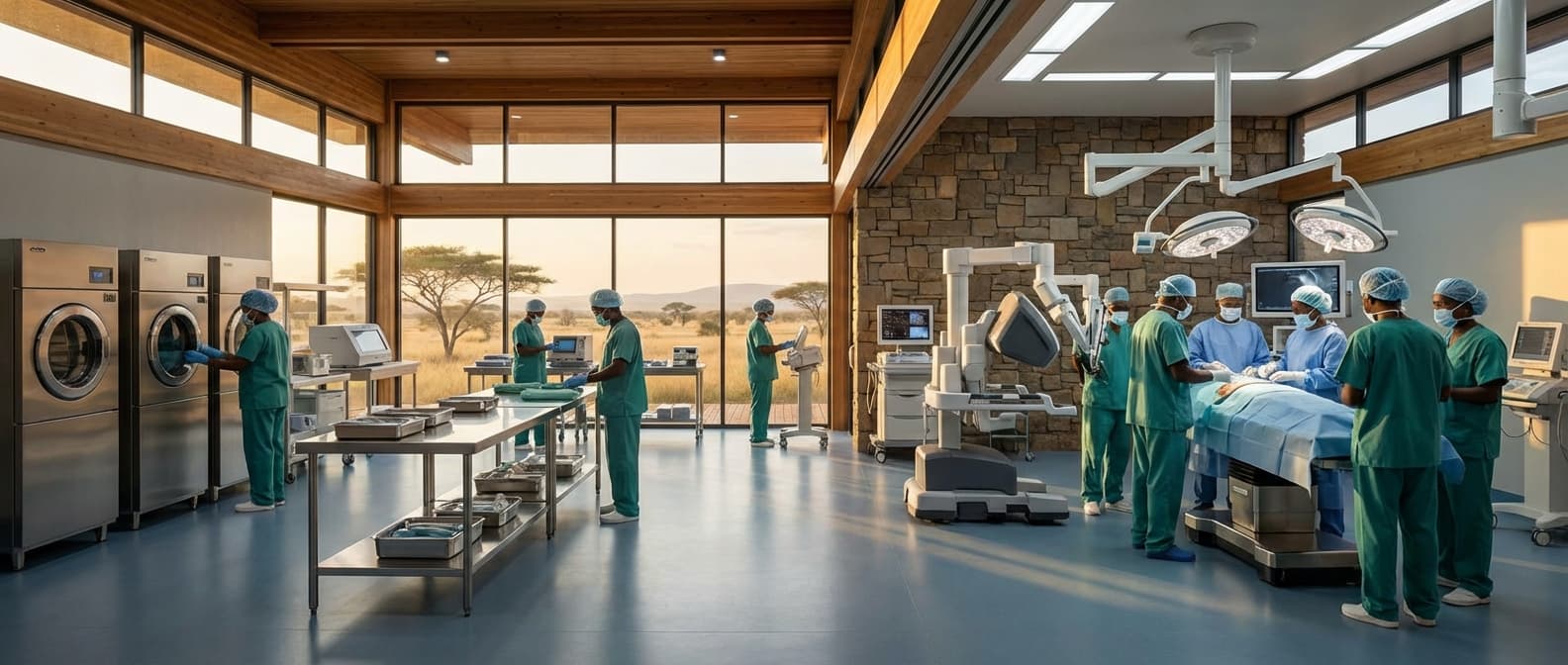
Endoscopy Reprocessing Validation in Niger
Engineering Excellence & Technical Support
AER validation, SOP development and compliance High-standard technical execution following OEM protocols and local regulatory frameworks.
Rigorous Biological Indicator Testing
Implementing strict biological indicator (BI) testing protocols with standardized incubation periods and interpretation methods to confirm the efficacy of automated endoscope reprocessors (AERs) and manual disinfection processes, ensuring complete inactivation of high-level disinfectant-resistant microorganisms in Niger's healthcare facilities.
High-Level Disinfectant (HLD) Concentration Monitoring
Establishing a robust system for regular quantitative and qualitative monitoring of high-level disinfectant (HLD) concentrations using validated test strips and titration methods. This ensures the correct chemical potency is maintained for effective decontamination of endoscopes, crucial for preventing healthcare-associated infections (HAIs) in Niger.
Comprehensive Process Validation Audits
Conducting detailed audits of the entire endoscopy reprocessing workflow, from initial cleaning to final storage. This includes verifying adherence to manufacturer's instructions for use (IFUs), proper instrument drying, and appropriate storage conditions, thereby validating the integrity of the reprocessing cycle against international best practices and local regulatory requirements in Niger.
What Is Endoscopy Reprocessing Validation In Niger?
Endoscopy reprocessing validation in Niger refers to the systematic assessment and verification of processes and equipment used to clean, disinfect, and sterilize endoscopic devices after each patient use. This critical service ensures that reusable medical equipment is rendered safe for subsequent procedures, thereby mitigating the risk of healthcare-associated infections (HAAs) and cross-contamination. The validation process confirms that the established reprocessing protocols consistently achieve the required inactivation of microorganisms, including bacteria, viruses, and prions, to meet established safety standards and regulatory requirements specific to Niger's healthcare landscape.
| Who Needs Endoscopy Reprocessing Validation? | Typical Use Cases | |||
|---|---|---|---|---|
| Healthcare Facilities in Niger: Hospitals, clinics, and diagnostic centers that utilize reusable endoscopic equipment (e.g., gastroscopes, colonoscopes, bronchoscopes, cystoscopes, laparoscopes) for diagnostic and therapeutic procedures. | Regulatory Bodies and Public Health Agencies: To ensure compliance with national healthcare standards and patient safety regulations. | Medical Device Manufacturers and Distributors: To provide evidence of the efficacy of their equipment and reprocessing recommendations in the local context. | Accreditation Bodies: As a prerequisite for institutional accreditation or certification. | Infection Prevention and Control Committees: To verify the effectiveness of their established protocols and identify areas for improvement. |
| Routine Pre-Procedural Assurance: To confirm that endoscopes are safe for use on the next patient, preventing nosocomial infections. | Post-Equipment Installation/Maintenance: Validation is essential after installing new reprocessing equipment or after significant maintenance to ensure continued performance. | Introduction of New Reprocessing Agents or Protocols: To confirm the efficacy of new cleaning solutions, disinfectants, or modified cleaning procedures. | Addressing Infection Outbreaks: When an outbreak of infection is suspected to be linked to improperly reprocessed endoscopes. | Periodic Audits and Quality Assurance: To maintain a high standard of patient care and operational efficiency, and to comply with internal quality management systems. |
Key Components of Endoscopy Reprocessing Validation
- Process Documentation Review: Examination of written protocols for cleaning, high-level disinfection (HLD), and sterilization of endoscopic instruments, including enzymatic cleaning agents, disinfectants, and sterilizing agents used.
- Equipment Performance Verification: Testing of automated reprocessors (e.g., washer-disinfectors, ethylene oxide sterilizers, peracetic acid sterilizers) to ensure they are functioning within specified parameters (temperature, time, concentration, flow rates).
- Environmental Monitoring: Assessment of the reprocessing environment, including air quality and water quality, as it pertains to microbial contamination.
- Microbiological Testing: Utilizes surrogate biological indicators (e.g., Geobacillus stearothermophilus for autoclaving, Geobacillus subtilis for ETO, and challenging organic loads) and chemical indicators to confirm the efficacy of the reprocessing cycle in eliminating or inactivating microorganisms.
- Personnel Competency Assessment: Evaluation of the knowledge and practical skills of reprocessing staff through training records and direct observation of their adherence to protocols.
- Record Keeping and Traceability: Review of documentation systems to ensure proper logging of each reprocessing cycle, patient usage, and maintenance records for traceability.
Who Needs Endoscopy Reprocessing Validation In Niger?
Endoscopy reprocessing validation is a critical patient safety measure. In Niger, where healthcare infrastructure may be developing, ensuring the sterility and safety of endoscopic equipment is paramount to prevent the transmission of infections. This process is essential in any healthcare facility performing endoscopic procedures. The target customers for endoscopy reprocessing validation services and training in Niger would primarily be healthcare institutions that utilize flexible endoscopes. This includes both public and private sector facilities across various levels of care.
| Target Customer Type | Key Departments Involved | Rationale for Validation |
|---|---|---|
| Public Hospitals | Endoscopy Suite/Unit, Central Sterile Supply Department (CSSD), Infection Control Department | Prevent nosocomial infections, ensure patient safety, comply with national health guidelines (if available), optimize resource utilization. |
| University Teaching Hospitals | Endoscopy Unit, CSSD, Infection Prevention and Control (IPC) Department, Training departments for medical and nursing staff | Maintain high standards of patient care, provide a safe learning environment for trainees, research and development in endoscopy, establish best practices. |
| Private Hospitals and Clinics | Endoscopy Department, Sterile Processing Department, Quality Assurance Department | Uphold reputation for quality and safety, meet patient expectations, comply with regulatory requirements, minimize liability. |
| Specialized Medical Centers | Gastroenterology Department, Endoscopy Unit, CSSD | Focus on specific endoscopic procedures, ensuring the highest level of sterility for complex interventions, patient confidence. |
| NGO Healthcare Facilities | Endoscopy Services, Clinical Support Departments, Program Management | Provide essential diagnostic and therapeutic services, particularly in underserved areas, ensure sustainable and safe healthcare delivery with limited resources, demonstrate accountability. |
Target Customers and Departments in Niger Requiring Endoscopy Reprocessing Validation
- Public Hospitals (National, Regional, and District)
- University Teaching Hospitals
- Private Hospitals and Clinics
- Specialized Medical Centers (e.g., Gastroenterology Clinics)
- Non-Governmental Organization (NGO) Healthcare Facilities
Endoscopy Reprocessing Validation Process In Niger
The Endoscopy Reprocessing Validation Process in Niger involves a structured workflow to ensure that reusable endoscopic equipment is cleaned and disinfected to a standard that prevents healthcare-associated infections (HAIs). This process begins with an initial inquiry, proceeds through a series of validation steps, and culminates in the final execution and ongoing monitoring of the reprocessing protocol.
| Stage | Description | Key Activities | Responsible Parties | Deliverables/Outcomes |
|---|---|---|---|---|
| Initial request or identification of the need for validating endoscopy reprocessing procedures. | Contacting relevant health authorities or facility management, understanding current practices, identifying existing challenges and risks of HAIs related to endoscopy. | Healthcare facility management, Infection Prevention and Control (IPC) committee, Ministry of Health (MoH) representatives. | Needs assessment report, preliminary risk analysis, documented justification for validation. |
| Establishing or adapting a standard operating procedure (SOP) for endoscopy reprocessing. | Reviewing international guidelines (e.g., WHO, CDC, national guidelines), adapting them to local context (resources, equipment availability), drafting the SOP detailing cleaning, disinfection, sterilization (if applicable), storage, and handling. | IPC committee, endoscopy unit staff, biomedical engineers, relevant medical specialists. | Draft SOP for endoscopy reprocessing, list of required materials and equipment. |
| Ensuring availability and suitability of reprocessing equipment and consumables. | Inventorying existing reprocessing machines (e.g., automated endoscope reprocessors - AERs), manual cleaning supplies, disinfectants, and sterile storage facilities. Verifying compatibility of disinfectants with endoscopes. | Biomedical engineering department, IPC committee, supply chain management. | Equipment inventory, list of validated cleaning agents and disinfectants, assessment of facility infrastructure. |
| Educating staff on the validated reprocessing protocol. | Conducting theoretical and practical training sessions for all staff involved in reprocessing, assessing competency through observation and practical tests. | IPC team, experienced endoscopy technicians, training coordinators. | Trained personnel, competency assessment records, documented training materials. |
| Testing the SOP in a real-world setting and gathering data. | Implementing the drafted SOP on a small scale, collecting data on cleaning effectiveness (e.g., visual inspection, adenosine triphosphate - ATP testing), disinfection efficacy (e.g., microbial challenge testing, chemical indicator use), and process adherence. | Endoscopy unit staff, IPC team, laboratory personnel (for testing). | Pilot study data, initial process adherence rates, preliminary effectiveness results. |
| Formalizing the findings and seeking approval. | Analyzing collected data, preparing a comprehensive validation report detailing methodology, results, identified deviations, and recommendations. Submitting the report for review and approval by relevant authorities. | IPC committee, hospital administration, Ministry of Health (IPC department). | Validated SOP, official approval letter, final validation report. |
| Rolling out the validated SOP and establishing ongoing checks. | Full implementation of the validated SOP across all relevant endoscopy procedures. Establishing a routine monitoring system including regular audits, periodic equipment maintenance, ongoing competency checks, and environmental monitoring. | Endoscopy unit management, IPC team, all reprocessing staff. | Fully implemented reprocessing protocol, established monitoring plan, regular audit reports. |
| Ensuring the process remains effective and up-to-date. | Regularly reviewing monitoring data, feedback from staff, and emerging best practices or new technologies. Revising the SOP as needed and conducting revalidation when significant changes occur (e.g., new equipment, disinfectants, or changes in patient population). | IPC committee, endoscopy unit leadership, MoH representatives. | Updated SOPs, documented process improvements, revalidation reports. |
Endoscopy Reprocessing Validation Workflow in Niger
- Inquiry and Needs Assessment:
- Protocol Development/Adaptation:
- Equipment and Material Assessment:
- Training and Competency Assessment:
- Pilot Testing and Data Collection:
- Validation Report and Approval:
- Implementation and Routine Monitoring:
- Continuous Improvement:
Endoscopy Reprocessing Validation Cost In Niger
Validating the reprocessing of endoscopic equipment is a crucial step in preventing healthcare-associated infections. In Niger, the cost of this validation process can fluctuate significantly due to several factors. These factors include the type and complexity of the endoscopic equipment being reprocessed, the specific validation methods and technologies employed, the expertise of the personnel involved, and the operational costs of the healthcare facility or laboratory performing the validation. The range in pricing can also be influenced by the geographic location within Niger, the availability of specialized services, and the current economic climate. Due to limited readily available public data specifically on endoscopy reprocessing validation costs in Niger, the following discussion provides estimated ranges based on general healthcare service pricing trends and a recognition of the economic realities in the country.
| Service Component | Estimated Cost Range (XOF - West African CFA Franc) |
|---|---|
| Basic Visual Inspection & Leak Testing (per scope) | 15,000 - 40,000 |
| Biological Indicator Testing (per cycle) | 25,000 - 70,000 |
| Chemical Indicator Testing (per cycle) | 10,000 - 30,000 |
| Lumen Integrity Testing (per scope) | 20,000 - 50,000 |
| Full Validation Package (e.g., all tests for a flexible scope) | 70,000 - 200,000+ |
| On-site Validation Services (additional travel/logistics) | 20,000 - 100,000+ (depending on distance) |
| Certification/Documentation Fees | 10,000 - 40,000 |
Key Pricing Factors for Endoscopy Reprocessing Validation in Niger
- Equipment Type and Complexity: Flexible endoscopes (gastroscopes, colonoscopes) often require more intricate validation due to their multiple channels and delicate components compared to rigid endoscopes. The presence of advanced features or newer models may also influence costs.
- Validation Methodology: The techniques used for validation are a primary cost driver. This can range from basic visual inspection and leak testing to more sophisticated biological and chemical indicator testing, as well as automated reprocessor performance verification. Each method has associated material and labor costs.
- Personnel Expertise: Trained and certified technicians or microbiologists are essential for accurate validation. Their salaries and ongoing training contribute to the overall cost.
- Consumables and Reagents: Biological indicators (e.g., spore strips), chemical indicators, cleaning agents, and disinfecting solutions are all necessary for validation and represent direct material costs.
- Equipment and Technology: The cost of maintaining and calibrating validation equipment (e.g., incubators for biological indicators, lumen integrity testing devices) adds to the overhead.
- Facility Overhead: This includes laboratory space, utilities, administrative support, and regulatory compliance costs, which are factored into service pricing.
- Geographic Location: Costs may be higher in major urban centers where demand and operational expenses might be greater, while remote areas could face challenges with accessibility and the availability of specialized services, potentially leading to higher travel or logistical costs.
- Volume of Procedures: Healthcare facilities performing a high volume of endoscopic procedures may be able to negotiate bulk discounts for validation services.
Affordable Endoscopy Reprocessing Validation Options
Navigating the complexities of endoscopy reprocessing validation can present a significant financial challenge for healthcare facilities. Ensuring patient safety through rigorous validation is non-negotiable, yet the associated costs can be a barrier, especially for smaller hospitals or those with budget constraints. Fortunately, innovative approaches like value bundles and strategic cost-saving measures can make this essential process more accessible and affordable.
| Strategy | Description | Cost-Saving Potential | Benefits |
|---|---|---|---|
| Value Bundles | A packaged approach where multiple validation services (e.g., performance testing, chemical indicator testing, biological indicator testing) are offered together at a reduced combined price compared to purchasing each service individually. Often provided by third-party validation companies or equipment manufacturers. | Significant, as it leverages economies of scale for the provider and offers a predictable, often lower, overall cost for the facility. | Simplified procurement, predictable budgeting, streamlined service management, potential for extended warranties or support included. |
| Internal Expertise Development | Investing in training existing staff to perform certain validation tasks internally, reducing reliance on external vendors for routine checks. | Moderate to High, dependent on initial training investment and frequency of internal validation. Reduces ongoing vendor fees. | Increased control over scheduling, enhanced staff competency, potential for faster turnaround on internal checks, fosters a culture of ownership. |
| Consolidated Vendor Partnerships | Negotiating contracts with a single or limited number of reputable validation vendors to cover all reprocessing validation needs. This allows for leverage in pricing and service level agreements. | Moderate, through volume discounts and streamlined negotiations. Reduces administrative overhead of managing multiple vendors. | Simplified invoicing and contract management, stronger vendor relationships, potential for dedicated account management and priority service. |
| Preventative Maintenance & Equipment Upgrades | Regular, high-quality preventative maintenance on reprocessing equipment can prevent malfunctions that lead to validation failures and costly rework. Investing in newer, more efficient equipment can also reduce validation frequency or complexity. | High, by preventing unexpected failures and associated downtime, rework, and potential patient safety risks. Newer equipment may have built-in validation features. | Reduced risk of validation failures, extended equipment lifespan, improved operational efficiency, enhanced patient safety. |
| Utilizing Reprocessed Supplies (where applicable and validated) | For single-use items that are FDA-cleared for reprocessing, exploring validated reprocessing services can offer cost savings compared to purchasing new. | Variable, depends on the specific item and the cost of the reprocessing service versus new acquisition. | Environmental benefits, reduced waste, potential for significant cost reduction on specific high-volume items. |
| Data Management & Trend Analysis | Implementing robust data management systems to track validation results over time. Identifying trends can help proactively address potential issues before they become costly problems or lead to validation failures. | Low to Moderate initial investment in software/systems. High long-term savings by preventing failures and optimizing processes. | Early identification of equipment or process issues, improved compliance, data-driven decision-making, optimized validation schedules. |
Key Endoscopy Reprocessing Validation Strategies
- Understanding Value Bundles
- Implementing Cost-Saving Strategies
- The Importance of Regulatory Compliance
- Technological Advancements
Verified Providers In Niger
Navigating healthcare options in Niger can be challenging, but identifying verified providers is crucial for receiving quality care. Franance Health stands out as a premier choice due to its rigorous credentialing process and commitment to excellence. This ensures that all listed providers meet high standards of professionalism, expertise, and ethical practice. Choosing a Franance Health credentialed provider means peace of mind, knowing you are in capable hands.
| Category | Franance Health Credentialing Criteria | Benefits for Patients |
|---|---|---|
| Medical Education | Verification of accredited medical degrees and postgraduate training. | Ensures foundational knowledge and competence. |
| Professional Licensing | Confirmation of valid and current medical licenses from relevant authorities. | Guarantees legal and ethical practice. |
| Clinical Experience | Review of documented practical experience and surgical case logs (where applicable). | Indicates hands-on skill and familiarity with diverse medical situations. |
| Specialty Certification | Validation of board certifications in specialized medical fields. | Confirms advanced expertise in a particular area of medicine. |
| Continuing Professional Development | Evidence of ongoing education and participation in medical conferences and workshops. | Demonstrates commitment to staying current with medical advancements. |
| Ethical Conduct | Background checks and review of any disciplinary actions or complaints. | Assures professional integrity and patient-centered care. |
Why Franance Health Credentials Matter:
- Rigorous Vetting: Franance Health employs a comprehensive verification process for all its providers, examining their educational background, professional licenses, and ongoing training.
- Commitment to Quality: Credentials signify adherence to best practices and a dedication to providing high-quality patient care.
- Enhanced Trust and Reliability: Verified providers offer a higher degree of trust and reliability for individuals seeking healthcare services.
- Access to Expertise: Franance Health's network includes specialists and general practitioners with proven expertise in various medical fields.
- Patient Safety Focus: The credentialing process prioritizes patient safety by ensuring providers meet established standards of care.
Scope Of Work For Endoscopy Reprocessing Validation
This document outlines the Scope of Work (SOW) for validating the reprocessing procedures of flexible endoscopes. The objective is to ensure that all reprocessing steps, from pre-cleaning to high-level disinfection (HLD) or sterilization, effectively eliminate microbial contamination and render the endoscopes safe for patient use. This validation will adhere to relevant industry standards and regulatory guidelines.
| Task/Phase | Description | Technical Deliverables | Standard Specifications/Guidelines |
|---|---|---|---|
| Protocol Development | Creation of a detailed validation protocol outlining study design, test methods, acceptance criteria, and sampling plans. | Approved Validation Protocol Document | ISO 17664, AAMI ST79, Manufacturer IFUs |
| Pre-Cleaning Validation | Testing to confirm the removal of simulated or actual bioburden from endoscope lumens and surfaces. | Pre-Cleaning Efficacy Report (including microbial load reduction data) | Manufacturer IFUs for pre-cleaning agents and methods |
| Manual Cleaning Validation | If manual cleaning is performed, validation of the process to ensure thorough removal of soil and microorganisms. | Manual Cleaning Validation Report | Manufacturer IFUs, Best Practice Guidelines for Endoscope Cleaning |
| Automated Reprocessing Validation | Verification of the AER's ability to achieve the specified level of disinfection/sterilization under defined operating parameters. | AER Performance Validation Report (including chemical indicator, biological indicator, and process parameter data) | AAMI TIR34, ISO 15883 (Parts 1-5), Manufacturer IFUs for AER and HLD chemicals/sterilants |
| Endoscope Component Integrity Testing | Assessment of endoscope components (e.g., valves, seals, channels) for damage or degradation after multiple reprocessing cycles. | Endoscope Integrity Assessment Report | Manufacturer IFUs |
| Drying Process Validation | Confirmation that endoscope lumens are adequately dried to prevent microbial proliferation. | Drying Efficacy Report | Manufacturer IFUs, Guidelines for Endoscope Storage |
| Final Validation Report | Comprehensive report summarizing all validation activities, results, and conclusions, including recommendations for ongoing monitoring. | Final Validation Report Document | Internal Quality Assurance Standards, Regulatory Requirements |
Key Objectives of Endoscopy Reprocessing Validation
- Verify the efficacy of pre-cleaning procedures in removing visible soil and organic matter.
- Confirm the effectiveness of automated endoscope reprocessors (AERs) in achieving HLD or sterilization.
- Validate manual cleaning and disinfection processes, if applicable.
- Assess the integrity of endoscope components and seals post-reprocessing.
- Ensure compliance with manufacturer's instructions for use (IFUs) for both endoscopes and reprocessing equipment.
- Confirm the effectiveness of drying procedures to prevent microbial growth.
- Establish a robust and repeatable reprocessing protocol for ongoing quality assurance.
Service Level Agreement For Endoscopy Reprocessing Validation
This Service Level Agreement (SLA) outlines the response times and uptime guarantees for the Endoscopy Reprocessing Validation service. This service ensures the accuracy and reliability of automated validation processes for endoscope reprocessing equipment, contributing to patient safety and regulatory compliance.
| Service Component | Response Time (Business Hours) | Response Time (24/7 Support) | Uptime Guarantee |
|---|---|---|---|
| Automated Validation System Monitoring | 2 Hours | 4 Hours | 99.5% |
| Data Analysis & Reporting Service | 4 Business Hours | 8 Business Hours | 99.0% |
| Alerting & Notification System | 1 Hour | 2 Hours | 99.8% |
| System Updates & Maintenance | Scheduled with 48-hour advance notice. Outages during maintenance are excluded from uptime calculations. |
Key Performance Indicators (KPIs)
- Response Time: The maximum time allowed for the service to acknowledge and begin addressing a reported issue.
- Uptime Guarantee: The percentage of time the service is expected to be available and fully functional.
- Validation Cycle Completion Rate: The percentage of scheduled validation cycles that complete successfully without critical errors.
- Data Integrity: The assurance that all validation data is accurate, complete, and unaltered.
Frequently Asked Questions

Ready when you are
Let's scope your Endoscopy Reprocessing Validation in Niger project in Niger.

Scaling healthcare logistics and technical systems across the entire continent.