
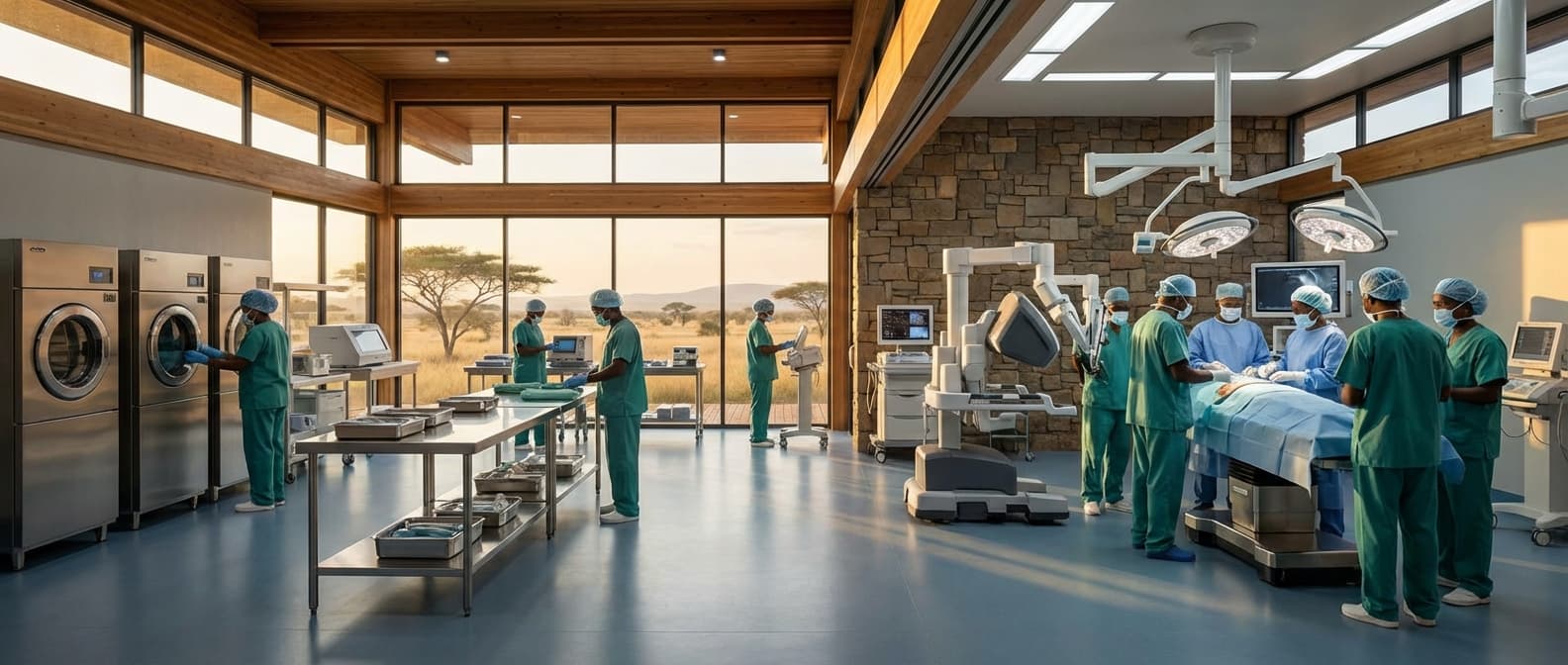
CSSD Design & Validation in Niger
Engineering Excellence & Technical Support
CSSD workflow design, validation and process development High-standard technical execution following OEM protocols and local regulatory frameworks.
Optimized Sterilization Cycle Validation
Implemented rigorous validation protocols for autoclaves and washer-disinfectors, ensuring adherence to ISO 17665 and HTM 01-01 standards. This included defining critical parameters, performing biological and chemical indicator testing, and meticulously documenting all results to guarantee instrument safety and efficacy for patient care.
Streamlined CSSD Workflow Design
Conducted comprehensive workflow analysis from decontamination to sterile storage. Designed and implemented optimized layouts and processes that minimize contamination risks, improve staff efficiency, and reduce turnaround times for surgical instruments, directly impacting patient safety and hospital operational flow.
Advanced Equipment Calibration & Maintenance Program
Established and managed a robust equipment calibration and preventive maintenance program for all CSSD machinery. This ensured consistent performance and accuracy of sterilization equipment, preventing failures and upholding the highest standards of sterile processing in accordance with international guidelines.
What Is Cssd Design & Validation In Niger?
CSSD (Central Sterile Services Department) Design and Validation in Niger refers to the specialized process of conceptualizing, planning, constructing, equipping, and subsequently verifying the operational efficacy and compliance of a sterile processing facility. This encompasses architectural layout, workflow optimization, selection and integration of sterilization equipment, environmental control systems, and the establishment of rigorous quality assurance protocols. The primary objective is to ensure the delivery of safe, sterile medical devices to healthcare providers, thereby mitigating the risk of healthcare-associated infections (HAIs).
| Service Component | Description | Typical Use Cases/Considerations |
|---|---|---|
| Needs Assessment & Functional Programming | Detailed analysis of the facility's surgical/procedural volume, instrument types, and workflow requirements to define space allocation, equipment needs, and staffing levels. | Determining the optimal size of the decontamination, assembly, and sterilization areas based on projected caseload; identifying specialized instrument sets requiring dedicated processing. |
| Architectural Design & Space Planning | Development of floor plans that adhere to established HTM (Health Technical Memorandum), AAMI (Association for the Advancement of Medical Instrumentation), or ISO (International Organization for Standardization) guidelines for optimal workflow, air pressure differentials, and infection control. | Ensuring unidirectional flow from soiled to sterile areas; specifying appropriate finishes for walls, floors, and ceilings; planning for adequate ventilation and HVAC systems. |
| Equipment Specification & Selection | Identification and selection of appropriate sterilization technologies (e.g., steam autoclaves, low-temperature sterilizers, washer-disinfectors) based on instrument compatibility, throughput requirements, and regulatory standards. | Choosing sterilizers with validated cycle parameters; selecting instrument washers with adequate cleaning efficacy; specifying ancillary equipment such as ultrasonic cleaners and drying cabinets. |
| Workflow Design & Process Mapping | Establishing efficient and safe Standard Operating Procedures (SOPs) for receiving, cleaning, disinfection, inspection, assembly, packaging, sterilization, storage, and distribution of sterile medical devices. | Developing clear protocols for instrument tracking and recall; defining procedures for handling contaminated items and managing sharps; optimizing turnaround times. |
| Environmental Control & Safety Systems | Designing and implementing HVAC systems to maintain appropriate air changes per hour, temperature, humidity, and negative/positive pressure differentials between processing areas. | Ensuring proper exhaust for decontamination areas; specifying appropriate lighting and ergonomic workstations; integrating safety features for hazardous materials. |
| Information Technology & Tracking Systems | Implementing robust tracking systems (manual or electronic) for instrument identification, sterilization cycle parameters, load contents, and traceability. | Utilizing barcode or RFID technology for efficient inventory management and audit trails; integrating with hospital information systems (HIS) for data reporting and analysis. |
| Commissioning & Validation | A systematic process of testing, documenting, and verifying that all CSSD systems and equipment are installed correctly and operate according to design specifications and regulatory requirements. | Performance Qualification (PQ) of sterilizers to confirm effectiveness under routine operating conditions; installation Qualification (IQ) and Operational Qualification (OQ) of all equipment and environmental systems; validation of cleaning and disinfection processes. |
| Staff Training & Competency Assessment | Developing and delivering comprehensive training programs for CSSD personnel on proper procedures, equipment operation, infection control principles, and quality assurance. | Ensuring staff competency in all aspects of sterile processing; providing ongoing education and professional development opportunities. |
| Quality Assurance & Monitoring | Establishing ongoing quality control measures, including biological and chemical indicator testing, process monitoring, and internal audits to ensure sustained compliance and sterile product integrity. | Regular calibration of monitoring devices; performance of routine Bowie-Dick tests and spore tests; review of sterilization records. |
Who Needs CSSD Design & Validation in Niger?
- Hospitals (Public and Private)
- Surgical Centers and Clinics
- Dental Practices with Surgical Procedures
- Dialysis Centers
- Any healthcare facility performing invasive procedures requiring the sterilization of reusable medical instruments.
Who Needs Cssd Design & Validation In Niger?
CSSD (Central Sterile Services Department) design and validation are critical for ensuring patient safety, preventing healthcare-associated infections (HAIs), and maintaining operational efficiency. In Niger, as healthcare infrastructure develops and the demand for quality patient care increases, these services become indispensable. A well-designed and validated CSSD minimizes risks associated with sterilization failures, improper instrument handling, and cross-contamination. This directly impacts patient outcomes and the reputation of healthcare facilities.
| Target Customer/Entity | Key Departments Involved in CSSD Design & Validation |
|---|---|
| Hospitals (Public and Private) | Infection Control Department, Surgical Departments, Central Sterile Supply Department (existing or proposed), Biomedical Engineering, Administration/Management, Quality Assurance |
| Specialty Clinics | Clinic Management, Lead Surgeons/Specialists, Nursing Staff, Procurement |
| Diagnostic Laboratories | Laboratory Management, Quality Control Officers |
| Government Health Ministries/Agencies | Public Health Department, Standards and Quality Assurance Division, Infrastructure Development Units |
| NGOs and International Aid Organizations | Project Management, Healthcare Program Leads, Procurement and Logistics |
| Medical Equipment Suppliers and Manufacturers | Sales and Technical Support Teams, Product Development |
Target Customers and Departments for CSSD Design & Validation in Niger
- Hospitals (Public and Private): This is the primary target. Facilities of all sizes, from large referral hospitals to smaller clinics, require robust CSSD functions.
- Specialty Clinics: Clinics focusing on surgery, dentistry, ophthalmology, and other procedures requiring sterile instruments are key clients.
- Diagnostic Laboratories: While not directly sterilizing surgical instruments, some laboratories may require validated sterilization processes for specific equipment or consumables.
- Government Health Ministries/Agencies: These entities are responsible for setting healthcare standards and may require design and validation services for public health facilities or for quality assurance purposes.
- NGOs and International Aid Organizations: Organizations involved in healthcare provision and infrastructure development in Niger will often contract CSSD design and validation for their projects.
- Medical Equipment Suppliers and Manufacturers: Companies supplying sterilization equipment will often partner with CSSD design and validation experts to offer comprehensive solutions to their clients.
Cssd Design & Validation Process In Niger
The Central Sterile Supply Department (CSSD) design and validation process in Niger follows a structured workflow to ensure sterile medical instruments are consistently produced and delivered, adhering to national and international standards. This process is crucial for patient safety and effective healthcare delivery. The workflow begins with an initial inquiry and culminates in ongoing validation and maintenance.
| Stage | Description | Key Activities | Responsible Parties | Deliverables/Outcomes |
|---|---|---|---|---|
| Initial contact and understanding the existing or proposed healthcare facility's sterile processing needs. | Site visit, interviews with stakeholders (surgeons, nurses, administration), review of current practices, identification of instrument load, volume, and types of procedures. | Healthcare Facility Management, Ministry of Health Representatives, CSSD Stakeholders, potentially external consultants. | Needs assessment report, preliminary requirements document, identification of key challenges and opportunities. |
| Developing a high-level layout and operational concept for the CSSD. | Defining functional zones (decontamination, packing, sterilization, storage), workflow diagram, preliminary space requirements, initial budget estimation, regulatory compliance considerations. | Architects, Biomedical Engineers, CSSD Consultants, Ministry of Health. | Conceptual layout drawings, operational concept document, preliminary budget, initial project plan. |
| Translating the conceptual design into detailed architectural and engineering plans. | Detailed floor plans, utility requirements (water, electricity, steam, ventilation), material specifications, equipment selection criteria, infection control measures, workflow optimization, compliance with national/WHO guidelines. | Architects, MEP Engineers, CSSD Specialists, Infection Control Practitioners, Procurement Department. | Detailed architectural drawings, mechanical, electrical, and plumbing (MEP) plans, equipment specifications, bill of quantities (BOQ), tender documents. |
| Acquiring necessary materials and constructing or renovating the CSSD space. | Tendering for construction/renovation services and equipment, site preparation, construction/renovation according to approved plans, adherence to infection control during construction. | Procurement Department, Construction Company, Project Manager, Ministry of Health. | Completed CSSD physical space, installed utilities, procured basic supplies. |
| Installing and testing all CSSD equipment. | Delivery and installation of washers, disinfectors, sterilizers (autoclaves, low-temperature sterilizers), instrument washers, drying cabinets, packing benches, storage units. Initial operational checks and calibration. | Equipment Suppliers/Manufacturers, Biomedical Engineers, CSSD Technicians, Ministry of Health. | Installed and functional CSSD equipment, manufacturer's test reports. |
| Establishing standard operating procedures (SOPs) for all CSSD activities. | Developing SOPs for receiving, cleaning, disinfection, inspection, assembly, packing, sterilization, storage, and distribution of instruments. Water quality testing protocols, biological monitoring procedures, chemical indicator usage guidelines. | CSSD Manager, CSSD Technicians, Infection Control Practitioners, Quality Assurance Department. | Comprehensive CSSD SOP manual, documented protocols for all processes. |
| Ensuring CSSD staff are adequately trained and competent. | Training on new equipment, SOPs, infection control principles, hazard management, and quality assurance. Competency assessments to verify understanding and practical application. | CSSD Manager, Equipment Trainers, Infection Control Trainers, HR Department. | Trained and competent CSSD personnel, training records, competency assessment results. |
| Systematic verification that the CSSD system and processes meet predetermined specifications and are fit for purpose. | Installation Qualification (IQ): Verifying equipment is installed correctly. Operational Qualification (OQ): Verifying equipment operates according to specifications. Performance Qualification (PQ): Verifying the entire process consistently produces sterile products under actual working conditions. Includes load testing with biological indicators. | Validation Team (CSSD Manager, Biomedical Engineers, External Validators if needed), Quality Assurance. | Validated CSSD system, comprehensive validation reports (IQ, OQ, PQ), certificates of sterilization cycle effectiveness. |
| Ongoing checks to ensure continued optimal performance of the CSSD. | Daily checks of sterilizer parameters, biological and chemical indicator monitoring for each cycle, regular cleaning of equipment, water quality testing, routine maintenance schedules. | CSSD Technicians, CSSD Manager, Biomedical Engineers. | Daily logs, indicator results, maintenance records, performance reports. |
| Regular review and updating of CSSD processes and systems. | Analyzing performance data, identifying areas for improvement, implementing changes, conducting periodic re-validation (especially after significant equipment changes, process modifications, or facility upgrades), auditing CSSD practices. | CSSD Management, Quality Assurance, Ministry of Health, Infection Control Committee. | Revised SOPs, documented improvement initiatives, updated validation reports, enhanced patient safety. |
CSSD Design & Validation Workflow in Niger
- Inquiry & Needs Assessment
- Conceptual Design & Planning
- Detailed Design & Specification
- Procurement & Construction/Renovation
- Equipment Installation & Commissioning
- Process Design & Protocol Development
- Staff Training & Competency Assessment
- Validation (IQ, OQ, PQ)
- Routine Monitoring & Performance Testing
- Continuous Improvement & Re-validation
Cssd Design & Validation Cost In Niger
Designing and validating a Central Sterile Supply Department (CSSD) in Niger involves a complex interplay of factors that influence overall cost. These factors range from the initial design conceptualization to the rigorous validation processes required for accreditation and operational efficiency. Understanding these elements is crucial for accurate budgeting and successful project implementation. The pricing is highly dependent on the scale and complexity of the CSSD, the quality of equipment chosen, the specific validation protocols adopted, and the prevailing economic conditions in Niger.
| Cost Component | Estimated Range (XOF - West African CFA Franc) | Notes |
|---|---|---|
| Basic CSSD Design & Planning (Small Scale) | 1,500,000 - 5,000,000 XOF | Covers basic layout, workflow, and initial equipment list for a small hospital or clinic. |
| Comprehensive CSSD Design & Planning (Medium to Large Scale) | 5,000,000 - 20,000,000 XOF | Includes detailed architectural plans, advanced workflow optimization, and detailed specifications for larger healthcare facilities. |
| Infrastructure & Renovation (per m²) | 50,000 - 200,000+ XOF | Highly variable based on the extent of work, materials used, and specialized cleanroom requirements. |
| Essential Sterilization Equipment (per unit) | 2,000,000 - 20,000,000+ XOF | Autoclaves, washer-disinfectors. Costs vary significantly by size, technology, and brand. Imported equipment will be more expensive. |
| Validation Services (IQ/OQ/PQ per equipment) | 500,000 - 2,000,000 XOF | Cost per equipment for comprehensive installation, operational, and performance qualification. May be bundled for package discounts. |
| Process Validation (Sterilization Cycles) | 1,000,000 - 5,000,000 XOF | Validation of sterilization cycles using biological indicators and other methods. Depends on the number of cycles and types of instruments. |
| Staff Training (per person) | 100,000 - 500,000 XOF | Covers training on equipment, infection control, and quality assurance protocols. |
| Initial Consumables & Supplies | 500,000 - 3,000,000 XOF | For initial stocking of detergents, wraps, indicators, etc. |
| Total Estimated Project Range (Small Clinic CSSD) | 15,000,000 - 50,000,000 XOF | A very rough estimate for a basic, small-scale CSSD with essential equipment. |
| Total Estimated Project Range (Medium Hospital CSSD) | 50,000,000 - 200,000,000+ XOF | A broad estimate for a more comprehensive CSSD in a medium-sized hospital, including advanced equipment and thorough validation. |
Key Pricing Factors for CSSD Design & Validation in Niger
- Infrastructure and Renovation: The cost of preparing the physical space for the CSSD, including any necessary structural modifications, plumbing, electrical work, HVAC systems, and cleanroom construction. This can vary significantly based on the existing building's condition and the desired layout.
- Equipment Procurement: This is often the largest cost component. It includes sterilization equipment (autoclaves, low-temperature sterilizers), washer-disinfectors, instrument cleaning systems, packaging materials, sterile storage solutions, and associated laboratory equipment for quality control.
- Design and Consultancy Fees: Engaging specialized CSSD designers and consultants to develop detailed architectural plans, workflow optimization strategies, and equipment specifications. This includes site assessments and preliminary studies.
- Validation Services: The cost of third-party validation services to ensure the CSSD meets national and international standards. This encompasses Installation Qualification (IQ), Operational Qualification (OQ), and Performance Qualification (PQ) for all equipment, as well as process validation for sterilization cycles.
- Training and Human Resources: Investing in training for CSSD staff on equipment operation, sterile processing techniques, infection control protocols, and quality assurance. This also includes recruitment and onboarding costs if new staff are required.
- Consumables and Supplies: Initial stocking of essential consumables like detergents, disinfectants, sterilization wraps, chemical indicators, and biological indicators required for operation and initial validation runs.
- Regulatory and Certification Fees: Any fees associated with obtaining necessary permits, licenses, or certifications from local health authorities or international accreditation bodies.
- Contingency: It is prudent to include a contingency fund to account for unforeseen expenses, price fluctuations, or scope changes during the project.
- Local vs. Imported Goods and Services: The availability and cost of locally sourced materials, labor, and expertise versus the higher cost of importing specialized equipment and consulting services.
- Project Timeline: A compressed timeline might necessitate expedited shipping, overtime labor, or higher fees for urgent services, all of which can increase costs.
Affordable Cssd Design & Validation Options
Designing and validating a Central Sterile Services Department (CSSD) is a critical investment for any healthcare facility. Ensuring proper sterilization processes protects patients and staff, maintains regulatory compliance, and enhances operational efficiency. While comprehensive CSSD design and validation can be costly, several affordable options and strategic approaches can significantly reduce expenses without compromising quality or safety. This document outlines value bundles and cost-saving strategies for CSSD design and validation.
| Cost-Saving Strategy | Description | Potential Benefits |
|---|---|---|
| Phased Approach | Instead of a full-scale renovation or new build, break down the project into manageable phases. Focus on critical areas first (e.g., decontamination, sterilization) and expand later. | Lower upfront capital investment, allows for learning and adjustments between phases, manageable cash flow. |
| Leverage Existing Infrastructure | Assess if any existing spaces or utilities (plumbing, electrical, HVAC) can be repurposed or upgraded to meet CSSD requirements, rather than building new. | Significant reduction in construction costs, faster project timelines. |
| Standardized Equipment Selection | Opt for well-established, reliable equipment from reputable manufacturers that offer good value for money. Avoid highly specialized or niche equipment unless absolutely necessary. | Lower initial purchase price, easier maintenance and parts availability, potentially better bulk discounts. |
| Consolidated Procurement | Bundle equipment purchases with a single or limited number of vendors to negotiate better pricing and reduce administrative overhead. | Volume discounts, streamlined purchasing process, simplified logistics. |
| In-House Validation Expertise (with external oversight) | Train internal staff to perform certain aspects of validation (e.g., routine cycle monitoring) under the guidance and validation of external experts for initial IQ/OQ/PQ. | Reduced ongoing validation costs, increased internal capacity for quality control. |
| Modular or Prefabricated Solutions | Consider modular CSSD units or prefabricated cleanrooms that can be rapidly installed, reducing on-site construction time and labor costs. | Faster deployment, predictable costs, less disruption to existing hospital operations. |
| Energy-Efficient Equipment & Design | Invest in energy-efficient sterilization equipment and optimize ventilation systems to reduce long-term operational costs (energy, water). | Lower utility bills, reduced environmental impact, potential government incentives. |
| Remote Consultation & Design | Utilize virtual meetings and cloud-based platforms for design reviews and consultations to reduce travel expenses for consultants. | Reduced travel and accommodation costs, faster feedback loops. |
| Partner with Experienced Consultants | Engage consultants with a proven track record and transparent pricing. Seek out those offering bundled services for better value. | Avoid costly mistakes, ensure compliance, efficient project management. |
| Focus on Essential Validation | Prioritize comprehensive IQ, OQ, and PQ for all critical sterilization processes. Avoid over-validation or unnecessary testing that adds cost without significant benefit. | Cost-effective use of validation resources, ensures regulatory compliance. |
Understanding Value Bundles
- {"title":"What are CSSD Value Bundles?","description":"Value bundles in CSSD design and validation are integrated service packages that combine multiple essential components into a single, often discounted, offering. They aim to streamline the process, provide predictability in costs, and ensure a cohesive approach to establishing or upgrading a CSSD."}
- {"title":"Typical Components of a Value Bundle","description":"These bundles commonly include a combination of the following services, tailored to the facility's specific needs:"}
- {"title":"Design Phase:","description":"Includes preliminary layout planning, equipment selection consultation, workflow analysis, and adherence to relevant standards (e.g., ISO, AAMI)."}
- {"title":"Equipment Procurement Support:","description":"Guidance on selecting cost-effective, reliable equipment, potentially leveraging bulk purchasing power or preferred vendor relationships."}
- {"title":"Installation & Commissioning:","description":"Supervision and verification of equipment installation and initial operational checks."}
- {"title":"Validation Services:","description":"Crucial for proving that sterilization processes are effective. This typically includes Installation Qualification (IQ), Operational Qualification (OQ), and Performance Qualification (PQ)."}
- {"title":"Training:","description":"Comprehensive training for CSSD staff on equipment operation, sterilization cycles, documentation, and quality control procedures."}
- {"title":"Ongoing Support & Auditing (Optional Add-on):","description":"Post-validation support, routine process monitoring, and periodic audits to ensure continued compliance and efficiency."}
Verified Providers In Niger
In Niger's evolving healthcare landscape, identifying verified providers is crucial for ensuring quality and trust. Franance Health stands out as a premier choice due to its rigorous credentialing process, commitment to patient well-being, and a network of highly qualified healthcare professionals. This dedication translates into superior patient outcomes and a more reliable healthcare experience for individuals and families across Niger.
| Credential Type | Verification Standard | Benefit to Patient |
|---|---|---|
| Medical Licenses & Certifications | Confirms legal authorization and recognized expertise in a specialty. | Ensures providers are legally qualified and possess the necessary skills for safe practice. |
| Professional Experience & Background Checks | Thorough review of previous employment, disciplinary actions, and references. | Minimizes risk by ensuring providers have a proven track record and no concerning history. |
| Specialty Board Certifications | Verification of advanced training and expertise in specific medical fields. | Guarantees that specialists have met rigorous standards for in-depth knowledge and skills. |
| Continuing Medical Education (CME) Compliance | Confirmation that providers are actively updating their knowledge and skills. | Ensures patients receive care based on the latest medical research and techniques. |
| Reputation & Peer Review | Assessment of feedback from other healthcare professionals and patient satisfaction metrics. | Provides an additional layer of assurance regarding the quality and reliability of care. |
Why Franance Health Credentials Matter:
- Rigorous Vetting Process: Franance Health employs a stringent verification system that scrutinizes the qualifications, licenses, and professional history of all its affiliated providers.
- Commitment to Excellence: Only providers who meet Franance Health's high standards for clinical competence, ethical practice, and patient care are accepted into their network.
- Continuous Professional Development: Franance Health often encourages or mandates ongoing training and education for its providers, ensuring they remain at the forefront of medical advancements.
- Patient-Centric Approach: Verified Franance Health providers are committed to putting patients first, prioritizing clear communication, empathy, and personalized treatment plans.
- Access to Specialized Care: Their network includes a diverse range of specialists, offering comprehensive healthcare solutions for various medical needs.
Scope Of Work For Cssd Design & Validation
This Scope of Work (SOW) outlines the detailed requirements for the Design and Validation of a Central Sterile Supply Department (CSSD) to ensure optimal functionality, compliance with relevant standards, and the highest level of patient safety. The project encompasses all phases from conceptual design through to final validation and handover.
| Phase | Key Activities | Technical Deliverables | Standard Specifications / References |
|---|---|---|---|
| Needs assessment, facility requirements definition, regulatory review, preliminary layout development. | Functional Program, Site Assessment Report, Preliminary Layouts, Regulatory Compliance Matrix. | Facility guidelines, workflow analysis principles, relevant building codes. |
| Detailed architectural, mechanical, electrical, and plumbing (MEP) design, equipment selection and specification, workflow optimization, material flow analysis, infection control considerations. | Detailed Architectural Drawings (including room layouts, finishes, lighting), Detailed MEP Drawings, Equipment Specification Sheets, Workflow Diagrams, Material Flow Charts, Infection Control Risk Assessment (ICRA) Report. | ISO 13485:2016, AAMI ST79:2017, HTM 01-01: Part C, ASHRAE standards, local health authority guidelines. |
| Monitoring construction progress, ensuring adherence to design specifications, overseeing equipment installation and commissioning. | Construction Progress Reports, Installation Verification Checklists, Commissioning Reports (for utilities and building systems). | Relevant construction standards, manufacturer installation guidelines. |
| Installation Qualification (IQ): Verifying equipment is installed correctly according to manufacturer specifications and design requirements. Operational Qualification (OQ): Verifying equipment operates within defined parameters. Performance Qualification (PQ): Verifying equipment consistently performs as intended under actual use conditions. | IQ Protocols and Reports, OQ Protocols and Reports, PQ Protocols and Reports (including test results, calibration records). | Manufacturer's Installation, Operation, and Maintenance (IOM) manuals, AAMI TIR12, FDA guidelines. |
| Validation of all critical processes including cleaning, disinfection, sterilization (steam, low-temperature, etc.), and sterile packaging. | Cleaning Validation Protocols and Reports, Disinfection Validation Protocols and Reports, Sterilization Cycle Validation Protocols and Reports (including biological indicator studies, physical parameter monitoring), Packaging Validation Protocols and Reports. | AAMI ST79, ISO 11135 (Ethylene Oxide), ISO 17665 (Steam), ISO 14937 (General Sterilization), ISO 11607 (Packaging). |
| Comprehensive training for CSSD staff on equipment operation, workflow procedures, infection control practices, and documentation. Final documentation handover. | Training Materials, Competency Assessments, Standard Operating Procedures (SOPs) for CSSD operations, Equipment Manuals, Validation Master Plan, Validation Summary Report, As-Built Drawings, Maintenance Schedules. | Organizational training policies, relevant regulatory requirements for staff competency. |
| Review of CSSD performance, identification of areas for improvement, and establishment of a continuous improvement framework. | Post-Implementation Review Report, Recommended Improvement Plan. | Quality management principles, performance metrics. |
Key Objectives
- To design a CSSD that meets current and future needs for sterilization, disinfection, and sterile supply management.
- To ensure compliance with all relevant national and international standards and regulations (e.g., ISO 13485, AAMI ST79, HTM 01-01).
- To optimize workflow and material flow within the CSSD to enhance efficiency and reduce the risk of cross-contamination.
- To incorporate appropriate technology and equipment for effective and safe processing of medical devices.
- To validate all processes and equipment to demonstrate their ability to consistently achieve the intended results.
- To provide comprehensive training and documentation to CSSD staff.
Service Level Agreement For Cssd Design & Validation
This Service Level Agreement (SLA) outlines the performance expectations and guarantees for the design and validation of Central Sterile Supply Department (CSSD) facilities. It defines the responsibilities of both the service provider and the client regarding response times for critical issues and uptime guarantees for essential CSSD operational components during the validation phase.
| Service Component | Response Time (Business Hours) | Uptime Guarantee (%) | Notes |
|---|---|---|---|
| Initial CSSD Design Review & Feedback | 4 Business Hours | N/A | Applies to submitted design documents for review. |
| Critical Design Issue Resolution (during design phase) | 2 Business Hours | N/A | Issue identified by client impacting project timeline. |
| Validation Protocol Development & Review | 8 Business Hours | N/A | Applies to initial submission and subsequent revisions. |
| Equipment Installation & Pre-Validation Checks | 4 Business Hours | 98% | Applies to equipment critical for validation activities (e.g., autoclaves, washer-disinfectors). |
| Validation Protocol Execution Support | 2 Business Hours | 99% | Applies to any required support during active validation testing of critical equipment. |
| Validation Report Generation & Review | 24 Business Hours | N/A | Applies to initial draft report and subsequent revisions. |
| Post-Validation Issue (within 30 days of report sign-off) | 8 Business Hours | N/A | Issues identified post-validation related to the scope of this agreement. |
Key Definitions
- CSSD Design: The process of planning, developing, and detailing the layout, workflow, equipment selection, and operational procedures for a Central Sterile Supply Department.
- CSSD Validation: The documented verification that a CSSD facility, its equipment, and its processes consistently perform as intended and meet predefined quality standards and regulatory requirements.
- Critical Issue: Any problem that significantly disrupts or prevents the core functions of the CSSD validation process, potentially leading to delays in commissioning or non-compliance.
- Response Time: The maximum time allowed for the service provider to acknowledge and begin addressing a reported issue.
- Uptime Guarantee: The minimum percentage of time that critical CSSD operational components are available and functional during the agreed-upon validation period.
Frequently Asked Questions

Ready when you are
Let's scope your CSSD Design & Validation in Niger project in Niger.

Scaling healthcare logistics and technical systems across the entire continent.