
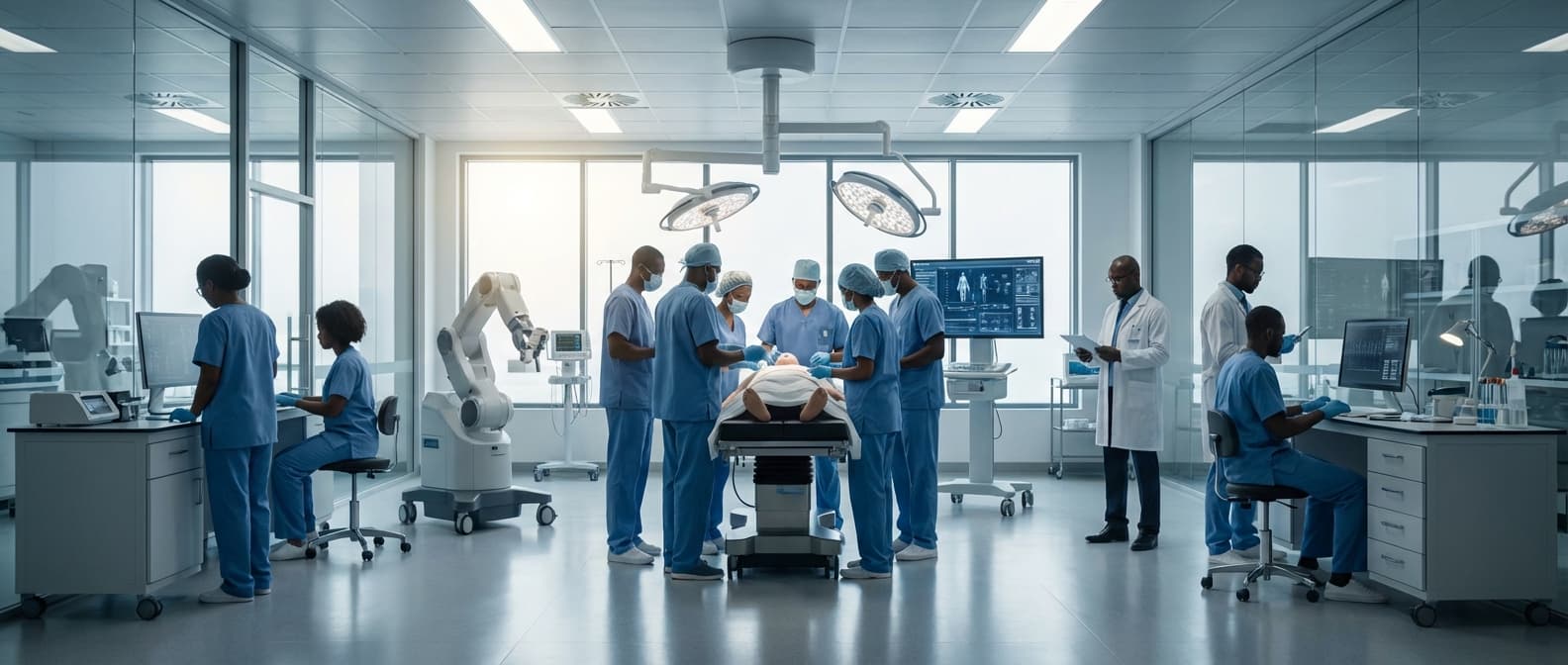
Managed Equipment Service (MES) in Niger
Engineering Excellence & Technical Support
Long‑term equipment provision with uptime SLAs and lifecycle management. High-standard technical execution following OEM protocols and local regulatory frameworks.
Advanced Biomedical Equipment Deployment
Successfully deployed and commissioned a suite of critical medical equipment, including X-ray machines, ultrasound devices, and laboratory analyzers, across multiple health facilities in remote regions of Niger. Our MES team ensured full integration, calibration, and staff training, enhancing diagnostic capabilities and patient care delivery in underserved areas.
Proactive Maintenance & Extended Equipment Lifespan
Implemented a robust preventive maintenance program for life-saving medical equipment in Niger, significantly reducing downtime and extending operational lifespan. Through rigorous scheduled checks, rapid response to minor issues, and the use of genuine spare parts, we've ensured consistent availability of vital healthcare tools, even in challenging logistical environments.
Remote Monitoring & Performance Optimization
Leveraged IoT-enabled remote monitoring systems to track the real-time performance and status of critical medical equipment in Niger. This proactive approach allows for predictive maintenance alerts, rapid troubleshooting of potential failures, and ongoing optimization of equipment usage, ensuring maximum efficiency and resource utilization for healthcare providers.
What Is Managed Equipment Service (Mes) In Niger?
Managed Equipment Service (MES) in Niger refers to a comprehensive outsourcing model where a third-party provider assumes responsibility for the procurement, installation, maintenance, and lifecycle management of specialized or critical equipment for an organization. This service is designed to optimize equipment utilization, reduce operational costs, and ensure continuous availability of assets essential for an organization's core functions. MES shifts the burden of capital expenditure, technical expertise, and operational risk from the client to the service provider. The scope of MES can be highly customized, encompassing a wide range of equipment, from medical devices and industrial machinery to IT infrastructure and energy generation systems.
| MES Provider Responsibilities | Client Benefits |
|---|---|
| Capital investment in equipment | Reduced upfront capital expenditure, predictable operational costs |
| Equipment selection and procurement | Access to specialized equipment and expertise, competitive pricing |
| Installation, commissioning, and integration | Seamless deployment and operational readiness |
| Preventive and corrective maintenance | Increased equipment uptime and reliability, minimized disruptions |
| Spare parts management and logistics | Ensured availability of critical components, reduced downtime |
| Technical support and training | Access to expert knowledge, improved in-house capacity |
| Performance monitoring and optimization | Enhanced operational efficiency and asset utilization |
| Lifecycle management (upgrades, disposal) | Reduced risk of obsolescence, strategic asset planning |
| Risk management (equipment failure, obsolescence) | Transferred operational and financial risks to the provider |
Typical Use Cases for MES in Niger
- {"sector":"Healthcare","useCase":"Medical Imaging and Diagnostics: A major hospital outsources its MRI, CT scanners, and X-ray machines. The MES provider handles procurement, installation, routine maintenance, calibration, and immediate repairs, ensuring high diagnostic availability and reducing the hospital's capital investment and technical overhead. This is crucial in a country where specialized medical technicians might be scarce."}
- {"sector":"Manufacturing","useCase":"Industrial Automation and Control Systems: A food processing plant contracts an MES provider for its automated production lines, packaging machinery, and quality control systems. The provider ensures 24/7 operational readiness, manages spare parts inventory, and offers rapid on-site technical support to minimize production stoppages, which are costly in terms of lost output and spoilage."}
- {"sector":"Telecommunications","useCase":"Telecommunications Network Infrastructure: A mobile network operator contracts MES for its base stations, core network equipment, and data center infrastructure. The provider ensures optimal performance, proactive maintenance, and swift resolution of any network failures, directly impacting service quality and customer satisfaction."}
- {"sector":"Mining/Energy","useCase":"Power Generation Equipment: A remote mining operation outsources the management of its diesel generators and associated power distribution equipment. The MES provider is responsible for fuel management, regular servicing, and emergency repairs, ensuring a stable power supply essential for continuous mining operations, especially in areas with unreliable grid power."}
- {"sector":"Utilities/Public Sector","useCase":"Water Pumping and Treatment Systems: A municipal water authority engages MES for its critical water pumps, filtration units, and monitoring systems. The provider ensures operational efficiency, maintains water quality standards through regular maintenance, and manages the lifecycle of these essential public service assets."}
Who Needs Managed Equipment Service (Mes) In Niger?
Managed Equipment Service (MES) offers a comprehensive solution for organizations in Niger seeking to optimize their medical equipment lifecycle. Instead of bearing the full burden of purchasing, maintaining, and upgrading expensive machinery, MES providers take on these responsibilities. This allows healthcare institutions, research facilities, and even government agencies to focus on their core missions while ensuring access to cutting-edge and reliable equipment. MES can significantly reduce capital expenditure, improve operational efficiency, and guarantee the availability of essential medical technologies.
| Target Customer/Department | Specific Needs MES Addresses |
|---|---|
| Public Hospitals (e.g., Hôpital National de Niamey) | Access to advanced diagnostic and treatment equipment, predictable budgeting for equipment maintenance and replacement, reduced operational burden for in-house technical teams. |
| Private Clinics (e.g., Clinique des Sœurs de la Providence) | Enhancing service offerings with modern medical technology, ensuring high patient satisfaction through reliable equipment, competitive differentiation in the healthcare market. |
| Diagnostic Imaging Centers | Acquisition and maintenance of MRI, CT scanners, X-ray machines, and ultrasound devices; ensuring uptime for patient throughput and diagnostic accuracy. |
| Surgical Departments | Availability of up-to-date surgical instruments, operating room equipment, and anesthesia machines; minimizing downtime during critical procedures. |
| University Medical Faculties | Providing students and researchers with access to modern medical equipment for training and research; facilitating research projects with advanced technology. |
| Ministry of Health (Equipment Procurement & Distribution) | Nationwide deployment of medical equipment to public health facilities, standardized equipment maintenance protocols, ensuring equitable access to healthcare technology. |
| NGO Healthcare Projects | Equipping mobile clinics or remote health posts with reliable medical devices, managing equipment lifecycle in challenging operational environments, ensuring sustainability of healthcare interventions. |
Who Needs Managed Equipment Service (MES) in Niger?
- Public Hospitals & Healthcare Centers: These institutions often face budget constraints and the challenge of maintaining a diverse range of aging equipment. MES can provide predictable costs and access to modern technology essential for public health.
- Private Hospitals & Clinics: Growing private healthcare providers aiming for higher service standards and competitive advantage can benefit from MES to ensure state-of-the-art facilities without the upfront investment and ongoing management hassles.
- Specialized Medical Centers (e.g., Dialysis, Imaging, Oncology): These centers rely heavily on highly specialized and often expensive equipment. MES ensures these critical machines are always operational and up-to-date, minimizing downtime and maximizing patient care.
- Research Institutions & Universities: Academic and research bodies that require advanced medical or scientific equipment for their studies can leverage MES to access and maintain specialized instruments, freeing up research budgets for other critical areas.
- Government Ministries & Agencies (e.g., Ministry of Health, Disaster Management): For national health initiatives, emergency response, or public health programs, MES can provide governments with a cost-effective and reliable way to equip facilities across the country, particularly in remote or underserved areas.
- Non-Governmental Organizations (NGOs) & Humanitarian Organizations: Organizations delivering healthcare services in challenging environments can rely on MES to ensure the functionality of their medical equipment, often in locations with limited technical support infrastructure.
Managed Equipment Service (Mes) Process In Niger
The Managed Equipment Service (MES) process in Niger outlines the end-to-end workflow for acquiring and maintaining essential medical equipment. This process is designed to ensure timely procurement, efficient deployment, and ongoing operational readiness of vital healthcare technology for public health facilities. It typically involves multiple stakeholders including healthcare providers, government ministries, and the MES provider. The workflow begins with identifying a need and culminates in the successful execution and sustained management of the equipment.
| Stage | Description | Key Activities | Responsible Parties | Output/Outcome |
|---|---|---|---|---|
| Determining the specific medical equipment requirements of healthcare facilities. | Surveys of existing infrastructure, consultations with healthcare professionals, identification of critical gaps. | Ministry of Health, Regional Health Directorates, Facility Managers | Detailed list of required equipment, technical specifications, justification for need. |
| Initiating contact with potential MES providers and assessing their suitability. | Issuing Requests for Information (RFIs), reviewing vendor profiles, assessing technical capabilities and financial standing. | Ministry of Health (Procurement Unit) | Shortlist of qualified MES providers. |
| Formal process of soliciting bids from qualified vendors. | Issuing Requests for Proposals (RFPs) or Tenders, receiving and opening bids, technical and financial evaluation of proposals. | Ministry of Health (Procurement Unit), Technical Evaluation Committee | Recommendation of a preferred bidder based on predefined criteria. |
| Finalizing terms and conditions with the selected MES provider. | Negotiating contract details (pricing, service level agreements, warranty, payment terms), formal contract signing. | Ministry of Health, MES Provider | Signed MES contract. |
| Acquisition and delivery of the specified medical equipment. | Place order with manufacturers, manage logistics, customs clearance, transportation to destination. | MES Provider, Ministry of Health (for import facilitation) | Equipment delivered to designated locations. |
| Setting up and verifying the functionality of the equipment. | On-site installation, calibration, testing, ensuring compliance with technical specifications. | MES Provider (Technical Team), Facility Staff | Fully functional and commissioned equipment. |
| Ensuring healthcare personnel can operate and maintain the equipment effectively. | User training, maintenance training for biomedical technicians, development of training materials. | MES Provider (Training Specialists), Facility Staff, Ministry of Health (for coordination) | Trained healthcare and technical personnel. |
| Providing regular preventive maintenance and immediate repair services. | Scheduled preventive maintenance, on-call emergency repairs, supply of spare parts, remote diagnostics. | MES Provider (Maintenance Team), Facility Staff (for reporting issues) | High equipment uptime and reliability. |
| Tracking the performance of the MES contract and equipment. | Regular site visits, equipment utilization reports, downtime analysis, service quality reviews, financial reconciliation. | MES Provider, Ministry of Health (Monitoring & Evaluation Unit) | Performance reports, identification of areas for improvement. |
| Planning for the eventual disposal or replacement of equipment. | Assessing equipment age and condition, planning for upgrades or replacements, environmentally sound disposal. | MES Provider, Ministry of Health | Strategized equipment lifecycle management. |
Key Stages of the MES Process in Niger
- Needs Assessment and Identification
- Inquiry and Vendor Qualification
- Tendering and Bid Evaluation
- Contract Negotiation and Award
- Equipment Procurement and Shipment
- Installation and Commissioning
- Training and Capacity Building
- Ongoing Maintenance and Support
- Performance Monitoring and Reporting
- Equipment End-of-Life Management
Managed Equipment Service (Mes) Cost In Niger
Managed Equipment Service (MES) in Niger offers a solution for healthcare facilities to acquire and maintain medical equipment without the burden of large upfront capital expenditure. MES contracts typically encompass the procurement, installation, maintenance, repair, and often even replacement of medical devices, bundled into a predictable service fee. The pricing for MES in Niger, as in any market, is influenced by a variety of factors, leading to a range of costs. These factors are crucial for healthcare providers to understand when budgeting for such services.
Key Pricing Factors for MES in Niger:
- Type and Complexity of Equipment: The most significant driver of MES cost is the nature of the medical equipment itself. Advanced imaging machines (MRI, CT scanners), sophisticated surgical robots, and complex diagnostic laboratories will naturally incur higher service fees than basic patient monitors or ultrasound devices. The technology involved, its reliability, and the specialized skills required for maintenance all contribute to this.
- Volume and Range of Equipment: A larger number of machines or a broader spectrum of equipment under an MES contract will generally result in a higher overall cost. However, economies of scale can sometimes lead to slightly lower per-unit pricing for larger, comprehensive packages.
- Service Level Agreements (SLAs): The level of service provided by the MES provider heavily impacts the price. This includes response times for maintenance and repairs, uptime guarantees, availability of spare parts, preventive maintenance schedules, and the provision of training for facility staff. More stringent SLAs with faster response times and higher uptime commitments will command higher fees.
- Contract Duration: Longer-term MES contracts can sometimes offer more favorable pricing due to the provider's ability to amortize their investment and operational costs over a longer period. Conversely, shorter contracts may include a premium.
- Provider's Overhead and Profit Margins: The MES provider's operational costs in Niger, including logistics, staffing (technical engineers, administrative personnel), insurance, and their desired profit margin, are factored into the pricing. Local market conditions and competition can influence these margins.
- Risk Mitigation and Guarantees: MES providers often incorporate risk premiums for equipment obsolescence, unexpected repair costs, and market volatility. The extent to which the provider assumes these risks will be reflected in the pricing.
- Training and Support: The inclusion of comprehensive training for hospital staff on equipment operation and basic troubleshooting can add to the MES cost, but it's a valuable component for efficient equipment utilization.
- Inflation and Currency Fluctuations: While contracts are often denominated in a stable currency, local economic factors like inflation and fluctuations in the West African CFA franc (XOF) can indirectly influence pricing over time, especially for locally sourced components or services.
- Geographic Location within Niger: While not a primary driver, the logistical challenges of reaching remote healthcare facilities for maintenance and support could potentially influence pricing, though most reputable MES providers will factor this into their national pricing structure.
Estimated Pricing Ranges in Niger (in West African CFA Franc - XOF):
It is challenging to provide precise price ranges without specific equipment details and service level agreements. However, for illustrative purposes, considering a range of common medical equipment and service levels, MES costs in Niger can be broadly estimated as follows. These are indicative and can vary significantly.
- Basic Equipment (e.g., patient monitors, infusion pumps, basic ultrasound): An annual MES fee for a bundle of such equipment could range from XOF 1,500,000 to XOF 5,000,000 per device, depending on the number of units and the SLA. This would cover routine maintenance and repairs.
- Intermediate Equipment (e.g., X-ray machines, advanced ultrasound, anesthesia machines): For more complex systems, the annual MES cost might fall between XOF 5,000,000 to XOF 20,000,000 per device. This would include more comprehensive service, spare parts, and potentially shorter response times.
- Advanced/High-End Equipment (e.g., CT scanners, basic MRI, laboratory analyzers): These high-value, technology-intensive systems will command the highest MES fees, potentially ranging from XOF 20,000,000 to XOF 100,000,000 or more annually per unit. This would cover highly specialized maintenance, significant spare parts inventory, and premium service levels.
| Equipment Category | Estimated Annual MES Cost Range (XOF) | Key Inclusions/Considerations |
|---|---|---|
| Basic Equipment (e.g., Patient Monitors, Infusion Pumps) | 1,500,000 - 5,000,000 per device | Routine maintenance, basic repairs, spare parts availability |
| Intermediate Equipment (e.g., X-ray, Advanced Ultrasound) | 5,000,000 - 20,000,000 per device | Comprehensive service, faster response, integrated spare parts |
| Advanced/High-End Equipment (e.g., CT Scanner, Basic MRI) | 20,000,000 - 100,000,000+ per device | Specialized maintenance, high uptime guarantees, advanced diagnostics, full service support |
Factors Influencing MES Costs in Niger
- Type and Complexity of Medical Equipment
- Volume and Range of Equipment under Contract
- Service Level Agreement (SLA) - Response Times, Uptime Guarantees
- Contract Duration (Longer-term may offer better rates)
- Provider's Operational Costs and Profit Margins
- Risk Assessment (Obsolescence, Repair Costs)
- Inclusion of Staff Training and Support
- Economic Factors (Inflation, Currency Stability)
- Logistical Considerations (if applicable for remote areas)
Affordable Managed Equipment Service (Mes) Options
Managed Equipment Service (MES) can be a cost-effective solution for organizations by outsourcing the management and maintenance of their essential equipment. This allows businesses to focus on their core operations while ensuring their equipment remains reliable and efficient. Affordable MES options often revolve around 'value bundles' and strategic 'cost-saving strategies'.
| Value Bundle Type | Typical Inclusions | Cost-Saving Benefit |
|---|---|---|
| Basic Maintenance Bundle | Scheduled preventative maintenance, basic troubleshooting, phone support. | Reduces breakdown frequency, prevents minor issues from becoming major ones, predictable service cost. |
| Comprehensive Care Bundle | Includes Basic Maintenance plus: on-site repairs, parts replacement, software updates, remote monitoring. | Minimizes downtime, eliminates unexpected repair bills, ensures optimal equipment performance. |
| Full-Service Solution | Includes Comprehensive Care plus: equipment lifecycle management, asset tracking, strategic upgrades, consumable management. | Maximizes ROI, optimizes asset utilization, streamlines procurement, predictable total cost of ownership. |
Key Components of Affordable MES
- Value Bundles: These are pre-packaged service offerings that combine multiple aspects of equipment management into a single, predictable service agreement. Bundles often include proactive maintenance, reactive repairs, software updates, and sometimes even consumable supplies. They are designed to provide comprehensive coverage at a more competitive price than sourcing these services individually.
- Cost-Saving Strategies: These are the methods and approaches employed by MES providers and adopted by clients to reduce overall expenses associated with equipment.
- Predictable Budgeting: MES agreements typically involve fixed monthly or annual fees, allowing for better financial planning and avoiding unexpected repair costs.
- Preventive Maintenance: Regular, scheduled maintenance by trained technicians reduces the likelihood of costly breakdowns and extends equipment lifespan.
- Optimized Resource Allocation: MES providers leverage their expertise to ensure the right equipment is in place and is utilized efficiently, avoiding overspending on underutilized assets.
- Access to Expertise: Clients gain access to specialized technicians and advanced diagnostic tools without the capital investment of purchasing them outright.
- Extended Equipment Lifespan: Proper maintenance and timely repairs through MES can significantly prolong the operational life of equipment, delaying the need for expensive replacements.
- Reduced Downtime: Proactive maintenance and rapid response to issues minimize operational interruptions, safeguarding productivity and revenue.
- Bulk Purchasing Power: MES providers often have relationships with manufacturers, allowing them to negotiate better prices on parts and new equipment.
- Consumable Management: Some MES plans include managing and replenishing consumables, often at negotiated bulk rates, saving clients time and money.
Verified Providers In Niger
In Niger's evolving healthcare landscape, identifying reliable and credentialed healthcare providers is paramount for individuals seeking quality medical services. Franance Health stands out as a beacon of trust, offering a network of verified providers whose credentials underscore their commitment to excellence, patient safety, and ethical practice. This document outlines the significance of verified providers, the robust credentialing process of Franance Health, and why this meticulous approach makes them the premier choice for healthcare in Niger.
| Credentialing Component | Franance Health Verification Process | Significance for Patients |
|---|---|---|
| Educational Background & Degrees | Rigorous verification of medical degrees, diplomas, and certifications from accredited institutions. | Confirms foundational medical knowledge and training meets international standards. |
| Licensure & Registration | Thorough checking of current and valid medical licenses and registrations with relevant Nigerien and international bodies. | Ensures providers are legally authorized to practice medicine and adhere to local regulations. |
| Clinical Experience & Training | Detailed review of residency programs, specialized training, and practical experience, often including peer evaluations. | Validates practical skills, hands-on experience, and the ability to manage diverse medical conditions. |
| Professional References & Background Checks | Contacting previous employers, supervisors, and conducting background checks to assess professional conduct and ethical standing. | Provides assurance of a provider's good character, reliability, and commitment to ethical medical practice. |
| Continuing Medical Education (CME) | Verification of ongoing participation in CME activities to stay abreast of the latest medical advancements and best practices. | Guarantees that providers are up-to-date with current medical knowledge and techniques, leading to more effective treatment. |
| Specialty Board Certifications | Validation of board certifications in specific medical specialties. | Confirms a high level of expertise and specialized knowledge in a particular area of medicine. |
Why Verified Providers Matter in Niger
- Patient Safety: Verified credentials ensure providers have met rigorous educational, training, and licensing requirements, minimizing the risk of medical errors and ensuring patients receive care from qualified professionals.
- Quality of Care: Credentialing often includes a review of clinical experience, peer evaluations, and adherence to established medical standards, directly contributing to higher quality healthcare outcomes.
- Trust and Confidence: Knowing that a healthcare provider has undergone a thorough verification process instills confidence in patients, empowering them to make informed decisions about their health.
- Accountability: Verified providers are typically subject to ongoing review and disciplinary actions if standards are not met, creating a system of accountability that benefits the patient.
- Access to Specialized Care: Verification can highlight specialists with specific expertise, ensuring patients are directed to the most appropriate care for their unique needs.
Scope Of Work For Managed Equipment Service (Mes)
This document outlines the Scope of Work (SoW) for a Managed Equipment Service (MES) contract, detailing the technical deliverables and standard specifications required from the service provider. The MES will encompass the lifecycle management of specified medical equipment, ensuring optimal performance, availability, and compliance throughout their operational life.
| Technical Deliverable | Description | Standard Specifications/Requirements | Key Performance Indicators (KPIs) |
|---|---|---|---|
| Comprehensive Equipment Inventory | Establish and maintain a detailed inventory of all managed equipment, including make, model, serial number, location, acquisition date, and warranty status. | Digital inventory management system accessible to the client. Regular audits and updates. | 100% accuracy of inventory records. Audit compliance rate > 98%. |
| Installation and Commissioning Plan | Develop and execute a plan for the installation and commissioning of new equipment, ensuring it meets all operational and safety standards. | Adherence to manufacturer's specifications. Site readiness assessment. Final acceptance testing documented. | Successful commissioning within agreed timelines. Zero installation-related failures in the first 90 days. |
| Preventive Maintenance (PM) Schedule | Implement a proactive PM program based on manufacturer recommendations and best practices to minimize equipment downtime and extend lifespan. | Documented PM checklists for each equipment type. Adherence to scheduled PMs within ±10% of the due date. | PM completion rate > 95%. Reduction in unplanned downtime by X% (baseline to be established). |
| Corrective Maintenance (CM) Response | Provide timely and effective repair services for equipment failures and breakdowns. | Defined response times based on equipment criticality (e.g., Tier 1: 4 hours, Tier 2: 8 hours, Tier 3: 24 hours). Use of genuine parts or approved alternatives. | Mean Time to Repair (MTTR) for critical equipment < Y hours. First-time fix rate > Z%. |
| Calibration Services | Ensure all calibrated equipment meets required accuracy and performance standards through regular calibration. | Traceable calibration certificates to national/international standards. Calibration intervals defined per equipment type and manufacturer recommendations. | Calibration compliance rate > 98%. Successful pass rate for all calibrations > 99%. |
| Equipment Performance Monitoring | Continuously monitor equipment performance to identify potential issues before they lead to failure. | Use of remote monitoring tools where applicable. Regular data analysis and trend identification. | Proactive identification of potential failures. Reduction in critical equipment downtime. |
| Technical Training Program | Provide training to hospital clinical and technical staff on the safe and effective operation and basic maintenance of managed equipment. | Training modules developed based on equipment type and user role. Competency assessments included. Annual refresher training. | User competency achievement rate > 90%. Positive feedback on training effectiveness. |
| Regulatory Compliance Documentation | Ensure all managed equipment complies with relevant national and international regulations, standards, and accreditation requirements. | Maintenance of all necessary documentation (e.g., service records, calibration certificates, risk assessments). Audit readiness. | 100% compliance with regulatory requirements. Successful outcomes in internal/external audits. |
| Decommissioning and Disposal Plan | Develop and execute a safe, environmentally responsible, and compliant plan for the decommissioning and disposal of end-of-life equipment. | Adherence to WEEE directives and local environmental regulations. Secure data erasure for devices with storage capacity. | Zero environmental non-compliance incidents. Full audit trail for disposal. |
| Regular Reporting | Provide comprehensive reports on equipment status, maintenance activities, costs, and performance. | Monthly and quarterly reports including equipment uptime, PM compliance, CM resolution times, costs, and recommendations. Monthly performance review meetings. | Timely submission of all reports. Actionable insights provided. |
Key Areas Covered by the MES
- Equipment Inventory and Asset Management
- Installation and Commissioning
- Preventive Maintenance and Calibration
- Corrective Maintenance and Repair
- Equipment Upgrades and Modernization
- Decommissioning and Disposal
- Performance Monitoring and Reporting
- Training and Competency Development
- Regulatory Compliance and Documentation
Service Level Agreement For Managed Equipment Service (Mes)
This Service Level Agreement (SLA) outlines the guaranteed response times and uptime for the Managed Equipment Service (MES). It defines the terms and conditions under which the Service Provider will deliver and maintain the specified equipment and associated services for the Client.
| Service Component | Severity Level | Response Time (Business Hours) | Resolution Time (Business Hours) | Uptime Guarantee |
|---|---|---|---|---|
| Core Equipment Functionality (e.g., Primary Printer, Server) | Critical (Service Outage) | 1 Hour | 4 Business Hours | 99.9% |
| Core Equipment Functionality (e.g., Primary Printer, Server) | High (Significant Performance Degradation) | 2 Business Hours | 8 Business Hours | 99.9% |
| Ancillary Equipment (e.g., Secondary Scanner, Network Switch) | Medium (Partial Functionality Loss) | 4 Business Hours | 1 Business Day | 99.5% |
| Peripheral Devices (e.g., Keyboard, Mouse) | Low (Minor Issue, No Impact on Core Operations) | 8 Business Hours | 2 Business Days | N/A (Best Effort) |
Key Definitions
- Managed Equipment Service (MES): The provision, installation, maintenance, and support of specified equipment as detailed in the attached Appendix A.
- Service Provider: The entity responsible for delivering the MES.
- Client: The entity receiving the MES.
- Downtime: The period during which the equipment is not operational and cannot be used for its intended purpose, excluding Scheduled Maintenance.
- Scheduled Maintenance: Pre-planned maintenance activities that are communicated to the Client in advance and typically occur during off-peak hours.
- Response Time: The maximum time allowed for the Service Provider to acknowledge a reported issue and commence troubleshooting.
- Resolution Time: The maximum time allowed for the Service Provider to resolve a reported issue and restore the equipment to operational status.
- Uptime Guarantee: The minimum percentage of time the equipment is expected to be available and operational, excluding Scheduled Maintenance.
Frequently Asked Questions

Ready when you are
Let's scope your Managed Equipment Service (MES) in Niger project in Niger.

Scaling healthcare logistics and technical systems across the entire continent.