
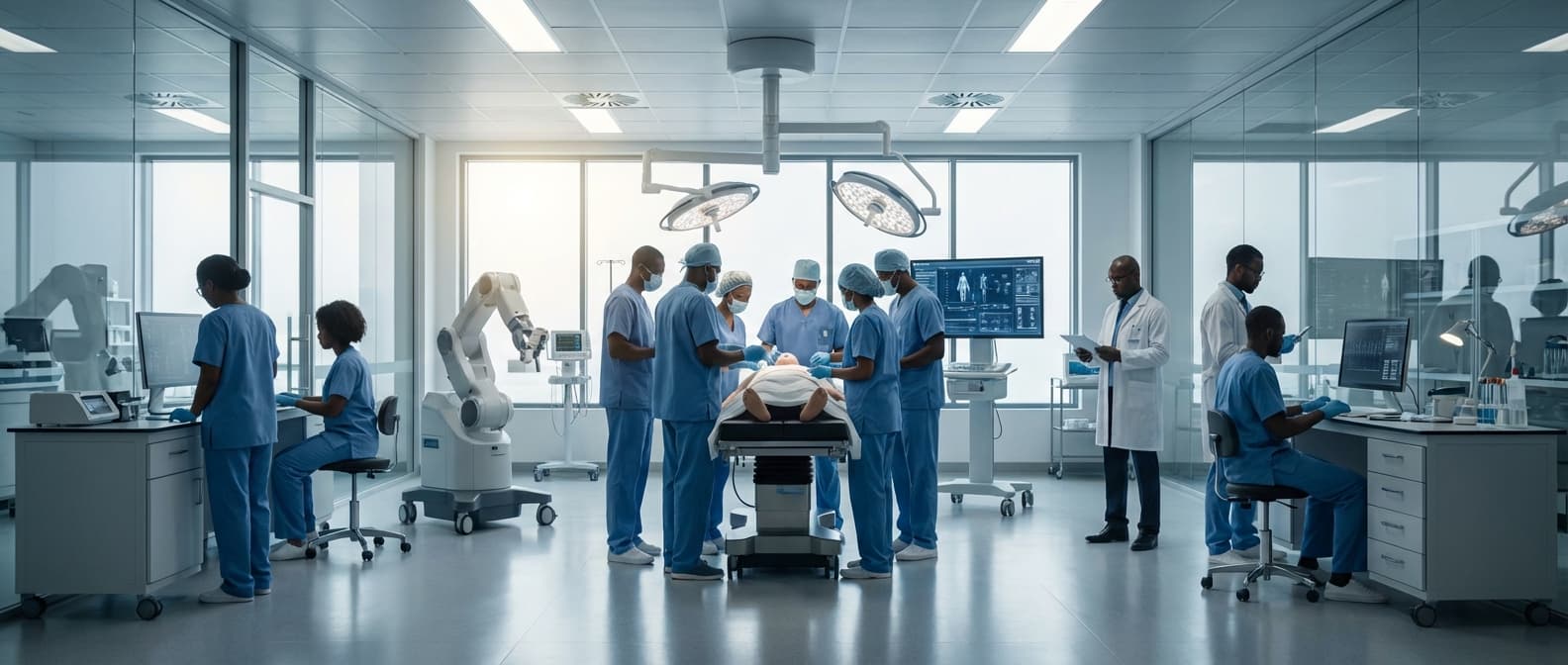
Biomedical Staffing Augmentation in Niger
Engineering Excellence & Technical Support
Onsite biomedical engineers and PACS administrators High-standard technical execution following OEM protocols and local regulatory frameworks.
Bridging Expertise Gaps in Diagnostics
Our augmentation services deploy highly skilled medical laboratory technologists and specialized technicians, ensuring critical diagnostic services in remote or underserved areas of Niger remain operational and meet international quality standards, even during periods of staff shortage or when specific expertise is scarce.
Strengthening Healthcare Infrastructure Delivery
We provide on-demand augmentation of clinical staff, including nurses and physicians with diverse specializations, to support the rollout and sustained operation of new health facilities or the expansion of existing ones across Niger, ensuring immediate and effective patient care delivery from day one.
Accelerating Local Capacity Building through Skill Transfer
Our augmented biomedical professionals are embedded within local healthcare teams in Niger, actively participating in knowledge transfer and on-the-job training initiatives. This approach not only addresses immediate staffing needs but also builds long-term local capacity and improves the sustainability of healthcare services.
What Is Biomedical Staffing Augmentation In Niger?
Biomedical Staffing Augmentation in Niger refers to the strategic deployment of specialized, external biomedical personnel to supplement the existing workforce of healthcare facilities, research institutions, or public health organizations within the country. This service addresses temporary or persistent gaps in technical expertise, capacity, or availability of trained biomedical professionals. It involves identifying specific needs, sourcing qualified individuals with relevant skill sets, and integrating them into the operational framework of the host organization for defined periods. The objective is to enhance diagnostic capabilities, streamline laboratory workflows, facilitate equipment maintenance and calibration, support public health initiatives, and bolster research endeavors without the long-term commitment and overhead associated with permanent hires. This approach is particularly valuable in regions like Niger, where access to highly specialized biomedical talent can be limited or subject to rapid fluctuations.
| Stakeholder/Entity | Reasons for Needing Staffing Augmentation | Typical Use Cases |
|---|---|---|
| Public Hospitals and Clinics | Shortage of specialized laboratory technicians, equipment malfunctions requiring urgent repair, increased patient load necessitating expanded diagnostic services, implementation of new diagnostic technologies. | Temporary staffing for high-throughput diagnostic testing during outbreaks, specialized calibration and maintenance of critical medical equipment (e.g., X-ray machines, PCR machines), support for specialized departments (e.g., pathology, microbiology). |
| National Public Health Laboratories | Need for expertise in emerging infectious disease surveillance, capacity building for advanced molecular diagnostics, backfilling positions due to staff turnover or deployment to remote sites, implementation of new national testing protocols. | Deployment of epidemiologists and molecular biologists for disease outbreak investigations, training of local staff on advanced genomic sequencing techniques, support for national vaccination campaign monitoring and impact assessment. |
| Research Institutions and Universities | Lack of specialized technical skills for specific research projects, need for project management expertise in clinical trials, support for data management and statistical analysis, maintenance of specialized research equipment. | Hiring of bioinformaticians for large-scale genomic studies, provision of clinical research associates for multi-site trials, recruitment of laboratory managers for core facilities, technical support for advanced imaging modalities. |
| Non-Governmental Organizations (NGOs) and International Development Agencies | Implementing health programs requiring specific technical expertise, scaling up service delivery in underserved areas, short-term project needs for specialized interventions, capacity development initiatives. | Providing laboratory quality assurance specialists for HIV/AIDS or malaria programs, deploying entomologists for vector-borne disease control projects, augmenting staff for maternal and child health initiatives requiring specialized monitoring and evaluation. |
| Private Diagnostic Laboratories | Increased demand for specific tests not currently offered, need for specialized equipment operators, quality control and assurance support, expansion of service offerings. | Temporary staffing for advanced toxicology screening, hiring of specialists for genetic testing services, quality management consultants to achieve international accreditation. |
Key Components of Biomedical Staffing Augmentation
- Needs Assessment: Identifying specific functional or technical deficits requiring external expertise (e.g., specialized lab techniques, advanced equipment maintenance, data analysis for clinical trials).
- Talent Sourcing and Vetting: Identifying, recruiting, and rigorously screening qualified biomedical professionals (e.g., medical laboratory scientists, biomedical engineers, public health informatics specialists, clinical research coordinators) with proven experience.
- Onboarding and Integration: Facilitating the smooth integration of augmented staff into the client's existing team, workflows, and operational protocols.
- Project Management and Oversight: Providing managerial or supervisory support for augmented staff to ensure project objectives are met and quality standards are maintained.
- Knowledge Transfer and Training: Enabling the transfer of critical skills and knowledge to permanent staff during the augmentation period, fostering long-term capacity building.
- Compliance and Regulatory Adherence: Ensuring that augmented staff meet all relevant national and international regulatory and ethical standards.
Who Needs Biomedical Staffing Augmentation In Niger?
Biomedical staffing augmentation in Niger is crucial for healthcare facilities facing workforce shortages or requiring specialized expertise. This service helps bridge critical gaps, ensuring the optimal functioning and maintenance of medical equipment, ultimately improving patient care and access to essential healthcare services. The demand for such augmentation is driven by various factors including the need for rapid deployment of skilled professionals, support for complex technological advancements, and to overcome challenges posed by remote locations and infrastructure limitations.
| Department | Specific Needs | Augmentation Justification |
|---|---|---|
| Biomedical Engineering Department | Routine maintenance and repair of diverse medical equipment (imaging, critical care, laboratory), calibration, installation of new devices, technical support for complex systems, training of local staff. | Addresses shortage of skilled biomedical technicians, ensures equipment uptime, prevents costly breakdowns, and facilitates the adoption of new technologies. |
| Radiology/Imaging Department | Operation and maintenance of X-ray machines, CT scanners, MRI machines, ultrasound devices, mammography units. Expertise in imaging physics and specialized software. | Ensures diagnostic imaging availability, reduces patient wait times, and maintains image quality critical for accurate diagnosis. Overcomes reliance on limited in-house expertise for specialized equipment. |
| Intensive Care Unit (ICU) / Critical Care | Maintenance and troubleshooting of ventilators, patient monitors, infusion pumps, defibrillators, and other life-support equipment. Rapid response to equipment failures. | Essential for maintaining critical patient care. Equipment downtime in the ICU can be life-threatening. Augmentation ensures immediate availability of highly skilled personnel. |
| Operating Theatre (OT) / Surgical Services | Maintenance and calibration of surgical instruments, anesthesia machines, electrosurgical units, patient warming systems, and specialized surgical equipment. | Guarantees the safety and effectiveness of surgical procedures. Reliable equipment is paramount for successful surgeries and patient recovery. Addresses need for specific surgical equipment expertise. |
| Laboratory Services | Maintenance and repair of analytical instruments, centrifuges, incubators, microscopes, and diagnostic testing platforms. Calibration and quality control support. | Ensures the accuracy and reliability of diagnostic tests, crucial for effective treatment planning and disease management. Addresses the complexity and diversity of modern laboratory equipment. |
| Anesthesia Department | Maintenance and servicing of anesthesia machines, vaporizers, ventilators (for anesthesia), and monitoring equipment used during surgical procedures. | Critical for patient safety during anesthesia. Proper functioning of this equipment directly impacts patient outcomes and reduces anesthetic risks. |
| Central Sterile Supply Department (CSSD) | Maintenance and validation of autoclaves, sterilizers, and other infection control equipment. Ensuring operational efficiency and compliance with sterilization standards. | Essential for infection prevention and control. Reliable sterilization equipment is vital for patient safety and preventing healthcare-associated infections. |
| Emergency Medical Services (EMS) / Ambulance Services | Maintenance and repair of portable medical equipment used in ambulances, such as defibrillators, portable ventilators, and monitoring devices. | Ensures that critical medical equipment is functional for pre-hospital care, extending the reach of essential medical interventions. |
Target Customers and Departments for Biomedical Staffing Augmentation in Niger
- Public Hospitals
- Private Hospitals
- Tertiary Care Centers
- Referral Hospitals
- District Hospitals
- Community Health Centers (with advanced equipment)
- Non-Governmental Organization (NGO) Healthcare Facilities
- International Health Organizations operating in Niger
- Research Institutions with clinical components
- Diagnostic Laboratories
Biomedical Staffing Augmentation Process In Niger
The Biomedical Staffing Augmentation Process in Niger is a structured workflow designed to efficiently identify, vet, and deploy qualified biomedical professionals to support healthcare facilities and initiatives. This process ensures that critical medical equipment is maintained and operational, thereby enhancing healthcare service delivery in the region. The workflow typically begins with an inquiry from a healthcare facility or a project requiring specialized biomedical expertise.
| Stage | Description | Key Activities | Responsible Parties | Deliverables/Outcomes |
|---|---|---|---|---|
| The process is initiated when a healthcare facility or project expresses a need for augmented biomedical staffing. | Submit formal request, define specific roles, required skills, duration, location, and budget. Conduct site visits if necessary. | Requesting Facility/Project, Ministry of Health (if applicable), Staffing Agency/Department | Clear understanding of staffing requirements, approved requisition. |
| Identifying and filtering potential candidates who meet the defined criteria. | Advertise openings, leverage existing databases, network with professional organizations, conduct initial resume screening for qualifications and experience. | Staffing Agency/HR Department, Recruitment Team | Shortlist of qualified candidates. |
| Assessing candidates' technical proficiency and suitability for the work environment and team dynamics. | Conduct technical interviews focusing on specific biomedical equipment knowledge and repair skills. Conduct behavioral interviews to assess problem-solving, communication, and teamwork. | Hiring Manager, Technical Specialists, HR Interviewer | Candidates assessed for technical competence and cultural fit. |
| Confirming the authenticity of candidate information and performance history. | Contact previous employers to verify employment dates, roles, and performance. Verify educational qualifications and professional certifications. | Staffing Agency/HR Department | Verified candidate information, positive references. |
| Formalizing the employment terms and conditions for the selected candidate. | Extend a formal offer of employment, negotiate salary, benefits, contract duration, and other relevant terms. Ensure compliance with local labor laws. | Staffing Agency/HR Department, Candidate | Accepted offer, signed employment contract. |
| Integrating the new staff member into the facility or project and initiating their work. | Provide orientation on facility policies, procedures, and safety protocols. Arrange necessary travel and accommodation. Facilitate equipment and tool access. Conduct site-specific training. | Requesting Facility/Project, Staffing Agency/HR Department | Staff member ready to begin duties. |
| Ensuring the augmented staff member is performing effectively and meeting expectations. | Regular performance reviews, feedback sessions with supervisors and peers, tracking key performance indicators (KPIs) related to equipment uptime and repair turnaround. | Requesting Facility/Project Management, Staffing Agency/HR Department | Performance reports, identification of areas for improvement or recognition. |
| Concluding the assignment and smoothly transitioning the staff member out. | Conduct a final performance review. Process final payments and benefits. Collect feedback on the augmentation process. Facilitate departure logistics. | Requesting Facility/Project, Staffing Agency/HR Department | Successful completion of assignment, asset return, and administrative closure. |
Workflow Stages and Activities
- Inquiry and Needs Assessment
- Candidate Sourcing and Screening
- Technical and Behavioral Interviewing
- Reference Checks and Verification
- Offer and Contract Negotiation
- Onboarding and Deployment
- Performance Monitoring and Evaluation
- Project Completion and Offboarding
Biomedical Staffing Augmentation Cost In Niger
Biomedical staffing augmentation in Niger involves the temporary or project-based hiring of skilled biomedical professionals. This can range from technicians for equipment maintenance and repair to specialists for training, project management, or research. The costs associated with such augmentation are influenced by a multitude of factors, making specific pricing ranges highly variable. These factors include the specific skills and experience required, the duration of the contract, the location within Niger (urban centers like Niamey may have higher costs than rural areas), the complexity of the tasks, and the reputation or size of the staffing agency or recruitment firm involved. Additionally, government regulations, prevailing market rates for comparable roles, and the demand for specific expertise play a significant role. It's crucial to note that costs are typically presented in Niger's local currency, the West African CFA franc (XOF).
| Service Category | Typical Daily Rate Range (XOF) | Notes |
|---|---|---|
| Biomedical Technician (Routine Maintenance) | 50,000 - 100,000 | Covers basic equipment checks, preventative maintenance. |
| Biomedical Technician (Complex Repair/Troubleshooting) | 75,000 - 150,000 | Involves diagnosing and repairing intricate equipment issues. |
| Senior Biomedical Engineer/Specialist | 100,000 - 250,000+ | For project oversight, advanced diagnostics, new installations, and specialized training. |
| Biomedical Training Facilitator | 80,000 - 200,000 | Focuses on imparting knowledge and skills to local staff. |
| Project Management (Biomedical Projects) | 120,000 - 300,000+ | For managing the lifecycle of biomedical equipment projects. |
| Consultancy (e.g., Policy, Procurement) | 150,000 - 400,000+ | Expert advice on biomedical infrastructure, procurement strategies, and policy development. |
Key Pricing Factors for Biomedical Staffing Augmentation in Niger
- Required Skill Set and Expertise
- Experience Level of Professionals
- Contract Duration and Type
- Geographic Location within Niger
- Complexity of Assigned Tasks
- Reputation and Overhead of Staffing Agency
- Market Demand and Supply Dynamics
- Government Regulations and Taxation
- Benefits and Allowances (e.g., housing, transportation, per diems)
Affordable Biomedical Staffing Augmentation Options
Biomedical staff augmentation can significantly enhance the capabilities of healthcare organizations, research institutions, and medical device companies. However, budget constraints often necessitate exploring cost-effective solutions. This guide outlines affordable biomedical staffing augmentation options, focusing on value bundles and strategic cost-saving measures.
| Strategy | Description | Cost-Saving Benefit | Ideal For |
|---|---|---|---|
| Value Bundles | Combining multiple services or expertise into a single package, often at a discounted rate. Examples include a bundle of regulatory consulting, validation services, and quality assurance support. | Reduced overall project cost, streamlined procurement, predictable budgeting. | Projects requiring a comprehensive suite of related services, long-term engagements. |
| Bulk Hour Contracts | Purchasing blocks of hours for a specific service or skill set in advance, often with tiered pricing for larger volumes. This allows for better planning and potentially lower hourly rates. | Lower per-hour rates for predictable needs, incentive for commitment. | Ongoing support for specific functions, regular project work. |
| Managed Services | Outsourcing an entire biomedical function or a specific project to a third-party provider who manages the personnel, processes, and outcomes. This can include device maintenance, clinical trial support, or data management. | Reduced management overhead, economies of scale, guaranteed service levels. | Complex or specialized functions, organizations seeking to offload operational burdens. |
| Retainer Agreements | Establishing an ongoing relationship with a staffing provider or consultant for a fixed monthly fee, ensuring access to a pool of talent or a specific level of expertise as needed. | Guaranteed availability of specialized skills, proactive problem-solving, predictable operational costs. | Organizations with consistent but variable demand for specialized biomedical expertise. |
| Platform-Based Augmentation | Utilizing online platforms that connect organizations with pre-vetted freelance or contract biomedical professionals. These platforms often handle administrative tasks like invoicing and contracts. | Reduced administrative burden, competitive pricing through marketplace dynamics, faster access to talent. | Short-term projects, niche skill requirements, organizations seeking agility. |
Affordable Biomedical Staffing Augmentation Options
- Freelance and Contract Professionals: Leveraging specialized freelance and contract biomedical engineers, technicians, and scientists can provide on-demand expertise without the overhead of full-time hires. This model is ideal for project-based work or to fill temporary skill gaps.
- Part-time and Shared Resources: For organizations with fluctuating needs or smaller-scale projects, engaging professionals on a part-time basis or sharing resources across departments can be a cost-effective approach. This maximizes the utilization of skilled personnel.
- Remote and Virtual Teams: In an increasingly digital world, many biomedical functions can be performed remotely. Augmenting your team with skilled professionals who work virtually can reduce costs associated with office space, equipment, and relocation.
- Entry-Level and Junior Talent with Mentorship: Investing in bright, entry-level biomedical professionals and pairing them with experienced mentors from your existing staff or through specialized augmentation programs can foster growth while being more budget-friendly than hiring senior-level talent directly for all roles.
- Partnerships with Educational Institutions: Collaborating with universities for intern programs or co-op placements can provide access to motivated students with relevant skills at a lower cost. This also serves as a pipeline for future talent.
- Outsourcing Specific Non-Core Functions: Certain administrative, data analysis, or regulatory support tasks within the biomedical field can be outsourced to specialized firms, allowing your core team to focus on higher-value activities.
- Skill-Based Training and Upskilling Existing Staff: Instead of solely relying on external augmentation, investing in targeted training for your current biomedical staff can address skill shortages internally. This can be more cost-effective in the long run.
Verified Providers In Niger
In Niger's evolving healthcare landscape, ensuring access to qualified and trustworthy medical professionals is paramount. Verified providers offer a crucial layer of assurance for patients seeking reliable care. Franance Health stands at the forefront of this movement, establishing a benchmark for excellence through its rigorous credentialing process and unwavering commitment to patient well-being. This commitment is reflected in their meticulous verification of medical practitioners, ensuring they meet the highest standards of education, experience, and ethical practice. Choosing a Franance Health verified provider means opting for competence, integrity, and ultimately, superior healthcare outcomes.
| Verification Component | Franance Health Standard | Patient Benefit |
|---|---|---|
| Medical Education & Training | Accredited institutions; recognized specialties | Guarantees foundational knowledge and skill |
| Professional Licensing | Current and valid licenses from relevant authorities | Confirms legal and regulatory compliance |
| Clinical Experience | Verified years of practice and relevant experience | Indicates practical expertise and problem-solving ability |
| Specialty Certifications | Board certifications in specific medical fields | Ensures advanced knowledge and proficiency in a chosen area |
| Background Checks | Thorough review of disciplinary actions and criminal records | Protects patients from unqualified or unethical practitioners |
| Peer Reviews (where applicable) | Positive feedback and endorsements from other medical professionals | Offers an external validation of competence and reputation |
Why Franance Health Verified Providers are the Best Choice:
- Rigorous Credentialing Process: Franance Health employs a multi-faceted verification system that scrutinizes educational qualifications, professional licenses, disciplinary records, and a proven track record of successful patient care.
- Commitment to Patient Safety: Verification by Franance Health is a direct indicator of a provider's dedication to upholding the highest standards of patient safety and quality of care.
- Enhanced Trust and Transparency: Patients gain confidence knowing their healthcare provider has undergone independent scrutiny, fostering greater trust in the medical system.
- Access to Specialized Expertise: Franance Health's network includes a diverse range of specialists, ensuring patients can find the right expert for their specific needs.
- Continuous Monitoring and Re-verification: The verification process isn't a one-time event. Franance Health is committed to ongoing monitoring and periodic re-verification to ensure continued adherence to their standards.
- Promotion of Ethical Practice: Beyond technical skills, Franance Health's verification process considers a provider's ethical conduct and commitment to patient confidentiality.
Scope Of Work For Biomedical Staffing Augmentation
This Scope of Work (SOW) outlines the requirements for augmenting the biomedical staff of [Client Name] with specialized and general biomedical professionals. The objective is to ensure seamless operation, maintenance, and support of the client's medical equipment inventory. This document details the technical deliverables and standard specifications expected from the augmented staff and the staffing provider.
| Category | Technical Deliverable | Standard Specifications/Requirements | Key Performance Indicators (KPIs) |
|---|---|---|---|
| Personnel Augmentation | Biomedical Technicians (General) | Minimum 3 years of experience in servicing a broad range of medical equipment; certified in relevant areas (e.g., CBET); proficient in troubleshooting and repair; understanding of medical device integration. | Mean Time Between Failures (MTBF) reduction; Patient Safety Incidents related to equipment; Equipment Uptime Percentage. |
| Personnel Augmentation | Specialized Biomedical Engineers (e.g., Imaging, Anesthesia, Critical Care) | Minimum 5 years of specialized experience in the designated equipment domain; advanced certifications (e.g., specific vendor certifications); expertise in complex diagnostic and therapeutic equipment; ability to perform advanced diagnostics and complex repairs. | First-Time Fix Rate for specialized equipment; Turnaround Time (TAT) for complex repairs; successful completion of specialized equipment projects. |
| Maintenance & Repair | Preventive Maintenance (PM) Completion | All PM tasks performed according to manufacturer guidelines and internal protocols within designated timelines. Documentation of all PM activities including tests performed, results, and corrective actions. | PM Completion Rate (% of scheduled PMs completed on time); PM Compliance Rate (% of PMs meeting all specified criteria). |
| Maintenance & Repair | Corrective Maintenance (CM) Response & Resolution | Adherence to established response times for equipment downtime incidents. Efficient and accurate diagnosis and repair of equipment malfunctions, minimizing downtime. Root cause analysis for recurring issues. | Mean Time To Respond (MTTR) for critical and non-critical equipment; Percentage of equipment repaired within Service Level Agreements (SLAs); Reduction in repeat service calls. |
| Installation & Integration | New Equipment Installation & Commissioning | Installation of new medical devices according to manufacturer specifications and hospital safety standards. Successful commissioning and integration into existing hospital networks and IT systems. Comprehensive testing and validation. | Successful installation and go-live rate; Completion of commissioning checklists; Absence of post-installation issues within defined period. |
| Calibration & Validation | Equipment Calibration | Regular calibration of medical devices to ensure accuracy and performance within manufacturer tolerances. Use of NIST-traceable calibration equipment. Detailed calibration records and certificates. | Calibration Compliance Rate (% of devices calibrated on schedule); Accuracy of calibrated equipment (measured against standards). |
| Documentation & Reporting | Service Reports & Records | Accurate and timely documentation of all service activities (PM, CM, installation, calibration) in the client's Computerized Maintenance Management System (CMMS). Generation of monthly/quarterly reports on equipment status, maintenance activities, and key performance metrics. | Completeness and accuracy of CMMS data; Timeliness of report submission; Clarity and comprehensiveness of reports. |
| Compliance & Safety | Regulatory Compliance Adherence | Strict adherence to all relevant regulatory standards (e.g., FDA, Joint Commission) and hospital policies regarding medical device maintenance and safety. Participation in internal and external audits. | Audit findings (number and severity of non-compliance issues); Successful completion of regulatory inspections. |
Key Objectives
- To provide skilled biomedical personnel to supplement existing internal resources.
- To ensure timely and effective maintenance, repair, and calibration of medical devices.
- To support new equipment installations and upgrades.
- To enhance patient safety and equipment uptime.
- To maintain compliance with regulatory standards and manufacturer specifications.
Service Level Agreement For Biomedical Staffing Augmentation
This Service Level Agreement (SLA) outlines the performance standards for the Biomedical Staffing Augmentation services provided by [Your Company Name] to [Client Company Name]. It specifically addresses response times for critical incidents and uptime guarantees for augmented staff.
| Service Element | Service Level Objective (SLO) | Measurement Metric | Reporting Frequency | Remedy/Penalty |
|---|---|---|---|---|
| Critical Incident Response Time (Tier 1 - Life-threatening equipment malfunction) | Within 30 minutes of initial notification | Time from notification to confirmed technician engagement (phone/remote access initiation) | Monthly | 5% service credit for each incident exceeding the SLO, capped at 20% of monthly service fee |
| Critical Incident Response Time (Tier 2 - Significant equipment downtime affecting patient care) | Within 2 hours of initial notification | Time from notification to confirmed technician engagement (phone/remote access initiation) | Monthly | 3% service credit for each incident exceeding the SLO, capped at 15% of monthly service fee |
| Urgent Incident Response Time (Tier 3 - Non-critical but impacting workflow) | Within 8 business hours of initial notification | Time from notification to confirmed technician engagement (phone/remote access initiation) | Monthly | 1% service credit for each incident exceeding the SLO, capped at 10% of monthly service fee |
| Augmented Staff Uptime Guarantee (Full-time equivalent) | 98% during scheduled shifts | Percentage of scheduled hours during which augmented staff are available and performing duties, excluding pre-approved leave and scheduled maintenance. | Monthly | If aggregate uptime falls below 98% for the billing period, a pro-rata credit of 2% of the monthly fee for each 1% shortfall below 98% will be applied. |
| Augmented Staff Uptime Guarantee (Part-time/On-call) | 95% of on-call availability during defined on-call periods | Percentage of defined on-call hours during which staff are reachable and able to respond as per contract. | Monthly | If aggregate on-call availability falls below 95% for the billing period, a pro-rata credit of 1% of the monthly on-call fee for each 1% shortfall below 95% will be applied. |
Key Performance Indicators (KPIs)
- Response Time: The maximum acceptable time for [Your Company Name] to acknowledge and begin addressing a reported critical issue.
- Uptime Guarantee: The minimum percentage of time that augmented biomedical staff are expected to be available and functional to perform their duties.
- Resolution Time: The maximum acceptable time to resolve a reported critical issue.
- Staff Availability: The scheduled hours and days for which augmented staff are guaranteed to be available.
Frequently Asked Questions

Ready when you are
Let's scope your Biomedical Staffing Augmentation in Niger project in Niger.

Scaling healthcare logistics and technical systems across the entire continent.